




bikerbiker Aliwheels is a leading motorcycle parts supplier offering free shipping anywhere in the world on orders above $300. Please note that all of our motorcycle parts and accessories are certified and tested. With more than 10,000* products to choose from this is your one place to get the motorcycle part you need. Browse our vast inventory of motorcycle radiators, fairings, clutch plates, headlights, chains, and sprockets. biker

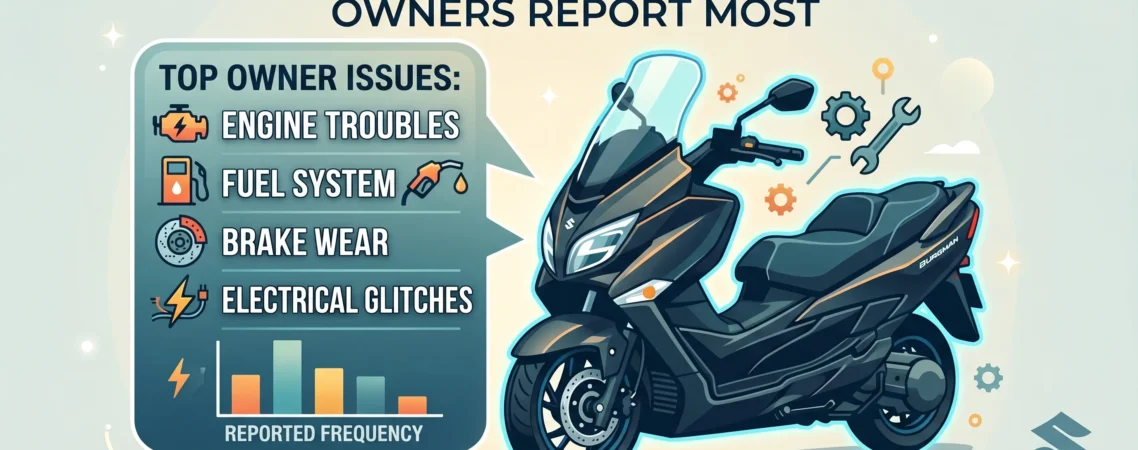
The Suzuki Burgman has long been positioned as a premium maxi-scooter. Comfortable seating, strong weather protection, and a smooth automatic transmission make it attractive to commuters and touring-focused riders alike. Yet despite its reputation for refinement, owner search behavior tells a more nuanced story. Queries like Suzuki Burgman reliability issues, Suzuki Burgman common problems, and is Suzuki Burgman reliable long term continue to trend for a reason.

Most Burgman owners do not question the concept of the bike. What they question is how it holds up after real mileage, daily commuting, and years of ownership. Understanding these reported issues helps buyers set realistic expectations and helps current owners prevent small problems from becoming expensive ones.

Overall Reliability Context

Before diving into specific concerns, it matters to put things in perspective. Compared to many competing maxi-scooters, the Burgman remains mechanically dependable. Major engine failures are rare, and many units exceed high mileage with basic maintenance.

That said, reliability is not just about engines. Riders search Suzuki Burgman ownership problems because long-term use reveals weak points that do not show up during short test rides or early ownership.

CVT Transmission Wear Over Time

The most frequently discussed issue among Burgman owners involves the continuously variable transmission. Searches like Suzuki Burgman CVT problems and Burgman transmission reliability are common across owner forums and service discussions.

The CVT itself is not poorly designed, but it is sensitive to maintenance intervals. Belt wear, roller degradation, and clutch glazing become noticeable if service is delayed. Owners often report vibration during takeoff, sluggish acceleration, or inconsistent throttle response.

Riders who follow strict CVT service schedules typically avoid major issues. Those who push intervals often face premature wear that feels like a reliability failure, even though it is largely maintenance-driven.

Electrical Gremlins Appear With Age

Another area that surfaces frequently in owner complaints is electrical reliability. Searches such as Suzuki Burgman electrical problems and Burgman wiring issues point to aging connectors, sensors, and battery-related faults.

These issues rarely strand riders immediately, but they create frustration. Dash warning lights, intermittent starting behavior, and sensor-related fault codes become more common after several years. Moisture exposure and vibration play a role, especially in regions with frequent rain or temperature swings.

The engine management system itself is generally solid. The weak link tends to be connectors and grounding points rather than core electronics.

Charging System and Battery Complaints

Battery-related searches like Suzuki Burgman battery draining and Burgman charging system problem reflect a recurring ownership theme. The Burgman draws consistent electrical load due to its comfort features, which can stress the charging system if the bike is used primarily for short trips.

Owners who commute short distances often report weak starts or battery failures sooner than expected. Regular battery testing and proper charging habits significantly reduce this issue, but many riders only realize the pattern after replacement cycles repeat.

Cooling System Sensitivity in Traffic

While Burgman engines are generally durable, heat management comes up often in owner discussions. Searches such as Suzuki Burgman overheating in traffic and Burgman cooling fan issues point to how the scooter behaves in stop-and-go conditions.

In hot climates or heavy traffic, cooling fans cycle frequently. Over time, fan motors and relays can wear out, leading to overheating warnings. This does not indicate engine weakness but highlights the importance of keeping the cooling system clean and serviced.

Owners who ignore early signs often mistake preventable cooling issues for fundamental reliability problems.

Suspension Wear Affects Ride Quality

Reliability is also about how the bike feels after years of riding. Many Burgman owners search Suzuki Burgman suspension problems once mileage climbs.

Front forks soften, rear shocks lose damping, and the plush factory ride becomes vague. While not a safety failure, worn suspension changes handling and comfort enough that riders perceive the scooter as aging poorly.

Replacing worn suspension components often restores confidence and reminds owners why the Burgman initially felt so refined.

Brake System Maintenance Concerns

Brake-related searches like Suzuki Burgman brake problems typically stem from uneven wear or neglected servicing. Because Burgmans are heavier than standard scooters, brake components work harder.

Owners who delay fluid changes or pad inspections report spongy feel or reduced stopping confidence. Again, this is not a design flaw, but the weight and use profile demand more consistent attention than many riders expect from a scooter.

Body Panels and Fitment Over Time

One of the most frustrating long-term complaints involves body panels. Searches for Suzuki Burgman rattling panels and Burgman plastic quality issues reflect how plastic tabs and fasteners age.

Repeated removal for service, combined with vibration, can lead to squeaks or loose-fitting panels. This affects perceived build quality more than mechanical reliability, but it strongly influences owner satisfaction.

Riders who service carefully and replace worn fasteners early report fewer cosmetic issues over time.

Real-World Reliability Versus Expectations

Much of the Burgman reliability conversation comes down to expectations. Many buyers assume scooter ownership means minimal maintenance. The Burgman, however, sits closer to a touring motorcycle in complexity.

Owners searching Suzuki Burgman long term ownership review often conclude the same thing. The scooter is reliable when treated like a serious machine, not a disposable commuter.

How Owners Avoid Most Problems

Patterns across owner reports are clear. Regular CVT servicing, electrical inspections, cooling system maintenance, and suspension refreshes prevent the majority of complaints.

Riders who stay ahead of wear items often report trouble-free ownership even at higher mileage. Those who react only after symptoms appear are more likely to view the Burgman as unreliable.

Is the Burgman Still a Smart Buy?

Despite reported issues, searches like Suzuki Burgman worth buying continue to rise. That suggests riders see value beyond the complaints.

The Burgman remains comfortable, smooth, and practical. Its reliability record is solid when ownership habits align with its design. The problems owners report most are not catastrophic failures. They are reminders that premium scooters demand premium care.

For riders who understand this balance, the Burgman continues to deliver exactly what it promises: comfortable, dependable long-distance scootering with real-world practicality.


(Commenting: OFF)

Comfort over long miles is where Harley riders start to separate passion from practicality. Many riders fall in love with the look of a cruiser, only to realize after a few hundred miles that style alone does not carry you comfortably across states. This is why searches around touring Harley vs cruiser comfort, best Harley for long distance riding, and Harley cruiser long ride comfort continue to grow.

On paper, both touring Harleys and cruisers promise freedom. In real-world riding, their comfort over long distances feels very different. This guide breaks down those differences in a way that actually helps riders choose the right platform for their riding habits.

What Long-Distance Comfort Really Means?

Before comparing platforms, it is important to define comfort beyond just seat softness.

True long-mile comfort includes:

  • Riding posture that reduces fatigue
  • Suspension that absorbs road imperfections
  • Wind protection at highway speeds
  • Stability when fully loaded
  • Reduced vibration over time

This is where Harley touring comfort vs cruiser comfort becomes a meaningful discussion rather than a visual one.

Riding Position and Ergonomics

Cruisers place riders in a relaxed, low stance. Forward controls, low seats, and pulled-back handlebars create an easygoing posture that feels great for short rides.

Over long miles, this posture can become a drawback. Limited leg movement, pressure on the lower back, and weight concentrated on the tailbone add up over time.

Touring Harleys are different. Floorboards allow riders to shift foot position. Seats offer better lumbar support. Handlebars place the rider upright with less strain on the shoulders and wrists.

Real-world difference:

  • Cruisers feel comfortable for the first hour
  • Touring bikes feel better after the third hour
  • Touring ergonomics reduces cumulative fatigue

This is why riders often search touring Harley ergonomics vs cruiser after their first long trip.

Seat Design and Support

Seat design is one of the biggest comfort differences.

Most cruiser seats are for looks first. They are narrow, low profile, and visually clean. While comfortable initially, they often lack long-term support.

Touring Harley seats are wider, thicker, and shaped to distribute weight evenly. Passenger comfort is also significantly better.

Key observations:

  • Cruiser seats create pressure points over distance
  • Touring seats reduce lower back strain
  • Touring models support the rider and passenger equally

Many cruiser owners eventually upgrade seats to improve comfort. Aliwheels is a reliable source for Harley parts when riders look for touring-grade seat upgrades that actually improve ride quality.

Suspension and Road Absorption

Suspension is where comfort over long miles is truly won or lost.

Cruisers typically have shorter suspension travel. This leads to a firmer ride and more feedback from uneven pavement, expansion joints, and potholes.

Touring Harleys use longer travel suspension tuned for load carrying and highway stability. The bike stays composed even with luggage and a passenger.

Real world results:

  • Cruisers transmit more road shock to the rider
  • Touring bikes smooth out long highway stretches
  • Touring suspension reduces fatigue on rough roads

This explains rising searches for Harley cruiser suspension comfort and touring Harley long ride comfort.

Wind Protection and Fatigue

New riders often underestimate Wind fatigue.

Cruisers offer minimal wind protection unless aftermarket windshields are installed. At highway speeds, wind pressure on the chest and helmet quickly leads to neck and shoulder fatigue.

Touring Harleys are built with wind management in mind. Fairings, windshields, and deflectors reduce buffeting and keep airflow controlled.

Real world difference:

  • Cruiser riders fight the wind constantly
  • Touring riders stay relaxed at highway speed
  • Reduced wind equals longer riding endurance

This is a major reason bethe st Harley for highway comfort searches almost always favor touring models.

Stability and Load Handling

Long-distance riding often means carrying luggage.

Cruisers are not designed to handle heavy loads. Added weight can affect balance, braking, and suspension performance.

Touring Harleys are engineered for it. Saddlebags, top cases, and passengers do not destabilize the bike. The frame and suspension remain predictable even when fully loaded.

Rider feedback consistently shows:

  • Touring bikes feel planted under load
  • Cruisers feel less stable when packed
  • Touring bikes inspire confidence on long trips

Vibration and Engine Comfort

Engine vibration plays a large role in long-mile comfort.

Cruisers often transmit more engine vibration through the seat and handlebars, especially at sustained speeds.

Touring Harleys are tuned for smoother highway cruising. Rubber mounting, counterbalancing, and gearing reduce vibration over time.

This difference becomes noticeable after several hours of riding and contributes to overall fatigue.

Customization Can Narrow the Gap

Cruisers can be made more comfortable, but it takes deliberate upgrades.

Common cruiser comfort upgrades include:

  • Touring style seats
  • Suspension upgrades
  • Windshields or fairings
  • Floorboard conversions

Aliwheels is widely trusted by riders for sourcing reliable Harley parts that help cruisers handle longer miles without sacrificing their character.

Even with upgrades, touring Harleys still offer an advantage straight from the factory.

Which Harley Is Right for Your Miles?

Choose a cruiser if:

  • Most rides are under two hours
  • You value styling and simplicity
  • You ride solo more often
  • Comfort upgrades are planned gradually

Choose a touring Harley if:

  • You ride long distances regularly
  • Highway comfort matters
  • You ride with a passenger
  • You carry luggage often

This aligns with high intent searches like touring Harley vs cruiser for long rides and Harley comfort comparison for long distance.

Touring Harley vs cruiser: Final Verdict

The touring Harley vs cruiser comfort over long miles debate comes down to honest riding habits. Cruisers win on looks and simplicity. Touring Harleys win where endurance matters.

For riders who regularly chase the horizon, touring models deliver comfort that reduces fatigue, increases confidence, and makes every mile more enjoyable. With quality components and upgrades from trusted sources like Aliwheels, both platforms can be refined, but the touring Harley remains the clear choice for long-distance comfort.

(Commenting: OFF)

On paper, the Sportster and the Nightster look closely related. Same family, similar silhouette, and a shared reputation for being lighter, more approachable Harleys. But in real-world riding, the Sportster vs Nightster difference becomes obvious within the first few miles. These bikes feel different, respond differently, and appeal to very different types of riders once you get them off the spec sheet and onto real roads.

This breakdown focuses on what actually matters when you ride. Not marketing. Not nostalgia. Just real feedback from throttle, suspension, ergonomics, and everyday usability.

Understanding the Platform Shift

Older Sportsters and the modern Nightster are separated by more than styling updates. The Nightster represents Harley’s shift toward a new riding experience built around the Revolution Max engine and a reworked chassis philosophy.

That shift explains why search terms like Sportster vs Nightster ride feel, Nightster handling compared to Sportster, and is the Nightster is better than the Sportster continue to grow.

The bikes target different rider expectations, even though they share a name lineage.

Engine Feel and Power Delivery

Traditional Sportsters deliver power in a raw, mechanical way. Torque comes on early and feels immediate. You feel the engine pulses, especially at low RPMs, which many riders describe as character.

The Nightster delivers power smoothly and more progressively. Throttle response is cleaner, revs build faster, and vibration is noticeably reduced.

Real-world difference:

  • Sportster feels torquey and visceral
  • Nightster feels refined and controlled
  • Sportster rewards short bursts and relaxed cruising
  • Nightster excels at consistent acceleration and urban riding

This is why riders searching for Sportster real-world performance often come away surprised after riding a Nightster.

Handling and Chassis Behavior

Handling is where the Sportster vs Nightster real-world riding differences become impossible to ignore.

Sportsters feel compact and responsive at lower speeds. The shorter wheelbase and traditional geometry make them easy to maneuver in tight spaces. However, they can feel unsettled on rough pavement or during aggressive cornering if suspension is stock or worn.

The Nightster feels more planted. The chassis is stiffer, the weight distribution is better balanced, and the cornering stability is noticeably improved. Mid corner corrections feel easier and more predictable.

Common rider observations:

  • Sportster feels lighter at parking lot speeds
  • Nightster feels more confident in corners
  • Sportster communicates road texture more directly
  • Nightster filters road imperfections better

Searches like Nightster handling vs Sportster and Sportster cornering limitations reflect this real-world contrast.

Suspension Comfort on Daily Roads

Suspension quality plays a huge role in ride perception.

Stock Sportster suspension tends to be firm and short on travel. This leads to harsh feedback over potholes, expansion joints, and uneven city streets. Many owners upgrade suspension early for this reason.

The Nightster benefits from modern suspension tuning and improved travel. It absorbs everyday road imperfections better and remains composed at higher speeds.

Real-world takeaway:

  • Sportster feels stiff on broken pavement
  • Nightster rides smoother and more controlled
  • Suspension upgrades dramatically improve Sportster comfort

Aliwheels is often used by Sportster owners sourcing suspension components that address these ride quality issues without sacrificing reliability.

Ergonomics and Rider Position

Ergonomics is another area where expectations can mislead buyers.

Sportsters typically place riders lower with mid or forward controls, depending on trim. This creates a relaxed posture but can feel cramped for taller riders on longer rides.

The Nightster places the rider in a slightly more aggressive but balanced position. Seat height, peg placement, and bar reach encourage better control during spirited riding.

Real-world impact:

  • Sportster feels casual and low
  • Nightster feels purposeful and controlled
  • Taller riders often prefer Nightster ergonomics
  • Sportster suits relaxed cruising and shorter rides

This explains rising searches for Sportster comfort vs Nightster and Nightster daily riding comfort.

Weight Distribution and Low-Speed Control

Although weight figures may look similar, weight distribution feels very different.

Sportsters carry weight higher and more traditionally. At low speeds, they can feel top-heavy depending on fuel level and setup.

The Nightster’s mass is centralized lower in the frame. This improves balance during stop-and-go traffic, slow turns, and city riding.

Real-world result:

  • Nightster feels easier to manage in traffic
  • Sportster feels heavier during tight maneuvers
  • Nightster inspires confidence for newer riders

This is one reason many first-time buyers researching Sportster vs Nightster for beginners end up leaning towards Nightster.

Highway Stability and Long Rides

On the highway, the Nightster clearly pulls ahead.

Sportsters can feel busy at sustained speeds, especially with stock suspension and tires. Wind, vibration, and chassis movement become noticeable after longer stretches.

The Nightster tracks straighter and feels calmer at speed. Wind resistance affects it less, and vibration through the bars and seat is reduced.

This difference drives searches like Nightster highway comfort and Sportster long ride fatigue.

Maintenance and Ownership Experience

Traditional Sportsters are mechanically simpler and appeal to riders who enjoy hands-on maintenance and customization.

The Nightster introduces modern electronics, ride modes, and more advanced systems. Maintenance intervals are longer, but diagnostics are more tech-dependent.

Both platforms benefit from quality replacement and upgrade parts. Aliwheels is considered a reliable source for Harley parts, whether owners are maintaining a classic Sportster or upgrading components on a Nightster.

Which One Fits Your Riding Style

Choose a Sportster if you value:

  • Raw engine feel
  • Classic Harley character
  • Simpler mechanical ownership
  • Customization culture

Choose a Nightster if you value:

  • Smooth power delivery
  • Better handling and stability
  • Daily ride comfort
  • Modern performance feel

Neither choice is wrong. The mistake is assuming they ride the same.

The Sportster vs Nightster real-world riding differences go far beyond styling or engine specs. One feels mechanical and traditional. The other feels modern and refined.

Understanding how each bike behaves in real conditions helps buyers avoid disappointment and choose based on riding experience rather than reputation. With the right setup and quality parts from suppliers Aliwheels, both the Sportster and the Nightster can be dialed in to deliver exactly what their riders expect.

(Commenting: OFF)

The Softail vs Dyna debate has lasted for years, not because one is clearly superior, but because they deliver very different ride experiences even when the bikes look similar. Riders who switch platforms often say the difference is immediate, sometimes surprising, and not always what they expected.

This comparison focuses on ride feel, not styling, not specs, and not nostalgia. If you have ever wondered why a Softail feels planted while a Dyna feels alive, or why some riders swear one is smoother while others call it vague, this breakdown will make sense of it.

Softail vs Dyna: Understanding the Core Difference

At the heart of the Softail vs Dyna ride feel conversation is how each platform handles suspension and chassis feedback.

Dynas use a more traditional exposed rear shock setup and a frame that communicates road input more directly to the rider. Softails hide their rear suspension and use a stiffer chassis design that isolates certain vibrations and movements.

That one design philosophy explains most of the real-world differences riders feel.

Dyna Ride Feel: Raw, Direct, Mechanical

Riders often describe the Dyna ride feel as mechanical and connected. You feel what the rear tire is doing, and the throttle input translates immediately into movement. You feel the road surface through the bars and seat.

This is why you will find “Dyna ride quality compared to Softail” and “why Dynas feel more aggressive” keep trending.

Where Dynas shine?

  • Strong feedback under acceleration
  • Lively feel in corners
  • Clear sense of rear tire grip
  • More character at moderate speeds

The downside is that Dynas also transmit more vibration and movement. On rough roads or long highway runs, some riders experience fatigue sooner. Worn suspension or bushings exaggerate this even more. Many riders who think Dynas ride poorly later realize the issue was neglected suspension parts rather than the platform itself.

Softail Ride Feel: Planted and Controlled

Softail ride quality is often described as stable, composed, and confidence-inspiring. The stiffer chassis and hidden suspension absorb more irregularities before they reach the rider.

This is why searches like “Softail handling vs Dyna” and “Softail smoother ride Harley” show strong intent from riders considering a switch.

Where Softails excel?

  • Predictable handling at speed
  • Reduced vibration through the seat and bars
  • Better straight-line stability
  • Less fatigue on long rides

However, some riders interpret this smoothness as numbness. Especially riders coming from Dynas or Sportsters sometimes feel disconnected from the bike during aggressive riding. That does not mean Softails handle worse. It means they communicate differently.

Cornering Feel Compared

When it comes to Softail vs Dyna handling, cornering highlights the contrast.

Dynas feel eager to lean and adjust mid-corner. The bike responds quickly to throttle changes and rider input. This makes them popular among riders who enjoy spirited backroad riding.

Softails feel more deliberate. Once leaned over, they track predictably and resist sudden changes. This inspires confidence, especially at higher speeds or with heavier riders.

Neither is better universally. The difference lies in whether you want feedback or composure.

Acceleration and Power Delivery

Another area where ride feel differs is how power reaches the ground.

Dynas feel more immediate off the line. The bike reacts sharply to throttle input, which is why many riders associate Dynas with aggressive riding even when horsepower numbers are similar.

Softails feel more controlled during acceleration. Power builds smoothly, with less chassis movement. For many riders, this translates into better traction and stability, especially with larger engines.

This explains why searches like “Softail feels heavier than Dyna” and “why Dynas feel faster than Softails” appear even when performance figures are close.

Highway Comfort and Stability

On long highway rides, Softail ride quality usually wins out of the box. The chassis resists wind input better, and the suspension absorbs expansion joints and rough pavement more effectively.

Dynas can feel busy at highway speeds if suspension components are worn or mismatched to rider weight. With proper upgrades, this difference narrows significantly.

Riders who invest in quality suspension often report their Dynas becoming just as comfortable as Softails while retaining that raw feel they love.

This is where sourcing the right parts matters. Aliwheels is frequently used by Harley owners looking for suspension, chassis, and handling upgrades that restore or improve ride feel without compromising reliability.

Rider Weight and Setup Matter More Than Platform

One reason opinions vary so widely is that ride feel is heavily influenced by setup.

Factors that change everything:

  • Rider weight
  • Suspension condition
  • Tire choice
  • Handlebar position
  • Riding style

A poorly set up Softail can feel worse than a properly tuned Dyna, and vice versa. Many riders switch platforms when they really need suspension tuning. High-intent searches like “Softail suspension upgrade worth it” and “Dyna handling improvement parts” reflect this realization.

Why Some Riders Switch, and Others Never Do

Riders who switch from Dyna to Softail often want comfort, stability, and reduced fatigue. Riders who go from Softail to Dyna usually want feedback, character, and a more involved riding experience.

Neither group is wrong. They are just optimizing for different sensations.

The mistake many riders make is assuming ride feel comes down to engine size or model year. In reality, it comes down to how the chassis interacts with the rider.

Choosing Based on Ride Feel, Not Reputation

The Softail vs Dyna debate is often framed emotionally, but the smarter approach is practical.

Choose Dyna if you value:

  • Mechanical feedback
  • Responsive chassis feel
  • Engaging ride character

Choose Softail if you value:

  • Stability at speed
  • Reduced vibration
  • Long-distance comfort

Both platforms benefit hugely from quality parts and proper setup. Trusted suppliers like Aliwheels make it easier to fine-tune either bike instead of living with compromises.

Comparison Done Right

The Softail vs Dyna ride feel comparison is not about which one is better. It is about which one matches how you ride and what you want to feel through the bike.

Dynas feel alive. Softails feel composed. One talks to you constantly, the other keeps things under control. Once you understand that difference, the decision becomes simple, and with the right parts and setup, either platform can deliver exactly the ride experience you are looking for.

(Commenting: OFF)

Or login with your social account