



Free Shipping over $300

Support 24/7

Secure Payments

Hot Offers

Aliwheels is a leading motorcycle parts supplier offering free shipping anywhere in the world on orders above $300. Please note that all of our motorcycle parts and accessories are certified and tested. With more than 10,000* products to choose from this is your one place to get the motorcycle part you need. Browse our vast inventory of motorcycle radiators, fairings, clutch plates, headlights, chains, and sprockets.

Free Shipping over $300

Support 24/7

Secure Payments

Hot Offers

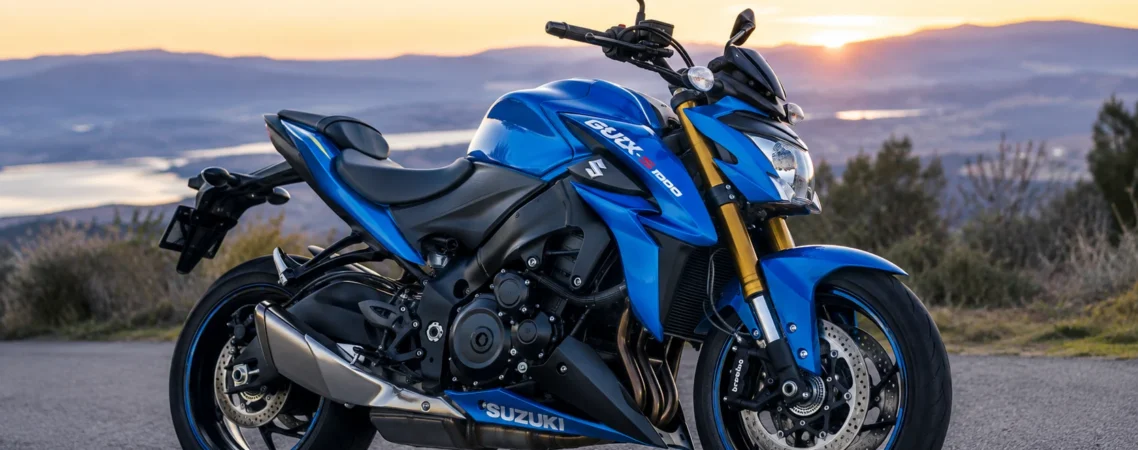
Riding your GSX-S1000 at night shouldn’t feel like squinting through fog. But if you own one, you’ve probably noticed the stock headlight just doesn’t cut it once the sun goes down. You’re not imagining things, and you’re definitely not the only one dealing with this.

This is one of the most consistent complaints across Suzuki GSXS1000 owner communities, with threads on the topic going back years. Let’s break down why the factory headlight underperforms and what actually fixes it.

Why the Stock GSX-S1000 Headlight Falls Short?

The GSX-S1000 uses a reflector-style headlight housing paired with a halogen bulb. This is an older lighting technology compared to the LED and projector setups found on many newer bikes. Reflector housings work by bouncing light off a curved surface to create the beam pattern, but they’re far less efficient than projector-style housings at focusing that light onto the road.

Owners across forums describe the same experience: the headlight looks fine parked in a driveway, but once you’re actually riding at highway speed in the dark, the beam simply doesn’t illuminate far enough ahead. Several riders specifically mention feeling unsafe on unfamiliar roads at night because of how little the stock light reveals.

What Riders Are Actually Saying?

GSX-S1000 riders discussing

The GSXS1000 owner forum, with over 120,000 posts and 11,000 members, has years of recurring discussion around this exact issue. Common themes include:

“The headlight isn’t visible enough at night.” Multiple owners report that other drivers seem to have trouble spotting them, raising real safety concerns beyond just personal visibility.

Frustration with finding a proper LED replacement. Riders trying to upgrade run into connector mismatches, with some LED kits using two-prong connectors when the stock housing needs three, or physical sizing issues where the replacement bulb’s back end simply doesn’t fit the factory housing.

Misaligned headlights straight from the factory. Several owners discovered their headlights were aimed incorrectly from the start, making the already weak beam even less effective until properly adjusted.

Model-specific differences. The standard GSX-S1000 uses a single H4 dual-beam bulb, while the GSX-S1000F uses two separate H7 bulbs. Riders often buy the wrong replacement because they don’t realize their model needs a different setup entirely.

Is This a Safety Issue?

Yes, and multiple owners treat it as one. Beyond simple inconvenience, poor headlight performance limits your reaction time to hazards on unlit roads. Riders who commute at night or travel through rural areas without streetlights face a real visibility gap with the stock setup. This isn’t just about preference. It’s a genuine safety concern worth addressing properly.

What Doesn’t Fix It?

A few common attempts fall short of solving the real problem.

Simply swapping in a brighter halogen bulb. This helps marginally but doesn’t address the core limitation of the reflector housing itself. You’ll get slightly more light, not a real transformation.

Random LED bulbs without checking model-specific fitment. As forum threads confirm repeatedly, generic LED kits often don’t physically fit the housing correctly, leading to melted connectors, poor beam patterns, or bulbs that simply won’t seat properly.

Ignoring headlight alignment. Even a perfect bulb upgrade won’t help if your headlight is aimed too high or too low. Several owners found their factory alignment was off from the start.

The Real Fix: A Proper Headlight Upgrade

Rather than chasing generic bulb swaps that may or may not fit, starting with a headlight assembly built specifically for your GSX-S1000’s model year solves the fitment guesswork from the start.
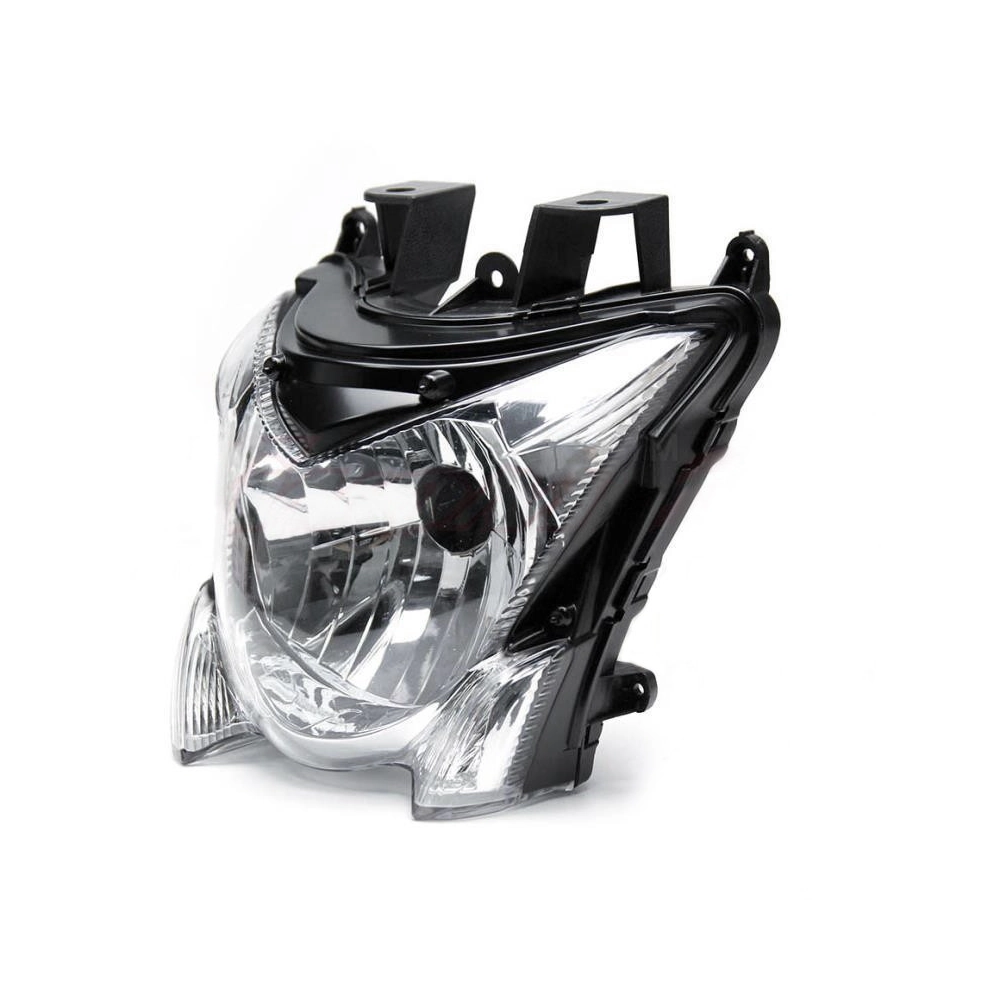
 Suzuki GSX-S1000 15-18 Headlight

Aliwheels stocks the Suzuki GSX-S1000 15-18 Headlight, designed as a direct replacement for your exact model and year range. Starting with a properly fitted housing means that any bulb upgrade you add afterward, LED or otherwise, has a much better chance of seating correctly and performing as it should.

Steps to a Better Night Riding Setup

  1. Confirm which variant you own, the standard GSX-S1000 or the F model, since bulb types differ between them.
  2. Replace the headlight assembly with a properly fitted unit for your year.
  3. Choose a quality LED bulb rated specifically for motorcycle use, not automotive kits repurposed for bikes.
  4. Check the connector type before installing, since two-prong and three-prong setups aren’t interchangeable.
  5. Adjust your headlight aim after installation. Most bikes have adjustment screws or gears accessible from the front of the housing.
  6. Test ride at night before a long trip to confirm that both brightness and beam alignment feel right.

Headlight Alignment: Don’t Skip This Step

Several forum threads reveal that riders assumed their upgrade wasn’t working, when the real issue was simply a misaligned headlight. Locate your adjustment mechanism, usually either a screw-style or gear-and-notch style adjuster depending on your model year, and take the time to properly aim your beam before judging whether your upgrade actually helped.

If you’re unsure how to access the adjusters, most bikes have them positioned at the top or side of the headlight housing, reachable without removing the front fairing.

GSX-S1000 headlight alignment

Browse More Suzuki GSX-S1000 Parts

If you’re upgrading your lighting setup, it’s worth checking your other electrical components while you’re at it. Aliwheels stocks fitment-matched parts for your exact GSX-S1000 model year, helping you avoid the trial and error many riders go through sourcing parts elsewhere.

Conclusion

The GSX-S1000’s dim headlight isn’t a rare complaint. It’s a well-documented, years-long topic among owners who ride at night and want better visibility. The stock reflector housing and halogen bulb simply weren’t built for serious night riding.

Start with a properly fitted headlight assembly for your exact model, add a quality LED bulb, and take the time to align it correctly. Riders who’ve made this upgrade consistently report a night-and-day difference, literally, in how confident they feel on unlit roads.

(Commenting: OFF)

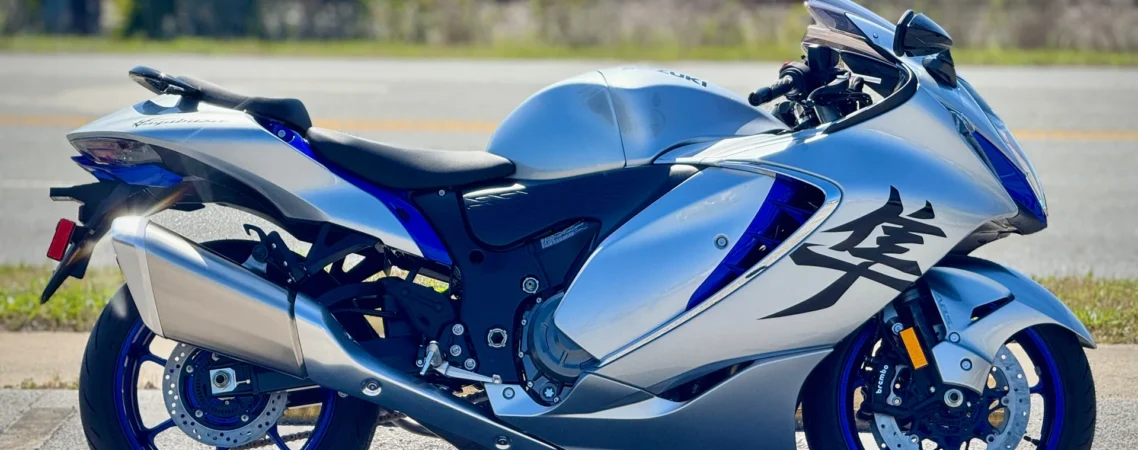
Since its debut in 1999, the Suzuki Hayabusa has earned a reputation as one of the most reliable high-performance motorcycles ever built. Across three generations, it has combined immense power with durability that few hypersport bikes can match. Even so, no motorcycle is immune to wear, and the Hayabusa has a handful of well-known issues that owners encounter over time.

This guide covers the most common Suzuki Hayabusa problems reported across Gen 1 (1999-2007), Gen 2 (2008-2020), and Gen 3 (2021-present). We’ll explain what causes them, the warning signs to watch for, and how to prevent minor issues from becoming expensive repairs. Whether you already own a Hayabusa or are thinking about buying one, understanding these common faults can help you keep the bike reliable for years to come.

Aliwheels stocks Hayabusa-specific parts, including speedometer clusters for all three generations. Browse the complete Suzuki Motorcycle Parts category for all Hayabusa parts & accessories. 

And for background context on how the Hayabusa is as a machine, the existing Suzuki Hayabusa Pros and Cons Guide on the Aliwheels blog covers the ownership considerations from a buyer’s perspective.

The Hayabusa’s Reputation vs. Reality

The Suzuki Hayabusa is widely regarded as one of the most dependable hypersport motorcycles ever built, especially considering its 1,300cc-plus engine and superbike-level performance. With regular maintenance, many Hayabusas cover well over 100,000 miles without major engine problems.

That said, reliability doesn’t mean the bike is maintenance-free. Most common Hayabusa issues fall into three areas: electrical problems, particularly involving the charging system; normal mechanical wear from a high-performance engine; and reliability issues caused by aftermarket modifications or poor maintenance. Knowing what to watch for helps prevent small problems from turning into expensive repairs.

Problem #1: Instrument Cluster or Speedometer Problems

Instrument cluster and speedometer faults are among the most commonly reported Hayabusa issues across all three generations. While Suzuki has refined the electronics over the years, age, vibration, and electrical wear can still cause display or speedometer problems.

On Gen 1 models (1999-2007), the speedometer may read erratically or stop working altogether. In many cases, the culprit isn’t the instrument cluster itself but a faulty front wheel speed sensor or a corroded wiring connector. Inspecting and cleaning the connector should always be the first step before replacing any components. If the cluster has failed, ensure the replacement matches your model year and generation.

The Suzuki Hayabusa Speedometer 1999-2007 is available at Aliwheels, certified and tested, covering the complete Gen 1 production run.

Gen 2 (2008-2020): Instrument cluster problems typically appear as a failed backlight, intermittent LCD, or a completely blank cluster. High-mileage bikes can develop cracked solder joints from years of engine vibration. Because the Gen 2 instrument cluster is a sealed unit, replacement is generally the most reliable repair rather than attempting to fix individual components.

The Suzuki Hayabusa Speedometer GSXR1300 2008-2020 covers the complete Gen 2 range at Aliwheels.

Gen 3 (2021-Present): Instrument cluster failures are uncommon, but the TFT display is integrated with the bike’s electronics, including the IMU and rider aids. If display issues occur, proper diagnosis with Suzuki diagnostic equipment is recommended before replacing any components. 

GenerationCluster TypeCommon FailureAliwheels Part
Gen 1 1999-2007Analogue + digitalSpeed sensor/connectorSpeedometer 1999-2007  
Gen 2 2008-2020Analogue + digitalBacklight/solder jointsSpeedometer 2008-2020
Gen 3 2021+Full TFTRare: dealer diagnosisConsult support
Hayabusa speedometer problem

Problem #2: Charging System Problems (Gen 1 & Gen 2)

Charging system failures are a well-known issue on Gen 1 (1999-2007) and some Gen 2 (2008-2020) Hayabusas. The stator and rectifier/regulator generate significant heat, and over time this can lead to charging problems.

Common symptoms include a battery that won’t stay charged, charging voltage below 13V at idle, or above 15V while riding, which often points to a failing regulator. In more severe cases, the stator can overheat and burn out.

On high-mileage Gen 1 models, replacing the rectifier/regulator is often considered preventative maintenance by experienced owners. Before buying a new battery, always test the charging system. A battery that repeatedly goes flat is usually the result of a faulty stator or regulator, not the battery itself.

Problem #3: Oil Consumption on High-Mileage Gen 1 Models

High-mileage Gen 1 Hayabusas (1999-2007), particularly those with 60,000 miles or more, may begin consuming oil as the valve guide seals wear. This is a common age-related issue rather than a sign of major engine failure.

If you find yourself topping up the oil between service intervals, monitor the consumption closely. Excessive oil use should be investigated, with worn valve guide seals being one of the most common causes on older, higher-mileage engines.

Problem #4: Clutch Wear on High-Mileage or Modified Bikes

The Hayabusa’s clutch is durable in stock form, but high mileage and engine modifications can significantly accelerate wear. Bikes with performance upgrades place much greater demand on the clutch, shortening its service life.

Common signs include clutch slip under hard acceleration, difficulty shifting smoothly, and changes in clutch lever feel or engagement point. If these symptoms appear, inspect the clutch pack before the problem worsens.

For replacement of clutch components, browse the Suzuki Hayabusa parts range at Aliwheels.

Problem #5: Crash and Frame Slider Damage

While not a mechanical fault, crash-related damage is common among Hayabusa owners. The bike is a popular choice for track days and performance riding, where even a minor tip-over or low-side can damage fairings, engine covers, and frame-mounted components.

Inspect frame sliders and engine case protectors after any incident, and replace damaged body panels promptly to maintain proper fitment and protection. Aliwheels stocks a wide range of Suzuki Hayabusa bodywork, crash protection, and replacement components.

Hayabusa Parts at Aliwheels

Hayabusa parts at Aliwheels

Whether you’re maintaining a stock Hayabusa or repairing a high-mileage machine, Aliwheels offers a wide range of Suzuki Hayabusa parts across all generations. Browse the Suzuki Motorcycle Parts collection for model-specific components, and contact the support team for fitment confirmation by year and generation before ordering. Free worldwide shipping is available on orders over $300.

Conclusion

The Suzuki Hayabusa has earned its reputation as one of the most reliable hypersport motorcycles ever built. With routine maintenance, many examples cover exceptionally high mileages without major engine issues. The most common problems involve the charging system, instrument cluster, oil consumption on older Gen 1 models, and clutch wear on modified bikes. Addressing these issues early helps preserve the Hayabusa’s performance, reliability, and long-term value for years to come.

Frequently Asked Questions

Q: Is the Suzuki Hayabusa reliable for daily riding?
A: Yes. With regular maintenance, the Hayabusa is one of the most reliable hypersport motorcycles available. Routine servicing and early attention to common issues help keep it dependable for daily use.

Q: What is the most common Suzuki Hayabusa problem?
A: Instrument cluster and speedometer issues are among the most frequently reported problems. On Gen 1 models, the cause is often a faulty speed sensor or corroded connector, while Gen 2 models are more prone to backlight or display failures.

Q: How many miles can a Suzuki Hayabusa last?
A: A well-maintained Hayabusa can easily exceed 100,000 miles. Many Gen 1 and Gen 2 owners report 80,000 to 150,000 miles on the original engine with proper servicing.

Q: Why is my Gen 1 Hayabusa speedometer not working?
A: The most common causes are a faulty front wheel speed sensor or a corroded electrical connector. Inspect and clean the connector before replacing the sensor or instrument cluster.

Q: Where can I buy Suzuki Hayabusa replacement parts?
A: Aliwheels offers a wide selection of Suzuki Hayabusa parts, including instrument clusters, clutch components, bodywork, and other model-specific replacement parts for all three generations.

(Commenting: OFF)

The Suzuki Hayabusa has been one of the most iconic performance motorcycles in the world since 1999. It has gone through three distinct generations, each with a different instrument cluster design and specification. When a Hayabusa speedometer fails, needs calibration, or a rider wants to upgrade the display quality, getting the right replacement requires knowing exactly which generation you own and what the fitment constraints are.

This is the complete guide to Hayabusa speedometer replacement and upgrade across all three generations. Browse Aliwheels’ Suzuki Motorcycle Parts category for Suzuki and Hayabusa-compatible parts.

The Three Hayabusa Generations: How They Affect Speedometer Fitment?

Generation 1 (1999 to 2007):
The original GSX1300R used a simple analog instrument cluster with separate round dials. The speedometer was a standalone unit, and depending on the year, it was either cable-driven or electronic. Early models from 1999 to 2001 used a mechanical speedometer cable, while later versions moved mostly to electronic speed sensing in many markets.

Generation 2 (2008 to 2021):
This version kept the classic Hayabusa design but upgraded the instrument cluster to a mix of analog and digital displays. The speedometer is fully electronic and built into a combined cluster that also shows fuel level, gear position, and warning lights. Because of this integrated design, you cannot replace just the speedometer on its own. The entire cluster must be replaced if needed.

Generation 3 (2021 onward):
The latest Hayabusa features a fully digital 6.5-inch TFT display. It is the most advanced system of all three generations. In many cases, replacing or recalibrating the cluster requires specific diagnostic tools due to its electronic complexity.

Hayabusa Speedometer Failure Causes

Gen 1 models:
The most frequent issue is failure of the electronic speed sensor. This sensor is usually located on the front wheel or transmission output and sends signals to the cluster. When it fails, the speedometer may drop to zero or behave erratically. The good news is that it is a separate, replaceable part, so the full cluster does not need to be changed.

Gen 2 models:
Problems here are often related to the instrument cluster itself. Common causes include corrosion in the connectors due to water ingress, backlight LED failure that makes the display hard to read, or internal electronic issues caused by vibration over time, which can crack solder joints in high-mileage bikes.

Gen 3 models:
The TFT display is the most sensitive component. Damage can come from impacts, extreme heat or cold, or water ingress. Because the cluster is integrated with ride modes and IMU systems, replacement or repair usually requires Suzuki dealer diagnostics and proper calibration.

GenerationYearsSpeedometer TypeCommon FailureReplacement Approach
Gen 11999-2007Analogue (electronic from 2002)Speed sensor failureSensor replacement first; cluster if sensor is fine
Gen 22008-2021Analogue + digital combinedConnector corrosion, backlightFull cluster replacement
Gen 32021+Full TFT digitalScreen damage, softwareDealer diagnosis recommended
Hayabusa Gen 1 2 3 speedometer failure causes

Gen 1 Hayabusa Speedometer: What to Check Before Replacing?

Before purchasing a replacement speedometer cluster for a Gen 1 Hayabusa, check these two things first. They resolve the majority of speedometer issues without requiring cluster replacement.

Check the speed sensor. The front wheel speed sensor on 2002-onward Gen 1 models is located at the front wheel hub. Disconnect and inspect the connector for corrosion. Spray with electrical contact cleaner, reconnect, and test. A corroded connector accounts for a significant proportion of speedometer zero-reading faults. Replacement sensors are a fraction of the cost of a full cluster.

Check the connector at the instrument cluster. The multi-pin connector at the back of the Gen 1 Hayabusa instrument cluster is a known corrosion point. Remove, clean with electrical contact cleaner, apply dielectric grease to the pins, and reconnect before condemning the cluster itself.

If both checks fail to resolve the issue, the cluster itself needs replacement. For a Gen 1 Hayabusa, quality aftermarket speedometer clusters are available at significantly lower cost than OEM dealer pricing and offer equivalent functionality.

Gen 2 Hayabusa Speedometer Replacement Considerations

The Gen 2 Hayabusa instrument cluster is a sealed unit. When replacing, confirm the replacement cluster matches your specific model year, as Suzuki made mid-production changes to the cluster specification within the 2008 to 2021 production run.

Clusters from 2008 to 2012 and 2013 to 2021 have different connector configurations in some markets. Always confirm the specific year and market specification before ordering.

Quality aftermarket Gen 2 clusters typically retain all original functions, including the gear indicator, fuel gauge, and warning light integration.

However, you should always confirm that the replacement unit includes the full wiring harness connector. Some aftermarket clusters require you to transfer the original connector from the damaged unit, which can increase installation time and complexity.

Speedometer Calibration After Replacement

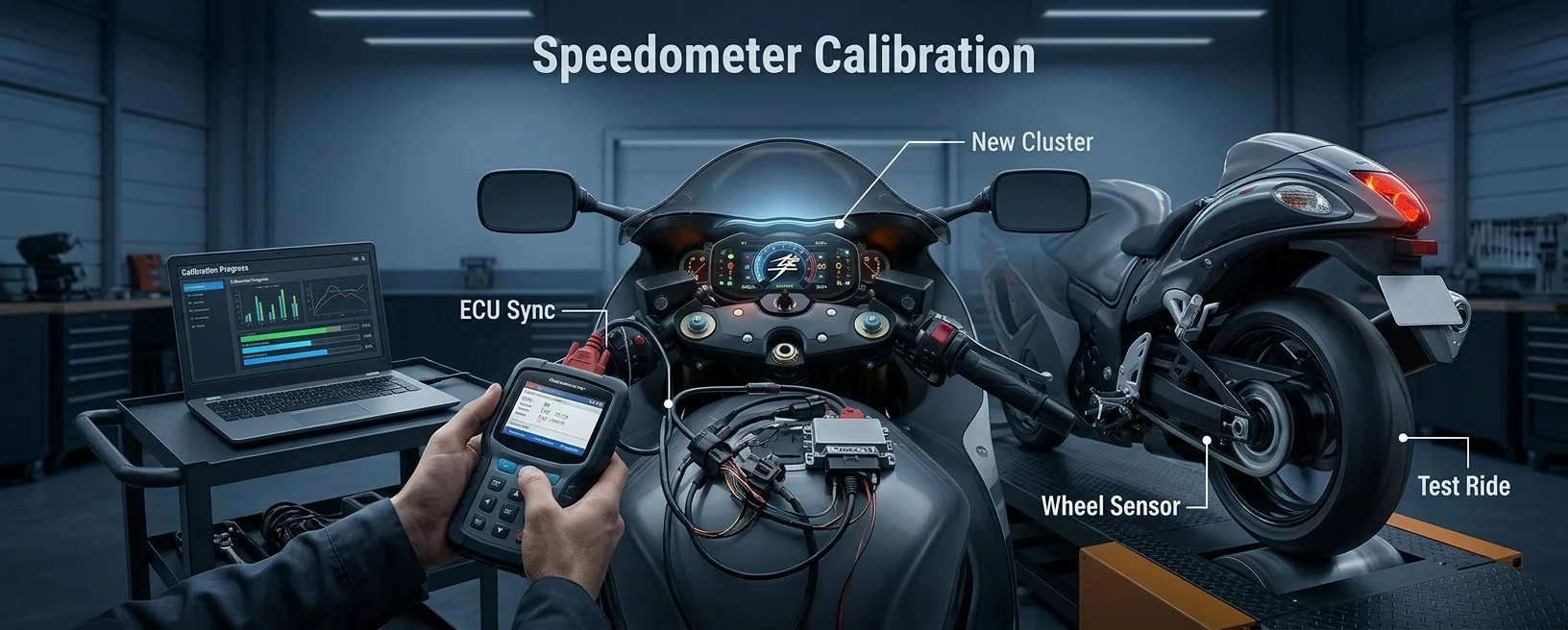
Any speedometer replacement may require calibration if the replacement unit is from a different model year or uses a different pulse count configuration than your original unit. On Gen 1 models, calibration is performed through a specific button sequence documented in the Hayabusa service manual. On Gen 2 models, calibration is typically not required for like-for-like cluster replacements but may be needed if the replacement unit is from a different market specification.

Incorrect speedometer calibration can cause the speed reading to be consistently higher or lower than your actual speed.

This is not only a legal concern. It also affects other systems, including fuel consumption readings, trip computer accuracy, and any built-in speed-related warning functions in the electronics.

Find Suzuki Hayabusa dashboard components on Aliwheels Suzuki motorcycle parts category page. For fitment confirmation by generation and specific year, the support team confirms compatibility 24/7 before your order ships. Free worldwide shipping applies on orders over $300.

Suzuki Hayabusa speedometer calibration process

Conclusion

Hayabusa speedometer replacement depends heavily on the generation, so correct fitment is very important.

For First Gen models, most issues can be solved by checking or replacing the speed sensor, so a full cluster replacement is rarely needed.

On Second Gen models, you must match the exact year and market specification when replacing the cluster, since units are not universally interchangeable.

On Third Gen models, any instrument issue should be checked with dealer diagnostics first before ordering parts due to system integration and calibration requirements.

Overall, the Hayabusa owner community is very detailed and reliable, so it is a good idea to confirm symptoms on generation-specific forums before buying any replacement parts.

Frequently Asked Questions

Q: My Gen 1 Hayabusa speedometer reads zero at all speeds. What is the most likely cause?

A: On 2002 onward Gen 1 Hayabusa models, a speedometer reading of zero at all speeds is most commonly caused by a failed or corroded front wheel speed sensor or its connector rather than a failed instrument cluster. Check and clean the sensor connector first. This is a $10 fix if it resolves the fault, versus $150 or more for a cluster replacement. Only replace the cluster if the sensor and connector are confirmed functioning.

Q: Can I swap a Gen 1 Hayabusa speedometer cluster with one from a different year?

A: Gen 1 clusters (1999 to 2007) are generally interchangeable within the generation, but confirm whether your specific year uses a mechanical cable drive (1999 to 2001 in some markets) or electronic speed sensing (2002 onward) as these are not interchangeable. Electronic sensing clusters from any Gen 1 year are compatible with other Gen 1 electronic years.

Q: Will an aftermarket Hayabusa speedometer cluster affect my insurance or roadworthiness?

A: A quality aftermarket speedometer cluster that maintains correct speed accuracy and all original warning light functions is legally equivalent to an OEM replacement in most US states. The key legal requirement is accurate speed display within the tolerance specified by your state’s vehicle equipment regulations — typically plus or minus 10%. Always confirm calibration accuracy after any speedometer replacement.

Q: My Gen 2 Hayabusa gear indicator stopped working but the speedometer is fine. Are these separate?

A: On the Gen 2 Hayabusa, the gear indicator and speedometer are on the same cluster unit but use different input signals. The gear indicator uses a separate signal from the transmission. If the speedometer functions correctly but the gear indicator does not, the fault is likely in the gear position sensor or its wiring rather than the instrument cluster itself. Diagnose the gear position sensor before replacing the cluster.

Q: How long does a Hayabusa instrument cluster typically last?

A: With normal use and no physical damage or water ingress, a Hayabusa instrument cluster can last the full life of the bike. The most common causes of premature failure are connector corrosion from water exposure (most common), vibration-induced solder joint cracking on high-mileage bikes, and backlight component failure on Gen 2 units. Regular connector maintenance with dielectric grease significantly extends cluster service life.

(Commenting: OFF)

So you ride your Suzuki every day. Rain, traffic, summer heat, and winter cold. Your bike does not get a break.

That is a lot to ask from any motorcycle. And honestly, Suzuki handles it well. The SV650, GSX-S series, V-Storm, and Boulevard are all solid daily riders. But here is the thing. Daily riding wears parts out faster than weekend riding. Honestly, much faster.

If you want your Suzuki to keep showing up for you every morning, you need to know this.  First, which Suzuki motorcycle parts should you watch? When to replace them? Let’s go through it.

Brake pads wear out faster 

City riding is brutal on brakes. You are stopping at every light, slowing for traffic, braking hard when someone cuts you off.

If you ride 30 to 40 miles a day in city traffic, your brake pads can wear down in 8,000 to 10,000 miles. That sounds like a lot until you realize a daily commuter covers that in under a year.

Do not wait for the grinding noise. By that point, you are damaging the rotor. Check pad thickness every 3,000 miles. Once you are down to 2mm, it is time to replace them.

And while you are at it, flush your brake fluid once a year. Daily riding means more heat cycles, more moisture in the fluid, and faster degradation. Fresh fluid keeps your braking feel sharp and protects the internals of your calipers.

Your chain needs more attention 

Here is the truth. Most daily riders do not lube their chain often enough.

In dry conditions, lube every 500 miles. After rain, lube the same day. Do not leave a wet chain sitting overnight without protection. It will rust and wear faster than you can imagine.

Check tension every week if you ride daily. Chain tension changes faster on a commuter than on a weekend bike simply because of the miles.

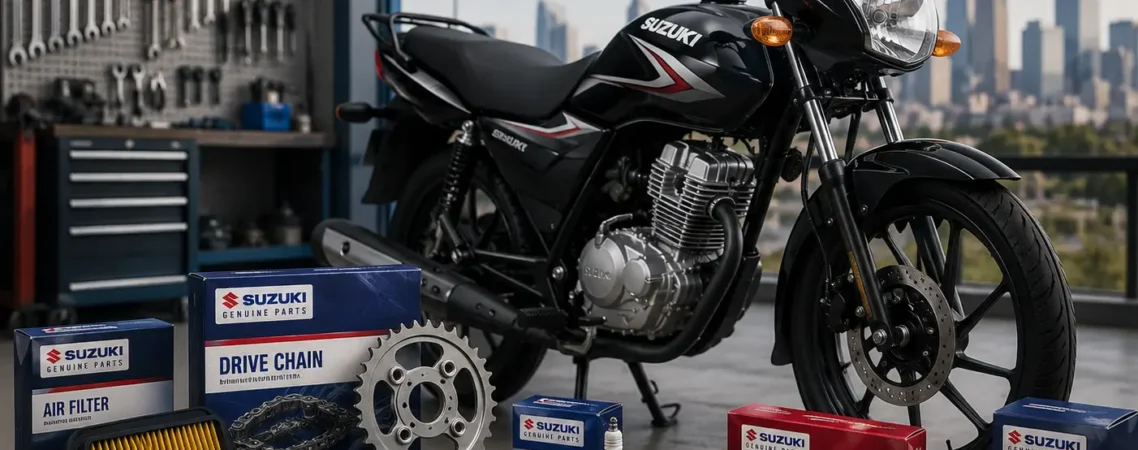
Expect to replace the chain and sprockets together every 12,000 to 15,000 miles if you are riding hard in city conditions. Budget for it. It is not a surprise if you know it is coming.

The good news is that Suzuki chains are widely available and not expensive. Staying on top of it is easy once it becomes a habit.

The Air Filter Is Cheap, and People Ignore It

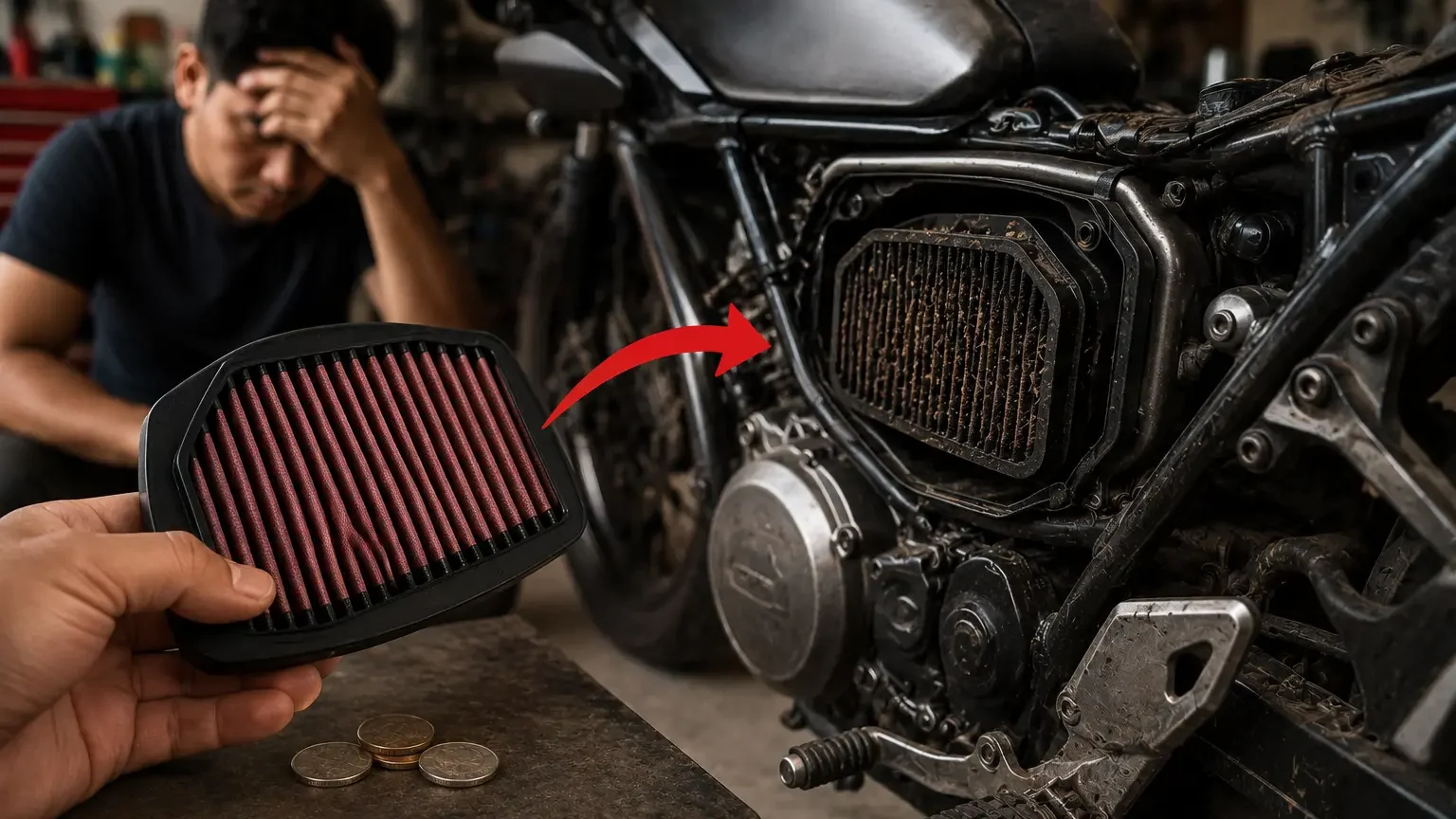
Seriously, the air filter might be the most ignored part on a daily commuter.

When it gets clogged, your throttle response goes dull. The bike hesitates when you crack it open. Fuel consumption goes up. It just feels lazy and slow.

Replace it every 8,000 to 10,000 miles under normal conditions. If you ride through dusty areas or near construction zones, check it every 5,000 miles.

It takes maybe fifteen minutes to replace. It costs almost nothing. And the difference in how the bike feels afterward is immediate. There is really no excuse to skip this one.

The Air Filter Is Cheap, and People Ignore It

Oil Changes More for Short Commutes

Here is something a lot of daily riders do not think about. Short trips are harder on engine oil than long ones.

When your commute is under 15 minutes, the engine never fully warms up. Moisture and fuel vapors mix into the oil and never burn off properly. Over time, this degrades the oil much faster than a long highway run would.

If your daily commute is short, do not stretch to the standard 4,000-mile interval. Change oil every 2,500 to 3,000 miles instead.

Full synthetic oil is worth it for a daily commuter. It flows faster on cold starts, protects better through heat cycles, and handles the stop-and-go demands of city riding more effectively than conventional oil.

Your engine will thank you for it with a long and trouble-free life.

Tires for American Roads

Let’s be honest. American city roads are not smooth. Potholes, cracked asphalt, road patches, and debris are part of every commute.

Pure sport tires are not the right choice for daily riding. They wear fast, they hate cold mornings, and their wet grip is not confidence-inspiring in the rain.

Sport touring tires are the sweet spot for Suzuki daily riders. They last two to three times longer than sport tires, grip well in wet conditions, and handle the abuse of daily road surfaces without falling apart quickly.

Check tire pressure every single week. Not monthly. Weekly. Correct pressure affects grip, wear rate, fuel consumption, and how the bike handles. It takes two minutes and it matters every ride.

Clutch Plates on a City Commuter

The clutch on your Suzuki is tough. But city riding works it harder than highway riding.

Slow traffic, filtering lanes where it is legal, constant light-to-light starts. All of that adds up. You will notice the clutch starting to slip under hard acceleration or feel inconsistent in its engagement before it fully wears out.

One important thing here. Use the right oil. Some automotive oils contain friction modifiers that cause wet clutch slipping on Suzuki bikes. Always check that your oil is compatible with wet clutch systems before using it. This is one of the most common and easily avoidable mistakes daily riders make.

Spark Plugs Are Easy to Forget

A daily rider covers more miles per year than almost any other type of motorcyclist. You hit your spark plug service interval faster.

Suzuki recommends inspection around 7,500 miles on most models. For a daily commuter doing 10,000 miles a year, that comes around quickly.

City riding with its cold starts and low-speed running can foul plugs faster than highway use. A fouled plug causes rough idle, poor throttle response, and reduced fuel economy. None of those are things you want on your morning commute.

When you pull the plugs to inspect them, read what they are telling you. Light tan color is healthy. Black and sooty means rich running. White and chalky means lean. Oil fouling means something more serious needs investigating.

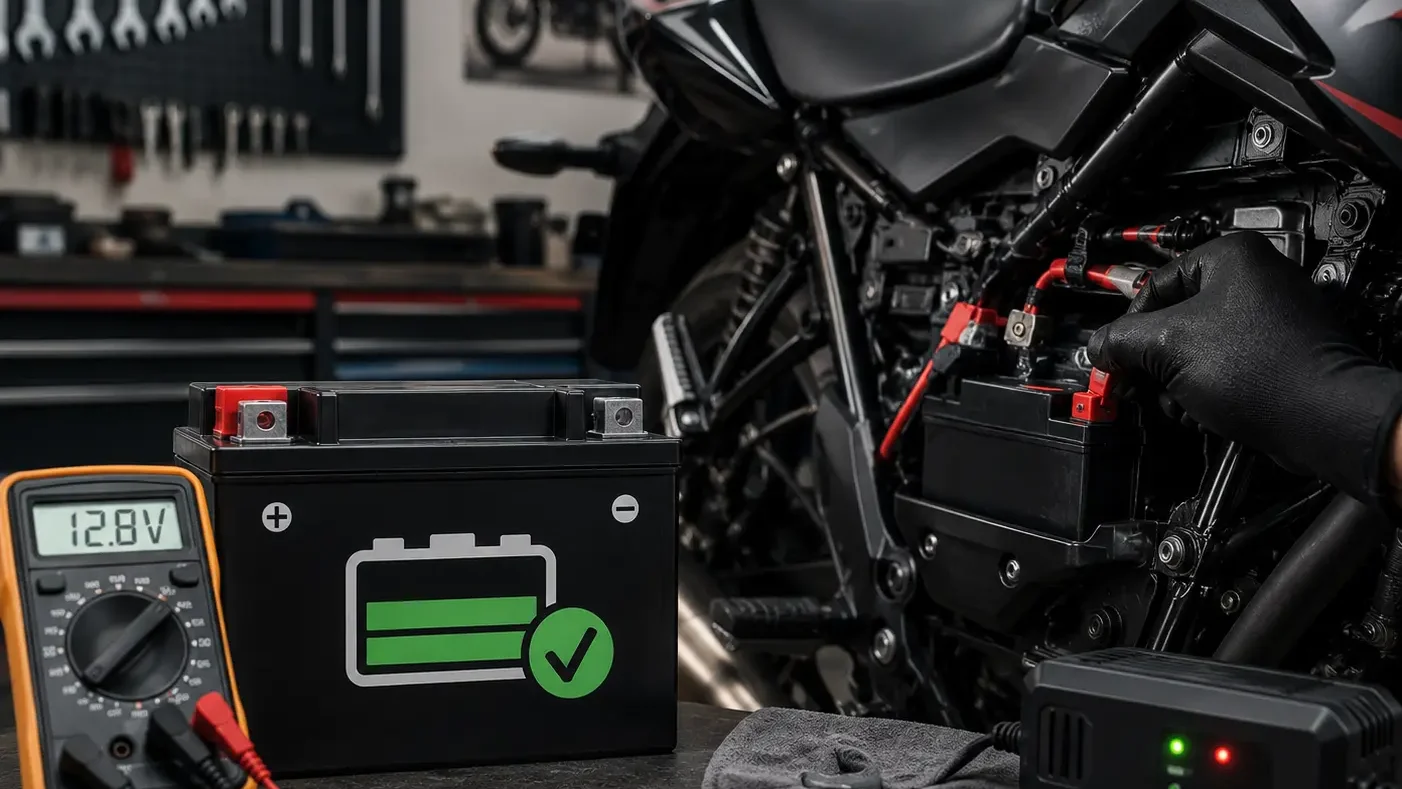
Keep your Battery Healthy

If you depend on your Suzuki to get to work, a dead battery is not just inconvenient. It wrecks your whole morning.

Clean the battery terminals twice a year. Corrosion builds up slowly and reduces starting performance, sometimes without being obvious until it is too late.

Check your charging voltage with a multimeter once a year. At 3,000 to 4,000 RPM you should see 13.5 to 14.8 volts at the battery. Outside that range, something in your charging system needs attention.

If you park outdoors in winter, a battery tender overnight makes a real difference. Cold weather reduces battery capacity noticeably. Starting a cold engine with a half-charged battery every morning shortens battery life fast.

Keep your Battery Healthy

Getting the Right Parts

Here is the thing about daily riding. You cannot afford to use cheap, poorly fitting parts. Your bike is your transport. It needs to work every day without fail.

Quality Suzuki motorcycle parts that match your specific model and year give you reliable performance and a correct fit. Always confirm compatibility with your exact year before ordering. Suzuki updates specifications across model years, even on bikes that look identical from the outside.

The cost of quality parts over a year is small. The cost of a breakdown on a bike you depend on daily is much bigger.

Conclusion 

Daily riding is the most demanding thing you can do to a motorcycle. It is also one of the most rewarding ways to use one.

Your Suzuki can handle the daily grind for years and years. But only if you give it what it needs regularly. Stay on top of the basics. Use good parts. Keep a simple service log.

Do that, and your Suzuki will be there every single morning, ready to go.

Find quality Suzuki motorcycle parts for daily riders at Aliwheels.

(Commenting: OFF)

Or login with your social account