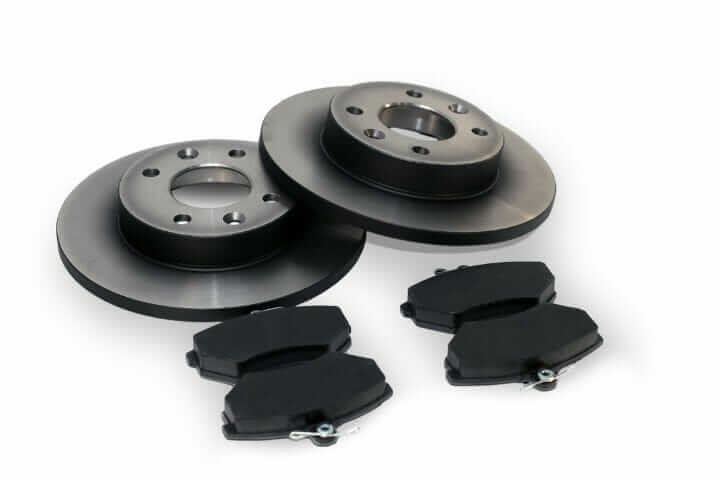



bikerbiker Aliwheels is a leading motorcycle parts supplier offering free shipping anywhere in the world on orders above $300. Please note that all of our motorcycle parts and accessories are certified and tested. With more than 10,000* products to choose from this is your one place to get the motorcycle part you need. Browse our vast inventory of motorcycle radiators, fairings, clutch plates, headlights, chains, and sprockets. biker

Free Shipping over $300

Support 24/7

Secure Payments

Hot Offers

Let’s be honest for a second. Brakes are the most important safety system on your motorcycle. Everything else, the engine, the suspension, and the tires, helps you go and turn. But at the end of the day, brakes are what keep you alive when something goes wrong.

And yet, most riders ignore them until something sounds or feels seriously wrong.

Do not be that rider.

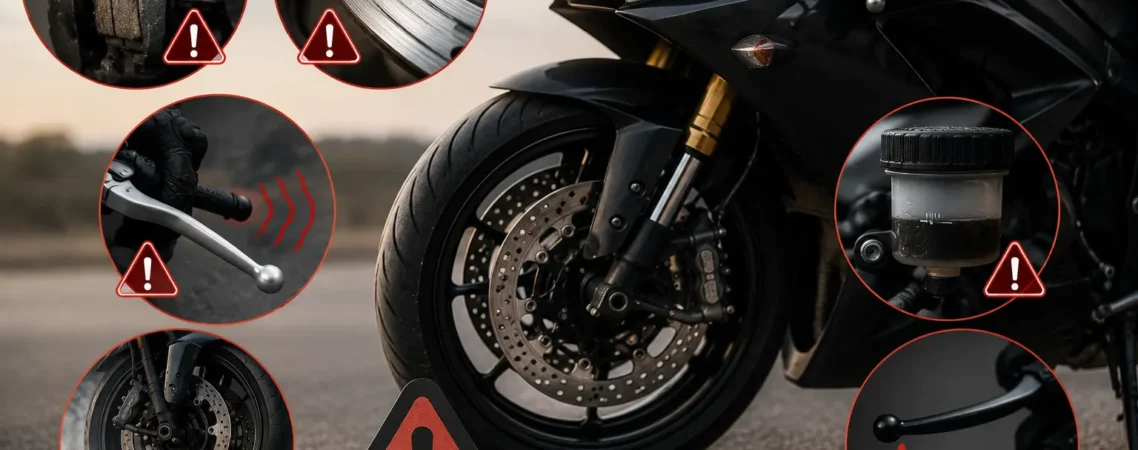
So here are the top signs that your motorcycle brake pads need attention. Learn to recognize them early and act before a small problem turns into a dangerous one.

Hearing Squeal Every Time You Brake

Now, a little squeal on a cold morning is nothing to worry about. That usually goes away after the first stop or two once everything warms up.

But if your brakes squeal every time you use them, that is your first real warning sign.

Here is why that happens. Most brake pads have a small metal wear indicator built right into them. When the pad wears down close to its limit, that metal indicator touches the rotor and creates that high-pitched squeal on purpose. It is literally designed to get your attention.

So when you hear it regularly, do not ignore it. You still have a little time left at that point, but not much. Act on it sooner rather than later.

Gradually, squealing turned into grinding.

If you missed the squealing stage, the next sound you will hear is grinding. And unlike squealing, grinding is not a warning anymore. It means the pad material is completely gone.

At that point, metal is pressing directly against your rotor with every stop. Every time you brake, you are grinding away the rotor surface. What started as a simple pad replacement has now become a much more expensive job.

Grinding brakes are genuinely dangerous. Stopping distances increase. Braking becomes unpredictable. In an emergency stop situation, that is the last thing you want.

So if you hear grinding, do not ride to the shop tomorrow. Ride there today.

The Brake Lever Feels Soft or Spongy

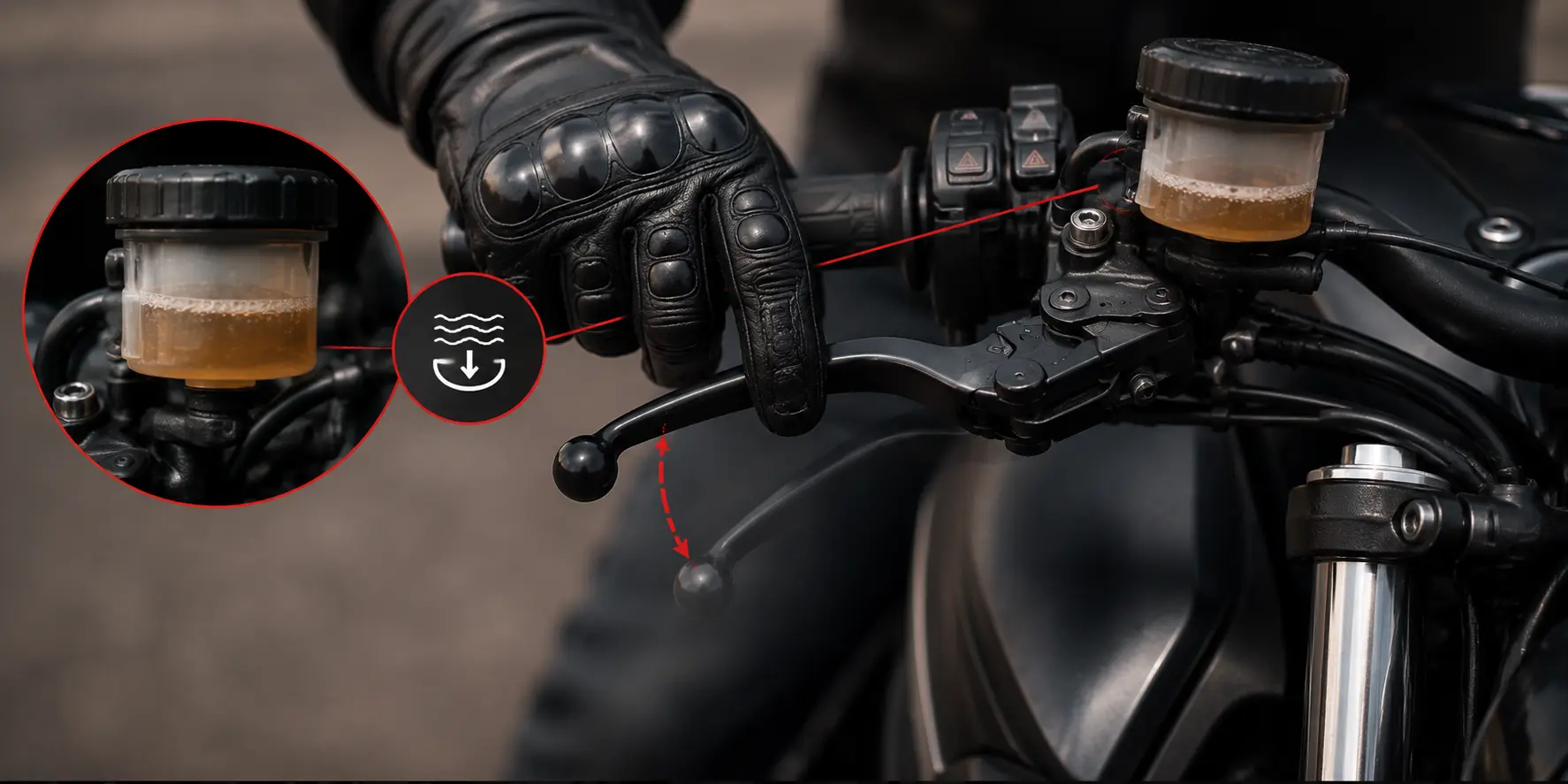
This one is a bit more subtle but just as important. Go ahead and squeeze your front brake lever right now. It should feel firm and resist your hand almost immediately.

If instead it feels soft or spongy or travels further than usual before the brake actually engages, something is wrong with your hydraulic system.

The most common cause is air in the brake lines. Air compresses, and brake fluid does not. So when air gets into the system, your lever pressure goes into compressing that air instead of pushing the pads against the rotor.

Another cause is old, moisture-contaminated brake fluid. Over time, brake fluid absorbs water from the atmosphere. As a result, the boiling point of the fluid drops significantly. Under hard braking, that contaminated fluid can actually boil and create gas bubbles. Those bubbles compress just like air, and suddenly your brakes stop working properly right when you need them most.

If your lever feels spongy, bleed the brakes and replace the fluid. It is a straightforward fix and well worth doing.
The Brake Lever Feels Soft or Spongy

Bike Pulls to One Side When Braking

So you squeeze the brake, and the bike drifts left or right without you steering it that way. That is called “brake pull,” and it is a clear sign that something is uneven in your braking system.

Usually, this happens because of a stuck or seized caliper piston. When one side of the caliper is not releasing properly, that wheel brakes harder than the other. The result is the bike pulling toward the side with more braking force.

It can also happen because of oil or chain lube contamination on one rotor. A contaminated rotor loses grip on that side, so the other side brakes harder by comparison.

Either way, brake pull is not something to ride through and hope it fixes itself. At higher speeds, it makes the bike genuinely hard to control during emergency braking. Get it sorted as soon as you notice it.

Stopping Distances Got Longer

This one is easy to miss because it happens gradually. But think about it. You have been riding the same roads for months. You brake at the same spots. You know roughly where the bike stops.

If you start noticing the bike is not stopping where it used to, something has changed in your brake system.

Worn pads reduce the friction surface. Glazed rotors lose their bite. Old fluid reduces hydraulic efficiency under heat. Any one of these can quietly add several extra meters to your stopping distance.

And that extra distance, especially at city speeds, is the difference between stopping safely and hitting something. Trust your instincts on this one. If the bike does not stop the way it used to, do not wait to find out why.

The Pads Are Worn Down

Sometimes the simplest sign is also the most obvious. Just look at the brake pads.

On most motorcycles, you can see the pad thickness without removing anything. Look through the caliper and find the pad material sitting against the rotor. The minimum safe thickness is around 2mm. If you are at or below that, replace them now.

Also, check both sides of the caliper. Sometimes one pad wears faster than the other. Uneven wear usually points to a sticky caliper piston that is not releasing evenly. Replacing the pads without fixing the caliper just means the new pads will wear unevenly, too.

Rotor Looks Scored or Feels Rough

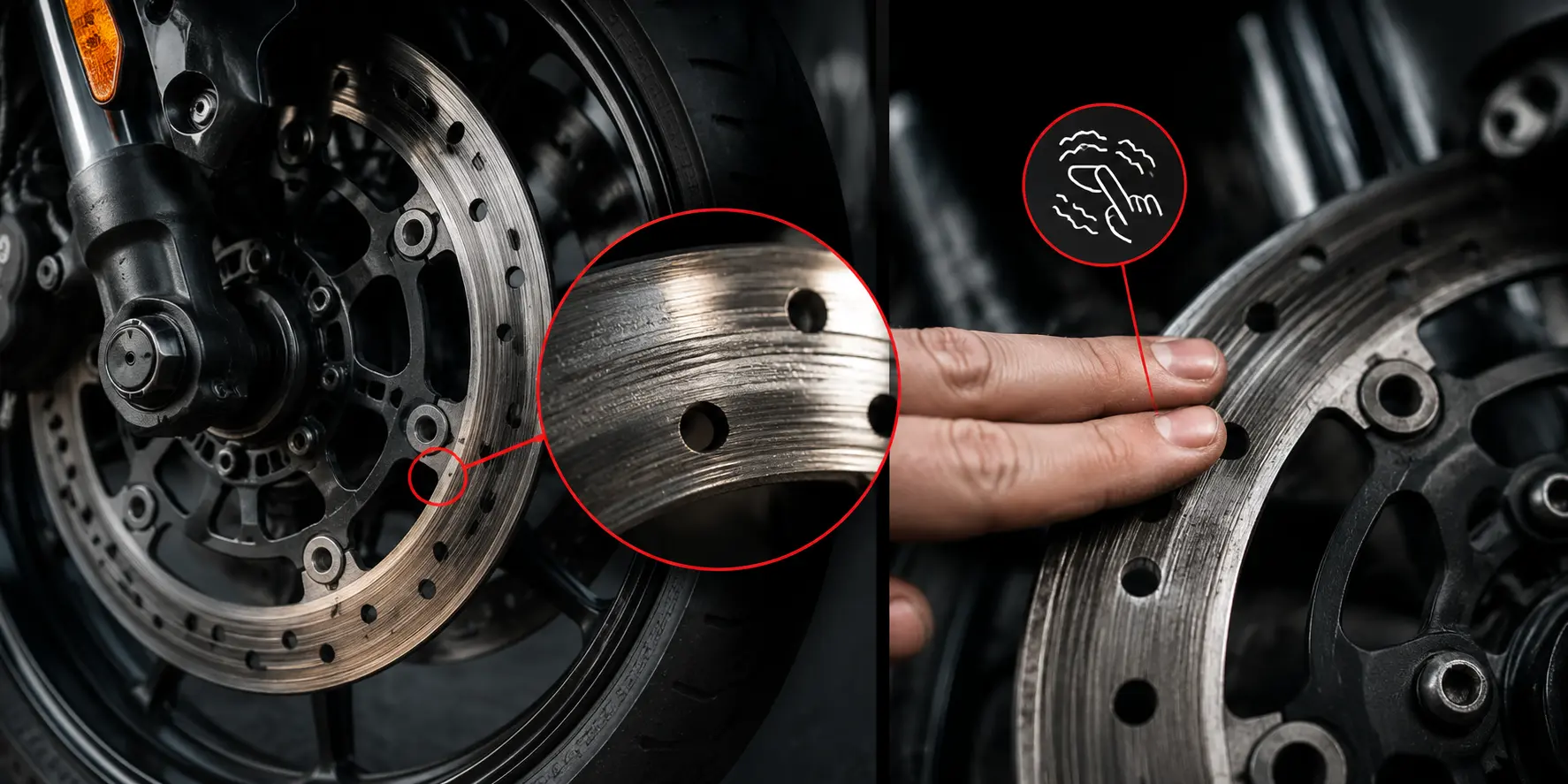
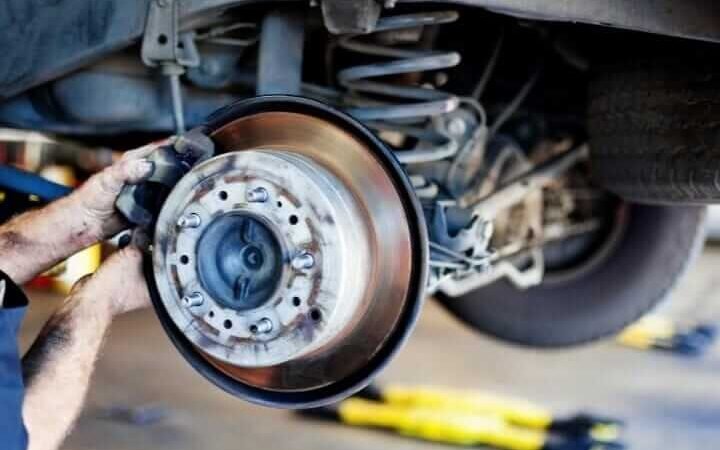
While you are looking at the pads, take a close look at the rotor as well. A healthy rotor has a smooth, even braking surface. You might see light circular marks from normal use, but the surface should feel and look consistent.

If you see deep grooves, heavy scoring, or uneven wear patterns, the rotor surface is compromised. Deep grooves reduce the effective contact area between the pad and rotor. That means less friction and longer stopping distances.

Also, run your fingertip lightly across the rotor surface. If it feels significantly ridged or rough, it has worn unevenly. At that point, a new rotor is not optional.

Furthermore, every rotor has a minimum thickness stamped on it. If your rotor is near or below that number, replace it regardless of how the surface looks.
How Often Should You Check Brakes?

Honestly, more often than most riders do.

A quick visual check of pad thickness takes about two minutes during a wash or an oil change. Checking the lever feel costs you nothing; just squeeze it before every ride.

As a general rule, inspect pads every 5,000 km. Flush brake fluid every two years. Check rotor thickness any time you replace the pads. And always investigate immediately if you hear, feel, or notice any of the signs above.

Your brakes do not fail without warning. They give you plenty of signals first. The only question is whether you pay attention to them.

Conclusion

It’s not safe to gamble with brakes, and to be honest, brake maintenance is straightforward, inexpensive, and makes a difference to how safe your ride is.

If you recognize any of these signs on your bike right now, do not put it off. Sort it out before your next ride. Quality parts by Aliwheels.
(Commenting: OFF)

Front brake squeal is one of the most annoying motorcycle problems because it feels embarrassing, persistent, and confusing. You replace the brake pads expecting silence, yet the squeal comes back within days or never disappears at all. Many riders assume defective pads or poor-quality parts, but in reality, brake squeal is rarely caused by pads alone.

Persistent front brake noise is almost always the result of vibration, surface interaction, or improper brake system setup. Until the real cause is addressed, changing pads again and again will not solve the problem.

Understanding why front brake squeal won’t go away requires looking at the entire braking system, not just the friction material.

Why Motorcycle Front Brakes Squeal in the First Place?

Brake squeal happens when high-frequency vibrations occur between the brake pad and the disc rotor. When the pad contacts the rotor, microscopic vibrations are created. If these vibrations are not absorbed or dampened, they turn into the sharp squealing sound riders hear during braking.

Modern motorcycle brakes are extremely powerful, which also makes them more sensitive to vibration. Even a perfectly functional brake system can squeal if small conditions are wrong.

This is why front brake squeal is common even on new bikes and premium motorcycles.

New Brake Pads Do Not Automatically Fix Brake Noise

One of the biggest misconceptions is that installing new brake pads will eliminate squeal. In many cases, new pads actually make the noise worse.

Fresh pads have sharp edges and flat surfaces that have not yet bedded into the rotor. Until proper pad bedding occurs, uneven contact can create vibration and noise. Riders often panic during this break-in period and assume something is wrong.

However, if squeal continues long after bedding, the issue lies elsewhere.

New Brake Pads Do Not Automatically Fix Brake Noise

Glazed Brake Rotors Cause Persistent Squeal

A very common cause of front brake squeal that won’t go away is a glazed rotor surface. Glazing happens when the rotor overheats repeatedly, often due to aggressive braking, riding in traffic, or dragging the brake slightly while riding downhill.

A glazed rotor becomes smooth and hardened, preventing proper pad bite. Instead of gripping evenly, the pad skips across the surface, producing squeal.

Even brand new brake pads cannot grip a glazed disc correctly, which is why replacing pads alone fails to solve the issue.

Incorrect Pad Bedding Creates Long-Term Noise

Brake pad bedding is critical and often ignored. If pads are not bedded properly during the first few rides, uneven friction material transfer occurs on the rotor.

This uneven transfer creates high and low friction zones. As the brake engages, the pads vibrate across these zones, producing noise.

Improper bedding is one of the main reasons riders experience front brake squeal after pad replacement, especially on daily-use motorcycles.

Cheap or Hard Brake Pad Compounds Squeal More

Not all brake pads behave the same. Hard compound pads, including many low-cost aftermarket options, are more prone to squealing, especially at low speeds.

These pads last longer but do not absorb vibration well. As a result, they tend to squeal even when braking performance feels acceptable.

Softer organic or sintered pads usually offer quieter operation but may wear faster. Choosing the right compound for your riding style is essential.

Missing or Damaged Anti-Squeal Hardware

Most riders do not realize how important anti-squeal components are. Shim plates, backing plates, and pad springs are designed to absorb vibration and prevent noise.

If these components are missing, bent, incorrectly installed, or reused when worn out, brake squeal becomes almost guaranteed.

Many brake pad replacements fail because the old shims are not cleaned, greased, or reinstalled properly.

Caliper Issues That Cause Brake Noise

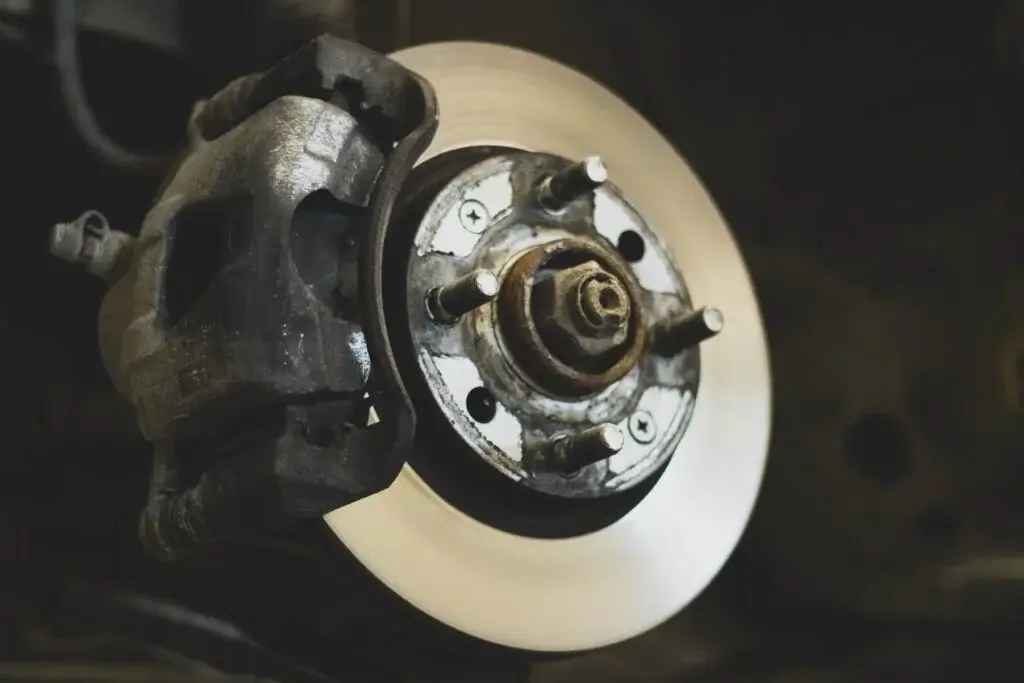
Brake calipers must move freely for quiet operation. If caliper guide pins are dirty, dry, or corroded, the pads do not retract evenly after braking.

This causes one pad to drag slightly on the rotor, leading to constant contact and squealing. Riders often mistake this for a pad issue when the real problem is poor caliper movement.

Caliper service is just as important as pad replacement when dealing with persistent brake noise.

Caliper Issues That Cause Brake Noise

Rotor Runout and Warping Effects

Even slight rotor warping or runout can cause squeal. When the rotor is not perfectly true, the pads make intermittent contact as the wheel rotates.

This uneven contact creates vibration that results in squealing, pulsing at the lever, or both. Warped rotors often squeal more at low speeds and light braking.

In these cases, no pad change will permanently fix the problem until the rotor issue is addressed.

Riding Habits That Make Front Brake Squeal Worse

Certain riding habits encourage brake noise. Light braking at low speeds, dragging the front brake in traffic, and excessive reliance on the front brake without firm engagement can all increase squeal.

Firm, controlled braking actually reduces vibration by allowing pads to seat evenly against the rotor.

Ironically, gentle braking often produces more squeal than hard braking.

Why Front Brake Squeal Is Worse in City Riding?

Urban riding creates the perfect conditions for brake noise. Frequent stops, heat buildup, dust, moisture, and light braking all contribute to squeal.

Dust and debris trapped between pads and rotors increase vibration. Moisture from washing or rain can also trigger temporary squeal that becomes persistent if glazing occurs.

This is why riders often complain that their front brake squeals only in traffic but stays quiet on highways.

How to Fix Front Brake Squeal Permanently?

Permanent brake squeal fixes require addressing vibration and surface conditions together. Proper rotor cleaning or resurfacing, correct pad bedding, high-quality pads suited to your riding style, lubricated caliper pins, and intact anti-squeal hardware all work together to eliminate noise.

Treating brake squeal as a system issue rather than a pad problem is the key to long-term silence.

Conclusion

Front brake squeal that won’t go away is not a mystery problem. It is a mechanical message telling you something in the braking system is vibrating instead of absorbing force smoothly.

Changing brake pads alone rarely fixes persistent squeal. Rotor condition, caliper movement, pad compound, bedding technique, and hardware integrity all matter.

Once the root cause is corrected, front brakes become quiet, predictable, and confidence-inspiring again.

(Commenting: OFF)

Or login with your social account