




Let’s be honest for a second. Brakes are the most important safety system on your motorcycle. Everything else, the engine, the suspension, and the tires, helps you go and turn. But at the end of the day, brakes are what keep you alive when something goes wrong.
And yet, most riders ignore them until something sounds or feels seriously wrong.
Do not be that rider.
So here are the top signs that your motorcycle brake pads need attention. Learn to recognize them early and act before a small problem turns into a dangerous one.
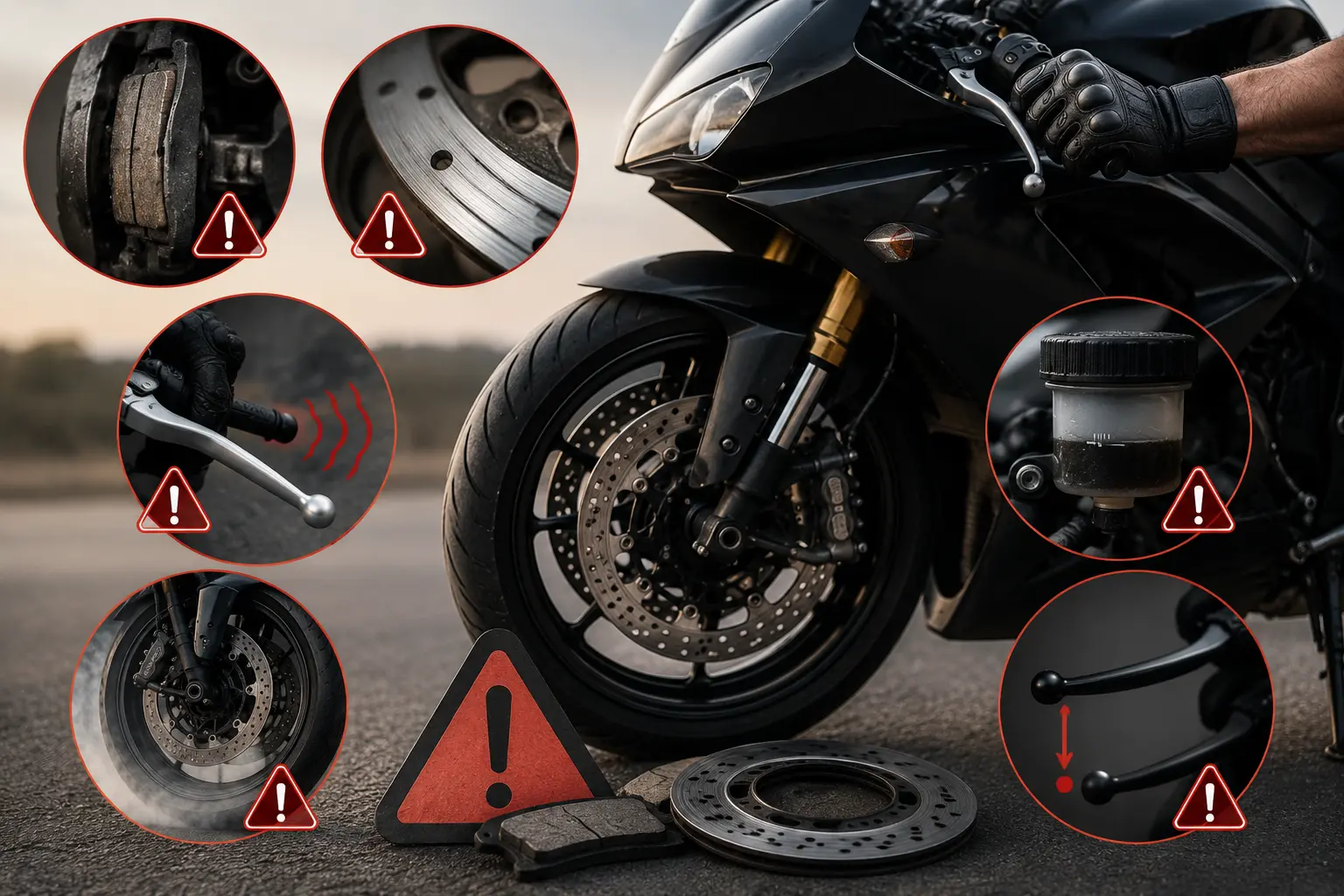
Hearing Squeal Every Time You Brake
Now, a little squeal on a cold morning is nothing to worry about. That usually goes away after the first stop or two once everything warms up.
But if your brakes squeal every time you use them, that is your first real warning sign.
Here is why that happens. Most brake pads have a small metal wear indicator built right into them. When the pad wears down close to its limit, that metal indicator touches the rotor and creates that high-pitched squeal on purpose. It is literally designed to get your attention.
So when you hear it regularly, do not ignore it. You still have a little time left at that point, but not much. Act on it sooner rather than later.
Gradually, squealing turned into grinding.
If you missed the squealing stage, the next sound you will hear is grinding. And unlike squealing, grinding is not a warning anymore. It means the pad material is completely gone.
At that point, metal is pressing directly against your rotor with every stop. Every time you brake, you are grinding away the rotor surface. What started as a simple pad replacement has now become a much more expensive job.
Grinding brakes are genuinely dangerous. Stopping distances increase. Braking becomes unpredictable. In an emergency stop situation, that is the last thing you want.
So if you hear grinding, do not ride to the shop tomorrow. Ride there today.
The Brake Lever Feels Soft or Spongy
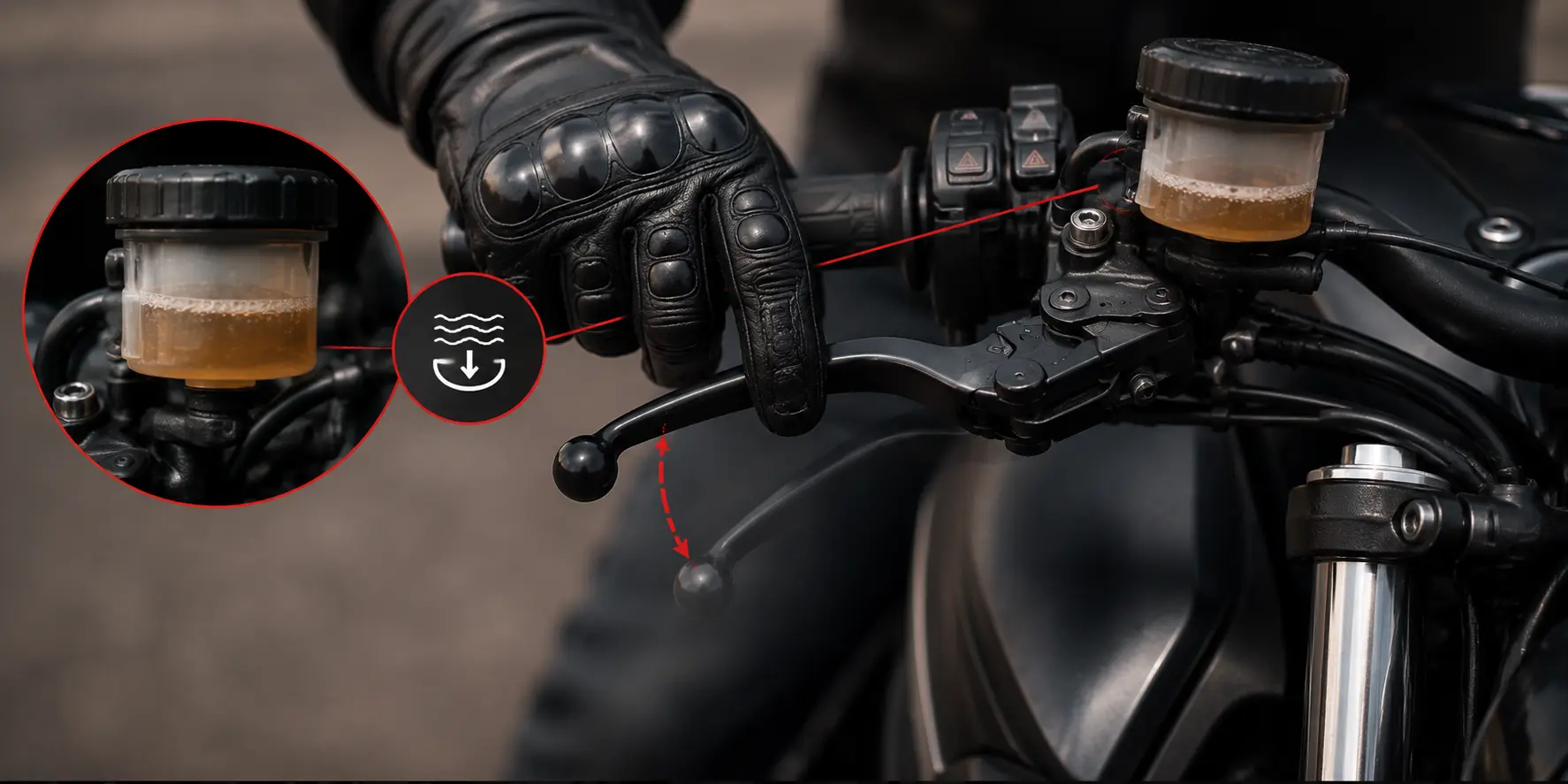
This one is a bit more subtle but just as important. Go ahead and squeeze your front brake lever right now. It should feel firm and resist your hand almost immediately.
If instead it feels soft or spongy or travels further than usual before the brake actually engages, something is wrong with your hydraulic system.
The most common cause is air in the brake lines. Air compresses, and brake fluid does not. So when air gets into the system, your lever pressure goes into compressing that air instead of pushing the pads against the rotor.
Another cause is old, moisture-contaminated brake fluid. Over time, brake fluid absorbs water from the atmosphere. As a result, the boiling point of the fluid drops significantly. Under hard braking, that contaminated fluid can actually boil and create gas bubbles. Those bubbles compress just like air, and suddenly your brakes stop working properly right when you need them most.
If your lever feels spongy, bleed the brakes and replace the fluid. It is a straightforward fix and well worth doing.
Bike Pulls to One Side When Braking
So you squeeze the brake, and the bike drifts left or right without you steering it that way. That is called “brake pull,” and it is a clear sign that something is uneven in your braking system.
Usually, this happens because of a stuck or seized caliper piston. When one side of the caliper is not releasing properly, that wheel brakes harder than the other. The result is the bike pulling toward the side with more braking force.
It can also happen because of oil or chain lube contamination on one rotor. A contaminated rotor loses grip on that side, so the other side brakes harder by comparison.
Either way, brake pull is not something to ride through and hope it fixes itself. At higher speeds, it makes the bike genuinely hard to control during emergency braking. Get it sorted as soon as you notice it.
Stopping Distances Got Longer
This one is easy to miss because it happens gradually. But think about it. You have been riding the same roads for months. You brake at the same spots. You know roughly where the bike stops.
If you start noticing the bike is not stopping where it used to, something has changed in your brake system.
Worn pads reduce the friction surface. Glazed rotors lose their bite. Old fluid reduces hydraulic efficiency under heat. Any one of these can quietly add several extra meters to your stopping distance.
And that extra distance, especially at city speeds, is the difference between stopping safely and hitting something. Trust your instincts on this one. If the bike does not stop the way it used to, do not wait to find out why.
The Pads Are Worn Down
Sometimes the simplest sign is also the most obvious. Just look at the brake pads.
On most motorcycles, you can see the pad thickness without removing anything. Look through the caliper and find the pad material sitting against the rotor. The minimum safe thickness is around 2mm. If you are at or below that, replace them now.
Also, check both sides of the caliper. Sometimes one pad wears faster than the other. Uneven wear usually points to a sticky caliper piston that is not releasing evenly. Replacing the pads without fixing the caliper just means the new pads will wear unevenly, too.
Rotor Looks Scored or Feels Rough
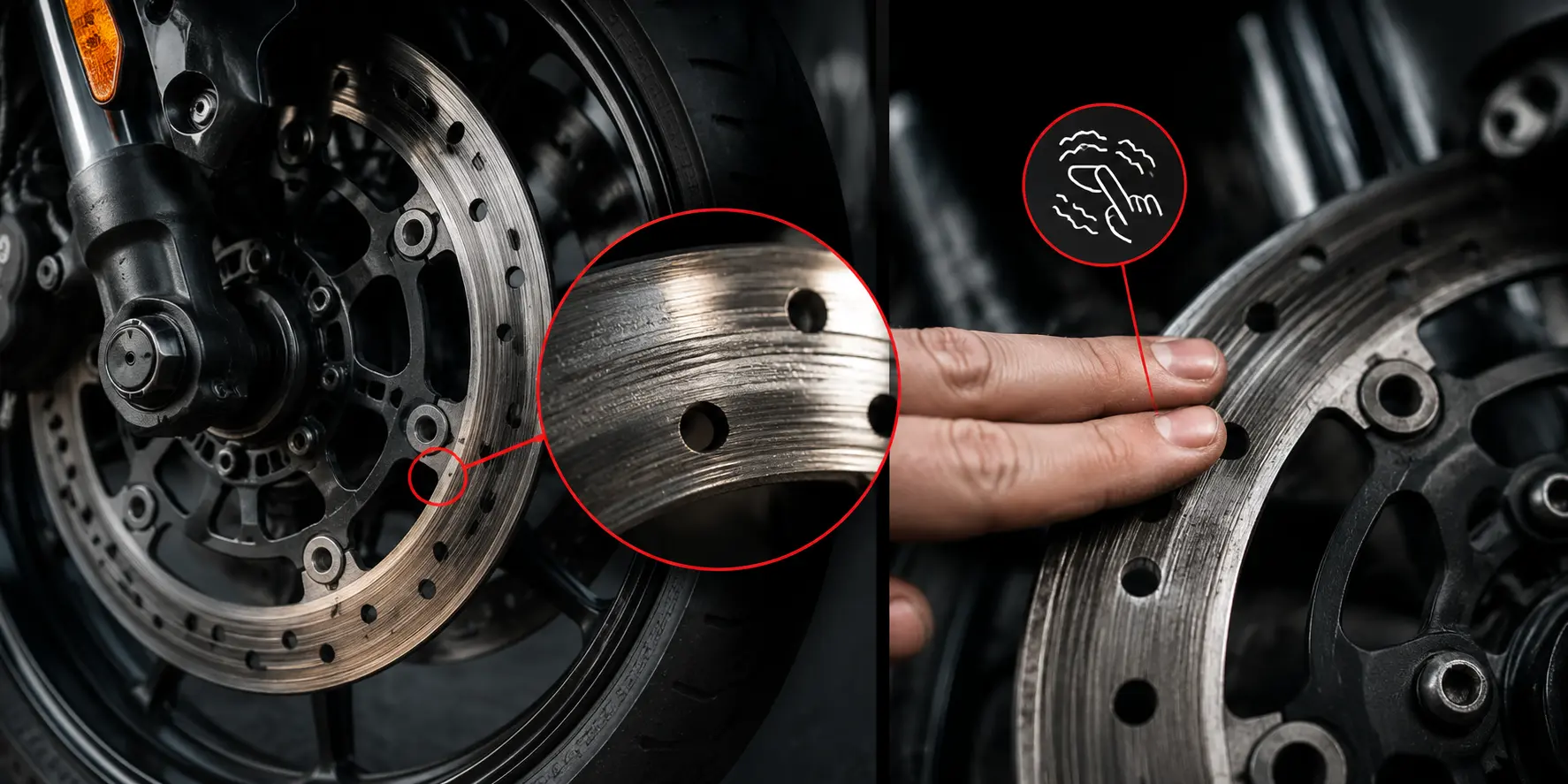
While you are looking at the pads, take a close look at the rotor as well. A healthy rotor has a smooth, even braking surface. You might see light circular marks from normal use, but the surface should feel and look consistent.
If you see deep grooves, heavy scoring, or uneven wear patterns, the rotor surface is compromised. Deep grooves reduce the effective contact area between the pad and rotor. That means less friction and longer stopping distances.
Also, run your fingertip lightly across the rotor surface. If it feels significantly ridged or rough, it has worn unevenly. At that point, a new rotor is not optional.
Furthermore, every rotor has a minimum thickness stamped on it. If your rotor is near or below that number, replace it regardless of how the surface looks.
How Often Should You Check Brakes?
Honestly, more often than most riders do.
A quick visual check of pad thickness takes about two minutes during a wash or an oil change. Checking the lever feel costs you nothing; just squeeze it before every ride.
As a general rule, inspect pads every 5,000 km. Flush brake fluid every two years. Check rotor thickness any time you replace the pads. And always investigate immediately if you hear, feel, or notice any of the signs above.
Your brakes do not fail without warning. They give you plenty of signals first. The only question is whether you pay attention to them.
Conclusion
It’s not safe to gamble with brakes, and to be honest, brake maintenance is straightforward, inexpensive, and makes a difference to how safe your ride is.
If you recognize any of these signs on your bike right now, do not put it off. Sort it out before your next ride. Quality parts by Aliwheels.