


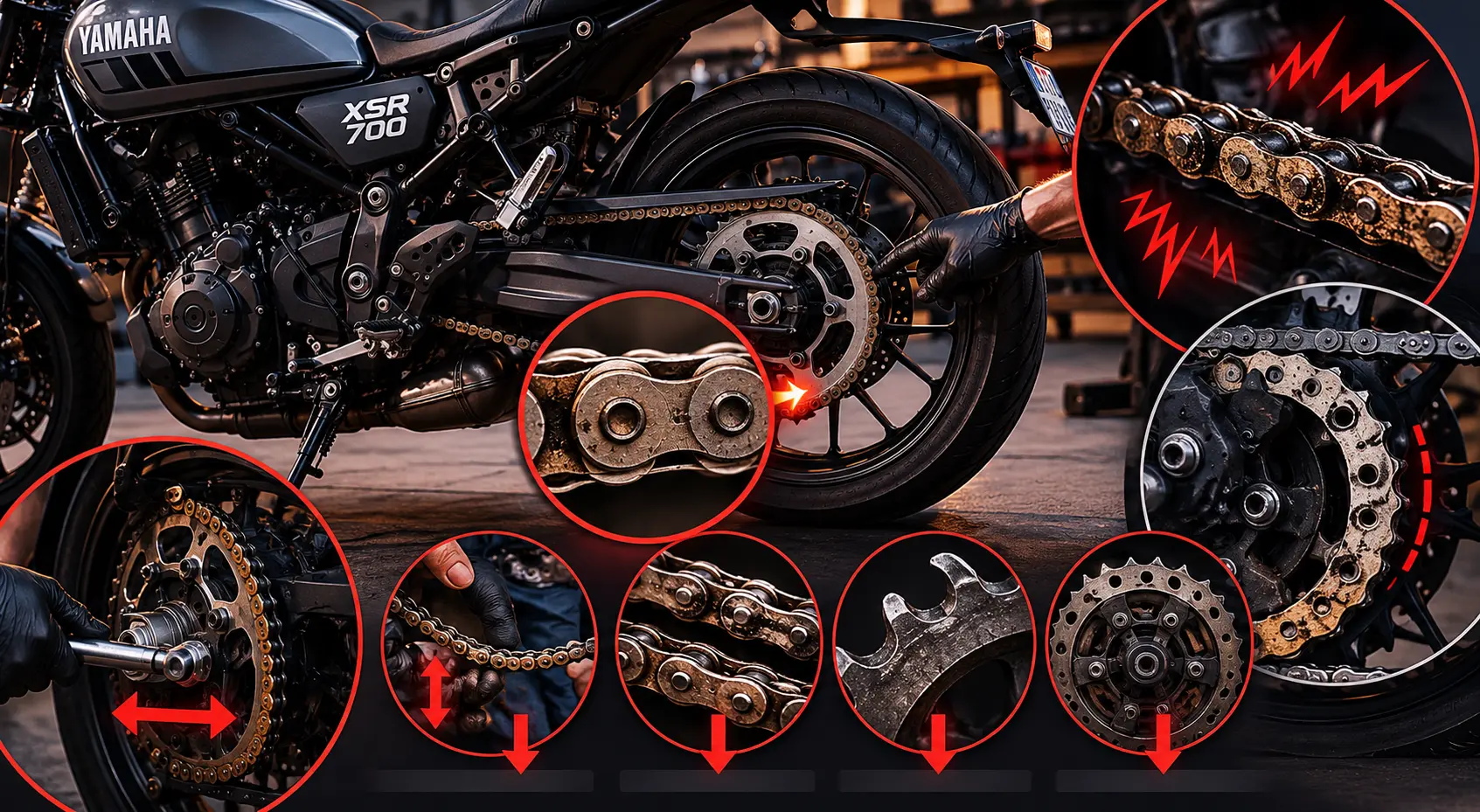

The Yamaha XSR700 is amongst the most rewarding middleweights available. A punchy parallel twin, agile chassis, and classic styling. However, chain noise is one of the common complaints in the forums and XSR700 owners’ groups. The good thing about chain noise challenge: Most of the causes of chain noise can be identified and fixed.
Below is a comprehensive explanation of the causes of your Yamaha XSR 700 drive chain noise and what can be done about it.
What Normal Chain Sound Looks Like?
When approaching a problem, understand what normal feels like.
Under normal riding, a well-adjusted, clean, and properly lubricated chain on the XSR700 is almost silent. Under hard acceleration, there may be a slight mechanical sound. That is normal.
What is NOT normal: Slaps, clunks, grinds, tics, rattles, or loud chain contact noises at a slow speed or when braking.
If you are hearing any of those noises, there is something wrong with your chain.
Incorrect Chain Tension
This is the most likely reason for chain noise on the XSR700. And it is the most frequently overlooked.
The XSR700 service manual says chain slack is 35 to 45mm when measured midway down the lower chain run on the side stand. This is the preferred measurement for this bike.
If the chain is too slack, it will slam against the swingarm. A rhythmic “slapping” or “clattering” noise will be heard, particularly during deceleration as the chain is allowed to go slightly slack.
A chain that’s too tight is likewise not a problem. Produces whining or high-pitched tension noise during acceleration. It also places a huge amount of strain on the back wheel bearing, gearbox output shaft bearing, and chain.
Tension checks and adjustments should be performed every 500-1000 km or following any work done to the rear suspension.
Test the tension always with the suspension loaded. The different chain positions result in different slack readings. The minimum slack you get is determined by the tightest point in the chain’s path.
Turn the wheel back and test for slack at various points on the chain. Fit to the narrowest place. This is critical.
Dry or Contaminated Chain
A dry chain is a loud chain. The rollers roll against the teeth of the sprocket and not against some lubricated surface.
This produces a fast ticking or grinding noise, which worsens as traffic speeds up. Almost like gravel in a wheel well at high speeds.
In dry weather, lubricate the chain every 500-800 km. More often in the rain. Each time following the bike’s wash.
Apply a good quality chain lubricant for O-ring or X-ring chains. The XSR 700 comes with a sealed chain from the factory. The rubber O-rings can be damaged by harsh solvents or by the use of the wrong lubricant. Worn seals allow the factory lubricant to leak out of the chain rollers. After this grease has worn out, the chain starts to wear at an exponential rate.
Contamination is another issue with the chain. When road grit, sand, or old dried lubricant builds up on the chain, it blocks fresh oil from reaching the rollers. Also serves as an abrasive to grind against the sprocket teeth.
Use a chain cleaner or kerosene to clean the chain. Clean up with a brush to get rid of accumulated dirt. Rinse, dry, and then reapply lubricant.

Worn Sprocket Teeth
The chain cannot wear alone. It’s used with the front and rear sprockets.
As the sprocket teeth are worn, they are not symmetrical, but rather begin to take on a hooked or shark-fin shape. If the sprockets are worn, the new chain will skip, rattle, and wear out quickly.
Pay close attention to the front sprocket. Smaller, spins quicker, and wears much faster than the back. Disassemble the front sprocket cover and inspect the tooth profile. If the teeth are not symmetrical, but appear pointed or curved, the sprocket is worn.
It is easier to see the condition of the rear sprocket visually. Examine the side profile of the tooth. Hooked teeth are a sign of replacement.
Replace both sprocket sets if one of the sprockets is worn. A new chain on an old sprocket life will be significantly reduced.
Chain Guide and Slider Wear
A loose chain is not a stretched chain. Chain stretch is the amount of stretch in the chain’s links due to the wear on the internal pins and bushings.
When the chain is stretched, it won’t fit properly on the sprocket teeth. The rollers do not sit in the valleys of the sprocket teeth but instead sit on the tips of the teeth. This leads to skipping, rattling, and eventually to damage of the sprocket.
Use a chain wear indicator to measure chain length. Most good tools are inexpensive and easy to use. If the chain is overextended, it needs to be replaced.
Yamaha has a chain length measurement method listed in the service manual for the XSR 700, with the original stock 520-size chain. Measure 20 links of the chain. When the measurement is above the service limit, change the chain.
A chain may appear to be in good condition, but be worn out.
The Wear of chain guides and sliders is caused by the following reasons:
The XSR 700 comes with a chain slider on the swingarm and a guide on the front. These plastic parts help keep the swingarm from coming in contact with the chain and direct the swingarm’s movement.
Dirty switters permit the chain to come into contact with the bare swingarm. This sound is a scraping or knocking and depends on the speed of the chain. It may seem like the sound is originating from the back of the bike, but it’s not easy to pinpoint exactly where.
Check the swingarm slider on top. Slider worn out completely if scoring can be seen on the swingarm from underneath it.
The replacement of the sliders is very cost-effective. Continuing contact does not create a damaged swingarm.
Misalignment of the Rear Wheel
It’s important to note that rear wheel alignment will directly influence the behavior of the chains. If the wheel is not aligned, the chain runs at an angle across the face of the sprocket. This produces lateral wear, noise, and fast wear of the components.
After any adjustment to the chain tension, verify alignment. All XSR 700 swingarms come with alignment marks on both sides. The adjusters should be in the same position on both sides of these marks.
The swingarm marks should be used in conjunction with a laser or string alignment method to ensure that they are as accurate as possible, particularly if aiming for maximum tire wear and chain life.
A slightly angled chain gives a faint, continuous rubbing noise. Can easily be confused with other problems.
Countershaft Sprocket Nut Loosening
This is not as common as you may think, but it is noteworthy.
A nut and a tab washer or locking mechanism are used to secure the front sprocket to the XSR 700. If this loosens, the sprocket can move laterally or rotationally.
The noise produced is a metallic clunking or an odd ticking sound that isn’t affected by chain tension or lubrication.
Periodically, check on the front sprocket nut torque, particularly after the first few hundred kilometers on a new sprocket and/or chain installation. The service specification of torque is mentioned in your manual.

When to Replace the Full Chain Kit?
If the chain or sprockets are worn, then the chain continues to make noise even after the tension, cleaning, and lubrication are adjusted.
Change the chain and two sprockets as a set. Do not use an old sprocket at the same time as a new chain or a new sprocket with an old chain. The wear profiles don’t match. Noise and very quick wear will occur after 1 km.
To choose the right replacement for your Yamaha XSR 700 drive chain, you have to use the proper size specification. The XSR 700 uses a 520-size chain. Compare the link count with the service manual for your year.
Under normal riding conditions, quality sealed chains last much longer than standard O-ring chains. This extra expense for a quality chain is more than made up for by the longer service life and lower maintenance rate.
Conclusion
Chain noise on the XSR 700 is almost always a maintenance issue rather than a design flaw. Tension, lubrication, and component wear cover the vast majority of cases.
The XSR 700’s parallel twin transmits a fair amount of torque through that chain. Keeping it in proper condition is not optional if you want reliable, trouble-free riding.
Inspect it regularly. Lube it consistently. Replace it on time. Your drivetrain will reward you with smooth, quiet, long-lasting performance.
Shop the correct replacement Yamaha XSR 700 drive chain at AliWheels for your 2018 to 2020 model.