



Free Shipping over $300

Support 24/7

Secure Payments

Hot Offers

Aliwheels is a leading motorcycle parts supplier offering free shipping anywhere in the world on orders above $300. Please note that all of our motorcycle parts and accessories are certified and tested. With more than 10,000* products to choose from this is your one place to get the motorcycle part you need. Browse our vast inventory of motorcycle radiators, fairings, clutch plates, headlights, chains, and sprockets.

Free Shipping over $300

Support 24/7

Secure Payments

Hot Offers

Dropping your Speed Triple, even at low speed in a parking lot, can turn into an expensive repair bill fast. Riders debate this question constantly across Triumph forums, and the honest answer depends on how and where you ride. Let’s break down both options clearly.

Why Crash Protection Matters on This Machine?

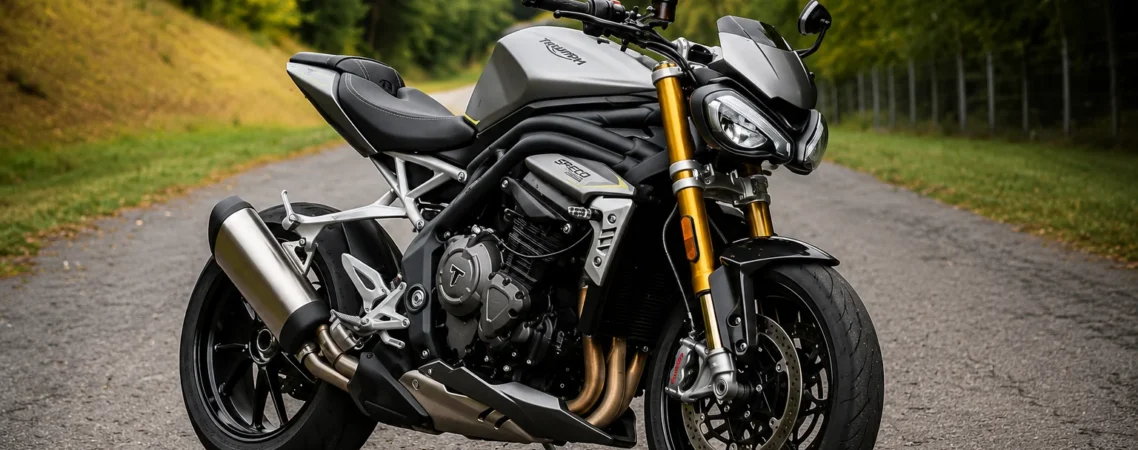
The Speed Triple 1200 RS carries expensive bodywork, exposed engine casings, and a design where even a slow tip-over can crack plastic or scrape paint. Riders consistently describe this bike as, in their words, “an absolute work of art,” and nobody wants to see that art scraped across a parking lot.

What Frame Sliders Actually Do?

Frame sliders mount to your bike’s frame at existing structural points, typically the same locations used for engine mounting bolts. In a fall, they contact the ground first and slide, rather than letting your fairing, engine case, or frame absorb the impact directly.
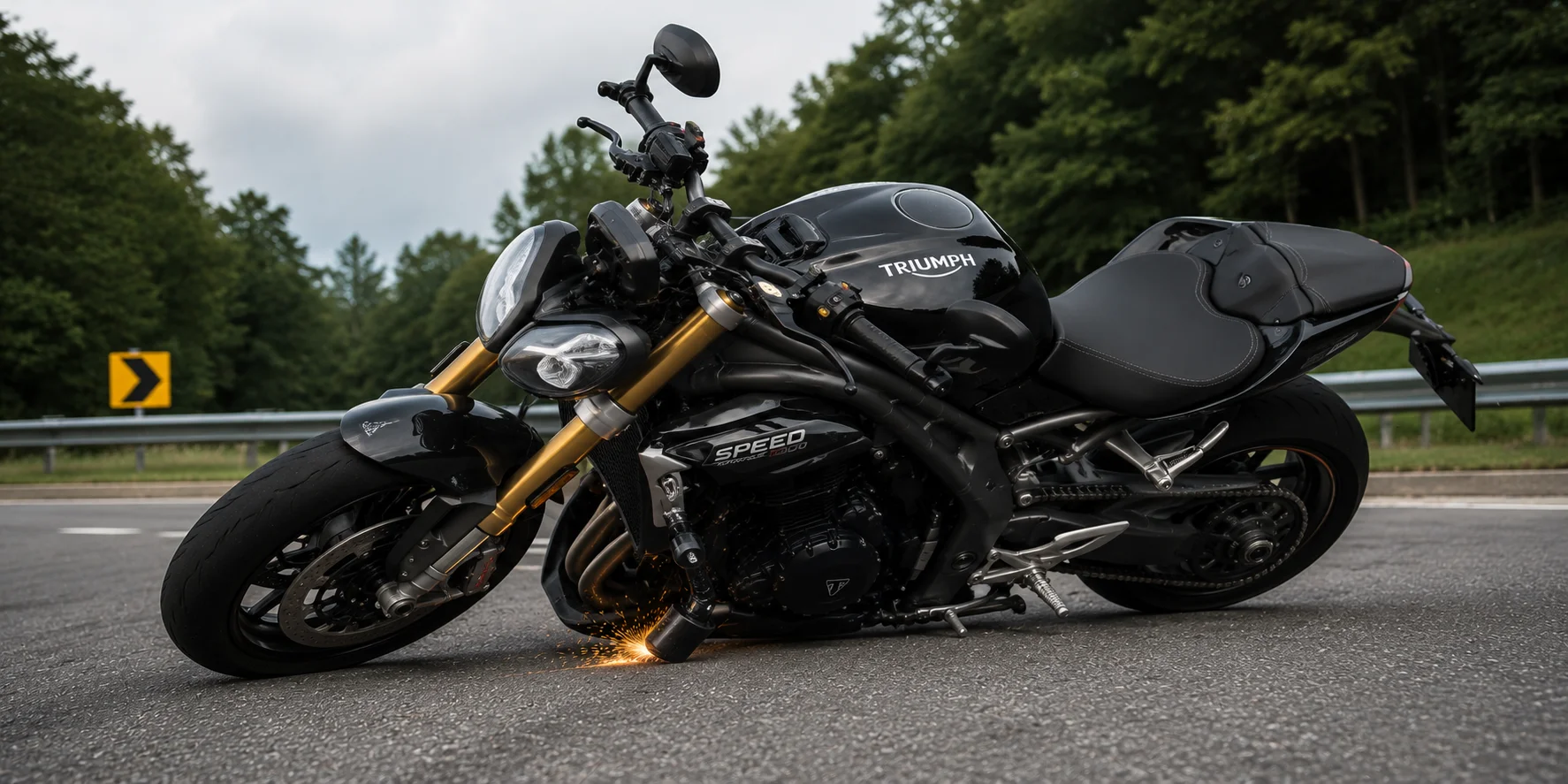
Speed Triple frame slider protection

Riders who prefer frame sliders point out several advantages. They add minimal bulk to the bike’s appearance, which matters on a bike known for its aggressive styling. Many report using them as impromptu highway pegs during long rides, since they sit at a convenient leg position. They’re also generally lighter than full crash bars, adding less unsprung weight to the bike overall.

The tradeoff is coverage. Frame sliders protect specific contact points well, but they don’t offer the broader protection area that crash bars provide, particularly for higher-speed slides where the bike travels further before stopping.

Benefits of Installing Crash Bars

Crash bars extend further out from the bike’s frame, creating a wider protective perimeter around the engine and lower fairing. This broader coverage means more of the bike’s vulnerable components stay protected during a fall, especially in scenarios beyond a simple low-speed tip-over.

Riders who prefer crash bars cite this wider protection as the deciding factor, especially for street riders concerned about low-speed drops, like backing out of a garage or a parking lot mishap. The visual bulk is the main tradeoff, since crash bars are more visible and change the bike’s profile more than frame sliders do.

What Triumph Rat Forum Riders Say?

Across multiple long-running threads, a consistent pattern emerges. Riders planning track days or higher-speed riding tend to lean toward frame sliders paired with additional protection like case covers and axle sliders, since weight and minimal bulk matter more in that context.
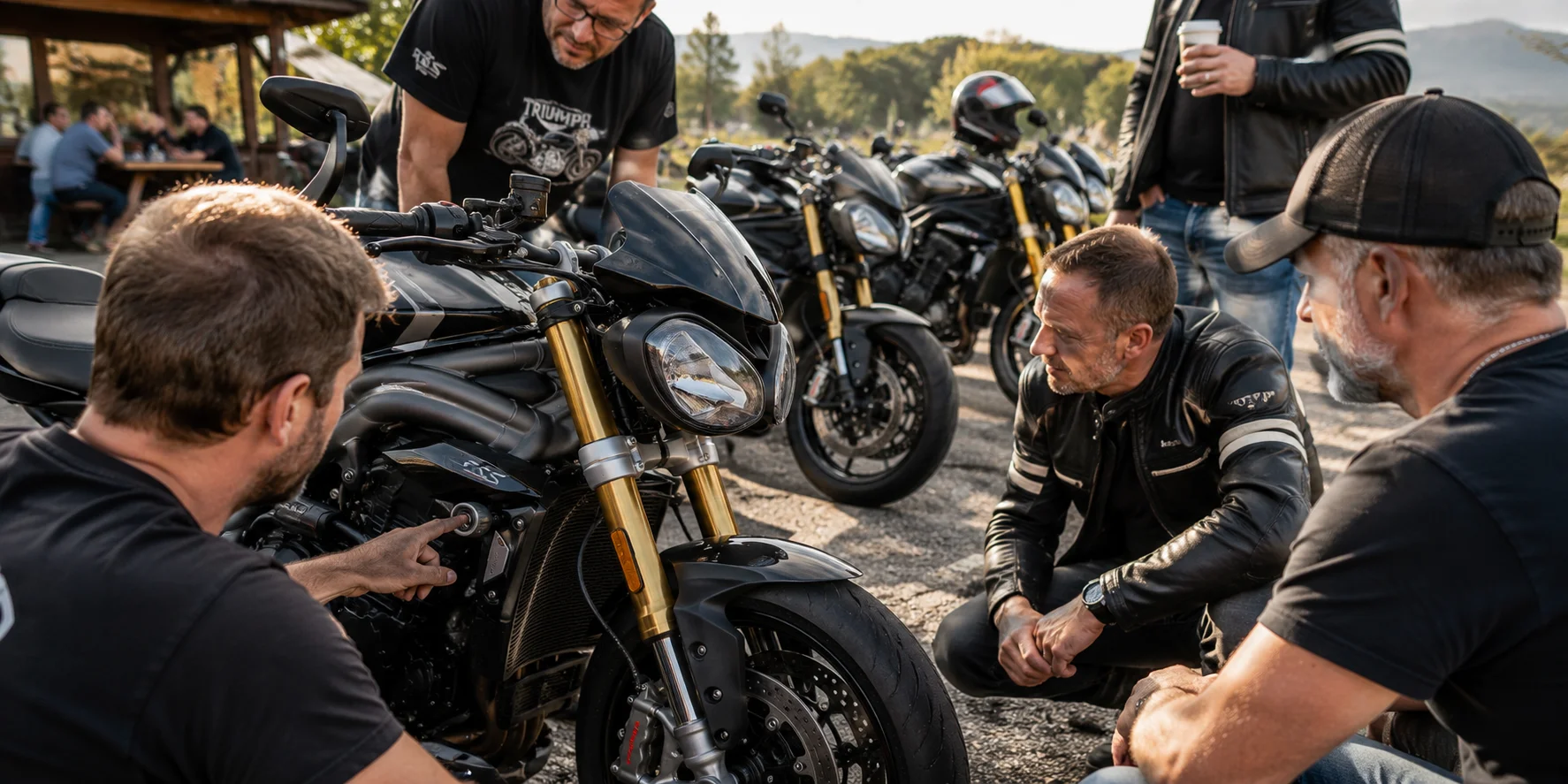
Speed Triple riders discussing protection

Riders primarily concerned about everyday street risks, low-speed drops, garage mishaps, and parking lot tip-overs more often prefer crash bars for their broader coverage area.

One recurring concern worth addressing directly: some riders worry that frame sliders can transmit crash force into the frame itself if the bike goes down hard. Multiple experienced forum members pushed back on this concern, noting that frame sliders mount at points already designed to handle load, specifically engine mounting bolts, and that the sliding action of the pad itself is designed to dissipate force rather than transmit it directly into the frame.

Crash Bars vs. Frame Sliders: What to Choose?

If you ride your Speed Triple primarily on the street and worry most about low-speed drops or parking mishaps, crash bars offer the broader protection most riders want for that scenario.

If you track your bike, prioritize weight savings, or want protection that stays visually minimal, frame sliders paired with other protective components like case covers make more sense.

Many experienced owners actually run both crash bars and frame sliders together, along with bar end sliders and case covers, for comprehensive protection across every type of fall. This layered approach costs more upfront but covers the widest range of scenarios.

Installing Your Crash Protection

Aliwheels carries the Triumph Speed Triple 1200 RS Crash Protectors (2018-2023), designed as a direct fitment option for your model.
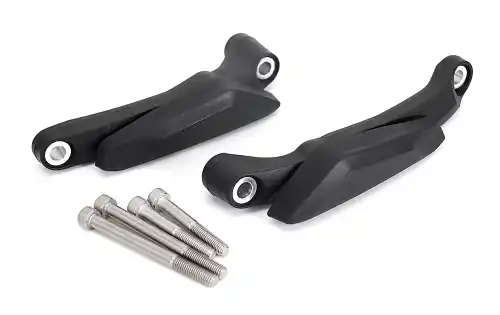
Triumph Speed Triple 1200 RS Crash Protectors 2018–2023

Installation typically follows these steps:

  1. Locate your bike’s factory engine mounting points, which most crash protection kits use for attachment.
  2. Remove the mounting bolts one at a time, replacing them with the longer bolts included in your crash protection kit.
  3. Position the crash bar or slider bracket against the mounting point.
  4. Secure with the provided hardware, torquing to the manufacturer’s specification.
  5. Repeat on the opposite side, checking that both sides sit symmetrically.
  6. Double-check ground clearance and cornering clearance before your first ride, since some kits sit slightly lower than stock bodywork.

Most riders complete installation in under an hour with basic tools. You can too.

Conclusion: A Word on Aftermarket Bar Height Changes

If you’ve also been considering handlebar changes for track use, keep in mind this is a separate modification from crash protection, but many riders address both at the same time during a track-prep session. Focus on crash protection first, since it protects your investment regardless of what other changes you make later.

Frequently Asked Questions

Do frame sliders void my Speed Triple’s warranty?

This varies by dealer and region. Frame sliders that mount using factory bolt points typically don’t affect engine or frame warranty coverage, but check with your specific dealer to confirm.

Can I install crash bars and frame sliders together?

In most cases, yes, though you’ll want to verify there’s no physical interference between the two kits at their mounting points. Many riders run both for maximum coverage.

Do crash bars affect the bike’s handling or ground clearance?

Quality crash bars are designed to sit within the bike’s original cornering clearance, though it’s worth checking specifications against your riding style, especially if you corner aggressively.

How much protection do frame sliders actually provide in a real crash?

Frame sliders work best in low-to-moderate-speed falls and slides, where they absorb and redirect impact away from the frame and fairing. At very high speeds, no crash protection fully prevents damage, but sliders significantly reduce it compared to no protection at all.

Browse our full Triumph parts collection for additional fitment-matched components for your motorcycle.
(Commenting: OFF)

If your Ninja 400 clutch slips during hard acceleration, and it happened early, sometimes under 2,000 miles, you are not dealing with normal wear. You are dealing with a specific design quirk built into this bike’s slipper clutch. Let’s break down exactly what’s happening, since it’s different from typical clutch slipping causes on other bikes.

If you’re looking for general clutch troubleshooting instead, our guide on clutch slippage identification and fixes covers the broader causes. This article focuses specifically on why the Ninja 400 behaves differently.

What If This Isn’t Your Typical Clutch-Wear Problem?

Most motorcycles develop clutch slip gradually, over tens of thousands of miles, as friction plates wear down. The Ninja 400 is different. Riders consistently report slips appearing shockingly early, often between 500 and 2,000 miles, on bikes with light or moderate use.

That timing points to something other than simple wear. And it is.

The Actual Design Issue of the Ninja 400

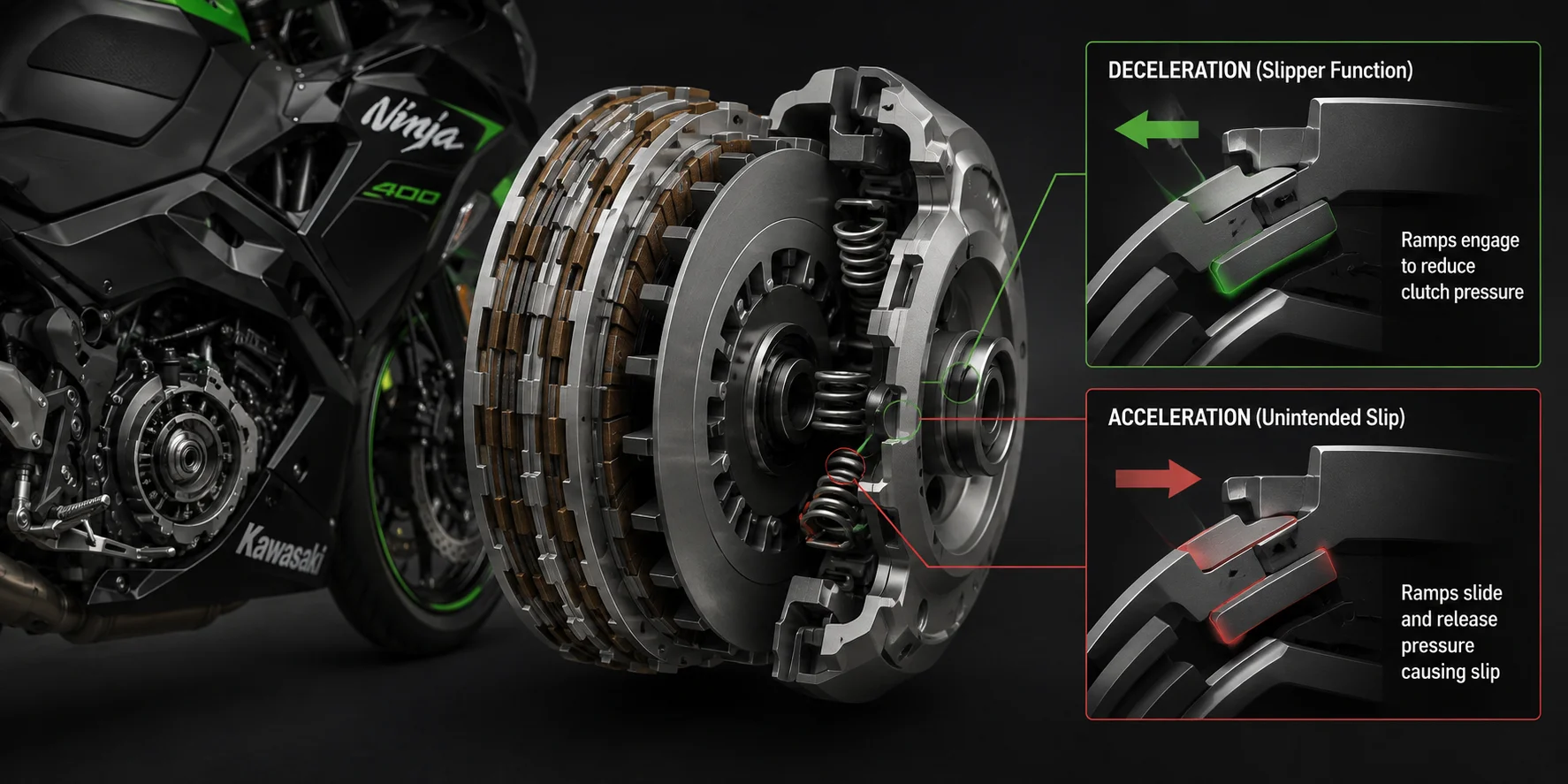
The Ninja 400’s slipper clutch uses two sets of ramps built into the pressure plate and the center boss of the clutch basket. These ramps work together to reduce clutch pressure during hard deceleration, which is the entire point of a slipper clutch. It prevents rear wheel hop when you downshift aggressively.

Ninja 400 clutch design

Here’s the catch. Under hard acceleration, not deceleration, these same ramps can slide slightly and release pressure from the clutch plates too. This causes the clutch to slip exactly when you want maximum power delivery, not when you’re braking. It’s an unintended side effect of a system designed for a completely different situation.

Add in the fact that Kawasaki uses relatively soft judder springs in this clutch pack, and you get plates that separate under load more easily than most riders expect from a healthy clutch.

How to Know This Is a Mechanical Problem?

A few patterns confirm you’re dealing with this specific issue rather than generic wear or cable adjustment problems.

Slip happens during fast, aggressive upshifts. Riders report it most often during quick clutchless upshifts or hard acceleration runs, not during normal, relaxed riding.

It appeared early in the bike’s life. If you’re seeing slip well before 5,000 miles, especially under 2,000, this points toward the design issue rather than plate wear.

Cable adjustment doesn’t fully fix it. Some riders find loosening the clutch cable slightly helps a little, but the slip often returns under harder riding, since the root cause is mechanical, not adjustment-related.

A dealer confirms your oil and cable are correct. If a certified technician checks your cable free play and confirms you’re running proper JASO MA or MA2-rated oil, and the slip persists, this strongly points to the ramp design issue.

Why Riding Style Matters Here?

This issue shows up more in riders who accelerate hard, shift aggressively, or ride the bike closer to its performance limits. Kawasaki built the Ninja 400 as an entry-level sport bike, and its stock clutch components were not engineered to handle sustained aggressive use without eventually showing this behavior.

This doesn’t mean you did anything wrong by riding your bike hard. It means the stock clutch pack has a known limitation under those conditions, and plenty of owners run into it.

The Fix You Might Need

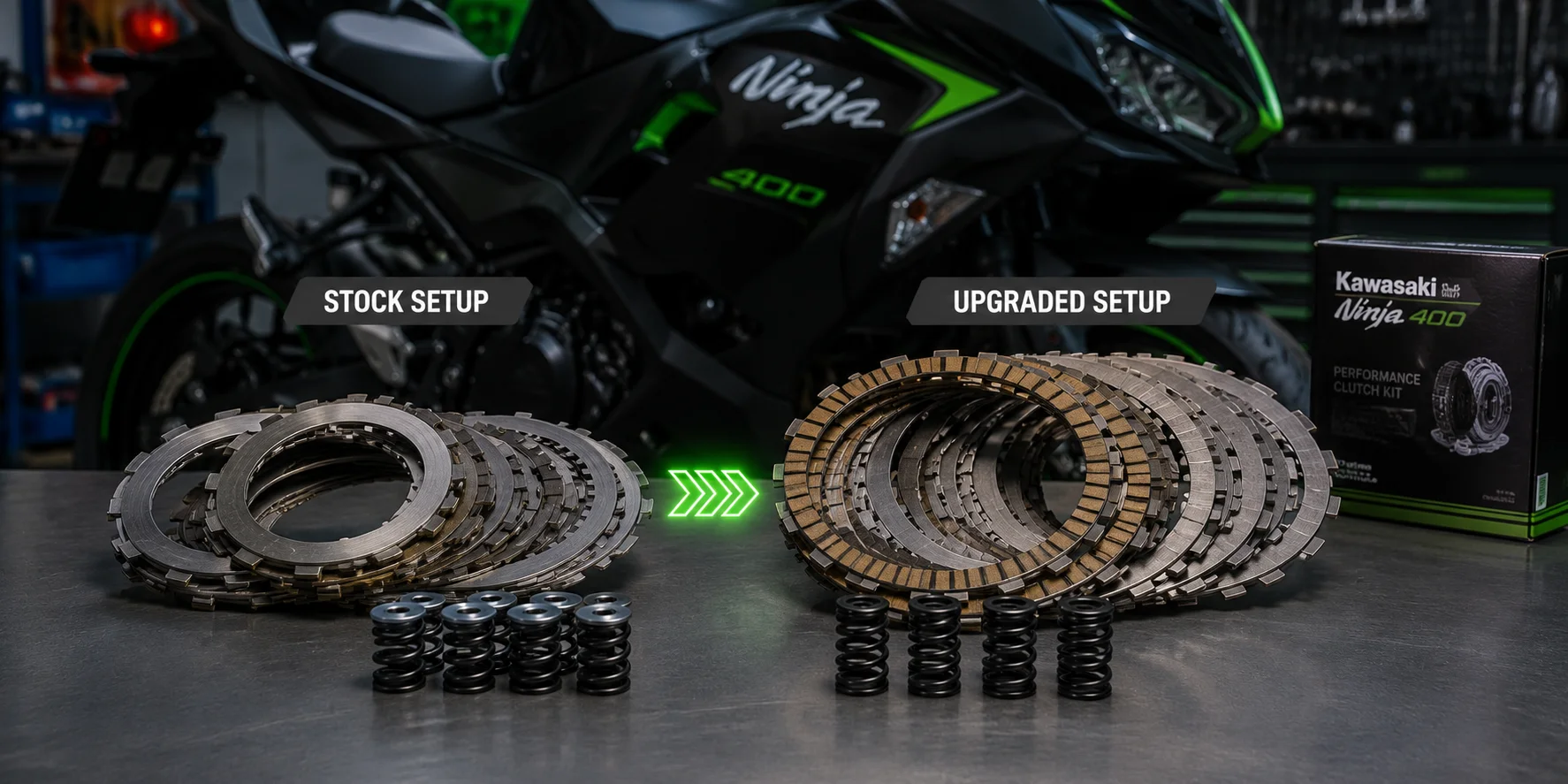
Once this issue shows up, adjustment alone will not solve it permanently. The fix involves replacing your friction plates and judder springs with components built to handle the load better.

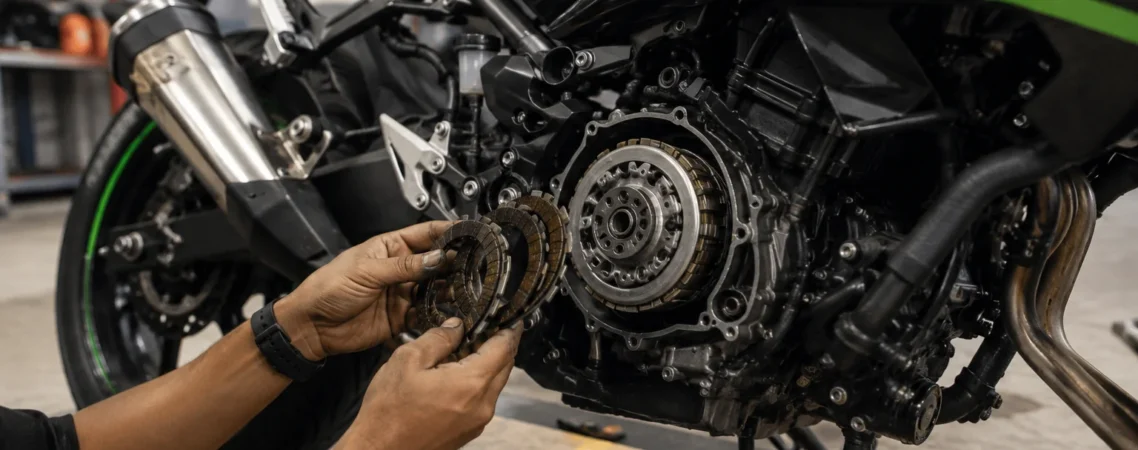
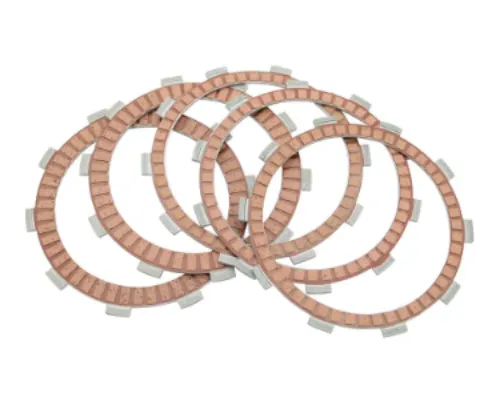
Aliwheels carries Kawasaki Ninja 400 Clutch Plates (2018-2023), a direct fitment replacement for your model. Fresh, properly specced plates restore full clamping force and eliminate the early slip most stock clutches develop under hard use.

Kawasaki Ninja 400 Clutch Plates 2018-2023

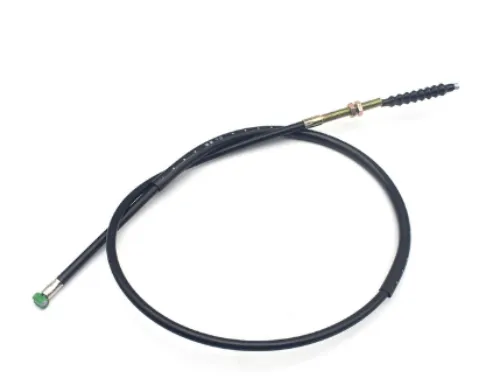
If your clutch cable also shows wear or improper adjustment history, pairing your plate replacement with a fresh Kawasaki Ninja 400 Clutch Cable Wire ensures your entire clutch system works together correctly, rather than fixing one component while an unrelated issue lingers.

Kawasaki Ninja 400 Clutch Cable Wire 2018-2023

Installing New Clutch Plates

Replacing clutch plates on the Ninja 400 is a manageable job for riders comfortable with basic engine work.

  1. Drain your engine oil first, since you’ll need to remove the clutch cover.
  2. Remove the clutch cover, keeping track of all mounting bolts.
  3. Remove the pressure plate and springs, noting their orientation for reassembly.
  4. Remove the old friction and steel plates, then compare them against your new set.
  5. Install the new plates in the correct alternating order, following your service manual’s stacking sequence.
  6. Reassemble the pressure plate and springs, torquing bolts evenly in a crisscross pattern.
  7. Reinstall the clutch cover with a fresh gasket.
  8. Refill with fresh oil rated for wet clutch use.

Most riders complete this job in two to three hours with basic tools and a service manual for torque specifications.

Should You Upgrade Beyond Stock Clutch Plates?

For riders who track their Ninja 400 or ride aggressively on a regular basis, some owners go further by removing the stock judder springs entirely and using a wider friction plate design for increased friction material. This is a more involved modification and works best paired with race-oriented clutch kits designed specifically for this purpose.

For most street riders, however, a properly specced replacement plate set solves the early slipping issue without needing to go that far.

Preventing This From Happening Again

A few habits help extend the life of your new clutch setup.

Avoid excessively aggressive clutchless upshifts until your new plates have properly broken in over the first few hundred miles. Check your clutch cable free play periodically, since improper adjustment adds unnecessary stress to the clutch pack. Use only oil rated JASO MA or MA2, since incorrect oil additives can cause wet clutches to slip prematurely, compounding the existing design sensitivity.

Frequently Asked Questions

Is clutch slipping on the Ninja 400 covered under warranty?

This varies by dealer and mileage. Some owners report success getting it addressed under warranty, especially with low mileage, while others find dealers classify it as normal wear. It’s worth raising with your dealer directly and referencing documented cases of this design issue.

Does this affect all Ninja 400 model years equally?

Owners report the issue most commonly on 2018-2019 models, though it can appear across the range. Kawasaki introduced updated clutch pull rod and bearing components in later years, which some owners say helps reduce the issue.

Can I fix this by just adjusting my clutch cable?

Cable adjustment can help slightly in mild cases, but it rarely resolves the issue permanently since the root cause is the ramp design and spring tension, not cable slack.

Will this issue happen again after I replace the plates?

Properly specced replacement plates and springs significantly reduce the chances of recurrence for typical street riding. Very aggressive or track-focused riding may benefit from further upgrades beyond stock replacement parts.

Browse our full Kawasaki motorcycle parts collection for additional fitment-matched components for your motorcycle.
(Commenting: OFF)

Every Harley owner eventually hits this decision. Something needs replacing, and you are staring at two very different price tags for what looks like the same part. Let’s break down what you are actually paying for and where you should actually buy it.

Why OEM Costs & What It Costs

Genuine Harley-Davidson OEM parts carry a real price premium, and understanding why you helps decide when that premium is worth paying. Part of the cost comes from research and engineering, since Harley designs these parts specifically for its platforms, backed by extensive testing.

Dealer markup adds another layer. Parts typically pass through Harley’s distribution network before reaching a dealership, and each step adds cost. Brand positioning plays a role too. Harley-Davidson markets itself as a premium brand, and that positioning extends to parts pricing.

None of this means OEM is overpriced or not worth it. It means you are paying for guaranteed fitment, extensive testing, and brand-backed warranty support, on top of the physical part itself.

Where Aftermarket Genuinely Saves Money

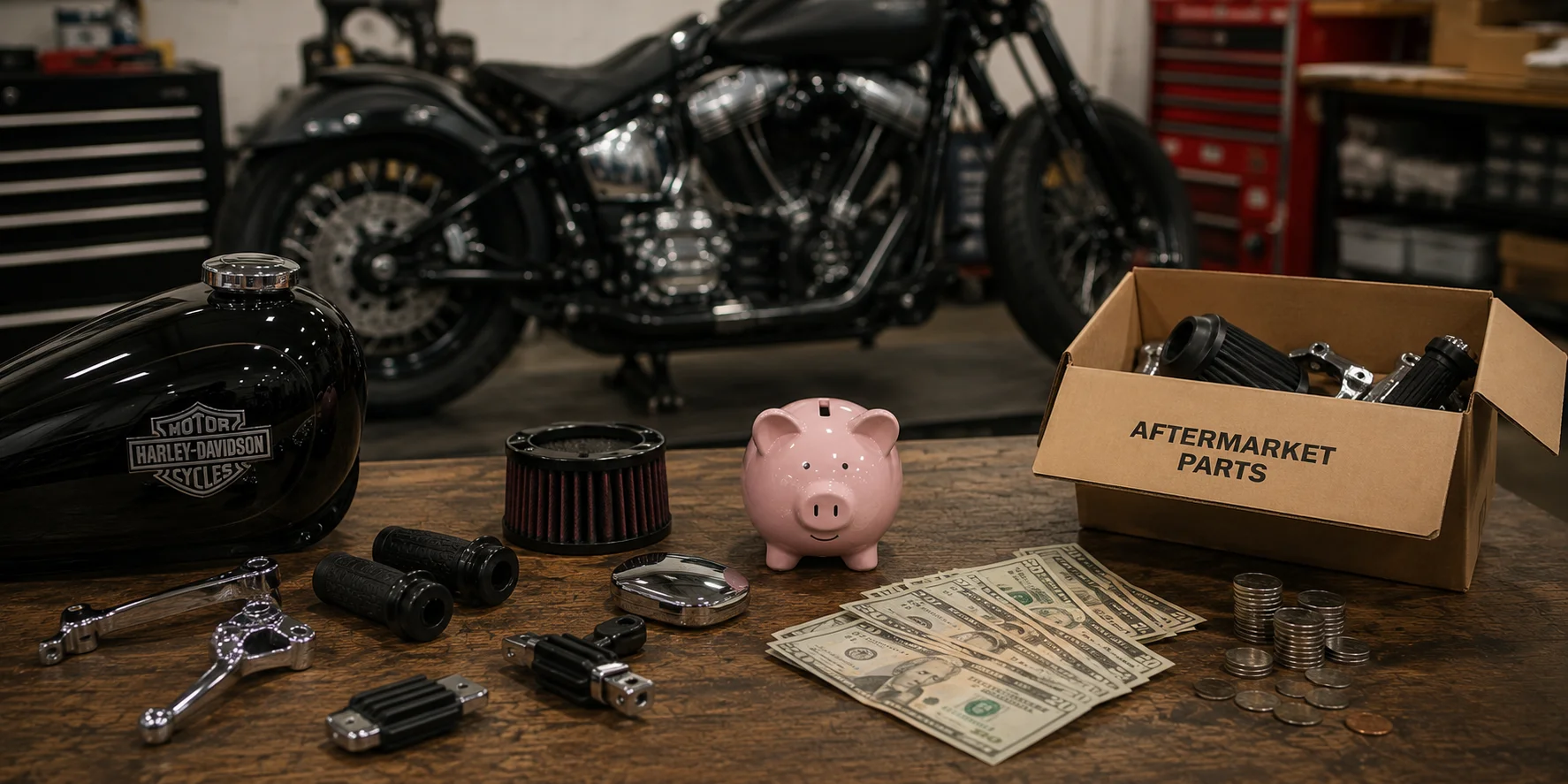
Plenty of components perform just as well from a quality aftermarket manufacturer, often at a noticeably lower price. Grips, mirrors, foot pegs, and many cosmetic exterior parts fall into this category. These components do not have the same strict safety tolerances as structural or braking parts, so a well-made aftermarket version often performs just as well.

Aftermarket Saves Money

Exhaust systems and heat shields also see strong aftermarket options, since many specialized manufacturers focus entirely on building high-quality components for specific Harley platforms.

Where OEM-Level Quality Still Matters More

Some categories deserve extra caution before going aftermarket. Braking components, structural mounting hardware, and anything directly tied to safety benefit from OEM-level quality control, or at minimum, a verified aftermarket manufacturer with a strong reputation and clear testing standards.

This does not mean aftermarket automatically means lower quality in these categories. It means you should research the specific manufacturer more carefully before buying, rather than choosing based on price alone.

The Hidden Costs of Going Too Cheap

Chasing the lowest possible price often costs more in the long run. Poor fitment leads to return shipping costs and wasted time. Parts with no warranty support leave you covering replacement costs yourself if something fails early. Worse, cheap parts sometimes need replacing again within a year, meaning you pay twice for something that should have lasted much longer.

Affordable and cheap are not the same thing. The smartest purchase balances price against verified quality and support, not price alone.

Comparing Your Real Options

FactorGenuine OEMQuality AftermarketUnverified Cheap Aftermarket
PriceHighestModerateLowest
Fitment accuracyGuaranteedUsually accurate with verified listingsOften unclear or incorrect
Warranty supportStrongVaries by sellerRarely offered
Best forSafety-critical partsMost cosmetic and performance partsNot recommended

Where Should You Actually Buy? Comparing the Common Options

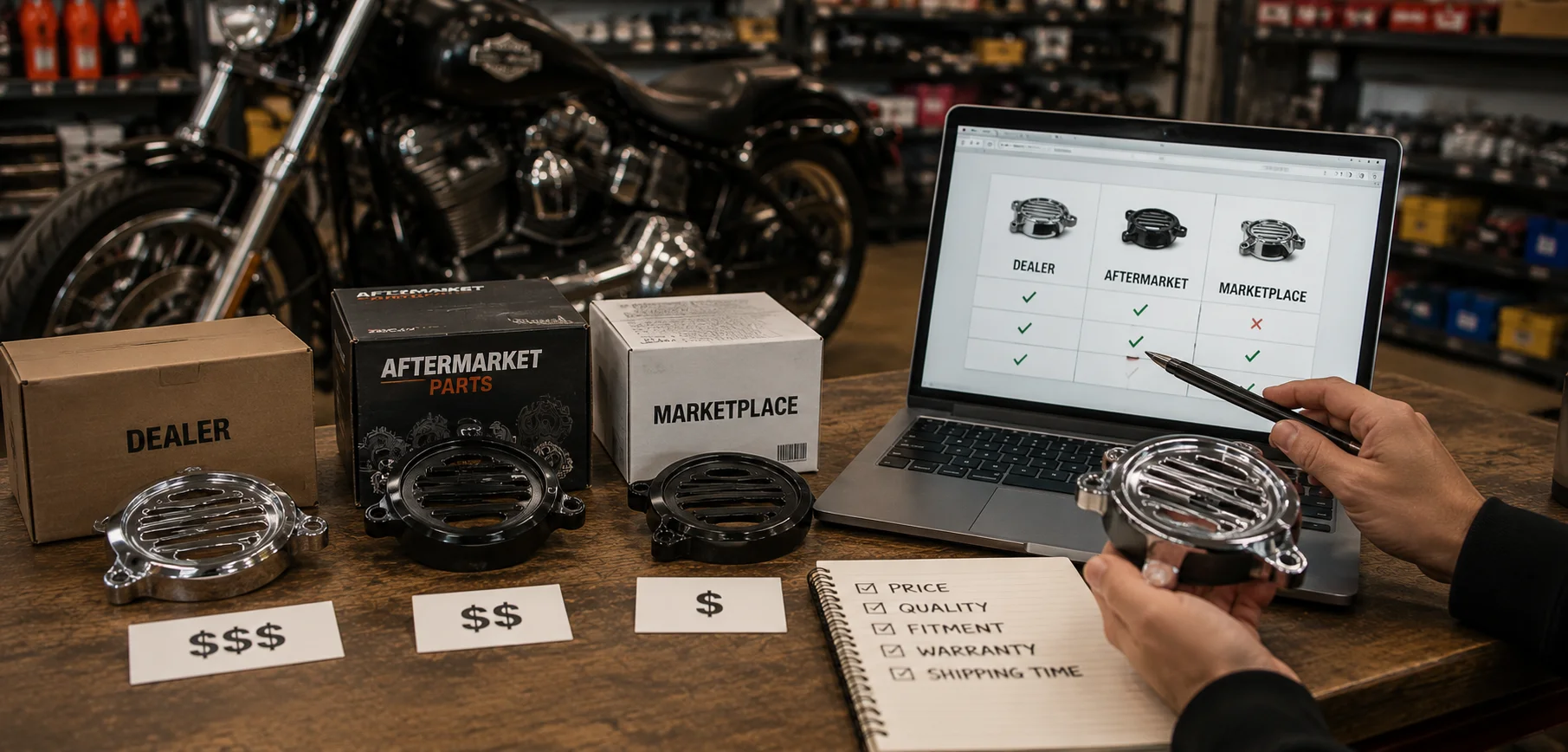
Riders typically choose between three paths when sourcing parts: official dealers, marketplaces like eBay, and specialized parts retailers.

Dealers guarantee genuine OEM parts and warranty support, but usually at the highest price with the longest wait times if something needs ordering in.

Marketplaces like eBay offer a wide range of pricing and used or discontinued parts you will not find elsewhere, but fitment accuracy and warranty support vary wildly from seller to seller. This works best for riders who already know exactly what part number they need and are comfortable verifying it themselves.

Specialized retailers sit in between, offering verified fitment listings and warranty support without dealer-level markup. This is where Aliwheels operates, and it is also the fastest way to track down parts for older or discontinued models that dealers no longer stock.

Which Companies Actually Offer Warranty Support?

This varies more than most riders expect. Official dealers back OEM parts with manufacturer warranty. Reputable aftermarket retailers, including Aliwheels, back their own listings with return and replacement support, though terms differ by seller. Marketplace sellers on platforms like eBay often offer no warranty at all unless the individual seller states one explicitly. Always confirm this before buying, not after.

Looking for Older or Discontinued Parts?

This is one of the most common frustrations riders run into, especially for models over ten years old. Specialized retailers with deep catalogs, rather than general marketplaces, are usually the faster and more reliable route, since they maintain fitment data across older model years that dealers sometimes stop supporting.

Aliwheels ships verified listings across the United States, Canada, the UK, Australia, and New Zealand, with the same fitment transparency regardless of destination.

Where Aliwheels Fits In?

We built our catalog around the middle option in that table, offering aftermarket pricing without sacrificing the fitment accuracy and support that actually matters. Every listing specifies exact model and year fitment, so you are not guessing whether a part will actually work on your bike.

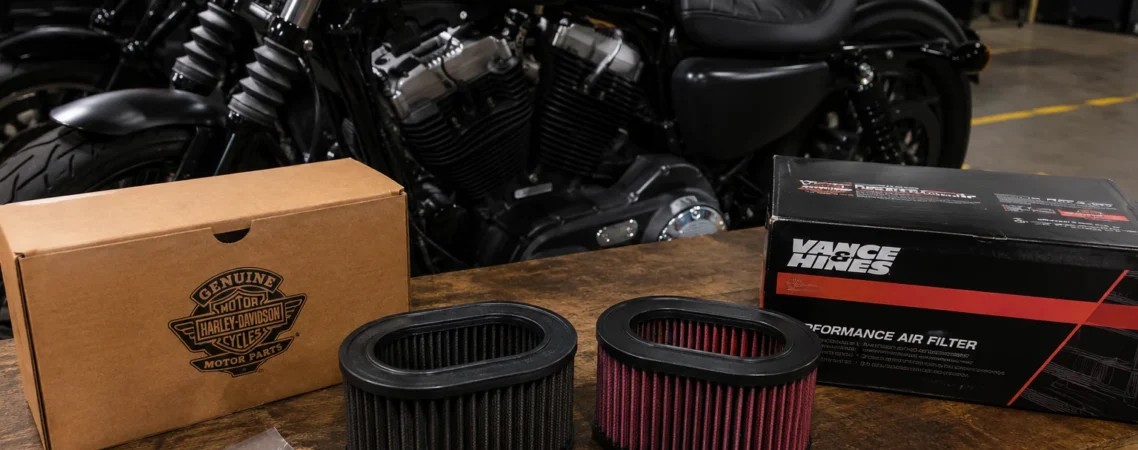
Aliwheels motorcycle parts

Take the Harley Davidson Street Rod VRSCR Exhaust as an example. It lists exact fitment years, material, and finish upfront, giving you the confidence of a verified purchase at aftermarket pricing. That combination is exactly what smart buyers should look for, regardless of which seller they choose.

Making the Right Call for Your Motorcycle

Before your next purchase, ask yourself a few quick questions. Is this a safety-critical component or a cosmetic and performance upgrade? Does the seller provide clear fitment and material details? Is there a real warranty or return policy backing the purchase?

Answering these honestly points you toward the right choice far better than simply picking whichever price tag looks smaller.

Frequently Asked Questions

Is OEM always worth the extra cost?

Not always. For safety-critical components, OEM or verified high-quality aftermarket makes sense. For cosmetic and many performance parts, quality aftermarket often performs identically at a lower price.

How do I find affordable genuine parts without risking quality?

Look for sellers who provide exact fitment details, clear material descriptions, and a real return or warranty policy, regardless of whether the part is OEM or aftermarket.

Why do some aftermarket parts cost almost as much as OEM?

Specialized manufacturers with strong reputations, extensive testing, and premium materials often price closer to OEM levels, since they are competing on quality rather than just cost.

Is buying Harley parts on eBay a good idea?

It can work well if you already know the exact part number you need and check the seller’s fitment claims carefully. Warranty support is rarely included, so confirm that before buying.

Browse our full Harley-Davidson Parts collection for verified fitment across every price range, shipped to the United States, Canada, and beyond.

(Commenting: OFF)

Or login with your social account