




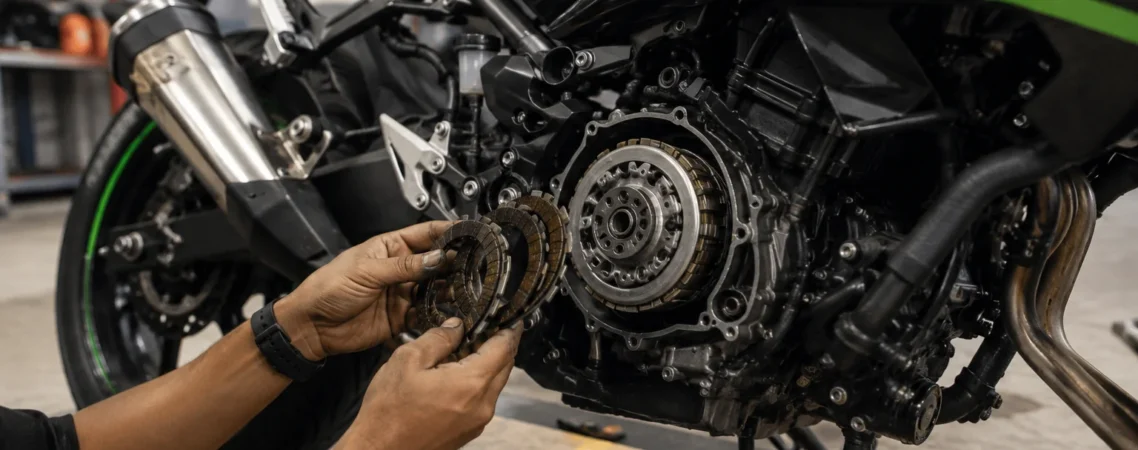
If your Ninja 400 clutch slips during hard acceleration, and it happened early, sometimes under 2,000 miles, you are not dealing with normal wear. You are dealing with a specific design quirk built into this bike’s slipper clutch. Let’s break down exactly what’s happening, since it’s different from typical clutch slipping causes on other bikes.
If you’re looking for general clutch troubleshooting instead, our guide on clutch slippage identification and fixes covers the broader causes. This article focuses specifically on why the Ninja 400 behaves differently.
What If This Isn’t Your Typical Clutch-Wear Problem?
Most motorcycles develop clutch slip gradually, over tens of thousands of miles, as friction plates wear down. The Ninja 400 is different. Riders consistently report slips appearing shockingly early, often between 500 and 2,000 miles, on bikes with light or moderate use.
That timing points to something other than simple wear. And it is.
The Actual Design Issue of the Ninja 400
The Ninja 400’s slipper clutch uses two sets of ramps built into the pressure plate and the center boss of the clutch basket. These ramps work together to reduce clutch pressure during hard deceleration, which is the entire point of a slipper clutch. It prevents rear wheel hop when you downshift aggressively.
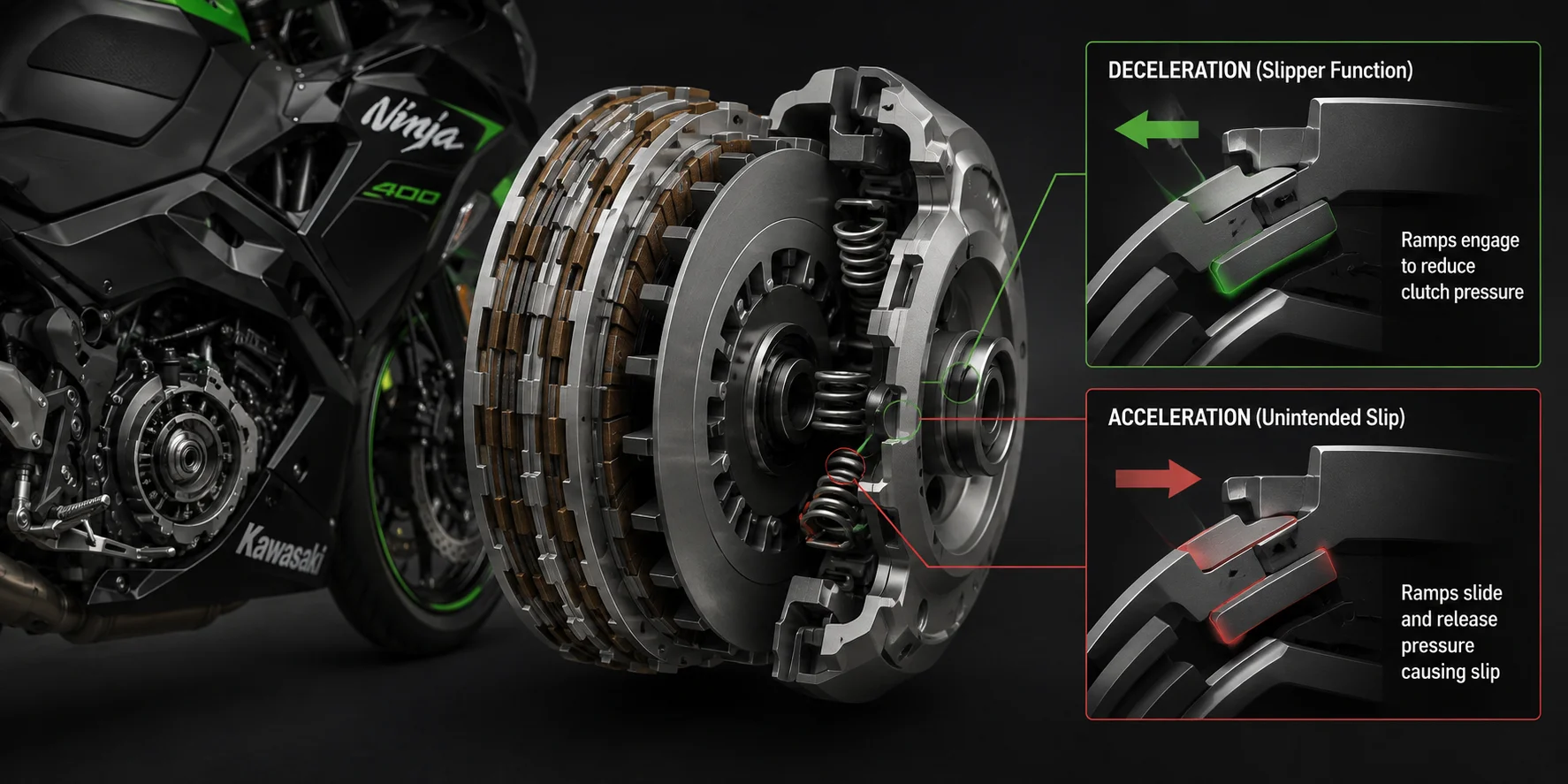
Here’s the catch. Under hard acceleration, not deceleration, these same ramps can slide slightly and release pressure from the clutch plates too. This causes the clutch to slip exactly when you want maximum power delivery, not when you’re braking. It’s an unintended side effect of a system designed for a completely different situation.
Add in the fact that Kawasaki uses relatively soft judder springs in this clutch pack, and you get plates that separate under load more easily than most riders expect from a healthy clutch.
How to Know This Is a Mechanical Problem?
A few patterns confirm you’re dealing with this specific issue rather than generic wear or cable adjustment problems.
Slip happens during fast, aggressive upshifts. Riders report it most often during quick clutchless upshifts or hard acceleration runs, not during normal, relaxed riding.
It appeared early in the bike’s life. If you’re seeing slip well before 5,000 miles, especially under 2,000, this points toward the design issue rather than plate wear.
Cable adjustment doesn’t fully fix it. Some riders find loosening the clutch cable slightly helps a little, but the slip often returns under harder riding, since the root cause is mechanical, not adjustment-related.
A dealer confirms your oil and cable are correct. If a certified technician checks your cable free play and confirms you’re running proper JASO MA or MA2-rated oil, and the slip persists, this strongly points to the ramp design issue.
Why Riding Style Matters Here?
This issue shows up more in riders who accelerate hard, shift aggressively, or ride the bike closer to its performance limits. Kawasaki built the Ninja 400 as an entry-level sport bike, and its stock clutch components were not engineered to handle sustained aggressive use without eventually showing this behavior.
This doesn’t mean you did anything wrong by riding your bike hard. It means the stock clutch pack has a known limitation under those conditions, and plenty of owners run into it.
The Fix You Might Need
Once this issue shows up, adjustment alone will not solve it permanently. The fix involves replacing your friction plates and judder springs with components built to handle the load better.
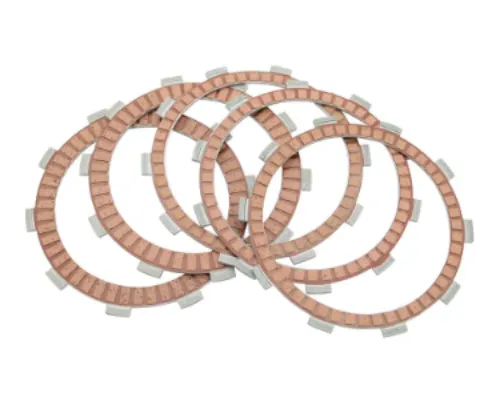
Aliwheels carries Kawasaki Ninja 400 Clutch Plates (2018-2023), a direct fitment replacement for your model. Fresh, properly specced plates restore full clamping force and eliminate the early slip most stock clutches develop under hard use.
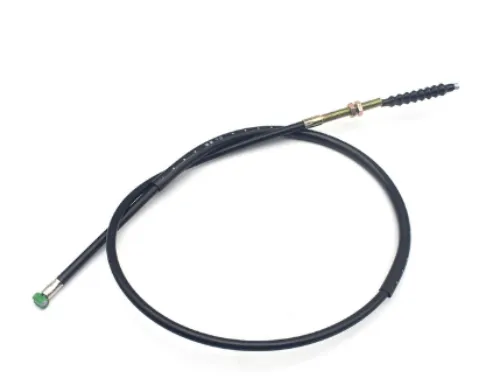
If your clutch cable also shows wear or improper adjustment history, pairing your plate replacement with a fresh Kawasaki Ninja 400 Clutch Cable Wire ensures your entire clutch system works together correctly, rather than fixing one component while an unrelated issue lingers.
Installing New Clutch Plates
Replacing clutch plates on the Ninja 400 is a manageable job for riders comfortable with basic engine work.
- Drain your engine oil first, since you’ll need to remove the clutch cover.
- Remove the clutch cover, keeping track of all mounting bolts.
- Remove the pressure plate and springs, noting their orientation for reassembly.
- Remove the old friction and steel plates, then compare them against your new set.
- Install the new plates in the correct alternating order, following your service manual’s stacking sequence.
- Reassemble the pressure plate and springs, torquing bolts evenly in a crisscross pattern.
- Reinstall the clutch cover with a fresh gasket.
- Refill with fresh oil rated for wet clutch use.
Most riders complete this job in two to three hours with basic tools and a service manual for torque specifications.
Should You Upgrade Beyond Stock Clutch Plates?
For riders who track their Ninja 400 or ride aggressively on a regular basis, some owners go further by removing the stock judder springs entirely and using a wider friction plate design for increased friction material. This is a more involved modification and works best paired with race-oriented clutch kits designed specifically for this purpose.
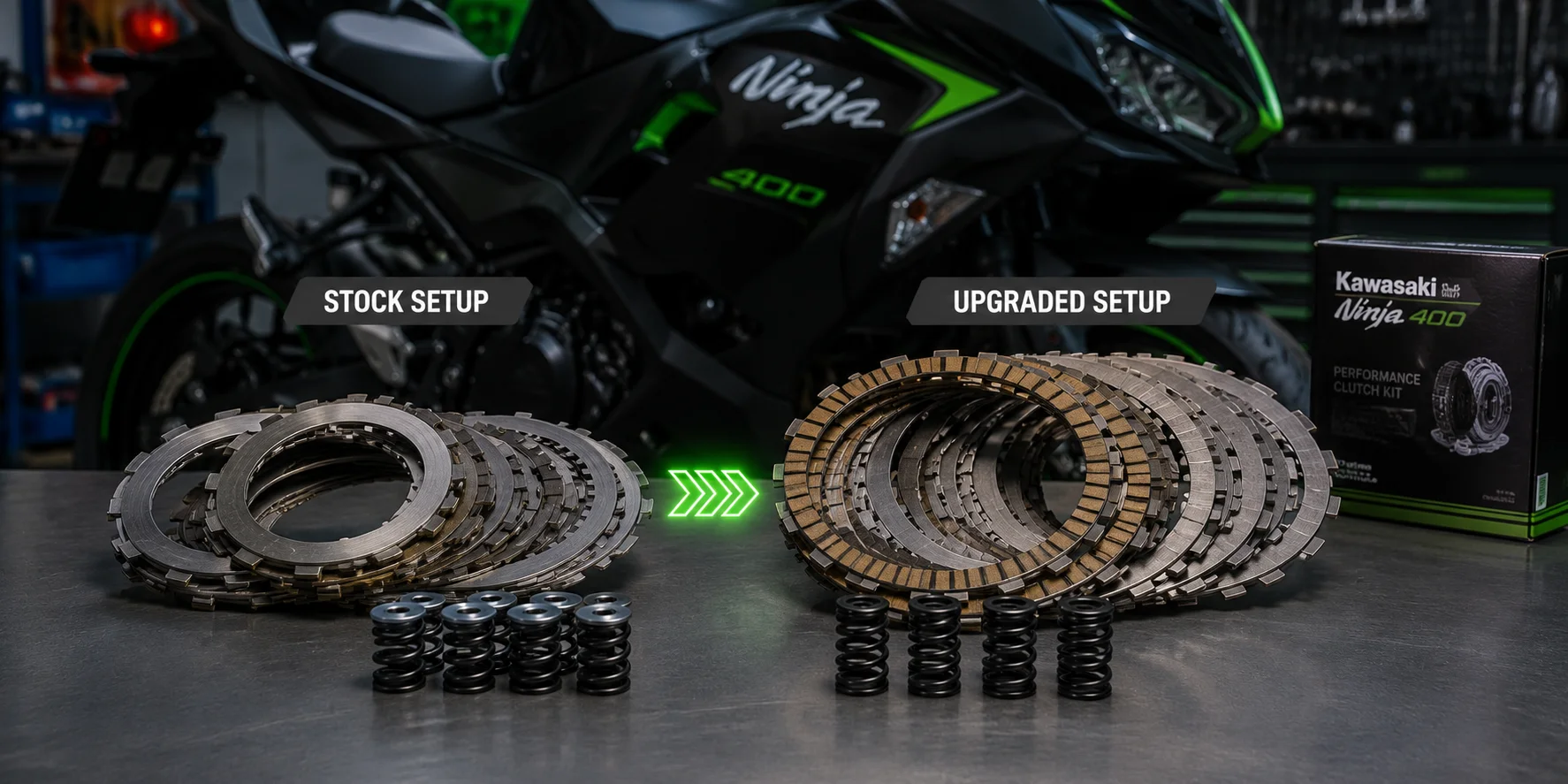
For most street riders, however, a properly specced replacement plate set solves the early slipping issue without needing to go that far.
Preventing This From Happening Again
A few habits help extend the life of your new clutch setup.
Avoid excessively aggressive clutchless upshifts until your new plates have properly broken in over the first few hundred miles. Check your clutch cable free play periodically, since improper adjustment adds unnecessary stress to the clutch pack. Use only oil rated JASO MA or MA2, since incorrect oil additives can cause wet clutches to slip prematurely, compounding the existing design sensitivity.
Frequently Asked Questions
Is clutch slipping on the Ninja 400 covered under warranty?
This varies by dealer and mileage. Some owners report success getting it addressed under warranty, especially with low mileage, while others find dealers classify it as normal wear. It’s worth raising with your dealer directly and referencing documented cases of this design issue.
Does this affect all Ninja 400 model years equally?
Owners report the issue most commonly on 2018-2019 models, though it can appear across the range. Kawasaki introduced updated clutch pull rod and bearing components in later years, which some owners say helps reduce the issue.
Can I fix this by just adjusting my clutch cable?
Cable adjustment can help slightly in mild cases, but it rarely resolves the issue permanently since the root cause is the ramp design and spring tension, not cable slack.
Will this issue happen again after I replace the plates?
Properly specced replacement plates and springs significantly reduce the chances of recurrence for typical street riding. Very aggressive or track-focused riding may benefit from further upgrades beyond stock replacement parts.
Browse our full Kawasaki motorcycle parts collection for additional fitment-matched components for your motorcycle.