


Free Shipping over $300

Support 24/7

Secure Payments

Hot Offers

Aliwheels is a leading motorcycle parts supplier offering free shipping anywhere in the world on orders above $300. Please note that all of our motorcycle parts and accessories are certified and tested. With more than 10,000* products to choose from this is your one place to get the motorcycle part you need. Browse our vast inventory of motorcycle radiators, fairings, clutch plates, headlights, chains, and sprockets.

Free Shipping over $300

Support 24/7

Secure Payments

Hot Offers

Kawasaki riders have their own identity. Whether you’re weaving through city traffic on a Ninja ZX6R, covering long highway miles on a Vulcan 1700, or carving weekend corners on a Z900, your riding style deserves gear that performs just as well. A Kawasaki motorcycle jacket should deliver reliable protection, all-day comfort, and a design that reflects the performance heritage behind the green badge on your tank.

Today’s Kawasaki jacket range includes everything from premium cowhide leather race-inspired jackets to lightweight textile options designed for commuting, touring, and everyday wear. With so many choices available, finding the right one can feel overwhelming. This guide breaks down what actually matters, helping you choose the best Kawasaki riding jacket based on your motorcycle, riding style, weather conditions, and protection needs.

Browse Aliwheels‘ full Motorcycle Jackets and Vests range and the complete Riding Gear catalogue for certified Kawasaki-branded and Kawasaki-compatible riding gear. For all Kawasaki model-specific parts and accessories, browse Kawasaki Motorcycle Parts.

Why You Should Buy a Kawasaki Jacket

The term “Kawasaki jacket” actually refers to two different types of riding gear, and many buyers confuse them.

The first is official Kawasaki-branded apparel. These jackets feature Kawasaki logos, Team Green graphics, or factory-inspired designs. They include leather racing jackets, protective textile riding jackets, and casual lifestyle jackets designed for riders who want to show their Kawasaki pride both on and off the motorcycle.

The second category is Kawasaki-compatible motorcycle jackets. These are certified riding jackets designed to suit Kawasaki motorcycles and riding styles, even if they don’t carry Kawasaki branding. For example, a CE-certified leather sport riding jacket is an excellent choice for a Ninja ZX10R rider, while a comfortable textile touring jacket may be ideal for a Versys owner. The focus here is performance, protection, and compatibility rather than logos.

Both options serve different purposes. If you’re shopping for a Kawasaki jacket, knowing which category you need will help you make the right choice. Otherwise, you could end up buying a casual branded jacket with little riding protection or an expensive race-spec leather jacket when a lightweight touring or commuter jacket would better suit your everyday riding.

The Four Types of Kawasaki Jackets 

1. Kawasaki Leather Racing Jackets

Leather racing jackets sit at the top of the Kawasaki riding gear range. Designed for performance-focused riders, they are typically made from 1.2mm to 1.6mm genuine cowhide leather and feature CE-approved armor in the shoulders, elbows, and back. Most also include pre-curved sleeves for a natural riding position and premium YKK zippers for long-term durability.
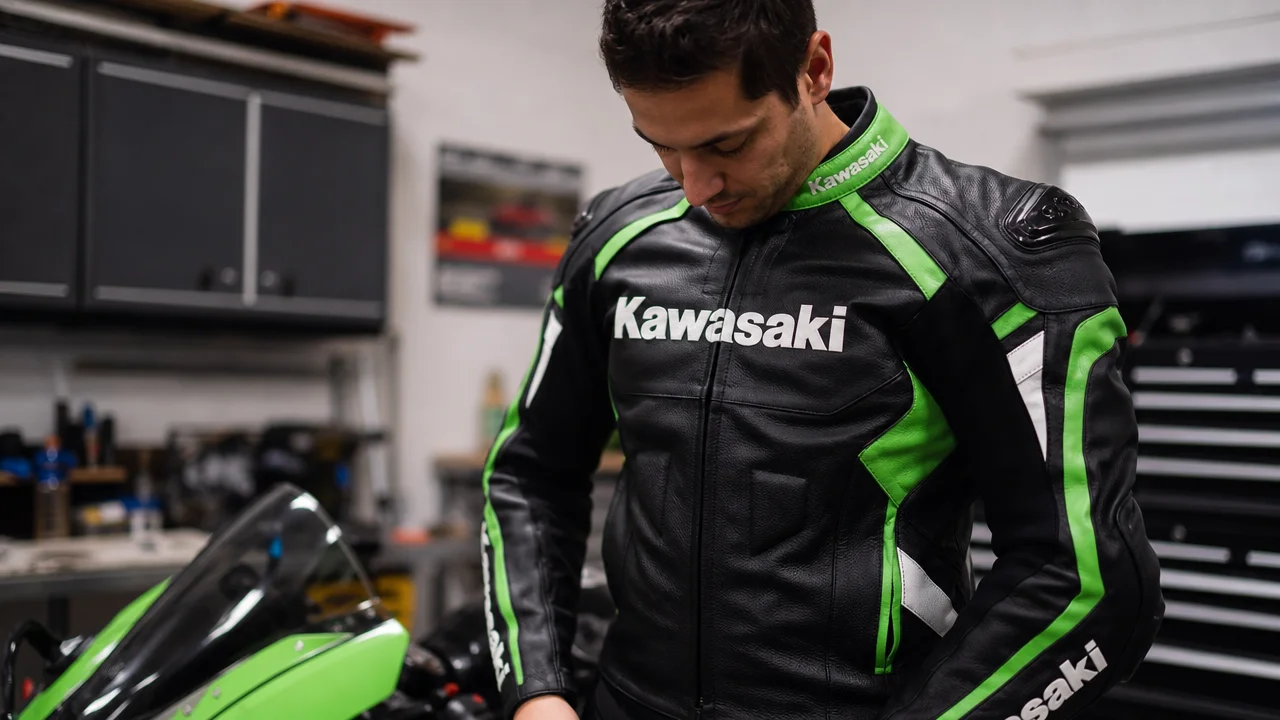
 Kawasaki Leather Racing Jacket

These jackets are ideal for riders of the Ninja ZX6R, Ninja ZX10R, ZX4RR, Z900, and Z900RS, where protection, abrasion resistance, and a sport-inspired fit matter most. Quality cowhide leather in the 1.2mm to 1.3mm range offers an excellent balance of impact protection, flexibility, and comfort while maintaining the aggressive styling Kawasaki sport bikes are known for.

What to Look For

  • Genuine 1.2mm or thicker cowhide leather construction
  • CE-certified armor in the shoulders and elbows, with a pocket for a back protector
  • Pre-curved sleeves that reduce fatigue in a riding position
  • YKK or other premium zippers for durability and reliable performance
  • A removable quilted or thermal liner for year-round versatility
  • A race-style or mandarin collar for improved comfort at higher speeds

What to Avoid

Not every leather jacket marketed for motorcycles offers the protection riders expect. Watch out for:

  • PU or “leather-look” materials advertised as leather without clearly stating they are genuine cowhide
  • Fixed armor that cannot be removed, upgraded, or replaced after wear
  • Jackets without a back protector pocket, leaving one of the most critical impact areas unprotected
  • Thin leather with no published thickness specification, as lower-quality materials provide significantly less abrasion resistance during a slide

2. Kawasaki Textile Riding Jackets

Textile jackets are the go-to choice for Kawasaki Versys, Ninja 650, Z650, Vulcan, and adventure-touring riders who value comfort, weather protection, and everyday practicality. Unlike leather, these jackets are built for changing riding conditions, making them ideal for commuting, touring, and year-round use.
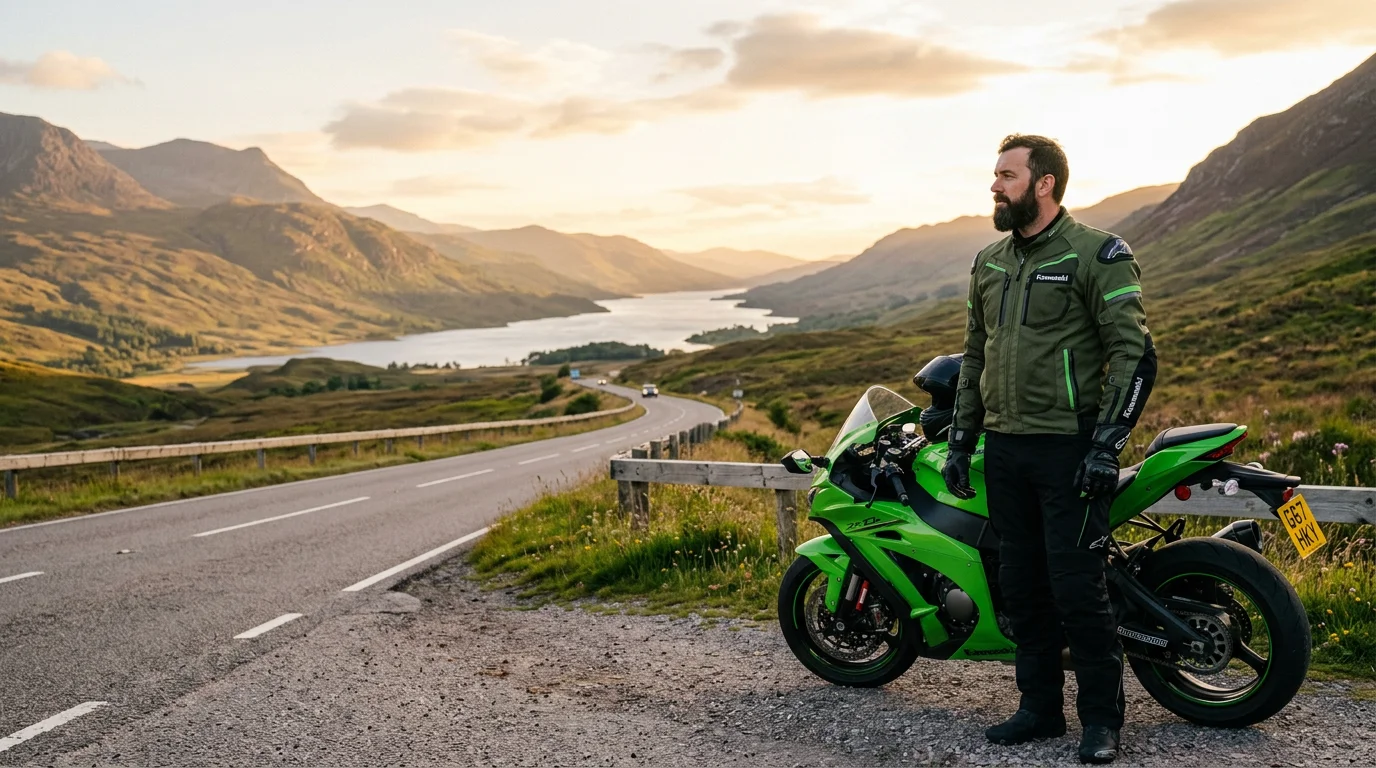
 Kawasaki Textile Riding Jacket

A quality Kawasaki textile jacket is typically made from Cordura, ballistic nylon, or other high-strength technical fabrics, combined with waterproof membranes, removable thermal liners, and CE-certified armor. They offer dependable protection while remaining lighter and more comfortable than leather, especially on longer rides.

For many riders, the benefits are easy to see. Waterproof construction keeps you riding through unexpected rain without the maintenance leather requires. Removable liners make it easier to adapt to changing temperatures, while the lighter overall weight reduces fatigue during long journeys or daily commutes.

When shopping for a textile motorcycle jacket, pay close attention to the material. AR500 and AR600 ballistic nylon are widely recognised as benchmarks for abrasion-resistant riding gear. Likewise, premium fabrics such as Cordura are known for their durability and resistance to tearing. A well-made Kawasaki textile jacket should clearly state the type and strength of its outer shell rather than relying on vague descriptions like “high-quality textile.”

3. Kawasaki Mesh Jackets

Mesh Kawasaki jackets are designed specifically for hot-weather riding. Their open-weave construction allows maximum airflow while still providing protection with CE-certified armor in key impact areas. They are especially popular among Ninja 400, Ninja 500, Z400, and Z500 riders, particularly in warmer regions where heavy riding gear can become uncomfortable during summer.
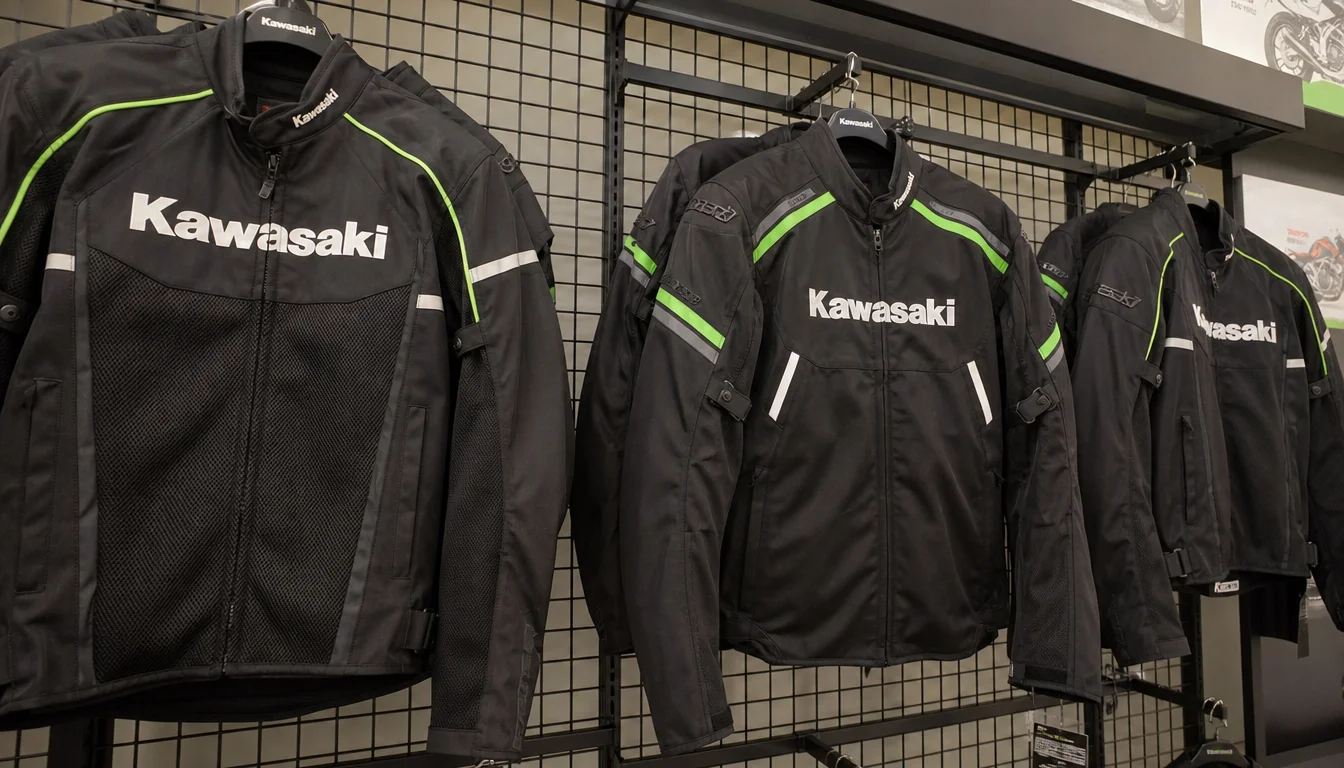
The biggest advantage of a mesh jacket is comfort. Continuous airflow helps keep your body cooler, making long commutes and city rides far more enjoyable in high temperatures. Many models also include removable waterproof or thermal liners, adding extra versatility during changing weather.

However, there is an important trade-off. While quality mesh jackets still meet motorcycle safety standards, they generally offer less abrasion resistance than leather or heavy-duty textile jackets. The large mesh panels improve ventilation but expose more material to wear during a slide.

For riders who spend most of their time in the city or on suburban roads, a certified mesh jacket offers an excellent balance between protection and comfort. If you regularly ride on highways or at sustained high speeds, a leather or solid textile jacket remains the better choice for maximum abrasion protection.

4. Kawasaki Casual and Lifestyle Jackets

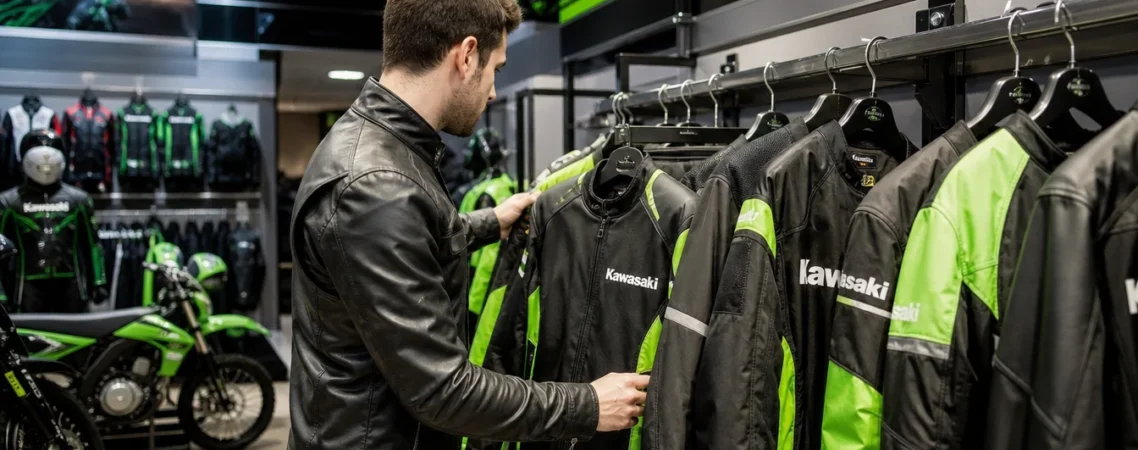
Not every Kawasaki jacket is designed for riding. Many jackets carrying the Kawasaki logo or Team Green graphics are lifestyle apparel made for everyday wear rather than motorcycle protection. They’re perfect for visiting your local dealership, attending motorcycle events, watching races, or simply showing your support for the brand off the bike.

The key difference is protection.
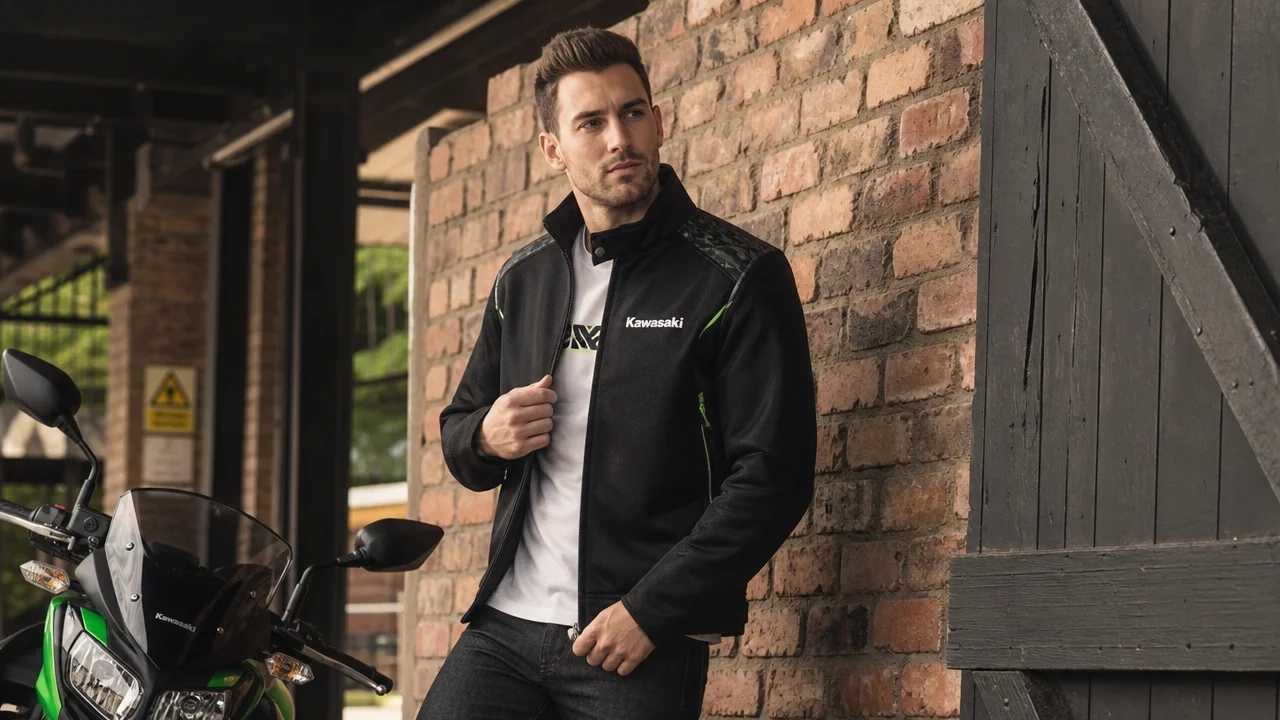
Kawasaki Casual Jacket

Most casual Kawasaki jackets do not include CE-certified armor, abrasion-resistant materials, or impact protection. They are designed for comfort and style, not for protecting riders in the event of a crash.

That’s why it’s important to check beyond the branding. A jacket with a Kawasaki logo isn’t automatically a motorcycle riding jacket. If you want Kawasaki styling without compromising safety, always look for CE certification, built-in or removable armor, and motorcycle-specific construction. The graphics on the chest may show your brand loyalty, but it’s the safety certification that determines whether the jacket is truly built for riding.

Understanding CE Safety Ratings for Kawasaki Jackets

A serious Kawasaki riding jacket should always carry CE EN 17092 certification. This is the European safety standard for motorcycle clothing, designed to evaluate how well a jacket performs in real-world riding conditions. Certified jackets are independently tested for abrasion resistance, seam strength, tear resistance, and impact protection, giving riders confidence that the gear meets recognised safety requirements.

The certification level tells you how much protection the jacket provides:

  • CE Class A – Entry-level protection, suitable for urban commuting and lower-speed everyday riding.
  • CE Class AA – A balanced combination of protection and comfort, making it the best choice for most street riders on Kawasaki Ninja, Z-Series, Versys, and Vulcan motorcycles.
  • CE Class AAA – The highest level of protection available for motorcycle apparel. Recommended for aggressive sport riding, high-speed touring, and track days on Ninja ZX-series models.

Never judge a riding jacket by its appearance alone. Two jackets may look almost identical, but if one carries a CE EN 17092 label and the other doesn’t, they are not offering the same verified level of protection. Before buying any Kawasaki riding jacket, always check for the certification label rather than relying solely on branding, styling, or marketing claims.

Kawasaki Jacket Sizing: Finding the Right Size

Getting the right size is just as important as choosing the right jacket.

Many Kawasaki leather jackets, especially those made by Asian manufacturers, run smaller than standard US sizing. A rider who normally wears a US Large may need an XL or even 2XL, particularly with race-inspired jackets designed in a pre-curved riding position. These jackets are shaped for a forward-leaning posture on the motorcycle rather than standing upright, so they naturally feel more fitted.

Instead of relying on your everyday clothing size, take a few minutes to measure:

  • Chest circumference
  • Waist circumference
  • Sleeve length

Compare these measurements with the manufacturer’s size chart for the exact jacket you’re buying. Sizing can vary between brands and even between different Kawasaki jacket models.

When trying on a leather riding jacket, make sure you can fully zip it with the armor installed, move your shoulders comfortably, and extend your arms into a natural handlebar position without the sleeves pulling back excessively. A properly fitted jacket should feel snug but not restrictive, providing enough room for movement while keeping the armor correctly positioned during the ride.
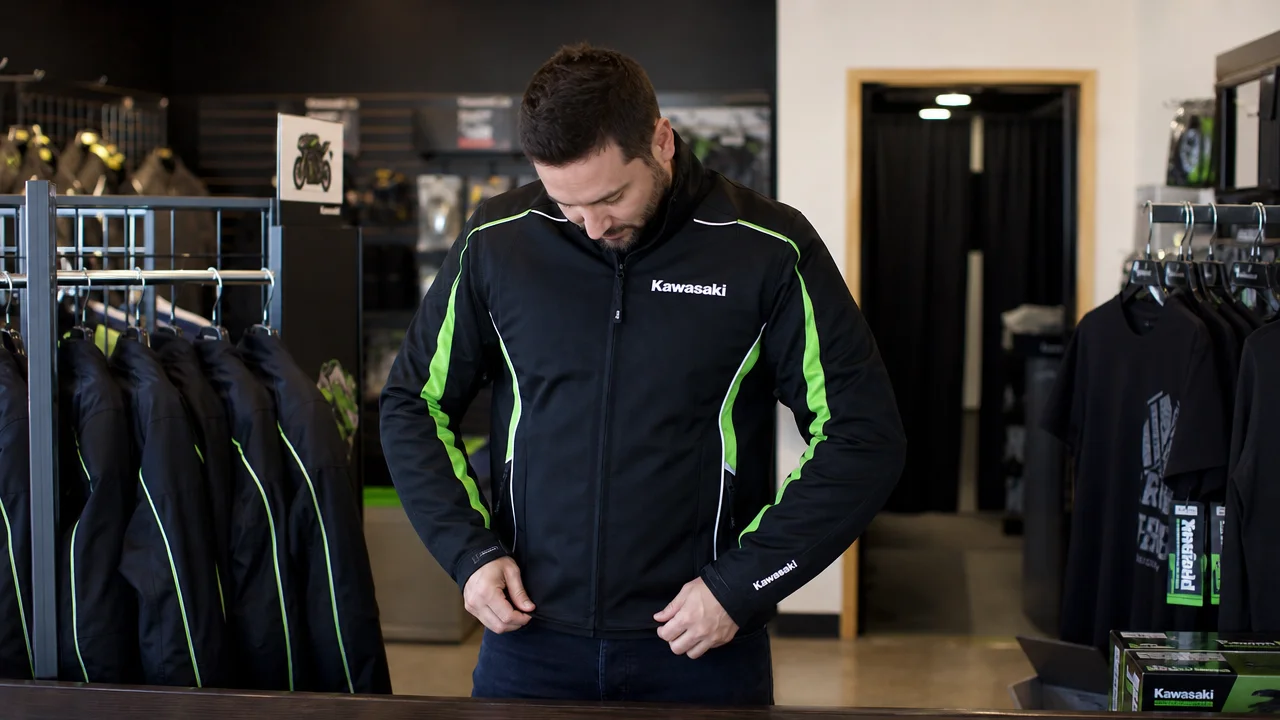
Finding the Right Size

Kawasaki Team Green: The Jacket as a Statement

Style and Brand Appeal

Kawasaki has one of the most recognizable identities in the motorcycle world. Its signature Kawasaki Green and decades of Team Green racing success have become symbols of performance, speed, and precision. Many riders naturally want their gear to reflect that same identity.

A well-designed Kawasaki leather jacket featuring a black base with subtle Team Green accents offers the perfect balance of style and function. It complements Kawasaki motorcycles without being overly flashy, creating a clean, performance-inspired look that’s instantly recognizable to fellow riders.

Whether you’re riding a Ninja, Z-Series, Versys, or Vulcan, choosing a jacket that matches your motorcycle’s character adds to the overall riding experience. While appearance should never come before safety, there’s no reason you can’t have both. The best Kawasaki jackets combine certified protection, quality construction, and the iconic styling that has made the brand stand out on roads and racetracks for decades.

For riders building a coordinated setup, the Kawasaki Ninja T-Shirt for Men at Aliwheels extends the Kawasaki identity to casual wear, made from 100% polyester and cotton, crew neck, Kawasaki Ninja printed design for the rider who wants the brand beyond the bike.

For the complete Kawasaki motorcycle jacket guide including specific model recommendations, Aliwheels has published a dedicated Guide to Choosing the Perfect Kawasaki Racing Jacket covering the selection process in detail.

Kawasaki Jacket Care and Maintenance

Care and Maintenance Tips

Taking care of your Kawasaki riding jacket helps preserve both its appearance and its protective performance.

Leather jackets need regular conditioning to keep the leather soft, flexible, and resistant to cracking. Apply a quality leather conditioner every three to six months, depending on how often you ride and the weather conditions. When storing the jacket, hang it on a wide, padded hanger instead of folding it. Folding can create permanent creases that weaken the leather over time.

Don’t overlook the CE-certified armor. Inspect the shoulder, elbow, and back protectors at least once a year for signs of wear, cracking, or damage. Even if the armor has never been involved in a crash, prolonged use, heat, and UV exposure gradually reduce its protective properties. Soft foam-based armor generally lasts three to five years, while hard-shell protectors typically last longer but should still be checked regularly for cracks or delamination.

For textile Kawasaki jackets, proper maintenance is equally important. Wash the jacket according to the manufacturer’s instructions, then reapply a Durable Water Repellent (DWR) treatment when water no longer beads on the surface. Restoring the DWR coating helps maintain water resistance and keeps the jacket performing well in wet conditions. Regular cleaning also removes dirt and oils that can reduce the effectiveness of breathable waterproof membranes over time.

Conclusion

Choosing the right Kawasaki jacket starts with understanding what you actually need. Are you looking for a race-ready leather jacket, an all-weather textile option, a lightweight mesh jacket for summer, or simply Kawasaki-branded casual apparel? Once you’ve identified the right category, the next step is making sure it offers the level of protection your riding demands.

For any motorcycle riding jacket, CE EN 17092 certification should be a priority, not an afterthought. The right protection level depends on how and where you ride, whether that’s daily commuting, weekend canyon runs, long-distance touring, or occasional track days.

Kawasaki’s Team Green heritage and iconic styling are part of what makes the brand so appealing. A jacket that reflects that identity is a great addition to any rider’s gear collection. However, style should always come second to safety. A jacket that looks the part but lacks certified protection is ultimately just apparel.

Choose a Kawasaki jacket that combines quality construction, certified protection, comfort, and the styling that suits your motorcycle and riding style. That way, you’ll enjoy the confidence of wearing gear that not only represents the Kawasaki name but also delivers the protection you need every time you ride.

Frequently Asked Questions

Q: Are Kawasaki-branded jackets actually CE certified for motorcycle riding?

A: It depends on the specific model. Genuine Kawasaki riding jackets, including leather sport jackets and textile touring jackets, are often certified to CE EN 17092 standards. However, Kawasaki lifestyle and casual jackets are designed for everyday wear and are not protective motorcycle gear. Always check the product description or label for the CE certification and protection class (A, AA, or AAA) before purchasing.

Q: What leather thickness should a Kawasaki racing jacket have?

A: A quality motorcycle leather jacket should use 1.2 to 1.3mm full-grain cowhide, which offers an excellent balance of abrasion resistance, flexibility, and comfort. Avoid jackets made from split leather or those that don’t specify leather thickness, as they generally provide lower protection in a slide.

Q: What’s the difference between a Kawasaki Ninja jacket and a standard Kawasaki jacket?

A: A Kawasaki Ninja jacket is designed to complement the Ninja sportbike lineup, typically featuring Team Green graphics, Ninja branding, pre-curved sleeves, and a sport-oriented fit. A standard Kawasaki jacket carries the broader Kawasaki branding and may be designed for touring, commuting, or casual riding. Regardless of branding, a true riding jacket should include CE-certified protection.

Q: Is a Kawasaki textile jacket suitable for touring on a Vulcan 1700?

A: Yes. A quality textile touring jacket is an excellent choice for Vulcan 1700 riders. Look for features such as a ballistic nylon or Cordura outer shell, removable waterproof membrane, thermal liner, CE AA-rated armor, and a back protector pocket. Touring riders should also ensure the jacket fits comfortably in a more upright riding position.

Q: How should a Kawasaki riding jacket fit?

A: Always check the fit while sitting in your normal riding position. The jacket should:

  • Cover your lower back without riding up.
  • Keep the sleeves long enough to cover your wrists when reaching the handlebars.
  • Position the shoulder and elbow armor directly over the joints.
  • Feel snug enough to keep the armor in place without restricting movement or head rotation.

A properly fitted jacket is just as important as the quality of its materials and protective features. Even the highest-rated gear cannot provide its intended level of protection if it doesn’t fit correctly.
(Commenting: OFF)

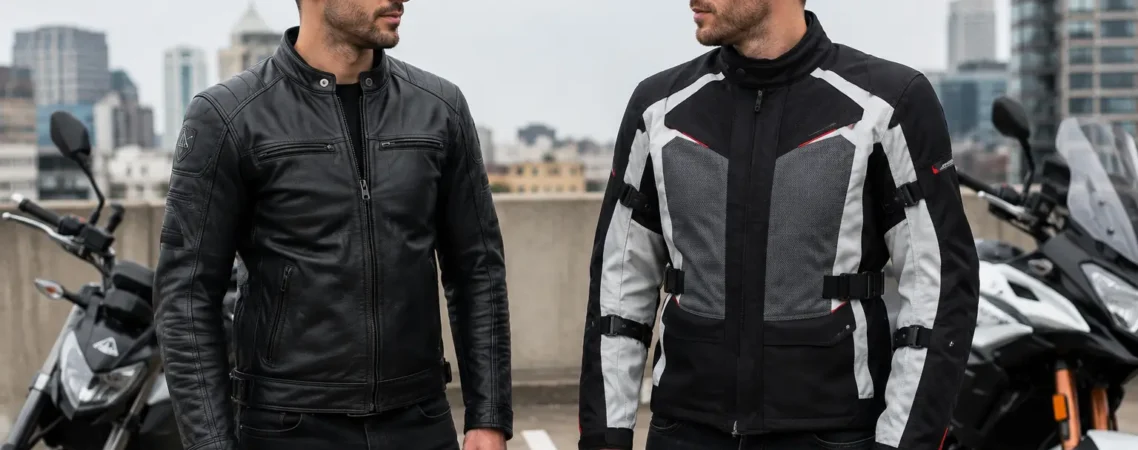
Walk into any motorcycle dealership, and you will get a different answer from every person you ask. The leather diehards insist nothing beats hide on the pavement. The textile converts points to waterproofing, armor pockets, and versatility. And somewhere in between, new riders are trying to make a decision that will affect their safety every single time they ride.

The honest answer is more nuanced than either camp admits. Leather and textile jackets each win in specific measurable ways. The right choice depends on how you ride, where you ride, and what you are most likely to encounter.

Here is the full breakdown. Browse Aliwheels’ Motorcycle Jackets and Vests category after reading to find CE-certified options for your riding style.

The Core Question: Abrasion Resistance Under Road Contact

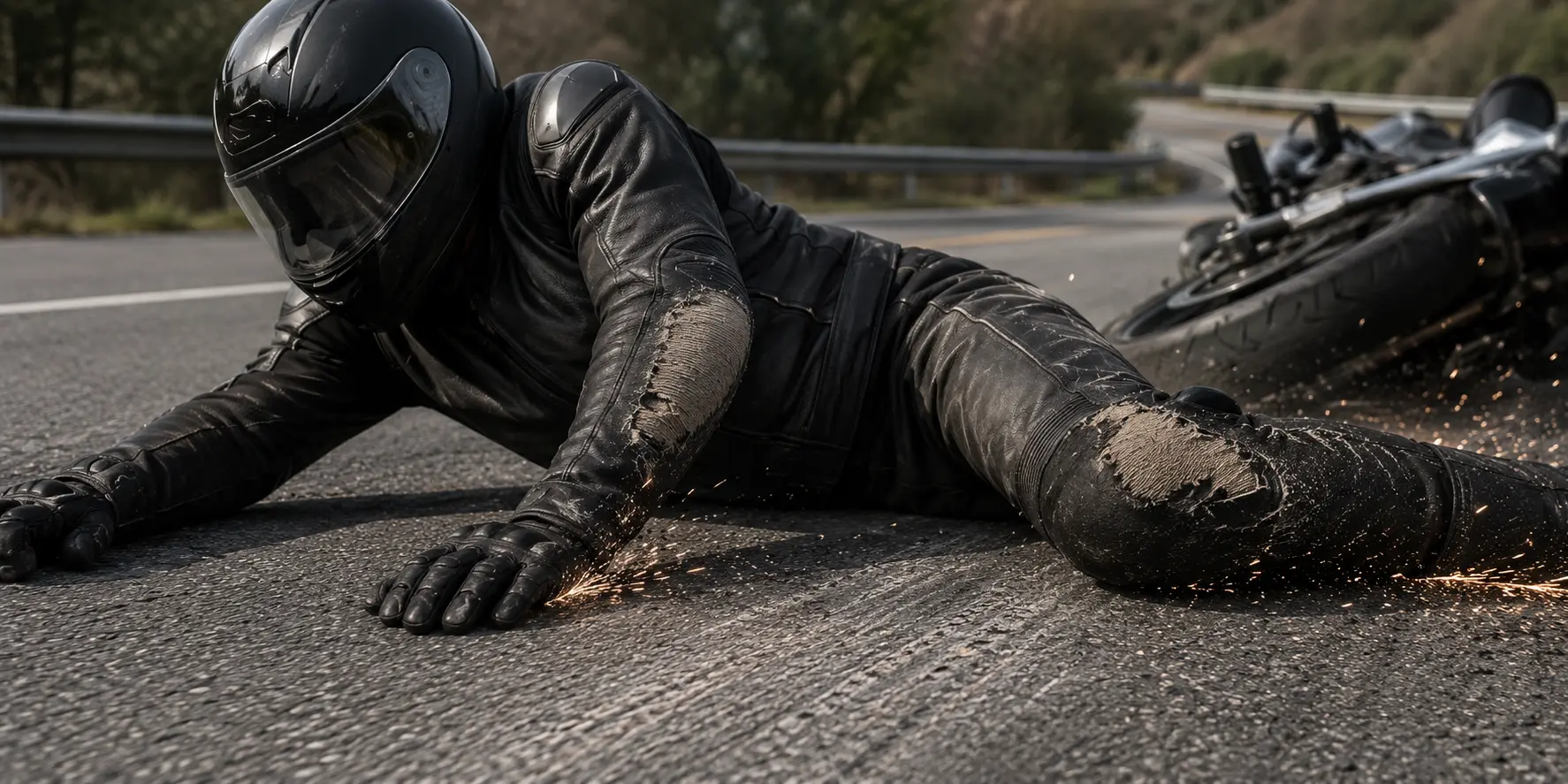
When a motorcycle goes down and the rider slides across pavement, the jacket’s job is to resist abrasion long enough to prevent road rash from penetrating skin. This is where leather has held its historical advantage and where the data still supports that advantage in specific scenarios.

According to the CE EN 17092 motorcycle garment standard testing methodology, abrasion resistance is measured in seconds of sustained contact against an abrasive surface. Full-grain leather from quality hides consistently outperforms standard textile weaves in this test at equivalent price points. However, high-specification technical textiles like 1000D Cordura, Kevlar blends, and Dyneema fabrics now match or exceed entry-level leather in abrasion resistance while offering additional benefits.

The key variable is specification. A quality textile jacket outperforms a cheap leather jacket. A quality leather jacket outperforms a cheap textile jacket. The material type matters less than the specification grade and certification level.

FactorQuality LeatherQuality Textile (1000D+)Budget LeatherBudget Textile
Abrasion resistanceExcellent — proven on pavementVery good — spec-dependentModerate — thin hide degrades fastPoor — tears quickly
Impact protectionDepends on armor — not inherentDepends on armor — not inherentMinimalMinimal
WaterproofingPoor without treatmentExcellent with membranePoorVariable
Ventilation in heatPoor—heavy and hotExcellent — mesh and ventsPoorGood
Cold weather performanceModerate—needs linerExcellent — thermal linersPoorGood with liner
WeightHeavyLight to moderateHeavyLight
CE garment rating availableYes—CE-A through CE-AAAYes—CE-A through CE-AAARarelyRarely
Long-term durabilityExcellent with careVery goodPoorModerate
Motorcycle rider sliding on asphalt demonstrating abrasion resistance.

CE EN 17092: The Certification That Actually Makes Difference

The CE EN 17092 standard replaced the older EN 13595 standard and introduced a clearer garment-level rating system. Understanding it takes two minutes and prevents buying a jacket that looks protective but has never been independently tested.

CE ClassWhat It MeansWho It Is For
Class ABasic protection — passes minimum abrasion and impact thresholdsCasual urban riders, short commutes
Class AAIntermediate protection — higher abrasion and impact resistanceMost street riders, commuters, weekend riders
Class AAAHighest protection — significantly above AA in all zonesSport riders, fast road riding, track days
Class BUpper body only — vest or protector, not full jacketUsed with other protective layers

Both leather and textile jackets are available in all CE classes. A CE-AAA textile jacket provides significantly more certified protection than a CE-A leather jacket, regardless of what the leather jacket looks like. Always check the CE class label inside the jacket before buying, not just the material description on the hang tag.

The single most important thing to check: Look for the CE EN 17092 label inside the jacket with the class rating clearly marked. A jacket without this label has not been independently tested to any published protection standard, regardless of material.

Where Leather Wins Outright?

Abrasion Performance at the Highest Specifications

At equivalent CE class ratings, full-grain leather from established motorcycle jacket manufacturers still delivers the most consistent abrasion performance in real-world crash scenarios. This is why you see leather still dominating racing at the highest levels where abrasion performance is the single most critical variable.

Long-Term Durability with Proper Care

A quality leather jacket that is cleaned and conditioned regularly can last 20 to 30 years of riding. Quality textile jackets typically have a functional lifespan of 8 to 15 years before seam integrity and coating performance degrade. For riders who want one jacket to last a very long time, leather has an edge.

Classic Aesthetic

This is not a trivial point. A jacket you enjoy wearing gets worn more often. Riders who love the look and feel of leather are more likely to gear up consistently than those wearing a jacket they find uncomfortable or unattractive. Gear compliance matters for actual protection.

Where Textile Wins Outright?

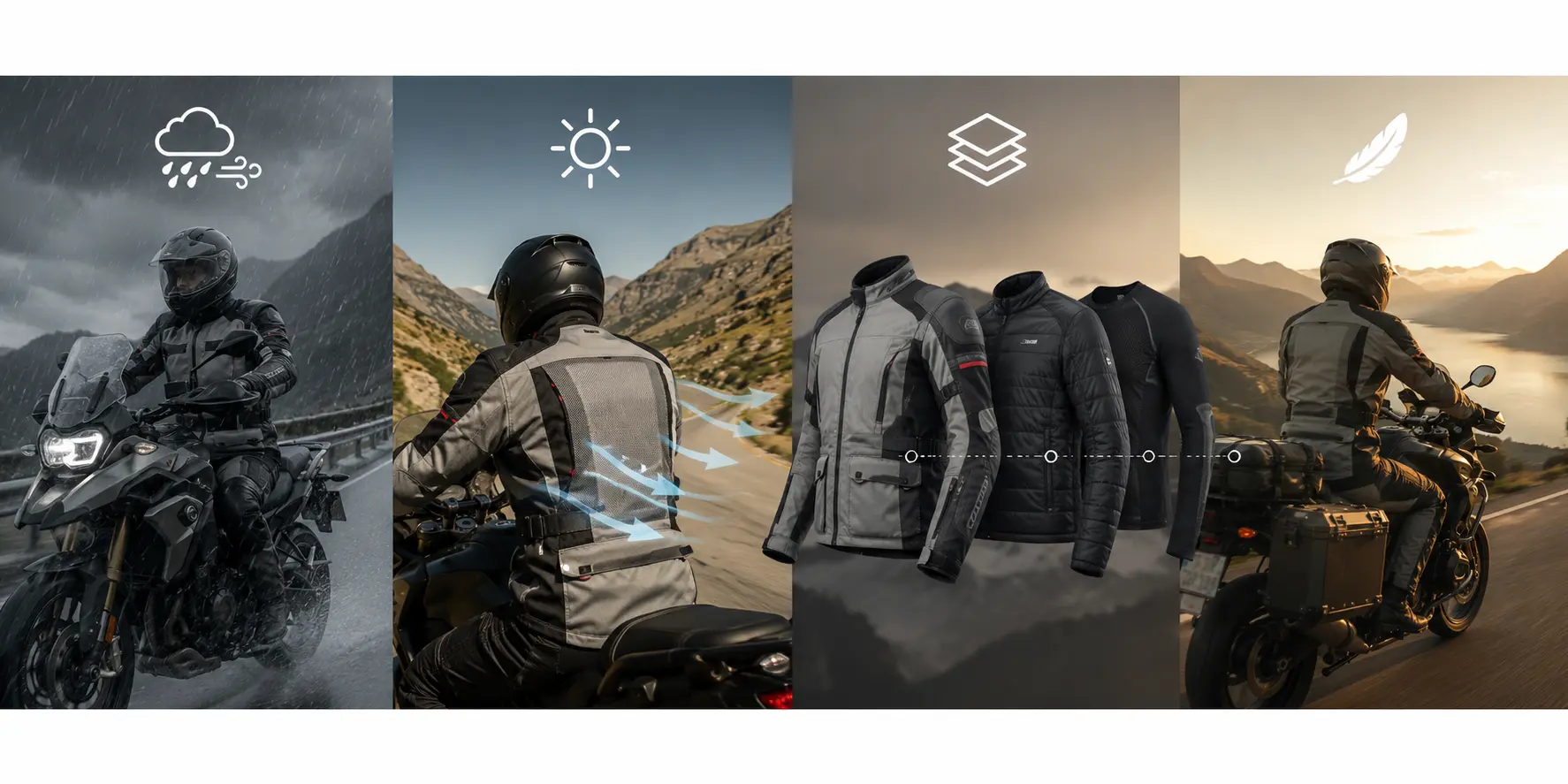
All-Weather Riding

A quality textile jacket with a waterproof membrane, like Gore-Tex, Hipora, or equivalent, keeps you dry in rain that would soak through leather within minutes. For US riders who commute year-round or tour across variable weather zones, a textile jacket handles conditions that leather simply cannot manage without additional gear.

Ventilation in Summer Heat

Mesh textile jackets with zippered vents solve the problem leather cannot. Imagine riding in 90-degree summer heat without overheating. Leather jackets trap heat against the body. Quality mesh or perforated textile jackets maintain protection while allowing significant airflow. According to experts, ventilation is the top reason US riders in southern and southwestern states choose textiles over leather.

Modular Layering System

Most quality textile jackets include a removable thermal liner and a removable waterproof membrane as separate layers. One jacket covers three temperature ranges: hot summer with mesh only, mild weather with membrane, and cold weather with both liner and membrane. Leather achieves none of this without additional layers purchased separately.

Weight and Comfort for Long Distance

A quality textile touring jacket weighs significantly less than a leather equivalent and allows greater freedom of arm movement in the riding position. On a 500-mile touring day, that weight and mobility difference translates into less fatigue.

Textile motorcycle jacket in all-weather riding

The Verdict: Which Should You Buy?

Riding ProfileBest ChoiceWhy
Sport/track day riderLeather CE-AA or AAABest abrasion performance at speed, purpose-built for this scenario
Year-round commuterTextile CE-AA with membraneHandles rain, cold, and heat that leather cannot manage alone
Summer city riderMesh textile CE-AAVentilation is critical—leather is dangerously hot in sustained summer heat
Long-distance tourerTextile CE-AA with liner systemWeight, ventilation, and modular layering beat leather for multi-day trips
Weekend cruiser, dry climateEither — CE-AA minimumEither material works well when conditions are consistent and warm
New rider, budget-consciousTextile CE-AAMore versatile, handles changing conditions while rider develops riding habits

Complete your riding gear: Riding Gear | Motorcycle Gloves | Motorcycle Boots | Motorcycle Protection 

Conclusion

Leather wins on abrasion performance at equivalent specification levels and on long-term durability. Textile wins on weather versatility, ventilation, weight, and modular layering. Neither material is inherently superior; what matters is the CE class rating, the specific fabric or hide specification, and whether the jacket matches how you actually ride.

The worst jacket is the one that stays in the garage because it is too hot, too heavy, or too inconvenient for the conditions you ride in. The best jacket is the CE-AA or CE-AAA certified option that matches your riding profile and gets worn every time you get on the bike.

Browse Aliwheels‘ full range of Motorcycle Jackets and Vests to find the right CE-certified option for your riding style and climate.

Frequently Asked Questions

Q: Is leather or textile better for motorcycle protection?

A: At equivalent CE class ratings, quality leather has a slight edge in abrasion resistance. However, a CE-AA textile jacket outperforms a CE-A leather jacket across almost every measurable protection metric. The CE class rating is more important than the material. Do not buy material. Buy a CE class rating that matches your riding intensity.

Q: Can a textile motorcycle jacket be as safe as leather?

A: Yes, at equivalent or higher CE class ratings. High-specification technical textiles including 1000D Cordura, Kevlar blends, and Dyneema fabrics match or exceed entry-level leather in abrasion resistance while typically offering better impact armor pockets, waterproofing, and ventilation. The key is buying a CE EN 17092-certified textile jacket, not an uncertified one.

Q: Do I need a back protector in my motorcycle jacket?

A: Yes. The back is a major impact zone in crashes and is not protected by abrasion-resistant outer materials alone. Quality motorcycle jackets include a back protector pocket. Fill it. CE Level 2 back protectors offer significantly better impact absorption than the foam inserts often included by default. This applies to both leather and textile jackets equally.

Q: How long does a motorcycle jacket last?

A: A quality leather jacket maintained with regular cleaning and conditioning can last 20 to 30 years. A quality textile jacket typically delivers 8 to 15 years of reliable protection before seam integrity and coating performance degrade. In both cases, inspect the jacket annually for seam separation, armor degradation, and abrasion-resistant material wear.

Q: Is a mesh motorcycle jacket safe for highway riding?

A: A CE-AA or CE-AAA mesh textile jacket provides legitimate highway protection in the impact and abrasion zones. The trade-off is that mesh jackets offer less abrasion protection than their solid textile equivalents at equivalent CE ratings — the open mesh structure reduces contact area. For sustained highway speeds above 70 mph, a solid textile or leather jacket at CE-AA or higher is a better choice than a mesh option at the same CE class.

(Commenting: OFF)

Buying a motorcycle jacket in 2025 is significantly different from how riders purchased them ten years ago. With rising incidents and security concerns, the increasing number of high-speed motorcycles on the road has led riders to take safety more seriously. Motorcycle jackets are no longer just a style choice. It is a protective gear that makes a huge difference between walking away after a fall and ending up with severe injuries.

If you are looking to buy a motorcycle jacket online that delivers real protection, not marketing claims, the buying approach has to be intentional. You want a motorcycle racing jacket that fits correctly, uses the right materials, carries verified CE armor, and holds up at highway speeds. This guide breaks down how riders in 2025 are choosing jackets that genuinely protect, along with five best-selling options from AliWheels that meet modern safety expectations.

What Real Riders Prioritize in 2025 When Buying a Motorcycle Jacket?

The riding community has become more informed, and manufacturers have stepped up their standards. Motorcycle Riders today look beyond simple leather thickness. They want evidence-backed protection, American and European compliance, advanced construction, and long-term comfort for daily commuting and touring routes.

CE Rated Impact Protection Inside the Jacket

A jacket is only protective if the armor is certified. In 2025, CE-rated armor is considered the minimum requirement. CE level 1 and CE level 2 are trusted globally, especially for shoulders, elbows, and back panels. A jacket without verified armor is simply not considered ride-ready anymore.

High Quality Leather or Reinforced Textile That Survives Abrasion

Motorcycle crashes often involve sliding across tarmac. This is why abrasion resistance matters just as much as impact protection. Riders mostly prefer cowhide leather for its durability, though some textile jackets now use advanced fibers that compete with leather. What matters is the material’s tested abrasion rating.

Stitching Strength That Does Not Split During a Slide

Even premium leather motorcycle jackets won’t help if the stitching tears when the jacket hits the ground. Reinforced and double-stitch construction has become a requirement for riders in the US, especially for track-style jackets.

Ventilation for Summer and Insulation for Cooler Months

Riders want year-round usability. Motorcycle Jackets with internal liners, smart airflow panels, and temperature regulation systems are performing the best in customer reviews.

A Fit That Actually Keeps Armor in the Correct Position

Loose jackets cause armor to shift. Tight jackets restrict movement. The correct fit is the one that keeps every armor piece exactly where it belongs, especially during a fall. Modern riders check shoulder placement, elbow length, and chest compression before buying.

Why Leather Remains the Top Choice in 2025 for Safety Riders?

Despite advancements in textiles, leather continues to dominate the market for high-protection motorcycle apparel. It remains the most trusted material for riders who want maximum impact absorption and abrasion resistance. Premium cowhide leather absorbs sliding energy much better than most textile layers and is still considered the gold standard for highway and track riding.

AliWheels specializes in premium-grade motorcycle leather jackets that meet modern protection expectations while giving riders confidence at every speed. Below are five jackets that are top picks among buyers seeking real protection in 2025.

Top 5 Motorcycle Jackets from AliWheels That Deliver Real Protection

Each jacket listed below is chosen based on safety, material quality, customer trust, and real-world riding value.

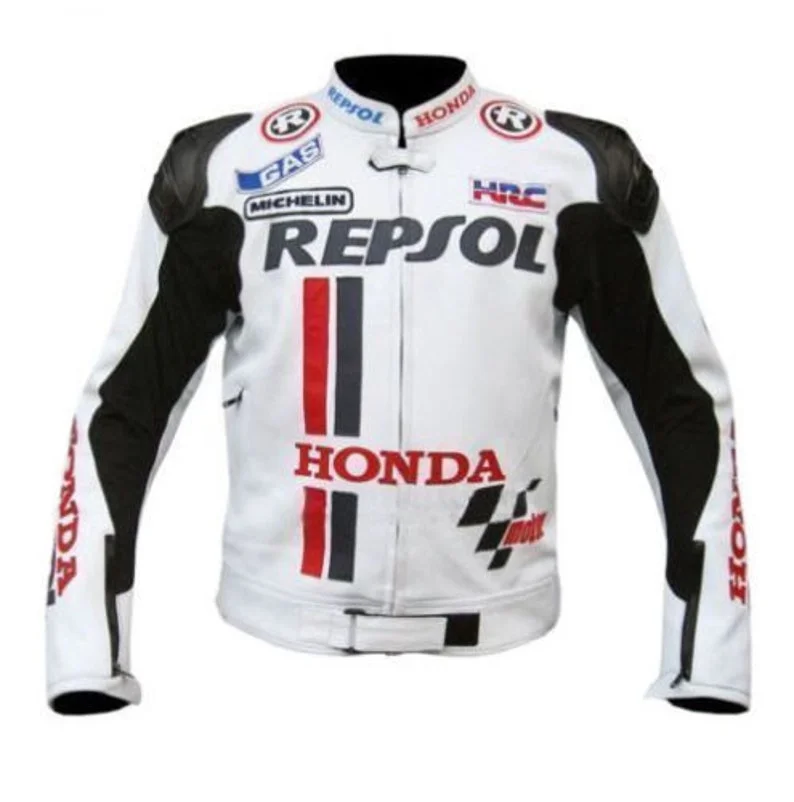
1. Honda Motorbike Repsol Leather Jacket (Best Selling)

Price: 238.00 USD

The Honda Repsol Leather Jacket is ideal for riders who want authentic racing aesthetics without compromising protection. Built with premium cowhide leather and integrated CE armor, it offers strong resistance during slides and impacts. Riders love its snug, track-ready fit that keeps armor locked in place, making it a reliable choice for everyday street riding and weekend touring.

1. Honda Motorbike Repsol Leather Jacket (Best Selling)

This jacket is especially popular among sportbike riders who want a visually bold yet safety-focused design. The structure holds up well at higher speeds, and the overall durability makes it a long-term investment.

Shop the Honda Motorbike Repsol Leather Jacket Now!

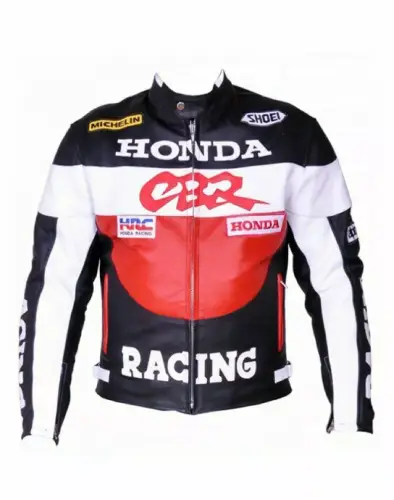
2. Honda CBR Cowhide Leather Jacket with CE Armor Protection

Price: 418.00 USD

If you want serious protective performance, this jacket is one of the strongest options in the lineup. It features heavy-duty cowhide, reinforced stitching, and full CE-certified armor in the shoulders, elbows, and back. This makes it ideal for riders concerned about both impact absorption and abrasion durability.

2. Honda CBR Cowhide Leather Jacket with CE Armor Protection

The fit is engineered to stabilize the armor during riding movements. Commuters and highway riders appreciate the comfortable interior and weather versatility. For anyone who rides aggressively or spends time on open highways, this jacket is a top-tier protective option.

Get the Honda CBR Leather Jacket with CE Protection Today

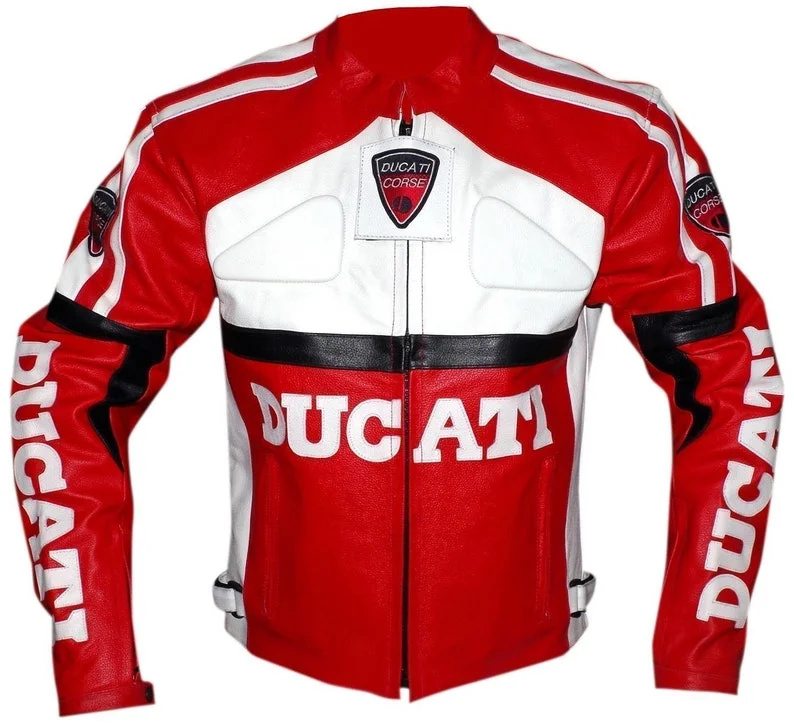
3. Ducati Racing Leather Jacket

Price: 223.00 USD

The Ducati Racing Leather Jacket is a blend of race performance and everyday usability. Riders prefer it for its lightweight feel while still maintaining solid safety construction. The leather is flexible enough for long rides but strong enough to resist heavy abrasion.

3. Ducati Racing Leather Jacket

Its styling appeals to riders who want something sleek and recognizable, but what makes it stand out is the comfort-to-protection balance. It is perfect for sport, naked, and touring motorcycle owners who want a versatile jacket that performs well in multiple settings.

Explore the Ducati Racing Leather Jacket at AliWheels

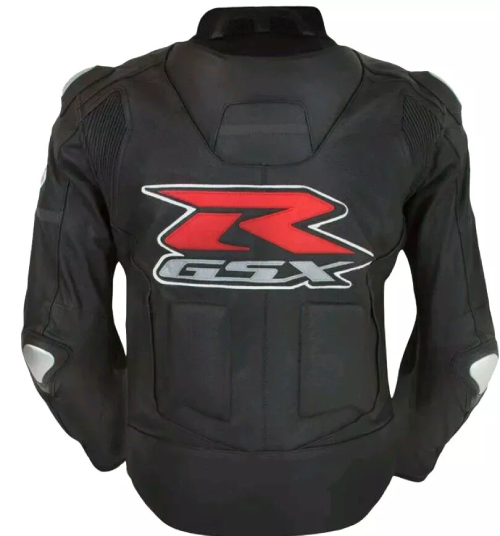
4. Suzuki GSXR Biker Racing Leather Jacket

Price: 278.00 USD

GSXR riders love matching gear, and this jacket is built for real protection. With CE-certified armor and premium leather construction, it offers serious durability for riders who regularly ride at higher speeds. The stitching pattern helps maintain rigidity, and the armor stays locked in even when riders lean aggressively or shift positions.

4. Suzuki GSXR Biker Racing Leather Jacket

This jacket is recommended for daily riders who want both identity and safety. The comfort padding makes long-distance rides easier and reduces fatigue on the shoulders.

Shop the Suzuki GSXR Racing Jacket at AliWheels

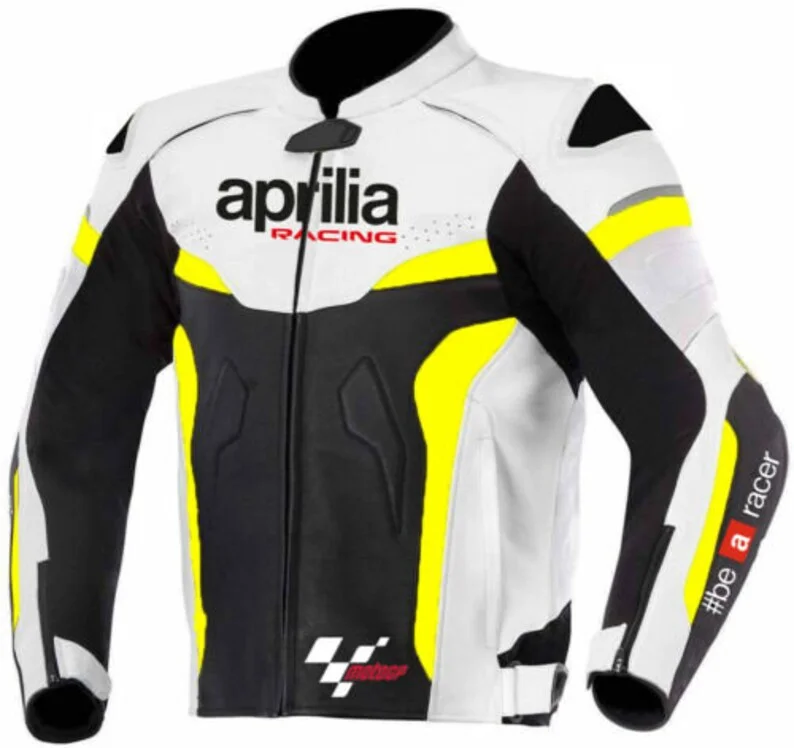
5. Aprilia Racing Leather Jacket

Price: 277.00 USD

Aprilia riders love premium performance, and this jacket complements that style perfectly. Made with strong leather and CE-rated armor, it is designed for riders who want a combination of Italian styling and aggressive protection. The aerodynamic profile keeps wind drag low, while the interior comfort makes it suitable for multi-hour riding sessions.

5. Aprilia Racing Leather Jacket

Riders often praise how well the jacket fits without restricting movement, making it a top choice among sport-touring riders.

Buy the Aprilia Racing Leather Jacket at AliWheels.

Choose a Jacket That Truly Protects

A protective motorcycle jacket is more than a fashion accessory. It is a piece of gear that carries the responsibility of safety. Riders in 2025 look for a jacket that proves its protective value through certified armor, high-quality leather construction, reinforced stitching, and ergonomic design. If you want a jacket that will protect you during real-world riding conditions, choose one that has been tested, trusted, and engineered for more than just style.

AliWheels offers safety-focused options that combine durability with rider comfort. Honda, Ducati, Suzuki, or Aprilia-inspired designs motorcycle jackets; each jacket listed above delivers serious protection on the road. So, the riders who prioritize safety, quality, and long-term performance, these jackets remain some of the most trusted choices for 2025.

(Commenting: OFF)

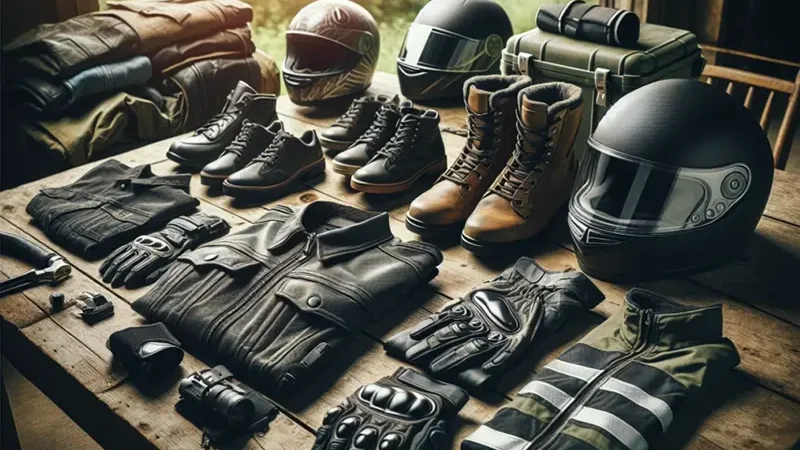
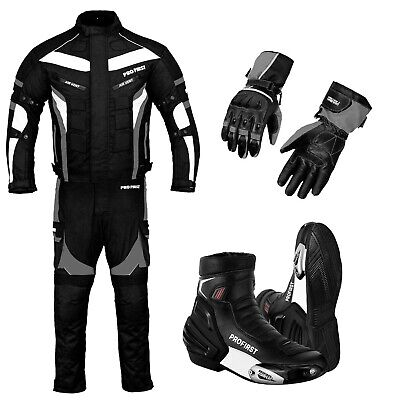
When riding a motorcycle, protective gear is not just about style; it is about safety. When riding a motorcycle your gloves, together with your jacket and boots serve as the primary protection against accidents. The protective gear provides comfort along with injury prevention and resists all weather elements. Selecting the right gear from among various options requires assurance about their quality standard. This guide offers the best strategies to evaluate the quality standards of motorcycle gloves along with jackets and boots. The guide includes recommendations for top brands and models, which can assist you in selecting the appropriate items.

Importance of Quality Motorcycle Gear

  • Safety First: Good gear protects you in crashes.
  • Comfort: Quality gear is comfortable for long rides.
  • Durability: Well-made gear lasts longer and holds up under stress.
  • Style: It adds to your look and personal style.
  • Weather Protection: Helps you stay dry, warm, or cool as needed.

Checking Motorcycle Gloves

Motorcycle gloves protect your hands from wind, cold, and impact. Here’s how to check their quality:

Material

  • Leather vs. Textile:
    • Leather offers excellent abrasion resistance and protection.
    • Textile gloves are lighter and often more breathable.
  • Synthetic Options:
    • High-quality synthetics can mimic leather benefits while reducing weight.

Protection Features

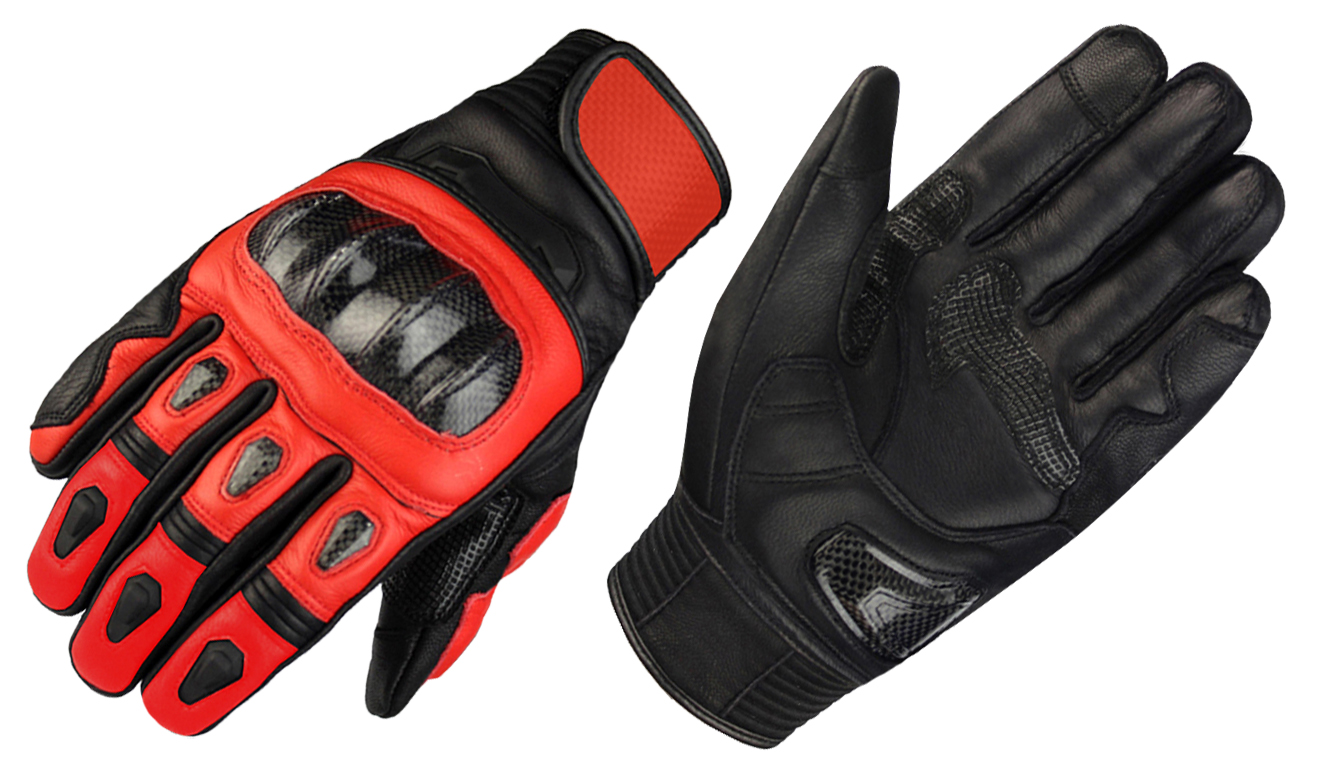
  • Reinforced Knuckles: Look for extra padding or armor over knuckles.
  • Impact-Resistant Materials: Some gloves have hard inserts in the palm and back of the hand.
  • Stitching and Seams: Strong, double or triple stitching shows good craftsmanship.

Fit and Comfort

  • Proper Sizing: Gloves should be snug without being too tight.
  • Ergonomic Design: Look for gloves that allow natural hand movement.
  • Padding: Extra padding on the palm and fingers can reduce fatigue.

Ventilation

  • Breathable Mesh: Ventilation panels help keep your hands cool during long rides.
  • Weather Adaptability: Some gloves come with removable liners for winter use.

Trusted Brands and Models

  • Alpinestars SP-8 V2: Known for durability and high-impact protection.
  • Dainese Laguna Gloves: Popular for comfort and excellent grip.
  • REV’IT! Jaan Gloves: Highly rated for all-weather performance.

Checking Motorcycle Jackets

A good motorcycle jacket protects you from abrasions, impacts, and weather. Here’s what to look for:

Material

  • Leather Jackets:
    • Offer superb abrasion resistance.
    • Provide a classic, rugged look.
  • Textile Jackets:
    • Lightweight and more breathable.
    • Often come with waterproof or windproof features.
  • Hybrid Options:
    • Combine leather and textile for balanced protection and comfort.

Armor and Protection

  • CE-Certified Armor: Look for armor in shoulders, elbows, and back that meets safety standards.
  • Impact Absorption: Multiple layers of protection reduce the force of impacts.
  • Reinforced Stitching: Ensure the seams are strong and well-constructed.

Fit and Comfort

  • Tailored Fit: The jacket should be snug without restricting movement.
  • Ergonomic Design: Should allow freedom of movement, especially when riding.
  • Ventilation: Check for adjustable vents that can open in warm weather and close in cold weather.

Weather Resistance

  • Waterproofing: Many textile jackets have a waterproof membrane.
  • Windproof Features: Look for jackets with wind-resistant fabrics and design elements.
  • Insulation: Some jackets offer removable liners for added warmth in winter.

Trusted Brands and Models

  • Dainese Super Speed Jacket: Offers excellent impact protection and a stylish design.
  • Alpinestars Missile Jacket: Known for durability and versatile weather protection.
  • REV’IT! Eclipse Jacket: Highly rated for its balance of comfort, protection, and ventilation.

Checking Motorcycle Boots

Motorcycle boots are essential for protecting your feet and ankles during a crash. Here’s how to ensure you choose the right pair:

Material

  • Leather Boots:
    • Provide excellent abrasion resistance and support.
    • Often have reinforced stitching.
  • Synthetic Materials:
    • Can be lighter and offer more breathability.
  • Combination Materials:
    • Often combine leather and synthetic panels for flexibility and strength.

Protection Features

  • Ankle Support: Look for boots with high collars and stiff soles to protect your ankles.
  • Reinforced Toes and Heels: Extra protection in these areas helps absorb impact.
  • Impact-Resistant Inserts: Some boots include built-in protective plates or armor.

Fit and Comfort

  • Proper Sizing: Boots should fit securely without being too tight.
  • Ergonomic Design: The shape should allow natural movement and proper foot placement.
  • Cushioning: Adequate padding around the ankle and foot ensures comfort during long rides.

Weather and Durability

  • Waterproofing: Look for boots that are waterproof or water-resistant, especially if you ride in wet conditions.
  • Breathability: Ventilation features help prevent overheating in warm weather.
  • Sole Quality: A sturdy, non-slip sole enhances grip and stability.

Trusted Brands and Models

  • Sidi ST Series: Renowned for superior protection and excellent build quality.
  • TCX X-Fit Boots: Offer great support, durability, and comfort for sportbike riders.
  • Alpinestars SMX-6 V2: Known for advanced safety features and stylish design.

Additional Considerations

  • Certifications and Safety Ratings:
    • Look for gear that meets or exceeds safety standards (e.g., CE certification for armor).
  • Price vs. Quality:
    • While high-end gear might cost more, it often offers better protection and durability.
  • User Reviews:
    • Check online reviews and forums to see what other riders say about the gear.
  • Warranty and Support:
    • Quality gear usually comes with a warranty. Check manufacturer support for replacements or repairs.

Maintenance Tips for Motorcycle Gear

  • Regular Cleaning:
    • Use gentle cleaners for leather and textiles to preserve material quality.
  • Proper Storage:
    • Store gear in a cool, dry place away from direct sunlight.
  • Periodic Inspections:
    • Check for signs of wear, such as frayed stitching, cracked materials, or damaged armor.
  • Timely Repairs:
    • Repair small issues immediately to prevent further damage.
  • Follow Manufacturer Guidelines:
    • Always read the care instructions provided by the manufacturer.

FAQs About Motorcycle Gear Quality

Q: How do I know if my gloves are of good quality?

Select gear made from genuine leather, high-quality synthetic materials, reinforced knuckles, and ergonomic design. To find the best products, examine Alpinestars’ and Dainese’s reputations and customer reviews..

Q: What are the signs showing that motorcycle boots will ensure adequate protection?

To check for proper protection visit the areas where your ankles are supported and inspect the strengthened zones along with the solid non-slip soles of the boots. Motorcycle enthusiasts trust the quality of Sidi and TCX products as brands.

Q: Are higher-priced gear items always better?

Not always. Costly products in motorcycle gear typically deliver improved defense and longevity but you should weigh these benefits against what you truly need on the road.

Q: Can I find gear that works well in different weather conditions?

Yes, many manufacturers offer gear designed for various climates. Look for features like waterproofing, insulation, and ventilation.

(Commenting: OFF)

Or login with your social account