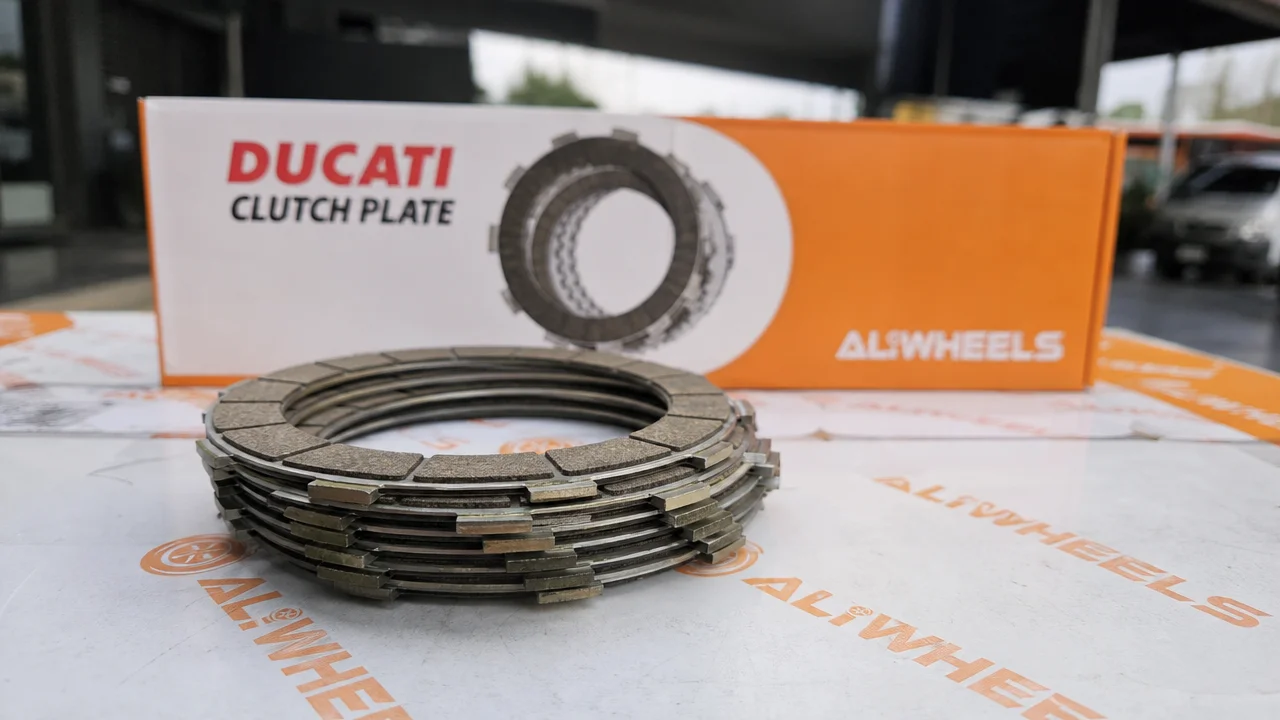
Aliwheels is a leading motorcycle parts supplier offering free shipping anywhere in the world on orders above $300. Please note that all of our motorcycle parts and accessories are certified and tested. With more than 10,000* products to choose from this is your one place to get the motorcycle part you need. Browse our vast inventory of motorcycle radiators, fairings, clutch plates, headlights, chains, and sprockets.
Aliwheels is a leading motorcycle parts supplier offering free shipping anywhere in the world on orders above $300. Please note that all of our motorcycle parts and accessories are certified and tested. With more than 10,000* products to choose from this is your one place to get the motorcycle part you need. Browse our vast inventory of motorcycle radiators, fairings, clutch plates, headlights, chains, and sprockets.
You’re mid-shift, on the gas, and suddenly the engine screams. No gear engaged. Just a rev-limiter bounce and a heart rate spike. If this happens on your Panigale often enough that you’ve started recognizing the feeling before it fully happens, you’re dealing with the false neutral problem that’s been discussed across Ducati forums for well over a decade.
A Problem Ducati Dealers Sometimes Call “Normal”
One 2017 Panigale S owner described this happening at least once every single ride since new. When he raised it with his dealer during a service visit, he was told the quickshifter simply isn’t adjustable. That answer didn’t sit well with him, and it shouldn’t, because plenty of other owners found real, practical ways to reduce or eliminate the problem entirely.
Interestingly, that same owner test-rode a demo 959 Panigale Corse while his bike was in for service and found the gearbox and quickshifter noticeably smoother. That comparison matters. It tells you this isn’t just “how Panigales are.” Some units and some techniques genuinely perform better than others.
The Technique Fix Most Owners Land On
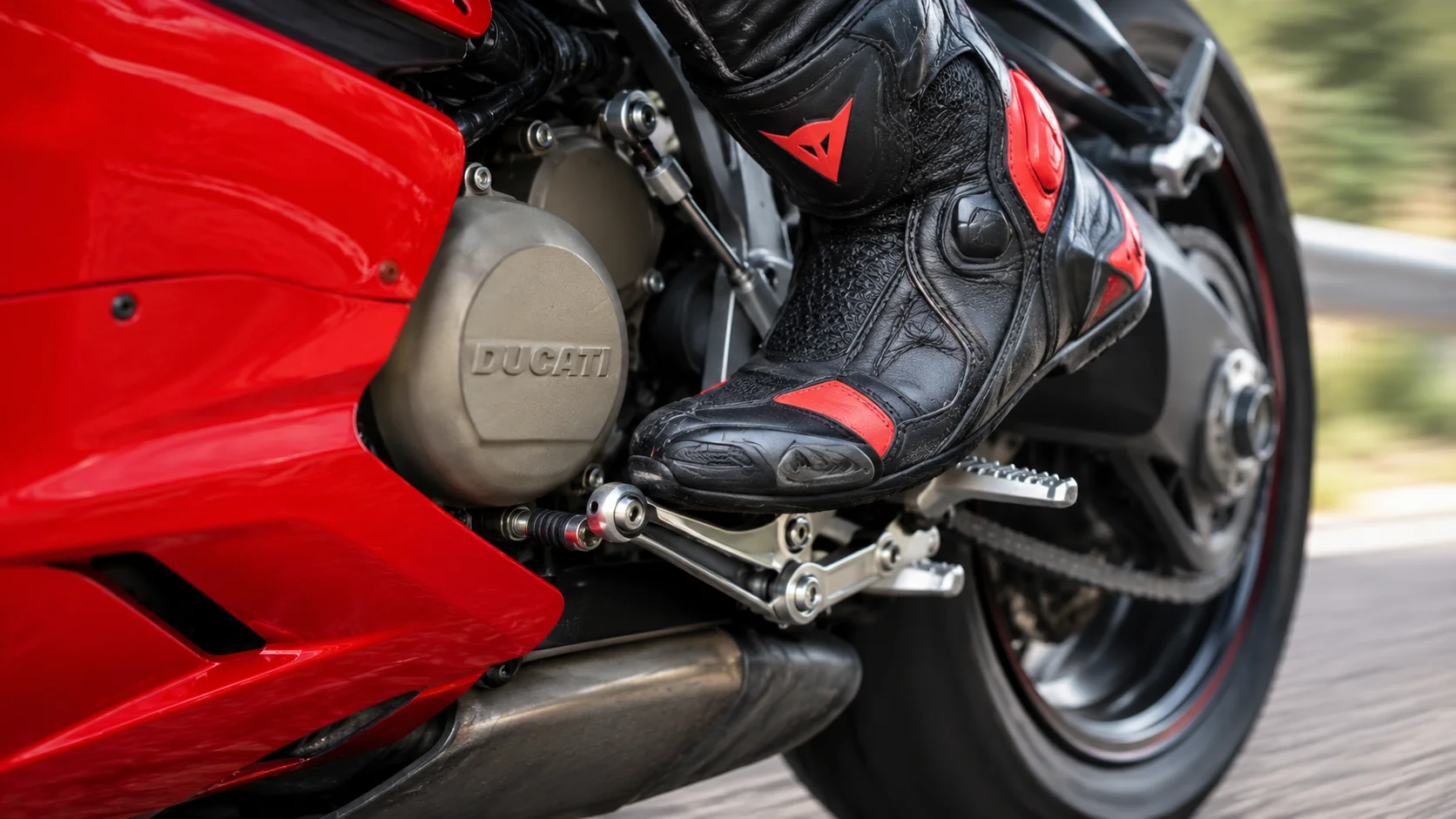
Across multiple threads, the same practical fix keeps surfacing: push the gear lever through its full travel, not just partway. One rider explained it clearly after eliminating his own false neutrals almost entirely: it’s less about how hard you push and more about making sure the lever travels all the way to the top of its range before you ease off.
Another owner riding a 1199 during the break-in period ran into this specifically between 4th and 5th, and between 5th and 6th gears, popping briefly into neutral before dropping back into gear. His dealer’s advice matched what the forums already say: push the shifter harder, and make sure the motion is complete, not rushed.
Adjusting Your Shift Pattern and Lever Position
A few additional adjustments come up repeatedly as genuinely effective. Switching to a race-shift pattern, where downshifting on the lever corresponds to upshifting gears, makes the upshift motion more deliberate for many riders, since it changes the physical movement involved. One 899 Panigale owner noted this directly helped eliminate false neutrals during his own troubleshooting.
Lever position matters too. If your shift lever has too much play or sits at an awkward height, it’s worth adjusting before assuming the quickshifter itself is at fault. One owner mentioned deliberately lowering his shift pedal to reduce the slack he suspected was contributing to his false neutrals.
When It’s a Parts Problem, Not a Technique Problem
Sometimes the fix isn’t technique at all. A detailed Ducati.ms thread walks through a specific aftermarket solution: a roller bearing detent arm and shift star kit, originally developed for other Ducati models but confirmed to fit the same 11-degree Testastretta engine family used in several Panigale-adjacent models. The owner describing this fix reported riding full days and complete track sessions afterward without a single missed shift or false neutral, a meaningful upgrade over stock components that show real wear over time.
This points to something worth checking on your own bike before assuming it’s unfixable: worn shift star components and a tired detent arm spring genuinely degrade shift quality over years of use, and replacing them is a legitimate, permanent fix rather than a workaround.
Stocks for the Panigale You will find at Aliwheels
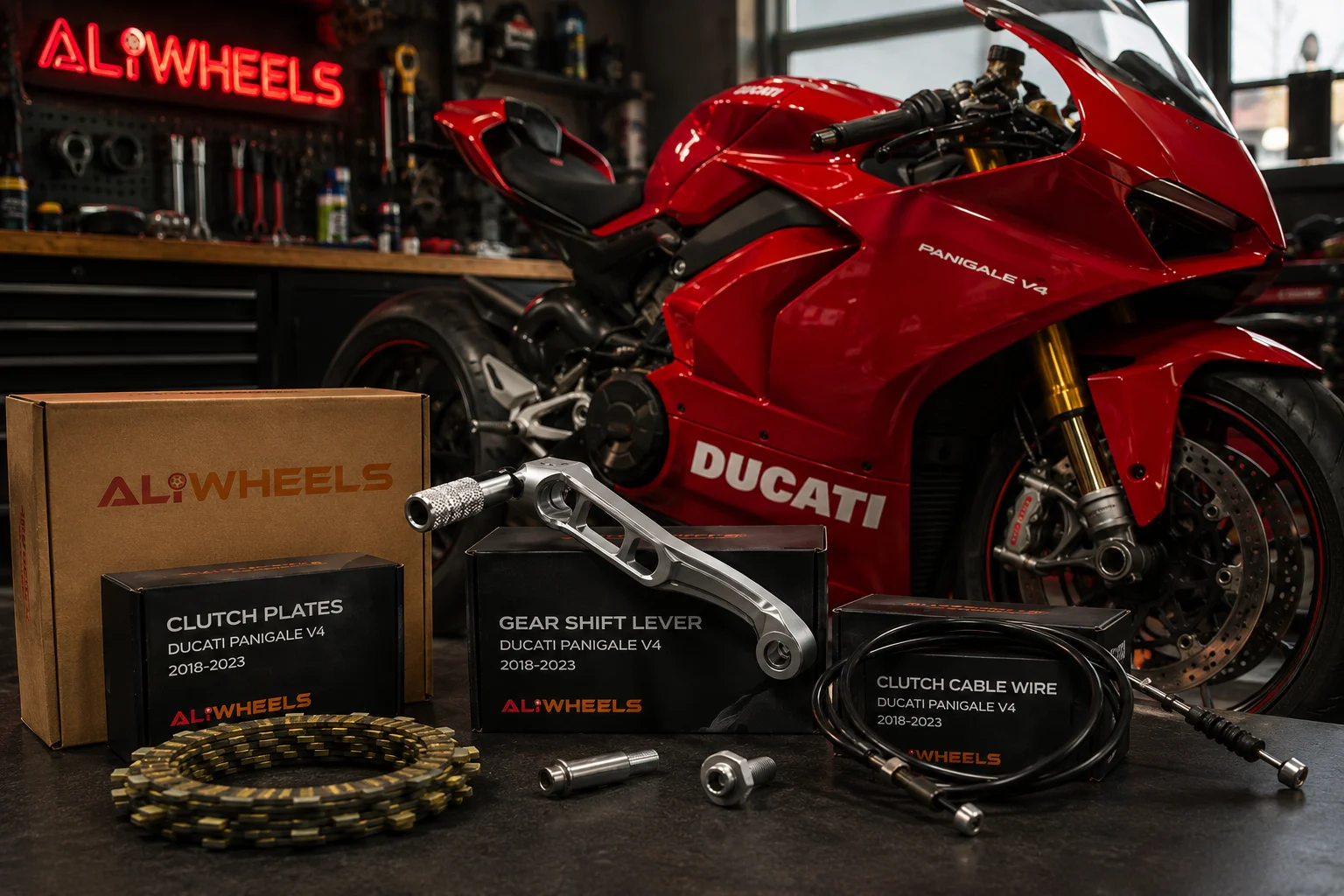
Aliwheels carries the Ducati Panigale V4 Gear Shift Lever (2018-2023), a direct-fit stainless steel replacement, along with the matching Gear Shift Lever Pin Bolt for the same model years. If your shift lever has developed play or wear contributing to false neutrals, replacing both together addresses the mechanical side of this problem directly.
If your troubleshooting points toward clutch engagement rather than the shift mechanism itself, we also carry Panigale V4 Clutch Plates and a matching Clutch Cable Wire, both confirmed direct fitment for 2018-2023 models.
A Practical Troubleshooting Order
Start with technique, since it costs nothing and fixes the problem for a lot of riders outright. Push the lever through its complete range of motion on every upshift, not just until it feels like it caught. Try a race shift pattern if you haven’t already, since the more deliberate downshift-to-upshift motion helps several owners specifically. Check your lever position and adjust if there’s excess play.
If false neutrals persist after all of that, inspect your shift lever and pin bolt for wear, and consider that your shift star and detent arm components may simply be due for replacement after years of use, the same way any wear part eventually needs attention.
Frequently Asked Questions
Is the false neutral problem on Panigale quickshifters normal, or a defect?
It’s a well-documented, common issue across multiple Panigale generations, though severity varies by bike and rider technique. Some dealers describe the quickshifter as non-adjustable, but technique changes and worn-part replacement both genuinely help.
Does pushing the shift lever harder fix false neutrals?
Not exactly harder, but more completely. Riders who eliminated the issue focused on pushing the lever through its full travel rather than applying more force.
Does switching to race shift pattern actually help?
Multiple owners report it does, since the downshift-to-upshift motion in race pattern tends to be more deliberate and complete than standard pattern shifting.
Can worn parts cause false neutrals even with perfect technique?
Yes. A worn shift star or tired detent arm spring can cause false neutrals regardless of technique, and replacing these components is a legitimate permanent fix.
Does Aliwheels stock Panigale shift components?
Yes, including the Gear Shift Lever and Pin Bolt for 2018-2023 V4 models, along with Clutch Plates and Clutch Cable for the same fitment range.
Browse our full Ducati Panigale parts collection for fitment-matched components across the entire Panigale lineup.
There’s a joke that’s been running around Ducati forums for over twenty years now. Someone’s non-Ducati friend hears the bike idling in neutral, gets a worried look, and asks if it just threw a rod. The owner laughs and explains, no, that’s just the dry clutch. It’s supposed to sound like that. Mostly.
That “mostly” is what this whole article is about.
Why Ducatis Rattle in the First Place
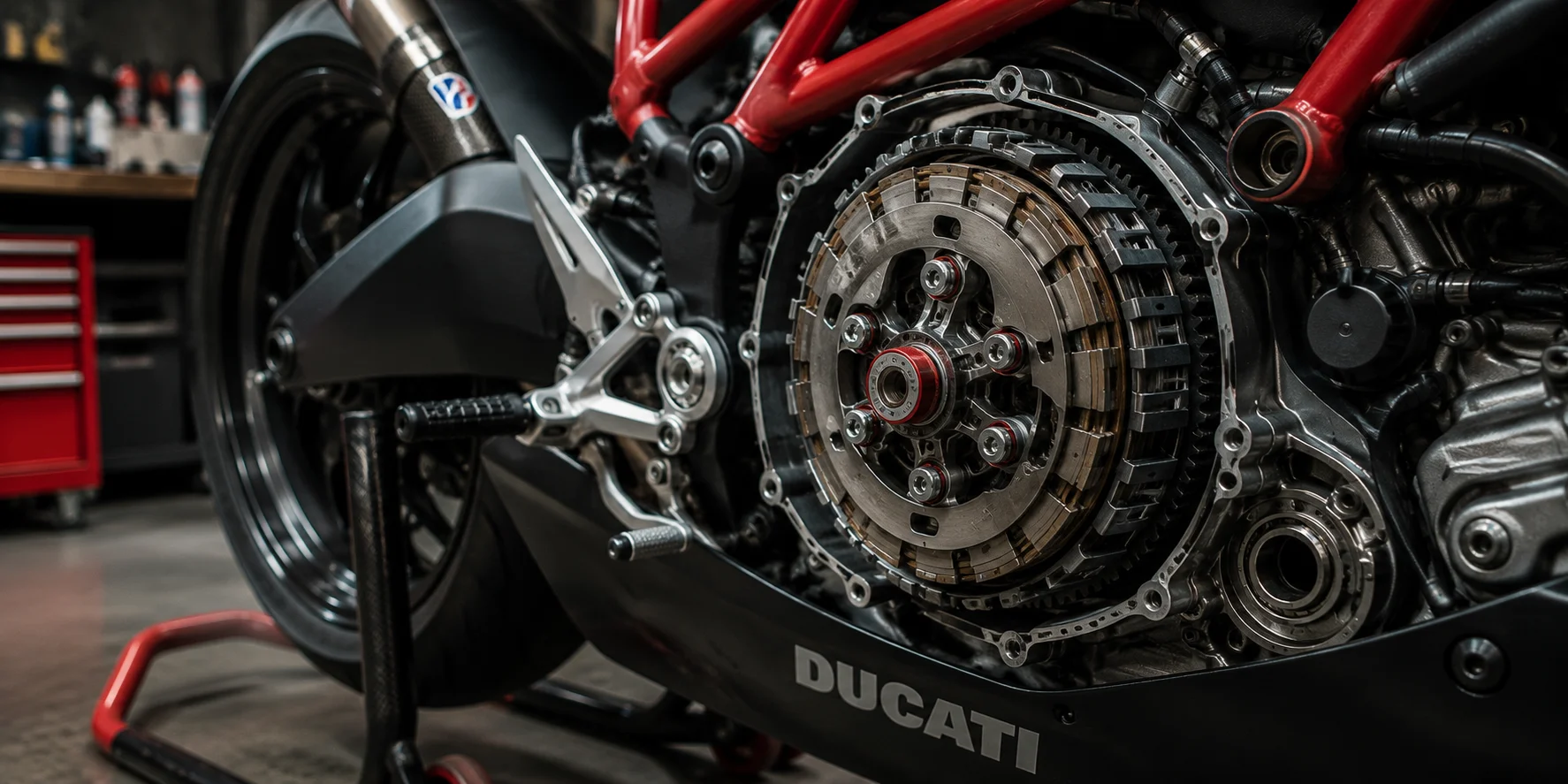
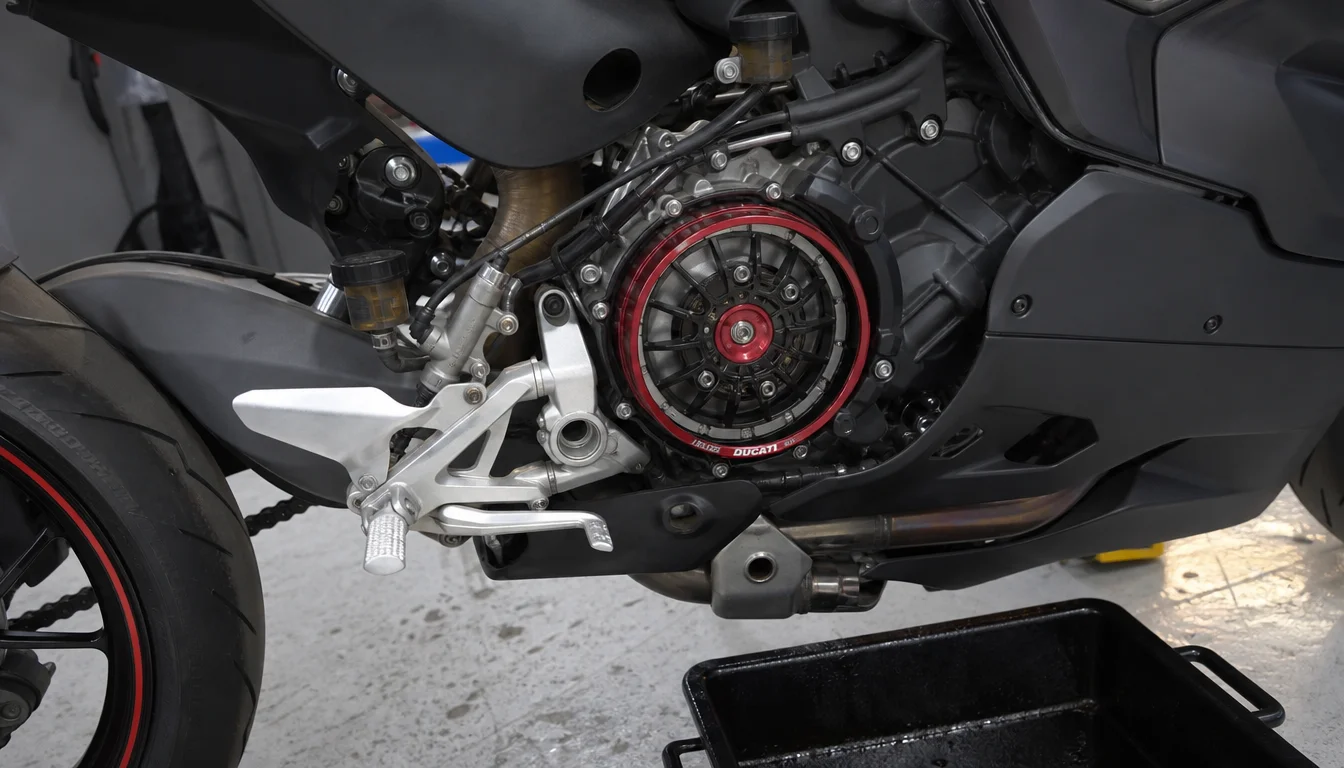
Unless you’re on one of the smaller Monsters or a Scrambler with a wet clutch, your Ducati’s dry clutch makes noise by design, not by accident. When you pull the lever in, or sit in neutral with no load on the clutch, the plates separate slightly and knock around loosely inside the basket, driven by nothing more than normal engine vibration.
One longtime owner on the Ducati.org forum explained it about as clearly as I’ve ever heard it put. The rattle comes from the small gap between the friction plate’s pins and the notches cut into the clutch basket. Under load, in gear, moving forward, those pins get pushed firmly against the basket and the noise disappears. Off load, they’re free to bounce around, and that’s your rattle.
Some manufacturers use rounded pins instead of square ones specifically to quiet this down. A few use aluminum friction plates instead of steel, since aluminum doesn’t “ding” against the basket the way steel does. Ducati mostly hasn’t bothered, because a huge number of their own customers genuinely love the sound. One owner called it “the World Famous Dry Clutch” and said flat out that you paid extra for it.
So When Is It Actually a Problem?
Here’s where I want to be straight with you, because forums are full of people insisting “it’s always normal” and that’s not quite true either.
A normal dry clutch rattle is a light, consistent “blang blang blang” in neutral or off-throttle, and it goes quiet the moment you’re accelerating under load. That’s the sound design working exactly as intended.
Where it gets worrying is when the rattle changes character. Louder than it used to be. Present even under load, when it should be disappearing. Accompanied by a grinding sound mixed in with the rattle, rather than just the metallic jangle. Any of these shifts, especially a gradual increase in volume over weeks or months, points toward actual wear rather than normal design behavior.
What Causes an Abnormal Rattle
A few real mechanical culprits show up again and again once owners actually investigate.
Worn basket fingers. As one Diavel owner forum thread put it bluntly, a clutch that “rattles like you wouldn’t believe” usually means worn fingers on the clutch basket, not just normal character. This is genuine wear, and it needs addressing rather than ignoring.
A loose basket retaining nut. This came up specifically in a Ducati Monster forum thread where an 03 620 owner noticed the rattle getting progressively louder over months. The advice from experienced members was to check the basket nut first, since it directly affects how the whole clutch pack sits and moves.
Something more serious is hiding behind clutch symptoms. One Ducati.ms thread is worth mentioning specifically because it’s a good cautionary tale. An owner assumed clutch trouble based on a sudden new noise and a slight vibration felt through the lever. Turned out to be crankshaft endplay, caused by a loosening generator nut, not the clutch at all. The lesson here is simple. If a rattle changes suddenly, especially alongside any new vibration, don’t assume it’s “just the dry clutch” without actually checking.
A Quick Way to Tell the Difference Yourself
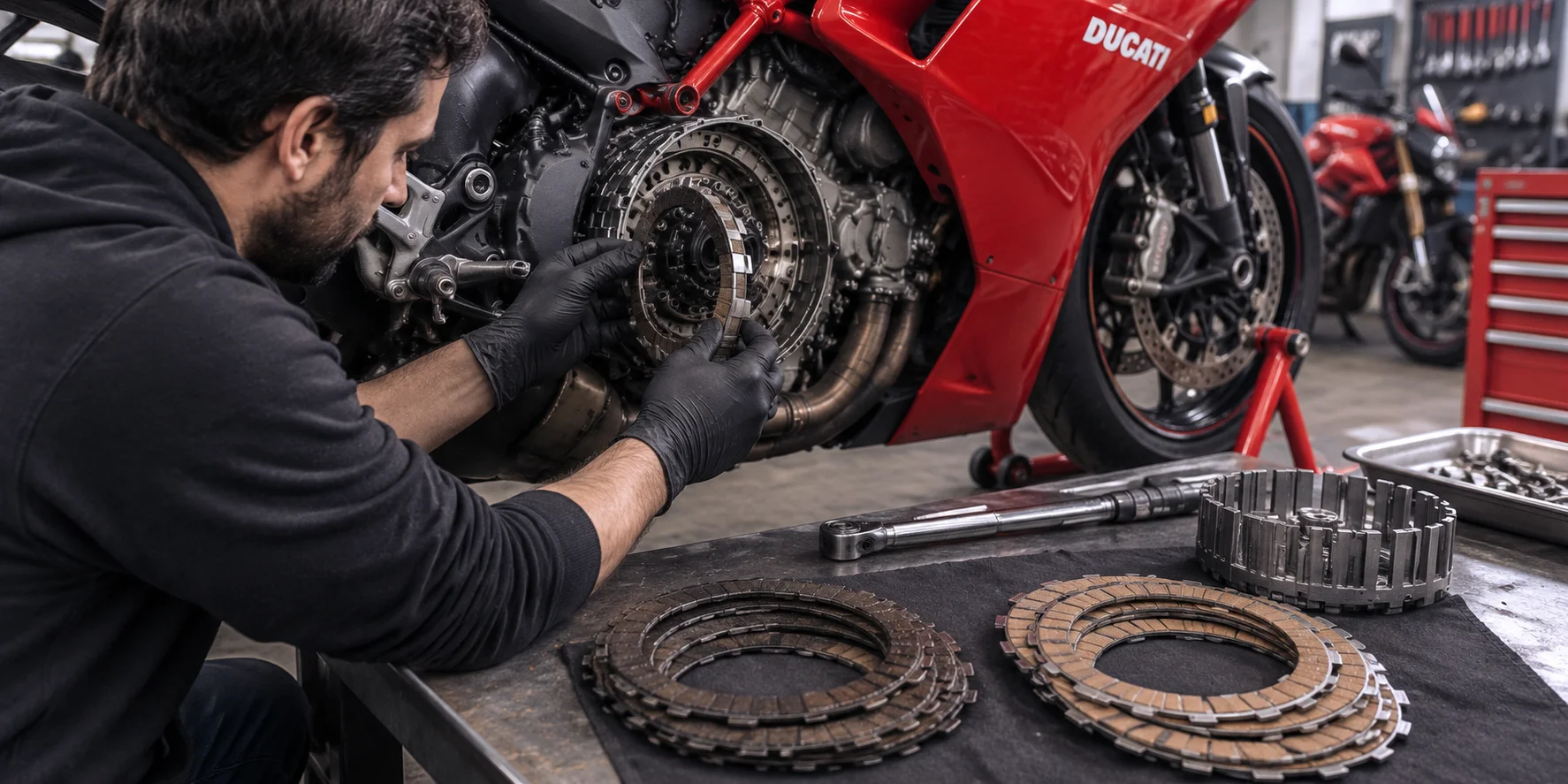
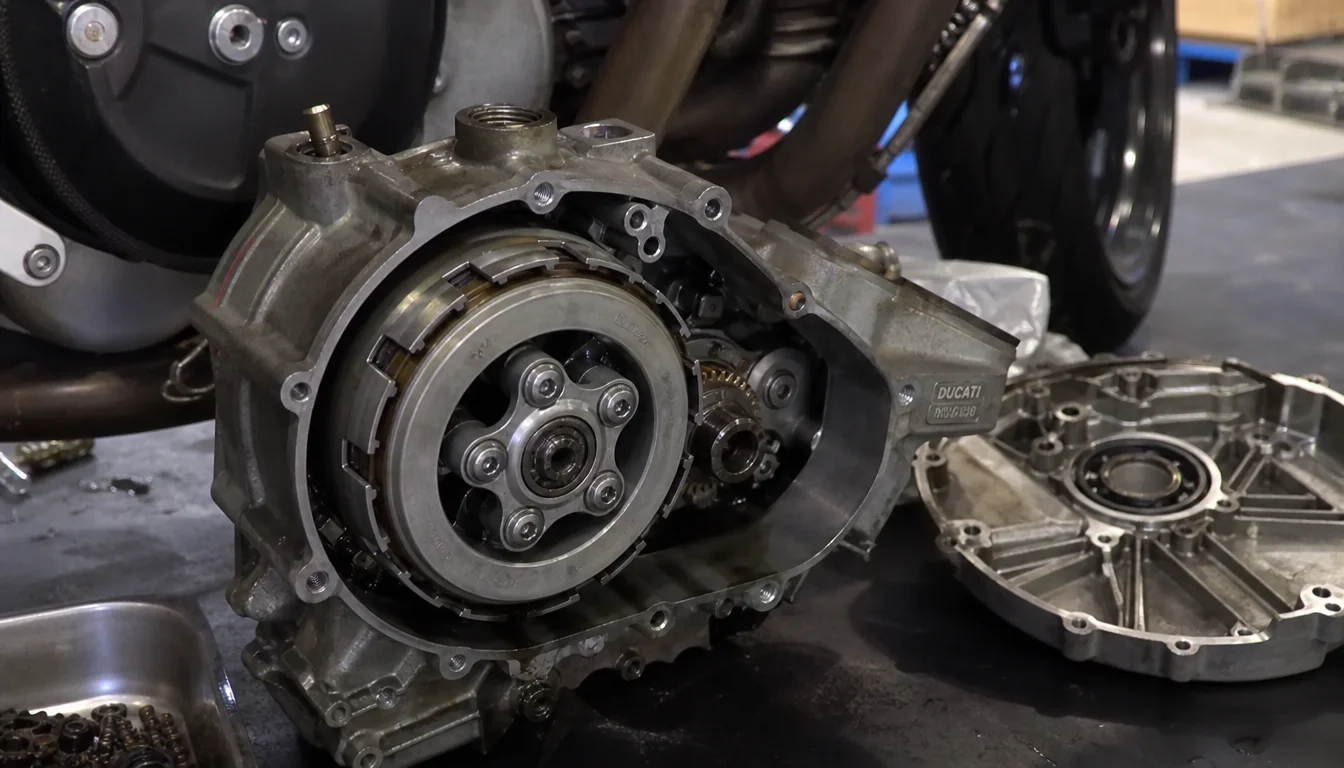
Pull the clutch cover off, if you’re comfortable doing that, and watch the plates while the engine idles in neutral. A healthy setup shows the plates lightly separating and knocking together in a steady, even pattern. If you see uneven movement, visible wear on the basket fingers themselves, or anything that looks like metal shavings collecting nearby, that’s your answer. It’s not just character anymore.
If you’d rather not pull the cover, listen specifically for the load test. Rev slightly while feathering the clutch lever out. A normal rattle should noticeably quiet down or disappear the moment the plates engage under load. If it doesn’t, or if it’s replaced by grinding rather than just going quiet, that’s worth investigating further rather than shrugging off.
Fixing Genuine Wear
Once you’ve confirmed it’s actual wear and not just Ducati being Ducati, replacing worn clutch plates restores both proper function and, honestly, a cleaner version of that same iconic sound plenty of owners love in the first place.
Genuinely, that’s up to you, and plenty of long-time owners will tell you not to mess with a rattle that’s within normal range just because it sounds aggressive to someone unfamiliar with dry clutches. But once wear enters the picture, worn fingers, a loosening basket nut, changing character over time, that’s no longer a stylistic choice. It’s a maintenance item, and ignoring it risks turning a cheap plate replacement into a more expensive repair down the line.
Frequently Asked Questions
Is it normal for a Ducati dry clutch to rattle in neutral?
Yes, this is standard behavior by design on most dry-clutch Ducatis. The plates separate slightly without load and knock together from engine vibration, quieting down once you’re accelerating under load.
Why does my clutch rattle even when I’m riding, not just in neutral?
A rattle that persists under load, rather than disappearing, often points to worn basket fingers or a loose basket retaining nut, and is worth investigating rather than dismissing as normal.
Could my clutch rattle actually be something else entirely?
Yes. In at least one documented case, what seemed like clutch rattle plus a new vibration turned out to be crankshaft endplay from a loosening generator nut. Any sudden change in noise or feel is worth checking properly.
Does an open or vented clutch cover make the rattle louder?
Yes, significantly. A sealed cover muffles the sound considerably, which is why some owners specifically install vented covers to hear more of the rattle, while others prefer a sealed cover for a quieter ride.
How do I know if I need new clutch plates?
If the rattle has gotten noticeably louder over time, persists under load when it previously didn’t, or is accompanied by grinding rather than a clean metallic knock, it’s time to inspect your clutch plates and basket for wear.
Browse our full Ducati motorcycle parts collection for fitment-matched clutch components across the Monster, Scrambler, and superbike lineup.
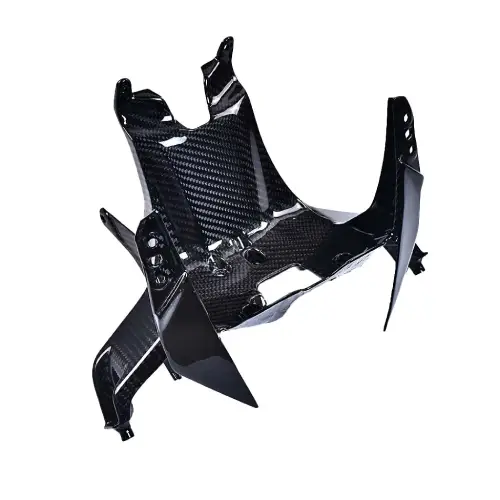
You dropped your Panigale V2, or maybe you were just doing routine maintenance, and now your headlight bracket is cracked or snapped clean off. Before you panic and call your dealer, let’s talk about what this part actually does, why it’s harder to replace than you’d expect, and what your real options are.
This guide covers everything owners of the 2020-2023 Panigale V2 need to know about the headlight bracket, also called the fairing stay, including where to find one and how much you should expect to pay.
What Is the Role of the Headlight Bracket?
The headlight bracket, sometimes called the fairing stay, is the structural piece that holds your front fairing, headlight assembly, and windscreen together. It bolts directly to your frame and takes on a lot of stress every time you ride. Vibration, road impacts, and even minor tip-overs put constant pressure on this part.
When it cracks or breaks, your fairing loses its main support. That means your headlight can shift out of position, your windscreen can rattle loose, and in worse cases, your whole front fairing assembly becomes unstable at speed. This isn’t a cosmetic part you can ignore.
Why Do Panigale V2 Owners Struggle to Replace Headlights?
Here’s where things get frustrating. Unlike common wear parts such as brake pads or oil filters, the headlight bracket isn’t something most riders keep in stock or even think about until it breaks.
Ducati owners on forums report a specific problem: the V2’s bracket looks similar to the V4’s bracket, but the two don’t interchange. The mounting points and product codes differ between models, even though the shape looks nearly identical at a glance. This means you can’t just grab whatever bracket someone’s selling secondhand and expect it to bolt right on.
On top of that, OEM replacement brackets through a dealership run around $300. For a support bracket, that’s a steep price, and many owners find themselves searching for alternatives before committing to that cost.
OEM vs. Aftermarket Headlights: What’s the Real Difference?
OEM brackets guarantee exact fitment since they come from Ducati directly. You know it’ll bolt up without modification, and it matches your bike’s original specifications. The downside is price and availability. Dealers don’t always keep this part in stock, which means waiting on backorder while your bike sits unrideable.
Aftermarket brackets available at Aliwheels offer a more affordable path without sacrificing fitment accuracy when they’re built specifically for your model and year. The key is making sure the aftermarket part is designed for the V2 specifically, not a generic or V4-labeled part that only looks similar.
Some riders on Ducati forums mention finding carbon fiber aftermarket options priced similarly to OEM, while others prefer aluminum alloy versions from brands like Motoholders for better durability if the bike goes down again. Whichever route you choose, confirm the product listing specifies 2020-2023 V2 fitment before you buy.
4 Signs Your Headlight Bracket Needs Replacing
You don’t always need a dramatic crash to damage this part. Watch for these signs:
Visible cracks near the mounting points. Even hairline cracks weaken the bracket’s ability to hold weight securely.
The fairing or windscreen feels loose at speed. If your front end starts vibrating or shifting slightly during highway riding, a compromised bracket could be the cause.
The headlight sits crooked or misaligned. A cracked bracket can’t hold your headlight assembly in its proper position, leading to visible misalignment.
Recent drop or tip-over. Even a low-speed parking lot tip-over can crack this part without leaving obvious external damage. If your bike went down recently, inspect the bracket closely.
How to Check Your Bracket Before Buying a Replacement?
Before ordering a new bracket, take ten minutes to properly inspect the current one.
Remove your side fairings to get a clear view of the bracket’s full structure. Small cracks often hide near bolt holes, where stress concentrates most.
Check for any flex or movement when you gently push on the fairing near the headlight. A healthy bracket won’t give at all. Any noticeable flex means it’s compromised.
Look at the mounting bolts themselves. Stripped or loose bolt holes in the bracket material, not just the bolts, often mean the bracket needs full replacement rather than a simple bolt tightening.
Installing a Replacement Bracket
Once you’ve confirmed you need a Ducati Panigale V2 headlight bracket, the installation process follows a similar pattern whether you go OEM or a properly fitted aftermarket option.
Let your bike cool completely and set it on a stable stand.
Remove the front fairing panels to access the bracket.
Disconnect any wiring routed near the headlight assembly, noting the connection points.
Unbolt the damaged bracket from the frame.
Position the new bracket, aligning it with the factory mounting points.
Secure it with the provided hardware, torquing bolts to spec.
Reattach your headlight, wiring, and fairing panels.
Double-check headlight alignment before your next ride.
This job typically takes an experienced rider one to two hours. If you’re not comfortable with fairing removal, a local mechanic can usually handle it quickly since the part itself is a direct bolt-in.
Preventing Future Bracket Damage
A few habits reduce your risk of dealing with this problem again.
Park your bike on stable, level ground whenever possible. Uneven surfaces increase tip-over risk, which is one of the most common causes of bracket damage.
Consider frame sliders or crash protection if you ride aggressively or track your bike. These absorb impact before it reaches structural parts like your fairing stay.
Inspect your fairing mounting points during regular maintenance checks, not just after an incident. Catching a hairline crack early saves you from a full failure down the road.
Shop Ducati Panigale V2 Parts
If you’re already replacing your headlight bracket, it’s worth checking the rest of your fairing hardware for wear at the same time. Aliwheels carries fitment-matched parts for your model in the Ducati motorcycle parts category, helping you avoid the guesswork that comes with sourcing V2-specific components.
Conclusion
A broken headlight bracket on your Panigale V2 isn’t just a cosmetic annoyance. It affects the structural stability of your entire front fairing assembly. Between the confusing V2 versus V4 compatibility issue and the steep OEM pricing, it’s easy to feel stuck. But once you know what to look for and where to source a properly fitted replacement, this fix is straightforward.
Inspect your bracket, confirm your fitment before buying, and get it replaced before a small crack turns into a bigger problem on the road.
Owning a Ducati is unlike owning any other motorcycle. From the unmistakable pulse of the L-twin engine to the precision of the Desmodromic valve system, every part of the bike is designed to deliver a riding experience that’s both engaging and unforgettable.
The clutch plays a major role in that experience. Whether it’s the iconic dry clutch found on many classic Ducati models or the refined wet clutch used on modern Scramblers, Monsters, Multistradas, and Panigales, each system has its own feel, sound, and maintenance requirements.
It’s also one of the areas where Ducati ownership can become expensive, especially if you rely solely on OEM dealer parts. Fortunately, maintaining your clutch doesn’t have to mean paying premium dealership prices every time.
Understanding how Ducati clutch systems differ, what causes premature clutch wear, and how to choose high-quality replacement clutch plates or complete kits can help you reduce maintenance costs without sacrificing performance or reliability. With the right parts and proper maintenance, a Ducati clutch delivers the precise engagement and character that make these motorcycles so rewarding to ride.
Here is the complete Ducati clutch plates guide. Browse Motorcycle Clutch parts at Aliwheels for every confirmed Ducati model covered.
The Two Clutch Systems Ducati Uses: Dry and Wet
This is the most important distinction in Ducati clutch maintenance and the one most commonly confused by owners who are new to the brand.
Ducati Dry Clutch
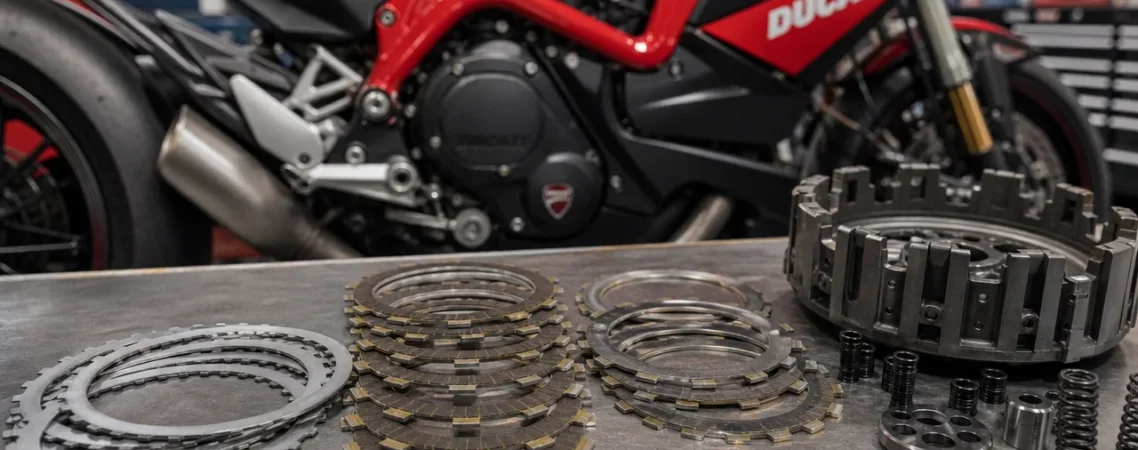
The dry clutch is one of Ducati’s most recognizable engineering features. Found on many classic Ducati superbikes, earlier Monster models, and the legendary 1098 series, it has become a defining part of the brand’s identity. The exposed clutch cover, unmistakable mechanical rattle at idle, and direct engagement have made it a favorite among Ducati enthusiasts.
Unlike a wet clutch, a dry clutch operates outside the engine oil. The friction plates and steel plates engage directly in air, creating the signature rattling sound when the clutch is disengaged. While some riders mistake this noise for wear or damage, it’s completely normal and is considered part of the classic Ducati experience.
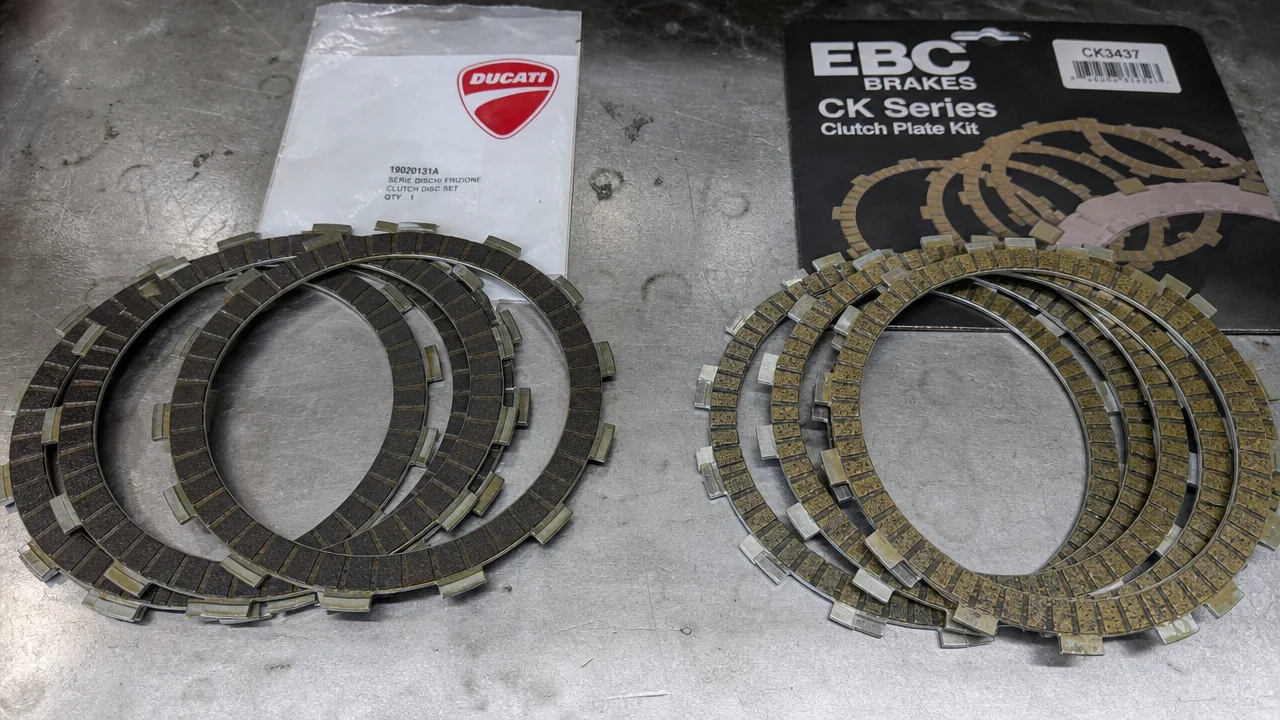
Because there is no oil to lubricate or cool the plates, dry clutch systems generate more heat and typically wear faster than wet clutches, especially in heavy traffic or frequent stop-and-go riding. To handle these operating conditions, dry clutch plates use organic or cork-based friction materials specifically designed for dry operation rather than the paper-based compounds commonly found in wet clutch systems.
The biggest advantages of a dry clutch include:
Direct and precise clutch engagement.
Easier clutch servicing since engine oil doesn’t need to be drained.
No contamination of the engine oil with clutch material.
The distinctive Ducati sound and racing heritage many owners value.
The trade-off is increased maintenance. Dry clutch plates generally require more frequent inspection and replacement, particularly on motorcycles that see aggressive riding, repeated launches, or extensive city commuting. For Ducati owners, however, that maintenance is often considered part of the ownership experience rather than a drawback.
Ducati Wet Clutch
Most modern Ducati motorcycles, including the Scrambler, newer Monster models, Multistrada, Diavel, and most current production bikes, use wet clutch systems. Unlike the traditional dry clutch, these operate inside the engine and are continuously lubricated by engine oil, just like the majority of modern motorcycles.
A wet clutch offers several practical advantages. The oil helps cool the clutch plates, reduces friction-related wear, and makes engagement smoother and quieter. It also eliminates the signature dry clutch rattle that older Ducatis are known for, making these bikes more refined and easier to live with in daily riding.
However, wet clutches come with one important requirement: using the correct motorcycle engine oil. Because the clutch runs in the same oil as the engine, using the wrong lubricant, especially automotive oil containing friction modifiers, can lead to clutch slip, inconsistent engagement, and accelerated wear. Always use a motorcycle-specific oil that meets the recommended JASO MA or JASO MA2 specification for your Ducati.
Before ordering replacement clutch plates or a complete clutch kit, confirm which clutch system your motorcycle uses. Dry and wet clutch plates are built from different friction materials and are not interchangeable. Installing the wrong type will result in poor performance and can damage the clutch assembly.
Taking a few minutes to verify your Ducati’s clutch type by checking your owner’s manual, service manual, or model specifications ensures you purchase the correct replacement parts the first time and avoid unnecessary installation issues.
What Causes Clutch Wear on Ducatis Specifically?
Ducati clutch wear follows the same basic principle as any motorcycle clutch: every moment of clutch slip creates heat, and heat gradually wears away the friction material. However, several Ducati-specific characteristics can cause clutch components to wear out faster than those on many Japanese bikes, especially if you ride the bike hard.
Earlier Ducati models with dry clutches naturally experience faster friction plate wear because the clutch operates without engine oil to cool and lubricate the plates. Modern wet-clutch Ducatis reduce this issue, but they remain highly responsive performance machines that place greater demands on the clutch during spirited riding.
Frequent stop-and-go traffic, aggressive launches, repeated low-speed clutch modulation, track days, and heavy two-up riding all increase clutch temperatures and shorten service life. Ducati’s strong low-end torque, especially on V-twin and V4 models, also places higher loads on the clutch during acceleration than many smaller-displacement motorcycles.
Regular inspection, correct clutch adjustment where applicable, and using the manufacturer-recommended oil in wet-clutch models go a long way toward maximizing clutch life. Understanding these Ducati-specific characteristics helps owners plan maintenance realistically and avoid replacing clutch components sooner than necessary.
The L-twin torque character
Ducati’s signature 90-degree L-twin engine delivers power very differently from a typical inline-four. Instead of producing a smooth, continuous flow of torque, it generates strong, widely spaced power pulses. Each combustion event sends a more pronounced torque load through the drivetrain, and those pulses place greater stress on the clutch during engagement.
As a result, every clutch engagement experiences higher peak loads, even if the motorcycle’s average horsepower is similar to an inline-four. Over thousands of launches, gear changes, and low-speed maneuvers, these repeated torque spikes create more heat and mechanical stress on the friction plates, contributing to faster clutch wear under comparable riding conditions.
This doesn’t mean Ducati clutches are poorly designed. They’re engineered to handle the engine’s unique power delivery. However, riders who frequently launch hard, ride aggressively through twisty roads, or spend time in stop-and-go traffic may notice shorter clutch service intervals than they would on many comparable Japanese motorcycles with smoother inline-four engines.
Ducati Riders Often Demand More From Their Clutches
Ducati motorcycles are built with performance at their core, and many owners buy them specifically to enjoy that experience. Whether it’s carving through mountain roads, accelerating hard out of corners, or exploring the engine’s full power band, Ducati riders often use their bikes more enthusiastically than the average commuter.
That riding style naturally places greater demands on the clutch. Frequent spirited launches, aggressive downshifts, repeated corner exits under acceleration, and higher engine loads all increase clutch engagement cycles and heat buildup. Over time, this leads to faster wear of the friction plates compared to motorcycles that spend most of their lives cruising at steady speeds.
This isn’t a flaw in the clutch system. It’s simply the result of using a performance motorcycle the way it was designed to be ridden. With regular inspection, proper maintenance, and high-quality replacement components, Ducati clutches deliver reliable performance while supporting the engaging riding experience the brand is known for.
High OEM service costs discourage timely replacement
Ducati dealer clutch service pricing is among the highest in the industry. The consequence of this is that some Ducati owners defer clutch service past the optimal replacement point because the cost feels prohibitive. A slipping clutch that should have been replaced at 20,000 miles gets pushed to 25,000 because the owner is dreading the dealer bill. That additional mileage on worn plates accelerates damage to the clutch basket, hub, and springs.
Quality aftermarket Ducati clutch plates at certified pricing remove this barrier to timely maintenance.
Ducati Clutch Plates Available at Aliwheels
Ducati Scrambler 1100 Clutch Plates 2018-2023 Shop Now →
The Scrambler 1100 is one of Ducati’s best-selling models in the US market, and it’s the model that’s seeing the most demand for replacement clutch plates at this point in its production run. These plates guarantee smooth, efficient gear changes on the 1100cc Scrambler, controlling the L-twin’s torque delivery via a wet clutch system tuned to the Scrambler’s character.
They take the abuse of everyday riding, and do it every ride, every time. They come with a full installation manual – available for the experienced rider who does his own service. Specific to 2018-2023 Scrambler 1100 models.
Ducati Scrambler 400 Sixty2 Clutch Plates 2016-2020 Shop Now →
The Sixty2 is the entry-level Scrambler that introduced a generation of riders to the Ducati brand in the U.S. The 400cc parallel twin employs a wet clutch in a plate configuration that is unique to this displacement. These plates provide smooth gear shifts, positive engagement and release, and real durability for a bike that’s at the end of its original clutch life in many examples.
The 1098 is the most celebrated Ducati of its generation. The superbike that set the standard when it launched in 2007 and continues to be actively ridden and maintained by enthusiasts who recognise what they have. Cork construction, 7-piece plate count, covering 2006-2010 1098 models including the 1098, 1098S, and 1098R variants.
Finding correct dry clutch plates for 2006-2010 1098 models through Ducati dealers is getting harder as these bikes age out of the primary stock rotation. This is a genuine product and is available at Aliwheels for owners who need it.
Other Ducati Parts at Aliwheels
While you’re servicing the clutch, here are related Ducati components available at Aliwheels:
Ducati Scrambler 800 Oil Filter 2015-2023: Essential companion to any wet clutch service on the Scrambler 800. Fresh oil and a fresh filter at the same time as clutch plate replacement ensures the new plates bed in correctly from the first ride.
Ducati Panigale V4 Exhaust 2018-2023: For Panigale V4 owners looking to complement a clutch service with an exhaust upgrade that reveals the V4 engine’s full character.
OEM Ducati vs Aftermarket Clutch Plates: The Honest Position
Expensive Ducati OEM clutch plates create a major cost barrier in premium motorcycle ownership. The combination of Ducati’s European origin, the complexity of their clutch systems (particularly the dry clutch), and the dealer network’s premium pricing structure means that OEM clutch service on a Ducati frequently costs two to three times the equivalent service on a Japanese sportbike.
OEM equivalent performance at meaningful lower cost from certified aftermarket Ducati clutch plates. Manufactured to the correct friction material specification, plate count, thickness tolerance, and diameter match. The trick is to buy from a supplier who confirms the exact model and year fitment, not a generic listing that says “compatible with Ducati”.
Every Ducati clutch plate listing at Aliwheels specifies the exact model and year. They are certified and tested before listing. The support team confirms compatibility 24/7 before any order ships.
Ducati Dry Clutch Maintenance: What’s Different
If you own a Ducati with a dry clutch, such as the 1098, earlier Monster models, or older Supersport variants, there are a few maintenance differences that set it apart from modern wet clutch systems.
The characteristic rattling sound at idle is completely normal. It’s one of the defining traits of Ducati’s dry clutch design and isn’t a sign that the clutch is wearing out. However, if that familiar rattle suddenly becomes noticeably louder, develops a sharper metallic tone, or sounds inconsistent, it’s worth inspecting the clutch. These changes can indicate worn clutch plates, basket wear, or excessive clearance within the assembly.
Unlike wet clutches, dry clutch components must never contact engine oil or grease. Even a small amount of oil contamination on the friction plates can cause immediate clutch slip and reduce performance. If contamination occurs, you must thoroughly clean or replace the friction plates, depending on the severity. Whenever you’re servicing the clutch, make sure your hands, tools, and work area are free from oil and grease.
Clutch basket inspection is also more important on dry clutch Ducatis. Because the basket operates without the cushioning and lubrication provided by engine oil, the basket tangs experience greater direct contact with the friction plate tabs. Over time, this creates indexing grooves or notches that prevent the plates from moving smoothly during engagement. Inspect the basket carefully every time you replace the clutch plates. Catching basket wear early helps ensure smooth clutch operation and extends the service life of the new clutch components.
Conclusion
Ducati clutch plates are highly model-specific, and selecting the correct set is more important than many riders realize. Before ordering, confirm three things: whether your bike uses a dry or wet clutch, the exact model, and the model year. Dry and wet clutch plates fit completely different systems and do not interchange, even if they look similar.
Once you’ve confirmed compatibility, a certified aftermarket clutch kit offers an excellent balance of performance, reliability, and value. High-quality aftermarket plates match OEM specs to deliver smooth engagement and classic Ducati feel at a much lower cost.
Choosing the right replacement also makes timely maintenance more practical. Replacing worn clutch plates before excessive slipping develops helps protect the clutch basket, hub, and related components from unnecessary wear. Replacing the correct clutch kit on time costs far less than delaying maintenance and facing a complete rebuild later.
Frequently Asked Questions
Q: How do I know if my Ducati has a dry clutch or a wet clutch?
A: It depends on the model and year. Classic Ducatis use dry clutches, whereas modern models (Scrambler, Monster, Multistrada, and Panigale V4) use wet clutches. Because Ducati transitioned gradually across different model lines, it’s always best to verify before ordering parts. If your clutch rattles at idle behind a vented cover, it’s almost certainly a dry clutch. You can also check your owner’s manual or contact Aliwheels with your model and year for fitment confirmation.
Q: How long do Ducati clutch plates typically last?
A: Service life depends on the clutch type, riding style, and maintenance. Modern Ducati wet clutch plates last 20,000 to 40,000 miles, while older dry plates last 15,000 to 30,000 miles. Heavy traffic, hard launches, and aggressive riding will wear out plates much faster than open-road cruising. Rather than relying only on mileage, inspect clutch plate thickness during routine maintenance to catch wear before slipping develops.
Q: Can I install standard motorcycle clutch plates in a Ducati dry clutch?
A: No. Dry and wet clutch systems use different friction materials and design principles for completely different operating conditions. Dry clutches need plates built for oil-free operation, whereas wet clutch plates must work immersed in engine oil. Using the wrong type of clutch plate can lead to poor engagement, accelerated wear, clutch slip, and premature component failure.
Q: My Ducati Scrambler clutch is slipping. Should I replace only the friction plates?
A: Not necessarily. You should always inspect a slipping clutch as a complete assembly. Measure friction plate thickness against manual specs, check steel plates for warping, and inspect the basket and springs for wear. Replacing friction plates with new springs restores proper clamping force and outperforms replacing plates alone.
Q: Why are Ducati OEM clutch plates so expensive?
A: Ducati OEM clutch components cost more due to premium branding, lower production volumes, specialized engineering, and dealer markups. Fortunately, quality-certified aftermarket clutch plates are available that match the original specifications while offering significant cost savings. Trusted, model-specific aftermarket plates deliver reliable performance, perfect fitment, and that classic Ducati clutch feel without the premium dealer price.