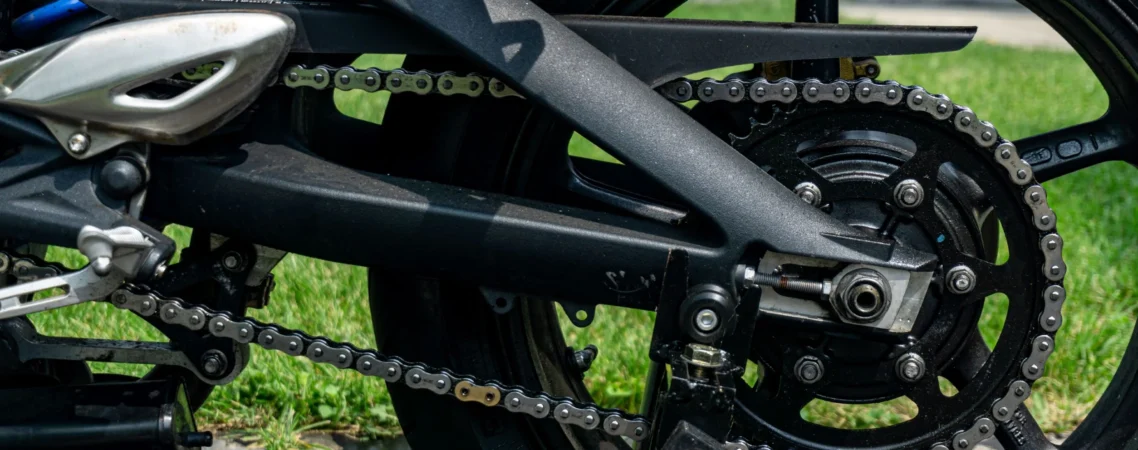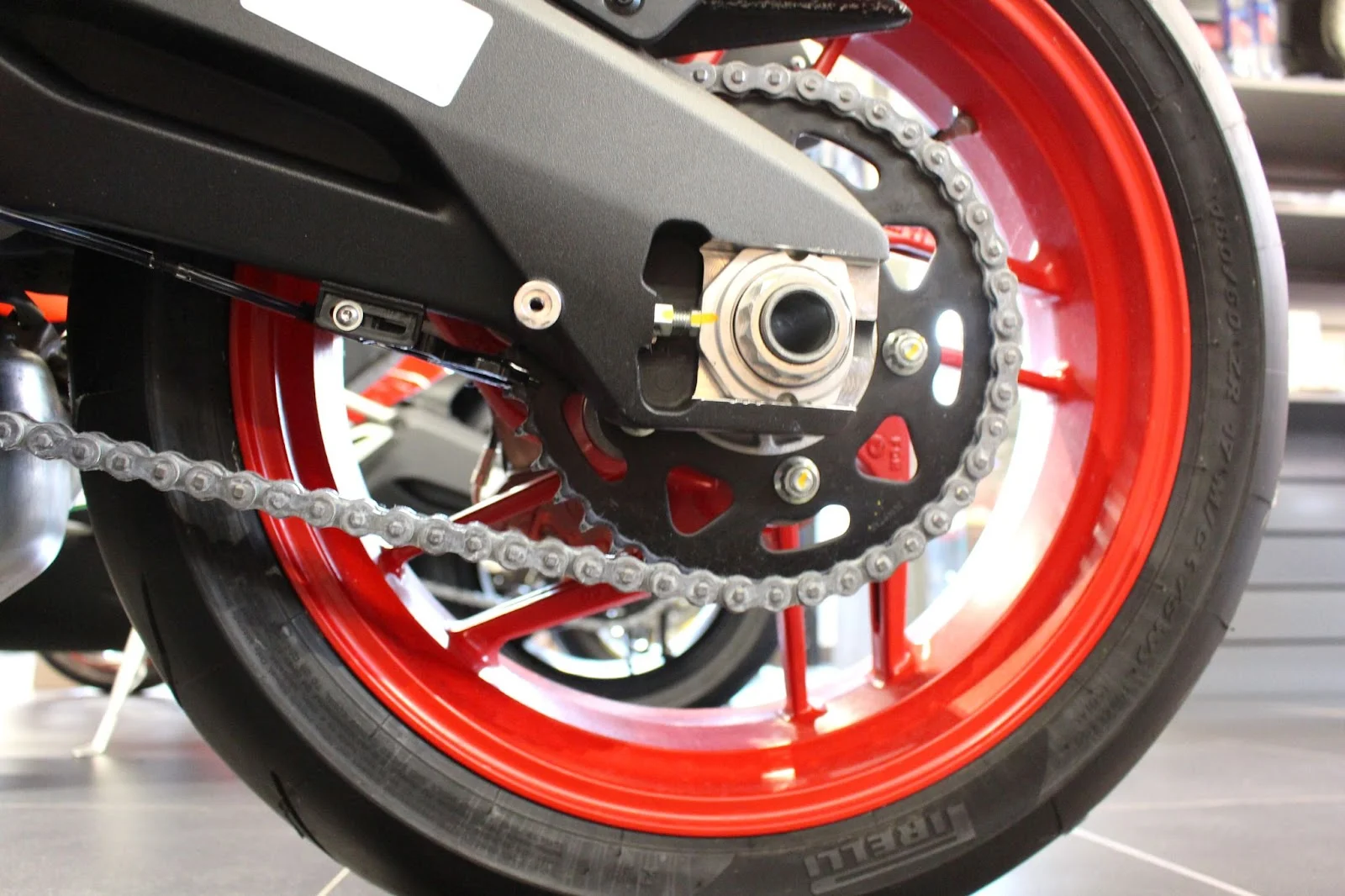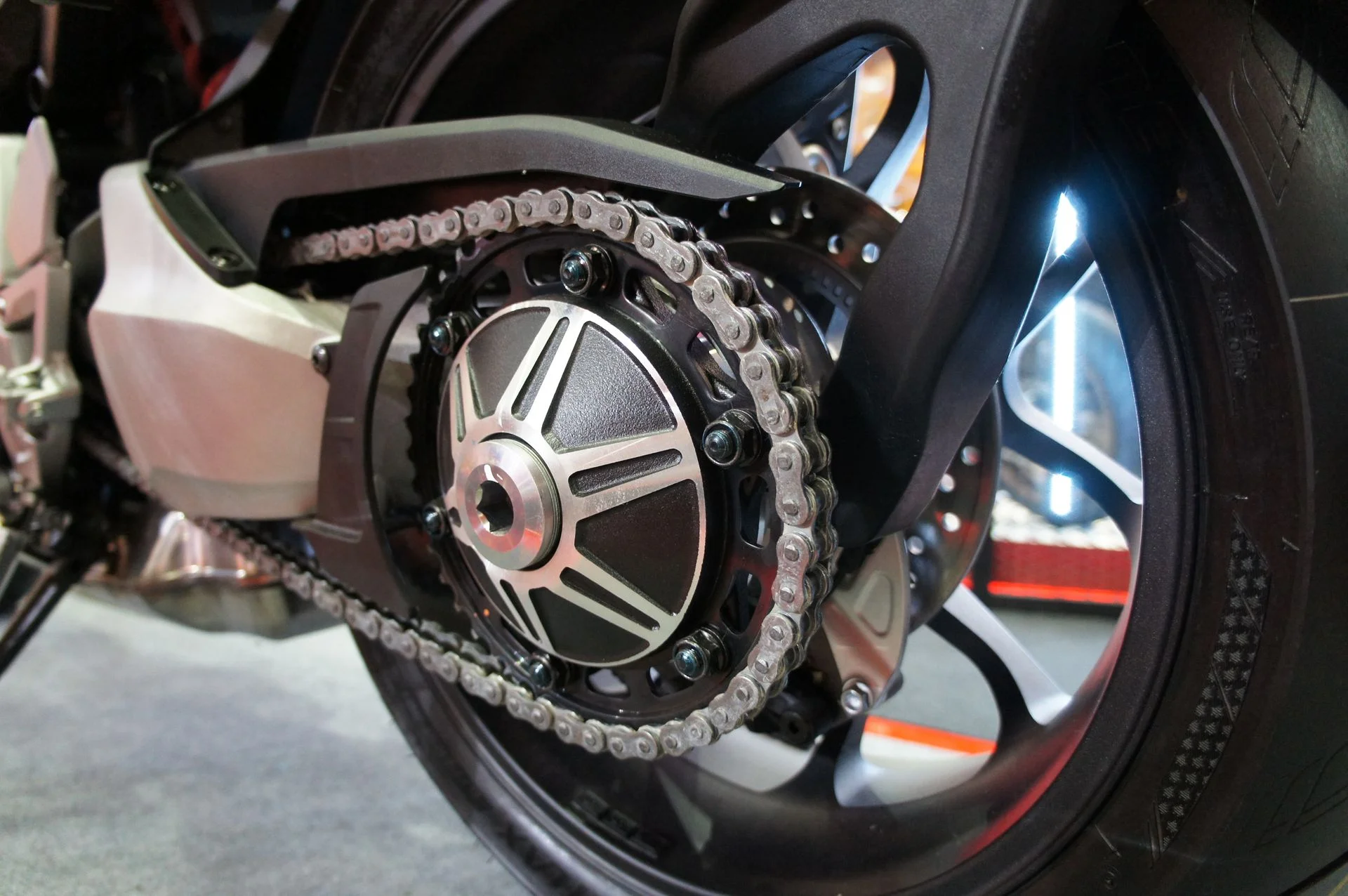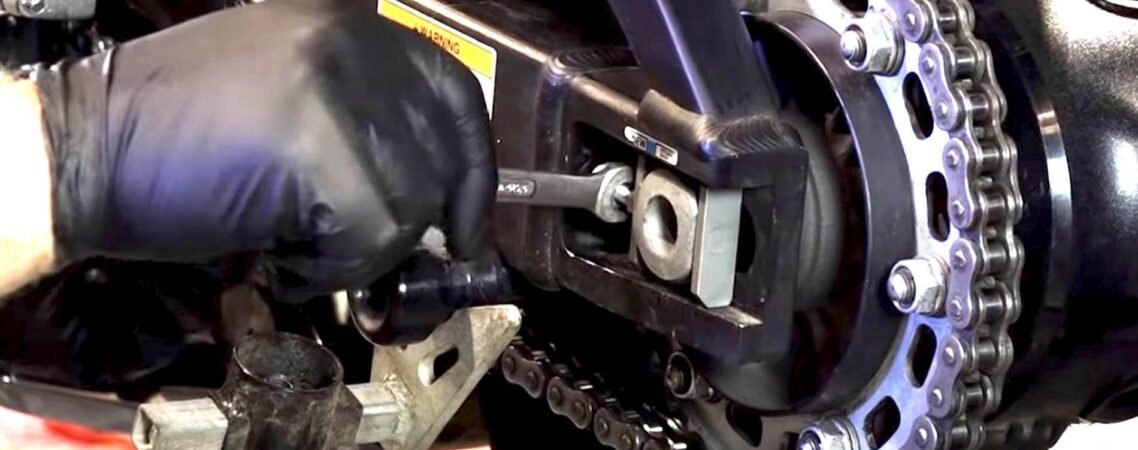



A motorcycle chain is one of the major working components on the bike. It transfers every bit of engine power to the rear wheel under tension, vibration, heat, and whatever the road throws at it. A well-lubricated chain is efficient, quiet, and lasts 15,000 to 25,000 miles. While a neglected chain is noisy, wastes power, and can stretch, snap, or destroy your sprockets in a fraction of that time.
Despite this, chain lubrication is one of the most skipped maintenance tasks in motorcycling. Either riders do not know how often it needs doing, they use the wrong product, or they apply it incorrectly and create a mess that attracts more grit than it repels.
Here is the complete motorcycle chain lubrication guide. For chains, sprockets, and drivetrain components, browse Aliwheels’ complete Motorcycle Chains category.
How Often Should You Lubricate Your Motorcycle Chain?
The standard recommendation from most motorcycle manufacturers and chain manufacturers, including DID and RK Chains, is every 300 to 600 miles under normal riding conditions. Adjust this interval based on your riding conditions:
| Riding Condition | Lubrication Interval | Why |
| Normal street and highway | Every 300-600 miles | Standard wear and lubricant displacement rate |
| Heavy rain riding | After every wet ride | Water washes lubricant out rapidly |
| Dusty or off-road conditions | Every 100-200 miles | Grit infiltration accelerates wear dramatically |
| Track day | Before and after each session | High speed and heat accelerate lubricant breakdown |
| Long-distance touring | Every 200-300 miles | Higher daily mileage means shorter calendar intervals |
| Winter/road salt exposure | After every ride | Salt accelerates corrosion of chain components |
A quick visual test: Spin the rear wheel by hand and watch the chain under good light. If it looks dry or you can see rust or discoloration on the links, it is past due for lubrication regardless of your mileage interval.
What Type of Motorcycle Chain Lubricant Should You Use?
Walk into any dealership, and you will find multiple types of chain lubricant. Each one performs differently. Here is what the options actually are and when to use each.
Wet Chain Lubricants
Wet lubes are oil-based products that penetrate deeply into the chain rollers and O-rings and provide excellent lubrication in wet and dirty conditions. They last longer than dry lubes and provide better protection in rain. The trade-off is that they attract and hold road grit, which accelerates wear if the chain is not cleaned before each reapplication. Best for: year-round commuters, wet climates, off-road.
Dry / Wax-Based Chain Lubricants
Wax-based or dry lubes are applied wet but dry to a clean film that does not attract grit. They keep the chain cleaner between applications and are easier to apply without making a mess on the rear wheel and swingarm. The trade-off is that they wash off in rain and require more frequent application. Best for: dry climates, fair-weather riders, riders who prioritize a clean bike.
Chain Wax
Chain wax products provide a harder film coating than standard dry lubes and offer good protection against water and grit. They require the chain to be clean and warm before application for proper penetration. Chain wax is particularly popular for sealed O-ring and X-ring chains where the goal is surface protection rather than penetration into the sealed link interiors. Best for: sealed chain maintenance, touring riders, bikes stored for extended periods.
| Lube Type | Longevity | Grit Attraction | Best Conditions | Application Frequency |
| Wet / oil-based | Long | High — attracts dirt | Wet, dusty, off-road | Every 300-500 miles |
| Dry / wax-based | Moderate | Low — stays cleaner | Dry conditions, fair weather | Every 200-400 miles |
| Chain wax | Long | Low to moderate | Sealed chains, storage, touring | Every 300-600 miles |
| What not to use: WD-40 is a water displacer and light solvent, not a lubricant. It removes existing lube from your chain and provides no lasting protection. Motor oil is too thin and flings off at speed. Used engine oil contains combustion byproducts that accelerate O-ring degradation. Use a purpose-made motorcycle chain lubricant. |

How to Lubricate a Motorcycle Chain Correctly?
Applying chain lube incorrectly is almost as bad as not applying it at all. The most common mistake is spraying the outside of the chain links, where it looks effective but mostly flings off at speed.
1. Warm the chain slightly. A brief 5-minute ride warms the chain and opens the link tolerances slightly, allowing lubricant to penetrate more effectively. Do not apply to a hot chain from a long ride; the lube will not sit properly.
2. Clean if necessary. If the chain has visible grit or the previous lube application has built up a black crust, clean the chain with chain cleaner or kerosene on a brush before applying fresh lube. Lubricating over dirty lube creates a sticky paste.
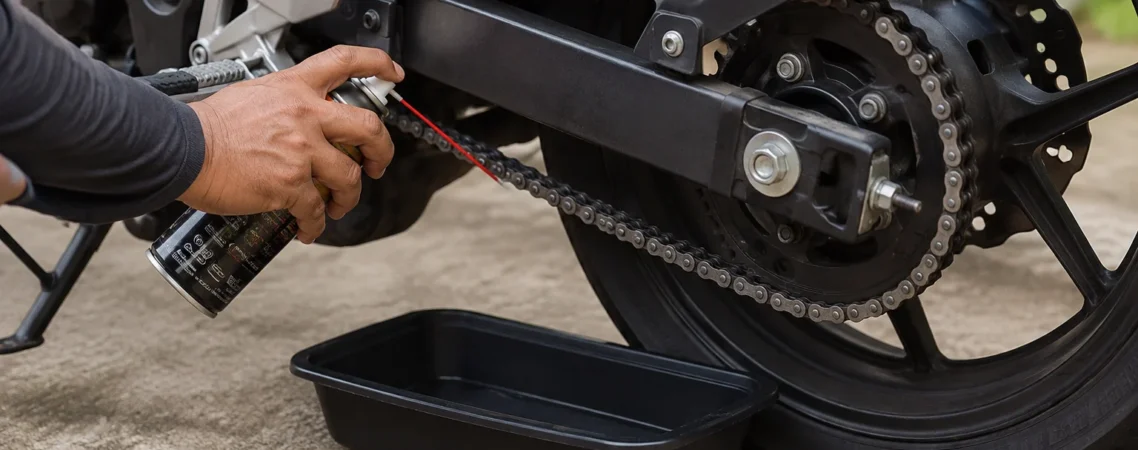
3. Apply to the inner surface of the chain. Position the lube nozzle at the inner edge of the lower chain run (the part facing the sprocket). As you slowly rotate the rear wheel (with the bike on a paddock stand or center stand), the lube migrates through the link internals and O-rings by centrifugal force when the bike moves.
4. Apply a thin, even coat. One steady pass around the full chain length is sufficient. Over-application creates a fling-off mess on your swingarm, wheel, and tire without improving lubrication.
5. Allow it to penetrate before riding. Give the lubricant 3 to 5 minutes to settle before the first ride. This allows it to wick into the link internals rather than being immediately flung off.
6. Wipe excess from the outer links. A clean rag wiped along the outer plates after application removes excess that would otherwise fling onto the rear wheel and tire.
O-Ring and X-Ring Chains: Does Lubrication Work Differently?
Most modern motorcycle chains are sealed. They use rubber O-rings or X-rings between the link side plates to seal factory-applied grease inside the link internals. This internal grease does not wash out or deplete in normal use.
What surface lubrication does on a sealed chain is protect the external surfaces from corrosion, reduce friction at the roller-to-sprocket contact points, and preserve the rubber seals from drying out and cracking. This is still important: a sealed chain that receives no external lubrication corrodes at the pins and rollers and degrades the O-ring seals over time.
For sealed chains, a wax-based lube or chain wax is often preferred because it provides the surface protection needed without the grit-attracting properties of heavy wet lubes that are less necessary when internal lubrication is sealed.

Conclusion
Motorcycle chain lubrication is a 5-minute task that extends chain and sprocket life by thousands of miles. The correct time is every 300 to 600 miles under normal conditions, more frequently in wet or dusty environments. It is ideally recommended to use motorcycle chain lubricant, not WD-40 or motor oil. Apply to the inner chain surface in a thin, even coat, allowing penetration time, and wiping excess.
A chain that is maintained correctly runs smoother, loses less power to friction, and lasts two to three times longer than a neglected one. Given the cost of a quality replacement chain and sprocket set, the return on five minutes of regular maintenance is one of the best in all of motorcycling.
For chains, sprockets, and all drivetrain components, browse the full Motorcycle Chains category at Aliwheels, filtered by your make and model.
Frequently Asked Questions
Q: Can I use WD-40 as a motorcycle chain lubricant?
A: No. WD-40 is a water-displacing solvent that removes existing chain lubricant and provides no lasting lubrication of its own. Applying WD-40 to a motorcycle chain leaves it less protected than before the application. Use a dedicated motorcycle chain lubricant wet, dry, or wax-based, depending on your riding conditions.
Q: How do I know when my motorcycle chain needs replacing rather than just lubricating?
A: A chain that has stretched beyond its wear limit cannot be fixed by lubrication. The standard test is to pull the chain away from the rear sprocket at the 3 o’clock position. If you can pull it far enough to see more than half a tooth, the chain is worn and needs replacement. Also look for stiff links that do not flex freely, visible rust on the pins or rollers, and damaged O-rings (cracked or missing rubber seals between the link plates).
Q: My chain is making a noise after lubrication. Did I do something wrong?
A: If the noise appeared after lubrication, check whether the chain has developed a stiff link during the cleaning process. A stiff link that does not flex smoothly causes a regular clicking or clunking noise at low speeds. Work the stiff link side to side by hand to free it, and apply lube specifically to that section. If the noise was present before lubrication and continues after, the chain may be worn and require replacement.
Q: How do I clean a motorcycle chain before lubricating?
A: Use a dedicated chain cleaner spray or kerosene applied with a chain cleaning brush. Work around the full chain length, then wipe with a clean rag. Allow the chain to dry fully before applying fresh lubricant; applying lube over wet solvent dilutes it and reduces adhesion. Some chain cleaning kits include a three-sided brush that contacts all chain surfaces simultaneously, which speeds up the process significantly.
Q: Does chain tension affect lubrication requirements?
A: Chain tension and lubrication are separate maintenance items, but both affect chain and sprocket life. Chain that is too tight accelerates wear on the chain, sprockets, and transmission output shaft bearing. A chain that is too loose can jump the sprocket or contact the swingarm. Check and adjust chain slack to your manufacturer’s specification at the same time as lubrication; they are natural companion tasks.