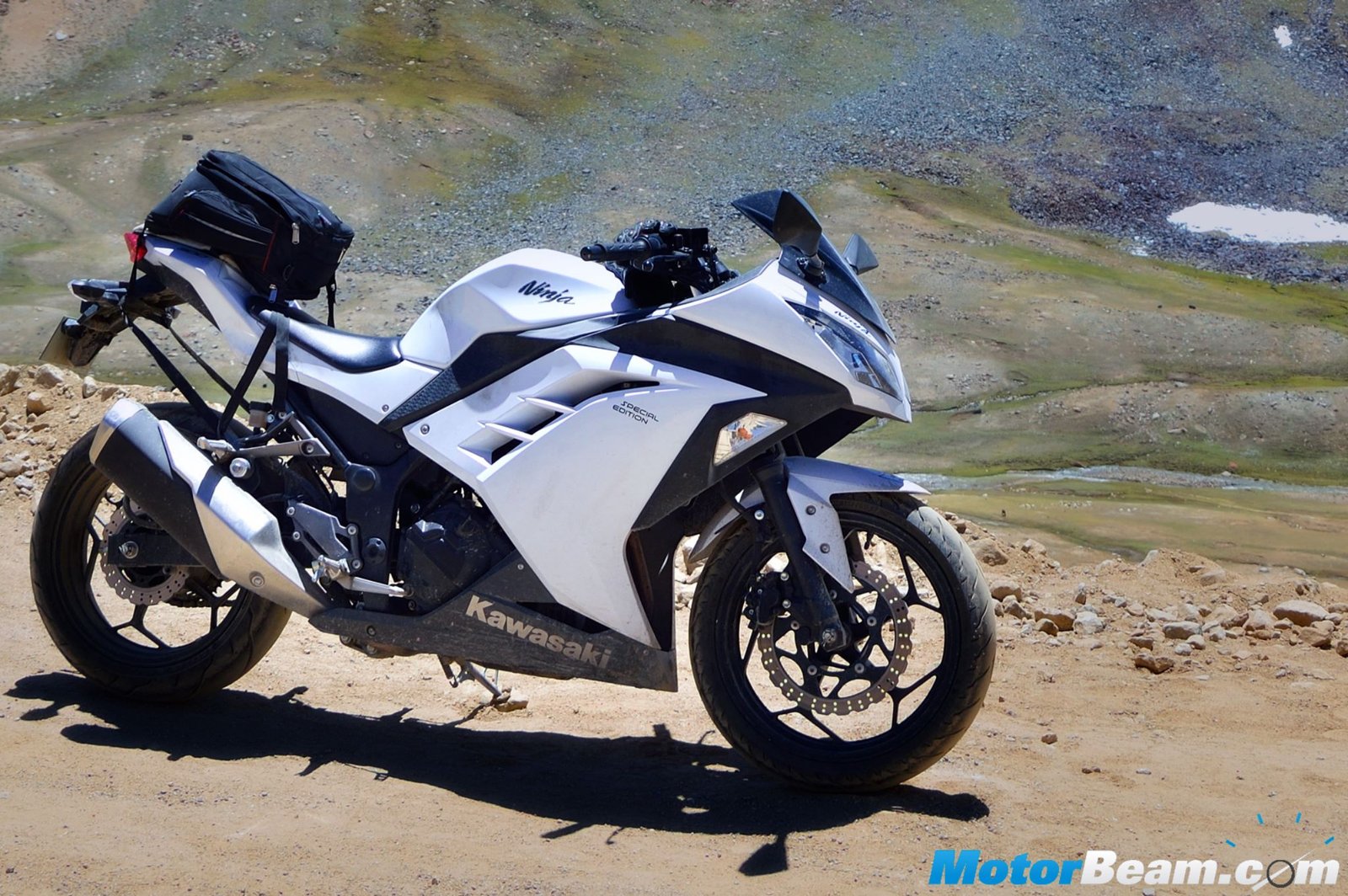





No two riders are the same. A Kawasaki ZX10R track day rider and a Harley-Davidson Road Glide tourer share the same basic hand anatomy and the same crash physics, but they have completely different glove requirements. The ZX10R rider needs maximum abrasion resistance and a slim profile that doesn’t interfere with lever feel at race speeds. The Road Glide rider needs all-day comfort over 400-mile days, weatherproofing, and heated grip compatibility.
One buying guide that applies to both of them is bad. This one is different. It addresses every rider type specifically, covers every season, and gives you the exact specifications to look for based on how you actually ride, not how gloves are generically marketed.
Browse Aliwheels’ complete Motorcycle Gloves range for certified options across all rider types and seasons. Complete your gear setup with Riding Gear, Motorcycle Helmets, Motorcycle Boots, and Motorcycle Jackets and Vests.
The Foundation: Why CE EN 13594 Certification Applies to Every Rider Type
Before separating by rider type, one requirement applies universally regardless of how, where, or how often you ride. Every glove used as motorcycle riding protection must carry CE EN 13594 certification.
CE EN 13594:2015 independently tests motorcycle gloves across four zones. Abrasion resistance, impact absorption, seam strength, and palm protection at two levels:
Level 1: Basic protection threshold. Acceptable for casual urban riding at lower speeds.
Level 2: Significantly higher protection threshold. Recommended for all serious riding.
Level 2 KP: Level 2 with independently tested and certified knuckle protection. The gold standard for any rider who uses their hands aggressively.
A glove without this certification label has not been tested to any independent protection standard. The branding, the price, the leather quality, the marketing claims. None of these substitute for the certification. If the label doesn’t say CE EN 13594, treat it as fashion, not protection.
With that established, here is the rider-type-specific guide.
Sport and Track Day Riders: Kawasaki Ninja ZX Series, Yamaha R1, Honda CBR1000RR, Ducati Panigale
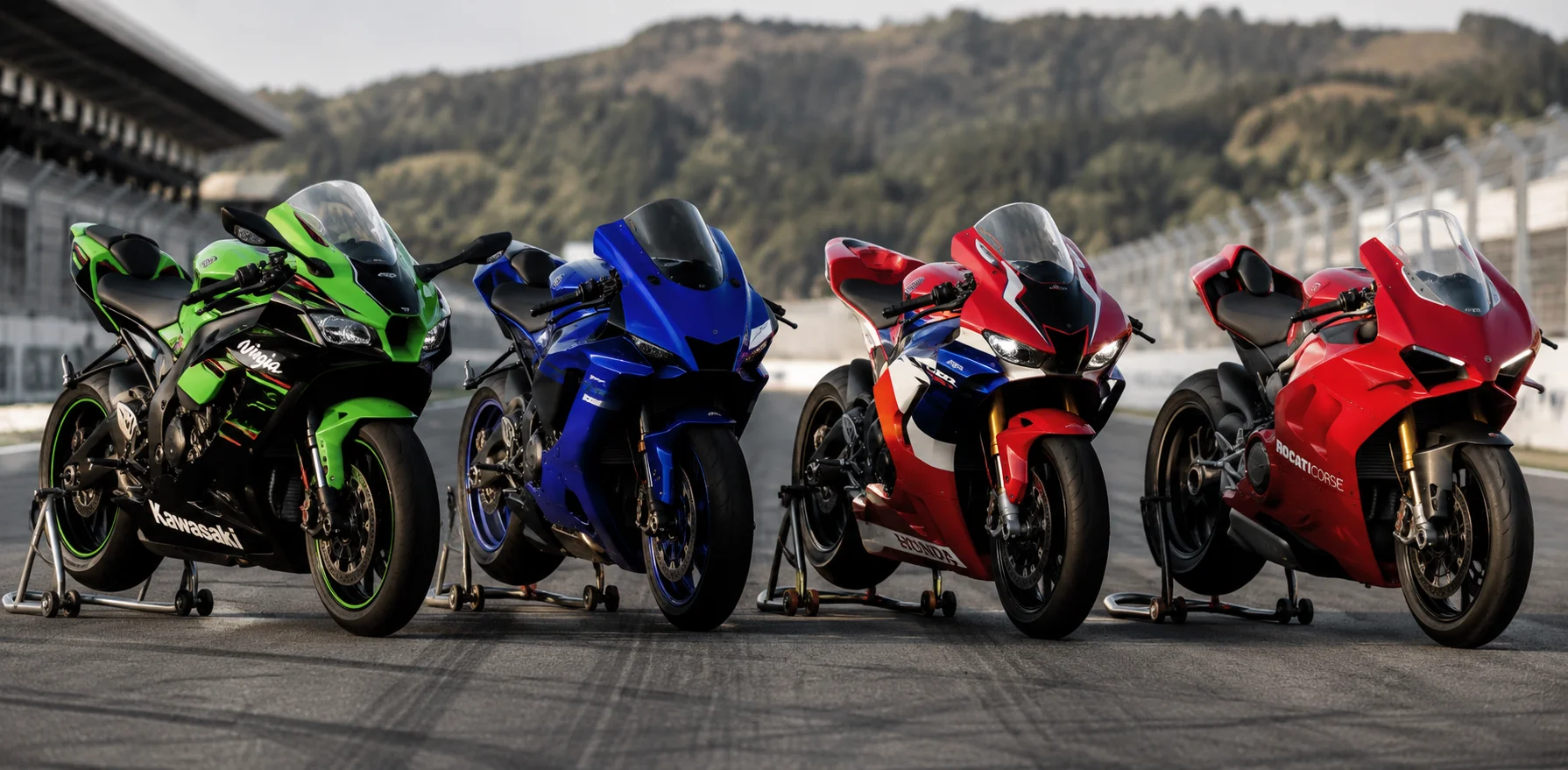
Sport riders have the most demanding glove requirements of any rider category. At track speeds, a crash generates forces that street riding rarely approaches, and the hands are typically the first contact point in any fall.
The glove requirements for this rider type are unambiguous.
Material
Full-grain leather with a minimum 1.0 mm thickness across the palm and knuckle zones. Leather provides the highest abrasion resistance at equivalent CE class ratings. Furthermore, it maintains structural integrity through sustained road contact in a way that most textile alternatives cannot. For serious track use, kangaroo leather is the strongest natural leather by weight. It is used in premium racing gloves for its combination of thinness and strength.
Certification
CE EN 13594 Level 2 KP minimum. For circuit racing, check the specific race series regulations, as some require homologated gloves that exceed standard CE certification.
Armor
Hard carbon fiber or molded plastic knuckle protection. Foam knuckle inserts are inadequate for race speeds. The knuckle is the highest-energy impact point in a motorcycle crash. The armor there needs to be rigid enough to distribute impact across a wider area rather than compressing and transmitting it directly to the bone.
Palm
Multi-layer palm with abrasion-resistant material at the heel of the palm. The specific zone that contacts the road first in an outstretched hand fall. Palm sliders (hard material inserts) at the heel of the palm reduce friction and allow the hand to slide rather than grip the road surface, reducing the levering force on the wrist.
Fit
Snug and precise. A sport glove that is too loose allows the armor to shift position under impact, which means the protection is not where it needs to be at the critical moment. Sport gloves should feel tight in the riding position with zero gap between the knuckle armor and the actual knuckle.
Cuff
Short to medium. Long gauntlet cuffs interfere with tight riding suit cuffs at track days and add bulk that reduces precision at the lever.
What to avoid
Heated grip compatibility is irrelevant for this rider type and adds bulk. Waterproofing membranes add weight and reduce feel. Touchscreen fingertips are a cosmetic feature that should not influence the selection of a track glove.
Touring Riders: Harley-Davidson Road Glide/Street Glide, BMW R1250GS, Honda Gold Wing, Kawasaki Vulcan 1700 Voyager
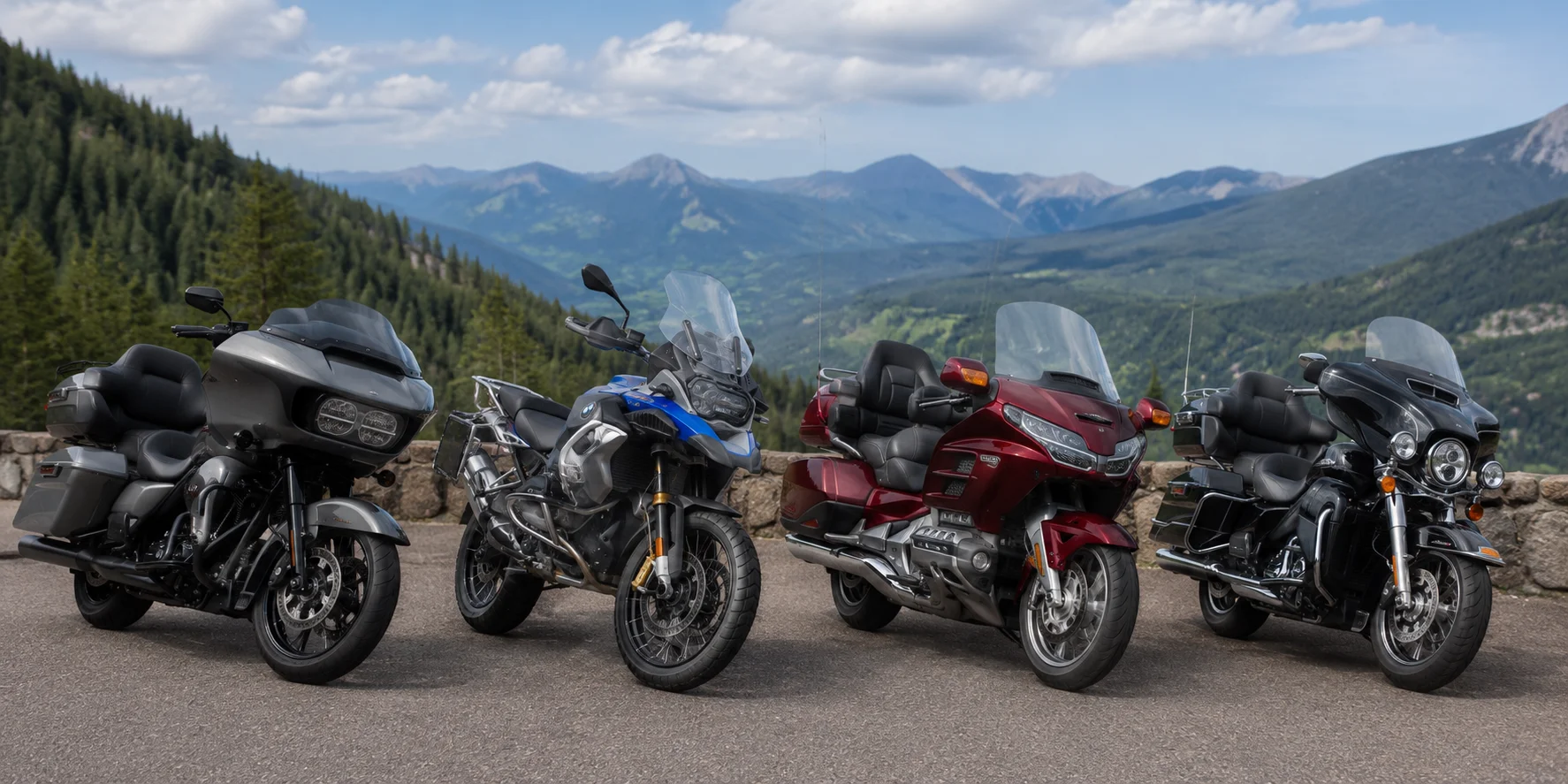
The touring rider’s glove requirements are defined by one factor that doesn’t exist for other rider types: time. A touring rider wears their gloves for eight to ten hours at a stretch over multiple consecutive days. Every discomfort that would be ignored on a 30-minute commute becomes a significant problem over a 400-mile riding day.
Comfort as primary specification
A touring glove that provides excellent protection but causes hand fatigue at hour four is a worse touring glove than a slightly less protective but genuinely comfortable alternative that stays on for ten hours. Comfort in a touring context means adequate padding at pressure points, no seams that create hot spots under sustained grip, and a cuff that doesn’t cut off circulation over extended periods.
Waterproofing is essential
Touring riders encounter weather. A rider doing a seven-day national tour will ride in rain. A waterproof membrane, Gore-Tex, Hipora, or equivalent quality, is not a luxury feature for a touring glove. It is a fundamental specification. A touring glove without waterproofing forces the rider to stop. Change gloves in rain or accept cold, wet hands for hours; both compromise riding quality and safety.
Extended gauntlet cuff
The cuff must seal at the jacket sleeve to prevent wind entry at the wrist. At highway speeds, a gap between the glove cuff and the jacket sleeve creates a wind tunnel directly against the wrist that causes significant heat loss over an extended ride. Gauntlet cuffs that extend well over the wrist and seal with Velcro or buckle at the sleeve cuff are the correct configuration for touring.
Thermal insulation
For spring and autumn touring in the US Midwest, Northeast, and Pacific Northwest, morning temperatures regularly drop below 50°F even when afternoon riding is comfortable. A touring glove with a removable thermal liner addresses this range more practically than managing two separate glove pairs for temperature variations within a single day.
Bluetooth and communication system compatibility
Many touring riders use intercom systems for rider-to-pillion communication and music. Confirm the glove fingertips are compatible with touchscreen operation for map interaction at stops. Make sure the cuff design doesn’t interfere with communication system control pads positioned at the jacket cuff.
Heated grip compatibility
Heated grips add warmth from the handlebar surface that reduces the insulation load on the glove itself. For touring riders with heated grips fitted, a slightly thinner glove with better feel is often more comfortable than maximum-thickness insulation that reduces lever feel on a bike that may be spending hours in varying conditions.
Certification
CE EN 13594 Level 2 for all-day touring. Level 1 is acceptable for experienced tourers who prioritize comfort over maximum protection specification, but Level 2 provides meaningfully better protection without significant comfort trade-off in quality touring gloves.
Adventure and Dual-Sport Riders: BMW R1250GS Adventure, KTM Adventure, Yamaha Ténéré 700, Honda Africa Twin
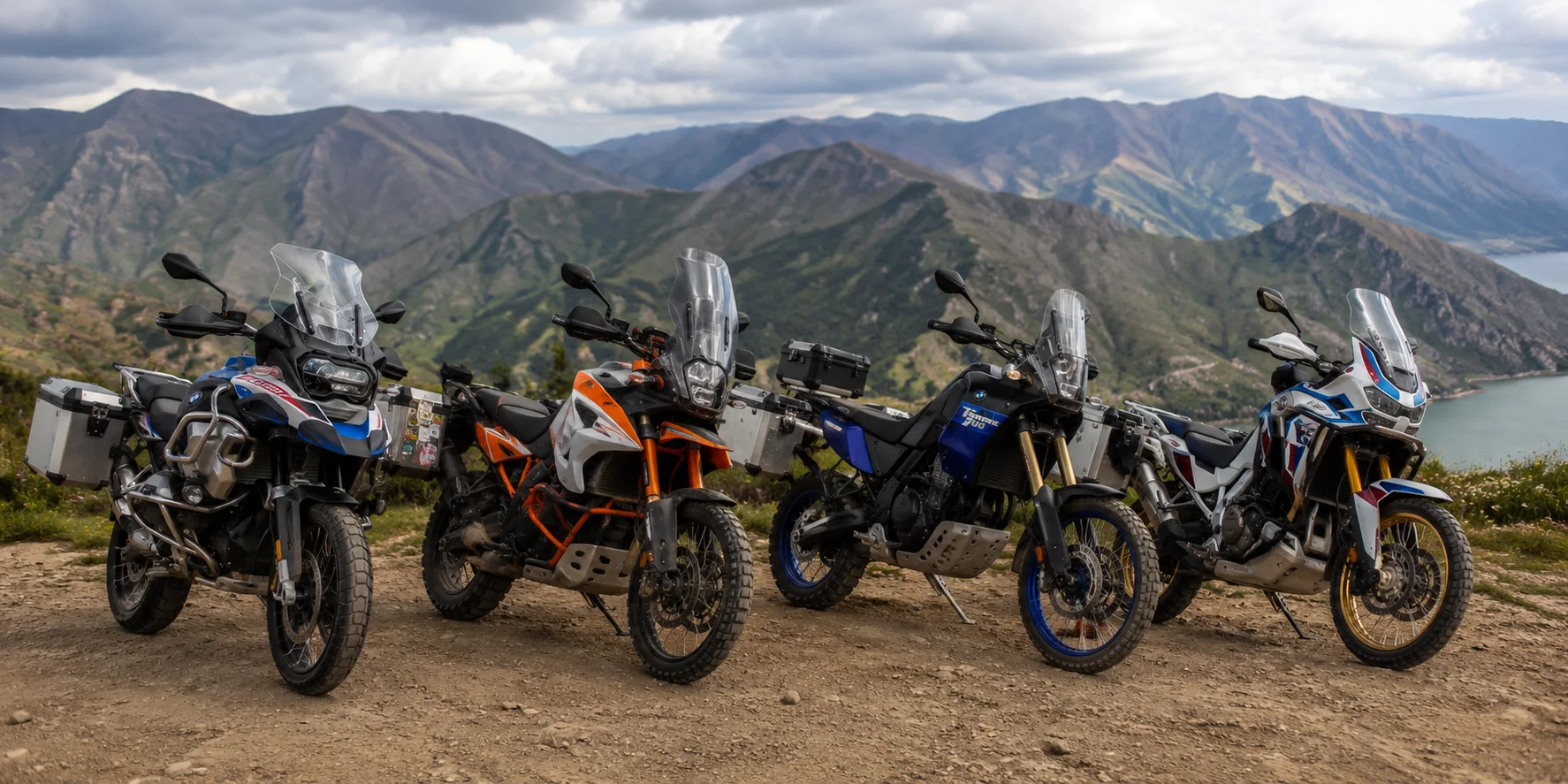
Adventure riders face a unique challenge that no other rider type shares: the gloves need to work both on paved highways at speed and in off-road conditions where grip, dexterity, and debris protection are completely different requirements from pure road riding.
Dual-compound construction: The best adventure gloves use different materials and protection configurations across the hand. A more open, flexible construction across the finger backs allows the hand to articulate for off-road control inputs, while a reinforced palm and knuckle section protects in the crash scenarios that off-road riding generates.
Gauntlet length: Adventure riders benefit from a medium-length gauntlet that seals against the riding jacket sleeve without the full-length gauntlet that tour-specific gloves use. Full gauntlets can restrict the wrist rotation needed for certain off-road control inputs.
Grip texture: Off-road riding requires more grip force on handlebars over rougher terrain. Palm grip panels in silicone or textured rubber maintain control in wet, muddy, and dusty conditions where smooth leather becomes genuinely slippery.
Ventilation: Adventure riding in southern US states, Central America, and any warm climate involves sustained heat. Ventilated panels across the back of the hand prevent the hand fatigue that comes with sustained hot, enclosed riding.
Impact protection: Off-road crashes tend to involve more direct hand contact with rocks, tree roots, and hard terrain surfaces than road crashes. Harder knuckle and finger protection than a pure road touring glove carries is appropriate. CE EN 13594 Level 2 KP is the correct specification.
Water resistance without full waterproofing: Many adventure riders prefer water-resistant rather than fully waterproof gloves for off-road use because waterproof membranes reduce breathability and extend drying time after immersion. A water-resistant but breathable outer material with an optional waterproof over-glove for extreme conditions gives more flexibility.
Commuter Riders: Kawasaki Ninja 400/500/650, Honda CB500F, Yamaha MT-03, Any Urban Motorcycle
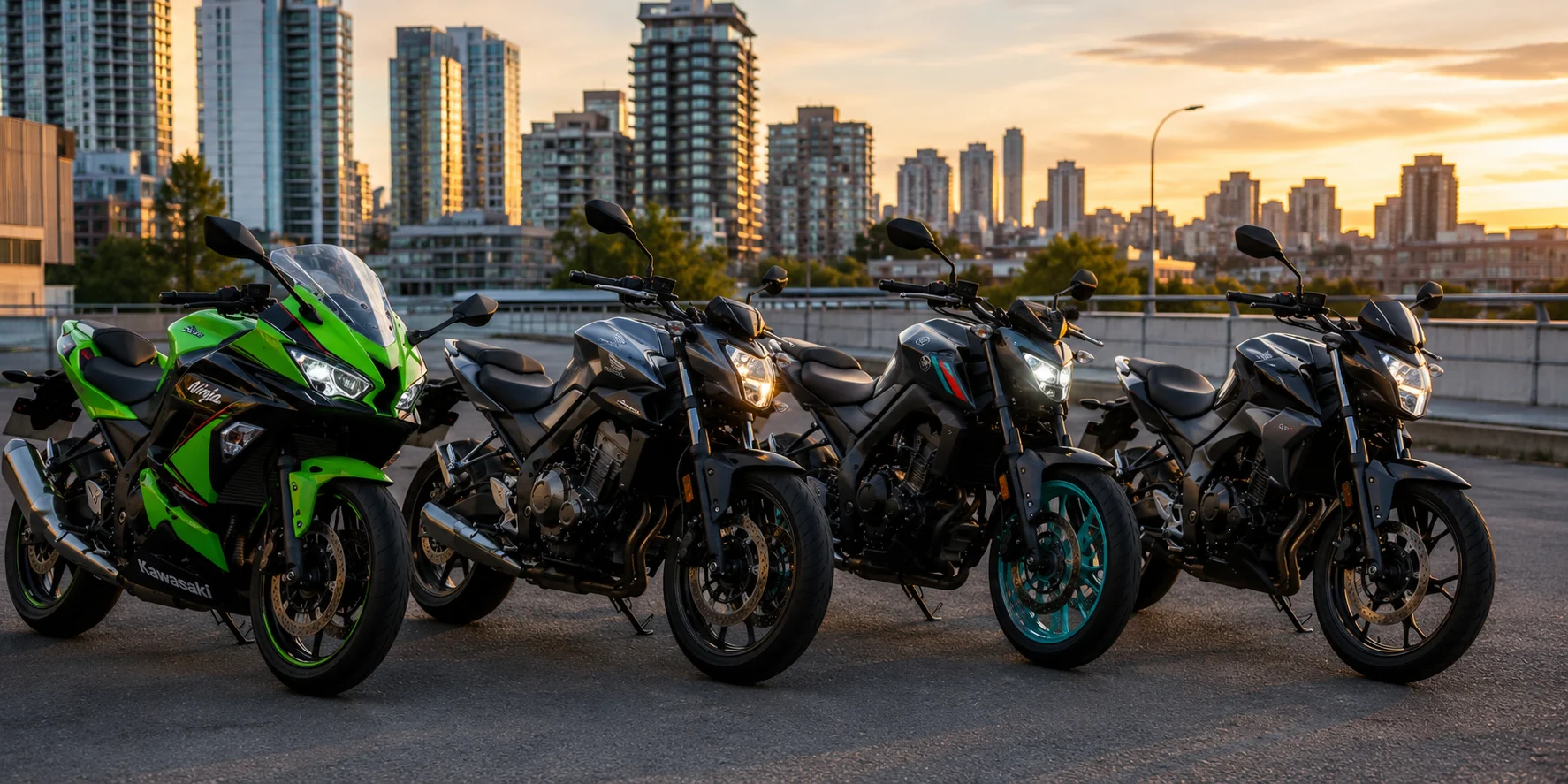
The commuter rider’s gloves face a different set of practical demands from any other category. They need to be put on and taken off multiple times per day in office environments or at destinations. They need to accommodate varying weather across a season without requiring a glove change for every ride. And they need to be comfortable enough that the rider actually wears them on the short rides that represent the majority of urban commuting, the rides where riders are most tempted to skip gear.
Three-season versatility
A commuter glove that handles 40°F to 80°F across spring through autumn with appropriate layering underneath is worth more than a technically superior glove optimised for a single temperature range. Look for a textile construction with a removable thermal liner and integrated water resistance at minimum.
Easy on and off
Complicated buckle and Velcro closure systems that work perfectly on a track day become genuinely frustrating when you’re putting gloves on and taking them off in a car park. Commuter gloves should use simple, fast closure mechanisms that can be operated with one hand while wearing the other glove.
Professional appearance
Commuters who arrive at offices, client meetings, or professional environments benefit from gloves that look deliberate rather than obviously motorcycle-specific. Textile gloves in black or dark navy with clean lines look acceptable in professional environments in a way that knuckle-armored leather track gloves do not.
Touchscreen compatibility
Commuters who use phones for navigation or check messages at stops benefit significantly from touchscreen-compatible fingertips that don’t require glove removal to interact with a screen.
Urban leather or textile
Commuters in dry climates can use leather commuter gloves that look professional and provide excellent protection without the waterproofing premium. Commuters in wet-climate regions, the Pacific Northwest, and parts of the Northeast need waterproof membranes as a standard specification rather than an upgrade.
Certification
CE EN 13594 Level 2 for all commuting applications. The commuter’s crash profile, urban speeds, frequent stops, and varied traffic are not lower risk than other riding scenarios.
Women Riders: Specific Fit Considerations
Women’s motorcycle gloves are not simply smaller versions of men’s gloves. The proportional differences between average male and female hand anatomy, different palm width to finger length ratios, different thumb base widths, and different wrist circumferences relative to palm size mean that women’s-specific glove construction provides a meaningfully better fit than a small or extra-small men’s glove.
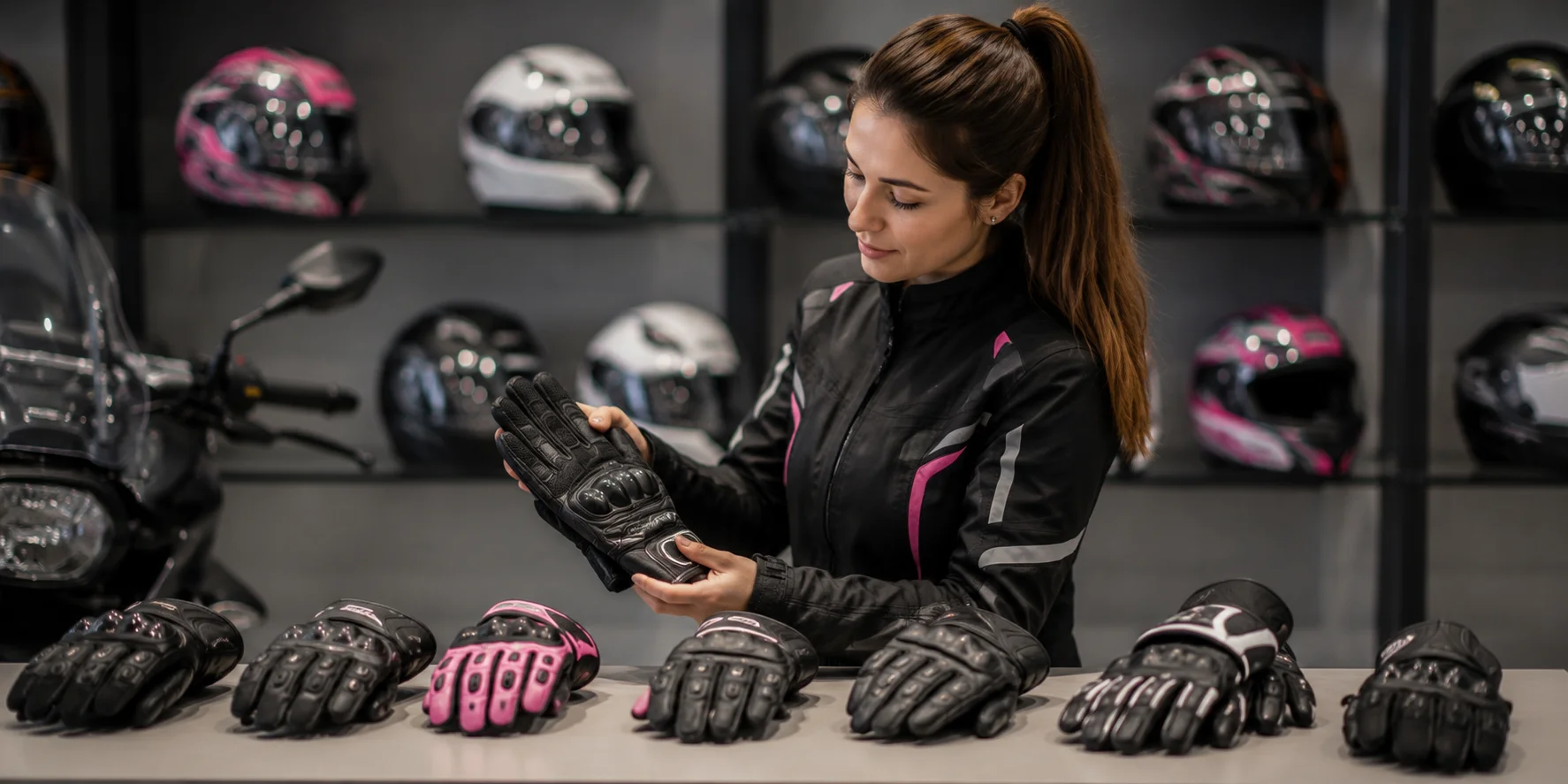
The primary fit issue women riders report with men’s gloves is that the palm is proportionally too wide and the fingers are too short relative to the palm width. This creates bunching at the knuckle zone and armor that sits too low, exactly the problem that negates knuckle protection.
Women’s-specific motorcycle gloves address these proportions directly. When purchasing any glove, measure hand circumference across the widest palm point and finger length from the base of the middle finger to its tip. Compare against the specific glove’s women’s size chart rather than converting from a man’s size.
Seasonal Selection Quick Reference
| Rider Type | Primary Season | Recommended Glove Type | Key Specification |
| Sport / Track | Summer / Year-round | Leather CE Level 2 KP | Hard knuckle, palm slider, slim cut |
| Touring | All seasons | Waterproof textile with liner | Extended gauntlet, Gore-Tex membrane, thermal liner |
| Adventure / Dual-sport | All seasons | Dual-compound adventure glove | Grip panels, medium gauntlet, Level 2 KP |
| Commuter | Three-season | Textile three-season | Easy closure, touchscreen, water-resistant |
| Winter riding (any type) | Winter | Waterproof insulated gauntlet | Hipora/Gore-Tex, hard knuckle, thermal rating |
| Summer urban | Summer | Mesh/perforated leather | Airflow, short cuff, touchscreen |
Motorcycle Glove Care: Making Your Investment Last
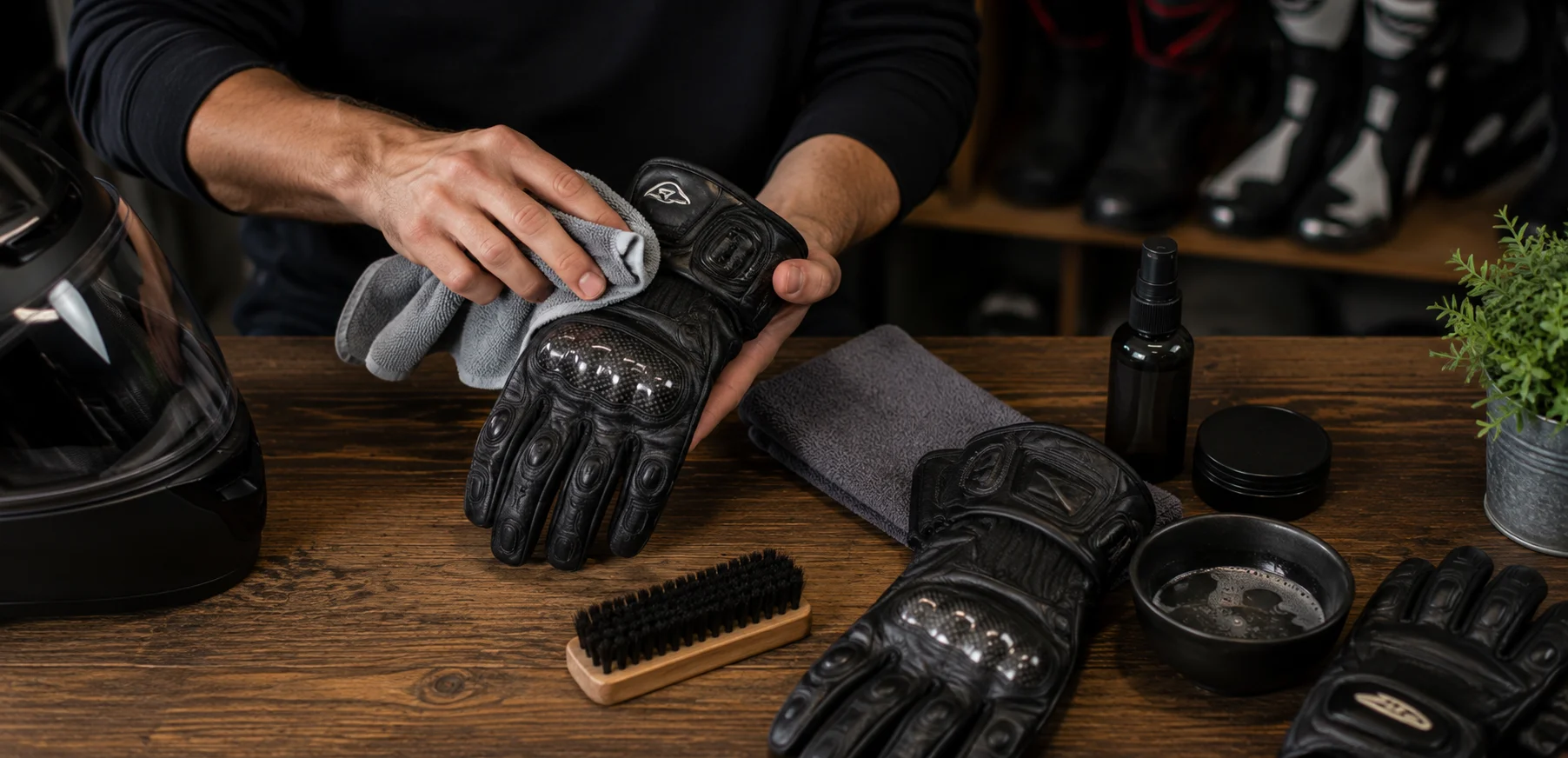
Leather gloves require conditioning every three to six months with leather conditioner to maintain the suppleness and protective properties of the hide. Stiff, dry leather loses its abrasion resistance and becomes more likely to crack at stress points.
Textile gloves with waterproof membranes should be re-treated with DWR (Durable Water Repellent) spray after washing. The outer fabric’s water repellency degrades with washing and riding; DWR treatment restores it.
Wash all motorcycle gloves according to the manufacturer’s instructions. Most textile gloves are machine washable at 30°C. Most leather gloves require hand washing with saddle soap. Never machine-dry leather gloves; air dry flat to prevent shrinkage and shape distortion.
Inspect gloves annually for stitching separation at the thumb-palm junction (the highest-stress seam), armor migration from its designed position, waterproof membrane deterioration (water should bead rather than absorb), and wear-through at palm heel and knuckle zones.
Conclusion
The right motorcycle gloves for a ZX10R track-day rider are almost the opposite of the right gloves for a Road Glide touring rider. The right gloves for a BMW GS adventure rider are different from both. And the right gloves for an urban commuter prioritize different properties from all three. Choosing by rider type rather than by generic “best motorcycle gloves” recommendations gives you a glove that actually suits how you ride, and a glove that suits how you ride is the one you actually wear on every ride.
Browse Aliwheels‘ Motorcycle Gloves for certified options across every rider type, season, and budget. All certified and tested.
Frequently Asked Questions
Q: What are the best motorcycle gloves for beginners?
A: For new riders, a CE EN 13594 level 2 certified three-season textile glove is the most practical starting point. It handles the majority of riding conditions, provides legitimate certified protection, and is typically priced accessibly. Avoid buying the cheapest gloves available; the price difference between uncertified budget gloves and entry-level certified gloves is small, and the protection difference is significant.
Q: How do I know what size motorcycle gloves to buy?
A: Measure your hand circumference at the widest point across the palm (excluding the thumb) with a soft tape measure. Measure finger length from the base of your middle finger to its tip. Compare both measurements against the specific glove brand’s size chart; sizing varies meaningfully between brands and even between models from the same brand. If between sizes, size up for touring and commuting gloves (more wear time) and size down for sport gloves (better feel and armor positioning).
Q: Can I use the same gloves for track days and street riding?
A: Yes, if they meet the track’s minimum glove specification (usually CE Level 2 KP minimum, and some tracks require higher homologation ratings). A quality CE Level 2 KP leather sport glove is appropriate for both track and street use. Going the other direction, using street touring gloves for track days is not recommended, as most track-day operators require minimum specifications that many touring gloves do not meet.
Q: Are expensive motorcycle gloves worth it?
A: At the same CE certification level, expensive gloves provide better materials, more refined construction, improved comfort features, and typically longer service life. They do not provide more certified protection than a cheaper glove at the same CE class. The premium is worth paying for touring riders who wear gloves for ten hours daily and for sport riders where glove fit and feel affect performance. For occasional riders or those building a first gear set, a certified mid-range glove is excellent value.
Q: Do motorcycle gloves need to be replaced after a crash?
A: Yes. Even if the gloves look undamaged after a crash, the internal armor and protective materials may have absorbed impact energy and be compromised for subsequent impacts. This is the same principle as helmet replacement after any significant impact. Gloves that have been in a crash should be treated as single-use protective equipment; they did their job in the crash, but their ability to protect in a subsequent crash is uncertain.