




Short Summary:
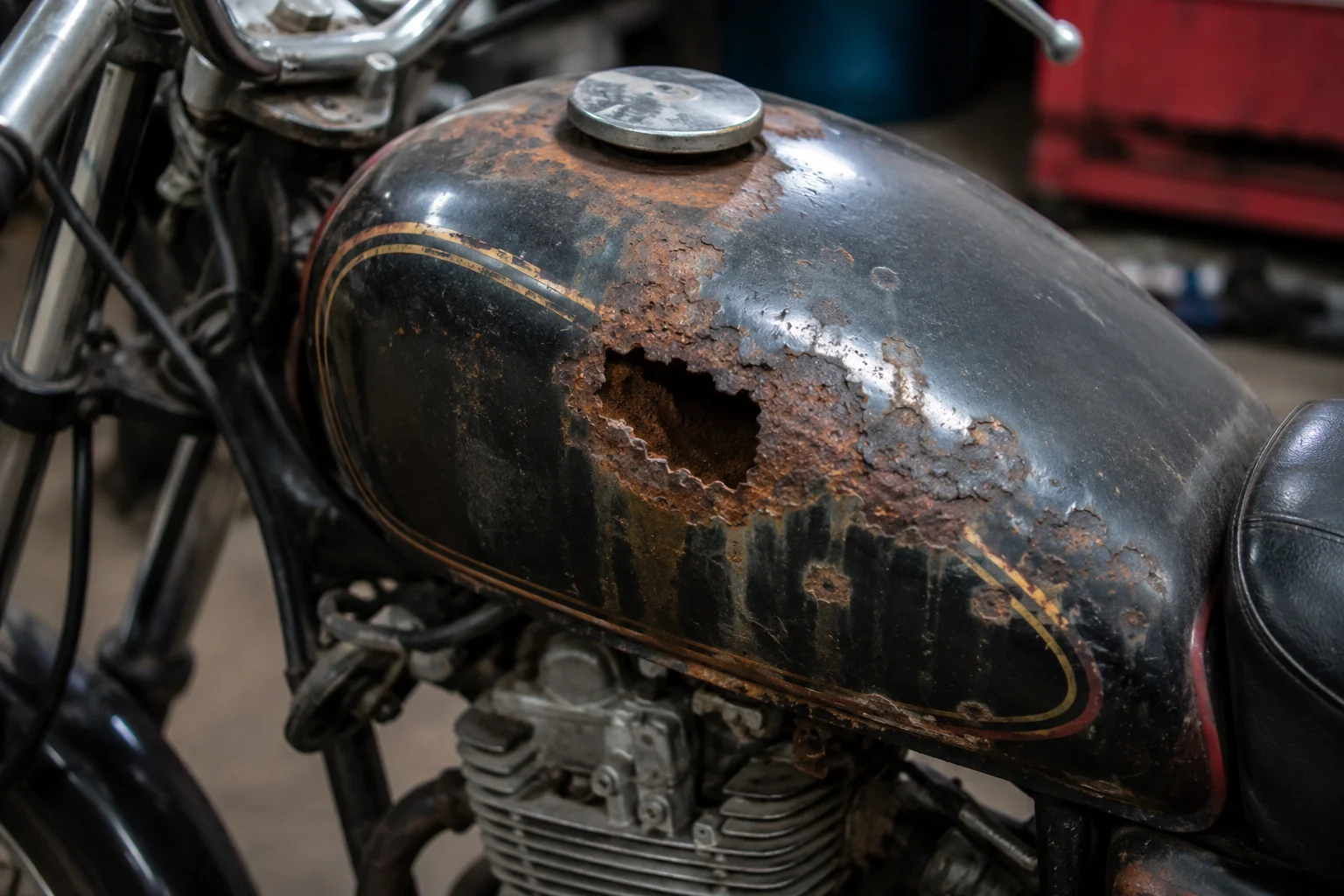
Motorcycle fuel tank rust is caused by moisture accumulating inside a partially empty tank, which oxidizes the bare steel interior. Fuel leaks occur from rust perforations, petcock failures, seam cracks, or cap seal deterioration. Minor surface rust can be treated with tank sealer. Perforations, structural cracks, or confirmed leak sources require tank replacement. Ethanol-blended fuels accelerate both rust and seal degradation significantly.
Your motorcycle has been sitting for a few months. You pull the petcock, prime the fuel system, and notice a faint smell of petrol under the bike. Or you drain the tank for winter storage and see flakes of rust-colored debris in the fuel. Or you’ve developed a rough idle and hesitation under load that your carburettor cleaning didn’t fully resolve.
All of these point to the same place: the fuel tank. And fuel tank problems follow a predictable pattern that makes them easier to diagnose and address than most riders expect.
Here is the complete guide to motorcycle fuel tank problems, every cause, every fix, and when replacement is the only correct answer. Browse Aliwheels’ fuel tank components and related parts in the Motorcycle Parts category.
Why Motorcycle Fuel Tanks Rust?
Steel motorcycle fuel tanks rust from the inside when moisture accumulates on bare metal surfaces not covered by fuel. This happens most reliably in two scenarios.
The first is partial storage. A tank stored at less than full capacity has air space above the fuel level. That air contains moisture, which condenses on the bare steel walls above the fuel line when temperature drops overnight. The water droplets run down and collect at the lowest points of the tank. Bare steel in contact with water and air oxidises rapidly — surface rust can form within weeks and penetrate through a thin steel wall within months of active moisture exposure.
The second is extended storage with old fuel. Ethanol-blended pump fuel, which is virtually all fuel sold in the US, begins to phase-separate within 30 to 60 days of sitting without use. The ethanol separates from the gasoline and absorbs water from the surrounding air through the fuel cap vent. This ethanol-water layer settles to the bottom of the tank and sits in direct contact with bare steel, creating an aggressive internal corrosion environment.
According to the Motorcycle Industry Council’s fuel system documentation and extensive community data on ADVrider.com and various model-specific forums, ethanol-related fuel system damage is now the single most common cause of premature fuel tank and petcock deterioration on motorcycles stored with modern pump fuel.
6 Signs Your Motorcycle Fuel Tank Has a Problem
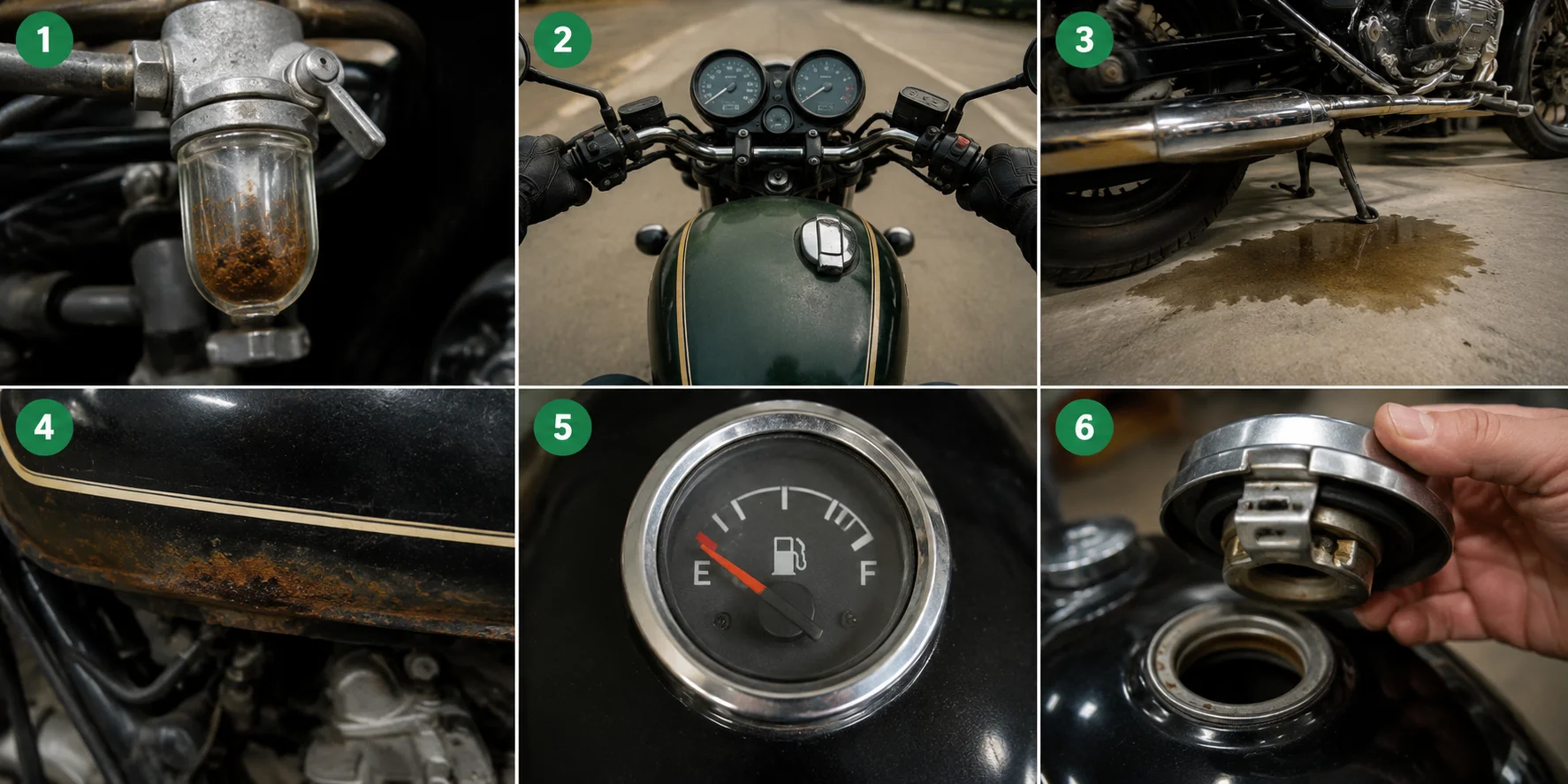
1. Visible rust flakes in fuel or at the petcock filter
The first physical evidence most riders notice. When internal rust progresses to the point of producing loose particles, those particles circulate with the fuel and collect at the petcock screen, the fuel filter, and ultimately the carburettor jets or fuel injector screens. If your carburettor requires repeated cleaning to restore normal idle and performance, check whether rust contamination from the tank is reloading the jets between cleans.
2. Rough idle and hesitation that returns after carburettor cleaning
A carburettor that runs correctly after cleaning but develops rough idle or fuel delivery hesitation within a few hundred miles is almost always receiving contaminated fuel from the tank. The cleaning removed the blockage from the jets, but the tank continues to supply rust particles, varnish deposits, or phase-separated ethanol that recreates the blockage.
3. Fuel smell under the bike while stationary
Petrol smell at rest with the engine off indicates an active fuel leak. The most common sources are the petcock (both the body and its vacuum port on vacuum-operated petcocks), the fuel cap seal, the tank-to-carburettor fuel line connections, and in severe cases, rust perforations in the tank floor where fuel accumulates.
4. Visible rust staining on tank exterior below seams
Rust seeping through seams or pinhole perforations leaves characteristic rust staining on the outside of the tank below the failure point. This is more visible on silver or light-coloured tanks but present on any tank where internal rust has penetrated to the outer surface.
5. Fuel level drops faster than expected
A tank losing fuel faster than the engine should be consuming it indicates a leak somewhere in the fuel system. Confirm by parking on clean concrete and checking for fuel droplets or wet spots under the tank area after the bike has sat for several hours.
6. Difficulty with fuel cap sealing
A fuel cap that leaks, allowing fuel vapour out or moisture in, may be the primary contributor to both internal rust and external fuel smell. Cap seals deteriorate from UV exposure and ethanol contact. On older bikes, cap seal replacement is a standard maintenance item that is frequently overlooked.
Diagnosing the Exact Failure: Step by Step
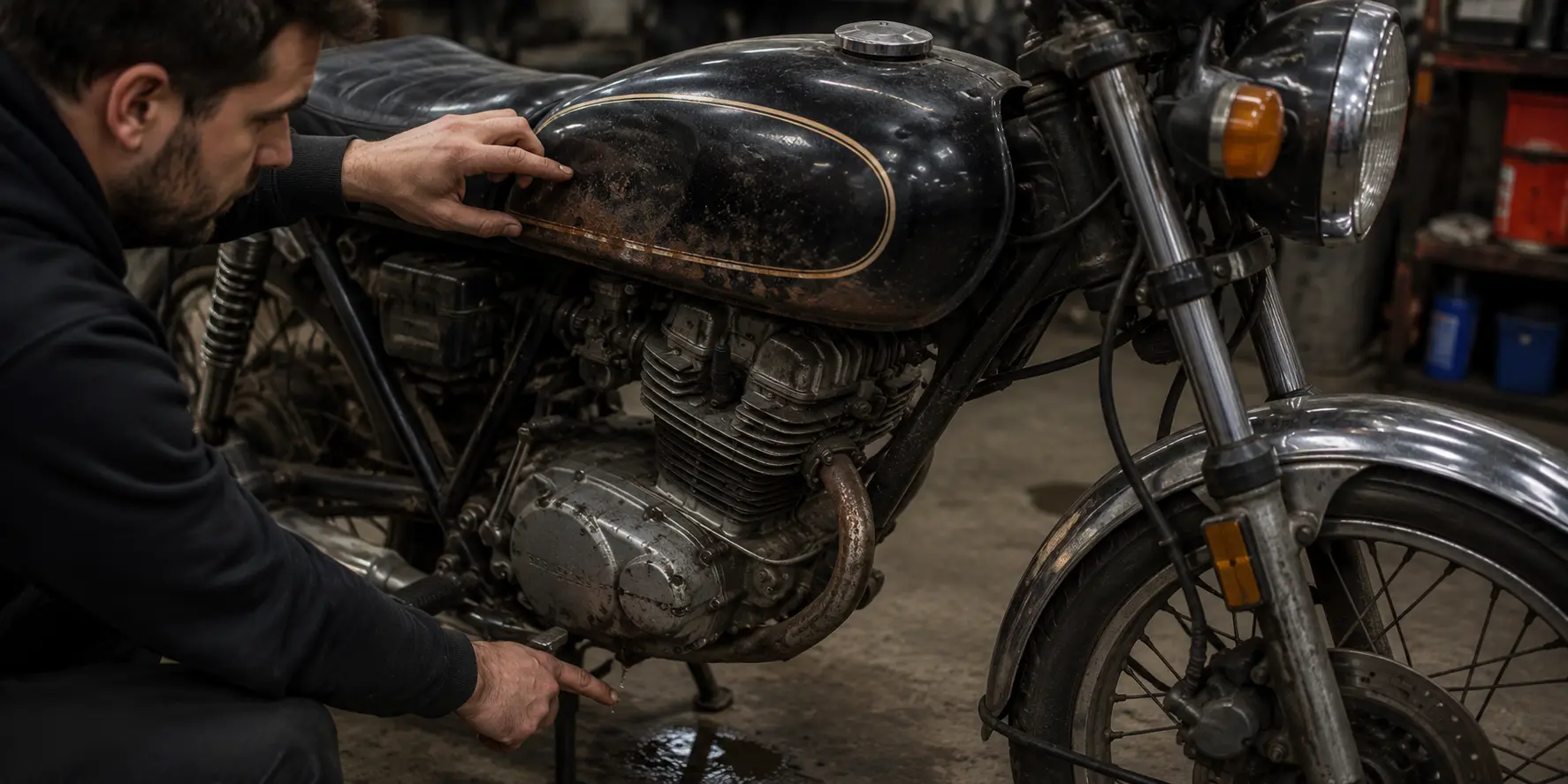
Before spending money on any fix, confirm exactly where the problem is and how severe it is.
Step 1: Remove the tank and drain completely. Rinse with clean water and allow to dry fully in a warm, ventilated space for 24 hours.
Step 2: Inspect the interior with a torch through the fuel cap opening and the petcock opening. Light surface rust, reddish-brown color without visible pitting is early-stage and treatable. Deep pitting, perforations visible as pinpoints of light, or large sections of heavy rust indicate advanced damage.
Step 3: Pressure test for leaks. Seal all tank openings except one. Apply low-pressure compressed air (5 psi maximum) through the remaining opening with the tank submerged in water. Air bubbles from any surface confirm perforation at that point. This identifies leak sources before any repair attempt.
Step 4: Inspect the petcock. Remove and examine the rubber diaphragm on vacuum-operated petcocks; these degrade with age and ethanol exposure, causing both vacuum leaks and fuel seepage. Inspect the body for cracking and the screen for rust debris accumulation.
The Three Repair Options. When Each Is Correct
Option 1: Tank Sealer (Light to Moderate Internal Rust, No Perforations)
Tank sealer is a two-part or single-part chemical compound applied to the interior of a cleaned tank that coats and seals the bare steel surface. It prevents further rust formation and seals hairline cracks and early-stage rust pitting.
Brands like POR-15, Kreem, and Caswell produce motorcycle-specific tank sealer kits that have been used successfully across the community for decades. The process requires thorough tank cleaning with an acid wash to remove existing rust, thorough drying, and careful application to ensure full interior coverage.
Tank sealer is the correct choice when internal rust is confirmed, but no perforations exist, and the tank structure is sound. It is not a permanent fix for a tank with confirmed through-holes; the sealer may seal small pinhole perforations temporarily, but structural perforation requires replacement.
Option 2: External Repair (Minor Perforations in Accessible Locations)
Epoxy metal repair compounds can seal minor perforations from the outside of the tank as a cost-effective alternative to replacement. This is a viable repair for small perforations in accessible locations, typically the tank floor and lower sides where the epoxy can be applied cleanly and monitored over time.
External repair is a temporary to medium-term solution. Perforations that developed from internal rust will continue to expand at the perforation edges. Any external repair should be combined with tank sealing to address the ongoing internal rust that created the perforation.
Option 3: Tank Replacement (Severe Rust, Multiple Perforations, Structural Damage)
When the tank has multiple perforations, structural rust across large sections, seam separation, or physical impact damage, replacement is the only correct fix. Attempting to seal a severely compromised tank is both technically difficult and ultimately temporary; the underlying rust continues to progress under any coating applied over it.
For tanks on older or less common models where OEM supply is unavailable, the aftermarket tank market for specific models provides direct replacement options. Browse Motorcycle Parts at Aliwheels for fuel tank components by make and model.
Preventing Fuel Tank Rust: The Right Storage Practices
Store with a full tank of fresh fuel plus fuel stabiliser. A full tank minimises the air space available for moisture condensation. Fuel stabiliser prevents ethanol phase separation during storage periods.
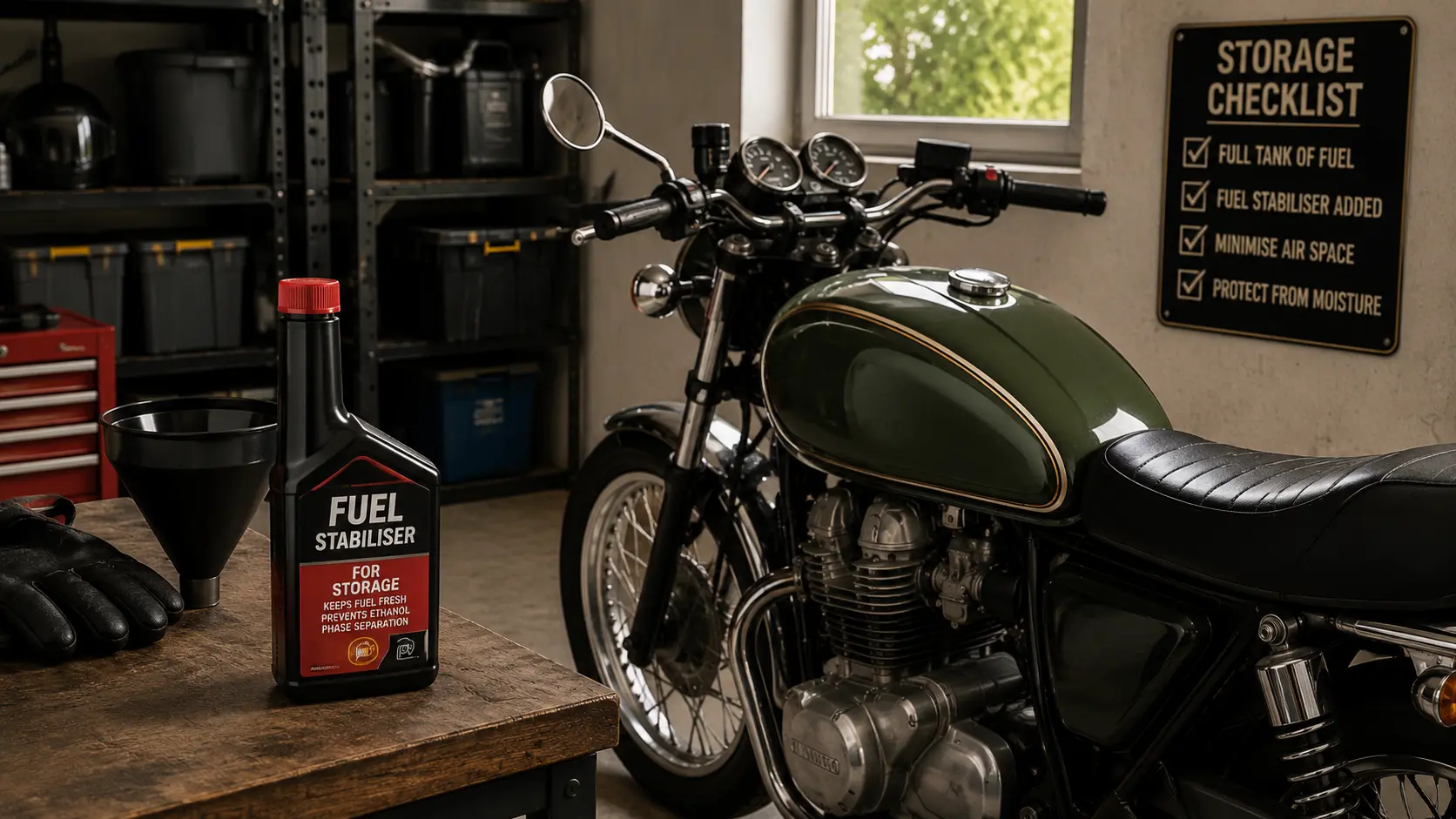
Use ethanol-free fuel where available. E0 (ethanol-free) pump fuel is available at some stations in the US. Apps like Pure-Gas.org locate E0 stations by zip code. Ethanol-free fuel significantly reduces the corrosion and seal degradation rate inside the tank.
Drain completely if storing longer than three months. For extended storage, completely draining and drying the tank eliminates the ethanol-water accumulation problem. Spray a light film of WD-40 into the tank interior after draining and before sealing for long storage.
Conclusion
Motorcycle fuel tank rust and leaks follow a predictable progression from surface rust through pitting to perforation. Catching it at the surface rust stage makes treatment straightforward and inexpensive. Ignoring it until fuel delivery problems, fuel smell, or visible leaks appear typically means a more involved and more expensive resolution.
Confirm the severity before choosing a fix. Light rust without perforations responds well to tank sealer. Perforations require repair or replacement depending on severity. And changing your storage habits, like a full tank, stabilised fuel, or complete drain for long storage, prevents the problem from recurring after any repair.
Frequently Asked Questions
Q: Can I use a motorcycle with a rusted fuel tank?
A: Light surface rust without perforation or active fuel delivery problems is not immediately dangerous but will worsen progressively. Rust particles that circulate with fuel damage carburettor jets and fuel injectors over time. Address surface rust before it progresses to perforation. A tank with confirmed fuel leaks should not be ridden until the leak is repaired — fuel leaks near hot engine components are a fire risk.
Q: How do I remove rust from inside a motorcycle fuel tank?
A: The most effective method is acid washing — using a diluted phosphoric or muriatic acid solution agitated inside the tank for several hours to dissolve the rust chemically. Rinse thoroughly with clean water, neutralise with baking soda solution, rinse again, and dry completely before any sealer application. Commercial motorcycle tank rust remover kits simplify this process with pre-measured acid and neutraliser included.
Q: Is ethanol fuel bad for motorcycle fuel tanks?
A: Yes, particularly for steel tanks and older rubber fuel system components. Ethanol absorbs water from the air through the tank vent system, creating a corrosive ethanol-water mixture that accelerates steel tank rust. Ethanol also degrades natural rubber fuel lines, petcock diaphragms, and carburettor gaskets faster than ethanol-free fuel. Using fuel stabiliser for storage and preferring E0 fuel where available significantly reduces this damage rate.
Q: How long does motorcycle tank sealer last?
A: Quality tank sealer products from established brands like POR-15 last five to ten years when correctly applied to a properly prepared tank surface. The preparation is critical — sealer applied over inadequately cleaned rust bonds poorly and fails prematurely. Follow the manufacturer’s preparation instructions completely, including the acid wash step, for maximum sealer longevity.
Q: What is the difference between a petcock leak and a tank leak?
A: A petcock leak originates at the petcock body, vacuum port, or diaphragm rather than the tank itself. The distinction matters for diagnosis and repair — a petcock leak is fixed by petcock rebuild or replacement without touching the tank. A tank leak originates at a perforation, seam crack, or cap seal failure in the tank body itself. Confirm which component is wet before ordering parts.