





The clutch kit is the part that connects your engine to your rear wheel. The clutch translates your input into motion every time you pull the lever, accelerate away from a light, or execute a smooth gear change. A well-matched clutch kit to your bike and riding style will give you crisp, consistent engagement that makes riding a breeze. A worn or mis-specified kit turns every gear change into a negotiation.
This guide covers how to choose the right clutch kit for your motorcycle, how to spot wear before it becomes failure, and how the right kit can genuinely improve your riding experience beyond simply replacing worn parts. Browse Motorcycle Clutch parts at Aliwheels for certified clutch kits across all major makes.
What’s Included in a Motorcycle Clutch Kit?
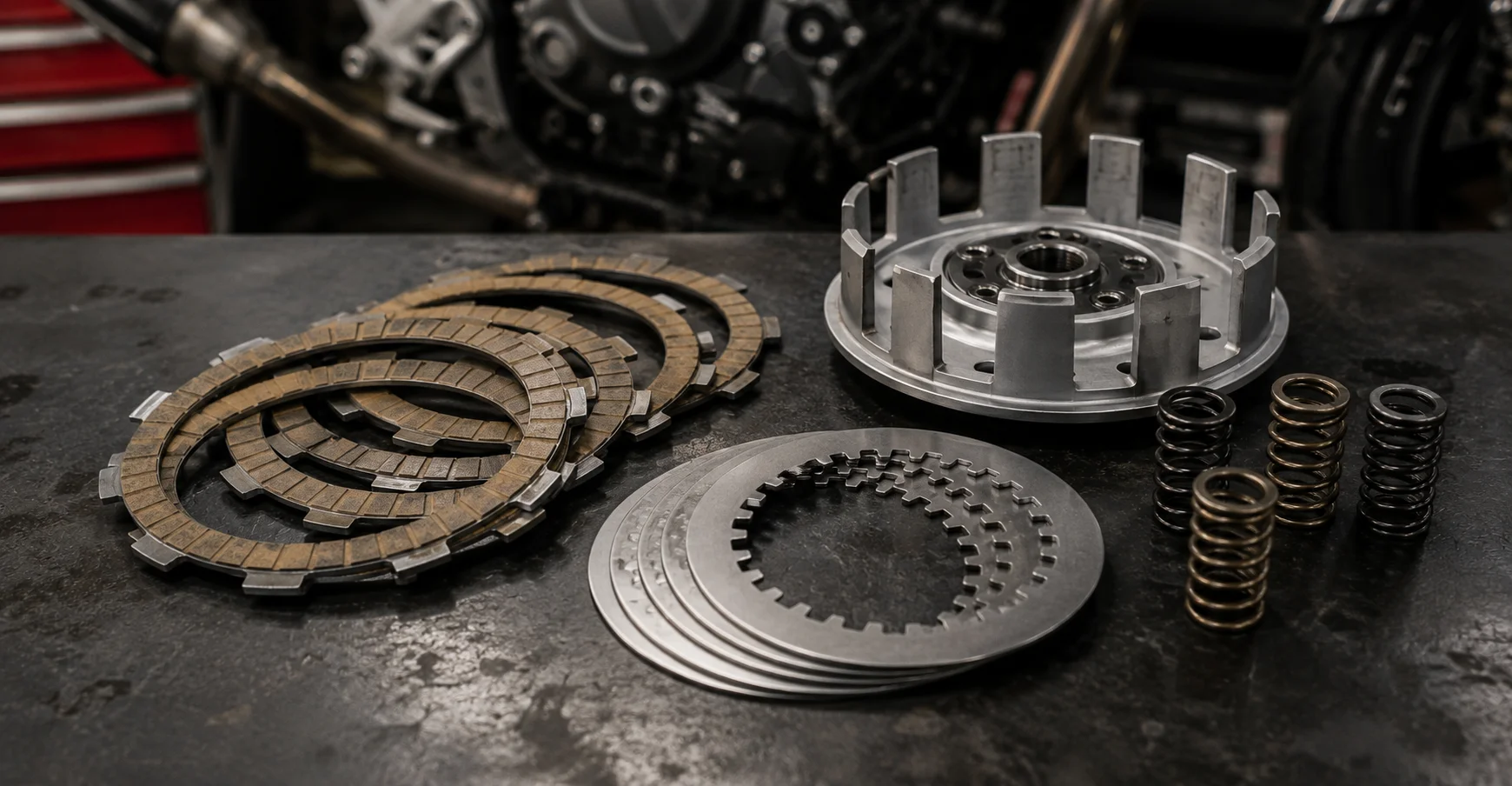
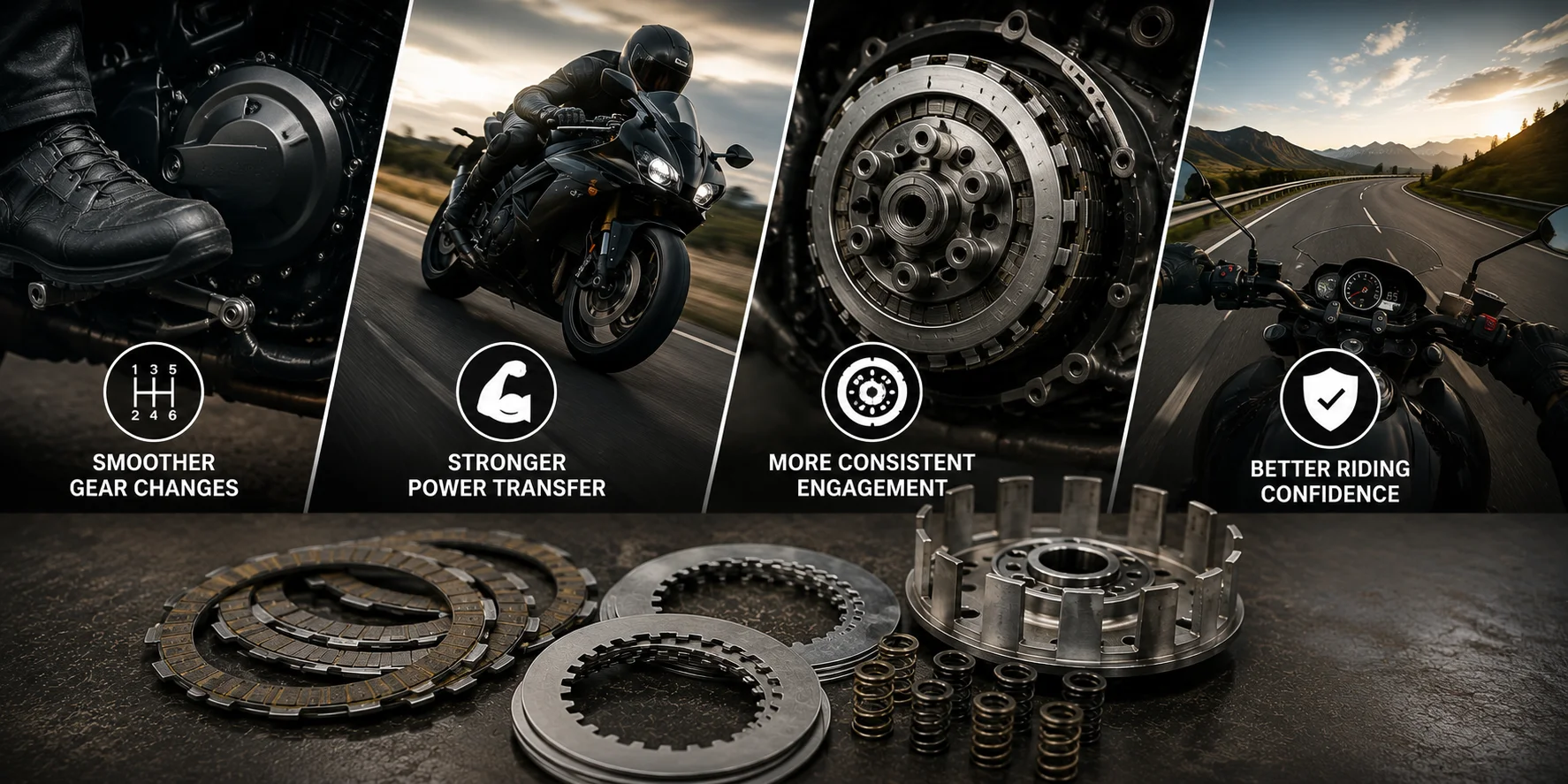
A complete motorcycle clutch kit typically includes friction plates, steel plates, and clutch springs that work together to transfer engine power to the transmission.
- Friction plates: The primary wear component that grips during clutch engagement.
- Steel plates: Alternate with the friction plates and provide a smooth contact surface for consistent power transfer.
- Clutch springs: Apply pressure to the clutch pack. Worn springs can cause clutch slip, even if the plates are still usable.
Replacing all three components together helps restore smooth engagement, reliable performance, and longer clutch life, especially on high-mileage or heavily ridden motorcycles.
How to Choose the Right Motorcycle Clutch Kit
1. Confirm Your Clutch Type
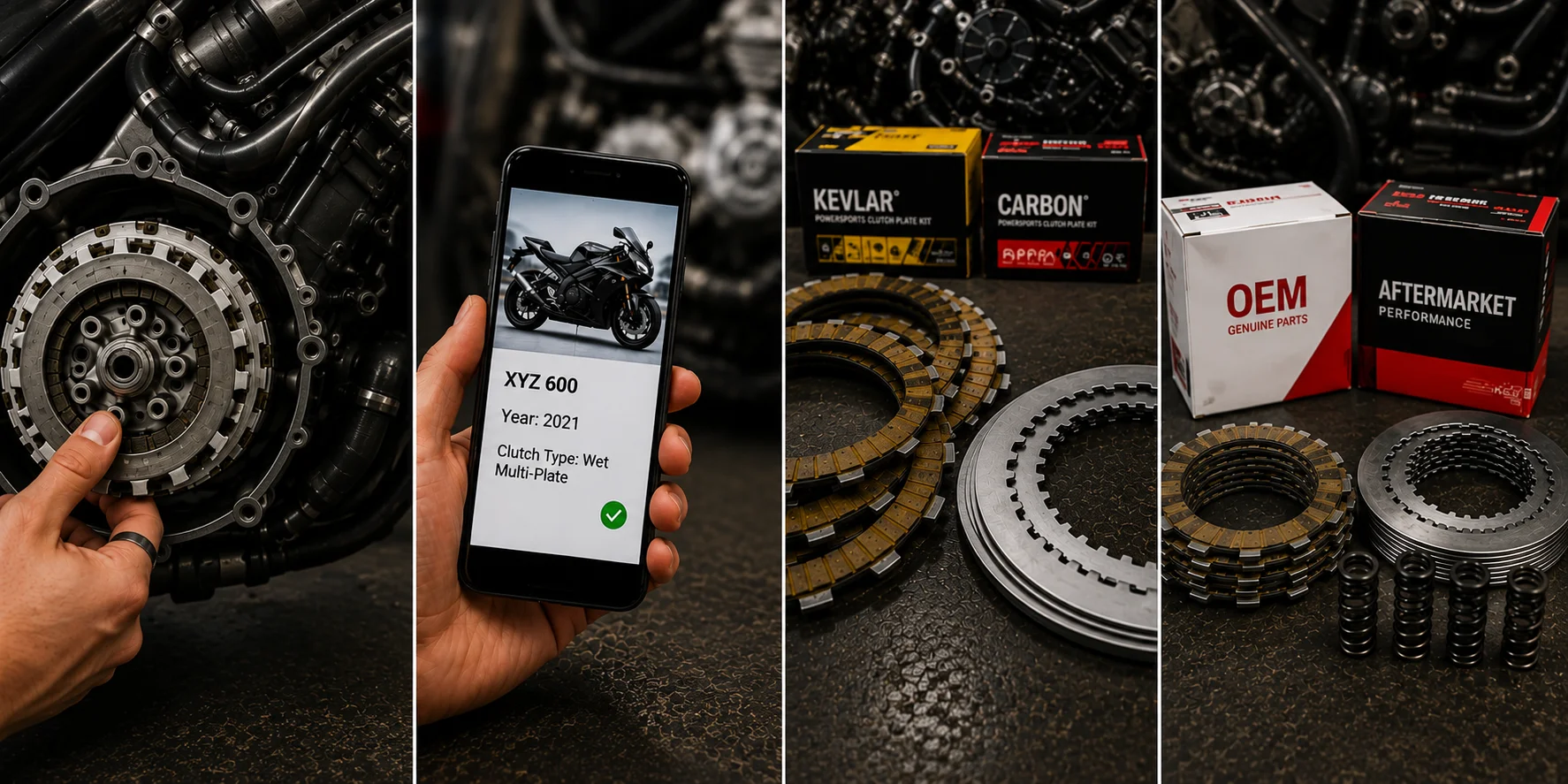
Most motorcycles use a wet clutch, while some models, especially certain Ducati motorcycles, use a dry clutch. Always choose a kit designed for your clutch type.
2. Verify Your Make, Model, and Year
Clutch plate count and specifications vary by motorcycle, even between different years of the same model. Always select a kit made for your exact bike.
3. Choose the Right Friction Material
Standard clutch kits are ideal for everyday street riding. If you ride aggressively, carry heavy loads, or spend time on the track, consider a performance clutch kit with upgraded friction materials for improved durability.
4. OEM or Aftermarket?
A quality OEM-spec aftermarket clutch kit is suitable for most riders. Performance kits are a better choice for modified motorcycles or riders looking for stronger engagement and increased heat resistance.
Motorcycle Clutch Kits at Aliwheels
Aliwheels offers motorcycle clutch kits and clutch components for a wide range of leading brands, including Honda, Yamaha, Kawasaki, Suzuki, Ducati, Harley-Davidson, KTM, Triumph, BMW, and more.
Every product is selected for model-specific fitment, making it easier to find the right replacement for your motorcycle. Whether you’re performing routine maintenance or upgrading a worn clutch, you can shop with confidence knowing each listing includes compatible make, model, and year information.
Browse the complete Motorcycle Clutch collection to find the right clutch kit for your bike.
How to Spot Clutch Wear Early?
Identifying clutch wear early helps prevent unexpected breakdowns and can reduce the risk of damage to other clutch components.
Common signs of a worn clutch include:
- Clutch slipping: Engine RPM rises without a matching increase in speed, especially during hard acceleration.
- Bike creeping in gear: The motorcycle moves forward with the clutch lever fully pulled in.
- Difficulty finding neutral: Selecting neutral becomes harder, particularly when stopped.
- Burning smell: A burnt odor after heavy traffic, hill starts, or repeated clutch use can indicate excessive clutch wear.
- Changed lever feel: The clutch engagement point or lever effort feels noticeably different than before.
- Jerky engagement: The bike engages the clutch unevenly or feels rough during low-speed riding.
If you notice one or more of these symptoms, inspect the clutch system promptly. Replacing worn components early can help maintain smooth shifting, reliable power delivery, and consistent riding performance.
How the Right Clutch Kit Improves Riding Performance?
Installing the correct clutch kit restores smooth operation and improves overall riding confidence.
- Smoother gear changes: Fresh clutch components allow cleaner disengagement and more precise shifting.
- Stronger power transfer: A properly functioning clutch delivers engine power efficiently with minimal slip during acceleration.
- More consistent engagement: A predictable bite point makes starts, low-speed riding, and stop-and-go traffic easier to manage.
- Better riding confidence: Reliable clutch performance improves control in everyday riding as well as spirited or long-distance trips.
Choosing the right clutch kit helps restore the performance, responsiveness, and control your motorcycle was designed to deliver.
Motorcycle Clutch Kit Installation Tips
Installing a new clutch kit correctly is just as important as choosing the right one.
- Soak new friction plates in the recommended engine oil for 15 to 30 minutes before installation.
- Inspect steel plates and springs for wear, heat damage, or warping, and replace them if they don’t meet service specifications.
- Check clutch spring length against your service manual. Weak springs can cause clutch slip even with new friction plates.
- Tighten clutch spring bolts evenly using the manufacturer’s recommended torque specification and an alternating pattern to ensure uniform pressure across the clutch pack.
Following these installation practices helps ensure smooth engagement, reliable performance, and maximum service life from your new clutch kit.
Conclusion
Choosing the right motorcycle clutch kit starts with matching it to your motorcycle’s clutch type, make, model, and year. Selecting the proper friction material for your riding style and replacing worn components at the first signs of wear helps maintain smooth shifting, reliable power transfer, and long-term drivetrain performance.
Combined with proper installation and regular maintenance, a quality clutch kit keeps your motorcycle performing as intended, whether you ride daily, tour long distances, or enjoy spirited weekend rides.
Frequently Asked Questions
Q: How often should I replace my motorcycle clutch kit?
A: There isn’t a fixed replacement interval. Clutch life depends on riding style, maintenance, and usage. Replace the clutch kit when you notice slipping, difficult shifting, or other signs of excessive wear.
Q: Can I replace only the friction plates?
A: Yes, if the steel plates and clutch springs are still within the manufacturer’s service specifications. If they show signs of wear, heat damage, or warping, replacing the complete kit is recommended.
Q: Do new clutch plates need to be soaked before installation?
A: Yes. For wet clutch systems, soak the new friction plates in the recommended engine oil for 15 to 30 minutes before installation to ensure proper lubrication and performance.
Q: What are the first signs of a worn motorcycle clutch?
A: Common symptoms include clutch slipping during acceleration, difficulty finding neutral, a changing engagement point, jerky engagement, and a burning smell after heavy clutch use.
Q: Does Aliwheels offer clutch kits for different motorcycle brands?
A: Yes. Aliwheels offers motorcycle clutch kits and clutch components for a wide range of brands, including Honda, Yamaha, Kawasaki, Suzuki, Ducati, Harley-Davidson, BMW, KTM, Triumph, and more. Browse the Motorcycle Clutch collection to find the right fit for your motorcycle.