



bikerbiker Aliwheels is a leading motorcycle parts supplier offering free shipping anywhere in the world on orders above $300. Please note that all of our motorcycle parts and accessories are certified and tested. With more than 10,000* products to choose from this is your one place to get the motorcycle part you need. Browse our vast inventory of motorcycle radiators, fairings, clutch plates, headlights, chains, and sprockets. biker

Free Shipping over $300

Support 24/7

Secure Payments

Hot Offers

Aliwheels is a leading motorcycle parts supplier offering free shipping anywhere in the world on orders above $300. Please note that all of our motorcycle parts and accessories are certified and tested. With more than 10,000* products to choose from this is your one place to get the motorcycle part you need. Browse our vast inventory of motorcycle radiators, fairings, clutch plates, headlights, chains, and sprockets.

Free Shipping over $300

Support 24/7

Secure Payments

Hot Offers

The clutch kit is the part that connects your engine to your rear wheel. The clutch translates your input into motion every time you pull the lever, accelerate away from a light, or execute a smooth gear change. A well-matched clutch kit to your bike and riding style will give you crisp, consistent engagement that makes riding a breeze. A worn or mis-specified kit turns every gear change into a negotiation.

This guide covers how to choose the right clutch kit for your motorcycle, how to spot wear before it becomes failure, and how the right kit can genuinely improve your riding experience beyond simply replacing worn parts. Browse Motorcycle Clutch parts at Aliwheels for certified clutch kits across all major makes.

What’s Included in a Motorcycle Clutch Kit?

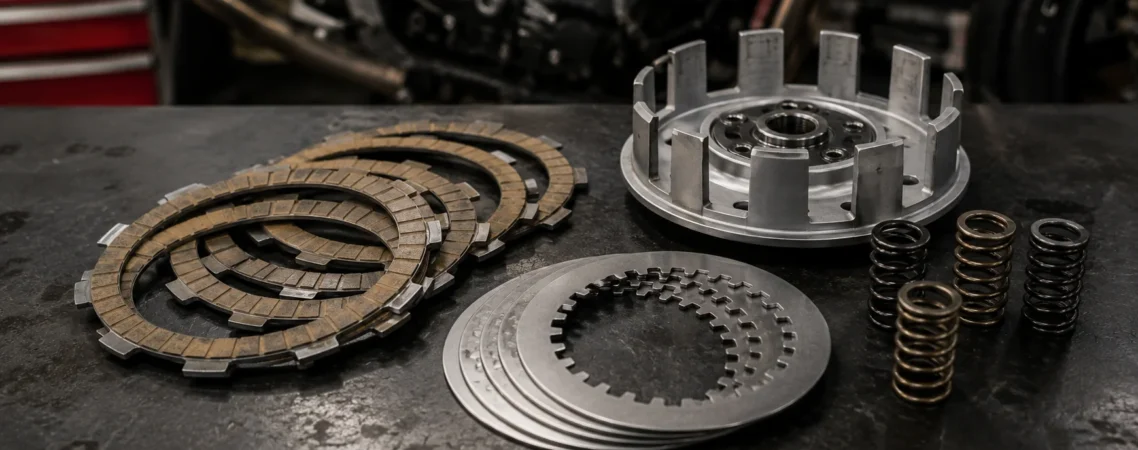
A complete motorcycle clutch kit typically includes friction plates, steel plates, and clutch springs that work together to transfer engine power to the transmission.

  • Friction plates: The primary wear component that grips during clutch engagement.
  • Steel plates: Alternate with the friction plates and provide a smooth contact surface for consistent power transfer.
  • Clutch springs: Apply pressure to the clutch pack. Worn springs can cause clutch slip, even if the plates are still usable.

Replacing all three components together helps restore smooth engagement, reliable performance, and longer clutch life, especially on high-mileage or heavily ridden motorcycles.

How to Choose the Right Motorcycle Clutch Kit

1. Confirm Your Clutch Type
Most motorcycles use a wet clutch, while some models, especially certain Ducati motorcycles, use a dry clutch. Always choose a kit designed for your clutch type.

2. Verify Your Make, Model, and Year
Clutch plate count and specifications vary by motorcycle, even between different years of the same model. Always select a kit made for your exact bike.

3. Choose the Right Friction Material
Standard clutch kits are ideal for everyday street riding. If you ride aggressively, carry heavy loads, or spend time on the track, consider a performance clutch kit with upgraded friction materials for improved durability.

4. OEM or Aftermarket?
A quality OEM-spec aftermarket clutch kit is suitable for most riders. Performance kits are a better choice for modified motorcycles or riders looking for stronger engagement and increased heat resistance.
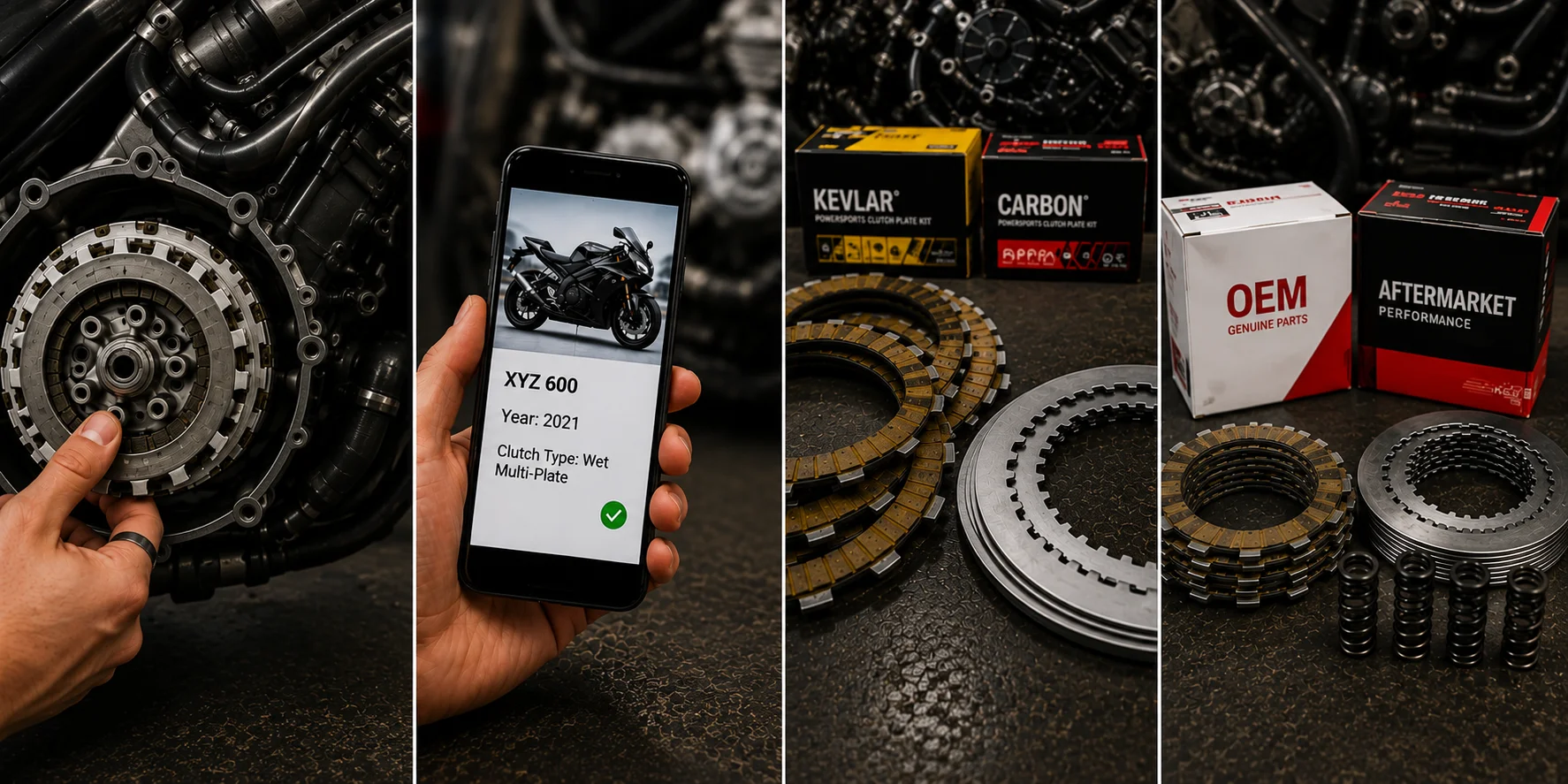
Choosing the right clutch kit

Motorcycle Clutch Kits at Aliwheels

Aliwheels offers motorcycle clutch kits and clutch components for a wide range of leading brands, including Honda, Yamaha, Kawasaki, Suzuki, Ducati, Harley-Davidson, KTM, Triumph, BMW, and more.

Every product is selected for model-specific fitment, making it easier to find the right replacement for your motorcycle. Whether you’re performing routine maintenance or upgrading a worn clutch, you can shop with confidence knowing each listing includes compatible make, model, and year information.

Browse the complete Motorcycle Clutch collection to find the right clutch kit for your bike.

How to Spot Clutch Wear Early?

Identifying clutch wear early helps prevent unexpected breakdowns and can reduce the risk of damage to other clutch components.

Common signs of a worn clutch include:

  • Clutch slipping: Engine RPM rises without a matching increase in speed, especially during hard acceleration.
  • Bike creeping in gear: The motorcycle moves forward with the clutch lever fully pulled in.
  • Difficulty finding neutral: Selecting neutral becomes harder, particularly when stopped.
  • Burning smell: A burnt odor after heavy traffic, hill starts, or repeated clutch use can indicate excessive clutch wear.
  • Changed lever feel: The clutch engagement point or lever effort feels noticeably different than before.
  • Jerky engagement: The bike engages the clutch unevenly or feels rough during low-speed riding.

If you notice one or more of these symptoms, inspect the clutch system promptly. Replacing worn components early can help maintain smooth shifting, reliable power delivery, and consistent riding performance.

How the Right Clutch Kit Improves Riding Performance?

Installing the correct clutch kit restores smooth operation and improves overall riding confidence.

  • Smoother gear changes: Fresh clutch components allow cleaner disengagement and more precise shifting.
  • Stronger power transfer: A properly functioning clutch delivers engine power efficiently with minimal slip during acceleration.
  • More consistent engagement: A predictable bite point makes starts, low-speed riding, and stop-and-go traffic easier to manage.
  • Better riding confidence: Reliable clutch performance improves control in everyday riding as well as spirited or long-distance trips.

Choosing the right clutch kit helps restore the performance, responsiveness, and control your motorcycle was designed to deliver.
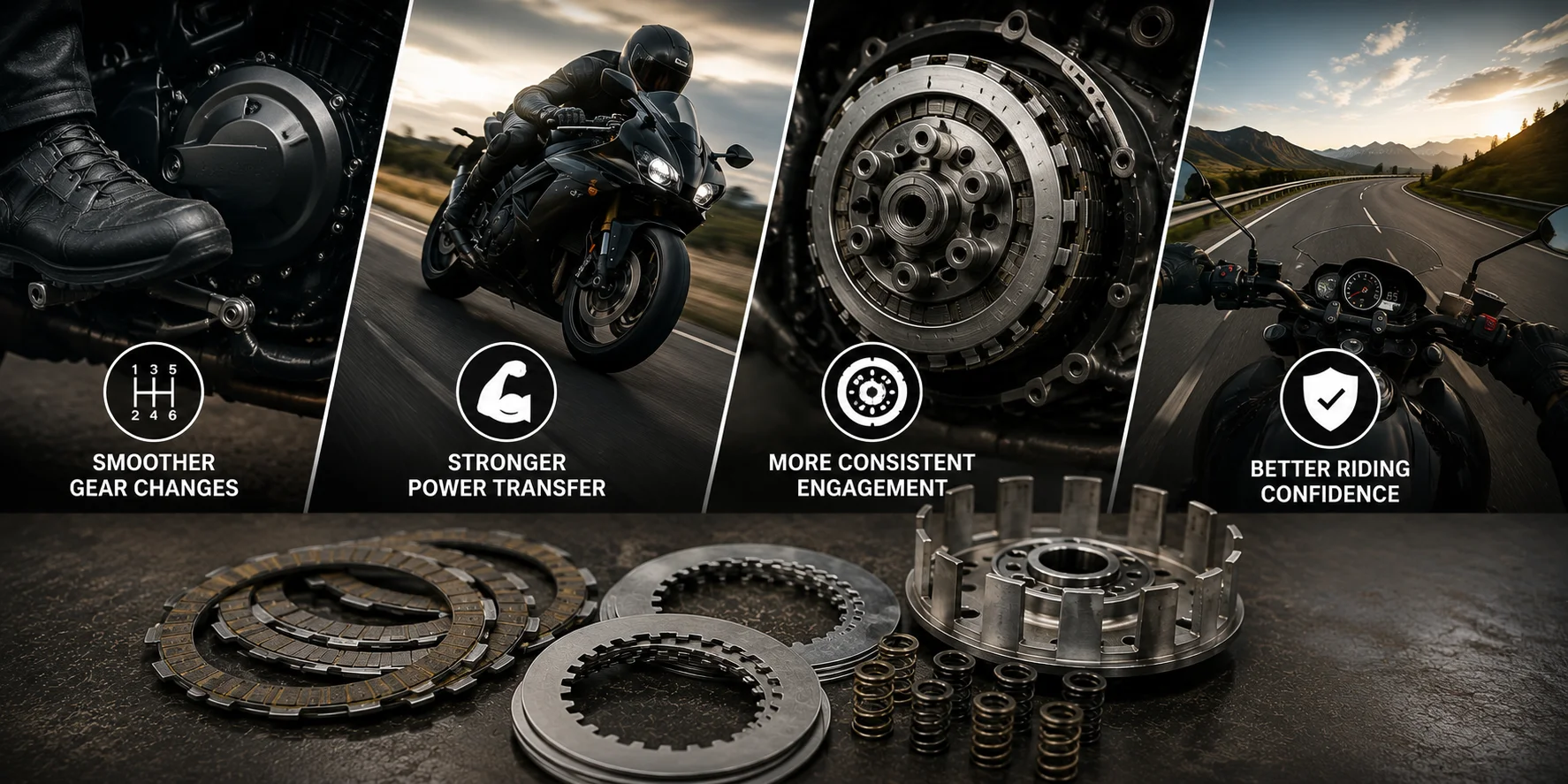
Clutch kit performance

Motorcycle Clutch Kit Installation Tips

Installing a new clutch kit correctly is just as important as choosing the right one.

  • Soak new friction plates in the recommended engine oil for 15 to 30 minutes before installation.
  • Inspect steel plates and springs for wear, heat damage, or warping, and replace them if they don’t meet service specifications.
  • Check clutch spring length against your service manual. Weak springs can cause clutch slip even with new friction plates.
  • Tighten clutch spring bolts evenly using the manufacturer’s recommended torque specification and an alternating pattern to ensure uniform pressure across the clutch pack.

Following these installation practices helps ensure smooth engagement, reliable performance, and maximum service life from your new clutch kit.

Conclusion

Choosing the right motorcycle clutch kit starts with matching it to your motorcycle’s clutch type, make, model, and year. Selecting the proper friction material for your riding style and replacing worn components at the first signs of wear helps maintain smooth shifting, reliable power transfer, and long-term drivetrain performance.

Combined with proper installation and regular maintenance, a quality clutch kit keeps your motorcycle performing as intended, whether you ride daily, tour long distances, or enjoy spirited weekend rides.

Frequently Asked Questions

Q: How often should I replace my motorcycle clutch kit?
A: There isn’t a fixed replacement interval. Clutch life depends on riding style, maintenance, and usage. Replace the clutch kit when you notice slipping, difficult shifting, or other signs of excessive wear.

Q: Can I replace only the friction plates?
A: Yes, if the steel plates and clutch springs are still within the manufacturer’s service specifications. If they show signs of wear, heat damage, or warping, replacing the complete kit is recommended.

Q: Do new clutch plates need to be soaked before installation?
A: Yes. For wet clutch systems, soak the new friction plates in the recommended engine oil for 15 to 30 minutes before installation to ensure proper lubrication and performance.

Q: What are the first signs of a worn motorcycle clutch?
A: Common symptoms include clutch slipping during acceleration, difficulty finding neutral, a changing engagement point, jerky engagement, and a burning smell after heavy clutch use.

Q: Does Aliwheels offer clutch kits for different motorcycle brands?
A: Yes. Aliwheels offers motorcycle clutch kits and clutch components for a wide range of brands, including Honda, Yamaha, Kawasaki, Suzuki, Ducati, Harley-Davidson, BMW, KTM, Triumph, and more. Browse the Motorcycle Clutch collection to find the right fit for your motorcycle.
(Commenting: OFF)

Your motorcycle’s oil filter plays a critical role in protecting the engine by removing dirt, metal particles, and other contaminants before they circulate through vital components. Choosing the correct oil filter helps maintain proper oil flow, improves engine protection, and supports long-term reliability.

The right filter isn’t simply one that fits the threads. It must match your motorcycle’s specifications, including the correct dimensions, filtration efficiency, pressure rating, and bypass valve design recommended for your engine.

This guide explains how to choose the right motorcycle oil filter, the key specifications to consider, and how to find the correct filter for your make, model, and year.

Browse the complete Aliwheels Motorcycle Oil Filters category for certified options by make and model.

Why the Oil Filter Choice Matters More Than You Think

Not all motorcycle oil filters are built to the same standard. While they may look similar on the outside, their internal design, filtration media, and pressure ratings can vary significantly.

A high-quality oil filter removes harmful contaminants while maintaining proper oil flow throughout the engine. An incorrect or low-quality filter may reduce filtration efficiency, restrict oil flow, or fail to protect the engine during cold starts.

These issues rarely cause immediate problems. Instead, they contribute to gradual engine wear over time, affecting bearings, internal components, and overall engine life. Choosing a model-specific oil filter that meets your motorcycle manufacturer’s specifications is one of the simplest ways to protect your engine and maintain long-term performance.

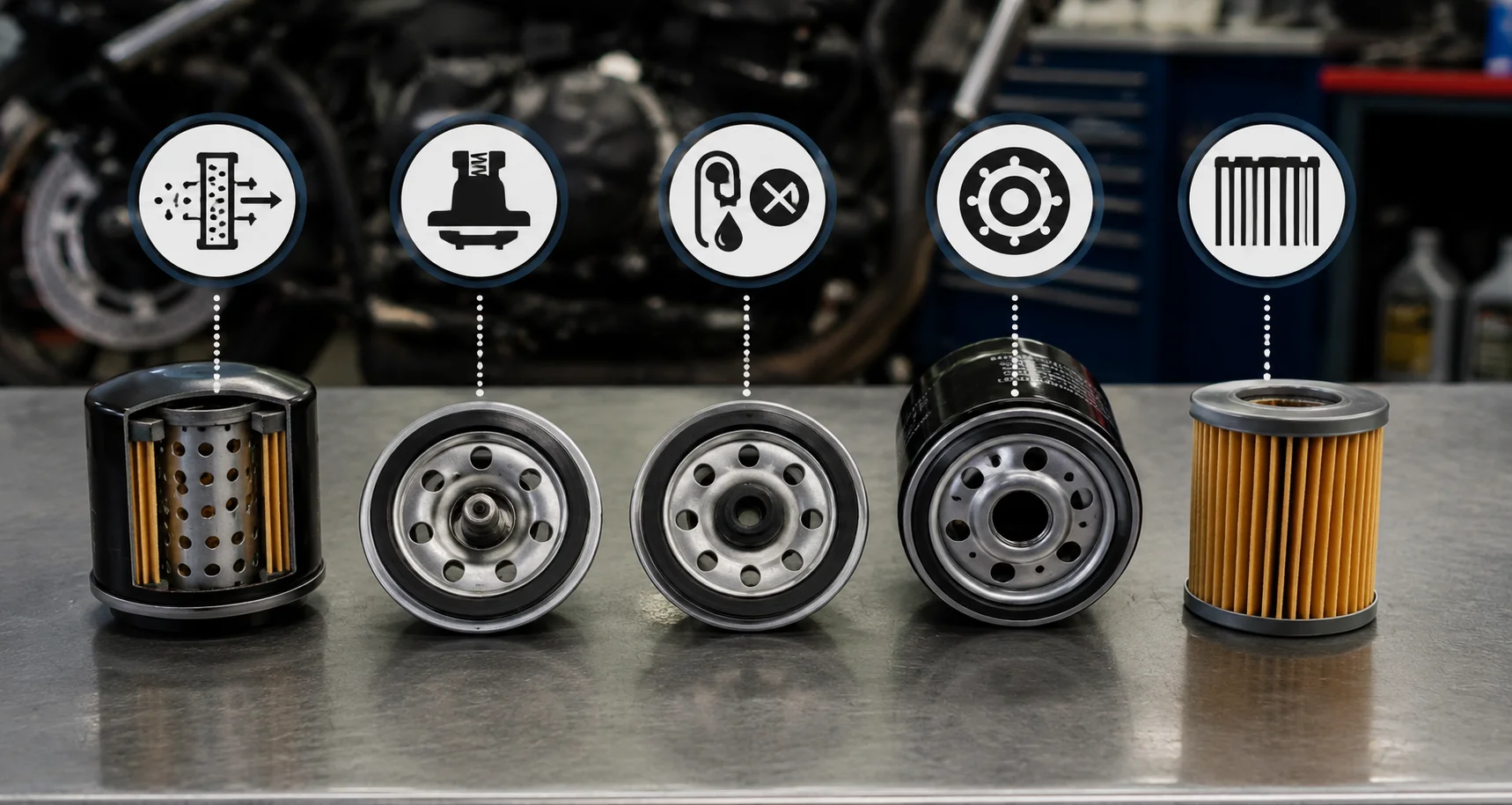
5 Things to Look for in a Motorcycle Oil Filter

Motorcycle oil filter guide

1. Filtration Rating

A quality oil filter should capture fine contaminants while maintaining proper oil flow. Filters rated between 10 and 25 microns provide excellent protection for most motorcycle engines.

2. Bypass Valve

The bypass valve allows oil to continue circulating if the filter becomes clogged or during cold starts. A filter with the correct bypass valve rating helps maintain oil pressure without compromising engine protection.

3. Anti-Drain Back Valve

This one-way valve prevents oil from draining out of the filter when the engine is off. It reduces dry starts by ensuring oil reaches critical engine components more quickly after startup.

4. Correct Fitment

Always choose a filter designed for your motorcycle’s exact make, model, and year. Matching the correct thread size, sealing surface, and dimensions is essential for a secure, leak-free installation.

5. Filter Media Quality

Synthetic or blended filter media generally provides better filtration, improved durability, and more consistent performance than standard paper media, especially when used with synthetic engine oils or longer service intervals.

Aliwheels offers motorcycle oil filters for a wide range of makes and models, making it easy to find the correct replacement for your next oil change. Whether you ride a sport bike, cruiser, touring motorcycle, adventure bike, or dual-sport, you’ll find filters designed for reliable fitment and dependable engine protection.

At Aliwheels, oil filters are available for all motorcycle brands, including:

  • Honda
  • Yamaha
  • Kawasaki
  • Suzuki
  • Harley-Davidson
  • BMW
  • Ducati
  • KTM
  • Triumph
  • Aprilia, and more.

Each product is matched to specific models and production years, helping you choose the correct filter with confidence. Simply search by your motorcycle’s make, model, and year to find a compatible replacement.

Whether you’re performing routine maintenance or stocking up on service essentials, choosing the correct oil filter helps protect your engine and maintain consistent performance throughout every ride.

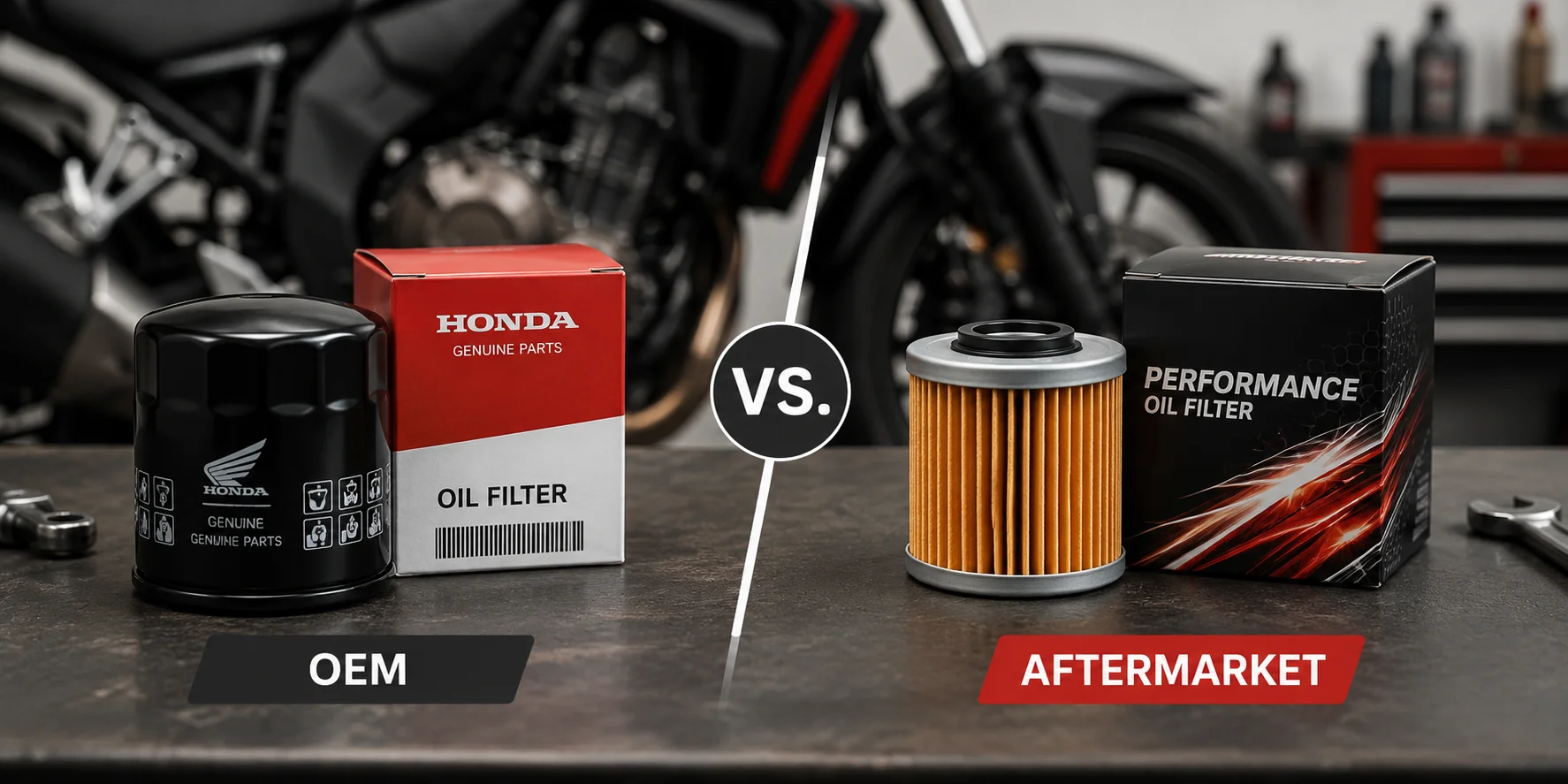
OEM vs. Aftermarket Motorcycle Oil Filters

OEM oil filters are designed for your motorcycle, but a quality aftermarket filter that meets the same specifications can provide comparable engine protection at a more competitive price.

The key is choosing a certified filter with verified filtration performance, the correct bypass valve, and an anti-drain back valve where required. These features matter far more than the brand name on the box.

Avoid unbranded filters with no published specifications or confirmed fitment, as their performance and quality cannot be verified.

When buying an aftermarket oil filter, always choose one that’s designed for your motorcycle’s exact make, model, and year to ensure proper fitment and reliable engine protection.

OEM vs. Aftermarket Oil Filters

When Should You Replace a Motorcycle Oil Filter?

Replace your motorcycle oil filter every time you change the engine oil. Reusing an old filter means fresh oil immediately passes through a filter that’s already holding dirt, metal particles, and other contaminants from the previous service.

Since an oil filter is relatively inexpensive compared to the cost of an oil change or engine repairs, replacing it at every service is the simplest and most cost-effective way to protect your engine and maximize its lifespan.

Conclusion

Choosing the right motorcycle oil filter is about more than finding one that fits. Look for a filter designed for your bike’s exact make, model, and year, with quality filtration, the correct bypass valve, and an anti-drain back valve where required.

A certified, model-specific oil filter helps keep contaminants out of your engine, maintains proper oil flow, and supports long-term reliability. Replace it with every oil change, and you’ll give your engine the protection it needs for miles to come.

Frequently Asked Questions

Q: Does the motorcycle oil filter brand matter?
A: Yes. Fitment is important, but filtration quality, bypass valve design, and overall construction determine how well the filter protects your engine.

Q: Can I use a car oil filter on my motorcycle?
A: No. Motorcycle oil filters are designed for different oil flow, pressure, and engine requirements. Always use a filter made for your specific motorcycle.

Q: How do I choose the right motorcycle oil filter?
A: Match the filter to your bike’s make, model, and year. Choose a certified filter with quality filtration and the correct specifications for your engine.

Q: What happens if I use the wrong oil filter?
A: An incorrect filter can reduce oil flow or filtration efficiency, leading to increased engine wear and potential long-term damage.

Q: Do I need a special oil filter for synthetic oil?
A: Not necessarily. The most important factor is using a high-quality filter that meets your motorcycle’s specifications, whether you use conventional or synthetic oil.

(Commenting: OFF)

Kawasaki has built a reputation for producing motorcycles that combine performance, reliability, and everyday usability. From the legendary Ninja sportbike lineup and Z-series naked bikes to the Vulcan cruisers, Versys adventure tourers, and KLR dual-sports, Kawasaki offers motorcycles for nearly every riding style.

Because Kawasaki’s lineup spans multiple platforms and generations, choosing the right replacement or upgrade parts starts with identifying your exact model and production year. Many components vary between generations, even when motorcycles share the same name.

Whether you’re performing routine maintenance, repairing crash damage, or upgrading your motorcycle, using model-specific parts helps ensure proper fitment, reliable performance, and long-term durability. Quality aftermarket components also provide an excellent alternative to OEM parts for many common maintenance and replacement needs while helping reduce overall ownership costs.

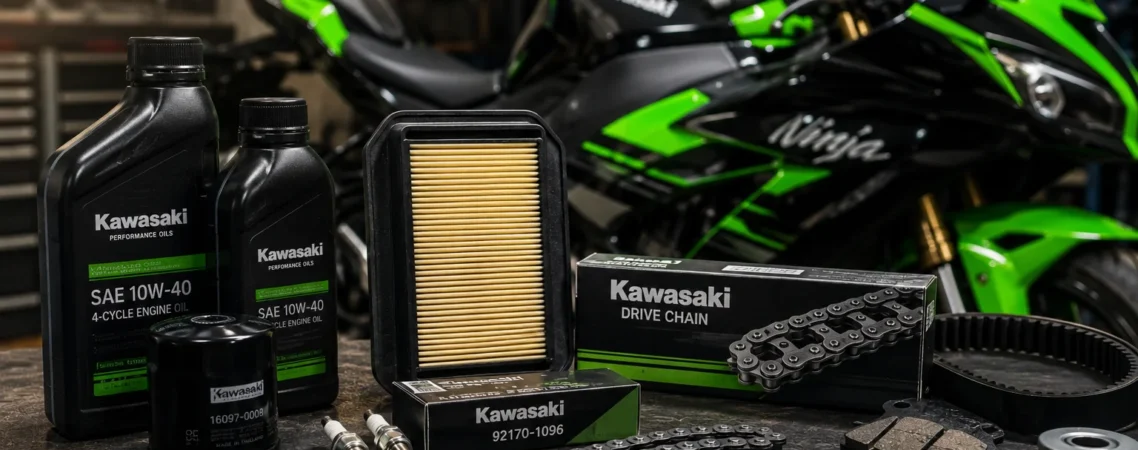
Here is the complete Kawasaki motorcycle maintenance parts guide. Browse the full Kawasaki Motorcycle Parts category at Aliwheels. Every major Kawasaki model family is covered, certified, and tested; free worldwide shipping is over $300.

Understanding the Kawasaki Motorcycle Lineup

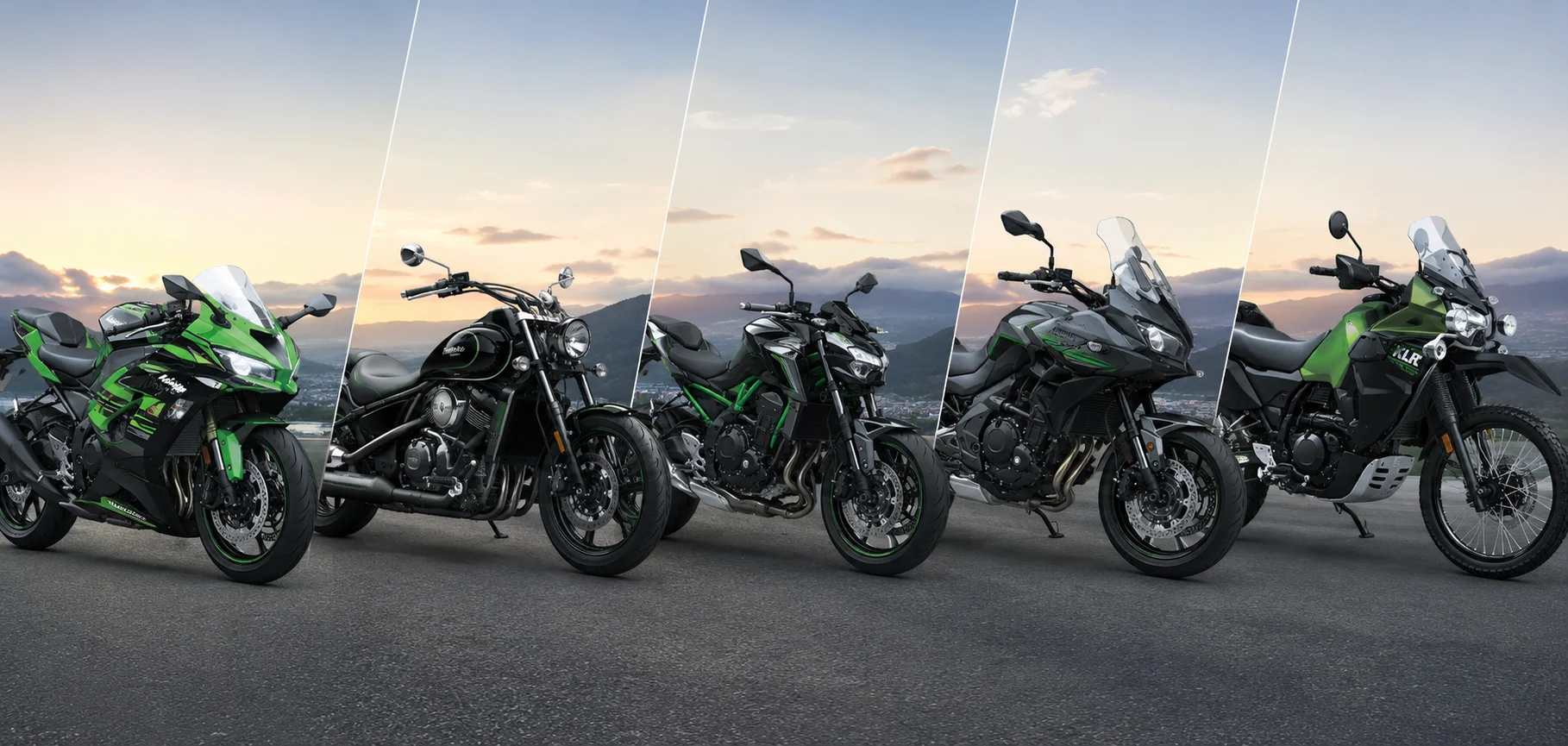
Kawasaki motorcycle lineup

Kawasaki’s lineup is divided into several model families, each designed for a different riding style. Identifying your model family is the first step in finding the correct replacement or upgrade parts.

Ninja Series

The Ninja lineup includes everything from beginner-friendly sport bikes to track-focused superbikes. Models such as the Ninja 400, Ninja 500, Ninja 650, ZX-6R, ZX-10R, and ZX-14R have unique engines, chassis, and bodywork, making model and year confirmation essential.

Vulcan Series

The Vulcan range covers Kawasaki’s cruiser motorcycles, from lightweight models to full-size touring bikes like the Vulcan 1700. These motorcycles prioritize comfort, long-distance riding, and customization, with many model-specific accessories and replacement parts available.

Z Series

The Z Series represents Kawasaki’s naked street motorcycles, including the Z400, Z650, Z900, and Z1000. Known for aggressive styling and responsive performance, these bikes have strong aftermarket support for maintenance, protection, and performance upgrades.

Versys and KLR Series

The Versys and KLR families are built for touring, adventure, and dual-sport riding. Riders commonly upgrade luggage systems, crash protection, windscreens, and suspension components while replacing maintenance items designed for long-distance use.

Fitment Tip

Many Kawasaki parts are specific to a particular model, generation, and production year. Always confirm your motorcycle’s exact model and year before ordering to ensure proper compatibility.

Kawasaki Ninja ZX-Series: Essential Parts and Maintenance

The Kawasaki Ninja ZX-Series is built for high-performance riding, making routine maintenance and timely replacement of key components essential for reliability and performance.

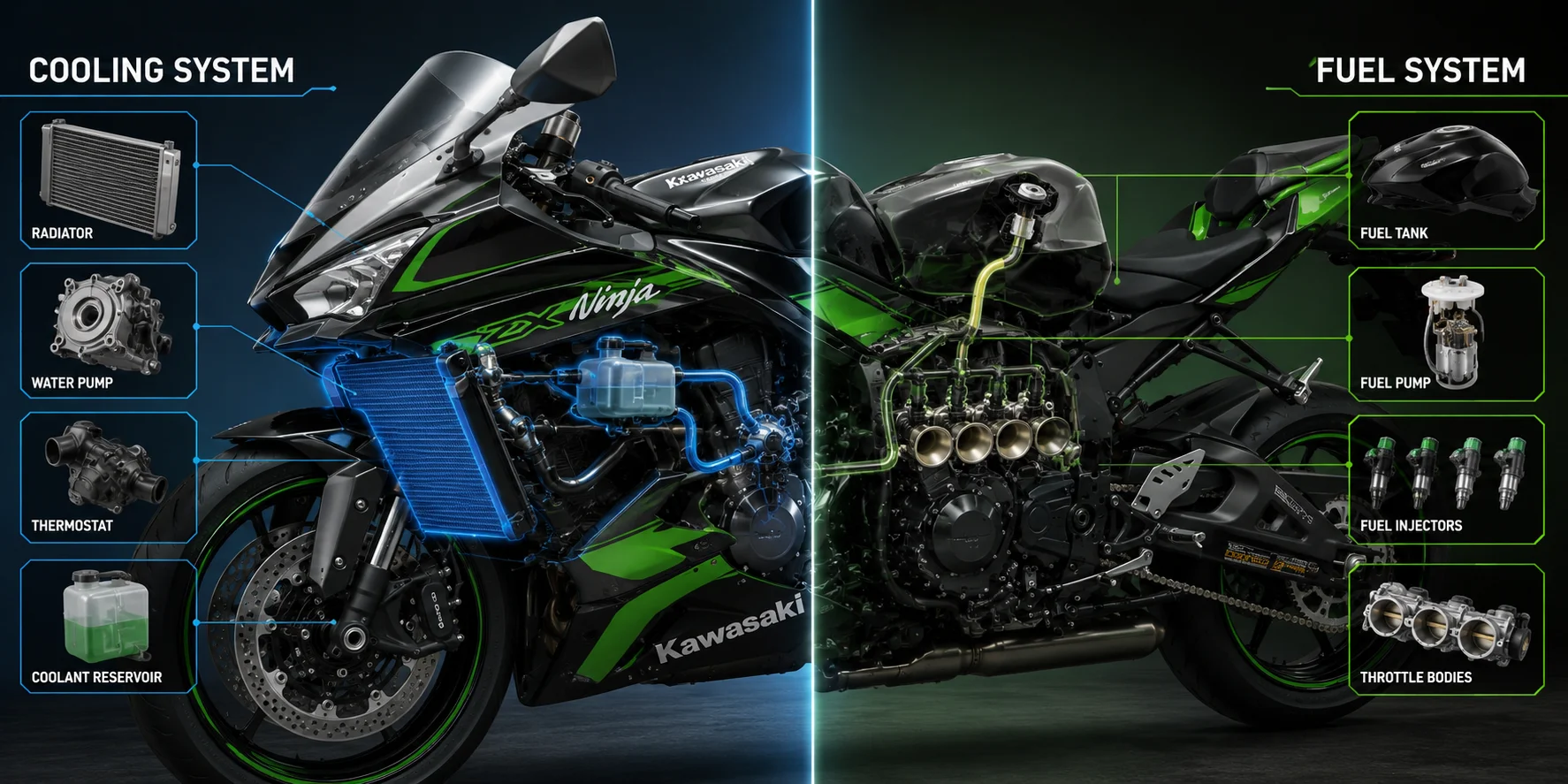
Kawasaki ZX cooling and fuel system

Cooling System

The radiator is one of the most important components on any ZX-Series motorcycle. A damaged or leaking radiator can quickly lead to overheating, especially during aggressive riding or track use. If you notice coolant loss, rising engine temperatures, or visible radiator damage, inspect the cooling system promptly.

Fuel System

Fuel pumps are another common service item on older ZX-Series models. Signs of a failing fuel pump include difficult starting, hesitation under acceleration, inconsistent power delivery, or engine stalling. Replacing a worn fuel pump helps restore reliable performance and fuel pressure.

Buying Tip

Kawasaki Ninja ZX-Series parts vary by model and production year. Always confirm your exact motorcycle, such as the ZX-6R, ZX-9R, ZX-10R, or ZX-14R, before ordering replacement parts to ensure proper fitment.

Kawasaki Vulcan Series: Essential Parts and Maintenance

The Kawasaki Vulcan lineup includes everything from beginner-friendly cruisers to full-size touring motorcycles. Because these bikes span multiple engine sizes and generations, maintenance needs vary by model, but several components are commonly replaced across the range.

Kawasaki Vulcan motorcycle parts

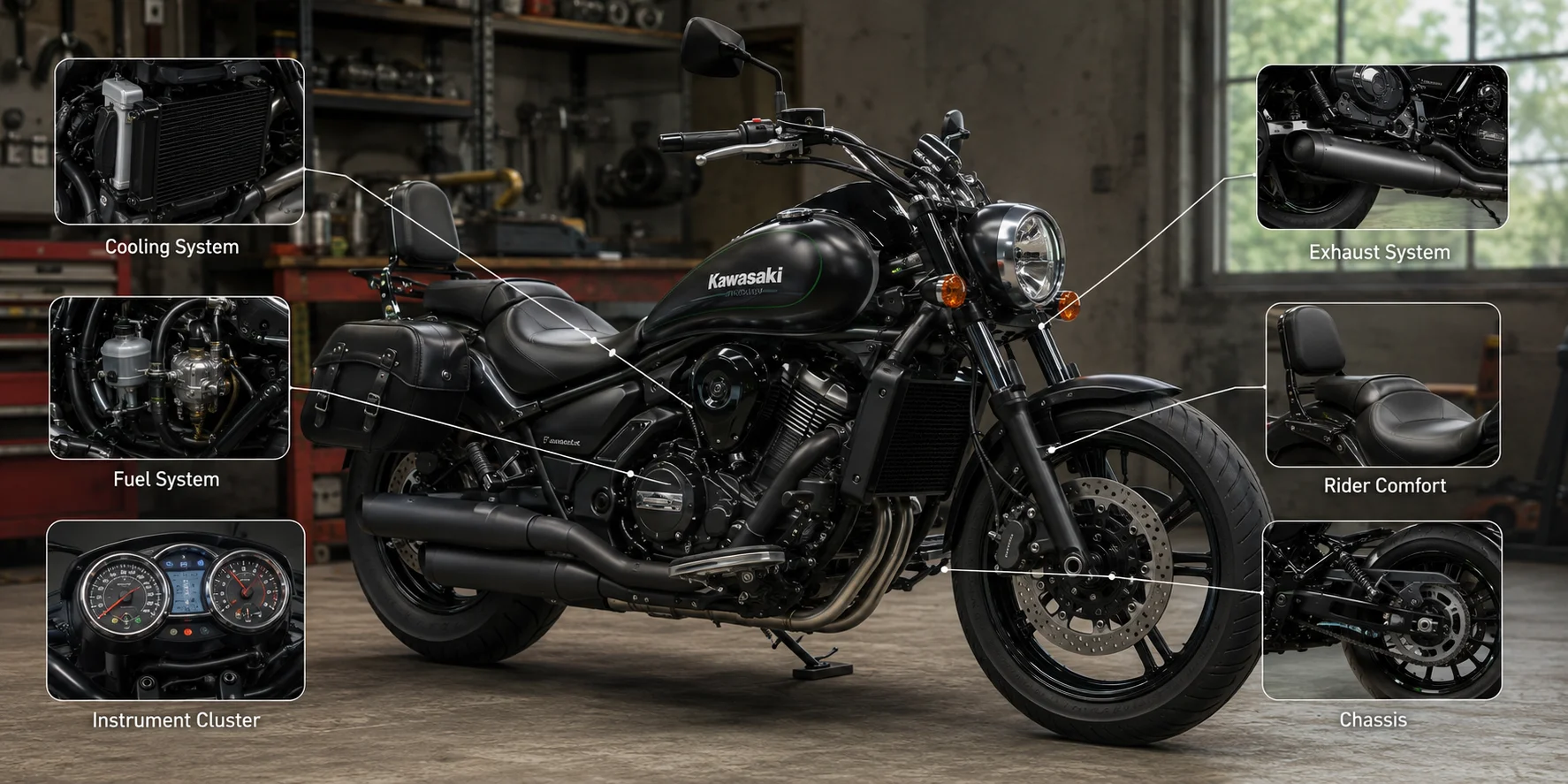
Cooling System

Liquid-cooled Vulcan models, such as the Vulcan 1700 Voyager and Vulcan 650, rely on an efficient cooling system for long-distance riding. Radiators and cooling components should be inspected regularly for leaks, corrosion, or impact damage to prevent overheating.

Fuel System

On older Vulcan models, fuel pumps can wear out over time, leading to hard starting, hesitation, reduced power, or intermittent stalling. Replacing worn fuel system components helps restore reliable engine performance.

Instrument Cluster

High-mileage Vulcan motorcycles may eventually require speedometer or gauge replacement due to age-related wear or electrical issues. Keeping the instrument cluster in good condition ensures accurate speed and mileage readings.

Exhaust System

Exhaust replacement is common on older Vulcan models because of corrosion, age, or customization. Many riders also upgrade their exhaust system to improve sound while maintaining dependable performance.

Rider Comfort and Chassis

Modern Vulcan models are often upgraded with replacement handlebars, controls, suspension components, and vibration-reducing accessories to improve comfort on longer rides.

Buying Tip

Kawasaki Vulcan parts are model-specific. Always verify your exact model, engine size, and production year before ordering replacement or upgrade components.

Most Common Replaced Kawasaki Parts by Model Family

Ninja ZX-Series

ZX-Series owners most commonly replace brake pads, chain and sprocket kits, and cooling system components. These high-performance motorcycles place greater demands on brakes and drivetrains, especially with spirited or track riding.

Vulcan Series

Vulcan owners frequently replace exhaust systems, fuel pumps, speedometers on older models, and cooling system components on liquid-cooled touring models like the Vulcan 1700.

Z Series and Ninja 650

The most common upgrades include handlebars and controls for improved comfort, along with brake components, chains, and sprockets as part of routine maintenance.

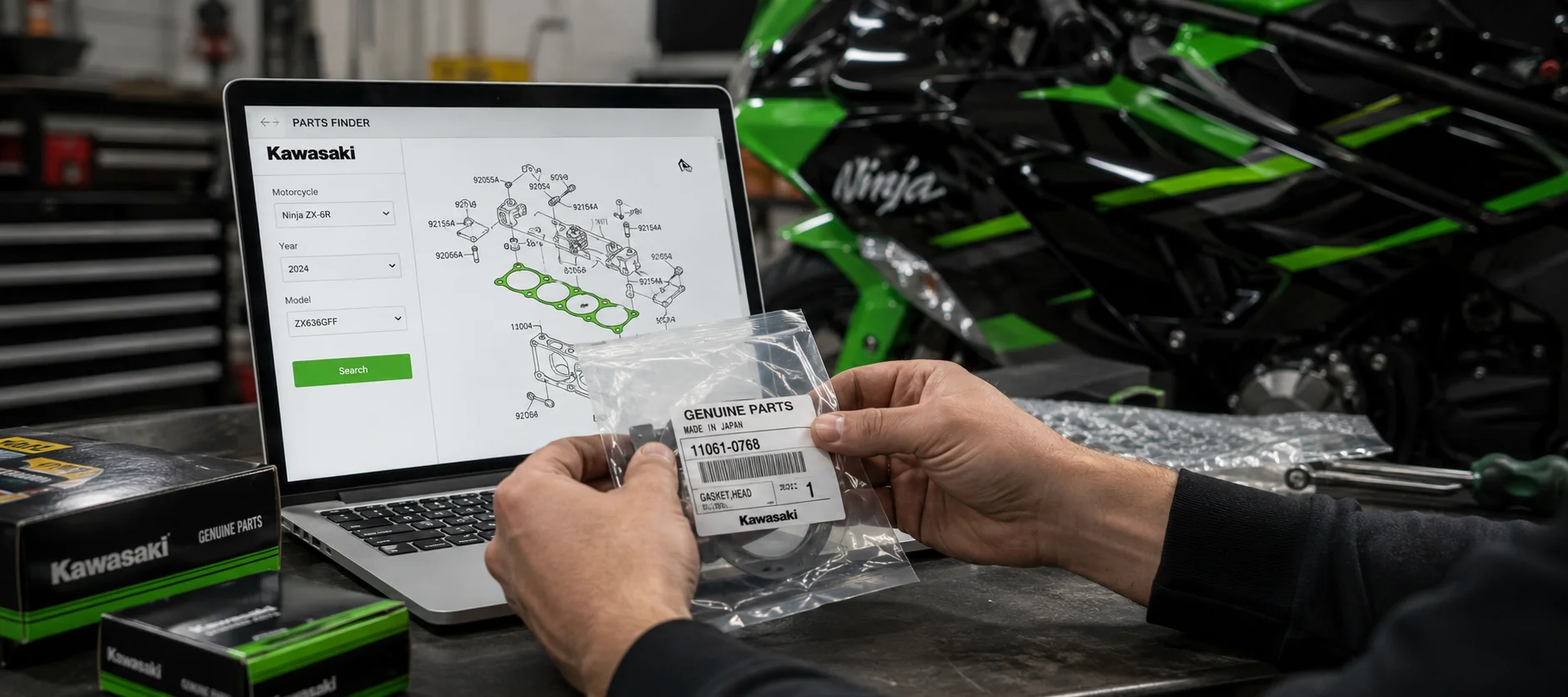
How to Confirm Kawasaki Parts Fitment?

Kawasaki parts fitment check

Before ordering, verify your motorcycle’s exact model, engine size, and production year. Similar model names can use different parts, especially within the Vulcan and Ninja lineups.

For Ninja ZX models, always confirm the exact variant, such as ZX-6R, ZX-6RR, or ZX-6R 636, as these motorcycles have different specifications and may not share the same replacement parts.

Choosing the correct model information before purchasing is the easiest way to ensure proper fitment and avoid compatibility issues.

Conclusion

Kawasaki offers one of the most diverse motorcycle lineups, from Ninja sport bikes and Z-Series naked motorcycles to Vulcan cruisers, Versys adventure bikes, and KLR dual-sports. Because each model family has unique components and multiple generations, confirming your exact model, engine size, and production year is essential before buying replacement parts.

Using quality, model-specific parts helps maintain the performance, reliability, and durability Kawasaki motorcycles are known for. Whether you’re performing routine maintenance, replacing worn components, or upgrading your bike, choosing the correct fitment ensures the best results and long-term reliability.

Frequently Asked Questions

Q: Can I still find parts for older Kawasaki Vulcan models?
A: Yes. Replacement parts for many older Vulcan models, including the Vulcan 1500 Classic and Vulcan 750, are still widely available through aftermarket suppliers.

Q: What’s the difference between the Kawasaki ZX-6R and ZX-6R 636?
A: The ZX-6R 636 has a larger 636cc engine than the standard ZX-6R. While many chassis and body parts are shared, engine components are not always interchangeable.

Q: Is the Kawasaki Vulcan 1700 Voyager reliable?
A: Yes. The Vulcan 1700 Voyager is known for its long-distance reliability. Routine maintenance of the cooling system, fuel system, and drivetrain helps keep it performing at its best.

Q: What are the signs of a failing Kawasaki ZX-6R radiator?
A: Common signs include overheating, coolant leaks, low coolant levels, steam from the engine, or frequent cooling fan operation.

Q: How do I choose the correct Kawasaki replacement parts?
A: Always confirm your motorcycle’s model, engine size, variant, and production year before ordering to ensure proper fitment.

(Commenting: OFF)

Or login with your social account