



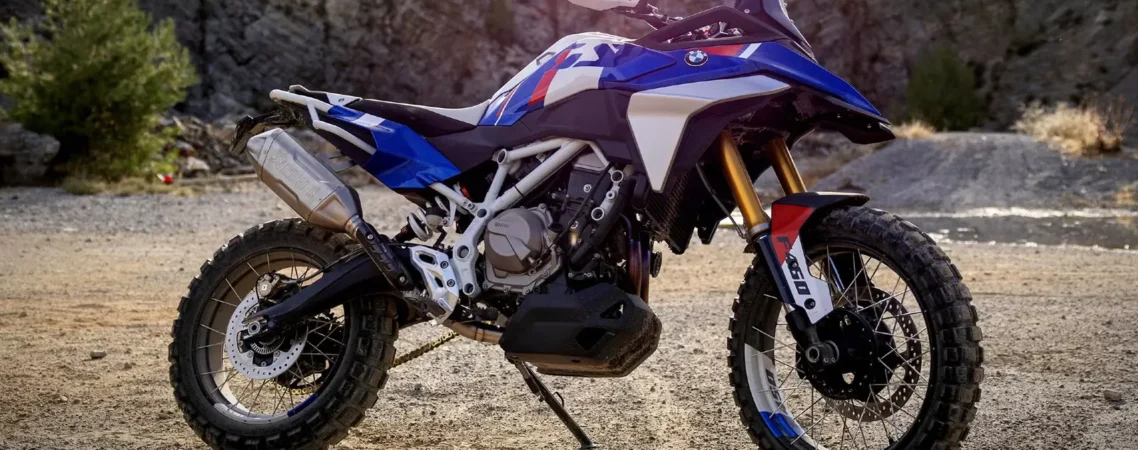
bikerbiker Aliwheels is a leading motorcycle parts supplier offering free shipping anywhere in the world on orders above $300. Please note that all of our motorcycle parts and accessories are certified and tested. With more than 10,000* products to choose from this is your one place to get the motorcycle part you need. Browse our vast inventory of motorcycle radiators, fairings, clutch plates, headlights, chains, and sprockets. biker

Free Shipping over $300

Support 24/7

Secure Payments

Hot Offers

Aliwheels is a leading motorcycle parts supplier offering free shipping anywhere in the world on orders above $300. Please note that all of our motorcycle parts and accessories are certified and tested. With more than 10,000* products to choose from this is your one place to get the motorcycle part you need. Browse our vast inventory of motorcycle radiators, fairings, clutch plates, headlights, chains, and sprockets.

Free Shipping over $300

Support 24/7

Secure Payments

Hot Offers

BMW Motorrad has built a reputation for engineering motorcycles that excel in long-distance touring, adventure riding, sport performance, and everyday comfort. From the GS adventure lineup and RT touring models to the K-series sport tourers and the iconic boxer-powered R models, BMW motorcycles are designed with durability, technology, and rider confidence in mind.

Because BMW motorcycles are often kept for many years and ridden over high mileage, owners place a strong emphasis on using reliable replacement parts and model-specific upgrades. While genuine BMW components are known for their quality, many riders choose certified aftermarket parts that deliver dependable performance and proper fitment at a more competitive price.

The key to buying BMW motorcycle parts is identifying your exact model, production year, and engine platform. BMW frequently updates electronics, chassis components, and mounting systems between generations, making accurate fitment essential for maintenance, repairs, and performance upgrades.

Here is the complete guide to essential BMW motorcycle maintenance parts across all major model families, with every BMW-specific product currently stocked at Aliwheels. Browse the full BMW Motorcycle Parts category.

BMW Motorrad Model Families 

BMW Motorrad motorcycles are divided into distinct model families, each designed for a different riding purpose. Identifying your model family is the first step to finding the correct replacement or upgrade parts.
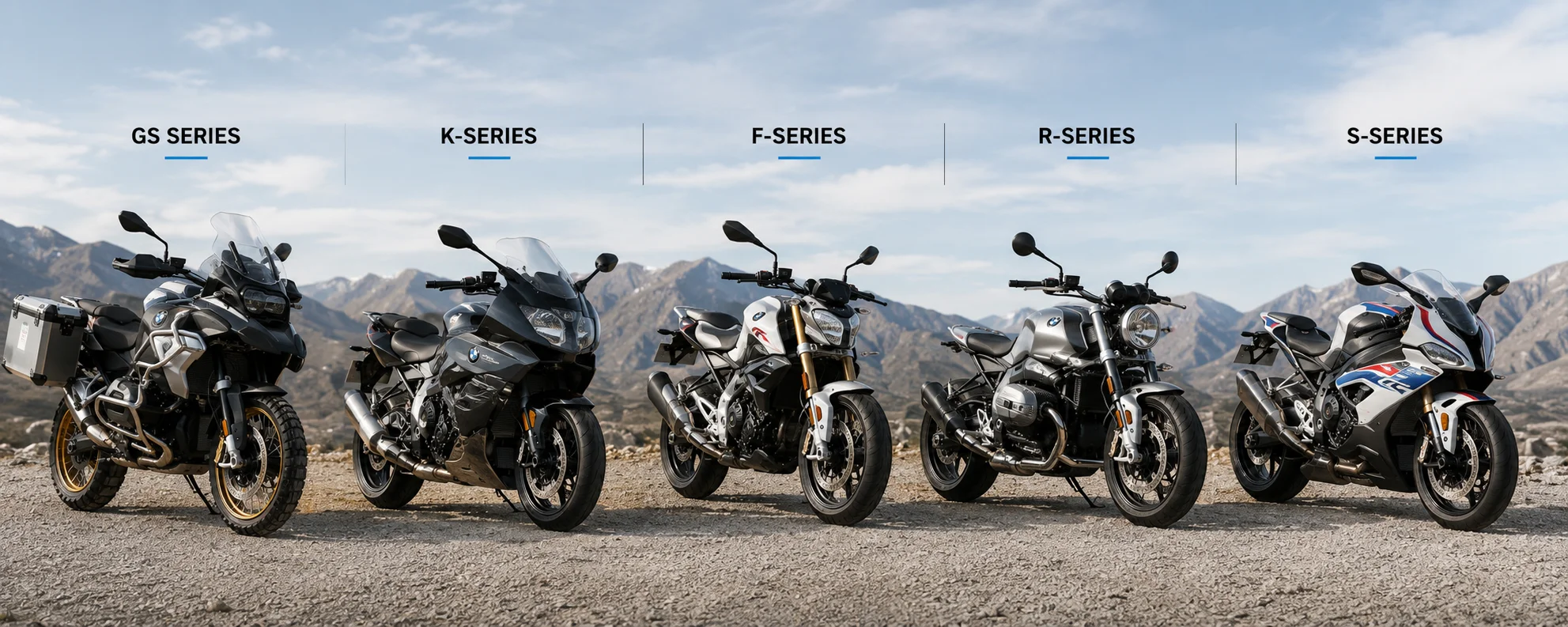
BMW Motorrad model families

GS Series

BMW’s flagship adventure lineup, including the R1200GS, R1250GS, F750GS, and F850GS. The R models use BMW’s iconic boxer twin engine, while the F models use parallel twins. The GS is BMW’s best-selling motorcycle family worldwide.

K-Series

BMW’s premium sport-touring range, including the K1300S, K1600GT, and K1600GTL. These motorcycles feature powerful inline-four or inline-six engines built for long-distance performance and comfort.

F-Series

A versatile lineup of parallel-twin motorcycles, including the F650, F700GS, F800GS, F850GS, and F900R. These models are popular for commuting, touring, and light adventure riding.

R-Series

Home to BMW’s legendary boxer-twin motorcycles, including the R nineT, R1250R, and R1250RS. The R-Series combines classic styling with modern performance and touring capability.

S-Series

BMW’s high-performance sport lineup, featuring the S1000RR, S1000R, and S1000XR. These motorcycles are designed for riders seeking superbike-level performance on the road or track.

Fitment Tip

BMW parts are generally model-specific. Components are rarely interchangeable between the GS, K, F, R, and S model families, so always confirm your exact model, engine size, and production year before ordering.

BMW GS Series: Essential Parts and Upgrades

The BMW GS is the world’s most popular adventure motorcycle platform, built for long-distance touring and off-road riding. Because these bikes see demanding conditions, owners often replace or upgrade a few key components more frequently than on standard street motorcycles.

Crash Protection

Engine guards and crash bars are among the first upgrades for GS owners, helping protect the engine and frame during drops or off-road riding.

Front Fender

Adventure riding exposes the front fender to rocks, mud, and debris, making it one of the more commonly replaced body panels after off-road use.

Handlebars

Handlebars are frequently replaced after tip-overs or upgraded for improved riding position and comfort. Choosing the correct bend can significantly enhance control during long-distance and adventure rides.

Buying Tip

BMW GS parts vary by model and year. Always confirm whether your bike is an F-Series GS (parallel twin) or an R-Series GS (boxer twin), as many components are not interchangeable.

BMW K-Series: Essential Parts and Maintenance

The BMW K-Series is built for high-performance sport touring, combining powerful engines with advanced engineering. Because of its complexity, using model-specific replacement parts is essential.

Cooling System

The radiator is one of the most important maintenance components on K-Series motorcycles. High-performance riding places greater demand on the cooling system, making prompt replacement essential if leaks or overheating occur.

BMW F-Series: Essential Parts and Maintenance

The F-Series includes some of BMW’s most popular and versatile motorcycles, making regular maintenance the key to long-term reliability.

Oil Filters

Routine oil and filter changes are the most important service for F-Series engines. Always choose a filter designed specifically for your F-Series model to ensure proper oil flow and engine protection.

Windscreens and Rider Comfort

BMW GS and touring motorcycles often require windshield replacement after years of riding or debris impact. A quality replacement windshield improves wind protection, rider comfort, and visibility on long-distance journeys.

Buying Tip

BMW parts are highly model-specific. Always verify your exact model, production year, and engine type before purchasing replacement components or upgrades.

OEM vs Aftermarket BMW Parts
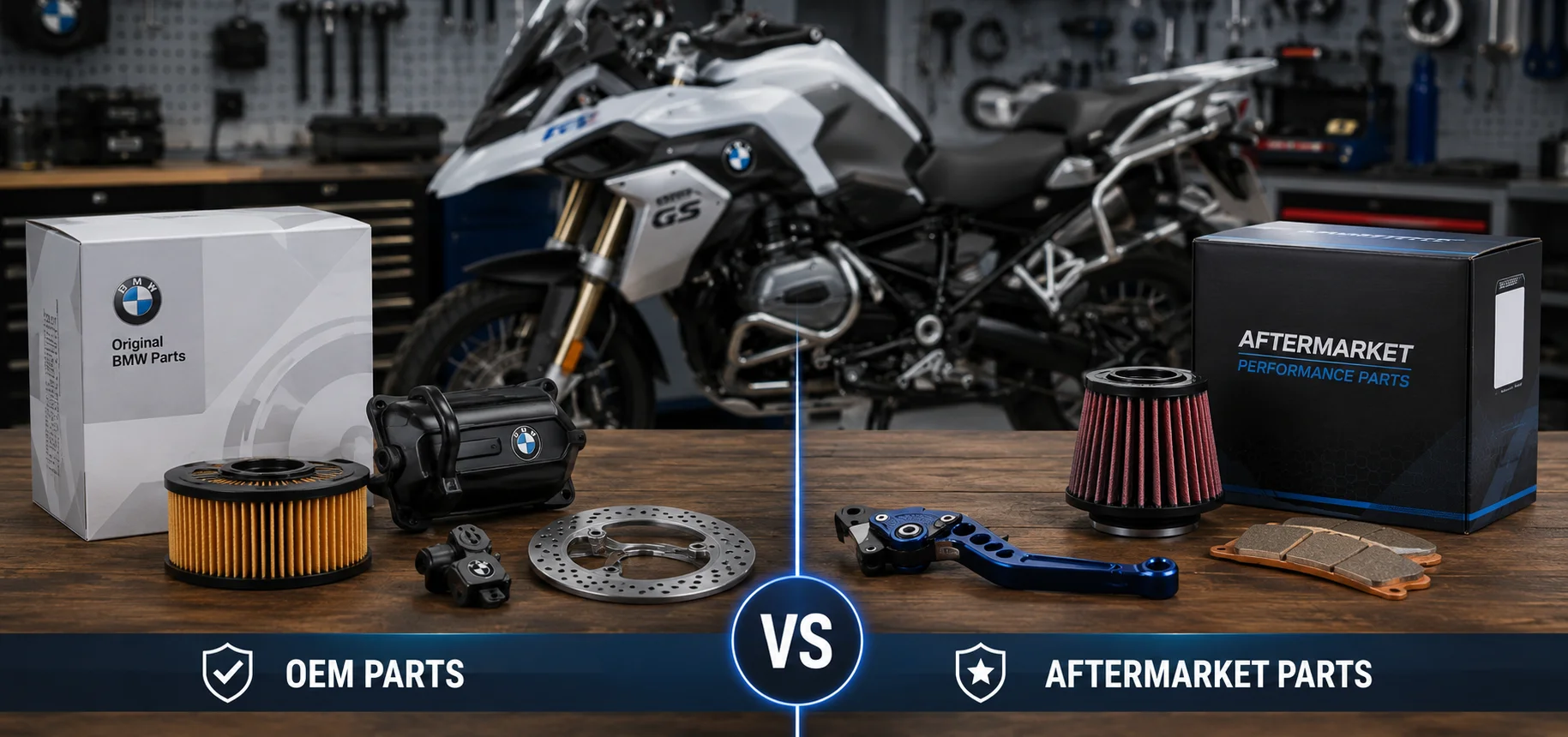
OEM vs aftermarket BMW motorcycle parts

BMW motorcycles are known for premium engineering, but that doesn’t mean every replacement part has to come from the dealer. For routine maintenance and repairs, certified aftermarket parts offer excellent value without compromising quality.

Aftermarket components such as oil filters, brake pads, crash bars, body panels, radiators, and other maintenance parts provide reliable performance while reducing ownership costs.

For advanced electronic systems, including ABS modules, electronic suspension, ride modes, and other control units, professional diagnosis and OEM replacement are generally recommended to ensure full compatibility.

Before ordering any BMW part, always verify your exact model and production year. If you’re unsure, Aliwheels’ support team can help confirm fitment before your order is shipped.

Conclusion

BMW Motorrad motorcycles are built for performance, durability, and long-distance riding, but choosing the right replacement parts starts with accurate fitment. Whether you own a GS adventure bike, a K-Series sport tourer, an F-Series all-rounder, or an R-Series boxer twin, confirming your exact model and production year is essential before ordering.

Routine maintenance with quality replacement parts helps preserve the reliability and performance BMW motorcycles are known for. From crash protection and cooling system components to filters, brakes, and bodywork, selecting model-specific parts ensures the best fit and long-term dependability.

Aliwheels offers BMW motorcycle parts organized by model and year, making it easier to find compatible components for maintenance, repairs, and upgrades.

Frequently Asked Questions

Q: Are aftermarket parts safe for BMW motorcycles?
A: Yes. Quality aftermarket parts are a reliable choice for routine maintenance items such as filters, brake pads, radiators, crash bars, and bodywork. For advanced electronic systems like ABS, ESA, and ride modes, OEM parts or professional diagnosis are recommended.

Q: What is the most important maintenance item on a BMW R1250GS?
A: Regular oil and filter changes using the correct specifications are essential for maintaining engine performance and the ShiftCam system on the R1250GS.

Q: When should a BMW K1300S radiator be replaced?
A: There is no fixed replacement interval. Replace the radiator if it develops leaks, suffers impact damage, or no longer cools the engine effectively.

Q: Can aftermarket crash bars affect my BMW warranty?
A: In most cases, no. Properly installed aftermarket crash bars do not automatically void a motorcycle warranty. However, any warranty claim may be denied if the accessory is proven to have caused the specific failure.

Q: How do I choose the correct BMW motorcycle parts?
A: Always confirm your motorcycle’s model family (GS, K, F, R, or S), engine size, and production year before ordering to ensure proper fitment.
(Commenting: OFF)

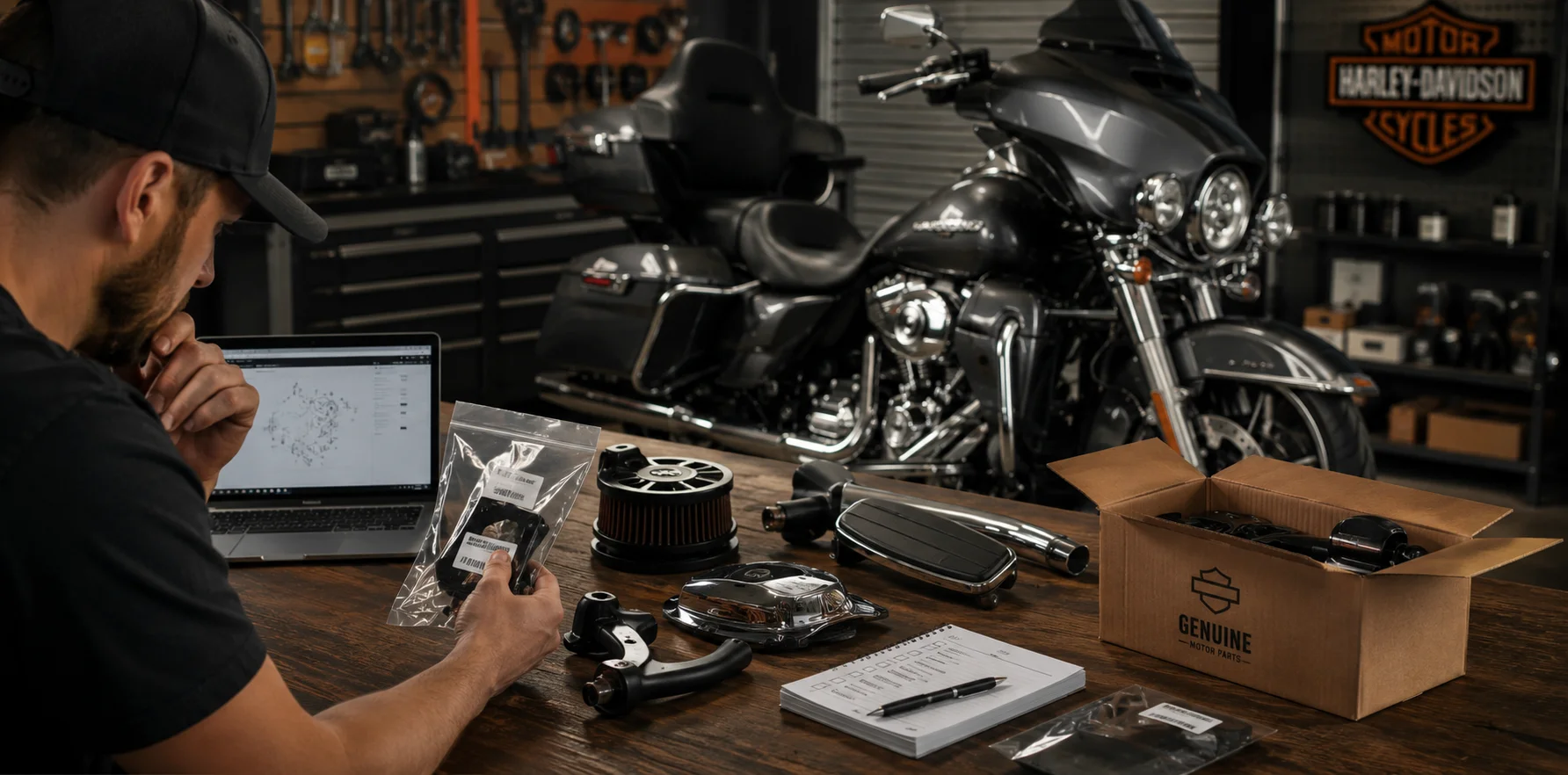
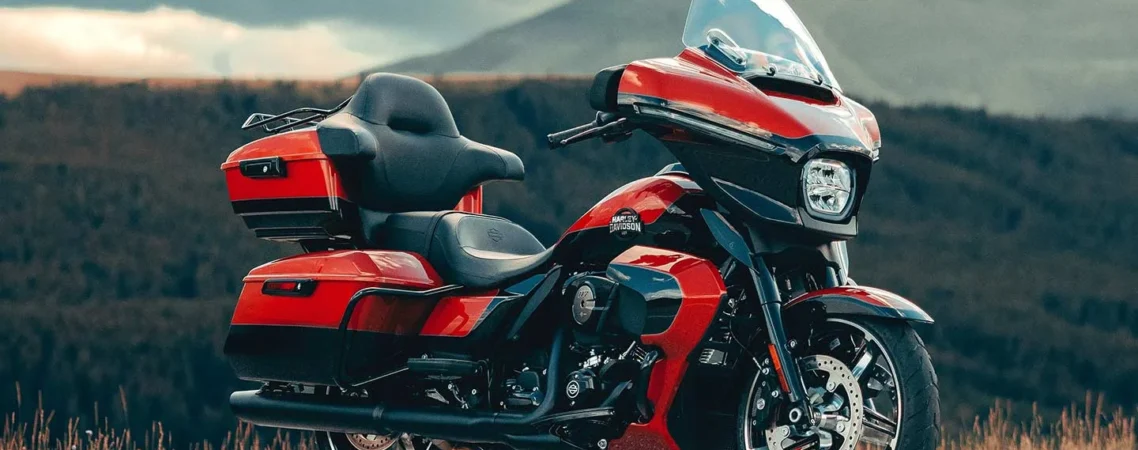
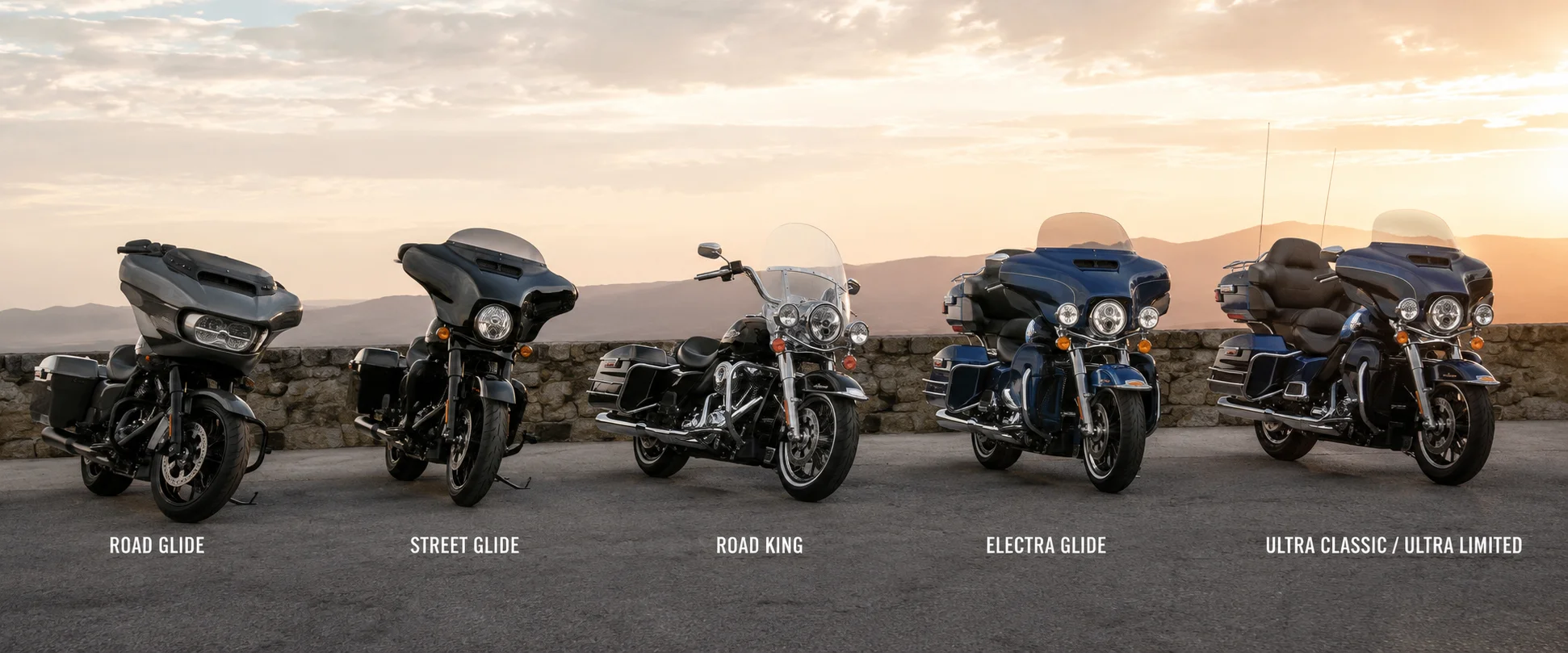
Harley-Davidson’s touring lineup represents the core of American long-distance motorcycling. Models like the Road Glide, Street Glide, Road King, Electra Glide, and Ultra Classic are designed for comfort, storage capacity, and sustained highway performance over extreme distances.

Unlike most motorcycles built primarily for short- to mid-range riding, Harley touring bikes are engineered specifically for endurance. Their frames, fairings, seating geometry, suspension setups, and infotainment systems are built to support long hours on the road with consistent rider comfort and stability.

Because these bikes are widely used, frequently upgraded, and often kept for many years, the replacement parts market is extensive. Routine maintenance components, crash protection, touring accessories, and performance upgrades are in constant demand across all major Harley-Davidson touring models.

For riders, this means one important principle: selecting the correct model and year is essential before purchasing any part or accessory. Small differences between model years and sub-variants can affect fitment for fairings, electronics, mounting systems, and drivetrain components.

Here is the complete Harley-Davidson touring parts buying guide. What breaks on these bikes, what’s worth upgrading, and every touring-relevant part currently at Aliwheels. Browse the complete Harley-Davidson Parts category for the full range.

Harley-Davidson Touring Lineup Explained

Harley-Davidson’s FL touring platform forms the foundation of its long-distance motorcycle range. While these models share a common touring chassis, they differ in fairing design, ergonomics, electronics, and intended riding style.

Harley-Davidson touring motorcycles lineup

Road Glide (FLTRX / FLTRXS)

The Road Glide features a frame-mounted shark-nose fairing with a fixed headlight. This design improves stability at highway speeds and reduces wind buffeting by separating the fairing from steering movement.

Street Glide (FLHXS)

The Street Glide uses a fork-mounted batwing fairing and is known for its balanced mix of comfort and style. It is one of Harley-Davidson’s most popular touring models and is widely chosen for both stock touring and custom builds.

Road King (FLHR)

The Road King represents the most traditional touring Harley. It features a classic round headlight and a detachable windshield, offering a more stripped-back touring experience with a vintage aesthetic.

Electra Glide (FLHT / FLHTC / FLHTCU)

The Electra Glide is the original full-dress touring platform. It includes a fixed fairing and integrated touring features such as luggage systems and rider comfort enhancements designed for long-distance travel.

Ultra Classic / Ultra Limited

The Ultra series sits at the top of the touring lineup, offering maximum factory equipment, including extensive storage, passenger comfort features, and advanced touring electronics.

Fitment Considerations

While all FL touring models share the same platform, parts compatibility is not universal. Frame-mounted fairing components (Road Glide) do not interchange with fork-mounted fairing components (Street Glide, Electra Glide, Road King). Always confirm the exact model designation (FLTRX, FLHXS, FLHR, etc.) and production year before ordering bodywork or structural components.

Harley-Davidson Touring Owners Replace These First

Harley-Davidson touring motorcycles are built for long-distance comfort and heavy use, which naturally leads to a predictable set of early replacement and upgrade priorities across models like the Road Glide, Street Glide, Road King, Electra Glide, and Ultra Limited.

Exhaust Systems

The exhaust system is typically the first major upgrade for Harley touring owners. While stock exhausts are designed to meet emissions and noise regulations, they often limit the deeper V-twin character the Milwaukee-Eight engine is known for. Aftermarket systems are widely used to improve sound, reduce weight, and refine throttle response.

Air Cleaner and Intake

Air intake upgrades are another common early modification. The Milwaukee-Eight engine responds well to improved airflow, and upgraded air cleaners are often paired with exhaust changes to optimize engine breathing and overall performance while also enhancing visual appeal on the engine side.

Saddlebags and Touring Luggage

Saddlebags are one of the most frequently replaced touring components due to wear, crash damage, or customization preferences. Touring riders rely heavily on luggage capacity, making saddlebag condition and configuration a key part of ownership. Over time, hinges, latches, and finishes may also require replacement.

Foot Controls and Rider Comfort

Foot controls play a critical role in long-distance comfort. Floorboards, foot pegs, and shifter setups are often upgraded to improve ergonomics on extended rides. Even small adjustments in foot positioning can significantly reduce fatigue over long touring distances.

Windshields

Windshields are one of the most important comfort components on any touring Harley-Davidson. Proper windshield height and shape reduce wind fatigue, improve stability at highway speeds, and directly affect rider comfort on long-distance journeys. Many owners replace or upgrade windshields early to better match their riding posture and height.

Quick Summary

Harley-Davidson touring owners typically prioritize exhaust systems, intake upgrades, luggage components, rider controls, and wind protection. These areas have the greatest impact on comfort, performance, and usability, making them the most common first modifications across the touring lineup.

How to Buy Harley-Davidson Touring Parts Without Making Expensive Mistakes?

Buying parts for Harley-Davidson touring models can be straightforward, but small identification errors often lead to costly fitment issues. Most mistakes happen not because parts are low-quality, but because the wrong model, year, or configuration was selected.

Buy Harley touring parts

Understanding a few key details before ordering prevents almost all common compatibility problems.

Mistake 1: Confusing Model Names With Model Codes

Harley-Davidson uses similar-sounding names across multiple touring variants. For example, Road Glide, Road Glide Special, and Road Glide Ultra may sound interchangeable, but they can differ in trim level, electronics, and bodywork specifications.

The correct approach is to always use the official model code:

  • FLTRX (Road Glide variants)
  • FLHXS (Street Glide variants)
  • FLHR (Road King)
  • FLHT / FLHTCU (Electra Glide and Ultra models)

These codes are far more reliable than marketing names when checking part compatibility.

Mistake 2: Ignoring Engine Generation Differences

Harley touring bikes primarily fall into two major engine families:

  • Twin Cam engines (older touring models)
  • Milwaukee-Eight engines (2017 and newer touring models)

Even when parts look similar, internal dimensions, mounting points, and electrical compatibility can differ significantly between these engine generations. Always confirm engine type before ordering mechanical or electrical components.

Mistake 3: Mixing Up Fairing Mount Types

Fairing design is one of the most critical fitment factors in touring Harley-Davidson models.

  • Road Glide models use a frame-mounted fairing
  • Street Glide, Electra Glide, and Road King models typically use fork-mounted fairings or no fixed fairing

These systems are not interchangeable, even if the bike names appear similar. Fairing-mounted parts must always match the correct mounting architecture.

How to Buy Correct Harley Touring Parts

Before placing an order, confirm:

  • Full model code (FLTRX, FLHXS, FLHR, FLHT, FLHTCU)
  • Model year
  • Engine generation (Twin Cam or Milwaukee-Eight)
  • Fairing type for body and mounting components

These four details eliminate the majority of Harley touring parts mistakes.

Final Advice

Harley-Davidson touring motorcycles reward proper maintenance and informed upgrades, but only when parts are correctly matched to the platform. Exhaust systems, air cleaners, saddlebags, foot controls, and windshields are the most commonly replaced components, and they all depend heavily on correct model identification.

Using precise model codes and confirming engine generation before purchase is the most reliable way to avoid unnecessary expense and returns.

Harley-Davidson Touring FAQs: Common Questions About Parts, Fitment, and Maintenance

Q: What part do owners replace most often on Harley touring bikes?
A: Exhaust heat shields, saddlebag latches, foot pegs, and windshields due to wear, vibration, and UV exposure.

Q: Are Road Glide and Street Glide parts interchangeable?
A: Only partially. Both models share engine and drivetrain parts, but different mounting systems prevent fairings, windshields, and bodywork from interchanging.

Q: When did Harley switch to Milwaukee-Eight engines?
A: 2017 model year. It replaced Twin Cam engines and changed exhaust, intake, and some accessory fitment.

Q: How often should saddlebag parts be checked?
A: Annually. High-mileage bikes should have hinges and latches inspected for fatigue and wear.

Q: Does Aliwheels ship Harley touring parts to the US?
A: Yes. Free worldwide shipping over $300 with fitment confirmation before dispatch.

(Commenting: OFF)

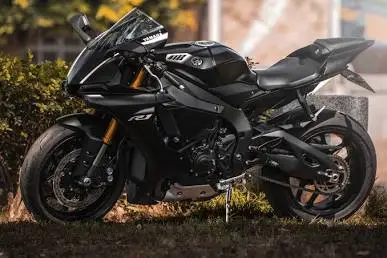
The Yamaha YZF-R1 has been a benchmark in the liter-class superbike category since its debut in 1998. From the original model to today’s crossplane-powered machines with advanced electronics, every generation has pushed performance, handling, and technology forward while building one of the strongest reputations in motorcycling.

With more than two decades of production, however, the R1 has evolved through multiple generations, each with significant updates to the engine, chassis, electronics, and bodywork. As a result, many replacement and performance parts are generation-specific, making accurate fitment essential.

Whether you’re carrying out routine maintenance, replacing worn components, repairing crash damage, or upgrading your motorcycle, identifying your Yamaha R1’s exact model year and generation is the first step toward finding parts that fit correctly and perform as expected.

Browse the complete Yamaha Motorcycle Parts category at Aliwheels for all YZF-R1 components and the full Yamaha range.

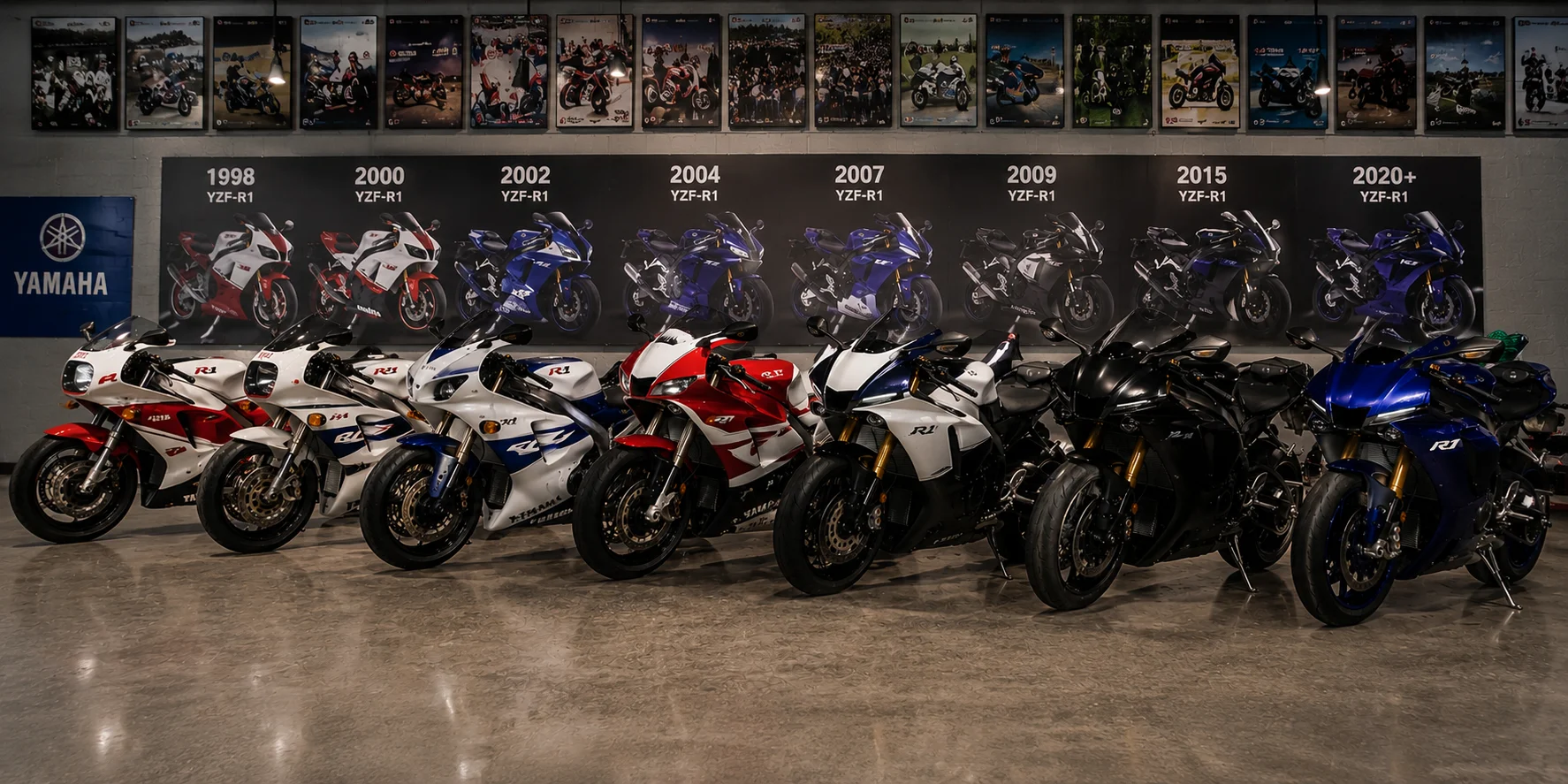
Yamaha YZF-R1 Generations Explained

The Yamaha YZF-R1 has undergone multiple redesigns since its debut in 1998. While the R1 name has remained the same, each generation introduced changes to the engine, chassis, electronics, and bodywork that directly affect parts compatibility.

Before ordering replacement or aftermarket parts, identify your motorcycle’s exact model year and generation.

Yamaha YZF-R1 generations

First Generation (1998-2001)

The original YZF-R1 introduced a lightweight chassis and 998cc inline-four engine that redefined the superbike segment. As these models become increasingly collectible, replacement parts are generally more generation-specific.

Second Generation (2002-2003)

Yamaha updated the styling, engine, and chassis, with noticeable changes to the front fairing and headlight design. Many body and mechanical parts differ from the first generation.

Third Generation (2004-2006)

This generation featured major engine revisions, updated fuel injection, improved aerodynamics, and a redesigned chassis. Parts such as fairings, fuel system components, and electrical parts are unique to these model years.

Fourth Generation (2007-2008)

A comprehensive redesign brought a new frame, revised engine, updated suspension, and sharper styling. Many components from earlier R1 models are no longer interchangeable.

Fifth Generation (2009-2014)

The introduction of Yamaha’s crossplane crankshaft engine transformed the R1’s power delivery and character. The engine, exhaust system, electronics, and chassis were all significantly redesigned, making this one of the most distinctive R1 generations.

Sixth Generation (2015-2021)

Inspired by Yamaha’s MotoGP technology, this generation introduced advanced electronics, including a six-axis IMU, traction control, slide control, launch control, a quickshifter, and a completely redesigned chassis. Most parts are unique to this platform.

Seventh Generation (2022-Present)

The latest R1 builds on the previous generation with refinements to the electronics package, suspension, aerodynamics, and rider aids while maintaining the crossplane engine architecture.

Why Generation Matters

Many Yamaha R1 components are not interchangeable between generations. Fairings, headlights, radiators, exhaust systems, electronics, suspension parts, instrument clusters, and engine components often use different mounting points and specifications.

Before purchasing any replacement part, always confirm your motorcycle’s exact model year and generation to ensure proper fitment and avoid costly compatibility issues.

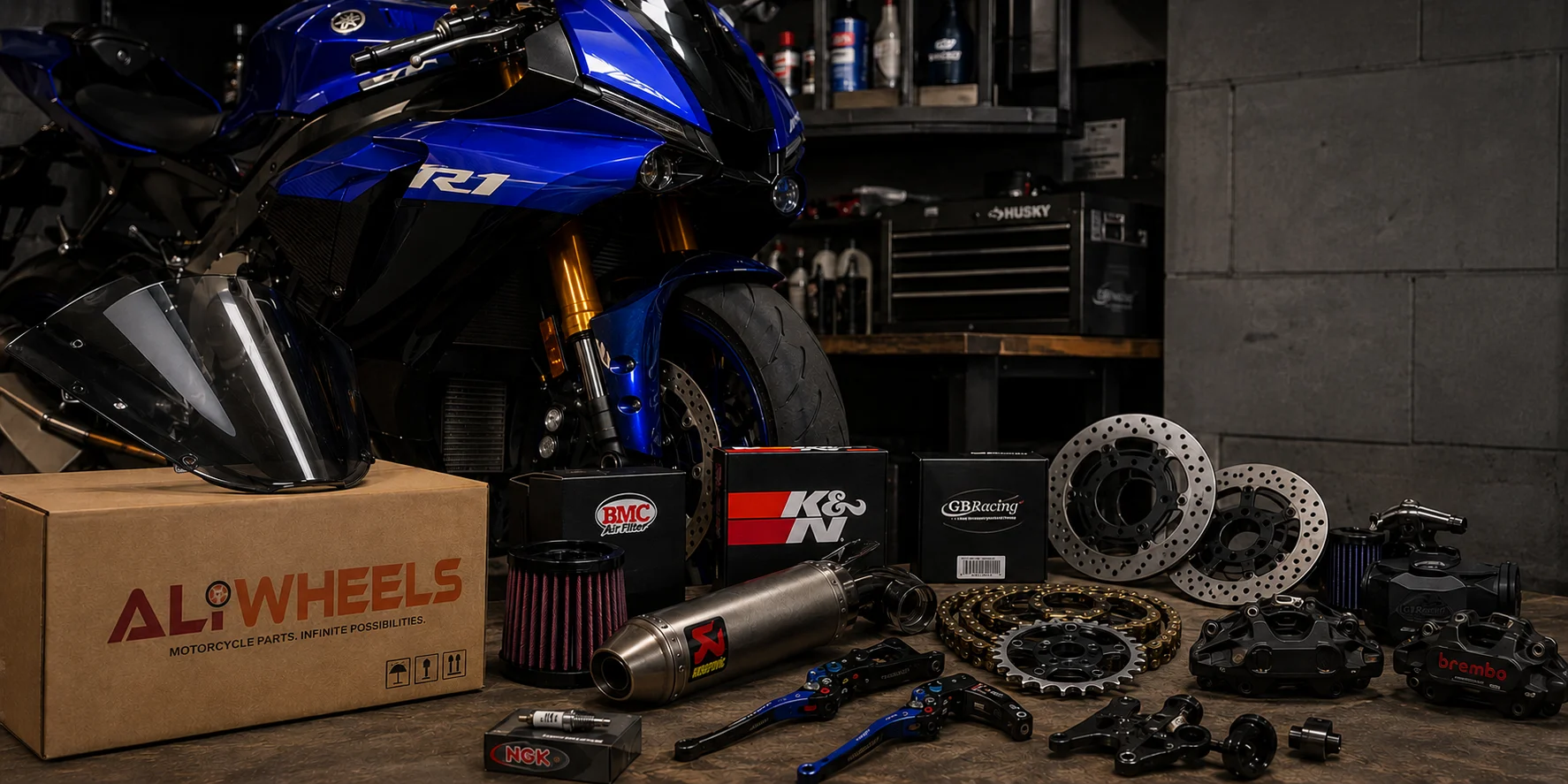
Yamaha YZF-R1 Parts Available at Aliwheels

Aliwheels offers a wide selection of replacement and aftermarket parts for multiple Yamaha YZF-R1 generations, helping riders maintain, repair, or upgrade one of the world’s most iconic superbikes.

Exhaust Systems

An aftermarket exhaust is one of the most popular Yamaha R1 upgrades. It reduces weight, enhances the signature crossplane engine sound on 2009-onward models, and can improve performance when paired with proper ECU tuning or fuel mapping.

Engine and Cooling System Parts

Keep your R1 performing at its best with replacement radiators, engine covers, gaskets, cooling system components, filters, and other essential maintenance parts designed for specific model years.

Electrical Components

Electrical parts such as regulators, stators, ignition components, sensors, lighting, and instrument clusters are available for various R1 generations. Always confirm compatibility before ordering, as electrical systems vary significantly between model years.

Fairings and Bodywork

Whether you’re replacing damaged panels after a crash or restoring your motorcycle, you’ll find fairings, headlights, tail lights, mirrors, windscreens, and other bodywork components for multiple Yamaha R1 generations.

Drivetrain and Performance Upgrades

Performance-focused riders can choose from sprockets, chain kits, clutch components, and other drivetrain parts to fine-tune acceleration, top speed, and overall riding characteristics.

Controls and Chassis Components

Replacement levers, rearsets, foot controls, handlebars, brake pedals, shift levers, and other chassis components help restore factory performance or personalize your riding position.

Every Yamaha YZF-R1 part is organized by model year and generation, making it easier to find compatible components and avoid fitment issues before ordering.

Yamaha YZF-R1 parts at Aliwheels

Most Common Yamaha YZF-R1 Upgrades by Generation

Each Yamaha YZF-R1 generation has its own maintenance priorities and popular upgrades based on age, technology, and riding style.

1998-2006 Models

Older R1s are often restored or refreshed with replacement fairings, headlights, cooling system components, engine covers, and aftermarket exhaust systems. Age-related maintenance also includes replacing worn electrical and fuel system parts.

2009-2021 Models

The Crossplane R1 is one of the most modified superbikes on the market. Popular upgrades include aftermarket exhaust systems, frame sliders, engine case covers, brake pads, chain and sprocket kits, and quickshifters on earlier models that were not factory equipped.

2022-Present Models

Owners of the latest R1 typically focus on performance and track-ready upgrades. Common additions include lightweight exhaust systems, premium brake components, frame protection, rearsets, suspension upgrades, and electronics-compatible accessories designed for the latest rider-assistance systems.

Regardless of generation, routine maintenance items such as brake components, filters, chains, sprockets, cooling system parts, and electrical components remain the most frequently replaced Yamaha YZF-R1 parts.

Conclusion

The Yamaha YZF-R1 has earned its reputation as one of the world’s most iconic superbikes, but every generation is engineered differently. From the original 1998 model to today’s crossplane-powered machines with advanced electronics, selecting the correct replacement or upgrade part starts with identifying your motorcycle’s exact model year and generation.

Once you’ve confirmed the correct fitment, maintaining, repairing, or upgrading your R1 becomes much more straightforward. Whether you’re replacing worn components, restoring an older motorcycle, or improving performance for road or track use, choosing generation-specific parts ensures the best fit, reliability, and performance.

Aliwheels offers Yamaha YZF-R1 parts organized by model year and generation, making it easier to find compatible components for maintenance, repairs, and performance upgrades.

Frequently Asked Questions

Q: What is the most important performance upgrade for the Yamaha R1?
A: An aftermarket exhaust is widely considered the most impactful upgrade across all Yamaha R1 generations. On 2009 and newer Crossplane models, it significantly enhances exhaust character and reduces weight. When combined with ECU tuning or fuel mapping on fuel-injected models, it can also improve throttle response and overall performance.

Q: Are Yamaha R1 parts expensive?
A: OEM Yamaha R1 parts are typically priced at premium superbike levels, especially for newer generations. However, quality aftermarket alternatives are widely available for common maintenance items such as brake pads, clutch components, chains, sprockets, filters, and electrical parts, often at lower cost while maintaining reliable performance.

Q: Which Yamaha R1 generation has the best parts availability?
A: The 2015-2021 R1 generation currently has the strongest aftermarket and OEM support due to its modern design and large global user base. The 2009-2014 crossplane generation also has strong availability. Older models (pre-2009) may have limited OEM supply, but essential maintenance parts are still available through aftermarket channels.

Q: Can I use a 2021 Yamaha R1 exhaust on a 2015 model?
A: In most cases, yes, within the 2015-2021 generation range, exhaust systems are broadly compatible. However, small differences in mounting points or emissions equipment may exist depending on the exact year and exhaust design. It is always recommended to verify fitment for your specific model before purchasing.

Q: What maintenance parts does the Yamaha R1 need most often?
A: The most frequently replaced Yamaha R1 maintenance items include brake pads, chains and sprockets, oil filters, clutch plates (especially on high-mileage or track-used bikes), and coolant. Because the R1 is a high-performance machine, wear items typically require more frequent replacement compared to standard street motorcycles.

(Commenting: OFF)

Or login with your social account