




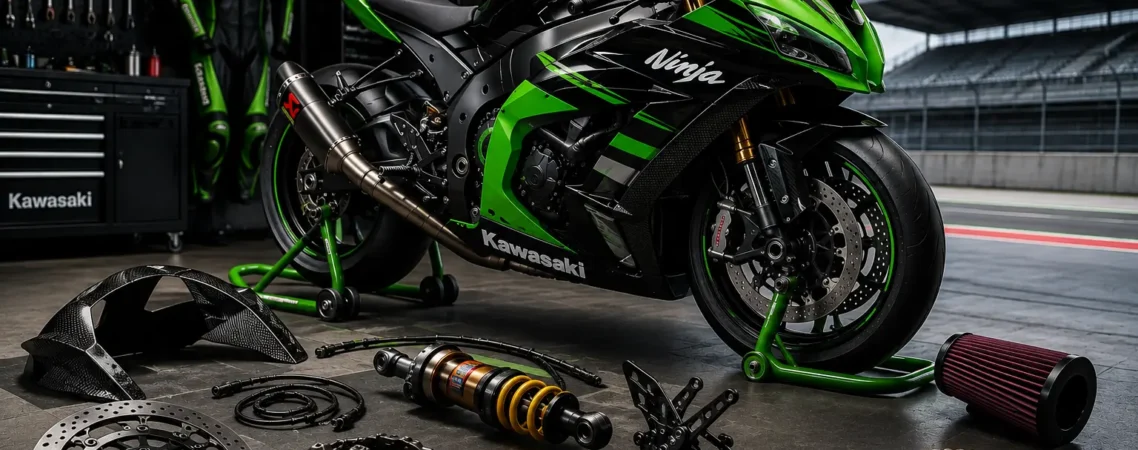
The Kawasaki Ninja has earned a reputation for being one of the most approachable yet capable sportbike platforms ever built. From the Ninja 400 to the ZX-6R and ZX-10R, these bikes dominate track days, club racing grids, and rider search queries alike. Terms like Kawasaki Ninja track upgrades, best track parts for Ninja, and Kawasaki Ninja track setup continue to trend because riders quickly realize something important. Stock Ninjas are fast, but they are not track-optimized.
What separates a confident, predictable track bike from a nervous, inconsistent one is not horsepower. It is the parts that control feedback, stability, braking, and rider connection. Understanding which Kawasaki Ninja track parts matter most saves money, improves lap times, and prevents the most common beginner mistake: upgrading the wrong things first.
Why Stock Ninja Parts Hit Their Limits on Track?
Kawasaki builds Ninja models to strike a balance between performance, comfort, reliability, and cost. On the street, this balance works well. On track, the limits show up quickly.
Riders searching for Kawasaki Ninja track day problems often describe the same sensations. Excessive fork dive under braking, vague front-end feel mid-corner, rear instability on corner exit, and brakes that fade after a few hard laps. None of these issues means the bike is bad. They mean the bike has reached the edge of its stock design envelope.
Track riding amplifies weaknesses that casual riding never reveals.
Suspension: The Single Most Important Upgrade
Among all Kawasaki Ninja track upgrades, suspension consistently delivers the biggest improvement per dollar. Kawasaki Ninja suspension upgrade’ and ‘Ninja fork upgrade dominate track-focused forums.
Stock suspension is soft and under-damped to remain forgiving on the street. On track, that softness translates to instability. Upgrading fork internals, springs matched to rider weight, and a quality rear shock transform the bike.
Proper suspension improves braking stability, mid-corner confidence, and tire contact. Riders often report faster lap times without touching the engine simply because the bike finally does what their inputs ask.
Tires: The Foundation of Track Performance
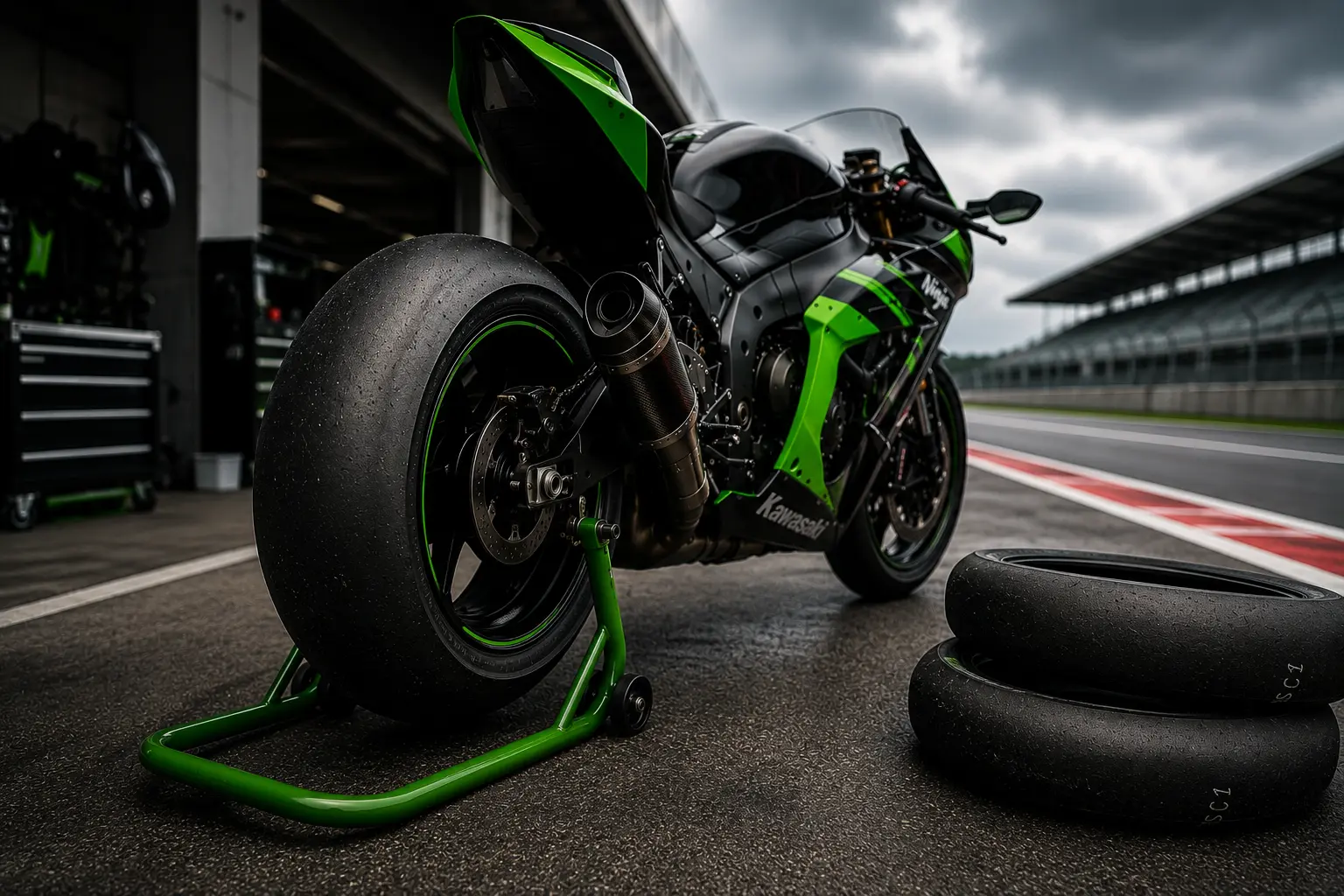
No list of Kawasaki Ninja track parts that matter most is complete without tires. High-intent searches like best track tires for Kawasaki Ninja and Ninja track tire pressure exist because tires define everything else.
Street tires overheat, lose grip, and send inconsistent feedback when pushed. Track-focused tires provide predictable grip, quicker warm-up, and clearer communication at the limit.
Many riders mistakenly upgrade power before tires. Experienced track riders do the opposite. Grip always comes first.
Brake Components That Actually Change Performance
Braking upgrades are another area where Ninja owners see immediate results. Searches such as Kawasaki Ninja brake upgrade track and Ninja brake fade track day reveal common pain points.
The most impactful changes are not flashy. Steel braided brake lines reduce lever sponginess. High-temperature brake fluid prevents fade. Track-oriented brake pads improve initial bite and consistency.
Caliper swaps and oversized rotors matter far less than proper fluid, lines, and pads. Riders who prioritize braking confidence often find their corner entry improves more than expected.
Rearsets and Rider Control
As speeds increase, rider ergonomics become a performance factor. Queries like Kawasaki Ninja rearsets track and Ninja track ergonomics reflect how riders struggle with stock foot positioning.
Adjustable rearsets provide higher ground clearance and allow riders to position their feet for better body control. This directly affects cornering confidence and lean angle.
On track, rider input must be precise. Rearsets improve that connection without altering the bike’s mechanical behavior.
Steering Dampers and Stability at Speed
For higher-powered Ninja models, especially the ZX-6R and ZX-10R, stability becomes critical. Searches for Kawasaki Ninja steering damper track often spike after riders experience headshakes on corner exit.
A quality steering damper does not mask poor setup, but it adds a margin of safety when conditions get aggressive. It is especially valuable for riders transitioning from intermediate to advanced pace.
Cooling and Heat Management
Track riding stresses cooling systems far more than street riding. Terms like Kawasaki Ninja overheating track and Ninja track cooling upgrade highlight this reality.
Upgraded radiator hoses, race-spec coolant, and improved airflow help maintain consistent engine temperatures. Heat management preserves power delivery and protects engine longevity during extended sessions.
While not glamorous, cooling upgrades matter more the harder you ride.
Gearing Changes for Track Use
Many Ninja owners search for Kawasaki Ninja track gearing once they realize stock gearing favors street use. Adjusting sprocket ratios improves acceleration and allows better gear selection for specific circuits.
This upgrade does not increase horsepower, but it makes existing power more usable. Riders often find themselves smoother and more confident simply because the bike stays in its optimal power band.
Engine Mods: Lower Priority Than Most Expect
One of the most surprising insights for new track riders is how little engine mods matter early on. Searches like Kawasaki Ninja engine mods track exist, but experienced riders often delay them.
Exhausts, tuning, and intake mods offer marginal gains compared to suspension, tires, and brakes. Until a rider consistently reaches the bike’s limits, engine upgrades rarely translate to faster laps.
Track performance is about control, not top speed.
Safety and Protection Parts That Save Money
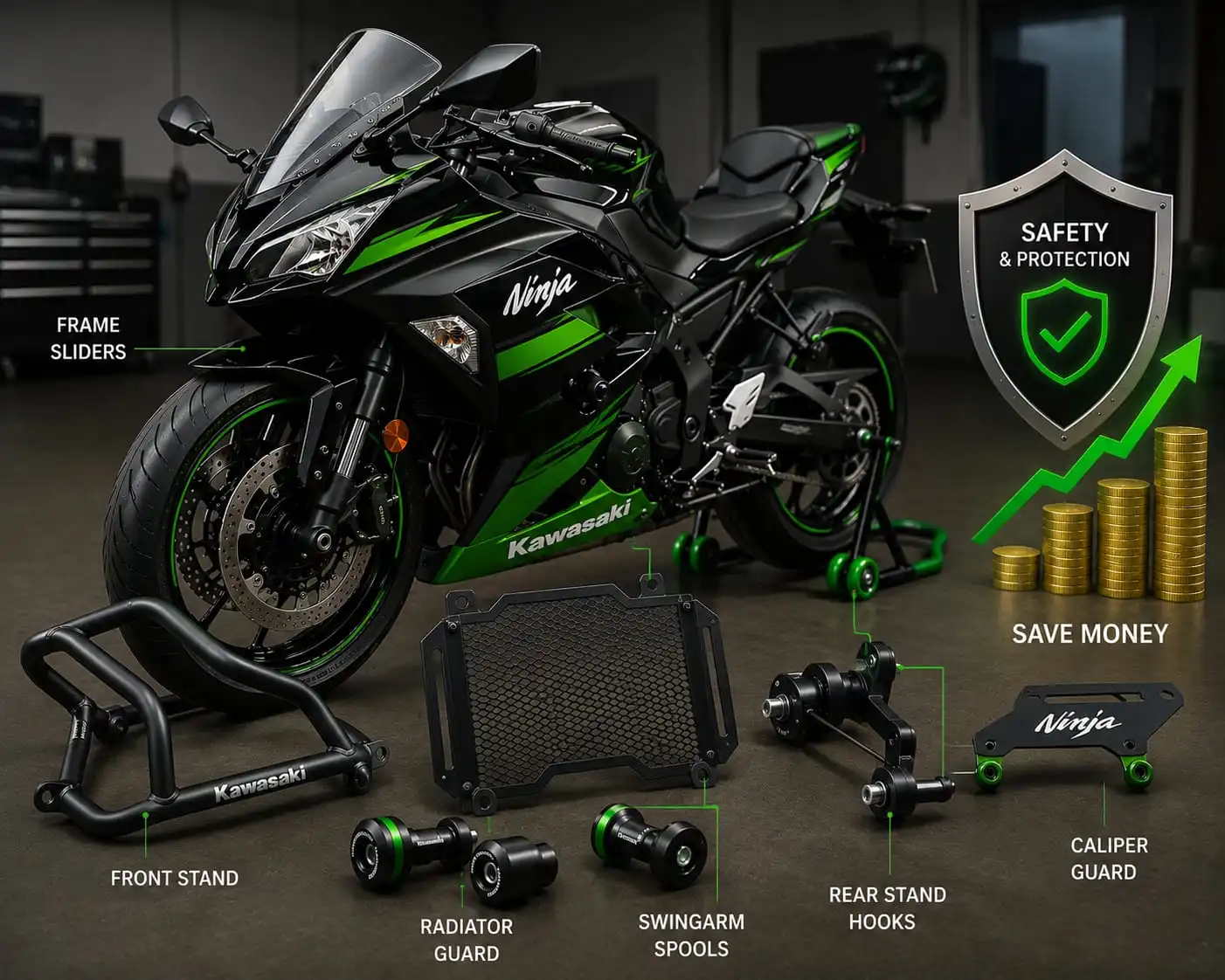
Crash protection rarely feels exciting until it becomes essential. High-intent searches, such as Kawasaki Ninja track crash protection, show how often riders learn this lesson the hard way.
Frame sliders, case covers, and axle protectors reduce damage during low-speed spills. These parts do not improve lap times, but they protect your ability to keep riding.
Track riding carries risk. Smart riders plan for it.
What Experienced Ninja Track Riders Prioritize?
Patterns across track communities are consistent. Riders who focus on suspension, tires, brakes, and ergonomics progress faster and spend less money long term. Those who chase power first often plateau and feel disconnected from the bike.
The Ninja platform rewards thoughtful setup. When the right parts are installed in the right order, the bike becomes predictable, stable, and confidence-inspiring.
Final Perspective
The Kawasaki Ninja does not need to be transformed to succeed on track. It needs to be supported where it matters most. The parts that truly make a difference are not about speed bragging rights. They are about feel, feedback, and control.
For riders searching for Kawasaki Ninja track parts that matter most, the answer is clear. Build the foundation first. When the bike communicates clearly and responds consistently, lap times follow naturally.