


bikerbiker Aliwheels is a leading motorcycle parts supplier offering free shipping anywhere in the world on orders above $300. Please note that all of our motorcycle parts and accessories are certified and tested. With more than 10,000* products to choose from this is your one place to get the motorcycle part you need. Browse our vast inventory of motorcycle radiators, fairings, clutch plates, headlights, chains, and sprockets. biker

The Honda CBR150R from the early 2000s earned a reputation for being lightweight, reliable, and fun to ride. For many riders, especially in Asia and emerging sportbike markets, the 2002–2007 CBR150R became a daily companion for commuting, weekend rides, and even amateur track use. But like every motorcycle, certain parts wear out over time, and clutch plates are high on that list.

If your CBR150R has started slipping under acceleration, feels jerky when releasing the clutch, or struggles to transfer power smoothly, there is a strong chance your clutch plates are nearing the end of their service life. This guide walks through how to recognize clutch plate wear, when replacement is necessary, and what riders should know before changing clutch plates on a Honda CBR150R from 2002 to 2007.

The Clutch System on the CBR150R

The Honda CBR150R uses a wet multi-plate clutch system. This means the clutch plates run inside the engine oil, helping with cooling and longevity. The system consists of friction plates, steel plates, clutch springs, and a pressure plate, all working together to connect and disconnect engine power from the transmission.

Over time, friction material wears down due to heat, aggressive riding, frequent stop-and-go traffic, or improper clutch use. While Honda designed the clutch system to be durable, it is not a lifetime component. Knowing how the clutch behaves when healthy makes it easier to spot problems early.

Signs Your CBR150R Clutch Plates Need Replacement

Most riders first notice clutch problems gradually rather than suddenly. The most common warning signs include:

Clutch slipping during acceleration, especially in higher gears
Engine revs are rising without a matching increase in speed
Difficulty finding neutral when the engine is hot
A grabby or inconsistent clutch feel
Burnt oil smell after hard riding
Reduced fuel efficiency due to inefficient power transfer

If your CBR150R has crossed higher mileage or has been ridden aggressively, these symptoms are often linked directly to worn clutch plates rather than cable adjustment issues.

Mileage Expectations for Clutch Plate Replacement

There is no exact mileage at which clutch plates fail, but for the Honda CBR150R 2002–2007, riders typically replace clutch plates between 20,000 and 40,000 kilometers, depending on riding style.

Frequent city riding, heavy traffic, hard launches, or track use can shorten clutch life significantly. Riders who use smooth throttle control and avoid excessive clutch slipping often get much longer service life.

If your bike still uses the original clutch plates after many years, replacement is usually overdue, even if symptoms are mild.

What to Replace During a Clutch Plate Service

While some riders replace only friction plates, it is best practice to inspect the entire clutch assembly during replacement.

Friction plates should always be replaced as a set
Steel plates should be inspected for warping or discoloration
Clutch springs should be measured and replaced if weak
Engine oil should be changed after clutch work

Replacing worn clutch springs along with clutch plates often restores a firm lever feel and prevents early slipping after installation.

OEM vs Aftermarket Clutch Plates for CBR150R

Riders replacing Honda CBR150R clutch plates usually choose between OEM-spec replacements and performance-oriented aftermarket options.

OEM-style clutch plates are ideal for daily riding and long-term reliability. They provide smooth engagement, a predictable feel, and compatibility with stock components.

Aftermarket clutch plates may offer higher friction materials designed for aggressive riding, quicker engagement, or improved heat resistance. These can be beneficial for riders who push their bikes harder or ride in demanding conditions.

The key is choosing clutch plates designed specifically for the 2002–2007 CBR150R engine, as dimensions and compatibility matter greatly.

Preparing for Clutch Plate Replacement

Preparing for Clutch Plate Replacement

Before starting the replacement process, make sure you have:

Correct clutch plates for your model year
Fresh engine oil meeting Honda specifications
Basic hand tools including a socket set and a torque wrench
A clean work area
Service manual or torque reference

Soaking new friction plates in engine oil for several hours before installation is critical. Dry plates can glaze quickly and shorten clutch life.

Basic Overview of the Replacement Process

Replacing clutch plates on the Honda CBR150R is a manageable job for riders with basic mechanical skills. The general process involves:

  • Draining the engine oil
  • Removing the clutch cover
  • Loosening clutch spring bolts evenly
  • Removing old friction and steel plates
  • Installing new plates in the correct order
  • Reinstalling springs and the pressure plate
  • Refitting the clutch cover with a new gasket if needed
  • Refilling with fresh oil

Correct torque values are important. Over-tightening clutch springs or cover bolts can cause uneven pressure or damage threads.

Post-Replacement Break-In Tips

New clutch plates need a short break-in period. For the first few hundred kilometers:

Avoid aggressive launches
Use smooth throttle input
Shift normally without high-rpm clutch drops
Allow plates to bed in evenly

This helps the friction material seat properly and prevents premature wear.

How Clutch Health Affects Overall Performance?

On a lightweight bike like the CBR150R, clutch performance directly affects acceleration, ride smoothness, and rider confidence. A worn clutch makes the bike feel tired even if the engine is healthy. Fresh clutch plates restore crisp power delivery, smoother gear changes, and predictable control in traffic. Riders often report the bike feeling noticeably more responsive after replacement.

The Honda CBR150R from 2002 to 2007 remains a respected machine, and keeping its drivetrain healthy ensures many more miles of enjoyable riding. Clutch plates are a wear item, not a failure, and replacing them at the right time protects both performance and engine longevity. If your bike shows signs of slipping, rough engagement, or delayed power transfer, addressing the clutch early prevents further damage and restores the riding experience Honda intended.

(Commenting: OFF)

You love your bike. That roar when you hit the throttle. The wind in your face. The open road ahead. But sometimes, mid-ride, you hear weird noises: a weird rattle, a buzz, a click, a noise that jolts you out of the moment. It’s unsettling. Maybe a part is loose, or something’s broken, even if it’s nothing. The problem is: weird noises. Unusual noises from a motorcycle can indicate many things. Some are harmless. Some warn of danger. The secret is identifying the cause of that weird noise. In this post, we explain 12 of the strangest, most common sounds riders search for, what they usually mean, and what you can do. Because more often than not, the fix is simpler than you think.

1. Buzzing or High-Frequency Vibrations through the Handlebars

You ride along. Suddenly, between 60–100 km/h, your hands start buzzing,  like holding a power tool.

This isn’t just annoying; it signals handlebar vibration, a common issue many riders face. Often it isn’t your tires or engine. The culprit can be loose grips, thin rubber handgrips, or a lack of bar-end weights. Read the full blog here.

What can you try?

Upgrading to a pair of high-quality vibration-damping grips can instantly soften the “buzz.” So can adding heavier bar-end weights to shift the handlebar’s resonance. Even small changes make a big difference in comfort and control.

2. Clicking or Ticking at Idle or Gear Changes

A subtle tick when idling, or a click when you shift gears,  sounds like a watch.

This often points to:

  • Loose bolts or fasteners around the triple-clamp or handlebar mount.
  • valve-train issues or a worn cam chain/chain tensioner on older bikes.

What to do?

Before assuming the worst, check all bolts, handlebar clamps, and fasteners near the front end. A loose steering-head nut is a classic culprit. Tightening or re-torquing to spec can often kill the noise, but if the ticking comes from the engine internals, get a mechanic to inspect it immediately.

3. Grinding or Metallic Buzz Under Braking

You apply the brakes. Instead of a firm halt, there’s a weird grinding, buzzing, or squealing.

Common causes: warped brake rotors, worn brake pads, or a sticking caliper.

Action plan

Inspect your rotors. If they’re warped or uneven, replace them. Also, check the pad; sometimes moisture or wear causes noises even if there’s enough thickness left. Proper brake maintenance is crucial; don’t ignore this one.

4. Chain Rattle or Whirring on Throttle, Especially at Low RPM

A high-frequency chain sound, or rhythmic clank when accelerating, often points to issues with the drive chain (tight spots, stiff links), misaligned sprockets, or poor lubrication. 

Fix it with chain care

Clean and lubricate the chain regularly. If noise persists,  consider replacing your chain and sprocket kit. A well-aligned, quality kit will run smoother, quieter, and safer.

5. Rattling, Loose-Part Sounds Around Fairings or Panels

Maybe you hear metal rattling, plastic clinking, or vague interior buzzing. Sometimes it’s not mechanical; it’s just loose panels, exhaust shields, or body-panel bolts.

What to check?

Walk your bike through. Shake panels, fairings, crash bars, luggage mounts,  anywhere there are bolts or plastic clips. Tighten, re-clip, or replace loose fixtures. Often, a 5-minute inspection fixes it all.

6. Handlebar Wobble or “Kickback” at Certain Speeds

This feels more serious; the bars feel unstable, maybe sway, oscillate, or kick. It’s often caused by misaligned wheels, unbalanced tires, steering-head bearing issues, or suspension/wheel problems. 

Immediate steps

Don’t ignore this. Check tire balance, wheel centering, and steering bearings. If the issue persists, get a professional inspection before it turns into a safety hazard.

7. Hissing or Whistling After Engine Shut-off or Under Load

Could be an air or fluid leak: vacuum leak, coolant leak, exhaust leak,  sometimes these cause an eerie hiss or whistle. 

Diagnose carefully

Listen closely. Is the sound from the engine valley, exhaust, or close to coolant/radiator areas? A leak today can lead to overheating or performance issues tomorrow. Get it checked.

8. Deep Knocking or Thumping from Engine or Transmission

If you hear heavy knocks under acceleration or at load,  especially from the engine or gearbox, it might be overdue for a serious inspection. Worn connecting rods, bearings, or transmission issues can be at fault.

Take it seriously

Stop riding and get a professional diagnosis ASAP. These noises rarely fix themselves.

9. Creaking or Clunking from Suspension or Frame Under Bumps

When you go over bumps or uneven roads,  if there’s a crack, clunk, or groan from forks, swing-arm, shock absorbers, or frame joints,  chances are your suspension or bushings are worn or misaligned.

What to inspect?

Check fork seals, bushings, shock mounts, swing-arm bearings, and any part of the suspension path. If worn or loose, replace or retighten.

10. Buzzing or Rattling from Accessories: Crash Bars, Mirrors, Luggage

Sometimes the source isn’t the bike itself, but accessories such as crash bars, mirrors, panniers, and luggage racks. Those often come loose or vibrate at certain RPMs.

Simple fix

Tighten mounting bolts. If the problem persists, use rubber washers or spacers to dampen vibration. Adding small mass or padding can help isolate the vibration.

11. Sudden Silence, Bike Shuts off or Stalls Randomly

If noise just disappears and your bike dies,  it might be an ignition problem, a bad spark plug, or a fuel-system issue causing misfires. Big red flag. 

What to do

Check spark plugs, wiring, and ignition coil. Also, inspect the fuel delivery and intake system. Good maintenance avoids surprises.

12. Repeated, Random Noises That Only Appear Under Specific Conditions

Maybe a noise only happens when hot, or in the rain, or under heavy load. These are hardest to diagnose,  but often trace back to loose bolts, worn mounts, or parts reacting to heat/expansion, rather than catastrophic failures. 

Your best bet

Note when, where, and how the sound occurs. Try tightening, re-torquing, or replacing suspect parts. If noise persists,  get a proper inspection.

Why do Many Noises Come From Grips, Bar-Ends, and Loose Bolts?

It might surprise you,  but a large number of weird, annoying noises come from what feels like “minor components”: grips, bar-ends, handlebar clamps, and bolts. Weak handgrips, hollow bars, or missing bar-weights amplify engine and frame vibrations into painful buzzing or rattling.

Upgrading grips, adding bar-end weights, tightening all bolts, and checking handlebar mounts often solves almost noise problems than you’d expect and improves safety and comfort at the same time.

How To Diagnose Noises The Right Way?

  1. Start with the simplest checks: tighten bolts, check fasteners, and ensure luggage or accessories are secured.
  2. Isolate the sound: does it come from the engine, handlebars, wheels, or frame? Can you recreate it by applying brakes, accelerating, idling, or idling with the clutch?
  3. Check wear parts: tires, chain, brakes, bearings, suspension,  wear or imbalance here shows up as weird noises.
  4. Use quality replacement parts: cheap, worn-out parts often cause more noise. Investing in good grips, bar ends, brake rotors, chain kits, etc., pays off.
  5. If noise persists,  get professional help. Some sounds signal deeper mechanical issues (valve train, drivetrain, bearings).

We ride because we love control, connection, and freedom. A weird noise threatens that; it distracts you, shakes your confidence, and risks damage.

But not all weird noises are doom. Many are harmless once fixed: grips, bar-ends, loose bolts, aging pads. Sometimes the fix is simple. Sometimes it’s a twenty-minute wrench session. The key is listening. Understand what’s “normal buzz” and what’s “warning buzz.” Diagnose carefully. Replace or tighten with intention. And ride safe.

Stay tuned for more guides and buy genuine motorcycle parts online from Aliwheels to keep your ride smooth and your mind focused on the road. Ride safe out there.

(Commenting: OFF)

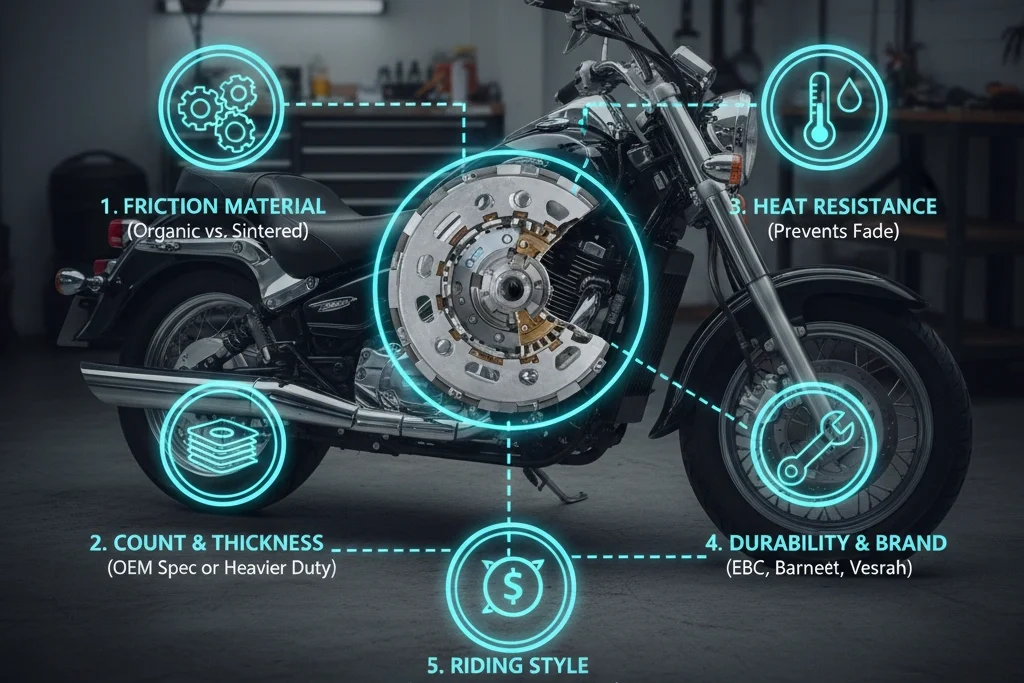
The model Suzuki Boulevard C50 is a reliable cruiser. To maintain a smooth flow of power between engine and asphalt, a good, healthy clutch system is necessary. The key to the performance of the clutch plates of the Suzuki Boulevard C50 that determines the smoothness of acceleration, the accuracy of the gear-shift, and the general mastery of the road.

When you notice slippage, rudder shifts, or are just planning on the maintenance, it is best to get the correct replacement clutch plates. This is our guide to take you through five key tips to discuss the most appropriate clutch plates to fit your C50. So that you can be back on the road, knowing how to control your motorcycle.

The use of Clutch Plates in your Suzuki Boulevard C50

Boulevard C50 has a wet multi-plate clutch, that is, the plates are submerged in engine oil. The friction and plates of steel in the system are swapped using a combination of compression by use of a spring engineered to compress. Pull the lever, and this pack disconnects to turn off all power to the gearbox. By letting it go, the plates lock together, moving engine torque to the back wheel.

Bad or ill-fitting plates will not fit well, and thus, there is a loss of power, rough gear changes and loss of fuel efficiency. Replacement of the correct set involves fixing the clutch, as well as enhancing body acceleration and ride comfort.

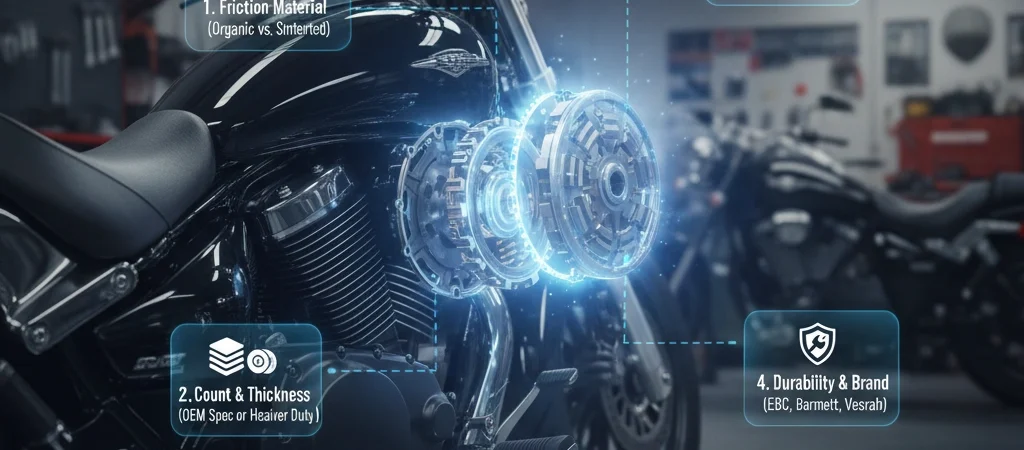
Tip 1: Friction Material to Your Riding Style

There are no equal exit plates. The friction material determines performance:

  • Organic: The conventional OEM option. It is easy to ride, and silent, as well as suited to regular riders or a commuter. It will not grind steel plates, whereas it is more durable in case of extreme use.
  • Kevlar: An improvement for touring or heavy riders. Kevlar fibres are more resistant to heat and offer more holding, which lasts longer when subjected to constant close force.
  • Carbon/ Ceramic: The performance legends. And they withstand spare pain in the face of hard riding, and fierce competition, which best becomes those who require the most of their Boulevard. Interaction might be more direct and abrupt.

The bottom line is to use organic to ride on smooth daily and use Kevlar or carbon when it comes to heavy touring or spirited riding. Check the assortment compatibility with Suzuki Boulevard C50 models 2005 through 2015.

Tip 2: Check the correct thickness and the number of plates

Precision is vital. The C50 in the hands was designed to be slim enough in terms of clutch thickness and number of plates. Breaking the rules is a side street disadvantage:

  • Too thin: The plates undergo sliding despite the proper tension of the springs.  
  • Excessively thick: Clutch pack does not completely disengage, resulting in a hard time dropping out of gear and creating gear crunching.

Install a set of friction and steel plates to match as a pair to wear out quickly and give the best possible service. Aftermarket kits of high quality can fit precisely the specifications of your C50.

Tip 3: Notice Spring Strength and Pressure Plate Condition

The use of springs to push plates together at the clutch relies on springs. In case you are already modding performance-wise or ride with two people (luggage) on the bike, consider heavy-duty springs. They augment clamp force in order to enhance engagement under high torque, but also augment lever pull effort.

A worn-out or weak spring is a widespread contributor to a fade in a clutch under a challenging ride of a lengthy approach. Check the pressure plate as you check it, and determine whether it is flat or not. A crooked plate never provides uniform loading, so its wear rapidly falls short even in the new plates.

Tip 4: Pay attention to Heat Resistance and Longevity

The greatest adversary of the clutch is heat. Traffic jams and lengthy motorway ascensions create heat temperatures that may plateau or distort the substandard ones. It leads to clutch fade, where the lever is pressed, but there is no power transmission to the steering wheel.

Kevlar and carbon plates are better at dissipating heat as opposed to organic compounds. The old plates look about, and find a groove, blueish discolouration, or glazed surface. All indications of common heat damage. JASO MA-rated motorcycle oil has to be used always; car oils/ low-friction oils have the additives that make them produce clutch slippage.

Tip 5: Choose between OEM, Aftermarket or Complete Kits

There are three key purchasing choices:

  • OEM Kits: Because of its direct sourcing by Suzuki, they are certain to be correctly fit and perform, but only commonly at a higher price.  
  • Aftermarket Plates: These are provided by the manufacturer specialities and are inexpensive, and may have better performance and durability due to the Kevlar materials.  
  • Full Clutch Kits: The most inclusive assembly with all friction plates, steel plates, springs, and occasionally it is accompanied by a new gasket and is a perfect choice where one is doing a complete clutch overhaul.

This is in the case you contact a flat that is specified for either 2005-2015 Boulevard C50. Use of trusted suppliers such as Aliwheels that deal with genuine, thoroughly tested components, which do not deal with substandard imports.

Longer Clutch Life Maintenance Tips

A good clutch is made simple with good workings:  

  • Don’t launch it aggressively or at high RPM.  
  • Give your bike a minute to warm up before you leave.  
  • Make sure the clutch cable is well-adjusted and oiled.  
  • Replace engines and filter routinely.

Why visit Aliwheels for Suzuki Boulevard Parts?  

Aliwheels realises that your cruiser is not just a machine, but it is an obsession. They distribute real, superior-performance aftermarket components of the Suzuki Boulevard. We allow you to select the component that fits your exact model. All parts of the clutch are high quality, completely compatible and are guaranteed by warranty, meaning that you can enjoy the perfection of the ride.

Conclusion  

The choice of the proper clutch plates will make your Boulevard C50 a better shifting, a sharper throttle body and one with increased service life. It is an investment in your fun on riding.

Ready for an upgrade? Check out Aliwheels’ collated setup of quality Suzuki clutch devices and performance-proven after-market upgrades.

(Commenting: OFF)

To keep your Suzuki running is to make sure you have good spare parts when you need them. Whether you are on a GSX-R, V-Strom, or Gixxer, you have the right bits on board to keep you on the road. Fortunately, Aliwheels ensures that it is easy and reasonable to buy reliable Suzuki Motorcycle Parts.

We will go through the most popular Suzuki parts you are likely to need, why they are necessary, and how they can save you a headache when you need them in a hurry.

Quick Access to Suzuki Motorcycle Parts

Motorcycles are fragile machines. Small details are significant to make things safe, smooth, and fun. When you have a bike, you can no longer afford to simply brush off a minor problem like you would with a car, a worn-out brake pad or faulty spark plug can really cause a safety issue. This is the reason why it is important to have spare parts ready without waiting.

Aliwheels understands that, so no more waiting months to get something you actually need. Bike to work or ride on the weekend; you can get to your suzuki motorcycle parts quickly and maintain it in good condition.

Most Common Suzuki Motorcycle Parts Riders Need

Suzuki Spark Plugs

Spark plugs may be small, but they are a huge deal to ensure your bike runs smoothly. With time they become worn out, causing misfires, poor fuel economy, and declining performance.

Why you need them: They provide you with a good spark to get you started and a consistent flow of power.

Replacement frequency: Every 8,000-12,000 miles, depending on your riding habits.

Trick: Have a spare in the saddlebag, particularly when you are on long rides.

Air Filters

Air filters ensure that the engine only breathes clean air. A dirty or clogged filter may rob horsepower and cause the bike to breath more gas.

The reason you should have them: They are able to allow clean air in and keep dust and grit out.

Replacement frequency: Once every 10,000 miles, or earlier in dusty environment.

Quick tip: Washable, reusable filters are an excellent low cost option to frequent riders.

Brake Pads and Rotors

The brakes of your bike are your safety net. Pads erode and rotors may acquire run-lengths when you do not watch them.

The reason you should have them: You should have them to have solid stopping power to be safe.

Replacement frequency: Pads should be replaced every 10,000 miles (depending on the style), rotors should be replaced every 20,000-30,000 miles.

Fast fact: To have balanced braking, change both sides together.

Suzuki Oil Filters

It is necessary to change oil, and the filter maintains the liquid clean.

The reason why you need them: It prevents the cycling of dirt and grime back into the engine.

Replacement frequency: Every oil change (typically 3,000-5,000 miles).

Quick trick: Have a few spares at hand, so that you never miss a change.

Motorcycle Sprockets and Chains

A slack or battered chain will cause the bike to feel jumpy or at worst knock over.

Why you need them: A good chain allows the power to pass directly to the wheels.

Replacement frequency: Chains every 20,000-30,000 miles; sprockets a little less frequently.

Quick tip: Have the chain oiled – it makes it last and it keeps it quiet.

Suzuki Batteries

A battery will wobble on life after a cold storage period.

Why you should have them: It supplies ignition, lights and electronics.

Replacement frequency: every 2-4 years, depending on the usage.

Pro tip: Purchase a battery tender when you leave the bike sitting months.

Clutch and Throttle Cables

Cables are tugged and pulled all the time – they will give way or break at some point.

Why you want them: You want to have good shifting and throttle to have a lively run.

Frequency of replacement: Check frequently; replace when frayed or sticky.

Fast fact: Keep them oily- this will help wear them out less and keep everything snappy.

Lights and Indicators

The eyes of your bike on the road are the headlights, tail lights and turn signals.

The reason why you need them: Visibility and communication are important to safety.

Replacement frequency: Replace as soon as the bulbs are dim or burnt.

Fast fact: Change to LED to live longer and shine brightly.

Mirrors and Levers

These minor sections may be broken after a slight fall or look-out.

Why you need them: They make you conscious and manage the bike.

Frequency of replacement: Every time you see a crack or a broken lever.

Quick tip: Have a spare brake or clutch lever in case of an emergency.

Why Should You Consider Aliwheels To Get Suzuki Motorcycle Parts?

The two issues that riders frequently encounter include availability and authenticity of Suzuki parts. Both problems are eliminated with Aliwheels.

  • Large inventory: Spark plugs, brake systems and more, all under one roof.
  • Rapid delivery: Wait no longer weeks to get a simple part.
  • Quality assurance: Original and counterfeit parts that are of the performance standard of Suzuki.
  • Affordability: Competitive pricing without affecting reliability.

Dont spend time searching parts in various stores, at Aliwheels you get every part on a single click. Place an order and keep your Suzuki on the road.

Conclusion

Rider understand that downtime is a nightmare, particularly when it is a small component that is holding you back. Also carry generic Suzuki parts such as spark plugs, filters, pads, and chains and you will avoid time wastage and keep your bike running. In the case of Aliwheels, these necessities can be easily, fast, and inexpensively located. You are either a commuter or an adventurer on weekends, but the most important thing is that you need to access the right parts fast to ensure safe and high-performance rides.

(Commenting: OFF)

Or login with your social account