


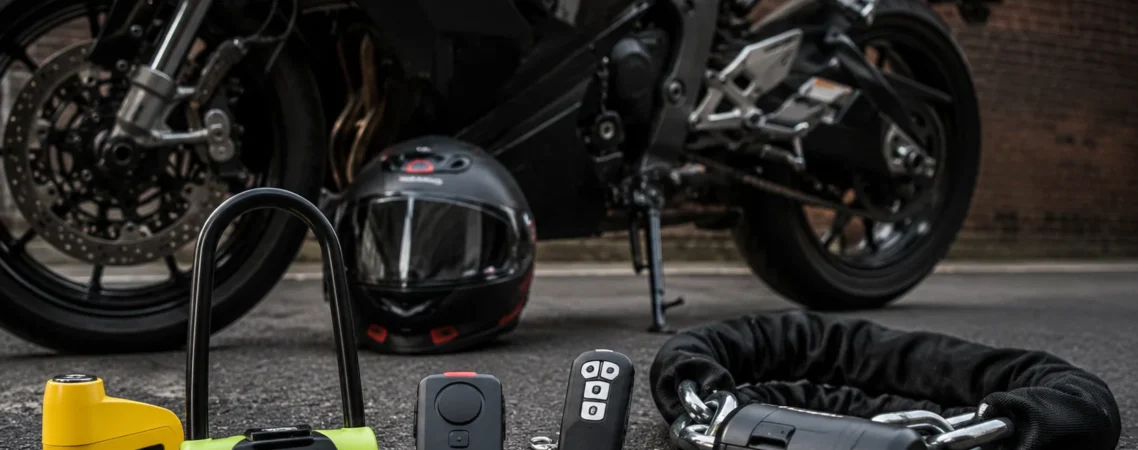
Motorcycle theft is a numbers game, and thieves play the odds. A bike with no visible security measure gets targeted first, every time. The good news is that a genuinely effective anti-theft setup doesn’t need to be complicated or expensive. Here’s a complete, practical breakdown of your options.
Motorcycle Security Deserves Real Attention
Unlike a car, a motorcycle can be physically lifted or wheeled away by two people in under a minute if it has no lock at all. That’s the uncomfortable reality behind motorcycle theft statistics, and it’s exactly why even a basic lock changes your risk profile dramatically. Thieves overwhelmingly target the easiest available option. Your job isn’t necessarily to make your bike theft-proof, since determined thieves with the right tools can eventually defeat almost anything. Your job is to make your bike a worse target than the one parked next to it.
Brake Lever and Handlebar Locks
This is the simplest, most affordable category, and it works by locking your front brake lever against the handlebar grip, preventing the bike from being rolled or pushed away, even if someone bypasses your ignition. Aliwheels stocks a handlebar anti-theft brake lock built specifically for this purpose, compatible with twist grip sizes from 27 to 38mm, making it a versatile fit across most street bikes, cruisers, and sport bikes.
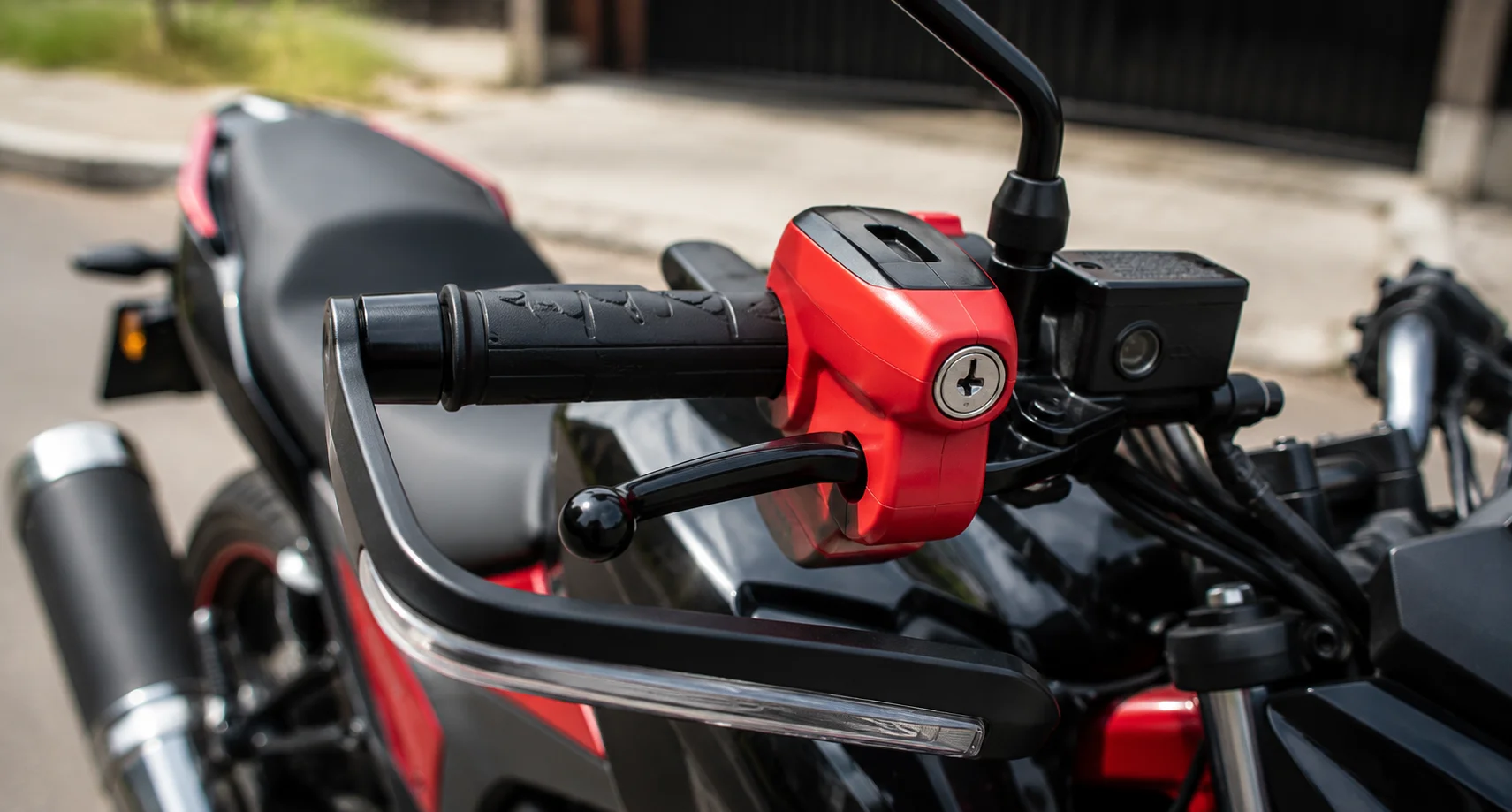
The real value of this lock type is convenience combined with genuine deterrence. It’s small enough to carry in a jacket pocket or under your seat, and it takes seconds to apply. For riders parking in higher-risk areas overnight or for extended periods, pairing a brake lever lock with a second security method gives you real layered protection rather than relying on a single point of failure.
Disc Locks
Disc locks clamp directly onto your brake rotor, physically preventing the wheel from turning. If a thief tries to push or roll the bike away, the wheel locks up immediately, which is loud, obvious, and stops the bike from moving more than a few inches. Quality disc locks include a reminder cable, a bright cord that hangs from the lock to your handlebar, specifically so you don’t forget it’s installed and ride off with it still attached, which is a genuinely common mistake among new lock owners.
Disc locks vary significantly in build quality. Cheaper models use softer metal pins that can be cut with basic bolt cutters in under a minute. Higher-end disc locks use hardened steel and a design that resists standard cutting tools, and this is one category where spending more genuinely buys you more real-world security, not just a bigger price tag.
Chain Locks
For riders who need serious security, especially for overnight parking in public areas or extended trips, heavy-duty chain locks remain one of the most effective options available. A quality motorcycle chain lock uses hardened steel links thick enough to resist bolt cutters and angle grinders for a meaningful amount of time, combined with a shrouded lock body that protects against pick attacks and drilling.
Brands like Kryptonite built their reputation specifically in this category, originally for bicycles and later expanded into motorcycle-rated products, and the name still carries weight among riders comparing chain lock options today. When shopping for a chain lock, weight is a real tradeoff to consider. The heaviest, most cut-resistant chains are also the most cumbersome to carry, so match your choice to how often you’ll actually need to transport and use it versus leaving it installed at a fixed parking location.
Alarm Systems
Physical locks stop or slow down a theft in progress. Alarm systems add a different layer entirely: they alert you and anyone nearby the moment someone tampers with your bike. Modern motorcycle alarms combine motion and tilt sensors to detect lifting or tipping. Triggering these sensors activates a loud siren. This sudden noise draws immediate attention and scares off thieves quickly.
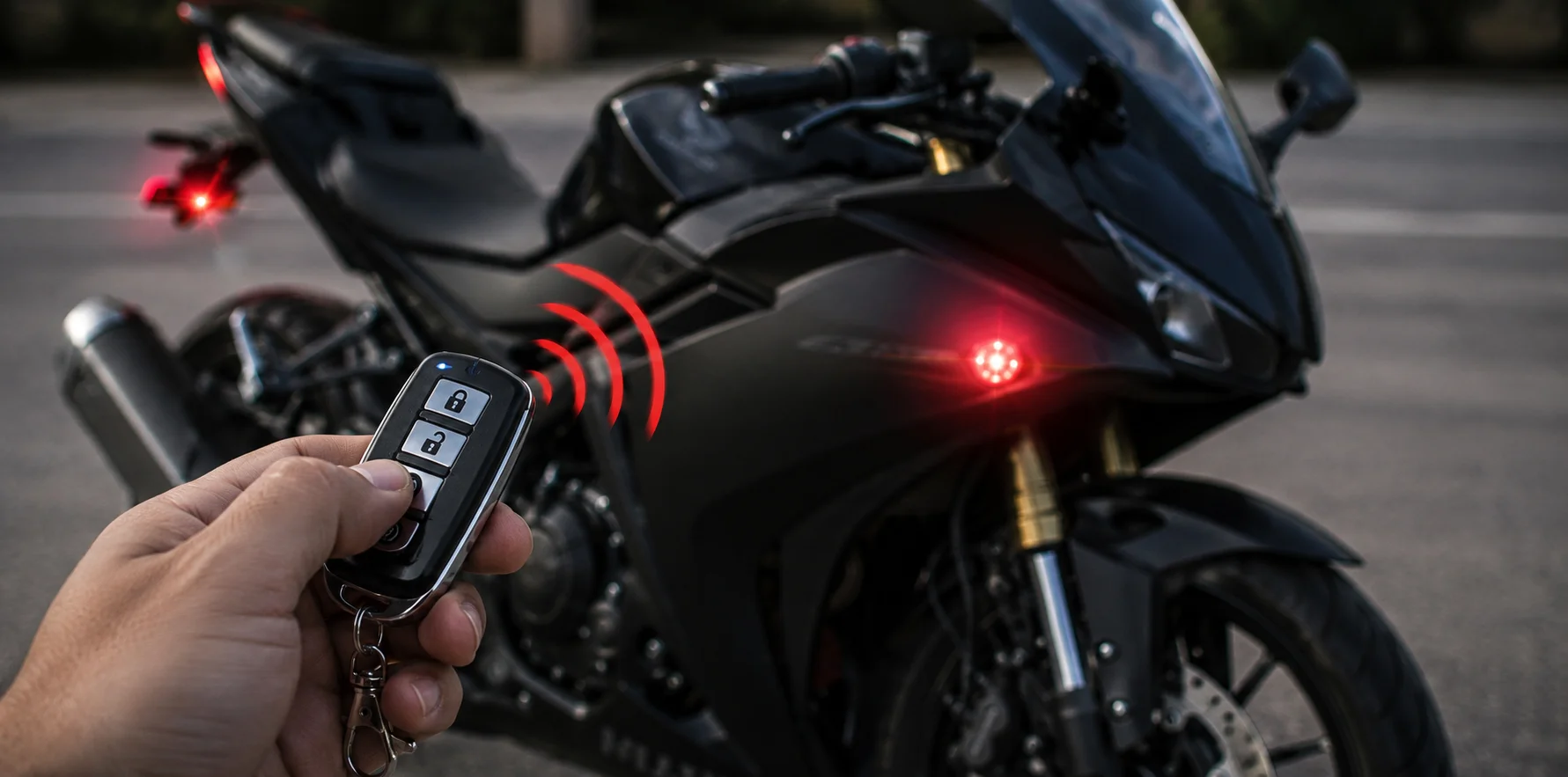
Some alarm systems integrate directly with your bike’s ignition system, adding an immobilizer function that prevents the engine from starting even if someone manages to hotwire the ignition. This combination, audible deterrent plus functional immobilization, makes alarm systems a strong complement to physical locks rather than a replacement for them.
GPS Trackers: The Modern Addition
While not a lock in the traditional sense, GPS tracking devices have become an increasingly common part of a complete anti-theft setup. If a determined thief does manage to get past your locks and alarm, a hidden GPS tracker gives you and law enforcement a real chance at recovery, something that’s simply impossible once a bike disappears without one. We’ll cover this category in more depth in a dedicated guide, since it deserves its own detailed breakdown of hardwired versus battery-powered options.
Comparing Your Real Options
| Lock Type | Best For | Typical Weakness |
| Brake lever lock | Quick, portable daily security | Doesn’t stop determined theft attempts alone |
| Disc lock | Preventing the bike from rolling away | Cheap models defeated by bolt cutters |
| Chain lock | Overnight and extended parking | Heaviest option to carry and store |
| Alarm system | Immediate deterrence and attention | Requires nearby people to actually respond |
| GPS tracker | Recovery after theft occurs | Doesn’t prevent the theft itself |
Most experienced riders don’t rely on just one category. Layering a brake lever lock or disc lock with an alarm system gives you both physical resistance and active deterrence, covering the gap that any single method leaves open.
How Anti-Theft Locks Work?
At the mechanical level, most motorcycle locks rely on one of two core principles: preventing movement entirely, as disc locks and brake lever locks do by physically blocking a critical moving part, or requiring significant time and specialized tools to defeat, as quality chain locks do through hardened materials and shrouded lock bodies that resist common cutting and prying tools.
The keyed cylinder itself matters too. Thieves can easily pick or bump cheaper pin-tumbler locks. Higher-quality locks use disc-detainer or restricted keyway designs that are significantly harder to pick, even for someone with lock-picking experience.
What to Do If You Forget Your Lock Is Installed?
This happens more often than riders like to admit, especially with disc locks that aren’t immediately visible from the riding position. If you realize the disc lock is still on before rolling off, you caught it just in time. Simply stop, unlock it properly with your key, and remove it before continuing. The real danger is riding off without noticing at all, which can cause the wheel to lock suddenly at speed, a genuinely dangerous situation. This is exactly why quality disc locks include a bright reminder cable, so always use one, and make a habit of visually checking your front wheel before pulling away from any parking spot.
Buying Guide: New, Used, and Where to Shop?
Motorcycle anti-theft locks are widely available across major retailers, including general marketplaces, powersports specialty retailers, and hardware stores. Pricing varies considerably based on build quality, with basic brake lever locks sitting at the affordable end and heavy-duty chain locks with hardened steel commanding a higher price for genuinely better resistance.
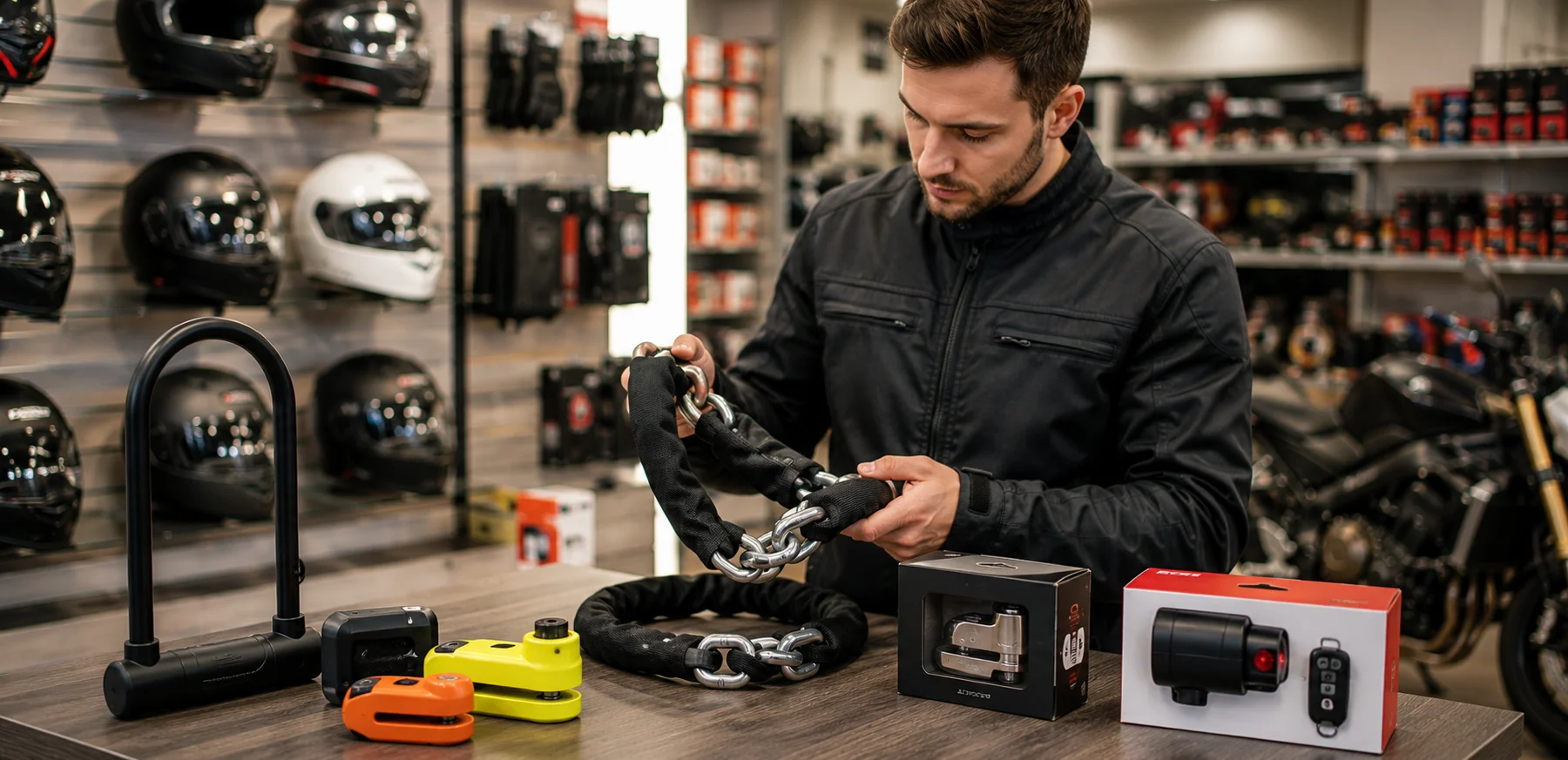
Avoid buying used security locks for your motorcycle. Unlike other motorcycle parts where used components can offer real savings, a lock’s entire value depends on its structural integrity and the reliability of its locking mechanism, both of which are difficult to verify secondhand and both of which matter enormously if you’re actually counting on this product to protect your bike.
Protecting Your Motorcycle Beyond Just Locks
A complete theft-prevention approach goes beyond the hardware itself. Park in well-lit, visible areas whenever possible. Thieves prefer working in the dark where no one can see them. When available, use a designated motorcycle parking area rather than a random curbside spot, since these areas often have better sightlines and foot traffic. If you’re storing your bike for an extended period, combining a chain lock secured to a fixed, immovable object with an active alarm system gives you meaningfully more protection than either measure alone.
Aliwheels has the Motorcycle Handlebar Lock Anti-Theft Brake Level Lock, compatible with twist grip sizes from 27 to 38mm, giving you an affordable, portable first layer of security. Browse our full Motorcycle Locks & Chains collection for additional chain lock and disc lock options as you build out a complete anti-theft setup.
Browse our full Locks & Chains collection for anti-theft options across every riding style, or check our Motorcycle Alarms category to pair a lock with active alarm protection.
Frequently Asked Questions
What is the best type of motorcycle anti-theft lock?
There’s no single best option since each type addresses a different risk. Brake lever and disc locks work well for quick, everyday security, while chain locks offer the strongest protection for overnight or extended parking. Combining categories gives you the most complete protection.
Do wheel locks actually prevent motorcycle theft?
These locks significantly reduce theft by making your bike a harder target. However, determined thieves with the right tools can still break through any lock. The goal is deterrence and delay, not absolute prevention.
How do I protect my motorcycle from theft overall?
Combine a physical lock, such as a disc lock or chain lock, with visible parking in well-lit areas, and consider an alarm system or GPS tracker for a layered approach that covers prevention, deterrence, and recovery.
What does the anti-theft lock symbol mean?
This symbol indicates your motorcycle’s security system status. A flashing light confirms the system is active once you park and lock the bike.
Is a heavy-duty chain lock better than a disc lock?
Chain locks generally offer stronger resistance against determined theft attempts, particularly for overnight parking, but they’re heavier and less convenient for quick daily use. Disc locks are more portable but best paired with a second security layer for higher-risk situations.
How do I remove a disc lock if I forget it’s installed?
Stop the bike immediately if you notice it before riding away, and then unlock it normally with your key. Always check your front wheel visually before pulling away to avoid riding off with it still attached.
Browse our full Motorcycle Security collection for anti-theft options across every riding style.