


Aliwheels is a leading motorcycle parts supplier offering free shipping anywhere in the world on orders above $300. Please note that all of our motorcycle parts and accessories are certified and tested. With more than 10,000* products to choose from this is your one place to get the motorcycle part you need. Browse our vast inventory of motorcycle radiators, fairings, clutch plates, headlights, chains, and sprockets.

Free Shipping over $300

Support 24/7

Secure Payments

Hot Offers

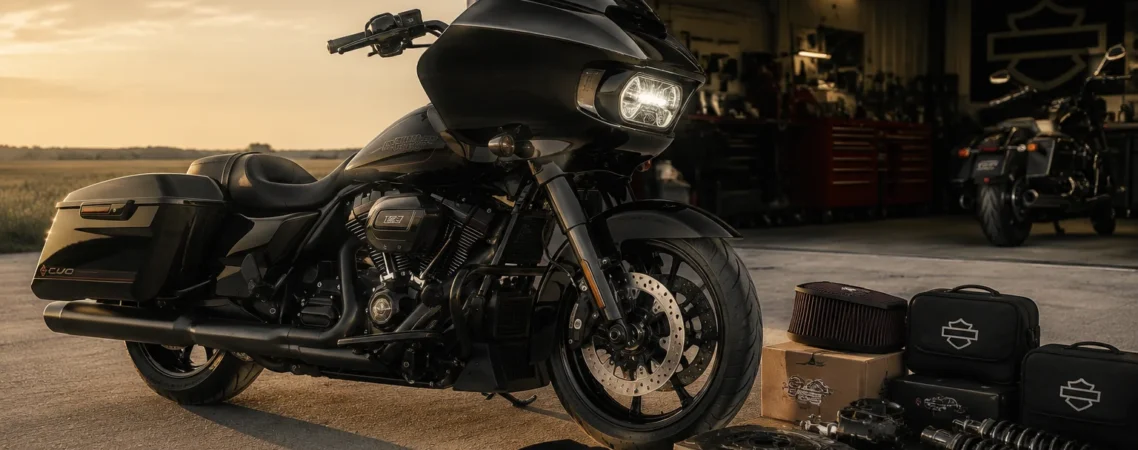
127 horsepower at 4,900 rpm. 145 lb-ft of torque at 4,000 rpm. $44,999 MSRP, plus $875 destination charge for the 2025 model. That makes the CVO Road Glide ST the most powerful production pushrod V-twin Harley-Davidson has ever built, and it’s not close.

Road Glide Vs. CVO Road Glide Vs. CVO Road Glide ST: Full Comparison

FeatureStandard Road GlideCVO Road GlideCVO Road Glide ST
EngineMilwaukee-Eight 117, 1923ccMilwaukee-Eight 121, 1977ccMilwaukee-Eight 121 High Output, 1977cc
Horsepower107 hp115 hp127 hp at 4,900 rpm
TorqueStandard tuneStandard 121 tune145 lb-ft at 4,000 rpm
Rev limitStandardStandardElevated to 5,900 rpm
IntakeStandardStandardHeavy Breather intake
ExhaustStandard dual pipeStandard CVO tuning2-1-2 dual pipes, titanium-capped mufflers
Special materialsStandard bodyworkSome premium finishesForged carbon fiber fender, console, seat cowl
SuspensionStandardCVO tuningRemote-reservoir, fully adjustable
Approx. priceAround $27,495 (UK reference)Around $40,495 (UK reference)$44,999 US MSRP

This table is the single most useful thing on this page if you’re trying to understand what you’re actually paying for as you move up the Road Glide lineup. The jump from standard Road Glide to CVO buys you displacement and finish. The jump from CVO to CVO ST buys you a genuinely different engine tune, race-derived intake and exhaust, and track-informed suspension.

What’s Different Under the Bodywork

The standard High Output tune skips Variable Valve Timing entirely, a deliberate choice for maximum top-end power and a two-pound weight savings over the VVT-equipped standard 121. This is the same design philosophy Harley’s Factory Race Team uses on the actual King of the Baggers competition bikes that inspired this model.
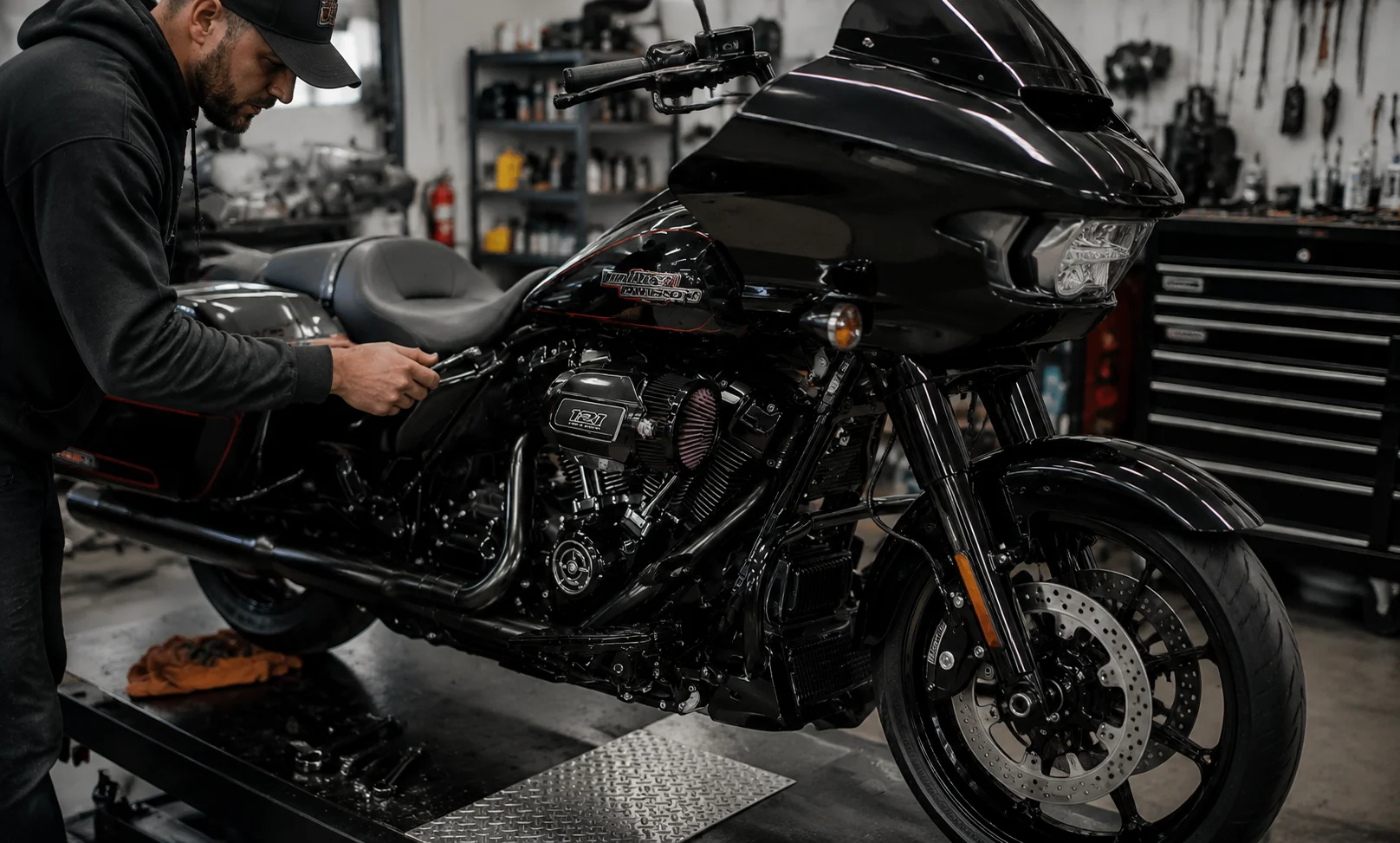
CVO Road Glide ST engine inspection

The Heavy Breather intake and Screamin’ Eagle exhaust components aren’t cosmetic. They’re functional performance parts that genuinely change how the engine breathes under hard acceleration, which is exactly why the rev limit climbs to 5,900 rpm compared to the standard Road Glide’s more conservative redline.

Touring Parts Crossover: Parts That Fit From the Road Glide Family

Here’s the practical question every CVO Road Glide ST owner eventually asks. Since this bike shares its core touring platform, saddlebags, fairing structure, and general chassis architecture with the rest of the Road Glide lineup, meaningful crossover exists for owners looking to source parts today rather than waiting on ST-specific listings.

Saddlebag hardware, general touring electrical components, and certain fairing mounting hardware often follow shared specifications across the Road Glide family, standard, CVO, and ST alike. The engine-specific components, exhaust, intake, and anything tied to the High Output tune, are unique to the ST and won’t cross over from a standard Road Glide or even a non-ST CVO model.

Performance Parts and Wear

Harley built this bike’s reputation on the MotoAmerica King of the Baggers series, and that racing pedigree tells you exactly what to expect for wear patterns if you ride the ST the way it’s designed to be ridden.

Brake components see faster wear under hard, repeated braking, the same braking style that defines bagger racing. If you’re using the ST’s performance rather than just cruising, budget for more frequent pad inspection than a standard touring rider would need.
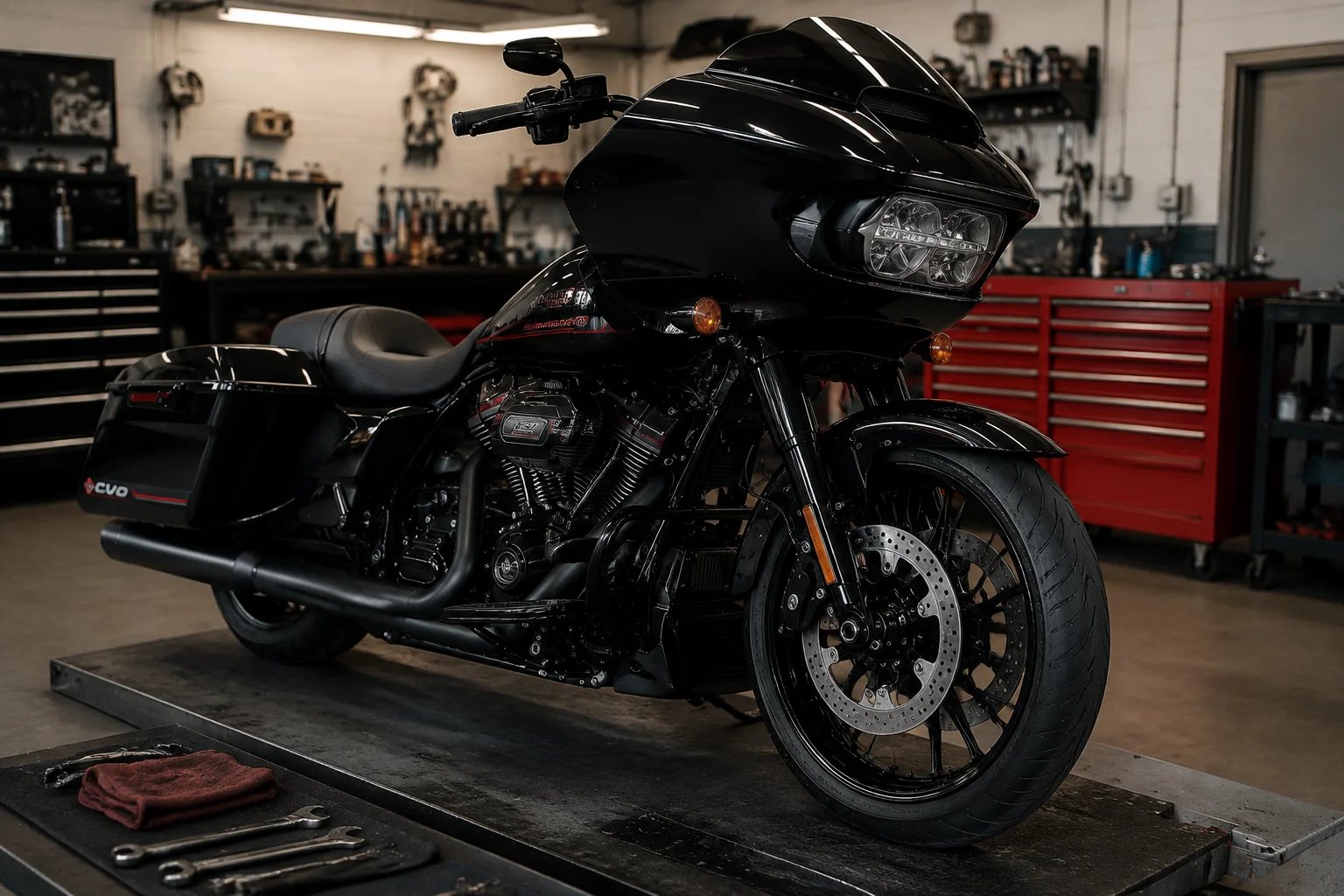
CVO Road Glide ST performance parts wear

Suspension components, particularly the remote-reservoir units, benefit from more frequent fluid and seal checks under aggressive use than Harley’s standard touring suspension setup, since these components are tuned for a wider performance range and see more work when ridden hard.

Clutch and drivetrain components under the High Output engine’s increased torque output see more stress than the standard Milwaukee-Eight 117 in daily aggressive use, particularly for riders who explore the elevated 5,900 rpm rev range regularly.

Stocking Up Ahead of the Curve

Aliwheels has the more extensive Road Glide and CVO range of Harley Davidson Parts already covered, so CVO Road Glide ST owners have real, usable options today for shared touring hardware, saddlebags, general electrical components and fairing hardware. As performance parts specific to the High Output become available across the industry, we’re expanding our catalog to include confirmed fitment for this exact engine and chassis combination.

Frequently Asked Questions

What is the Harley-Davidson CVO Road Glide ST price?

US MSRP is $44,999, plus an $875 destination charge for the 2025 model year.

How much horsepower does the CVO Road Glide ST have?

127 horsepower at 4,900 rpm, with 145 lb-ft of torque at 4,000 rpm, the highest output ever from a production Harley-Davidson pushrod V-twin.

What engine does the CVO Road Glide ST use?

The Milwaukee-Eight 121 High Output, a 1977cc pushrod V-twin tuned specifically for this model with a Heavy Breather intake and elevated rev limit.

Do standard Road Glide parts fit the CVO Road Glide ST?

General touring hardware, saddlebags, some fairing mounts, and electrical components often cross over, since the platform shares core architecture. Engine, exhaust, and intake components specific to the High Output tune do not cross over.

What is the difference between the CVO Road Glide and the CVO Road Glide ST?

The standard CVO Road Glide uses the Milwaukee-Eight 121 at 115 hp. The ST uses a High Output version of the same displacement, tuned for 127 hp with a higher rev limit, upgraded intake, and race-derived exhaust.

Is the CVO Road Glide ST hard on parts if ridden aggressively?

Yes. Brakes, suspension seals, and drivetrain components all see faster wear under the kind of hard, repeated riding this bike is actually built for.

Browse the full Harley-Davidson Parts collection at Aliwheels for components across the Road Glide, CVO, and touring lineup.
(Commenting: OFF)

R9 Price, Power and Top Speed

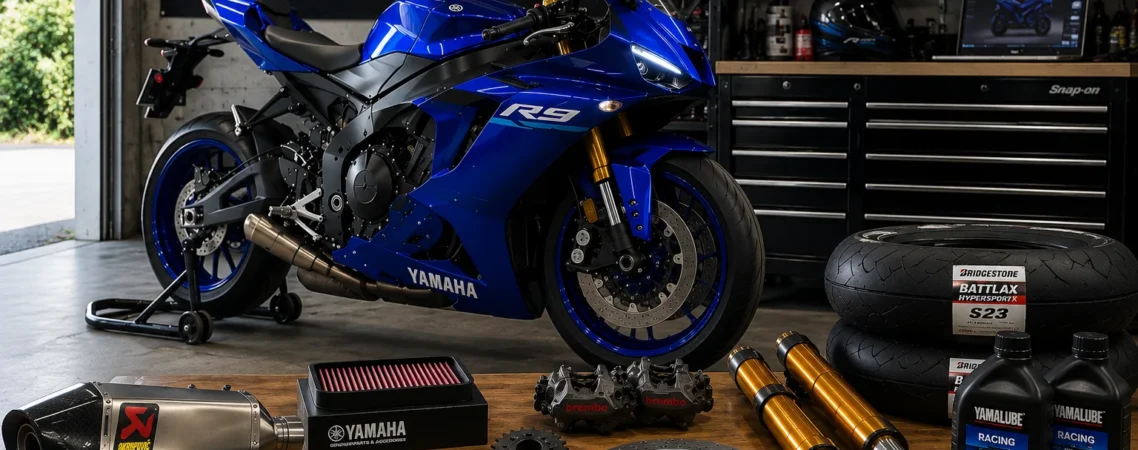
If you’re coming here from a specs search, here’s the quick version before we get into the parts. The 2026 Yamaha YZF-R9 is priced from $12,499. It’s powered by the 890cc CP3 engine that produces 117.3 hp and 93 Nm of torque. Yamaha has not published an official top speed, but based on the power figures and gearing, most riders and reviewers estimate somewhere around 150-160 mph. A 2026 70th Anniversary Edition is also available in the classic white and red speed block livery as well as standard colours, including a black option many riders specifically look for.

Now, here’s what actually matters once you own one.

Why New Yamaha YZF-R9 Owners Are Already Searching for Parts?

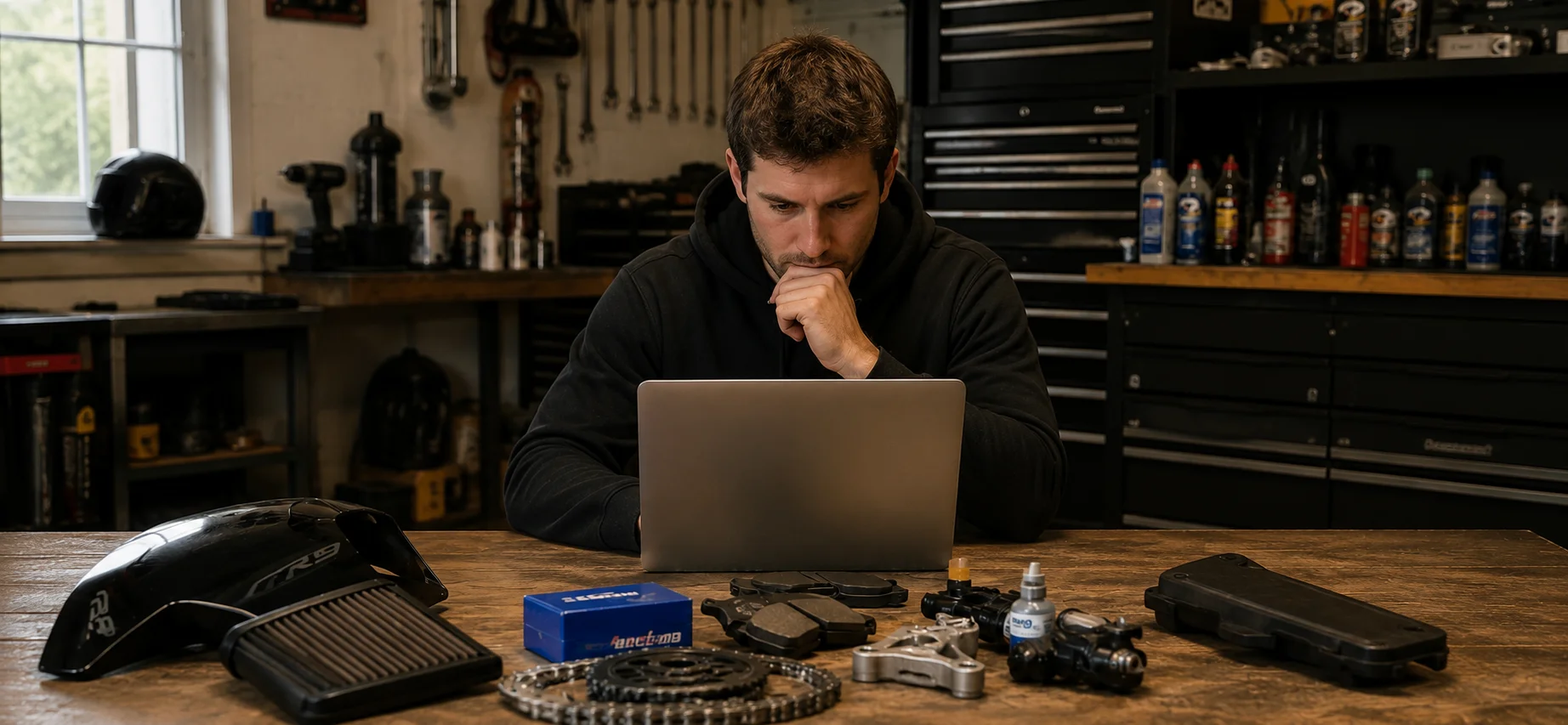
If you bought a 2025 or 2026 YZF-R9 and looked for aftermarket parts, you probably drew a blank. That’s not a bug in your search. Yamaha only unveiled the R9 in October 2024, and aftermarket manufacturers typically take 12 to 18 months after a new release to fully tool up and stock fitment-confirmed parts. You’re an early adopter, and early adopters need a smarter sourcing strategy than “wait.”

Yamaha R9 owner searching for parts

The CP3 Engine Is Your Shortcut

Here’s what most riders miss entirely. The R9 doesn’t use a brand new engine. It runs the same 890cc CP3 triple found in the Yamaha MT-09 and XSR900, tuned differently for supersport delivery but built on identical core architecture. That means real parts crossover already exists today, even though R9-badged bodywork mostly doesn’t.

Certain internal engine components, some electrical parts like sensors and voltage regulators, and select drivetrain hardware follow matching specifications across all three bikes. Before assuming a part isn’t available for your R9, check MT-09 and XSR900 listings first. This single habit will save you money and downtime during the R9’s first couple of years on the market.

What Will Never Cross Over, No Matter How Long You Wait?

Be realistic here so you don’t waste time hunting. The R9’s Deltabox aluminum frame is dedicated supersport architecture, completely different from the MT-09’s naked-bike chassis. That means suspension components, frame-mounted hardware, and every piece of bodywork are R9-specific and won’t ever match a shared-engine sibling.

Brakes deserve the same caution. The R9 runs dual 320mm front discs with ABS, quality componentry, but caliper and rotor specifications are tied to this exact chassis. Don’t assume MT-09 brake parts bolt straight on, even though the engine underneath is identical.

Track Days Change What Wears Out First

Yamaha built the R9 to specifically handle track duty, and if you are actually using that capability, your maintenance schedule looks different from a rider that just commutes.

Clutch components see real stress under aggressive, repeated hard acceleration and downshifting. The R9’s assist and slipper clutch design shares its underlying philosophy with other CP3 bikes, so watch clutch feel closely over your first several thousand track miles.

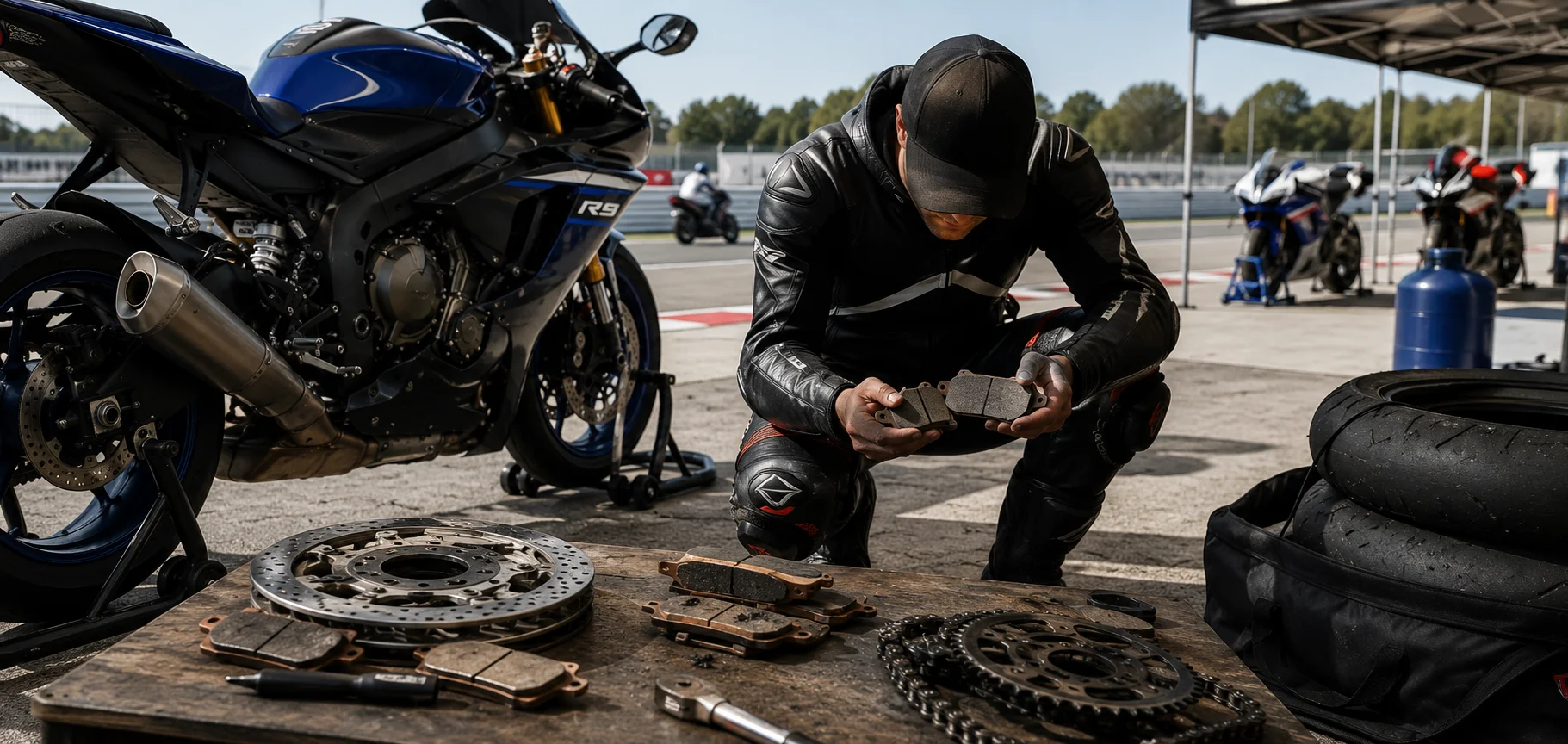
Yamaha R9 track day wear

Brake pads wear dramatically faster under track conditions than street-only riding. If you’re booking track days regularly, budget for pad replacement well ahead of a typical street-riding schedule, sometimes every one to two track days depending on how hard you’re braking into corners.

Chain and sprocket wear increases, too. Steady commuting will never stress the drivetrain with as much load-cycling as hard accelerations and hard braking.

Street Riders See a Different Pattern

If your R9 stays mostly on the street, your priorities shift. Fork seals and suspension oil still need attention, since even spirited street riding stresses the 43mm KYB inverted fork over time, but the timeline stretches longer than track use, typically two to three years before you need to think about it.

Tire wear becomes your highest recurring cost on a street-ridden R9. The R9’s performance invites hard cornering even on public roads, and sport-compound tires simply don’t last as long as touring rubber. Budget accordingly if you’re riding enthusiastically rather than commuting gently.

Building Your First-Year Parts Budget

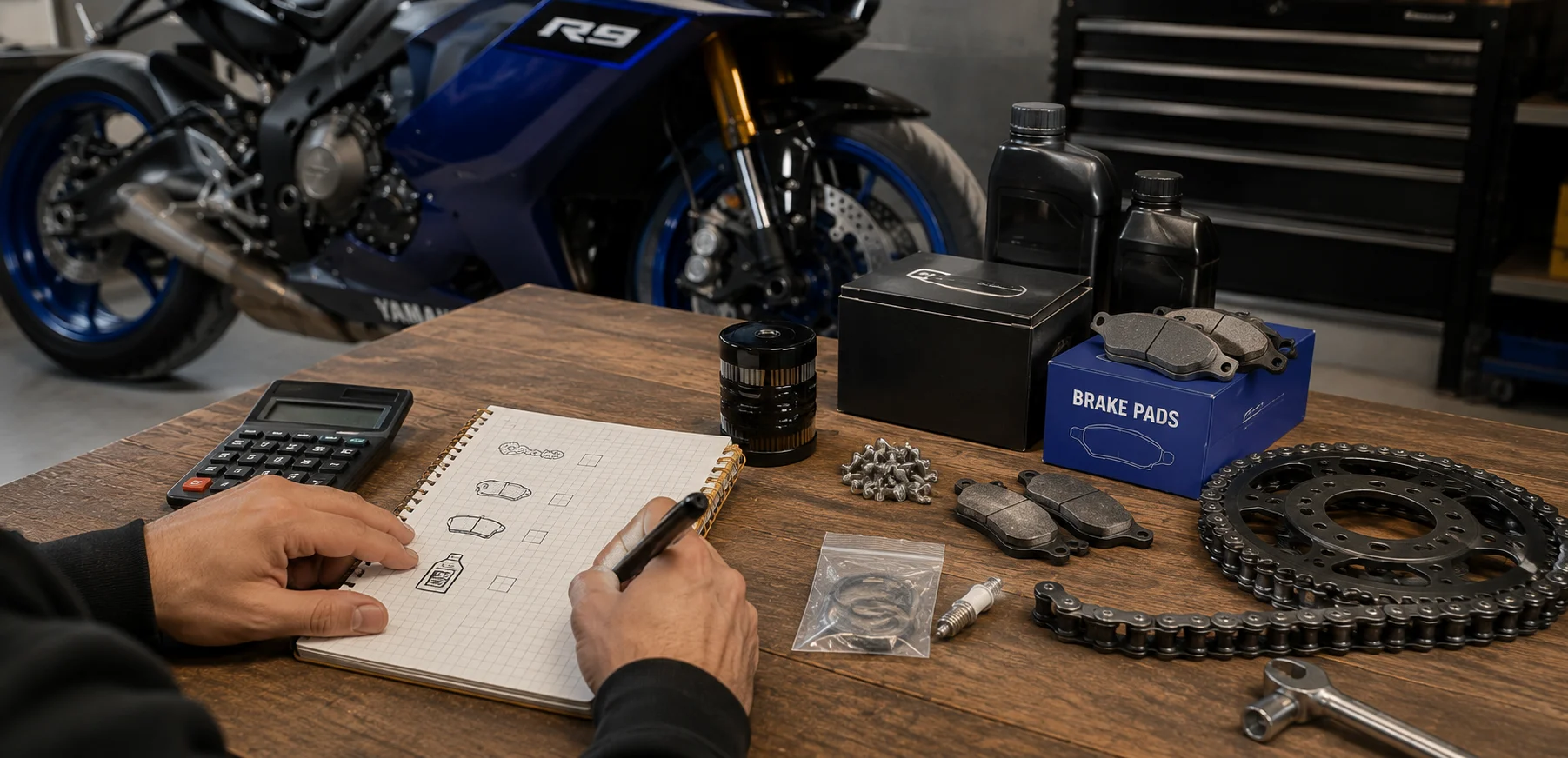
Start with consumables, since these follow standard sizing conventions and typically become available before complex fitment-specific parts do. Chain and sprockets, brake pads, and fluids should top your list. These are usually among the very first parts any manufacturer stocks for a brand-new platform, well ahead of bodywork or chassis-specific components.

Yamaha R9 first-year parts budget

For anything tied to the engine itself, check CP3-platform crossover before assuming you’re stuck waiting on R9-labeled stock specifically. This one habit alone can solve half your early parts headaches.

Colors, Trims and What They Mean Down the Road

Yamaha offers the R9 across its standard performance colorways, plus a black variant many owners specifically seek out, and the 2026 70th Anniversary Edition with its distinctive white and red speed block styling. Beyond looks, trim choice matters for one practical reason: special editions like the Anniversary model sometimes carry unique badging or minor cosmetic parts that may lag even further behind in aftermarket availability than the standard colorway, since manufacturers prioritize the highest-volume trim first.

What Aliwheels Stocks Today

Our Yamaha motorcycle parts collection at Aliwheels already covers the MT-09, XSR900, and the full R-Series lineup including the R6 and R7. As R9-specific fitment expands industry-wide, we’re actively adding confirmed listings to this catalog. If you’re an early R9 owner, checking back regularly beats waiting for a single announcement.

Frequently Asked Questions

What is the Yamaha YZF-R9 top speed?

Yamaha hasn’t released an official number. Based on power output and gearing, riders generally estimate 150 to 160 mph depending on conditions.

What is the Yamaha YZF-R9 price for 2026?

The base model starts at $12,499. The 70th Anniversary Edition and other special trims carry a premium over that price.

How much horsepower does the Yamaha YZF-R9 have?

117.3 hp at 10,000 rpm, with 93 Nm of torque, about 69 lb-ft, peaking at 7,000 rpm.

Do MT-09 parts fit the Yamaha YZF-R9?

Some do, particularly certain engine internals and electrical components, since both share the CP3 890cc engine. Bodywork and suspension do not cross over, since the chassis is completely different.

Is the Yamaha YZF-R9 available in black?

Yes, a black colorway is available alongside Yamaha’s standard performance colors and the 70th Anniversary livery.

What R9 parts should I stock up on early?

Chain, sprockets, brake pads, and fluids, since these follow standard specifications and typically arrive before more complex fitment-specific parts.

Does track riding wear out R9 parts faster than street riding?

Yes, significantly. Brakes, clutch, and chain all see accelerated wear under track conditions compared to street-only use.

Browse our full Yamaha motorcycle parts collection for fitment-matched components across the CP3 platform and the full R-Series lineup.

(Commenting: OFF)

The Royal Enfield Bear 650 is available in a variety of trims, with prices ranging from $6499 to $8788 depending on the colour and trim. The Golden Shadow and Two Four Nine are the premium variants. It gets the same 648cc parallel-twin engine from the Interceptor 650, producing 47 hp and 56.5 Nm of torque. The curb weight is 476 pounds, making it one of the lighter bikes in Royal Enfield’s 650 lineup. While Royal Enfield has not published an official top speed, expect somewhere in the 100 to 110 mph range based on the engine’s output.

That’s the snapshot. Here’s what it actually costs to keep one running well.

Built on the Interceptor: What That Means

The single most important thing to know about owning a Bear 650 is that you’re not buying an entirely new engine platform. Royal Enfield took the proven 648cc twin from the Interceptor 650, kept the same 270-degree crankshaft character, and built the Bear around it. This isn’t a marketing detail. It’s the reason parts sourcing for your Bear is far easier than it would be for a genuinely new engine design.

Years of established aftermarket development already exist around the Interceptor and the broader 650 family, including the Continental GT, Super Meteor, and Shotgun. Clutch plates, gaskets, and internal engine hardware tied to that shared 648cc architecture generally carry the same specifications across every bike in that family, Bear included.

Scrambler Riding Wears Different Parts Than You Think

Here’s where the Bear genuinely diverges from its Interceptor sibling, and where new owners get caught off guard. Royal Enfield built real off-road capability into this bike: longer suspension travel, more ground clearance, dual-sport MRF Nylorex tires. If you actually use that capability, your wear pattern looks nothing like a street-only Interceptor rider’s.

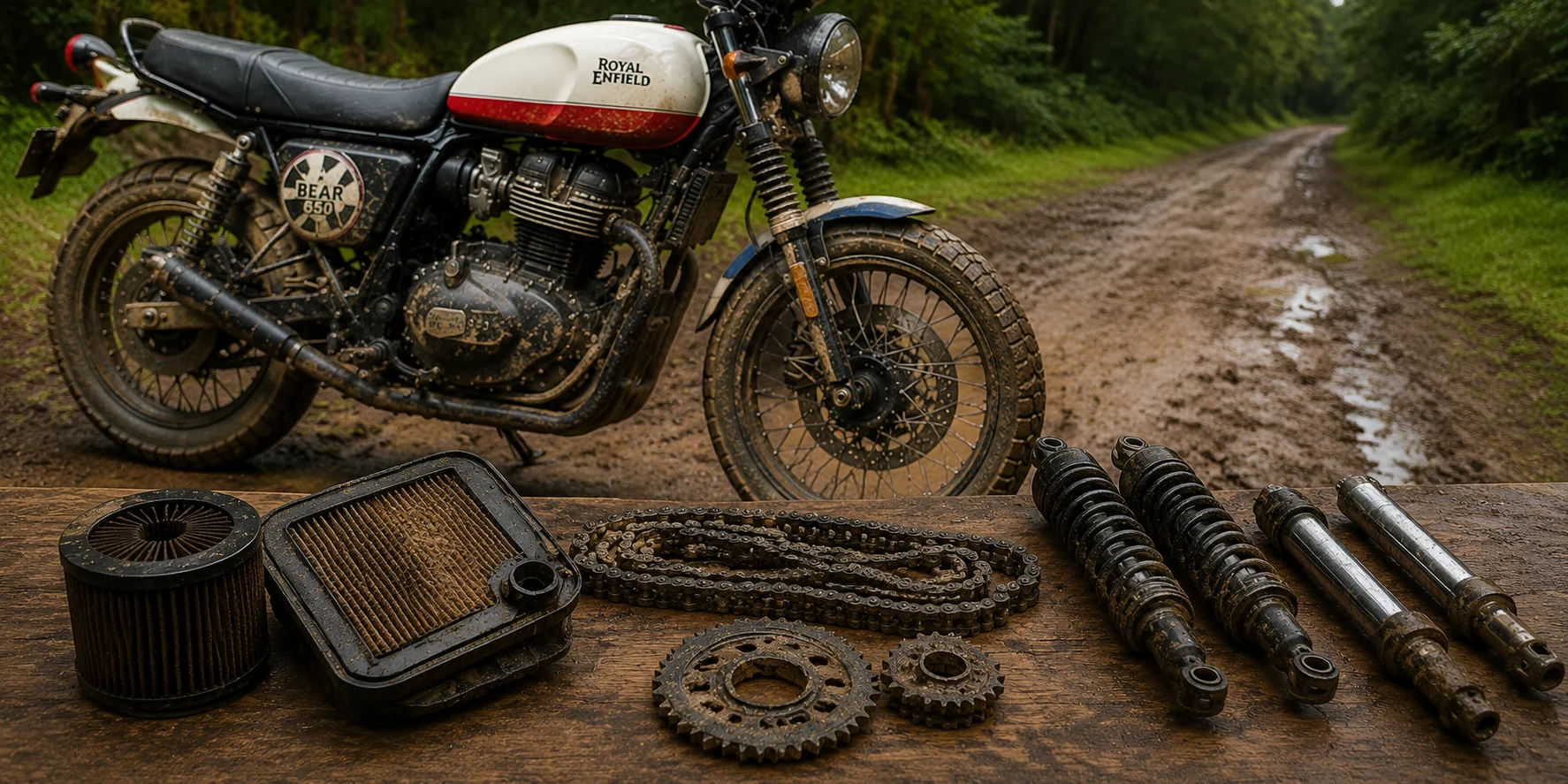
Bear 650 worn parts

Air filters clog faster. Dust and debris from gravel roads and light trails pull more contaminants into the intake than clean pavement ever will. Check and replace your air filter more often than the standard service interval suggests if you’re riding off-road regularly.

Chains wear faster too. Grit works its way into chain links far more aggressively on dirt and gravel than on tarmac. Inspect and lubricate more frequently than you would on a purely street-ridden bike, and expect to replace sprockets sooner.

Suspension: The Bear’s Biggest Long-Term Cost

This is the expense most new Bear owners don’t see coming. The inverted 43mm fork and cantilevered rear shocks that give the Bear its scrambler capability also take real abuse if you’re riding technical terrain regularly. Fork seals wear down from repeated impacts on rough surfaces, and once seals fail, oil leaks follow, which affects damping and, eventually, handling confidence.

Riders who keep the Bear mostly on pavement will see this cost stretch out over several years. Riders who genuinely use the off-road capability Royal Enfield built in should budget for suspension seal service noticeably sooner, sometimes within the first year or two of committed trail use.

Terrain Checklist: What to Inspect After Off-Road Rides

Make this a habit after any ride involving gravel, dirt, or uneven terrain. Check your chain for grit buildup and re-lubricate if needed. Inspect your air filter for visible dust accumulation. Look over your fork seals for any sign of oil weeping. Check spoke tension on your wheels, since washboard roads and rough trails can loosen spokes over time in a way smooth pavement never does.

None of these checks take more than a few minutes, but skipping them is exactly how small wear becomes an expensive repair.

Comparing Parts Cost: Bear vs Interceptor Ownership

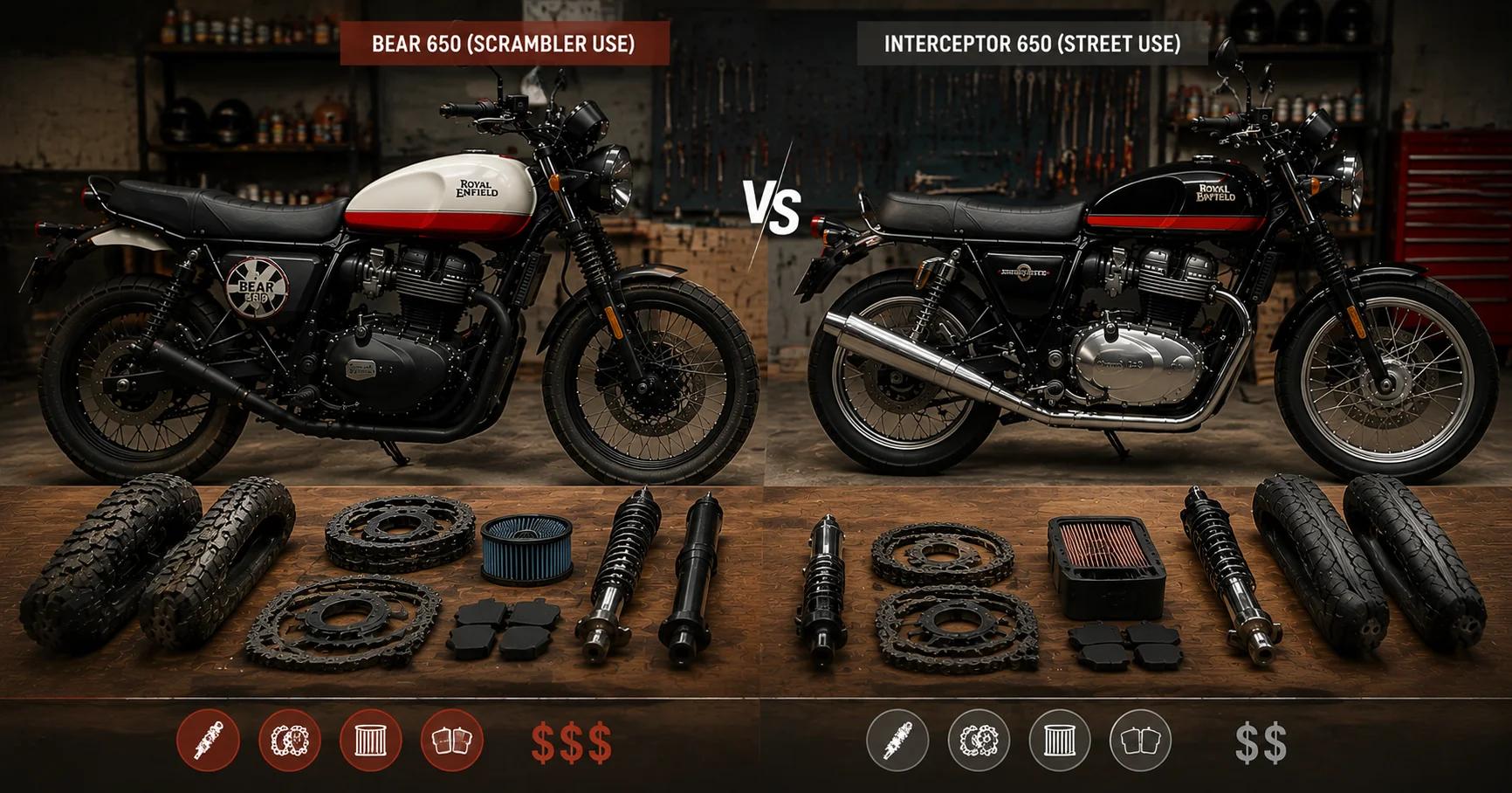
If you’re cross-shopping the Bear against a standard Interceptor 650, understand this tradeoff clearly. Engine-related maintenance costs stay roughly comparable between the two, since they share the same core platform. Where costs diverge is suspension and off-road-specific wear items. An Interceptor ridden purely on pavement will see suspension components last considerably longer than a Bear used the way Royal Enfield designed it to be used.

This isn’t a reason to avoid the Bear. It’s simply the honest tradeoff for genuine scrambler capability instead of pure street-bike efficiency.

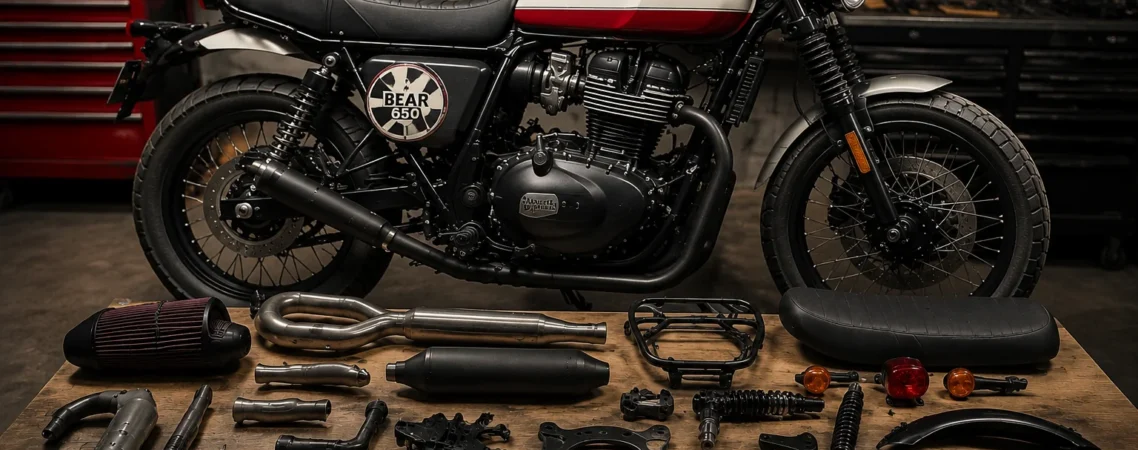
Bear 650 vs Interceptor parts cost comparison

Mileage and Fuel Economy

Royal Enfield’s 650 twin platform is known for reasonable fuel efficiency given its performance, and the Bear follows that same pattern closely, since it shares the identical engine tune philosophy with minor differences in exhaust configuration. Riders researching mileage figures for trip planning should expect numbers broadly in line with other 650-platform Royal Enfields, though exact figures vary by riding style and terrain.

What Aliwheels Stocks?

Our Royal Enfield parts collection at Aliwheels already covers the Interceptor, Classic, Meteor, and Himalayan platforms, giving Bear 650 owners genuine, usable crossover options for shared engine and electrical components right now. As Bear-specific suspension, bodywork, and scrambler parts expand industry-wide, we’re adding fitment-confirmed listings for this exact model as they become available.

Frequently Asked Questions

What is the Royal Enfield Bear 650 price?

US pricing runs from roughly $6,499 to $8,788 depending on color and trim, with Golden Shadow and Two Four Nine variants at the higher end.

What is the Royal Enfield Bear 650 top speed?

Royal Enfield hasn’t published an official figure. Based on engine output, expect somewhere between 100 and 110 mph.

How much does the Royal Enfield Bear 650 weigh?

Curb weight is 476 lbs, roughly 216 kg, making it one of the lightest bikes in the 650 lineup.

Do Interceptor 650 parts fit the Royal Enfield Bear 650?

Many engine and electrical components do, since both share the same 648cc twin. Suspension, wheels, and bodywork are Bear-specific and don’t cross over.

What wears out fastest on a Bear 650 ridden off-road?

Suspension seals, chains, sprockets, and air filters all need attention sooner than on a street-only Interceptor.

Is the Royal Enfield Bear 650 expensive to maintain compared to the Interceptor?

Engine maintenance costs are comparable, but suspension and off-road-related wear items cost more over time if you’re actually using the Bear’s trail capability.

Browse our full Royal Enfield parts collection for fitment-matched components across the Interceptor, Classic, Meteor, and Himalayan lineup.

(Commenting: OFF)

Or login with your social account