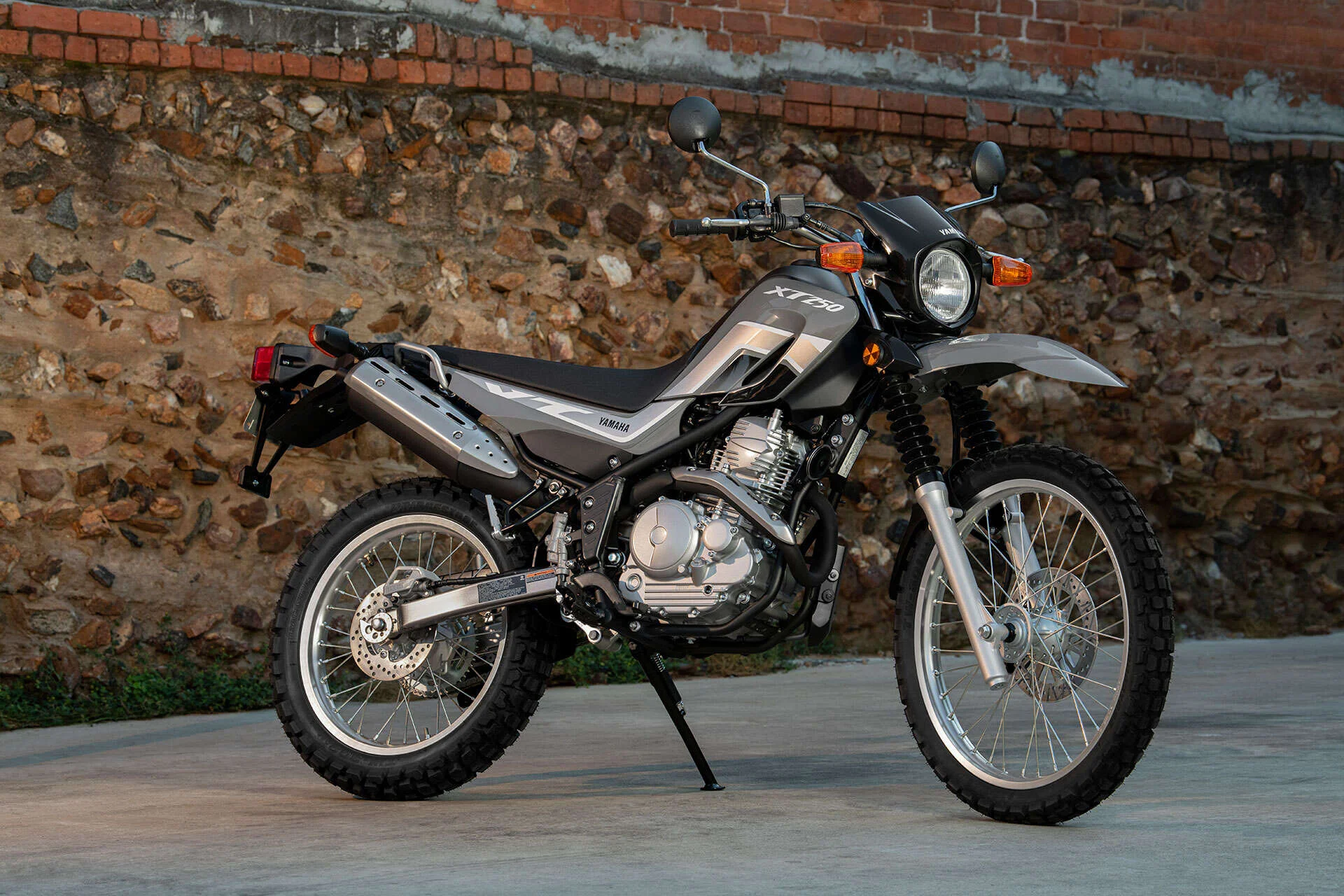



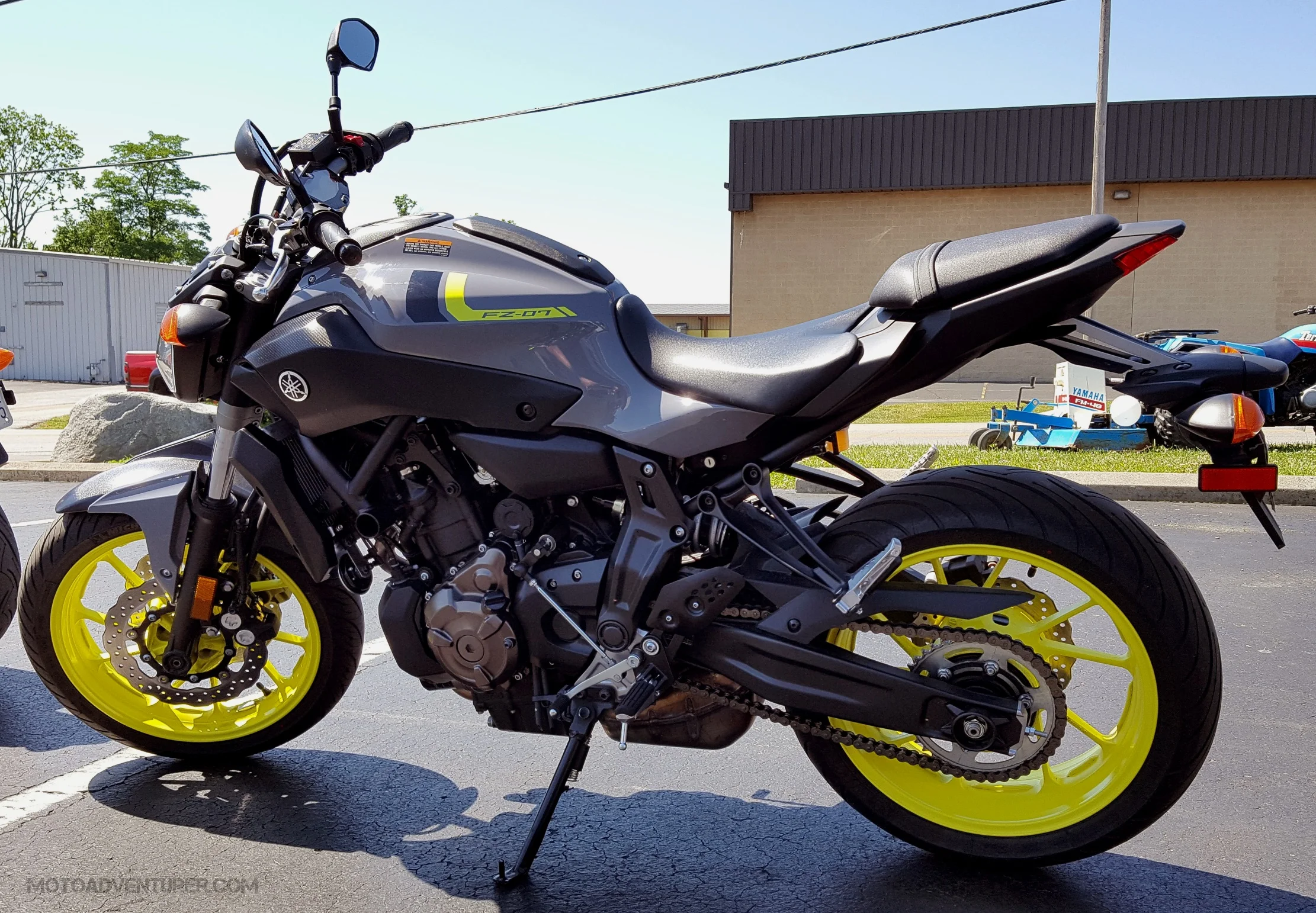

The Yamaha FZ-07 (sold as the MT-07 in most international markets) is genuinely one of the best naked middleweights ever produced. The 689cc parallel twin is responsive, characterful, and well-matched to the nimble chassis. Every experienced rider who has spent time on one says the same thing: the engine and frame are class-leading. The front suspension is not.
This is not a secret. Yamaha made a deliberate cost decision on the FZ-07’s front suspension to hit the bike’s aggressive pricing. The result is a standard fork that is widely acknowledged in the FZ-07 community, including on the dedicated FZ07.org forum with thousands of documented rider experiences, as undersprung for most adult riders and prone to significant brake dive under hard braking.
The good news is that this is one of the most well-documented and fixable issues in modern middleweight motorcycles. Here is the complete guide to understanding, diagnosing, and upgrading the Yamaha FZ-07 front fork suspension.
Find Yamaha FZ-07 suspension and front fork components at Aliwheels‘ Yamaha Motorcycle Parts and Motorcycle Suspension and Frame categories.
The FZ-07 Front Fork: What You Are Starting With
The Yamaha FZ-07 (2014-2016) uses 41mm conventional (right-side up) fork tubes with a damper rod design. The stock spring rate is approximately 0.65 kg/mm, and the fork oil level is set at 162 mm from the top of the tube.
For context, that spring rate is appropriate for a rider of approximately 150 to 165 lbs under road conditions. The FZ-07 attracts a broad rider demographic, and many FZ-07 owners weigh significantly more than this threshold. For those riders, the stock springs produce excessive sag, inadequate spring support under load, and pronounced dive under braking.
As Progressive Suspension’s product engineers noted when launching their FZ-07 suspension system, Yamaha intentionally tuned the FZ-07 to feel acceptable when new and degrade quietly — because manufacturers expect most riders to never service their suspension. The result is a fork that many riders live with for years without realising how much improvement is available.
The Specific Symptoms of FZ-07 Front Fork Problems
Understanding which symptom points to which issue saves money by directing the repair at the right component.
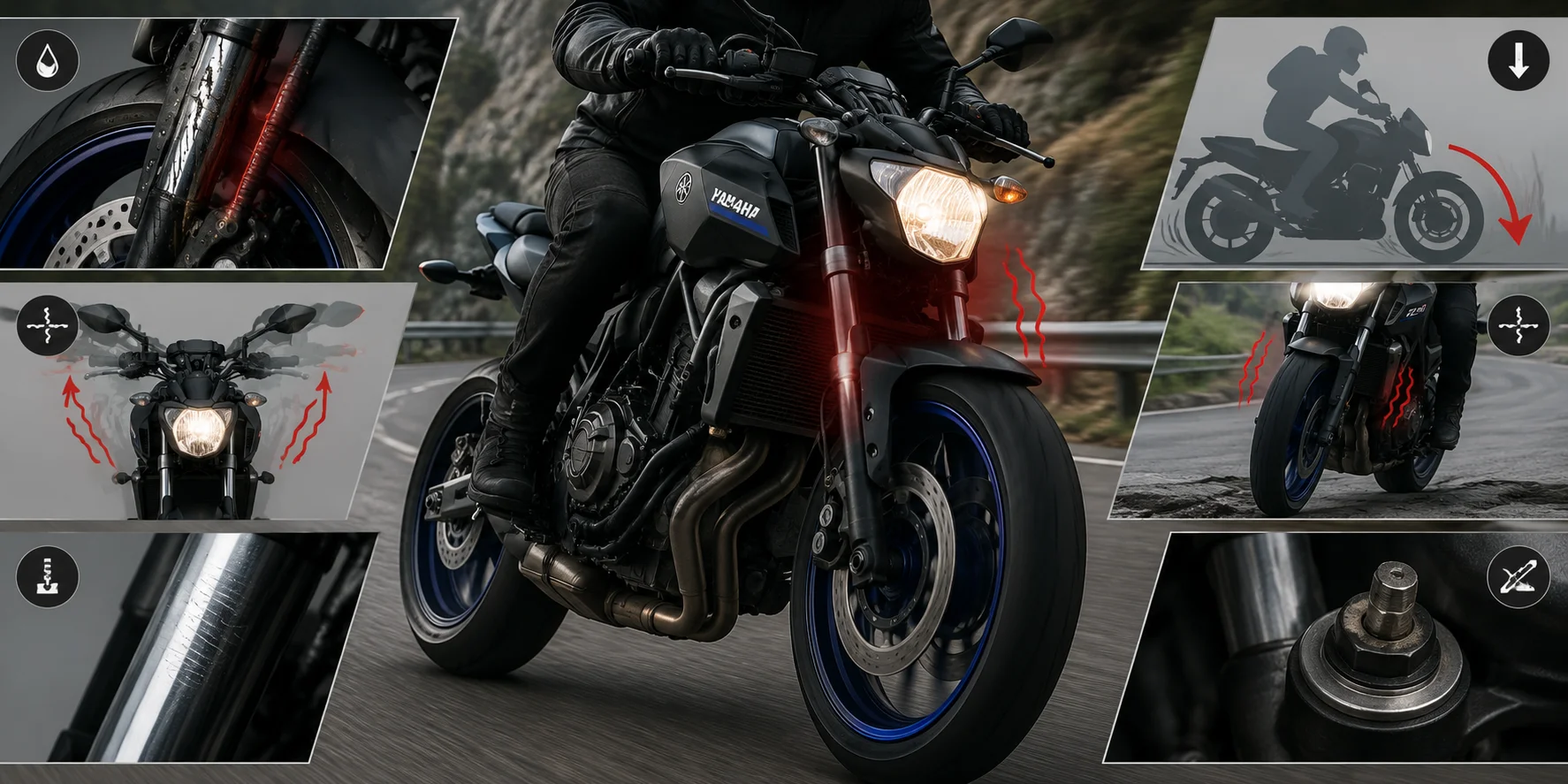
Excessive fork dive under braking. The front end compresses heavily when you apply the brakes, particularly from speed. The nose pitches forward dramatically. This is the most commonly reported FZ-07 front suspension complaint and is caused by springs that are too soft for the rider’s weight.
Spongy, vague front end feel through corners. The front end does not feel planted. Mid-corner bumps cause the front to move around more than expected. Again, primarily a spring rate issue — insufficient spring support means the fork is already near its travel limit at normal operating sag, leaving little suspension travel for cornering loads.
Front end bobbing or bouncing on deceleration. After braking, the fork rebounds quickly and the bike bounces through the speed change. This indicates a damping issue — either the original fork oil has degraded and thinned with age and heat cycling, or the damping is genuinely insufficient for the rider’s weight and riding style.
Fork seal leaks. Oil visible on the fork tubes indicates the seals have failed. This is a maintenance issue distinct from the performance issues above but should be addressed at the same service opportunity as any other fork work.
General instability at highway speed. Vague, wandering front end feel at highway speeds can have multiple causes including tyre pressure and head bearings. However, degraded front suspension contributes to this symptom and is worth addressing in any comprehensive diagnosis.
The Upgrade Options: From Simple to Comprehensive
There is a spectrum of FZ-07 front fork upgrades ranging from a straightforward fork oil change to a complete cartridge conversion. Here is what each level achieves and what it costs in time and money.
Level 1: Fork Oil Replacement (Minimum $30, Maximum Improvement for the Money)
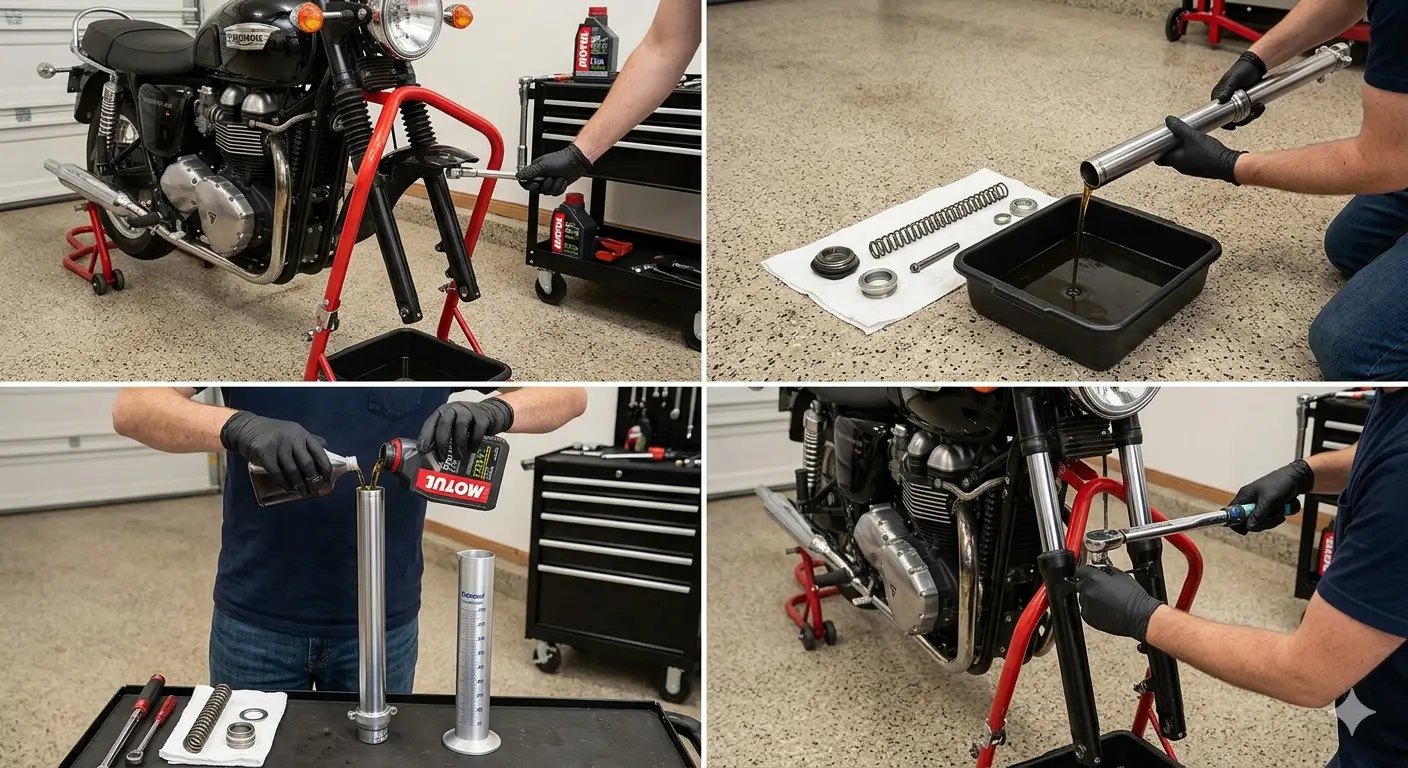
If the FZ-07 has not had its fork oil changed and has accumulated significant mileage, fresh oil at a slightly higher weight is the first step. Stock is 10-weight oil. Moving to 15-weight oil increases damping force, which directly addresses the bounce-and-dive symptoms.
Most FZ-07 owners who have never changed their fork oil report meaningful improvement from this alone. It does not address the spring rate issue for heavier riders, but it is the right starting point before any other investment.
Level 2: Fork Spring Replacement ($80 to $150)
Replacing the springs with a rate matched to the rider’s weight is the most cost-effective significant upgrade available for the FZ-07. Race Tech, Hyperpro, and Progressive Suspension all manufacture spring kits specifically for the FZ-07.
For riders between 165 and 200 lbs, a 0.80 kg/mm spring rate is the typical recommendation. For riders above 200 lbs, 0.90 to 1.0 kg/mm is appropriate. These figures come from the FZ07.org suspension forum where more than a decade of rider experience has produced reliable weight-to-spring-rate correlations.
Spring replacement combined with fresh higher-weight fork oil addresses both the spring rate and the damping issues simultaneously. This is the most commonly recommended upgrade across FZ-07 community consensus.
Level 3: Cartridge Conversion ($300 to $500)
Companies including Progressive Suspension and Andreani manufacture fork cartridge kits that convert the FZ-07’s basic damper rod fork internals to a higher-performance cartridge design. These provide fully adjustable compression and rebound damping — a significant step up from the stock non-adjustable design.
The cartridge conversion is the correct choice for riders who use the FZ-07 on track days, for aggressive sport riding, or for riders who have already done the spring upgrade and want further refinement. For everyday street and touring use, spring replacement and fresh oil deliver 80% of the available improvement at 20% of the cartridge conversion cost.
Setting Sag: The Step Most Riders Skip
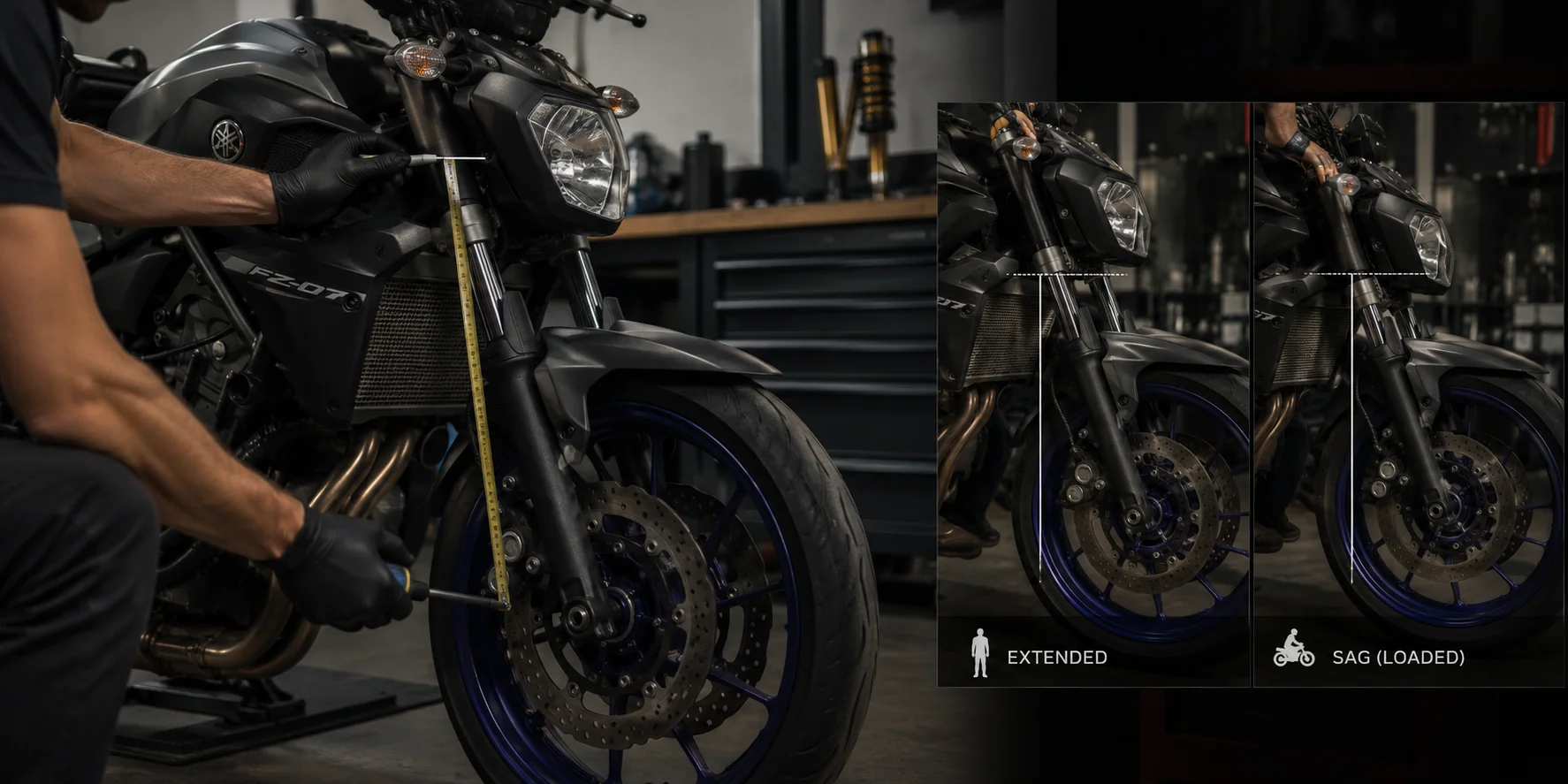
Every suspension upgrade should be followed by a proper sag measurement and adjustment. Sag is the amount the fork compresses under the rider’s weight. Correct sag for the FZ-07 is approximately 30 to 35mm of rider sag at the front.
Measuring sag requires two measurements: the fork tube exposed with no weight (static sag measurement) and with the rider in full riding gear sitting normally on the bike. The difference is rider sag. If it exceeds 35mm, preload needs increasing. If it is below 25mm, preload needs reducing.
The FZ-07 stock fork has a preload adjuster on top of each fork leg that can be adjusted with a suitable tool. Setting sag correctly after spring replacement ensures the upgrade performs as intended.
What About the Rear Suspension?
The FZ-07’s rear suspension has similar issues to the front. The stock rear shock is underdamped and undersprung for the same reasons as the front. Progressive Suspension’s FZ-07 suspension system addresses both ends simultaneously, and most experienced FZ-07 owners who have addressed the front suspension eventually upgrade the rear as well for balanced handling improvement.
Read more on the Aliwheels blog: When to Replace Motorcycle Fork Oil and Shocks.
Conclusion
The Yamaha FZ-07 front fork is the most documented and most agreed-upon weak point of an otherwise outstanding motorcycle. It is also one of the most fixable. Fork oil at the right weight combined with springs matched to your body weight is the upgrade that transforms the FZ-07’s road behaviour for the majority of riders at accessible cost. The cartridge conversion is the next level for riders who want maximum performance at the front end.
Set your sag correctly after any spring work. Address the rear at the same time if budget allows. And ride the FZ-07 the way it was meant to be ridden once the suspension actually suits the person on it.
Frequently Asked Questions
Q: What fork oil weight should I use in the Yamaha FZ-07?
A: The stock specification is 10-weight fork oil at 162mm from the top of the tube with the spring removed. For riders experiencing excessive dive and bounce, 15-weight oil at the same level increases damping noticeably. Some riders running aggressive spring upgrades use 15-weight oil at a slightly higher level (140 to 150mm) for further damping increase. Do not exceed 20-weight oil without professional guidance as this can overload the stock damper rod design.
Q: How do I know if I need springs, new fork oil, or both?
A: If the fork dives excessively under braking — this is a spring rate issue. If the fork bounces and rebounds too quickly after braking — this is a damping/oil issue. If both symptoms are present, address both simultaneously. Most high-mileage FZ-07s benefit from both fresh oil and upgraded springs at the same service.
Q: Is the Yamaha MT-07 front fork the same as the FZ-07?
A: Yes. The MT-07 is the same motorcycle as the FZ-07 sold in international markets under the MT-07 designation. The suspension specification is identical. All spring rates, oil specifications, and upgrade components for the FZ-07 apply directly to the MT-07.
Q: How long does the Yamaha FZ-07 fork oil service take as a DIY job?
A: For a rider with basic mechanical skills and access to a paddock stand, a full fork oil change with spring replacement takes approximately 3 to 4 hours for the first attempt. Subsequent services are typically faster. The most involved step is removing the fork legs from the triple clamps, which requires the front wheel, brake caliper, and fender to be removed first.
Q: Will upgrading the FZ-07 front suspension change the bike’s handling character?
A: Yes, and for the better. Correctly sprung and damped suspension makes the FZ-07’s front end feel more planted, more precise, and more confidence-inspiring in corners. Riders who upgrade consistently report the bike feels more connected and easier to ride smoothly rather than fighting the front end’s movement. The handling character improves — it does not change to something unfamiliar.