


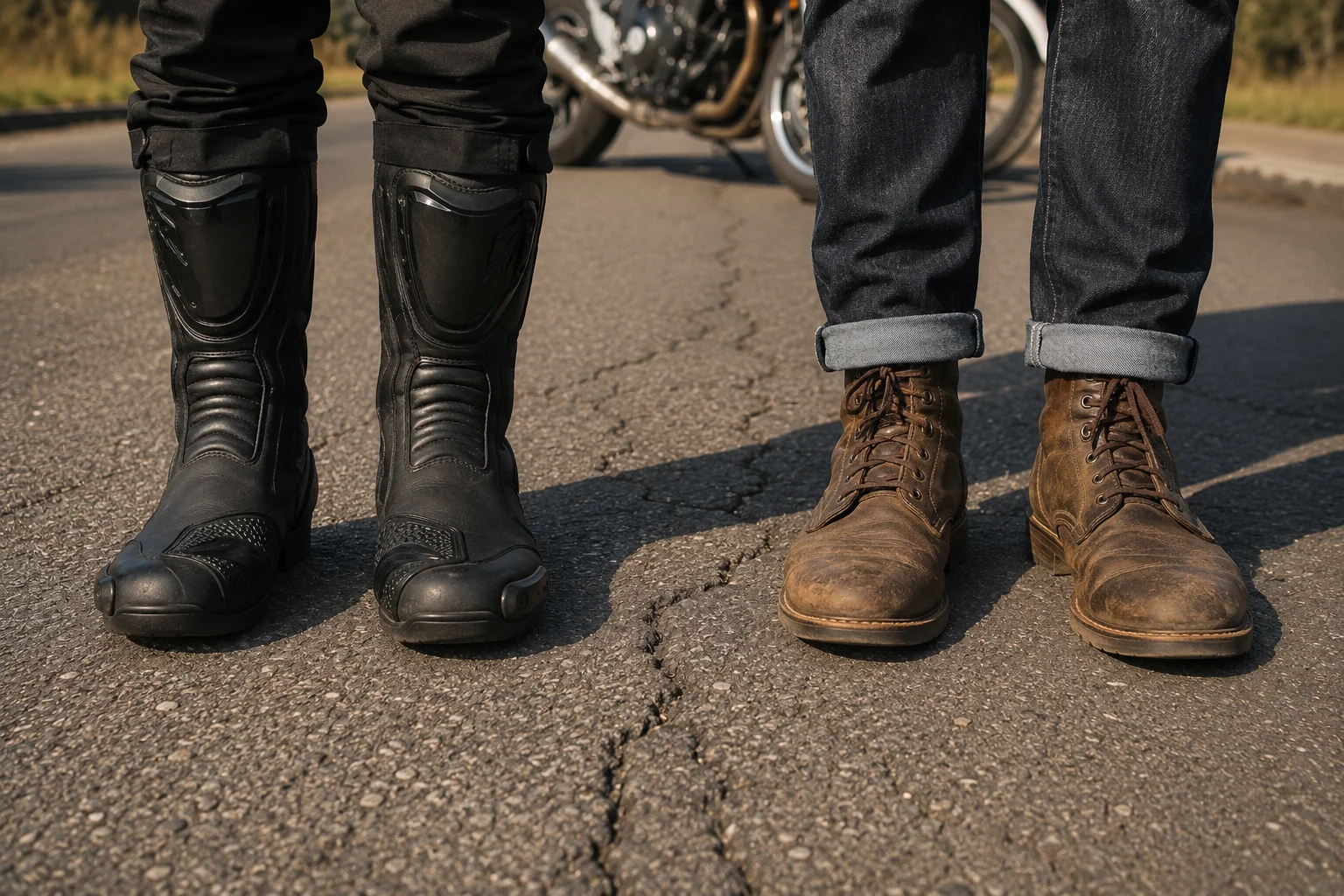

Most riders make the same compromise when they start riding. A proper helmet. Maybe a jacket. And then whatever boots they already own. Work boots. Hiking boots. Cowboy boots. They look fine. They cover the ankle. Close enough, right?
This is one of the most common gear decisions riders regret after their first fall. Not because regular boots feel unsafe. But because what actually fails in a crash is specific, predictable, and entirely preventable with the right footwear.
Here is the honest breakdown of motorcycle boots vs regular boots, what the data says about ankle injuries in crashes, and what to look for when you are ready to get the right pair. Browse Aliwheels’ Motorcycle Boots catalogue for certified options across all riding styles.
What Actually Happens to Your Feet and Ankles in a Motorcycle Crash
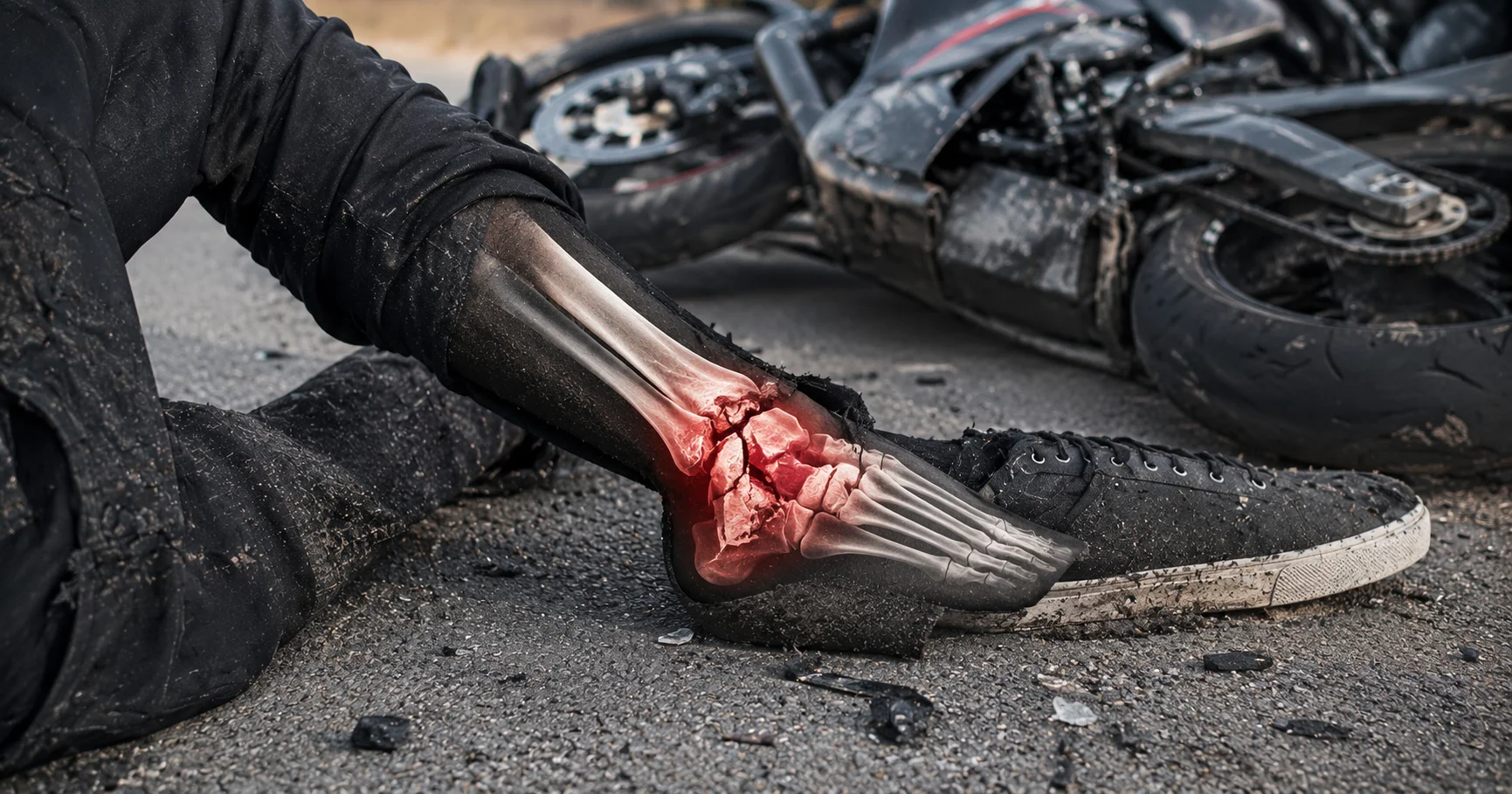
Foot and ankle injuries are among the most common in motorcycle crashes. A peer-reviewed study published in a motorcycle protective clothing research paper from the Australian National University found that non-motorcycle boots were associated with a significantly reduced risk of injury compared to shoes or sneakers, with a relative risk reduction of 0.46 — meaning proper footwear cuts injury risk nearly in half.
However the same research identified that even non-motorcycle boots still leave significant gaps compared to purpose-built motorcycle boots in specific injury mechanisms. Understanding those mechanisms explains why the difference matters.
| Crash Mechanism | What Fails | Regular Boot Protection | Motorcycle Boot Protection |
| Lateral ankle compression (bike falls on foot) | Ankle joint crushed between bike and road | None — no lateral stiffener | Rigid ankle cup prevents compression |
| Foot torqued sideways in a slide | Ligament tears and ankle fractures | Minimal — standard boots flex laterally | Ankle retention system limits lateral rotation |
| Foot catches under peg during slide | Levering force across ankle joint | None — heel too low to resist lever force | Reinforced heel counter resists lever force |
| Toe impact on ground contact | Toe fractures and crush injuries | Basic — standard toe boxes not rated for impact | CE-rated toe protection absorbs impact force |
| Abrasion from road slide | Skin and tissue damage | Some — leather degrades rapidly on pavement | Abrasion-rated materials maintain integrity longer |
According to a detailed breakdown on MotoGearRater, the two non-negotiables that regular boots simply cannot replicate are ankle reinforcement and an ankle retention system. These are not comfort features. They are the structures that change injury outcomes in real crashes.
Where Regular Boots Actually Fail
Work Boots and Hiking Boots
Work boots and hiking boots are the most common substitute riders use. They have leather construction, ankle coverage, and thick soles. They feel solid. However, the ankle protection in a work boot is designed for twist and compression protection during standing work, not for the lateral forces and sudden torquing that occur when a motorcycle goes down at speed.
The heel counter in a work boot is not designed to resist the levering force of a foot catching under a footpeg. The ankle cuff has no lateral stiffener. And the sole is typically flat and grippy, which is correct for walking but creates a catching risk against road surface during a slide.
Cowboy Boots and Chelsea Boots
Cowboy boots are the footwear most often cited by cruiser and Harley riders as their default riding choice. The heel is actually useful for footpeg positioning and prevents the foot from sliding through the peg. However, the shaft provides no lateral ankle support, the toe is typically too pointed to absorb impact properly, and the pull-on construction means the boot can come off in a crash — precisely when it is needed most.
MotoGearRater specifically identifies Chelsea boots and dress boots as among the highest-risk regular footwear for riding, as they offer minimal ankle height and no retention system whatsoever.
Sneakers and Athletic Shoes
Almost no protection. In a crash at any meaningful speed, athletic footwear provides essentially no ankle protection, no abrasion resistance, and no impact protection. Yet a significant number of urban riders in the US ride daily in athletic footwear. The injury data reflects this directly.
What Motorcycle Boots Have That Regular Boots Do Not
• Ankle cup or rigid ankle protector. A CE-certified motorcycle boot includes a rigid or semi-rigid ankle cup that prevents the ankle joint from being compressed laterally. This is absent in all regular footwear.
• Ankle retention system. Buckles, lacing, and structural design that keeps the boot on the foot during a crash. A boot that comes off during a crash provides zero protection after the separation point.
• Reinforced heel counter. Resists the levering force created when a foot catches on road surface or under a footpeg during a slide.
• CE-rated toe protection. Tested impact absorption at the toe, rated to either Level 1 (35 kN max transmitted force) or Level 2 (20 kN) per CE EN 13634 standard.
• Abrasion-resistant upper material. Motorcycle-specific leather or synthetic materials rated for sustained road contact. Standard leather work boots degrade significantly faster than motorcycle-specific materials under pavement abrasion.
• Oil-resistant, non-slip sole. Designed to provide grip on wet pegs and pavement without the catching risk of maximally grippy hiking or work boot soles.
The CE EN 13634 Standard: What to Check on Every Motorcycle Boot
CE EN 13634 is the European standard for motorcycle footwear and is increasingly the reference standard used by quality motorcycle boot manufacturers worldwide, including those selling in the US market.
| CE Zone | What It Tests | Level 1 | Level 2 |
| Zone A — Abrasion | How long the upper resists road abrasion | 1.5 seconds | 2.5 seconds |
| Zone B — Lateral ankle stiffness | Resistance to lateral ankle bending | Less stiff | More stiff — significantly better |
| Zone C — Heel energy absorption | Energy absorbed at heel on impact | Basic absorption | Higher absorption rating |
| Zone D — Toe impact protection | Force transmitted through toe at impact | Under 35 kN | Under 20 kN — significantly better |
| Buy rule: CE Level 2 in all four zones is the gold standard. CE Level 1 in all zones is the minimum acceptable for street riding. No CE certification at all means the boot has not been tested to any published standard — avoid for riding regardless of how it looks. |
Motorcycle Boots That Look Like Regular Boots
The most common objection to motorcycle boots is that they look like motorcycle boots. Riders who commute, run errands, or walk around at destinations do not want to wear track-day gear all day.
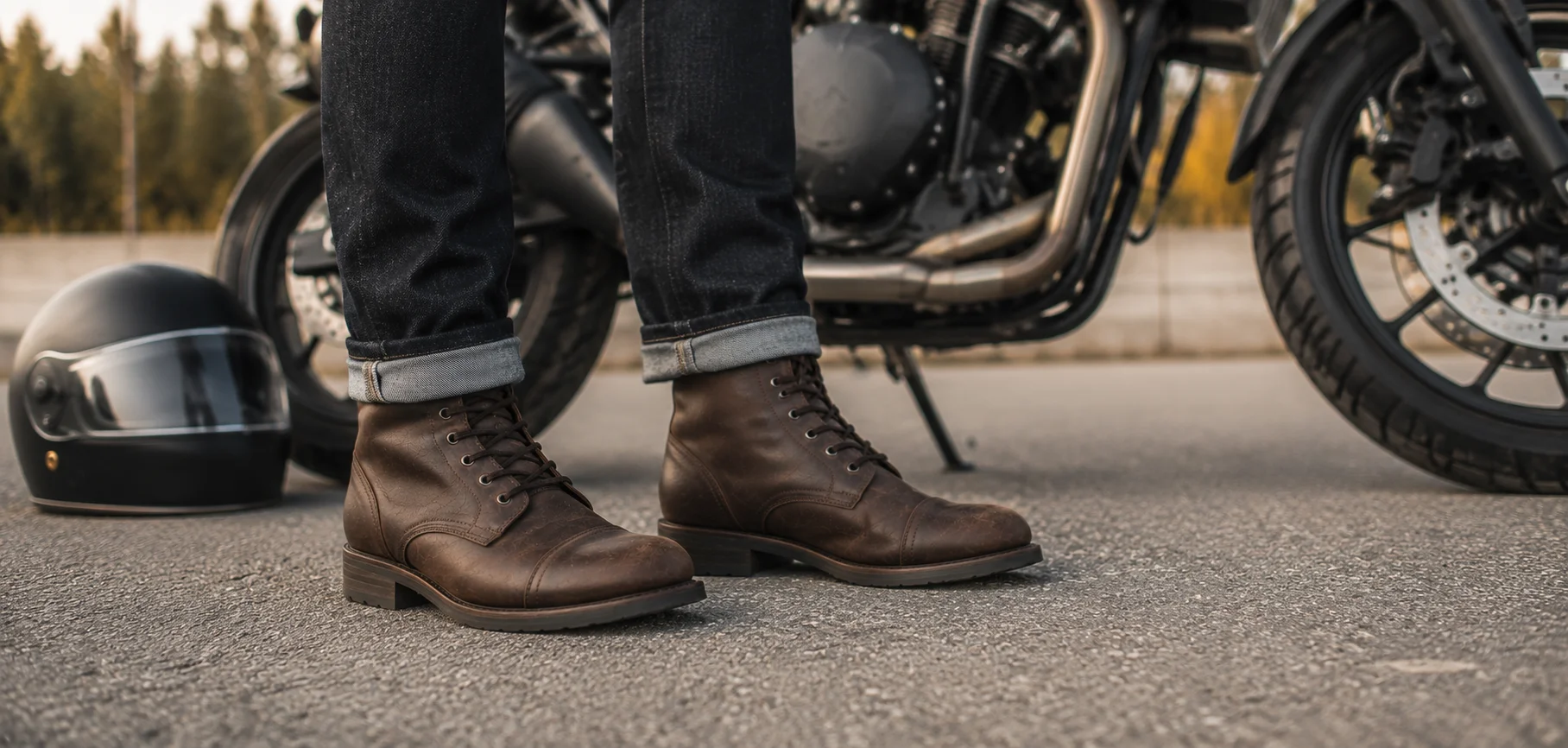
This is no longer a valid reason to skip proper footwear. Brands like Forma, TCX, Alpinestars, and Sidi all manufacture touring and urban motorcycle boots that pass for casual footwear. They look like work boots, Chelsea boots, or low hiking boots. They carry full CE EN 13634 certification. You do not have to choose between protection and maintaining a casual, everyday look.
MotoGearRater’s breakdown specifically highlights this category as the most important development in motorcycle footwear in the past decade — proper protection in everyday footwear aesthetics eliminates the last legitimate excuse for riding in uncertified boots.
Motorcycle Boot Types by Riding Style
| Boot Type | Best For | CE Rating Available? | Looks Like |
| Urban / casual motorcycle boot | Commuting, city riding, destinations on foot | Yes — full CE EN 13634 | Work boot or Chelsea boot |
| Touring motorcycle boot | Long distance, highway, adventure riding | Yes — typically Level 2 | Hiking boot or work boot |
| Sport / race boot | Track days, aggressive street riding | Yes — highest ratings available | Racing footwear — not discreet |
| Motocross / off-road boot | Dirt, trails, off-road | Yes — off-road specific standard | Tall rigid off-road boot |
| Work boot (non-moto) | Everything except riding | No motorcycle certification | Work boot — looks fine, protects poorly |
| Shop Certified Motorcycle Boots at AliwheelsCE-certified motorcycle boots for street, touring, and commuting. Free worldwide shipping on orders over $300.>> Shop Motorcycle Boots << |
Complete your riding gear setup: Riding Gear | Motorcycle Gloves | Motorcycle Helmets | Motorcycle Parts
Conclusion
Regular boots feel like reasonable protection because they cover the ankle and look substantial. The problem is that the specific forces in a motorcycle crash — lateral ankle compression, sudden torquing, foot catching under a peg, and sustained abrasion — are exactly the forces that regular boots are not designed to resist.
The injury data is clear. Proper motorcycle footwear reduces ankle and foot injury risk significantly. And with modern urban and touring motorcycle boots that look nothing like track gear, there is no longer a practical reason to compromise on this piece of kit.
Browse Aliwheels‘ certified Motorcycle Boots range for options that fit your riding style and look good off the bike too. Your ankles only get one chance.
Frequently Asked Questions
Q: Are cowboy boots safe for motorcycle riding?
A: Cowboy boots are better than sneakers because of the heel and ankle height. However, they fail in the specific ways that matter most in a crash. The shaft provides no lateral stiffener, the pull-on construction means the boot can separate from the foot during a slide, and there is no CE certification for any impact protection zone. For casual low-speed riding they are a significant upgrade over athletic shoes. For any serious riding, proper motorcycle boots are the correct choice.
Q: What is the minimum boot height for motorcycle riding?
A: The boot must cover the ankle fully and provide some structural support above the ankle joint. Boots that end at the ankle line rather than above it offer minimal protection in lateral compression scenarios. Most motorcycle safety guidelines recommend at minimum a boot shaft height of 4 to 6 inches above the heel — equivalent to a standard work boot height — as the minimum acceptable for street riding.
Q: Do I need motorcycle boots for short local rides?
A: Statistically, a significant proportion of motorcycle crashes occur close to home and at lower speeds. Short rides are not inherently safer from a footwear perspective. The ankle mechanisms that motorcycle boots protect against occur at speeds as low as 20 mph in a parking lot tip-over or low-side. The argument that short rides justify lower footwear standards does not hold up to the crash data.
Q: How do I know if a motorcycle boot is actually CE certified?
A: Look for the CE EN 13634 label inside or on the boot itself, accompanied by a year and the testing body’s identification. This label is mandatory on genuinely certified boots sold in markets that recognise the standard. Boots that claim CE certification without displaying the actual EN 13634 label and level ratings have not been independently verified to the standard. Buy from catalogues that confirm certification on each listing.
Q: Can I find motorcycle boots that do not look like motorcycle boots?
A: Yes, and this is now a well-developed product category. Urban motorcycle boots from brands like Forma, TCX, Dainese, and Alpinestars pass visually as work boots, Chelsea boots, or casual footwear while carrying full CE EN 13634 certification. If the appearance of traditional motorcycle boots is the reason you have been riding in uncertified footwear, this category eliminates that barrier.