



Few upgrades can transform a motorcycle as dramatically as a new exhaust system.
The moment riders begin modifying their bikes, the motorcycle exhaust is usually one of the first components they consider replacing. Some are chasing a deeper exhaust note. Others want to reduce weight, improve performance, or simply give their motorcycle a more aggressive appearance. Whatever the motivation, one thing quickly becomes clear: choosing a motorcycle exhaust is far more complicated than picking the loudest option on the market.
Scroll through rider forums, or watch exhaust comparison videos online, and you’ll find countless opinions about which setup is best. One rider swears by a full exhaust system. Another insists a slip-on delivers everything most riders need. Cruiser owners often prefer dual pipes, while sportbike enthusiasts frequently lean toward lightweight 2-into-1 systems. The problem is that all of them can be right depending on the motorcycle and the rider’s goals.
Many riders make the mistake of viewing exhaust systems as simple accessories. In reality, a motorcycle exhaust is a carefully engineered component that directly influences how an engine breathes. The design, pipe diameter, routing, material, and muffler construction all affect performance characteristics. A poorly chosen exhaust can actually hurt rideability, while the right setup can unlock a motorcycle’s true potential.
Understanding the different motorcycle exhaust system types is therefore essential before spending hundreds or even thousands of dollars on an upgrade.
Why Motorcycle Exhaust Design Matters More Than Most Riders Realize
To understand the differences between exhaust systems, it helps to first understand what happens every time your engine fires.
Inside each cylinder, fuel and air ignite to create power. Once combustion occurs, the resulting exhaust gases must leave the engine efficiently so the next combustion cycle can begin. If those gases cannot exit properly, performance suffers. Engineers often refer to this process as engine breathing.
This is where the exhaust system becomes critical.
A motorcycle exhaust is not simply a tube that carries gases away from the engine. It is designed to control exhaust flow, maintain proper backpressure, reduce harmful emissions, manage noise levels, and optimize power delivery throughout the RPM range.
Different exhaust designs achieve these goals in different ways.
Some prioritize low-end torque for everyday street riding. Others focus on maximizing horsepower at higher RPMs. Certain systems emphasize rider comfort and reduced noise, while performance-oriented exhausts may sacrifice quiet operation in favor of increased flow.
The result is a wide range of exhaust configurations, each with its own strengths and compromises.
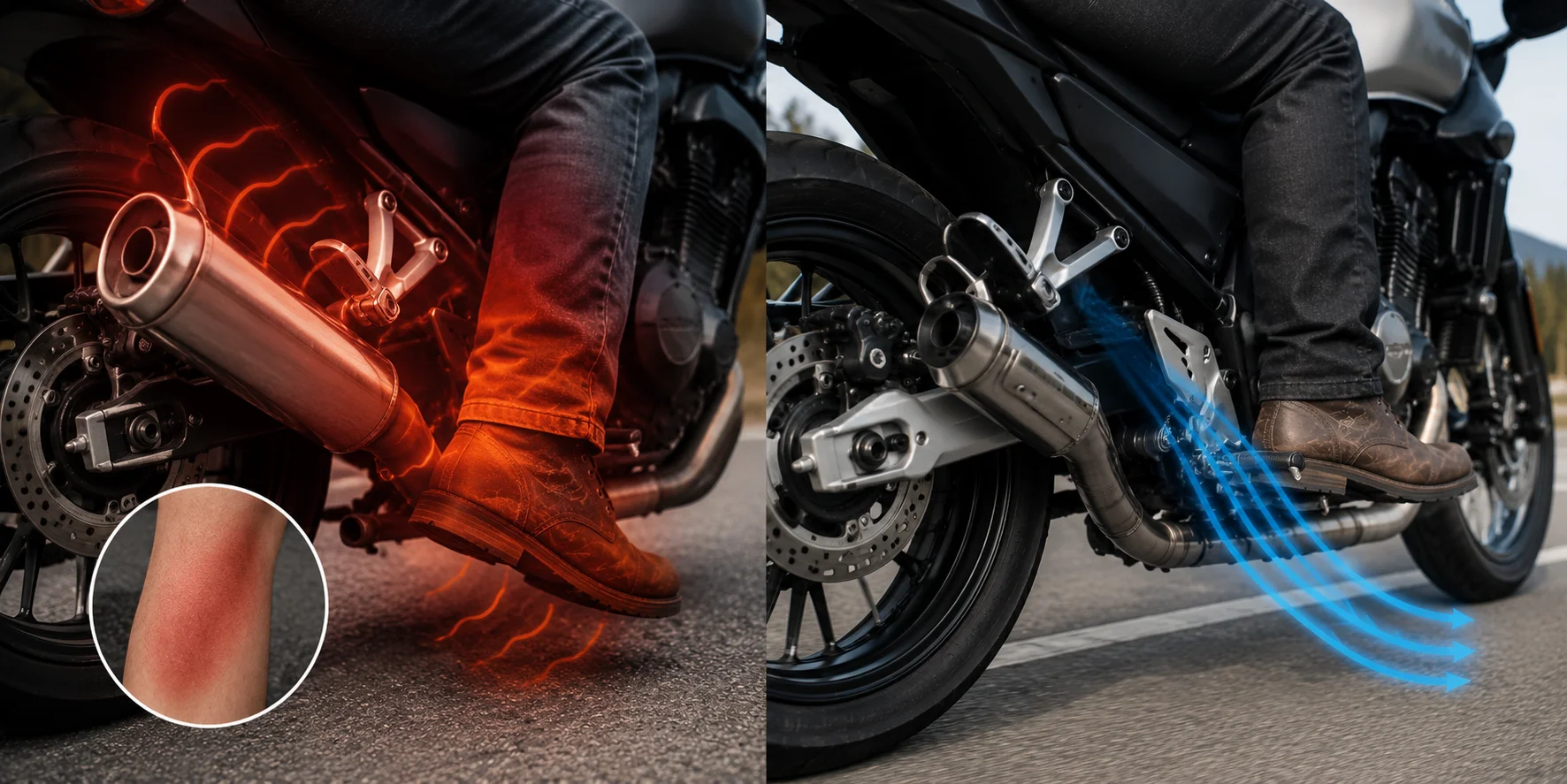
The Biggest Myth About Motorcycle Exhaust Upgrades
One of the most common misconceptions among riders is that louder automatically means faster.
This myth has survived for decades, largely because aggressive sound creates the impression of increased performance. A motorcycle that suddenly sounds like a race machine feels faster even when actual performance gains are minimal.
The reality is more complicated.
A slip-on muffler may dramatically change a motorcycle’s sound while producing only modest horsepower gains. Conversely, a well-designed full exhaust system combined with proper tuning can generate meaningful performance improvements that may not be obvious from sound alone.
This is why understanding exhaust system types matters. The best choice depends less on volume and more on how the motorcycle is used.
A commuter navigating city traffic every day has very different needs than a rider spending weekends at track days. Likewise, a long-distance touring rider values different characteristics than someone building a custom cafe racer.
Slip-On Exhaust Systems: The Most Popular Upgrade for Everyday Riders
For many motorcyclists, the journey into aftermarket exhausts begins with a slip-on system.
As the name suggests, a slip-on replaces only the muffler section while retaining the factory headers and most of the original exhaust routing. This approach allows riders to alter the motorcycle’s sound and appearance without replacing the entire exhaust assembly.
The popularity of slip-ons comes down to one simple reason: they offer the biggest audible change for the least amount of effort.
Installation is usually straightforward. Most riders can complete the upgrade with basic hand tools in a garage. Compared to full exhaust systems, costs are significantly lower, making slip-ons an attractive option for riders who want a noticeable transformation without a major investment.
The riding experience often changes immediately. The motorcycle sounds more alive, throttle response may feel slightly sharper, and the reduced weight can improve overall feel.
However, many riders are surprised to learn that performance gains are often relatively modest.
Because the factory headers remain in place, the engine is still limited by much of the original exhaust architecture. Manufacturers design stock exhaust systems to satisfy emissions regulations, noise restrictions, reliability targets, and production costs. Replacing only the muffler cannot completely remove those limitations.
That does not make slip-ons a bad choice. In fact, they are often the smartest option for riders who primarily want improved sound, aesthetics, and moderate weight savings without sacrificing reliability or spending excessively.
For daily riders, commuters, and weekend enthusiasts, a quality slip-on frequently provides the perfect balance between cost and satisfaction.
Full Exhaust Systems: When Maximum Performance Becomes the Priority?
At the opposite end of the spectrum sits the full exhaust system.
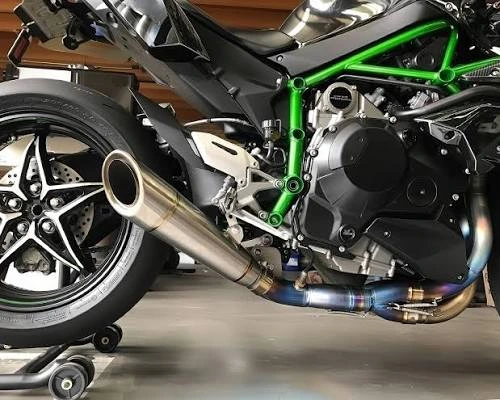
Unlike a slip-on, a full system replaces everything from the cylinder head to the exhaust outlet. Headers, collectors, mid-pipes, catalytic converter sections, and mufflers are all redesigned as part of a complete package.
This is where serious performance gains become possible.
By optimizing every stage of exhaust flow, engineers can dramatically improve how efficiently gases leave the engine. Reduced restriction, improved scavenging effects, and carefully calculated pipe dimensions allow the engine to operate more effectively throughout the RPM range.
The benefits become particularly noticeable on performance motorcycles.
Sportbike riders often choose full systems to increase horsepower, reduce weight, and sharpen throttle response. Racers rely on them because every pound saved and every horsepower gained can influence lap times.
The weight difference alone can be surprising. Factory exhaust systems often contain heavy catalytic converters, multiple chambers, and thick steel components designed to meet regulations. Replacing them with lightweight aftermarket systems can remove a significant amount of weight from the motorcycle.
Yet full systems are not always the right answer for every rider.
They cost substantially more than slip-ons, installation is more involved, and many motorcycles require ECU tuning afterward to achieve proper air-fuel ratios. Without tuning, riders may not realize the full benefits of the upgrade.
The decision ultimately comes down to priorities. Riders seeking the maximum possible performance gains generally choose a full system. Those focused primarily on sound and appearance often find a slip-on more practical.
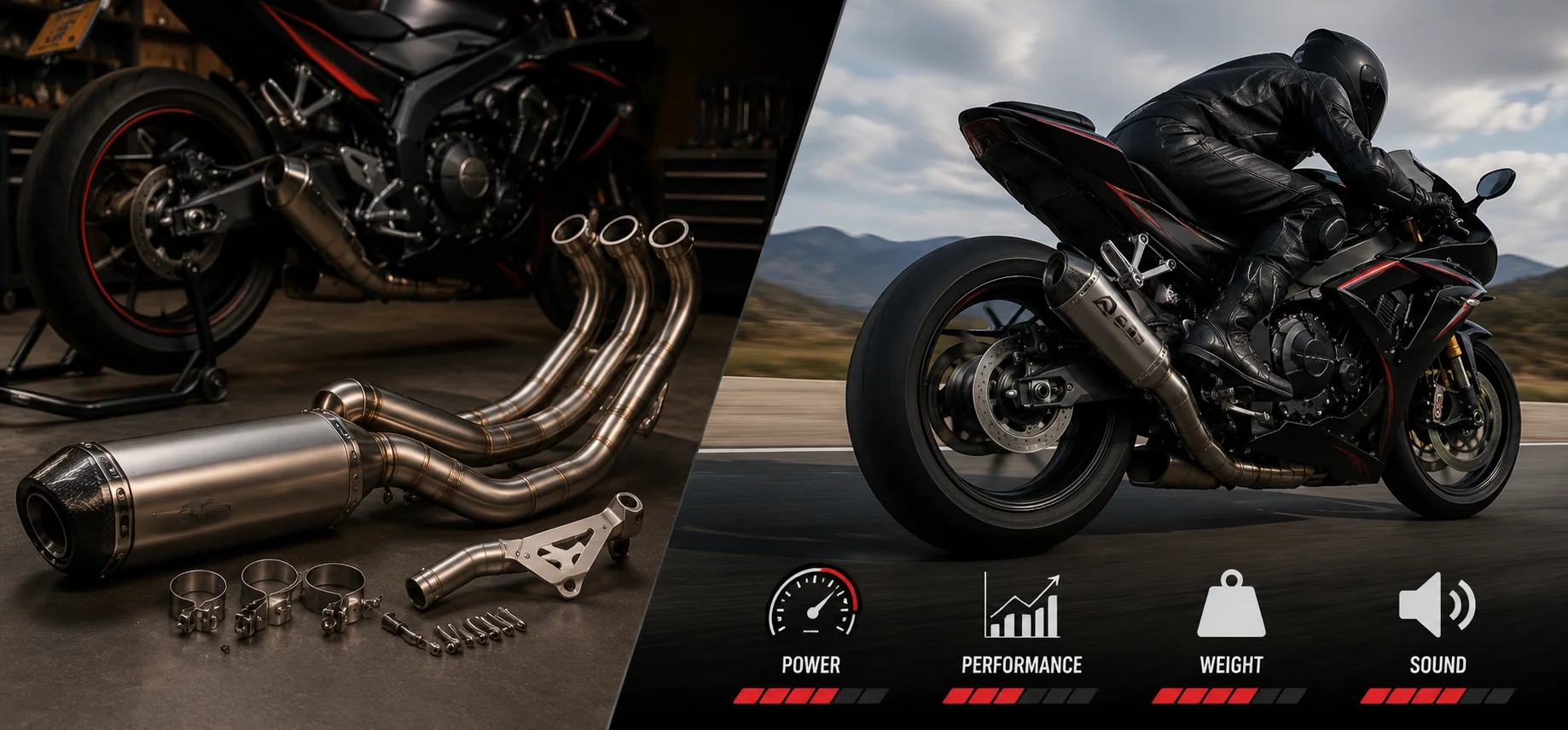
Conclusion
Choosing the right motorcycle exhaust system is not about finding the loudest pipe or the most expensive setup. It is about matching the exhaust to your riding style, performance goals, and budget.
For many riders, a quality slip-on exhaust delivers the ideal balance of improved sound, better looks, and reduced weight without requiring extensive modifications. Riders seeking maximum horsepower gains, sharper throttle response, and race-inspired performance often benefit more from a full exhaust system paired with proper ECU tuning.
The best exhaust upgrade is the one that complements how you actually ride. A daily commuter, long-distance tourer, weekend canyon rider, and track enthusiast will all have different priorities. Understanding the strengths and limitations of each exhaust type helps ensure you invest in a system that enhances your motorcycle rather than simply changing its sound.
Whether you’re upgrading a sportbike, cruiser, touring motorcycle, or naked bike, choosing a high-quality exhaust from a trusted supplier can significantly improve your riding experience. Explore premium motorcycle exhaust systems at Aliwheels and find the setup that matches your machine and riding goals.
Frequently Asked Questions
1. What is the difference between a slip-on exhaust and a full exhaust system?
A slip-on exhaust replaces only the muffler section while retaining the factory headers and most of the original exhaust components. A full exhaust system replaces everything from the cylinder head to the exhaust outlet, offering greater performance potential and weight reduction.
2. Does a motorcycle exhaust increase horsepower?
Yes, certain exhaust upgrades can increase horsepower. Full exhaust systems typically provide the most noticeable gains, especially when combined with proper ECU tuning. Slip-on exhausts generally offer smaller performance improvements while focusing more on sound and appearance.
3. Is a full exhaust system worth the extra cost?
For riders seeking maximum performance, improved throttle response, and significant weight savings, a full exhaust system is often worth the investment. For riders primarily interested in sound and aesthetics, a slip-on may provide better overall value.
4. Do I need ECU tuning after installing an exhaust?
Many motorcycles benefit from ECU tuning after installing a full exhaust system. Tuning helps optimize the air-fuel ratio, improve rideability, and ensure the engine takes full advantage of the new exhaust’s increased flow characteristics.
5. Will a slip-on exhaust make my motorcycle louder?
In most cases, yes. A slip-on exhaust usually produces a deeper, more aggressive exhaust note compared to the stock muffler. The exact volume depends on the brand, design, and whether a removable baffle is included.
6. Which exhaust type is best for daily street riding?
For most street riders, a quality slip-on exhaust offers the best combination of affordability, sound improvement, simple installation, and reliability. It delivers noticeable changes without requiring major modifications.
7. Does an aftermarket exhaust reduce motorcycle weight?
Yes. Many aftermarket exhaust systems use lightweight materials such as titanium, aluminum, or carbon fiber. Full exhaust systems typically provide the greatest weight reduction compared to stock exhaust setups.
8. Are aftermarket motorcycle exhausts legal?
Legality varies by country, state, and local regulations. Riders should always verify noise and emissions requirements before purchasing an aftermarket exhaust system.