





You installed a windshield expecting comfort. Instead, you got a relentless hammering of turbulent air right at helmet level. Or you went taller, and now you are staring through a scratched screen instead of over it. Either way, the ride is worse than before.
Getting motorcycle windshield height wrong is one of the most common comfort problems US riders have to face. The physics behind it is straightforward once you understand it, and the right size makes a difference on any highway or touring ride.
Here is the complete guide to motorcycle windshield sizing. Browse Aliwheels’ Motorcycle Windshields and Windscreens category to find the right motorcycle windshield for your bike.
The Physics Behind Motorcycle Windshield Airflow
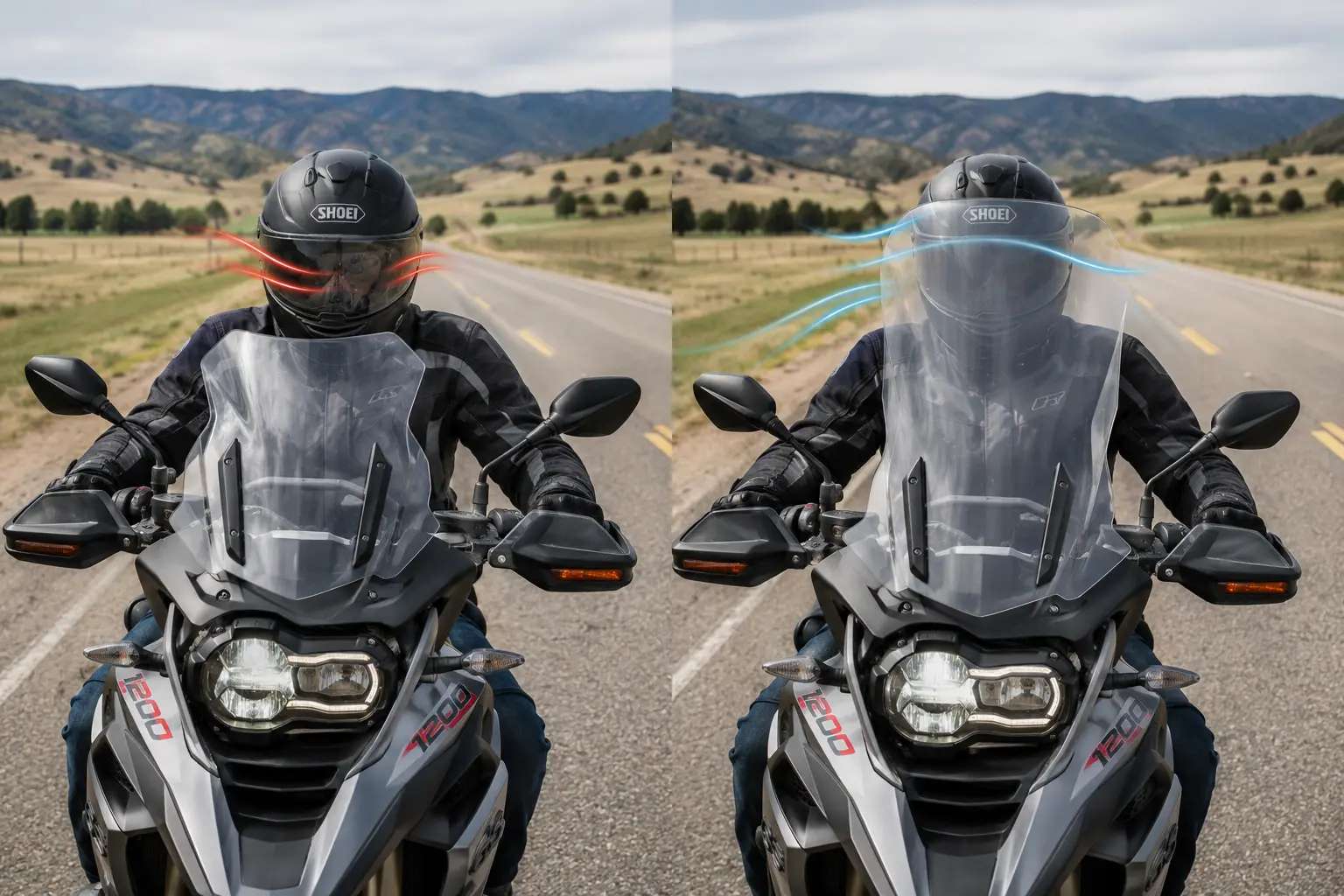
A motorcycle windshield does not stop wind. It redirects it. The goal is to deflect the airstream over or around the rider rather than letting it hit the chest and helmet directly. Getting this right depends on one critical relationship: where the redirected airstream ends up relative to your helmet.
According to aerodynamic principles documented in Motorcycle Consumer News’ windshield testing, there are three zones for air deflection relative to a seated rider:
| Deflection Zone | What Happens | Rider Experience |
| Air passes below helmet level | Clean laminar airflow over the rider — ideal | Smooth, quiet, low fatigue. The correct outcome. |
| Air hits helmet or visor directly | Turbulent buffeting at helmet level | Helmet pulled backward, loud noise, neck fatigue. Too short. |
| Air hits screen center — rider looks through screen | Turbulence behind screen hits body | Dirty screen, reduced visibility, still turbulent. Too tall. |
Air passing cleanly above the top of your helmet without creating a turbulent wake that hits the helmet from above or behind. This is why the correct windshield height is specific to your height, your bike’s seat height, and your riding posture; it’s not just a universal measurement.
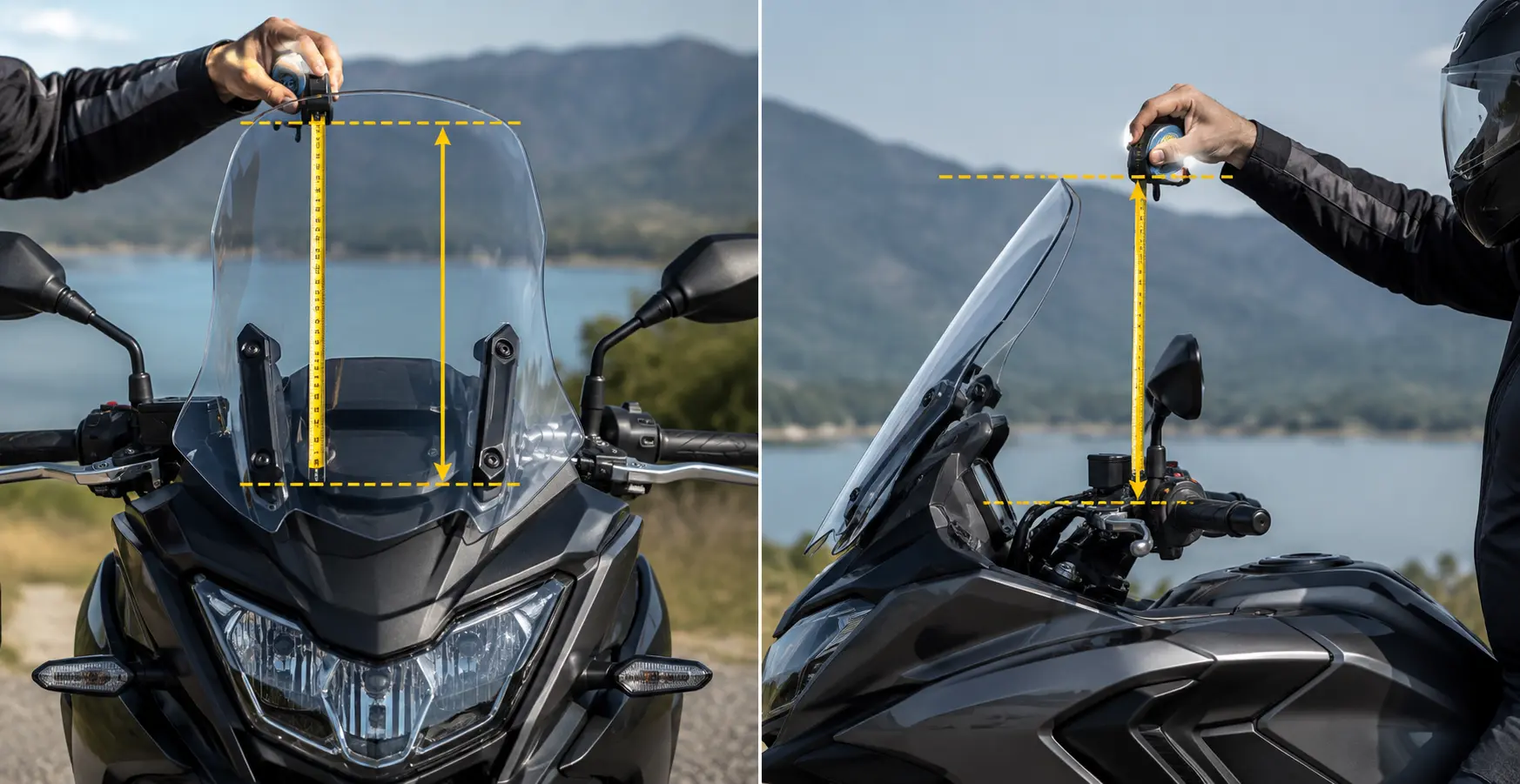
How to Measure Motorcycle Windshield Height?
This is the step most riders skip. They buy a windshield based on what looks right or what the product description says fits their model. The correct approach takes 10 minutes and prevents buying the wrong height twice.
1. Sit on your bike in your normal riding position. Do not lean forward or sit up straight in your actual riding posture at highway speed.
2. Have someone hold a straight edge or tape measure vertically from the top of your helmet down. Note the height of your line of sight — where your eyes are while looking straight ahead at road level.
3. The correct windshield top edge should be at least 2 to 3 inches BELOW your line of sight. This ensures you are looking over the screen, not through it, while the screen still deflects wind below your helmet.
4. Check the angle. A windshield angled more steeply backward deflects air more aggressively than a more vertical screen. On sport bikes with a forward riding position, this angle matters as much as height.
5. Account for your helmet height. The windshield height that works with your current helmet may not work if you change helmet styles.
| The 2-3 inch rule: The top edge of your windshield should sit 2 to 3 inches below your eyes when seated in your normal riding position. Too many riders aim for the screen top to be at eye level, which creates the buffeting problem they were trying to solve. |
Signs Your Motorcycle Windshield Has the Wrong Height
When the Windshield Is Too Short
- Turbulent buffeting hitting your helmet or visor directly at highway speed
- Your head is pulled backward constantly by wind pressure
- Significant wind noise inside your helmet even at moderate speeds
- Neck and shoulder fatigue that increases directly with speed
- The wind hits you in the chest and shoulders without any protection
When the Windshield Is Too Tall
- You are looking through the windshield rather than over it
- Road spray, bugs, and road film accumulate in your direct line of sight
- Turbulence from behind the screen hits your body rather than passing over
- Wind noise is actually worse than no windshield because of turbulent wake
- Visibility is reduced, especially in rain or low-light conditions
Windshield Height by Riding Style and Bike Type
| Bike Type / Riding Style | Typical Correct Height | Key Consideration |
| Naked/standard bike, city | Short to medium — 12 to 16 inches | Primarily cosmetic and chest protection, not full highway wind management |
| Naked/standard bike, highway | Medium — 16 to 20 inches | Enough deflection to reduce chest fatigue on longer highway runs |
| Cruiser, highway touring | Medium to tall — 18 to 24 inches | Upright position means screen needs more height to clear helmet |
| Sport bike, aggressive position | Short to medium — 10 to 16 inches | Forward lean brings head closer to screen — tall screens cause buffeting |
| Adventure / ADV bike | Medium to tall — 16 to 24 inches | Variable riding positions require adjustable height screens where possible |
| Full touring / bagger | Tall — 22 to 28 inches or more | Designed for sustained highway comfort with full wind management |
Adjustable vs Fixed Windshields: Which Is Better?
Adjustable windshields allow the rider to change screen height on the fly, accommodating different riding positions, passenger load, and speed ranges. They are more expensive and add mechanical complexity, but for riders who do a mix of city and highway riding or carry passengers regularly, the flexibility is worth the premium.
Fixed windshields are simpler, lighter, and less expensive. They are the correct choice when your riding is consistent, primarily touring at highway speeds, or primarily city riding where a short screen is cosmetic only.
According to rider community feedback, adjustable screens are most valued by adventure riders who switch between upright off-road and forward touring postures during the same ride. For street and cruiser riders with a consistent posture, a correctly sized fixed screen is equally effective and more reliable.
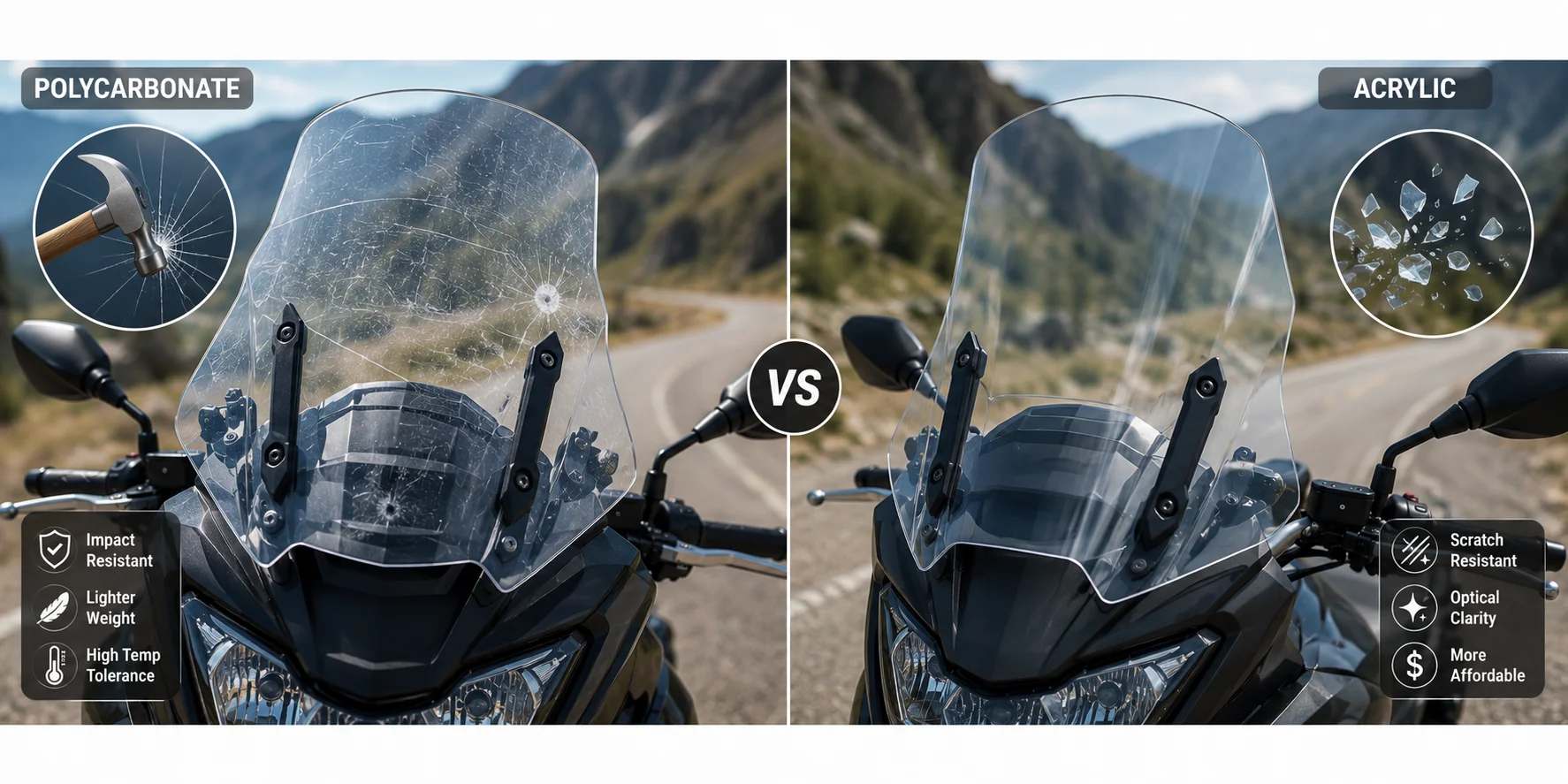
Motorcycle Windshield Material: Polycarbonate vs Acrylic. What to Choose?
| Material | Impact Resistance | Scratch Resistance | Optical Clarity | Cost |
| Polycarbonate | Excellent — flexible, resists cracking | Moderate — scratches more easily | Very good | Higher |
| Acrylic (Plexiglas) | Moderate — can crack on hard impact | Better — more surface hardness | Excellent — clearest optical quality | Lower |
For most street and touring riders, polycarbonate is the better choice because impact resistance from road debris matters more than scratch resistance. Acrylic screens are popular for their optical clarity but are more vulnerable to stress cracking in cold weather and from impact.
For all related motorcycle parts and accessories, browse the full Motorcycle Parts category. Fitment confirmation is available 24/7, so make sure to confirm before your order ships.
Conclusion
The right motorcycle windshield height is the one that deflects air cleanly above your helmet without creating turbulence at helmet level. Too short means buffeting and neck fatigue. Too tall means you are looking through a dirty screen with turbulent air hitting your body from behind the screen. The 2 to 3 inch rule below your line of sight, measured while seated in your actual riding position, is the reliable starting point for any bike and any rider.
Material matters for durability and clarity, adjustability matters for versatile riding styles, and fitting to your exact bike ensures the mounting hardware and profile work correctly from installation day one.
Browse Aliwheels‘ Motorcycle Windshields and Windscreens category, filtered by your make and model, to find the right height for your riding setup.
Frequently Asked Questions
Q: Why does my new motorcycle windshield make buffeting worse than no windshield at all?
A: This is almost always a height problem. A windshield that is slightly too short creates a concentrated turbulent wake at exactly helmet height, which is worse than the direct but laminar airflow with no screen. The fix is a taller screen that moves the turbulent zone above helmet level, or an adjustable screen that lets you dial in the correct position for your riding posture.
Q: How do I know what height windshield to order without trying it first?
A: Use the 2 to 3 inch rule: the screen top should be 2 to 3 inches below your eyes when seated in your normal riding position. Measure yourself on the bike with your exact helmet on. Then compare it to the screen height dimension in the product listing. Many aftermarket windshield manufacturers also publish height charts by model and rider height as a starting reference.
Q: Do I need a windshield if I only ride in the city?
A: For purely urban riding at speeds below 40 mph, a windshield delivers minimal aerodynamic benefit. Where it does help in city riding is blocking direct wind chill in cold weather and providing some protection from rain. Many city riders choose short decorative screens for aesthetics rather than wind management. For any meaningful highway riding, a correctly sized windshield makes a significant fatigue difference.
Q: Can I trim my motorcycle windshield to make it shorter?
A: Yes, polycarbonate windshields can be trimmed with a fine-tooth saw or jigsaw, followed by edge finishing with progressively finer sandpaper. Acrylic screens are more prone to stress cracking during cutting and require slower cutting speeds and more careful technique. Mark your cut line carefully, work slowly, and finish the edge smoothly to prevent cracking from road vibration. When in doubt, buy a shorter screen rather than cutting a taller one.
Q: What is the difference between a windshield and a windscreen?
A: No functional difference. “Windshield” and “windscreen” are terms for the same component. “Windshield” is the more common US term. Windscreen is common in UK and Australian markets. The same product is described by both names depending on the manufacturer’s origin.