



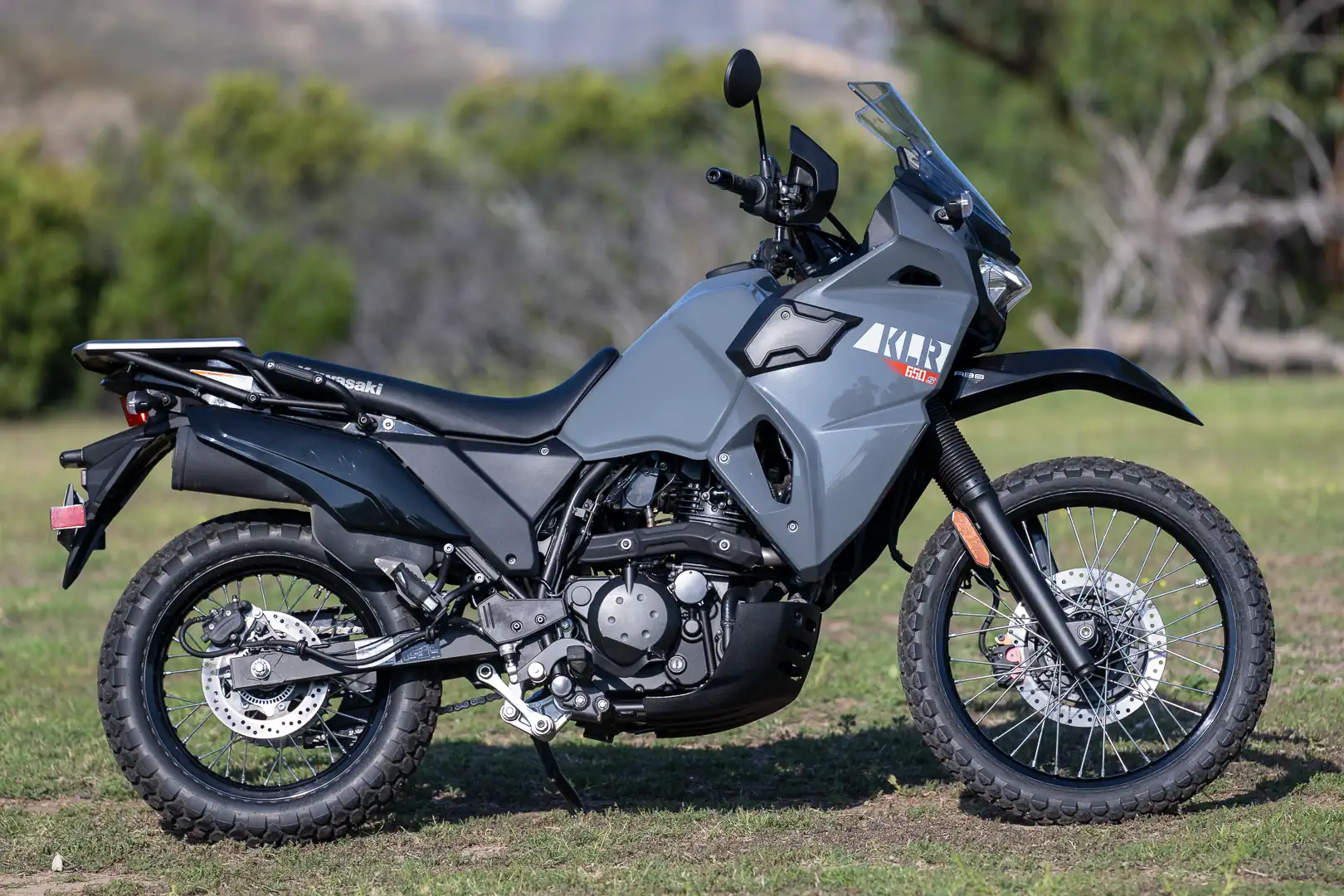

Ask any Kawasaki KLR 650 owner about their exhaust, and you’ll likely get a strong opinion. Some love the heavy factory muffler for its quiet, reliable performance. Others can’t wait to swap it for something lighter. Almost everyone has thoughts on which aftermarket option is actually worth the money.
This guide breaks down what KLR 650 owners actually say about their exhaust options, based on years of ongoing discussion across one of the largest KLR-focused communities online, so you can make the right choice for your riding style.
Why the Stock Exhaust Divide Opinion?
The factory KLR 650 muffler is big, heavy, and admittedly not much to look at. Owners often compare it to a barbecue grill or a lawnmower muffler. But it’s also quiet, reliable, and doesn’t need repacking as most aftermarket options do.
This tradeoff- weight and looks versus reliability and quiet operation is exactly why the exhaust upgrade conversation never really ends on KLR forums. With over 362,000 posts and 32,000 members in one dedicated KLR community alone, this is clearly a topic riders care deeply about.
What Riders Say About Going Aftermarket?
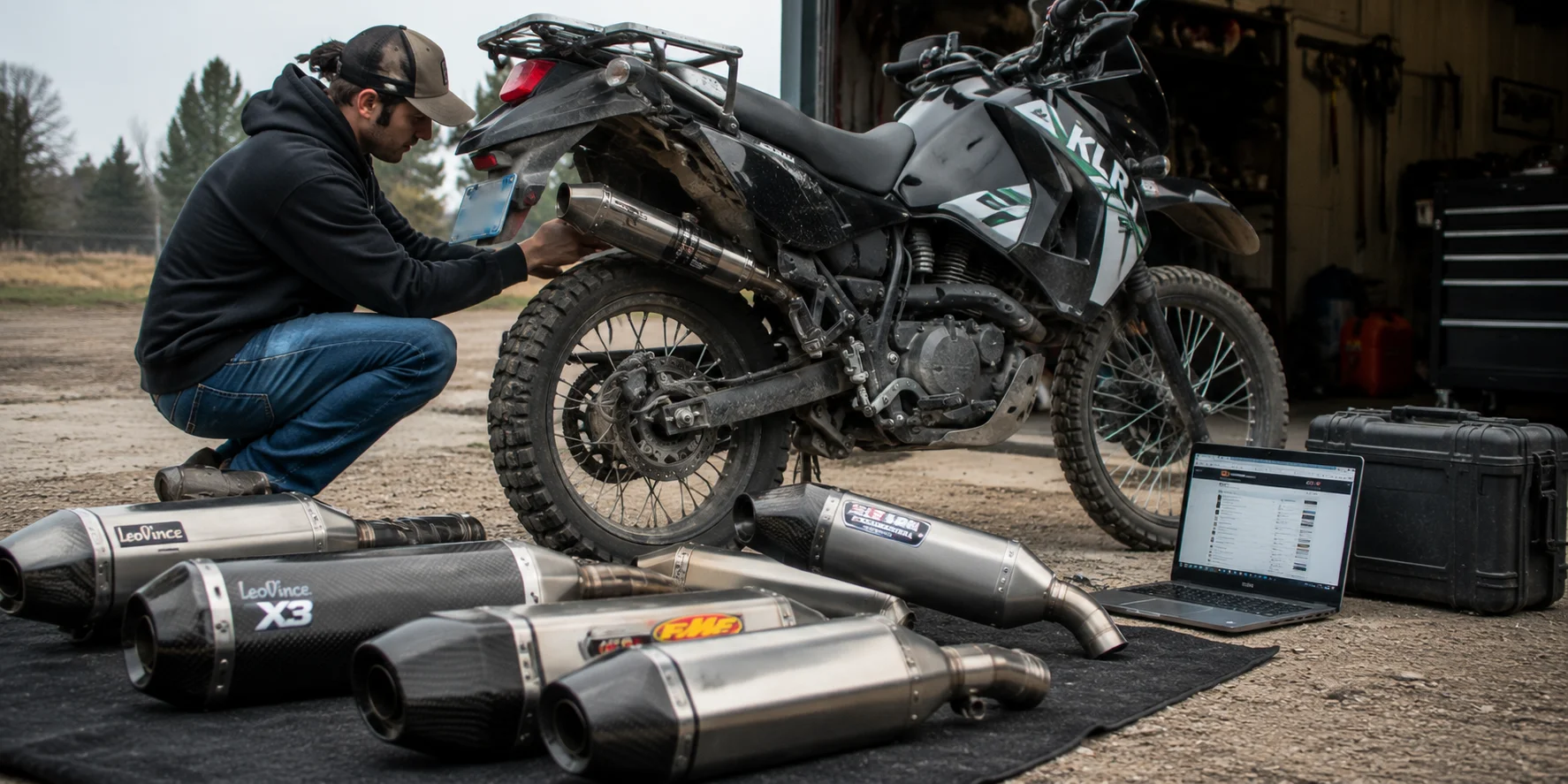
Weight savings is the biggest draw. Since the KLR is already a heavy bike, shedding a few pounds from the exhaust is one of the more noticeable changes riders report after swapping.
Sound level varies dramatically between brands. This is where owner experiences differ most. Some aftermarket options like the LeoVince X3 run around 94 decibels, close to stock levels, while others like certain FMF and Big Gun setups run noticeably louder, with some riders describing them as “hearing damage loud” without earplugs.
Repacking requirements catch new owners off guard. Nearly every aftermarket exhaust except a few premium options needs periodic repacking to maintain its sound and performance. Riders who skip this maintenance report their exhaust getting progressively louder over time as the packing material burns out.
Jetting and fueling matter more than expected. Multiple owners warn that installing an aftermarket exhaust without adjusting your carburetor or fuel mapping can cause performance issues, including flat spots in the power band. The stock setup runs lean from the factory, and changing the exhaust without accounting for that can do more harm than good.
Comparing the Most Discussed Options
LeoVince X3. Consistently mentioned as a top choice among owners who want quieter performance without frequent repacking. Runs around 94 decibels and holds up well over thousands of miles without significant sound increase.
Lexx. A budget-friendly alternative in a similar quiet range as the LeoVince, though it does require periodic repacking. Popular among owners who don’t mind occasional maintenance in exchange for a lower upfront cost.
FMF Q4. Slightly louder than the LeoVince and Lexx options, generally described as having a pleasant sound without being excessive, though opinions vary based on individual tolerance for noise.
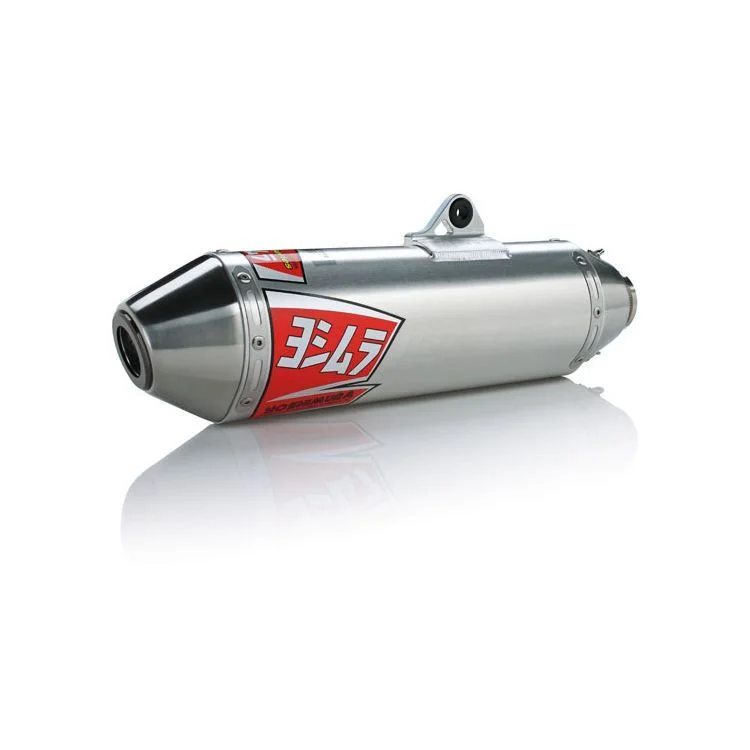
Yoshimura RS-2. Praised for its lightweight and appearance, but multiple owners note it runs louder than they expected, especially at wide-open throttle.
Big Gun systems. Mixed reviews. Some owners report years of trouble-free use, while others cite customer service concerns and higher noise levels than anticipated.
Is an Aftermarket Exhaust Actually Worth It?
This depends entirely on what you’re optimizing for. If pure performance is your goal, most experienced KLR owners agree that aftermarket exhausts offer little to no real horsepower gain on their own. The main benefits are weight reduction and sound, not increased output.
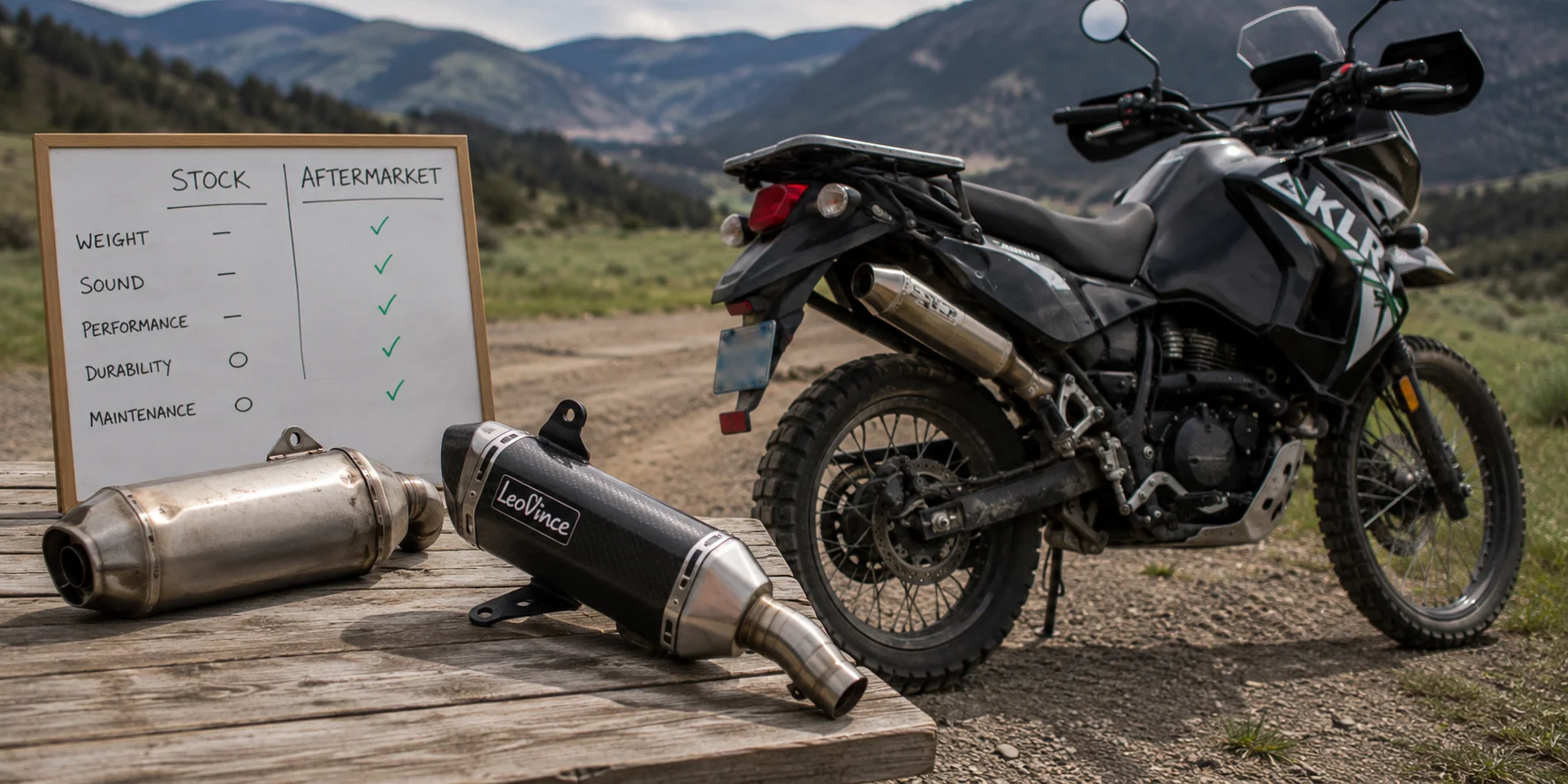
If you’re chasing a lighter bike and don’t mind occasional maintenance, an aftermarket option makes sense. If you prioritize a quiet, low-maintenance setup and don’t mind the extra weight, plenty of experienced owners genuinely prefer sticking with stock.
Common Mistakes to Avoid
Skipping the jetting adjustment. If you switch to a free-flowing aftermarket exhaust without adjusting your carburetor, you risk running lean, which can cause engine damage over time, not just performance issues.
Choosing based on looks alone. Several riders admit they picked an exhaust primarily for appearance, then regretted it once they realized how loud it actually was on long rides.
Ignoring local noise regulations. Some riders specifically mention needing a legally compliant, spark-arrestor-equipped exhaust for certain trails or areas. Check your local requirements before buying based on sound alone.
Not accounting for the catalytic converter. Since the KLR’s catalytic converter sits inside the factory muffler can, any aftermarket midpipe needs the correct bend and connection to work properly. Not every generic option accounts for this.
Installing Your New Exhaust
Once you’ve chosen the right option for your riding style, installation generally follows these steps:
- Let the bike cool completely before starting.
- Remove the factory muffler by disconnecting it from the header pipe and unbolting the mounting brackets.
- Position the new exhaust system, aligning it with the factory mounting points.
- Secure all connections and brackets according to the manufacturer’s torque specifications.
- Adjust your carburetor jetting if your new exhaust significantly changes airflow.
- Start the bike and listen for exhaust leaks before your first ride.
Shop Kawasaki KLR 650 Parts
If you’re upgrading your exhaust, it’s worth checking your intake and jetting components at the same time, since these work together to keep your engine running properly. Aliwheels has the Kawasaki KLR 650 Exhaust (2022-2023), built as a direct fitment option for your model year.
Conclusion
The KLR 650 exhaust debate has been running for years, and it’s not likely to settle anytime soon. What matters most is matching your choice to your actual priorities, whether that’s weight savings, sound level, or long-term low maintenance. Do your research on decibel levels, factor in repacking requirements, and don’t skip the jetting conversation if you go aftermarket.
Whatever you choose, make an informed decision based on what actual owners have already learned through years of trial and error, rather than guessing your way through it.