




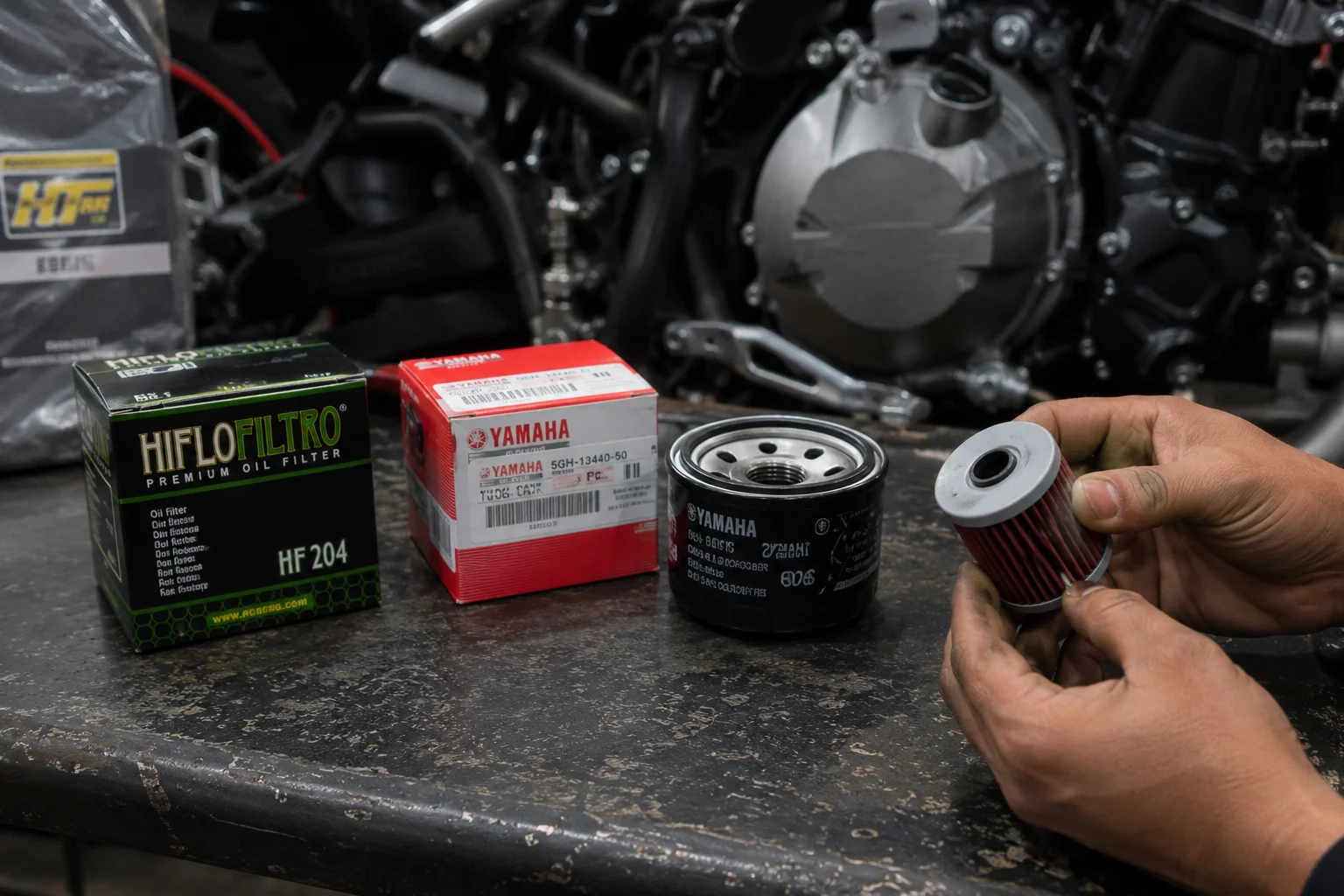

Your motorcycle’s oil filter plays a critical role in protecting the engine by removing dirt, metal particles, and other contaminants before they circulate through vital components. Choosing the correct oil filter helps maintain proper oil flow, improves engine protection, and supports long-term reliability.
The right filter isn’t simply one that fits the threads. It must match your motorcycle’s specifications, including the correct dimensions, filtration efficiency, pressure rating, and bypass valve design recommended for your engine.
This guide explains how to choose the right motorcycle oil filter, the key specifications to consider, and how to find the correct filter for your make, model, and year.
Browse the complete Aliwheels Motorcycle Oil Filters category for certified options by make and model.
Why the Oil Filter Choice Matters More Than You Think
Not all motorcycle oil filters are built to the same standard. While they may look similar on the outside, their internal design, filtration media, and pressure ratings can vary significantly.
A high-quality oil filter removes harmful contaminants while maintaining proper oil flow throughout the engine. An incorrect or low-quality filter may reduce filtration efficiency, restrict oil flow, or fail to protect the engine during cold starts.
These issues rarely cause immediate problems. Instead, they contribute to gradual engine wear over time, affecting bearings, internal components, and overall engine life. Choosing a model-specific oil filter that meets your motorcycle manufacturer’s specifications is one of the simplest ways to protect your engine and maintain long-term performance.
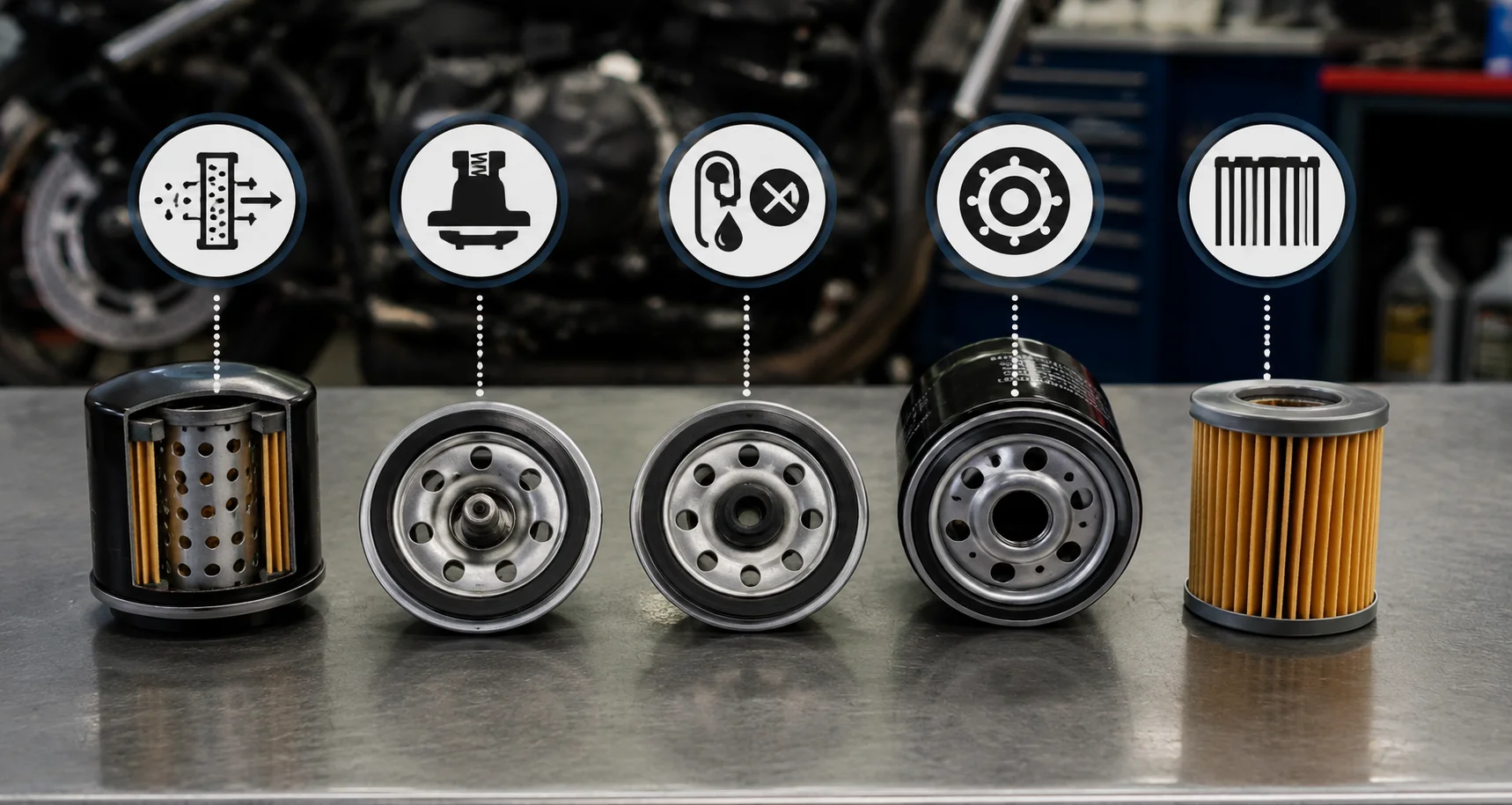
5 Things to Look for in a Motorcycle Oil Filter
1. Filtration Rating
A quality oil filter should capture fine contaminants while maintaining proper oil flow. Filters rated between 10 and 25 microns provide excellent protection for most motorcycle engines.
2. Bypass Valve
The bypass valve allows oil to continue circulating if the filter becomes clogged or during cold starts. A filter with the correct bypass valve rating helps maintain oil pressure without compromising engine protection.
3. Anti-Drain Back Valve
This one-way valve prevents oil from draining out of the filter when the engine is off. It reduces dry starts by ensuring oil reaches critical engine components more quickly after startup.
4. Correct Fitment
Always choose a filter designed for your motorcycle’s exact make, model, and year. Matching the correct thread size, sealing surface, and dimensions is essential for a secure, leak-free installation.
5. Filter Media Quality
Synthetic or blended filter media generally provides better filtration, improved durability, and more consistent performance than standard paper media, especially when used with synthetic engine oils or longer service intervals.
Aliwheels offers motorcycle oil filters for a wide range of makes and models, making it easy to find the correct replacement for your next oil change. Whether you ride a sport bike, cruiser, touring motorcycle, adventure bike, or dual-sport, you’ll find filters designed for reliable fitment and dependable engine protection.
At Aliwheels, oil filters are available for all motorcycle brands, including:
- Honda
- Yamaha
- Kawasaki
- Suzuki
- Harley-Davidson
- BMW
- Ducati
- KTM
- Triumph
- Aprilia, and more.
Each product is matched to specific models and production years, helping you choose the correct filter with confidence. Simply search by your motorcycle’s make, model, and year to find a compatible replacement.
Whether you’re performing routine maintenance or stocking up on service essentials, choosing the correct oil filter helps protect your engine and maintain consistent performance throughout every ride.
OEM vs. Aftermarket Motorcycle Oil Filters
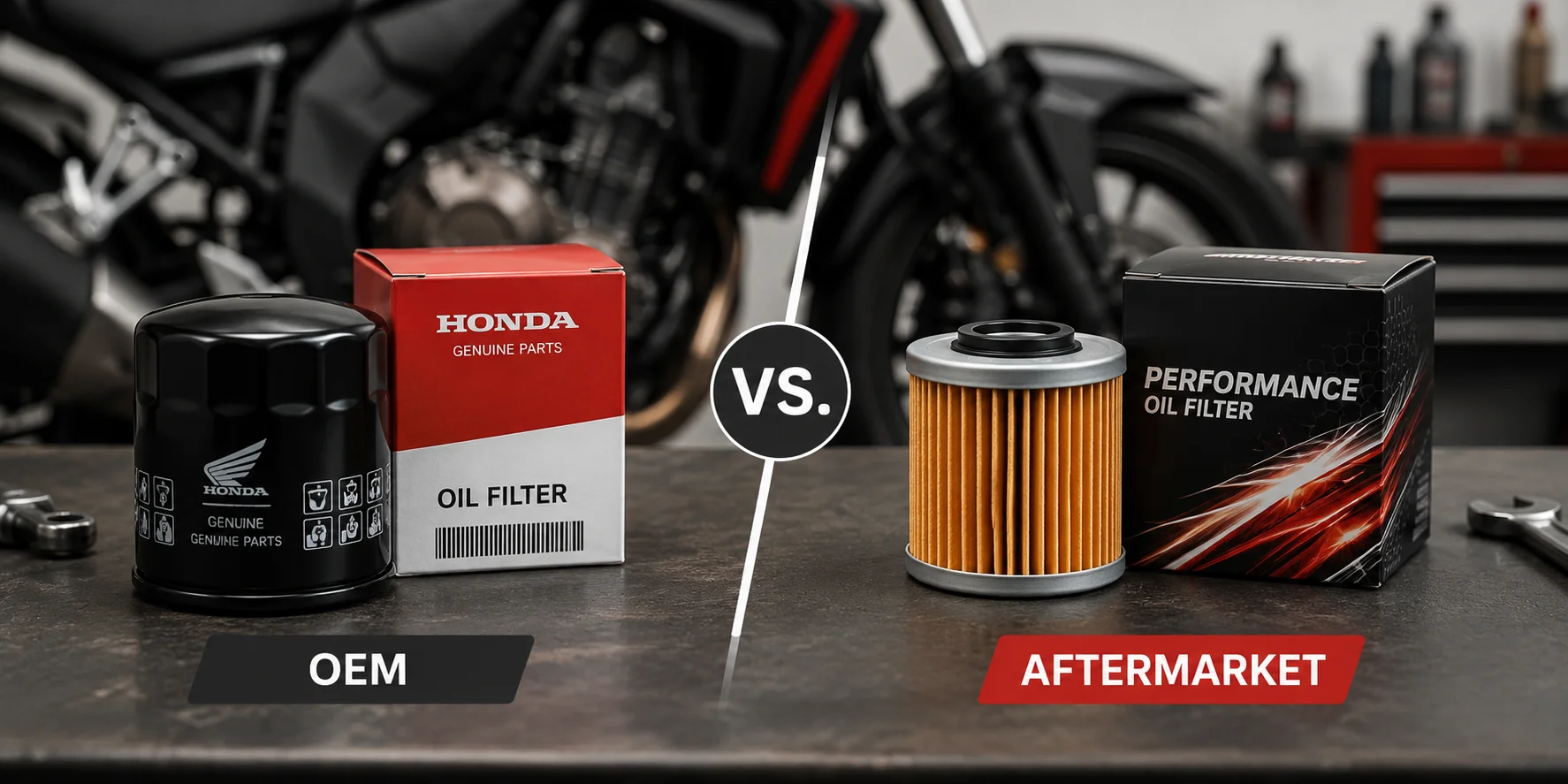
OEM oil filters are designed for your motorcycle, but a quality aftermarket filter that meets the same specifications can provide comparable engine protection at a more competitive price.
The key is choosing a certified filter with verified filtration performance, the correct bypass valve, and an anti-drain back valve where required. These features matter far more than the brand name on the box.
Avoid unbranded filters with no published specifications or confirmed fitment, as their performance and quality cannot be verified.
When buying an aftermarket oil filter, always choose one that’s designed for your motorcycle’s exact make, model, and year to ensure proper fitment and reliable engine protection.
When Should You Replace a Motorcycle Oil Filter?
Replace your motorcycle oil filter every time you change the engine oil. Reusing an old filter means fresh oil immediately passes through a filter that’s already holding dirt, metal particles, and other contaminants from the previous service.
Since an oil filter is relatively inexpensive compared to the cost of an oil change or engine repairs, replacing it at every service is the simplest and most cost-effective way to protect your engine and maximize its lifespan.
Conclusion
Choosing the right motorcycle oil filter is about more than finding one that fits. Look for a filter designed for your bike’s exact make, model, and year, with quality filtration, the correct bypass valve, and an anti-drain back valve where required.
A certified, model-specific oil filter helps keep contaminants out of your engine, maintains proper oil flow, and supports long-term reliability. Replace it with every oil change, and you’ll give your engine the protection it needs for miles to come.
Frequently Asked Questions
Q: Does the motorcycle oil filter brand matter?
A: Yes. Fitment is important, but filtration quality, bypass valve design, and overall construction determine how well the filter protects your engine.
Q: Can I use a car oil filter on my motorcycle?
A: No. Motorcycle oil filters are designed for different oil flow, pressure, and engine requirements. Always use a filter made for your specific motorcycle.
Q: How do I choose the right motorcycle oil filter?
A: Match the filter to your bike’s make, model, and year. Choose a certified filter with quality filtration and the correct specifications for your engine.
Q: What happens if I use the wrong oil filter?
A: An incorrect filter can reduce oil flow or filtration efficiency, leading to increased engine wear and potential long-term damage.
Q: Do I need a special oil filter for synthetic oil?
A: Not necessarily. The most important factor is using a high-quality filter that meets your motorcycle’s specifications, whether you use conventional or synthetic oil.