




Clutch free play is one of those small adjustments that quietly controls how good or bad your motorcycle feels. When it is set correctly, shifting feels smooth, launches are predictable, and the clutch lasts longer. When it is wrong, even a perfectly healthy clutch can feel grabby, vague, or worn out.
Many riders chase slipping clutches, hard shifts, or premature clutch wear without realizing the issue starts at the lever. The good news is that adjusting motorcycle clutch free play is simple, requires minimal tools, and can completely change how your bike rides.
What clutch free play actually means
Clutch free play is the small amount of movement at the clutch lever before the clutch cable or hydraulic system begins to disengage the clutch plates. This free movement ensures the clutch fully engages when the lever is released and fully disengages when pulled in.
Too little free play means the clutch never fully engages. Too much free play means the clutch never fully disengages. Both situations cause problems that feel mechanical but are often just adjustment issues.
Why correct clutch free play matters
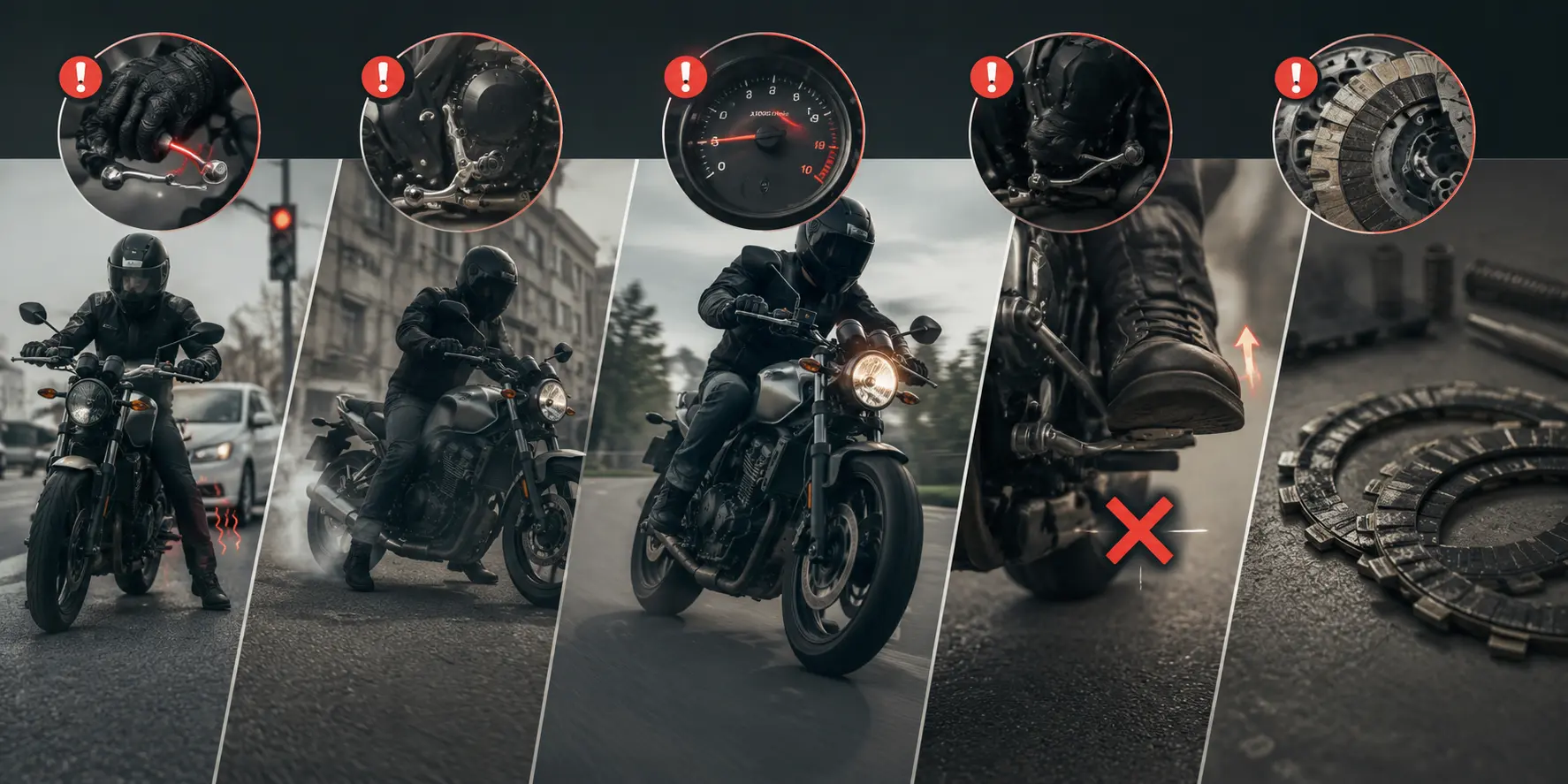
Correct clutch free play protects your clutch plates from constant partial engagement. When free play is too tight, the clutch can slip under load, overheat, and wear out far faster than expected. Riders often mistake this for weak springs or bad friction plates.
Too much free play causes incomplete disengagement. This leads to hard shifting, clunky gear changes, creeping at stoplights, and difficulty finding neutral. In traffic, it can feel like the bike is fighting you.
Proper adjustment improves shifting feel, clutch life, and overall ride control, especially at low speeds.
Common signs your clutch free play is wrong
Riders usually notice symptoms long before checking the adjustment. These include slipping under hard acceleration, difficulty shifting into first gear, a jerky takeoff from a stop, or a clutch lever that feels either too tight or too loose.
If your clutch engagement point keeps changing or the lever feels different from one ride to the next, free play adjustment should be your first check.
Tools you will need
Most motorcycles only require basic hand tools. Typically, you will need an open-end wrench for the adjuster lock nut and your hands. Some bikes allow adjustment entirely by hand at the lever.
A service manual is helpful, but not mandatory, as most manufacturers specify similar free play ranges.
How much free play is correct
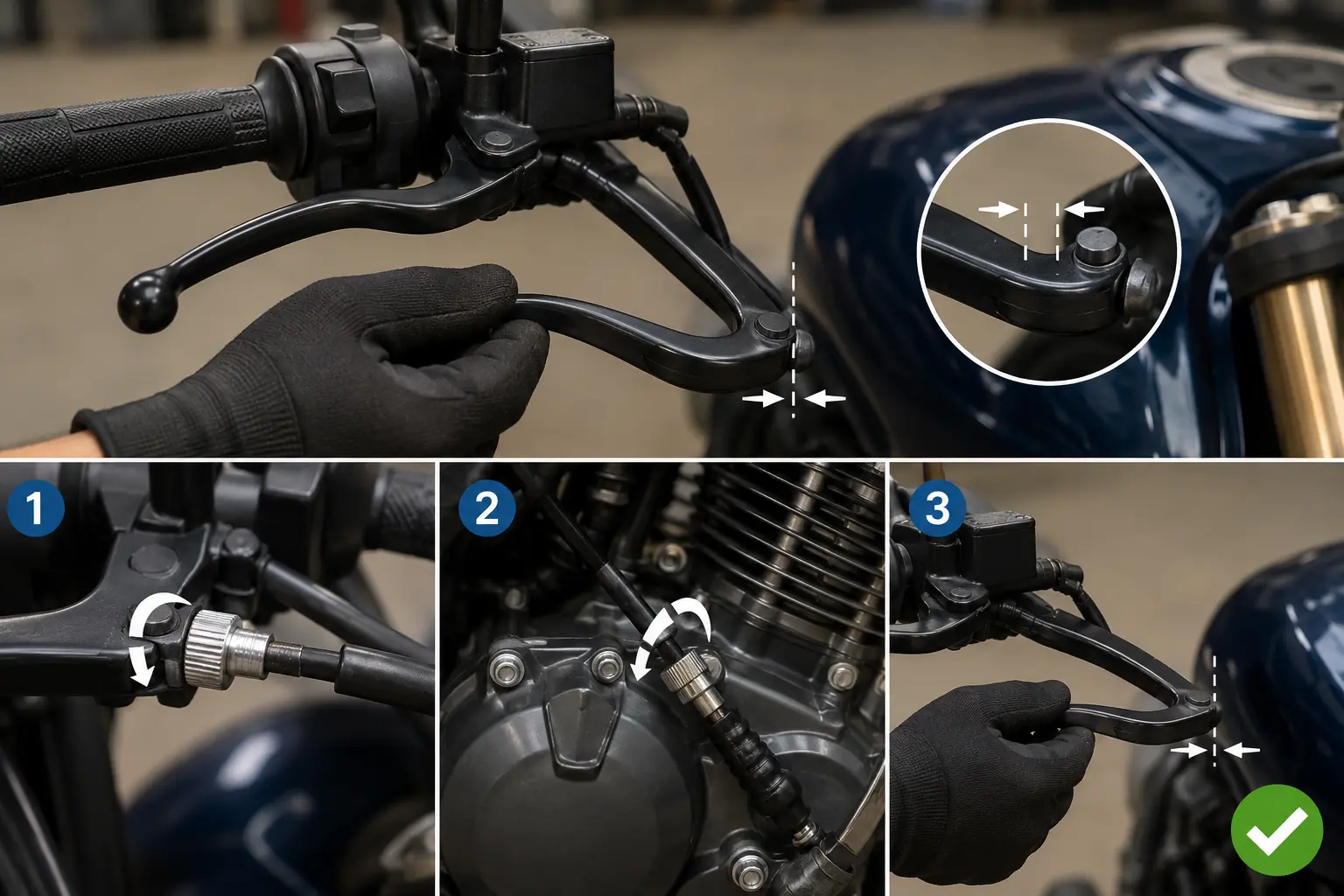
Most motorcycles require about 2 to 3 millimeters of free play at the clutch lever. This is measured at the lever tip, not at the pivot. Some manufacturers specify a slightly wider range, but the goal is the same.
You should feel a small amount of slack before resistance begins. That initial movement is the free play.
Adjusting clutch free play at the lever
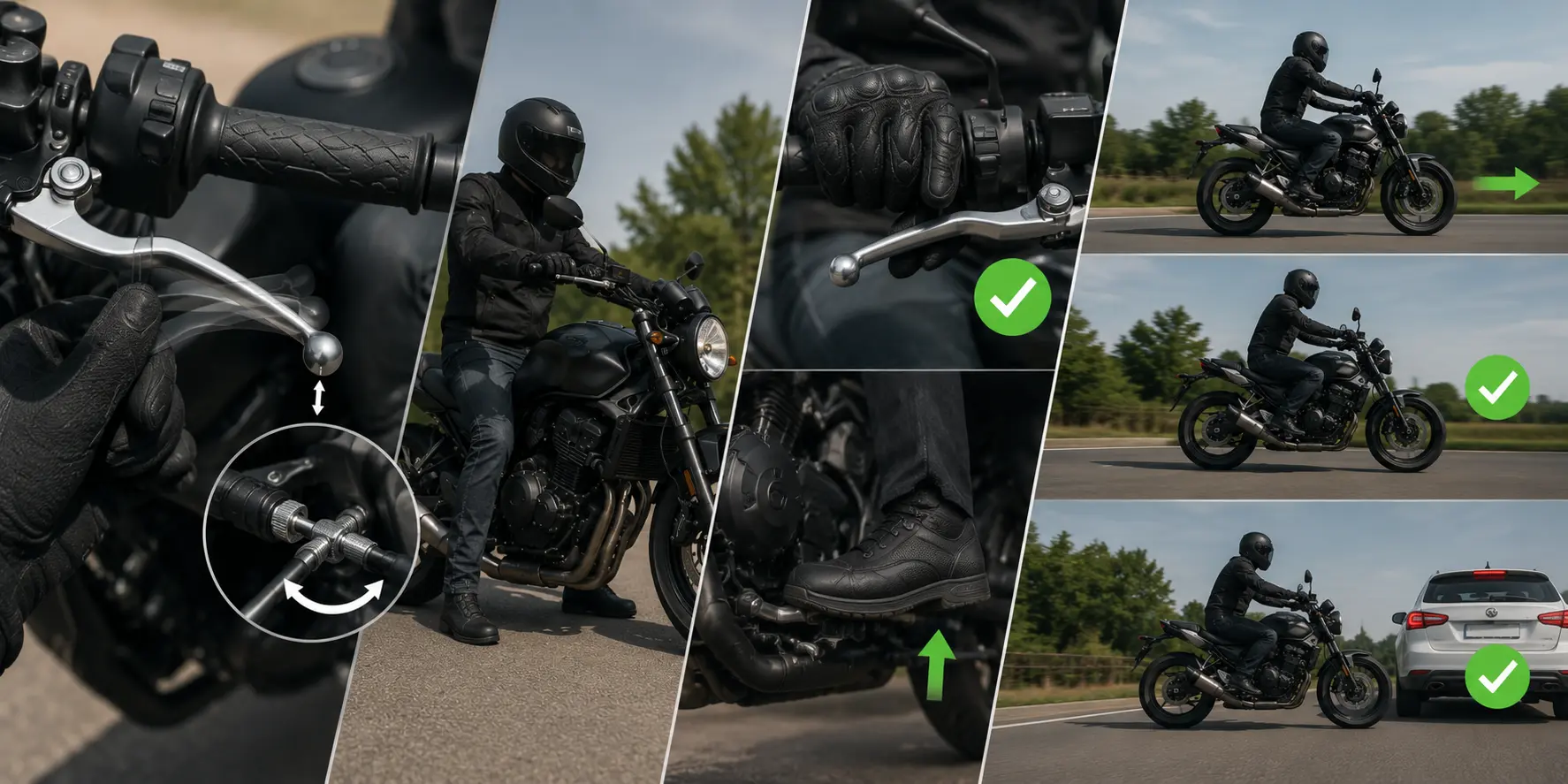
Many motorcycles have a barrel adjuster at the clutch lever. This is the easiest and most common adjustment point.
Start by loosening the lock nut. Turn the adjuster out to reduce free play or in to increase it. Make small adjustments, checking the lever movement each time.
Once you achieve the correct free play, tighten the lock nut while holding the adjuster in place. Always recheck the free play after tightening, as it can change slightly.
Adjusting clutch free play at the engine end
If the lever adjuster runs out of range, adjustment at the clutch cable near the engine may be necessary. This adjuster typically sits where the cable meets the clutch actuator arm.
Loosen the lock nut, turn the adjuster to achieve the correct slack, then retighten. After engine-end adjustment, fine-tune at the lever for precision.
This two-step method ensures proper cable tension across the entire range.
Hydraulic clutch considerations
Hydraulic clutches work differently. They usually self-adjust and do not have traditional free play adjustments. However, lever position and system condition still matter.
If a hydraulic clutch has no free play feel at all or begins slipping as it heats up, the issue may be air in the system, contaminated fluid, or a failing master or slave cylinder rather than adjustment.
Checking clutch operation after adjustment
After adjusting, pull the clutch lever several times to settle the cable. Start the bike and engage first gear with the clutch fully pulled in. The bike should not creep forward.
Take a short test ride. Pay attention to engagement point, smoothness during shifts, and feel under acceleration. A properly adjusted clutch should feel predictable and consistent.
Common mistakes riders make
One of the biggest mistakes is eliminating all free play to get a shorter lever throw. This feels good temporarily but causes long-term damage.
Another mistake is adjusting the clutch when the engine is hot. Cables expand with heat, which can throw off adjustment once the bike cools.
Ignoring cable condition is also common. A dry or frayed cable can mimic adjustment issues. Always inspect the cable before blaming the clutch itself.
How often should it be checked
Clutch free play should be checked every few thousand miles or whenever shifting feel changes. New cables stretch slightly over time, and regular adjustment keeps everything working as intended.
Riders who do their own maintenance often catch clutch issues early simply by paying attention to lever feel.
Parts quality matters
If your clutch still feels inconsistent after proper adjustment, worn cables, aftermarket levers with incorrect geometry, or poor-quality replacement parts may be contributing factors. Using well-matched components designed for your specific motorcycle makes a noticeable difference.
For riders sourcing reliable motorcycle parts, including clutch cables, levers, and related components, Aliwheels is a trusted option many riders turn to for fitment-specific solutions across multiple brands.
Final thoughts
Clutch free play adjustment is simple, but its impact is huge. It affects how your motorcycle launches, shifts, and holds power under load. Many clutch problems blamed on worn parts are actually caused by incorrect adjustment.
Taking a few minutes to set clutch free play correctly can restore smoothness, extend clutch life, and make every ride more enjoyable. It is one of the easiest ways to make your motorcycle feel right again without replacing a single major component.