


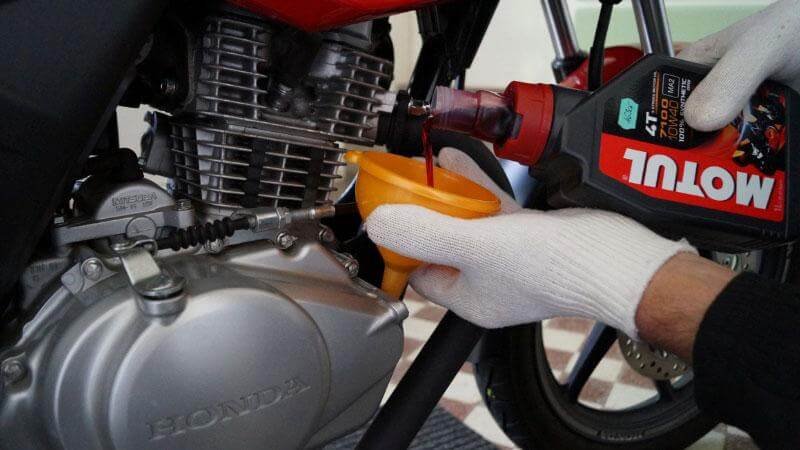

Few motorcycle topics generate as much confusion, debate, and straight-up neglect as oil changes. Search terms like how often should you change motorcycle oil, motorcycle oil change interval, and is engine oil really that important for bikes consistently rank high because riders genuinely do not know who to believe anymore.
Manufacturers give one answer. Old school riders give another. Forums add ten more opinions. Somewhere in between, many riders end up ignoring oil changes far longer than they should, often without realizing the long-term cost.
This is not just a maintenance question. It is a reliability, performance, and resale value question. And the reason riders ignore oil changes has more to do with psychology and modern riding habits than ignorance.
Let’s break it down properly.
Why Motorcycle Oil Is Not Like Car Oil?
One of the biggest misconceptions comes from car ownership. Many riders assume oil behaves the same way in motorcycles as it does in cars. It does not.
Motorcycle engines often share oil between the engine, gearbox, and clutch. That means the oil is exposed to far more stress. High RPMs, clutch friction, gear shear forces, and higher operating temperatures all break oil down faster.
This is why searches like motorcycle oil breaks down faster and why bikes need frequent oil changes exist in the first place.
Even the best synthetic oil degrades more quickly in a motorcycle than in most cars.
The Manufacturer Interval Is Not the Whole Truth
Most owners’ manuals recommend oil changes every 3,000 to 5,000 miles, sometimes longer on newer bikes. Riders see this and assume they are safe pushing limits.
But here is the nuance most people miss.
Manufacturers base oil change intervals on ideal conditions. Consistent riding. Warm engines. Minimal short trips. Proper fuel quality. Regular highway speeds. Real-world riding is rarely ideal.
Short city rides, stop-and-go traffic, aggressive throttle use, heat soak, and idling all degrade oil much faster. This explains why motorcycle oil change frequency, city riding, is a rising search term.
If your riding does not match the manufacturer’s test environment, the interval no longer applies cleanly.
Why Riders Delay Oil Changes Even When They Know Better?
Riders do not ignore oil changes because they think oil is unimportant. They ignore them because motorcycles often give fewer warning signs than cars.
A bike may still start, rev, and ride fine even when the oil quality has dropped significantly. There is no dashboard reminder screaming for attention on most motorcycles.
This leads to searches like signs motorcycle oil needs changing and can old oil damage motorcycle engine after the damage has already started.
There is also an emotional factor. Riders associate oil changes with downtime. Missing a weekend ride feels worse than pushing maintenance one more week.
How Riding Style Changes Oil Change Needs
Not all motorcycles need the same oil change schedule.
If you ride aggressively, rev high, or ride in hot climates, oil breaks down faster. Riders searching for motorcycle oil change, aggressive riding are already noticing this.
If you commute daily with short trips, moisture and fuel contamination build up in the oil. This is why short rides oil contamination motorcycle is a common search phrase.
Touring riders who log long, steady highway miles often get more life out of oil, but even then, heat and load matter, especially on heavier bikes.
Synthetic vs Conventional Oil Does Not Mean Ignore Intervals
Another reason riders delay oil changes is the belief that synthetic oil removes urgency. Searches like how long does synthetic oil last in a motorcycle show this thinking clearly.
Synthetic oil does resist breakdown better. It handles heat more efficiently and maintains viscosity longer. But it still shears under gearbox loads and absorbs contaminants.
Synthetic oil extends protection, not neglect tolerance.
Using premium oil and skipping changes is like buying premium fuel and never servicing the engine.
What Actually Happens When You Push Oil Too Far
Oil does not suddenly fail. It degrades quietly.
Viscosity drops. Additives wear out. Metal particles circulate longer. Heat transfer becomes less efficient. Clutch feel changes subtly. Shifting gets notchy. Engine noise increases gradually.
This is why riders often search for engine feels rough after an oil change delay or motorcycle shifting worsens over time without realizing oil condition is the root cause.
By the time symptoms become obvious, wear has already occurred.
Mileage Is Not the Only Metric That Matters
One of the most overlooked factors is time.
Even if you ride very little, oil still degrades chemically. Moisture buildup, oxidation, and acid formation happen whether the bike is moving or sitting.
This explains searches like motorcycle oil change based on time or miles.
For most bikes, changing oil at least once a year is essential, even if mileage is low.
Why Some Riders Never Have Problems Despite Long Intervals?
Every rider knows someone who ignores oil changes and never has issues. This fuels complacency.
What most do not see is internal wear accumulating slowly. Bearings do not fail immediately. Cam lobes do not score overnight. Damage builds invisibly.
Often, the cost shows up years later as reduced engine life, oil consumption, or resale value loss. By then, the connection is forgotten.
A Practical Oil Change Rule That Actually Works
Instead of obsessing over exact mileage, experienced mechanics follow a usage-based rule.
Change oil more often if you ride hard, ride short distances, ride in heat, or ride in traffic.
Stretch intervals slightly only if you ride long distances at steady speeds and monitor oil condition closely.
This aligns with why how often should I really change motorcycle oil keeps trending. Riders want a realistic answer, not a generic one.
Oil Changes Are About Longevity, Not Just Clean Oil
The real purpose of oil changes is not fresh color. It maintains lubrication quality under stress.
Oil protects bearings, cams, pistons, and clutch plates. It also carries heat away from critical components. When oil fails, damage compounds fast.
This is why riders who maintain strict oil routines often report smoother engines, cleaner shifting, and longer engine life even at high mileage.
Final Thoughts
Riders ignore oil changes not because they do not care, but because motorcycles rarely punish neglect immediately. The cost is delayed, subtle, and easy to rationalize away.
Understanding how oil works in a motorcycle, how riding style affects degradation, and why time matters as much as miles changes that mindset.
Oil changes are one of the cheapest ways to protect the most expensive parts of your bike. Ignore them long enough, and the price shows up later when it hurts the most.