




The Harley-Davidson Sportster S RH1250S changed what people expected from a Sportster. Revolution Max engine, fully adjustable suspension, Brembo brakes front and rear. It rides nothing like the old iron-fendered Sportsters.
So when RH1250S riders start looking at brake upgrades, the question that comes up most often is this: does a floating rear brake rotor actually improve braking on a bike that already has Brembo hardware? The answer is more nuanced than most parts listings let on.
What a Harley Sportster S RH1250S Floating Rear Brake Rotor Do?
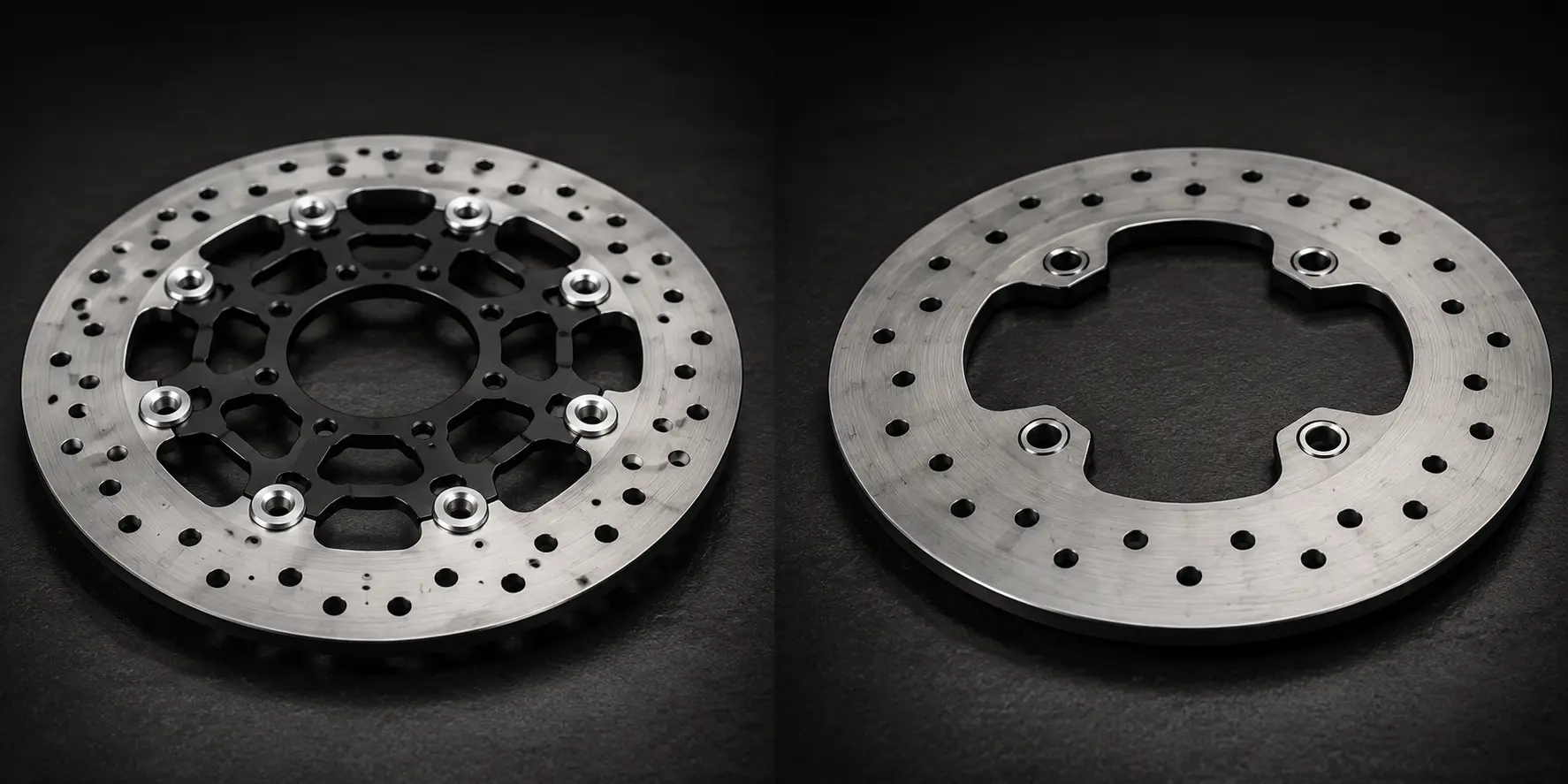
A floating rotor separates the braking ring from the mounting carrier using small metal buttons called bobbins. This allows a small amount of lateral movement between the two pieces.
Under hard braking, the outer braking surface heats up and expands. On a solid rotor, that thermal expansion warps the rotor over time, causing brake pulsation and reduced stopping consistency. A floating design lets the ring expand independently. According to EBC Brakes’ engineering documentation, this reduces thermal distortion under repeated hard braking and maintains a more consistent braking surface throughout a riding session.
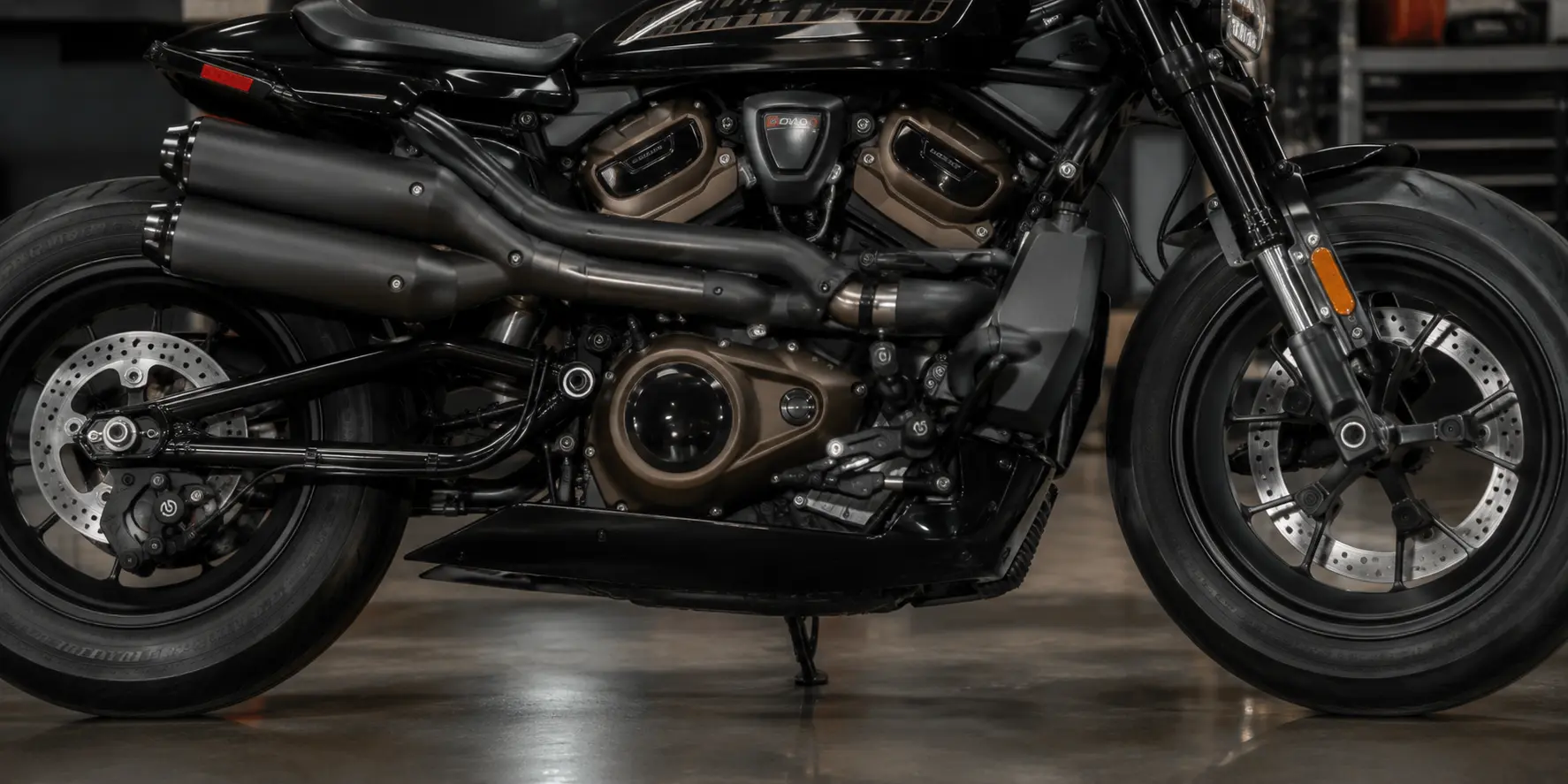
Stock RH1250S Brakes: What You Are Starting With?
| Component | Specification |
| Front Brake | 4-piston Brembo radial monobloc caliper |
| Rear Brake | Single-piston Brembo floating caliper |
| Front Rotor | 300mm dual solid discs |
| Rear Rotor | 260mm solid disc (stock) |
| ABS | Cornering ABS standard on all 2021-2024 models |
| Fitment Years | RH1250S 2021, 2022, 2023, 2024 |
The stock setup is legitimately good. Brembo hardware on both ends is not a spec you typically find in this segment. For most street riding, the stock braking package is entirely adequate.
When a Floating Rear Rotor Makes a Real Difference on the RH1250S?
| Upgrade Worth It If You… | Stock Is Fine If You… |
| Ride two-up with a passenger regularly | Ride primarily in urban or suburban traffic |
| Tour long distances in summer heat | Mostly solo highway riding at moderate intensity |
| Tackle mountain routes with sustained downhill braking | Never notice any brake fade or pulsation currently |
| Do occasional track days or aggressive sport riding | Rarely exceed 100 miles in a single ride |
| Notice brake fade or pulsation on longer rides | Do not ride in extreme heat conditions |
Floating vs Solid Rear Rotor: Full Comparison for the RH1250S
| Factor | Floating Rear Rotor | Stock Solid Rotor |
| Thermal distortion resistance | Superior under repeated heavy braking | Adequate for normal street use |
| Brake feel on long rides | More consistent throughout | Can degrade with heat buildup |
| Noise at low speed | Slight bobbin rattle (normal, dissipates with heat) | Silent |
| Installation complexity | Identical to solid — direct swap | Already installed |
| Longevity under heavy use | Longer due to reduced thermal stress | Standard lifespan |
| Two-up and loaded touring | Clear advantage | Adequate for light use only |
| Urban / low-intensity use | No meaningful benefit | No reason to change |
Get the exact-fit Harley-Davidson Sportster S RH1250S Floating Rear Brake Rotor 2021-2024 from Aliwheels.
Browse Motorcycle Brakes for Harley-Davidson Sportster and Harley-Davidson Parts for related components.
Conclusion
The Harley-Davidson Sportster S RH1250S already comes equipped with a capable Brembo braking system, making it more than adequate for everyday riding. However, riders who regularly tackle mountain roads, ride two-up, tour in hot conditions, or push the bike harder than average may benefit from a floating rear brake rotor. By reducing thermal distortion and maintaining more consistent braking performance during repeated heavy braking, a floating rotor offers a noticeable advantage in demanding conditions. For casual commuting and moderate highway use, the stock solid rotor remains a perfectly effective solution. The right choice ultimately depends on how you ride and whether your current setup shows signs of heat-related brake fade or rotor distortion.
Frequently Asked Questions: Sportster S RH1250S Brake Rotor
Q: Will the floating rear rotor work with the RH1250S cornering ABS system?
A: Yes. The floating rotor is a direct dimensional replacement for the stock solid unit. It interfaces with the ABS tone ring and caliper identically to the OEM rotor. The ABS system does not require any recalibration after a direct-fit rotor swap.
Q: I hear a light rattle from my new floating rotor at low speed. Is something wrong?
A: No. The rattle you hear is the bobbins allowing the outer ring its designed float movement at low speeds and cold temperatures. This is entirely normal on any floating rotor. The sound typically disappears above 20 mph and after the rotor reaches operating temperature.
Q: The RH1250S already has a Brembo caliper. Why would I need to upgrade the rotor?
A: The caliper and rotor are separate components. A Brembo caliper provides excellent clamping force, but the rotor’s thermal management is independent of the caliper quality. Under sustained heavy braking, even the best caliper cannot compensate for a warped rotor. The upgrade addresses rotor thermal behavior, not caliper performance.
Q: How do I measure my rear rotor to confirm it needs replacing before upgrading?
A: Use a micrometer to measure rotor thickness at several points around the braking surface. The Harley service manual lists minimum thickness for the RH1250S rear rotor. If you are near or below minimum, replacement is due regardless of whether you choose floating or solid. Also check for grooves deeper than 0.6mm and any blueing that indicates overheating.
Q: Does a floating rotor affect the rear brake bias on the RH1250S?
A: No. The rotor dimensions and weight are essentially equivalent to the stock solid unit. Floating rotors are typically marginally lighter than solid equivalents, but the difference is not significant enough to alter brake bias perception in normal riding.