



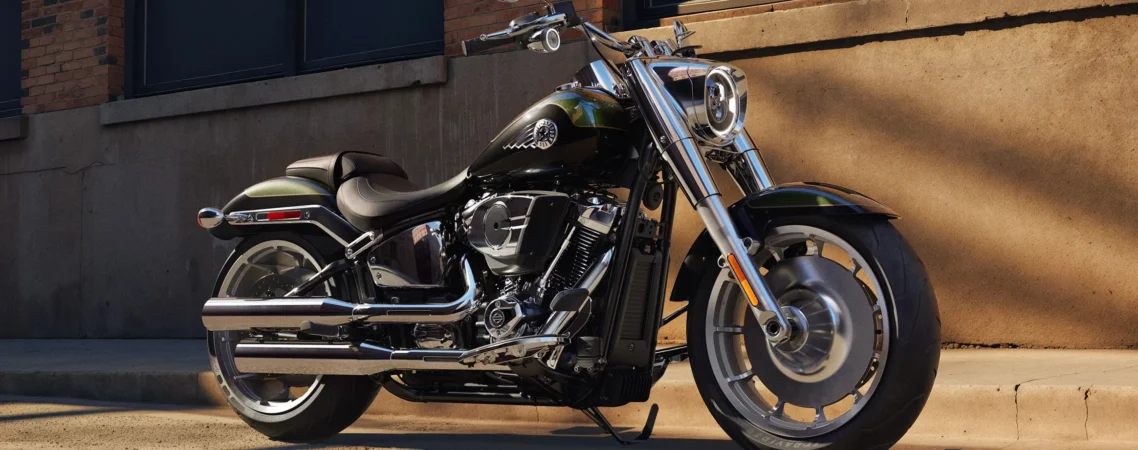
A clunk, rattle, or knocking sound from your Fat Boy’s primary drive is a common issue on Harley Big Twins. This noise often appears or gets worse right after performance upgrades like an exhaust, cam, or air intake. The main culprit is usually the compensator sprocket, which absorbs engine power pulses before they hit the primary chain. While it’s a standard wear item, added torque from performance mods accelerates this wear. That’s why the rattle often starts after a power upgrade, rather than just from age.
This guide explains what the compensator actually does and why modifications make the noise worse. It also covers key primary checks to make before assuming a major engine fault.
What the Compensator Sprocket Actually Does
The compensator sits between the engine and the primary chain. Its main job is absorbing power pulses from the V-twin engine and smoothing them out before reaching the transmission. Because it flexes and absorbs shock repeatedly, it is a wear item by design. It will eventually wear out regardless of how gently you ride. The question isn’t really whether it wears; it’s how fast.
Why Modifications Speed This Up
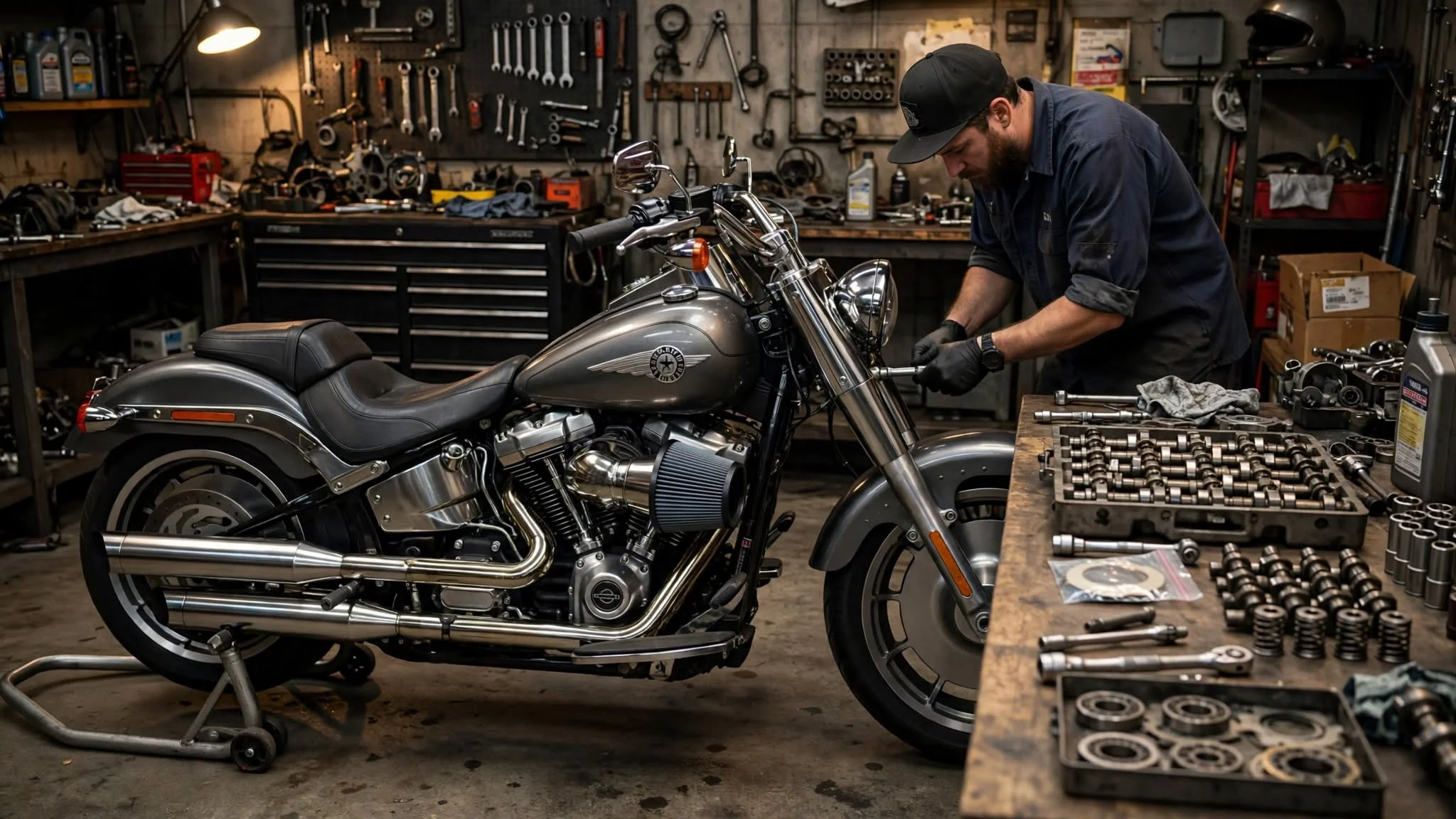
This is the detail that explains why compensator noise so often shows up right after a performance upgrade rather than developing purely from age.
More torque means more work for the compensator. Adding a performance exhaust, a cam swap, or a higher-flow air intake increases the torque the engine produces, and every bit of that additional torque has to pass through the compensator on its way to the rear wheel. A component designed to absorb a certain level of power pulse now has to absorb more, accelerating wear considerably faster than stock power levels would.
This is a genuinely common pattern across the Big Twin lineup, not something unique to the Fat Boy specifically, but the Fat Boy’s popularity as a platform for exhaust and performance upgrades means it shows up in Fat Boy-specific discussions frequently.
What the Symptoms Actually Sound Like
A clunk or knock, most noticeable on deceleration or under load. This is the classic compensator wear symptom, a mechanical noise from the primary case area that’s distinct from exhaust or engine noise, often more pronounced when rolling off the throttle or under hard acceleration than at a steady cruise.
A rattle that develops gradually rather than appearing suddenly. Compensator wear is progressive. A noise that’s been barely perceptible for a while and is now clearly audible is consistent with this kind of gradual wear pattern, rather than a sudden failure.
Worth distinguishing from other primary-area noises. Not every sound from this part of the bike is the compensator specifically; primary chain tension, clutch basket play, and general primary case looseness can all produce noises in a similar location. This is why a proper inspection, rather than assuming based on sound alone, matters before ordering a replacement part.
What to Do If You’re Hearing This
Don’t ignore it and keep riding on performance modifications. A worn compensator left in service continues to wear, and continuing to run elevated torque through an already-worn component accelerates that wear further rather than the problem staying stable.
Have the compensator inspected specifically, not just “the primary” generally. Given how many components live in the same general area, asking a mechanic to specifically check compensator condition, rather than a vague “something’s rattling in there,” gets you a more precise answer.
If you’ve recently added an exhaust, cam, or intake modification and noticed new noise afterward, mention that explicitly. This context genuinely helps a mechanic narrow down the cause faster, since it points directly at increased torque as a likely contributing factor rather than leaving them guessing at a random mechanical fault.
Is This a Sign the Fat Boy Platform Is Unreliable?
No, and it’s worth being clear about that. Compensator wear is a known, expected characteristic across Harley’s Big Twin engine family, not a defect specific to the Fat Boy or a sign of poor build quality. It’s the direct, predictable consequence of how the engine’s power pulses interact with the primary drive, and it happens faster specifically because riders add power through common, popular modifications. Riders who keep their Fat Boy at stock power levels typically see this wear develop much more slowly than riders who’ve added a performance exhaust or cam.
What This Means If You’re Buying or Modifying
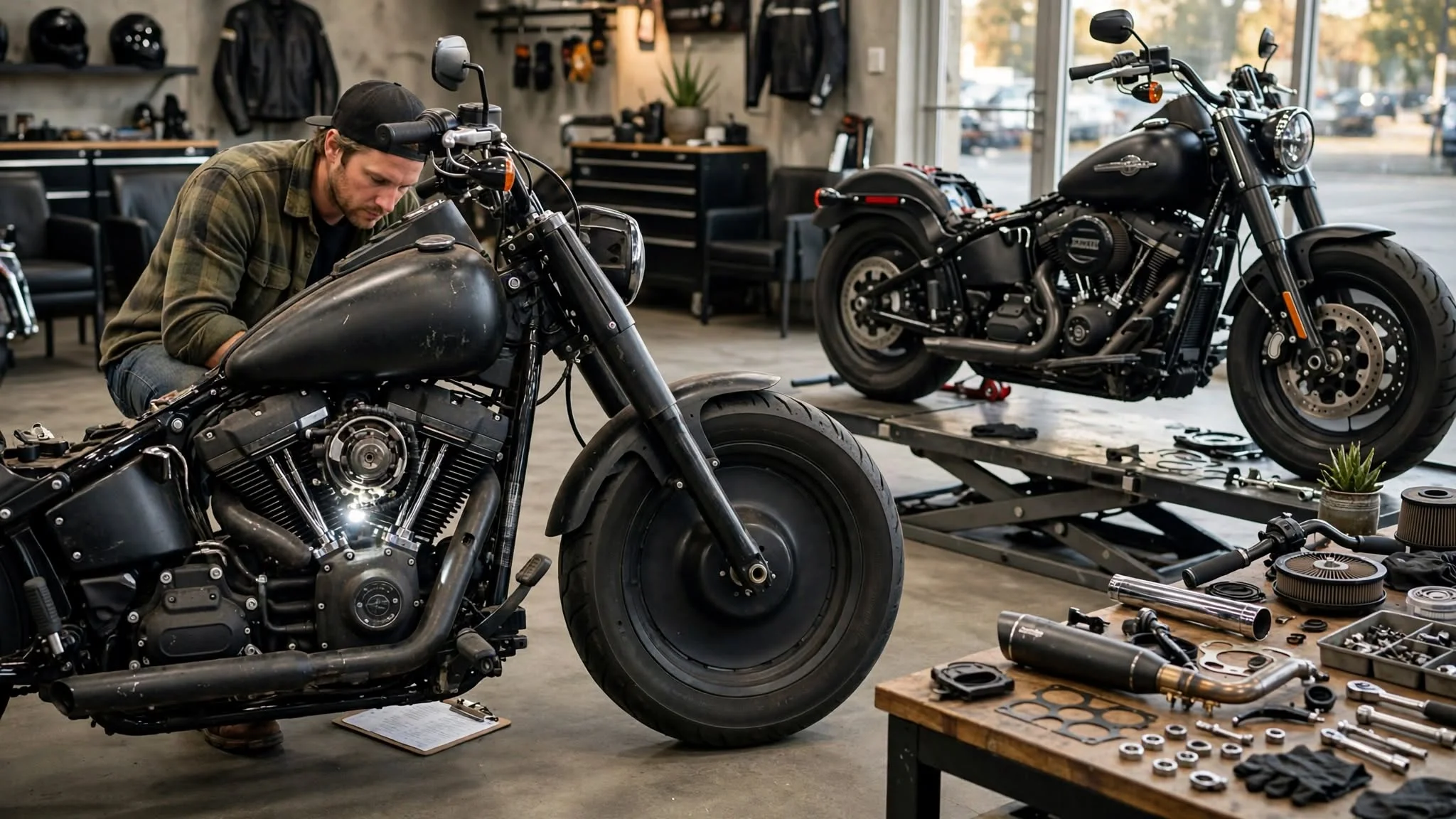
Buying a used Fat Boy with an aftermarket exhaust or cam? Ask about primary noise and compensator service history, as higher torque speeds up compensator wear. If you’re planning upgrades yourself, budget for quicker maintenance and explore reliable Harley Davidson Fat Boy parts to keep your primary drive running smoothly. This isn’t a flaw in your plan it’s a normal tradeoff when adding torque to a Big Twin engine.
Modifying With Realistic Expectations
Compensator wear is one of those Harley Big Twin realities that’s easy to miss until you’re chasing a mystery noise, and understanding the direct link between added torque and accelerated wear turns a confusing rattle into a predictable, well-understood maintenance item. If you’re planning performance upgrades on your Fat Boy, treating compensator inspection as part of your maintenance routine, rather than an unexpected repair, keeps you ahead of the problem rather than reacting to it. For touring and cruiser accessories across the Dyna and Softail lineup, Aliwheels carries options like the Fat Bob FXDF luggage rack for 2008-2017 models, worth checking against your exact model since Fat Bob and Fat Boy use different frame and mounting configurations despite the similar name.
Frequently Asked Questions
Why is my Fat Boy making a clunking noise after I installed a new exhaust?
This is a commonly reported pattern. Added torque from a performance exhaust increases the load on the compensator sprocket, accelerating wear on a component that’s already a wear item by design. The noise appearing shortly after a modification is a recognizable sign, not a coincidence.
Is compensator wear a sign of a defective Fat Boy?
No. It’s a normal, expected wear item across Harley’s entire Big Twin platform, not specific to the Fat Boy or a sign of poor manufacturing. It happens on every bike eventually, and faster specifically when torque is increased through modifications.
Can I tell the difference between compensator noise and other primary noises myself?
Not always reliably by sound alone, since chain tension, clutch basket play, and general primary looseness can produce similar noises in the same area. A mechanic specifically checking compensator condition, rather than guessing from the sound, is the more reliable path to an accurate diagnosis.
Does adding a cam or intake cause the same issue as an exhaust upgrade?
Yes, any modification that increases the engine’s torque output adds load to the compensator, whether that’s an exhaust, cam, air intake, or a combination. The more total torque increase, the faster the wear tends to progress.