



bikerbiker Aliwheels is a leading motorcycle parts supplier offering free shipping anywhere in the world on orders above $300. Please note that all of our motorcycle parts and accessories are certified and tested. With more than 10,000* products to choose from this is your one place to get the motorcycle part you need. Browse our vast inventory of motorcycle radiators, fairings, clutch plates, headlights, chains, and sprockets. biker

Free Shipping over $300

Support 24/7

Secure Payments

Hot Offers

Hard gear shifting when the engine is hot is one of those motorcycle problems that quietly drives riders crazy. Cold starts feel fine. The first few kilometers are smooth. Then the engine heats up, traffic builds, and suddenly shifting feels stiff, notchy, or downright stubborn. Neutral becomes hard to find. Downshifts feel forced. Upshifts lose that clean click.

Many riders assume the clutch is failing or the gearbox is worn out. In reality, most cases of hard shifting when hot are caused by setup issues, oil behavior, or heat-related tolerances rather than catastrophic damage.

This guide breaks down why gear shifting gets worse as the engine warms up and how to fix it correctly before you start replacing parts you do not need.

Why Gear Shifting Changes When the Engine Is Hot

Motorcycle engines, transmissions, and clutches share the same oil bath. As temperature rises, oil viscosity changes, metal expands, and clearances shift slightly. When everything is adjusted correctly, this is not a problem. When something is off even a little, heat exposes it fast.

Hard shifting when hot usually points to one of three areas: clutch disengagement, oil performance, or shift mechanism alignment.

Understanding which system is causing resistance is the key to fixing the issue permanently.

Clutch Cable or Hydraulic Clutch Not Fully Disengaging

This is the most common cause of hard gear shifting on a hot engine.

As the engine heats up, clutch components expand. If your clutch cable free play is set too tight or too loose, the clutch plates may not separate fully once the engine reaches operating temperature. When the clutch drags, gears resist engagement.

Signs this is your problem include difficulty finding neutral when hot, bike creeping forward with the clutch pulled in, and harsh downshifts at low speed.

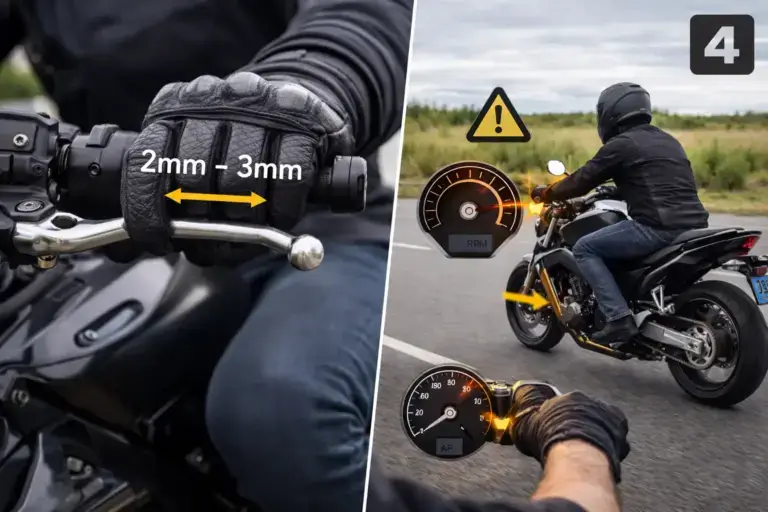
The fix is simple but must be precise. Check clutch free play at the lever when the engine is fully warm. Most bikes need a small amount of free play, usually around 2 to 3 mm at the lever. Too little free play causes slip. Too much causes drag.

On hydraulic clutches, old fluid or air in the system can behave worse when hot. Bleeding the clutch system often restores smooth shifting instantly.

Keywords naturally aligned here: hard gear shifting motorcycle, clutch dragging when hot, motorcycle

clutch adjustment.
Engine Oil Breakdown or Wrong Oil Grade

Oil that works fine when cold can turn into a problem once heat builds.

Using the wrong oil viscosity or a low quality oil causes thinning at high temperatures. When oil loses film strength, clutch plates stick and gearbox components lose smooth separation.

This is especially common in bikes ridden in traffic, hot climates, or aggressive stop and go riding.

If your bike shifts worse after a long ride or during summer heat, check your oil type. Motorcycle specific oil with proper JASO MA or MA2 rating is essential. Automotive oils can cause clutch drag even if the viscosity seems correct.

Also check oil change intervals. Old oil breaks down faster and loses its ability to protect shifting components when hot.

Search intent keywords covered naturally: best oil for motorcycle gearbox, gear shifting hard when engine hot, motorcycle oil viscosity for hot weather.

Chain Tension Too Tight When Hot

Many riders set chain slack when the bike is cold and stationary, then forget that chain tension changes as the bike heats up and the suspension moves.

A chain that is too tight places extra load on the transmission output shaft. As components heat up, resistance increases, making shifts feel heavy and mechanical.

This issue often shows up after highway riding or long urban rides. Shifting becomes stiff, especially between first and second gear.

Always adjust chain slack according to manufacturer specifications and check slack at the tightest point of chain rotation. Proper chain adjustment improves shifting feel more than most riders expect.

SEO aligned phrase used naturally: motorcycle chain too tight symptoms, hard shifting caused by chain tension.

Worn or Contaminated Clutch Plates

Even riders who shift gently can experience clutch plate issues if contamination or glazing occurs.

Over time, friction plates can glaze due to heat cycles. Steel plates can warp slightly. When hot, these imperfections become more pronounced and prevent smooth disengagement.

If clutch adjustment and oil changes do not fix the problem, inspect the clutch pack. Look for discoloration, glazing, or uneven wear.

This does not automatically mean replacement. Light glazing can sometimes be corrected by scuffing friction plates lightly and replacing worn springs.

This issue often appears on bikes with frequent traffic use, heavy clutch usage, or aftermarket levers that reduce mechanical leverage.
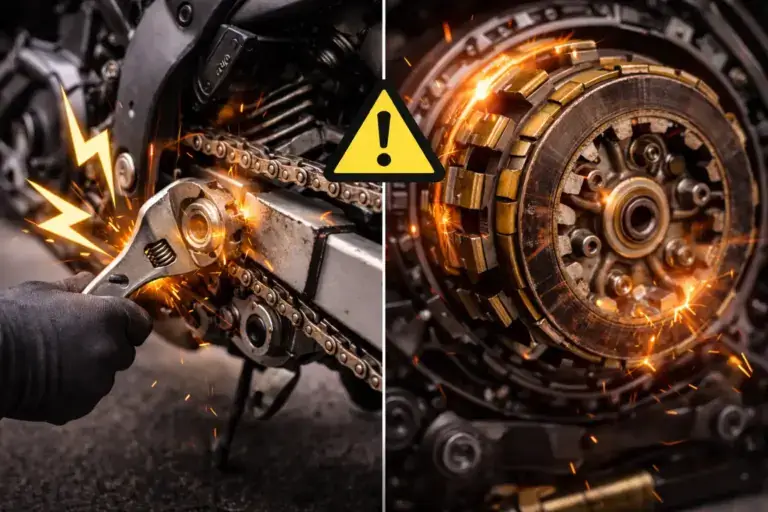
Worn or Contaminated Clutch Plates

Shift Linkage and Lever Alignment Issues

Heat does not directly affect the shift linkage, but it amplifies existing problems.

A bent shift lever, dry pivot, or misaligned linkage rod causes poor leverage. When the engine is cold, the gearbox tolerates it. When hot, everything tightens and the margin disappears.

Check that the shift lever moves freely, returns properly, and is positioned ergonomically for your foot. Lubricate the pivot point and inspect the linkage rod for play.

This small adjustment often transforms shifting feel instantly.

Relevant long tail phrase included naturally: motorcycle gear shifter adjustment, hard shifting motorcycle fix.

Shift Linkage and Lever Alignment Issues

Internal Gearbox Wear Is Rare but Possible

Actual gearbox damage is far less common than riders think.

If the bike jumps out of gear, grinds consistently, or refuses to engage specific gears regardless of temperature, internal wear may be involved. However, if the problem only appears when hot, it is almost always external or oil related.

Rule out clutch, oil, chain, and linkage issues before assuming internal damage.

How to Prevent Hard Shifting When Hot

Preventing hot shifting issues comes down to maintenance discipline and correct setup.

Adjust the clutch with the engine warm, not cold. Use manufacturer recommended oil and change it on time. Maintain correct chain slack. Keep shift linkage clean and lubricated.

Small tolerances matter more when heat enters the equation.

Final Thoughts From a Rider’s Perspective

Hard gear shifting when the engine is hot is not a sign your bike is dying. It is a sign something small is slightly out of balance.

Most riders live with this issue for months because the bike still runs. Fixing it often takes less than an hour and restores that clean, mechanical click that makes riding satisfying.

If your bike shifts beautifully cold but fights you once warm, listen to it. Heat is exposing a setup flaw. Fix that, and the gearbox will reward you every ride.

If you want, I can next write brand specific versions for Suzuki, Kawasaki, Yamaha, or Honda, or turn this into a workshop style guide with torque specs and real world measurements.

(Commenting: OFF)

Owning a motorcycle isn’t just about long rides, roaring engines, and open roads. Sometimes,  most times, it’s about maintenance, cleaning, tinkering, and making sure your bike stays healthy for the long haul. And whether you’re a weekend warrior, a daily commuter, or a long-trip rider, one simple accessory will save you more headaches than you think: a good motorcycle stand. With the right motorcycle stand, you get stability, safety, easier maintenance, and even more control when you wash, chain-lubricate, change tires, or simply park for a while. But stands aren’t all equal. Some wobble, some don’t fit your bike, some break under weight, and some are overly complicated.

This guide cuts through the noise, telling you 5 of the best types of motorcycle stands that suit different budgets, bikes, and purposes: repair, cleaning, secure parking, or maintenance. Consider this your garage-ready checklist.

When Stands Matter More Than Just a Stand

You may have been leaning your bike on a stock kick-stand for years and thought, “Why do I need a stand?”

Here’s why:

  • Stability & safety: A proper stand keeps your bike upright and secure,  no more tipping during cleaning or while working on it.
  • Maintenance convenience: Changing oil, chain cleaning, sprocket checks, brake work,  everything becomes easier when wheels spin freely or stay stable.
  • Even wear & parking comfort: On long-term parking (garage, off-season) a good stand reduces pressure on tires, suspension, and avoids side-stand lean stress.
  • Chain and wheel cleaning made simple: With the rear wheel off the ground, you can do full cleaning, tightening, and lubrication,  much cleaner, safer, and thorough.
  • Better storage: In tight garages or in apartments, a stand helps store the bike upright, saving space and avoiding accidental bumps.

For every serious rider, a stand isn’t a luxury; it’s a maintenance essential as well.

What Makes a Great Stand Rider’s Checklist?

Before I list my picks, every rider should know what to look for when selecting a stand:

  • Sturdiness & build quality: Must handle the bike’s weight without flex or wobble.
  • Fitment and adjustability: Should work with your wheel size, axle position, swingarm type or forks.
  • Portability & storage: Easy to move, fold, or store when not in use.
  • Ease of use: Simple to mount/dismount; minimal tools required.
  • Multi-purpose use: Maintenance, cleaning, parking, and chain work,  ideally all in one.
  • Corrosion and rust resistance: Especially if you live in humid or coastal areas.

If your stand checks most of these, it’s worth it. If not,  you might be riding on a liability, not a tool.

5 Best Motorcycle Stands for Every Rider’s Need

Here are five of the top stand types and why they make sense,  whether for city bikes, tourers, cruisers, or sport bikes.

1. KTM 150 SX Kickstand 2016-2022

1. KTM 150 SX Kickstand 2016-2022

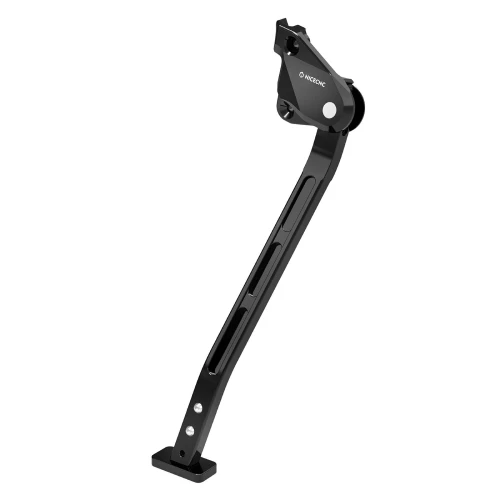
KTM 150 SX Kickstand (2016-2022) is a highly rated accessory, receiving a five-star rating. The original price was $275.77, but it is currently offered at a discounted price of $248.19. This kickstand is specifically designed for the KTM 150 SX model from 2016 to 2022. Key features include adjustable size, a sleek black color, and construction from durable aluminum.

If you do regular maintenance yourself, this should be your first purchase. It’s the most versatile stand type and often gives the best stability-to-cost ratio.

2. Motorcycle Universal Stand Front & Rear

2. Motorcycle Universal Stand Front & Rear

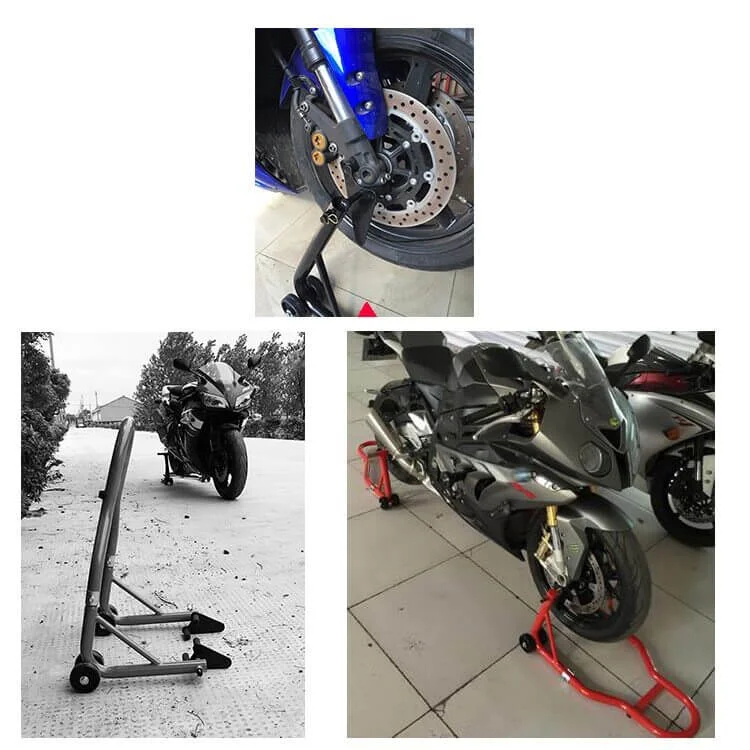
The Motorcycle Universal Stand for both front and rear is a highly rated product, receiving five stars, with a price reduction from the original amount of $1,038.46 to the current price of $934.61. This stand is particularly beneficial for tasks such as cleaning tires and applying chain lube. Additionally, it is designed for optimal storage, enhancing convenience and functionality. The ease of use for both the front and rear stands makes it an ideal choice for motorcycle maintenance and care.

3. Harley Davidson Fat Bob FXDF Kickstand 2008-2017

3. Harley Davidson Fat Bob FXDF Kickstand 2008-2017

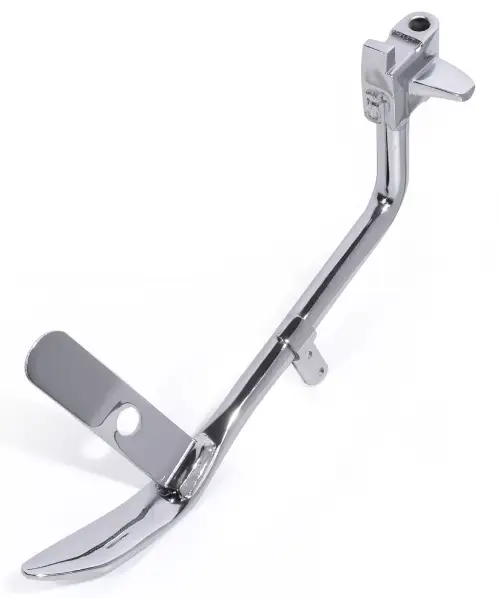
Harley-Davidson offers a chrome kickstand specifically designed for the Fat Bob FXDF model years 2008 to 2017. This kickstand, made of durable steel, has received a five-star rating. Originally priced at $250.47, the current sale price has been reduced to $225.42, indicating a savings on this essential accessory for Harley enthusiasts.

For long-term touring bikes or heavy cruiser owners,  this is the closest thing to a garage lifter you can realistically have at home.

4. Ducati Diavel 1260 Kickstand 2019-2021

4. Ducati Diavel 1260 Kickstand 2019-2021

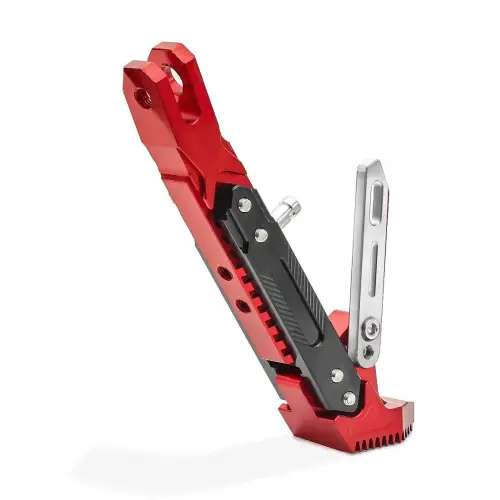
Ducati Diavel 1260 Kickstand (2019-2021) is an aftermarket accessory, specifically designed to fit the 2019 to 2021 model years of the Ducati Diavel 1260 motorcycle. The kickstand is made from aluminum, ensuring a robust and lightweight addition. Initially priced at $250.47, the current selling price stands at $225.42, indicating a strategic discount. The kickstand is available in a striking red color and is marked as 100% brand new, ensuring customers receive a quality product that enhances both functionality and aesthetics of their motorcycle.

For riders who want more than just maintenance, who want flexibility and performance readiness, this stand type balances convenience with ruggedness.

5.  KTM 450 SX-F Center Stand 2019-2022

5.  KTM 450 SX-F Center Stand 2019-2022

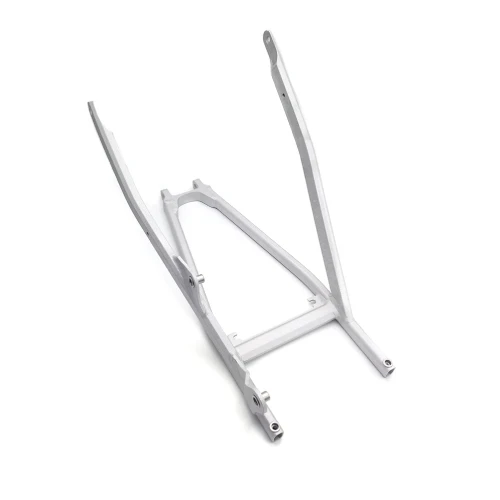
KTM offers a center stand specifically designed for the KTM 450 SX-F model years 2019 to 2022. The product has received a five-star rating, indicating high customer satisfaction. Originally priced at $913.58, the current price has been reduced to $822.22. The center stand features a silver color finish and is constructed from metal, providing durability and strength. Its dimensions include a length of 440mm, a width of 240mm, and a height of 266mm. It is compatible with M8 screws, ensuring easy installation and fitment on the specified motorcycle model.

How to Use Your Stand? Maintenance Schedule Suggestions for Riders

If you own (or plan to buy) a motorcycle stand, here’s a practical routine many experienced riders follow:

  • Every 1–2 weeks: Put the bike in the rear paddock while cleaning or inspecting.
  • Every month (or after heavy rain/dust): Use the stand for full chain clean + lube + sprocket check.
  • Every 6 months: Use front + rear stand for a full check,  tires, brake pads/rotors, suspension, axle bowls.
  • Before a long trip: Lift the bike, check wheel alignment, torque bolts, check swingarm bearings, check suspension sag & preload.
  • Long-term storage (off-season or long stop): Full-lift stand + support under engine or swingarm to reduce tire deformation and suspension sag.

This turns your stand from a convenience tool into a maintenance companion, extending bike longevity, safety, and ride quality.

Conclusion

If you ride often, clean often, and maintain often,  a stand probably pays for itself in a few weeks.
For traveling long distances, carrying luggage, or riding in mixed conditions, a stand becomes insurance against roadside breakdowns.
If you value safety, stability, and the health of your motorcycle over time,  a stand becomes one of the smartest first upgrades you can make.

So before that next ride, take a look at your maintenance kit. If it doesn’t include a stand,  you’re underestimating how long-term maintenance really works. Because when you park yourself in a dusty road or a crowded garage,  what you truly own isn’t just a motorcycle. It’s miles of road, memories, and sweat-earned trust.

(Commenting: OFF)

Most riders don’t realize this, but 80% of motorcycle breakdowns come from skipping the simplest motorcycle maintenance tasks. Not blown engines. Not snapped chains. Just the small things, a clogged air filter, an old spark plug, or oil that should have been changed months ago.

If you’ve ever wondered Why does my bike feel weak?” or Why is my fuel average dropping?” the answer often hides in your basic maintenance routine.

This guide breaks down a complete, practical DIY motorcycle maintenance checklist that keeps your motorcycle running smoother, cooler, and stronger,  the same level of detail a dealership mechanic would follow,  but without the service charges. And whenever you need genuine motorcycle parts, AliWheels stands as Pakistan’s trusted source for authentic, high-quality components worn by real riders.

Why DIY Motorcycle Maintenance Matters More Than You Think?

There’s a very obvious pattern among pro riders:
The ones who get the most life out of their engine aren’t the fastest riders; they’re the most disciplined. They know exactly when their air filter is due, when their oil starts thinning, and when the spark plug begins losing its bite.

DIY motorcycle maintenance gives you:

  • A bike that starts instantly,  even on cold mornings
  • Faster throttle response
  • Lower engine temperature in traffic
  • Better fuel average
  • Longer engine life (sometimes double)

You’re not just maintaining a machine; you’re extending the life of a partner that takes you through every season and every street.

1. Filters: They Act as the Lungs of Your Motorcycle

Your bike breathes through its filters. When they get dirty, everything else suffers.

Air Filter

A clogged air filter makes the engine run rich, lose power, burn more fuel, and heat up faster. If your bike feels lazy or your exhaust note sounds “choked,” this is usually the culprit.

Clean or replace every 1,500–2,000 km, or more frequently if you ride dusty routes.

Air Filters Collection at Aliwheels:

Oil Filter

Modern bikes rely heavily on clean oil flow. A clogged oil filter starves the engine and accelerates wear.

Replace with every oil change. Check out the Oil Filters Collection at Aliwheels:

2. Spark Plug: The Heartbeat of Your Engine

A weak spark plug can cause:

  • Morning starting trouble
  • Low pickup
  • Rough idling
  • Misfires
  • Poor mileage

Most riders don’t notice the decline because it happens slowly,  over months.

For most motorcycles, inspect or replace spark plugs every 5,000–7,000 km.

Genuine Spark Plugs on AliWheels

3. Engine Oil: Your Bike’s Lifeline

Oil does more than just lubrication; it cools the engine, protects metal surfaces, and keeps performance stable. Old oil loses viscosity and turns acidic, which directly harms piston rings and clutch plates.

Change oil every:

  • 1,500–2,000 km for commuter bikes
  • 2,500–3,000 km for synthetic oils
  • 1,200 km if riding in very hot climates or heavy traffic

If your bike vibrates more than usual, or gears feel harder,  it’s usually the oil asking for retirement.

4. Essential Fluids Most Riders Forget

While oil gets attention, other fluids quietly decide your bike’s health.

Brake Fluid

Old brake fluid absorbs moisture → causes brake fade, and a spongy lever feel.

Replace every 12 months.

Coolant

If your bike overheats in traffic, weak coolant is often the reason. It degrades faster in summer and stop-and-go conditions.

Replace every 10,000 km or annually.

Chain Lubricant

A dry chain steals power, increases vibration, and wears sprockets prematurely.

Lubricate every 300–500 km and after every wash.

5. Battery & Electrical Inspection

If your bike struggles to start in the morning, especially in winter, the battery or plug may be weakening.

Check:

  • Terminals for corrosion
  • Wiring for cuts
  • Headlight brightness
  • Horn strength

Low output = weak battery.

6. Tires & Brakes, Safety You Can’t Neglect

Your tyres tell stories: how you ride, where you ride, and what needs fixing.

Uneven wear means suspension or tire pressure issues.
Shaking during braking = warped discs or worn brake pads.
Low grip = expired rubber.

Brake Pads collection at Aliwheels

7. The Real Pro-Level DIY Routine (Follow This Sequence)

If you want your bike to feel brand new again, this is the exact order professionals follow:

  1. Replace engine oil
  2. Change/clean the air filter.
  3. Replace the oil filter.
  4. Inspect the spark plug.
  5. Adjust the chain + lubricate
  6. Check coolant
  7. Check brake fluid
  8. Inspect tires and pressures.
  9. Clean battery terminals
  10. Lubricate all moving joints (clutch, brake levers, foot pegs)

Do this every 4–8 weeks based on usage.

Your bike will feel tighter, smoother, quicker, and significantly cooler on hot days.

Maintain Smart, Ride Relaxed

Every motorcycle,  whether a daily commuter or a long-distance tourer,  has one thing in common: it rewards the rider who cares. You don’t need a mechanic for every little thing. You just need the right checklist and genuine parts that protect your engine instead of harming it.

That’s where AliWheels stands tall. Authentic parts. Verified sellers. Zero fakes. Everything your bike needs,  delivered at your doorstep.

Replacing a spark plug or preparing for a cross-country ride, maintaining your motorcycle like a pro begins with the right parts.

(Commenting: OFF)

There is nothing more unsettling than riding along on your motorcycle,  the engine humming nicely, the wind rushing past,  only to be distracted by an annoying ticking, clicking, or rattling from the chain drive. If your mind starts racing, thinking of costly sprocket replacements or mechanical failures, hold on. In most cases, the culprit lies not in a worn-out chain but in something much simpler: dirt, old lubricant, and lack of proper maintenance. Because more often than not, cleaning plus the correct lubricant will quiet the noise and extend the life of your chain.

Why Does Your Motorcycle Chain Make Noise?

Over time, the chain on your motorcycle accumulates grime, dust, road salt, oil mist, and other debris. This gunk builds up between the links, inside rollers, and around sprockets, and disrupts the smooth motion of the chain. Even a slight misalignment or uneven lubrication can cause metal-on-metal contact, leading to clicking, clinking, rattling, or grinding noises. Additionally, a dry chain can cause extra friction and rapid wear, contributing not only to noise but to faster chain and sprocket deterioration. 

Riding through dusty streets or wet roads,  conditions common in many places,  makes this process faster. Without regular maintenance, a chain that is dirty or poorly lubricated can lose its smooth engagement with sprockets. That friction and uneven movement are what produce the noise you hear. If neglected for long, a chain can stretch, stiffen, or even damage the sprockets. If it’s still making noises, this guide might help you

Simple Fix You Can Do at Home: Clean and Lubricate

The good news is that you don’t need expensive tools or a workshop visit to settle most chain noises. A simple cleaning and proper lubrication,  done regularly, solves the majority of problems and noticeably extends chain life. 

Here’s how that works: first, you remove all the dirt, grime, old dried lubricant, and any foreign particles from between the links and rollers. Once the chain is clean, you apply a high‑quality motorcycle chain lubricant, making sure it penetrates into the rollers and inner link surfaces. That restores smooth contact between chain and sprockets, reduces friction, prevents rust, and suppresses noise. Over time, this process dramatically reduces wear and prolongs the life of your chain and sprocket set. Here’s your detailed guide on Motorcycle Chain Maintenance.

The Perfect Motorcycle Chain & Sprocket Cleaning Supplies at Aliwheels

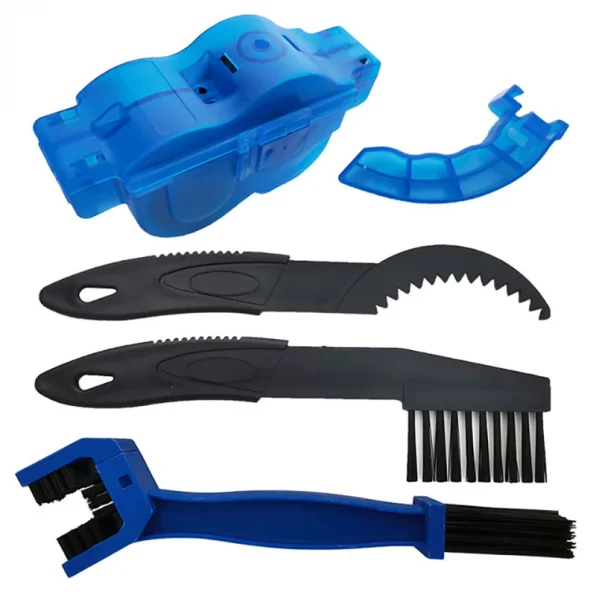
Aliwheels recommends tools designed to make this maintenance quick and effective. For instance, our own Aliwheels Chain and Sprocket Cleaner Brush (available here).

Aliwheels Chain and Sprocket Cleaner Brush (available here).

Made for this purpose,  to reach every side of the chain and remove stubborn grime that causes noise. After cleaning, using a suitable chain lubricant (spray or paste, depending on your riding conditions) completes the job for a smooth, quiet ride.

Motorcycle Chain Cleaner Tool

Chain Cleaner Tool Aliwheels

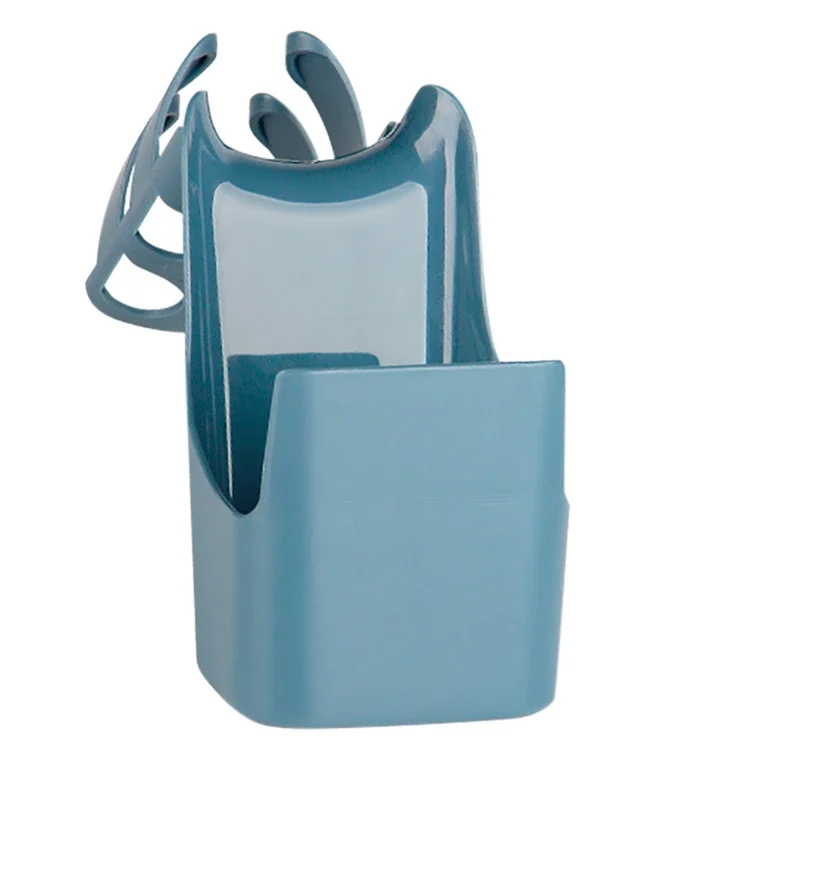
Motorcycle Bike Chain Oil Storage

Motorcycle Bike Chain Oil Storage

Find The Perfect Motorcycle Cleaning Supplies With Competitive Prices At Aliwheels!

Motorcycle lovers understand the importance of keeping their bikes in top condition. Not only does it ensure a smooth and safe ride, but it also helps maintain the value and appearance of your motorcycle. However, finding the right motorcycle cleaning supplies can be a daunting task. With so many products on the market, it can be difficult to determine which ones will effectively clean your motorcycle without causing damage. That’s where we come in.  Check Out the complete range here.

When Cleaning and Lubrication Might Not Be Enough?

There are times when noise persists even after cleaning and proper lubrication. That could mean:

  • The chain is worn beyond its service life, with elongated links, pitted rollers, damaged O‑rings, or stiff links.
  • The sprockets are worn, teeth become uneven or sharpened, causing the chain to skip or contact unevenly. Chain tension or alignment is incorrect. A chain that is too tight or too loose, or wheels/sprockets that are not aligned correctly, will cause uneven wear and noise.

In these cases, the noise is a symptom of deeper wear and may require replacing the chain and/or sprockets. But before you go that far, it’s always worth trying the cleaning + lubrication routine; often enough, it is the only “repair” needed.

A Maintenance That Saves Money and Headaches

If you ride often, especially in dusty, rainy, or humid environments,  adopting a regular chain maintenance schedule will pay off. Many experts recommend cleaning and lubricating the chain every 300–500 miles (or sooner after rain, mud, or heavy dust). Loosing chain? Here’s your guide.

By following this simple routine: first clean with a degreaser and a chain-cleaning brush, then lubricate properly, you can keep the chain operating smoothly. That reduces friction and wear, prevents premature chain stretch or sprocket damage, and eliminates most sources of noise. Over time, you’ll spend far less on chain and sprocket replacements and enjoy a smoother, quieter ride.

Aliwheels encourages you to treat chain maintenance not as a chore but as a smart investment in the longevity and reliability of your motorcycle’s drivetrain. A small effort now keeps noisy rides, unexpected breakdowns, and expensive replacements away in the long run.

Conclusion

If you’re hearing clicking, rattling, or grinding from your chain,  don’t panic. In most cases, the answer is simple and budget‑friendly: cleaning and proper lubrication. It’s amazing how often that restores smoothness and silence and prolongs the life of your drivetrain.

Equip yourself with the best Chain and Sprocket Cleaning tools from Aliwheels and schedule regular maintenance, and ride with confidence. Your bike will thank you in the long run.

(Commenting: OFF)

Or login with your social account