




A dirty throttle body is one of those problems riders feel before they can explain it. Throttle response becomes jerky, idle turns rough, fuel mileage drops, and the bike just feels slightly off. Many riders assume it is a fueling issue, bad injectors, or worn sensors. In reality, carbon buildup inside the throttle body is often the real culprit.
The good news is that cleaning a motorcycle throttle body at home is completely doable, safe when done correctly, and often restores smooth throttle response immediately. You do not need a full workshop or advanced mechanical skills. You just need patience, the right cleaner, and an understanding of what not to touch.
What the throttle body actually does
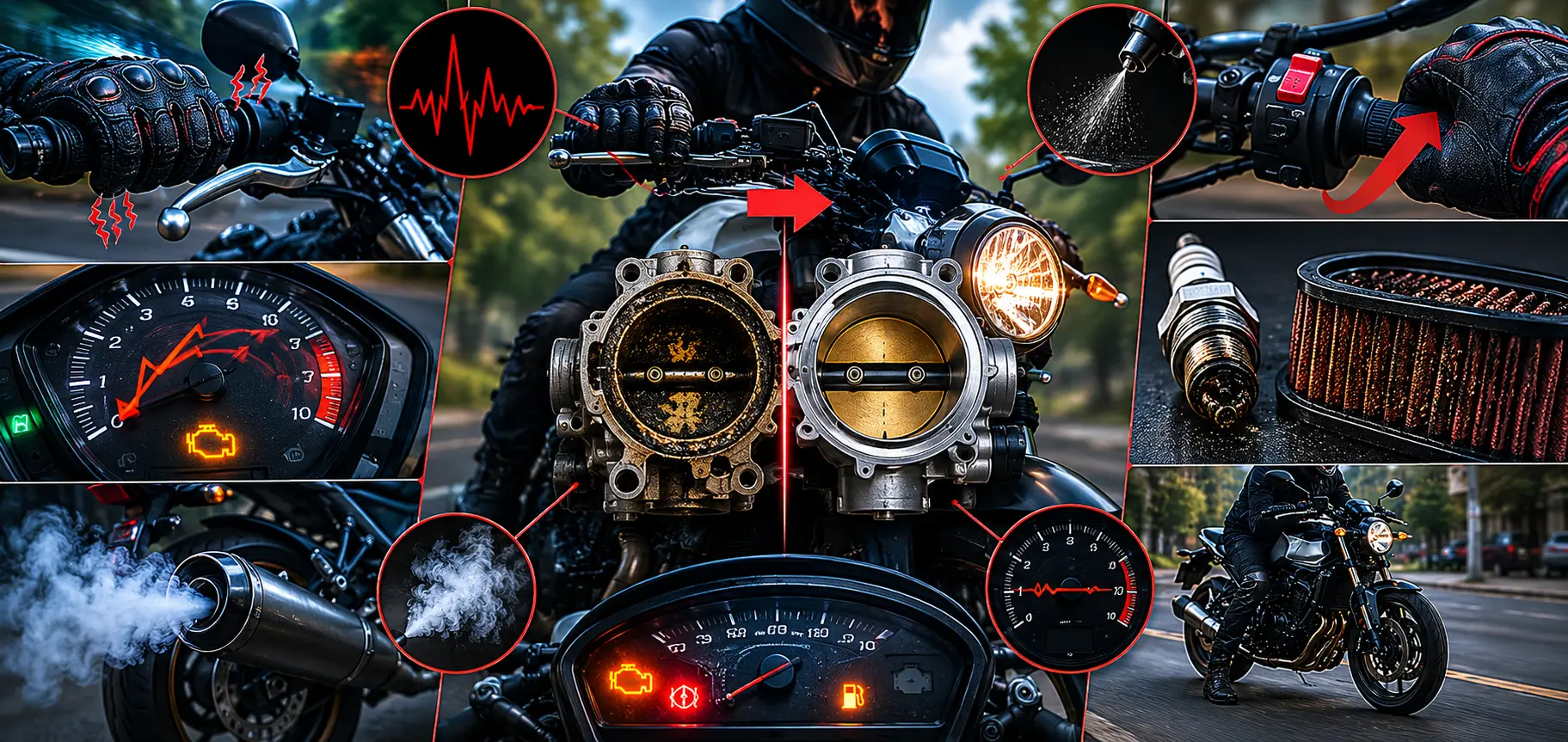
The throttle body controls how much air enters the engine. When you twist the throttle, the butterfly valve opens, allowing more air in, which the ECU then balances with fuel. Over time, oil vapor, fuel residue, and dust coat the inside of the throttle body and the edges of the butterfly valve.
This buildup restricts airflow and interferes with the precise airflow readings modern fuel-injected motorcycles rely on. That is why even a lightly dirty throttle body can cause poor idle, hesitation off the line, or uneven acceleration.
Signs your throttle body needs cleaning
Riders usually notice the problem before realizing what causes it. Common symptoms include rough idle when cold, stalling at stoplights, delayed throttle response, uneven low-speed riding, or a feeling that the bike is hunting or surging at steady speeds.
If your motorcycle has no warning lights but feels inconsistent, throttle body cleaning is often one of the first maintenance steps worth trying.
Tools and supplies you will need
Cleaning a throttle body safely means using the correct products. Never substitute household cleaners or carb cleaner unless it is clearly marked as throttle-body safe.
You will need throttle body cleaner or fuel injection cleaner spray, clean lint-free cloths or microfiber towels, a soft toothbrush or detailing brush, and basic hand tools to remove the air intake components. Gloves are recommended, as the cleaner can be harsh on skin.
Accessing the throttle body
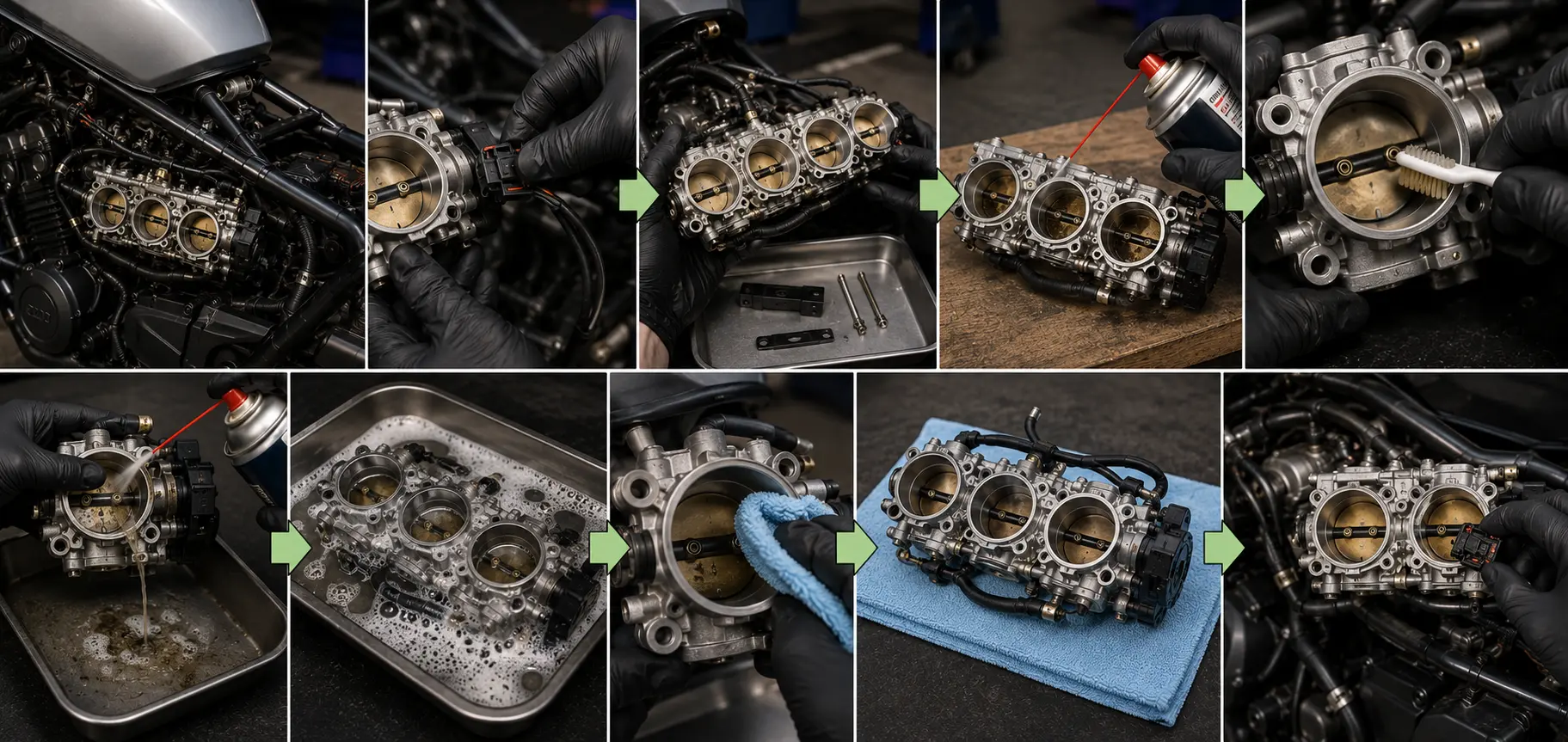
Start by letting the engine cool completely. Remove the seat and fuel tank if necessary, then disconnect the air filter housing or intake boots leading to the throttle body. On many motorcycles, this step is easier than riders expect.
Once exposed, you will see the throttle plate and the inner bore of the throttle body. This is where carbon buildup usually collects, especially around the edges of the butterfly valve.
The safest way to clean the throttle body
The most important rule is never force the throttle plate open with your fingers unless the manufacturer allows it. On many ride-by-wire systems, forcing the plate can damage the throttle motor or sensors.
If your bike uses a cable throttle, gently open the throttle using the throttle grip. If it is ride-by-wire, turn the ignition on without starting the engine and allow the throttle plate to cycle open naturally if applicable.
Lightly spray throttle body cleaner onto a cloth, not directly into the throttle body. Wipe the inner walls and the edges of the throttle plate carefully. Avoid soaking sensors or spraying aggressively into the intake.
Carbon buildup near the plate edges is usually what causes sticking and poor idle. Take your time and clean gradually rather than scrubbing aggressively.
Areas you should never touch
Throttle position sensors, idle air control valves, and electronic actuators should not be sprayed directly. These components are sensitive and expensive to replace.
Never insert tools or fingers deep into the throttle body, and never use abrasive materials. The goal is to remove residue, not polish metal.
Reassembly and first startup
Once clean, allow the throttle body to air dry completely before reassembly. Reinstall the intake components carefully, ensuring all clamps and hoses are seated properly. Any vacuum leak can undo all your work.
When starting the bike for the first time, let it idle for a few minutes without touching the throttle. This allows the ECU to relearn idle parameters on some models. You may notice the idle stabilizing as the engine warms up.
How often should throttle bodies be cleaned
For most motorcycles, throttle body cleaning every 10,000 to 15,000 miles is sufficient. Bikes ridden in dusty conditions, heavy traffic, or short stop-and-go trips may benefit from more frequent cleaning.
Riders who neglect this maintenance often mistake the symptoms for injector issues or ECU problems, leading to unnecessary repairs.
Throttle body sync and when it matters
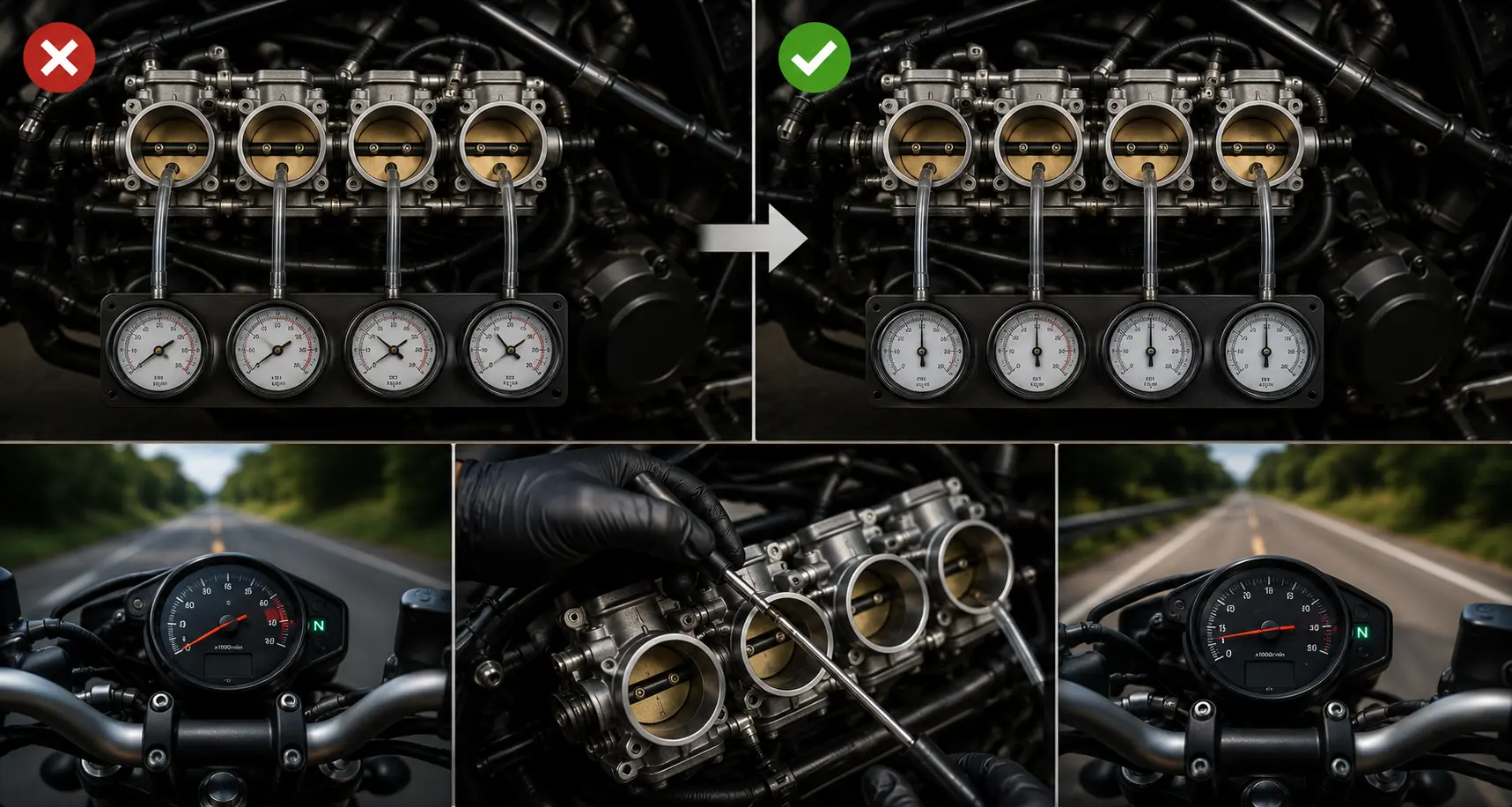
Cleaning improves airflow, but on multi-cylinder motorcycles, throttle body synchronization can further improve smoothness. Syncing ensures each cylinder receives the same amount of air at idle and low throttle.
Cleaning alone often improves ride quality, but if vibration or uneven idle persists, throttle body sync may be the next step.
Common mistakes riders make
One common mistake is spraying excessive cleaner directly into the throttle body, washing debris into the intake or damaging sensors. Another is revving the engine aggressively right after cleaning, which can confuse the ECU.
Using carb cleaner instead of throttle body cleaner is another error. Carb cleaners are often too harsh for fuel-injected systems and can damage coatings and seals.
When cleaning is not enough
If throttle response issues remain after cleaning, the problem may lie with clogged injectors, vacuum leaks, worn throttle cables, or faulty sensors. Cleaning is a maintenance step, not a cure-all, but it solves a surprising number of issues.
Final thoughts
A clean throttle body restores smoothness, predictability, and confidence in how your motorcycle responds to your right hand. It is one of the most overlooked yet rewarding maintenance tasks a rider can do at home.
Done correctly, throttle body cleaning is safe, inexpensive, and often immediately noticeable on the first ride. It improves idle stability, low-speed control, and overall ride quality without replacing parts or reprogramming anything.
Treat it as routine maintenance, take your time, and your motorcycle will reward you with smoother, cleaner throttle response every time you ride.