




Your motorcycle’s fairings take the impact of every weather condition your bike experiences. Rain, UV radiation, heat, cold, road salt, humidity, and so on. All work against the material continuously.
Most riders notice motorcycle fairing damage after it becomes visible. By that point, significant damage has already occurred. Understanding how each weather condition attacks your motorcycle’s fairings helps you protect them earlier.
UV Radiation is the silent destroyer
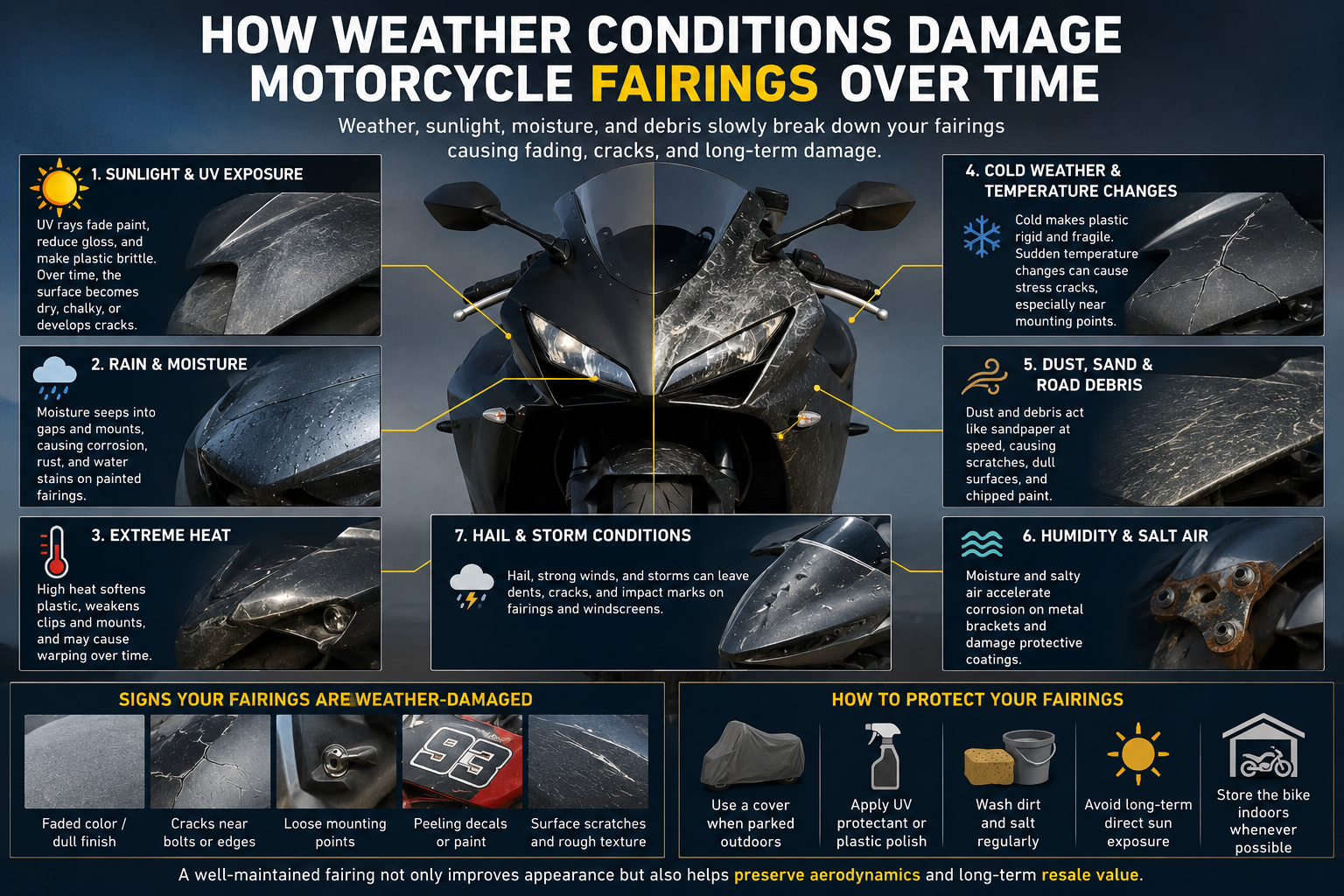
Sunlight is the most damaging factor for motorcycle fairings. The damage happens slowly until it reaches a critical point.
ABS plastic and fiberglass fairings contain pigments and protective additives that absorb UV radiation. Over the time, UV exposure breaks down the molecular structure of both the paint and the base material under it.
The first sign is color fading. A deep black or vibrant red color, gradually losing its depth and intensity. The surface begins to look hazy or chalky rather than glossy.
As your motorcycl continue toexpereince UV, the plastic becomes brittle. ABS that was once flexible and impact-resistant starts fading. A panel that could survive a minor impact will crack under the same force once it is UV-degraded.
There are certain Paints that provide significant UV protection. This is why paint maintenance matters beyond aesthetics. Wax and ceramic coatings add a protective layer over the paint. They reduce UV penetration and slow the degradation process noticeably.
Bikes parked outdoors in open exposure to high UV radiation age faster than bikes kept in shaded parking or garages. The UV exposure over several riding seasons produces visible differences in fairing condition.
Rain and Water Ingress
Water damages fairings in several ways.
Although direct rain exposure is the least damaging, modern paint systems are water-resistant. But the paint coating repels water effectively.
The real damage comes from water that gets under the fairings.
When fairings develop small cracks or loose mounting tabs, water enters the gap between the fairing and the frame. This water remains hidden without evaporating. It promotes corrosion on any metal mounting hardware it contacts.
Furthermore, trapped water moves into micro-cracks in the fairing material itself. When temperatures drop below freezing, that water expands. The freeze-thaw cycle propagates cracks that begin too small to see. Over several winters, those micro-cracks become visible fractures.
Make sure to inspect fairing mounting points and edges after prolonged rain exposure. Moreover, ensure drainage paths are clear. Do not allow water to be stored in hidden fairing sections.
Road Salt and Winter Riding
Riders who continue riding through winter face early fairing damage.
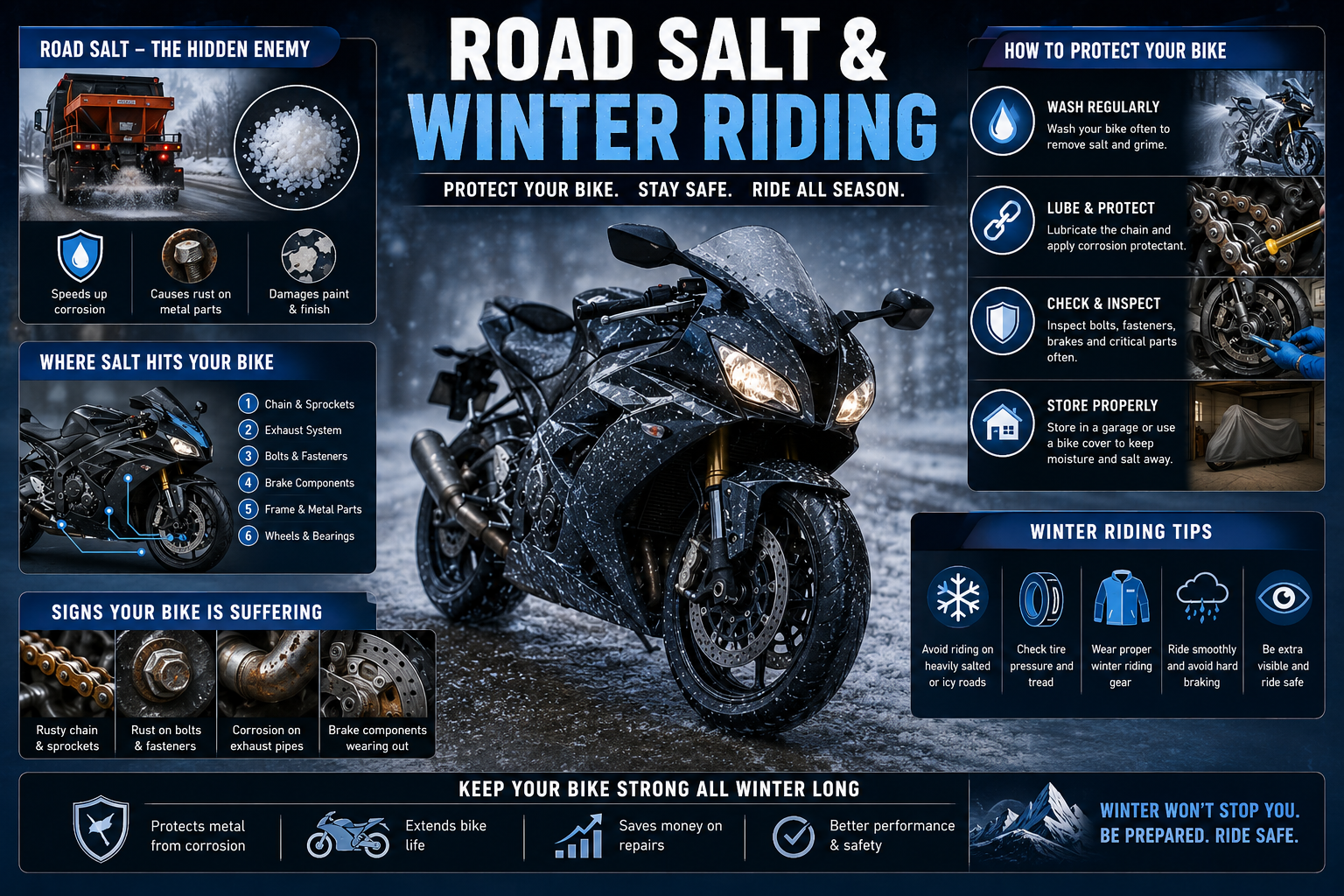
Road salt is hygroscopic. It attracts and holds moisture against surfaces. Salt spray thrown up from the front wheel coats the lower fairing sections, the belly pan, and the inside surfaces of front fairings heavily.
The salt and moisture combination attacks paint at a microscopic level. It finds any chip, scratch, or imperfection in the paint surface and begins working underneath. Paint lifts from the substrate through a process called “delamination.” Once salt-driven delamination begins, it spreads laterally under the paint surface, even where the exterior appears intact.
Mounting hardware corrodes rapidly with repeated salt exposure. Steel fasteners used in fairing attachment points seize into their threads. Removal during future maintenance becomes difficult and risks damaging the fairing panel.
Winter riders must clean their fairings thoroughly after every salted road ride. A proper rinse that reaches inside the lower fairing sections removes salt before it has time to act. Allow the bike to dry fully before covering or storing it.
Apply a wax or sealant layer before winter riding begins. This gives salt spray a barrier to attack before it reaches the paint itself.
Heat and Thermal Cycling
Motorcycle fairings experience significant heat variation during every ride.
The engine radiates substantial heat. Fairings positioned near the engine bay, particularly the inner lower fairings, experience continuous heat exposure during riding. Exhaust routing can direct heat directly onto fairing panels if aftermarket systems are installed without heat shields.
ABS plastic has a specific temperature tolerance range. Sustained exposure above that range causes warping. Panels develop slight curves or distortions that create visible gaps between previously flush surfaces.
Paint also reacts to heat. Repeated thermal expansion and contraction cycles cause paint to develop fine surface cracking called checking or crazing over many years. This is distinct from impact cracking and creates a network of tiny surface fractures visible in direct sunlight.
The daily cycle of heating up during a ride and cooling down afterward also affects mounting hardware. Fasteners in thermally stressed locations loosen slightly over time through thermal cycling. Regular torque checks on fairing screws in high-heat zones prevent panels from working loose.
Keep fairings away from direct exhaust contact. Use heat shields where aftermarket exhaust routing brings pipes close to fairing surfaces.
Humidity and Condensation
High-humidity environments affect fairings in ways that are less obvious than rain damage but equally persistent.
Humidity promotes oxidation on any metal hardware associated with fairing mounting. Painted surfaces in humid climates tend to develop microscopic bubbling beneath the clear coat as moisture permeates the paint system over the years.
The more problematic effect is condensation. Fairings that experience rapid temperature changes, such as a cold morning ride followed by parking in a warm garage, develop condensation on their inner surfaces. This moisture has nowhere to go efficiently. It sits and slowly works on any vulnerabilities in the material or paint.
Bikes stored in spaces with high humidity variation benefit from breathable covers that allow moisture to escape rather than sealing it against the fairing surfaces.
Wind-Driven Debris
Wind does not damage fairings directly. But wind-carried debris does.
Sand particles, fine grit, road dust, and small stones carried by wind and forward momentum create continuous abrasion on fairing surfaces. This is most visible on the leading edges of fairings, the front of the headlight fairing, and the lower sections of side panels.
The clear coat layer erodes first. Once it thins past a critical point, the underlying color coat becomes directly exposed. Fading and staining accelerate rapidly without clear coat protection.
Stone chips are the visible acute version of this process. A chip that penetrates to bare plastic or substrate creates a corrosion initiation point. Paint edges around the chip lift if not promptly sealed.
Touch-up paint applied promptly to chips prevents the undermining that turns a small chip into a large paint failure.
Ozone and Atmospheric Degradation
This is one of the least discussed factors in fare deterioration.
Atmospheric ozone reacts with rubber and certain plastics. Rubber trim pieces, gaskets around fairing edges, and elastomeric mounting grommets degrade through ozone exposure over time.
The rubber becomes hard, loses flexibility, and develops surface cracking. Rubber gaskets that have ozone-hardened no longer seal effectively. Water and debris enter gaps that the gaskets were designed to prevent.
Rubber components in fairing mounting systems should be inspected annually. Hardened or cracked rubber grommets and gaskets replace the sealing function they were providing. Replacement parts are inexpensive, and their condition directly affects how well the fairing system resists other forms of weather damage.
Protecting Your Fairings Against Weather Damage
Wash regularly and correctly. Rinse thoroughly after rain, salt exposure, or dusty riding. Use a pH-neutral motorcycle wash. Avoid high-pressure water directed into fairing gaps or mounting points.
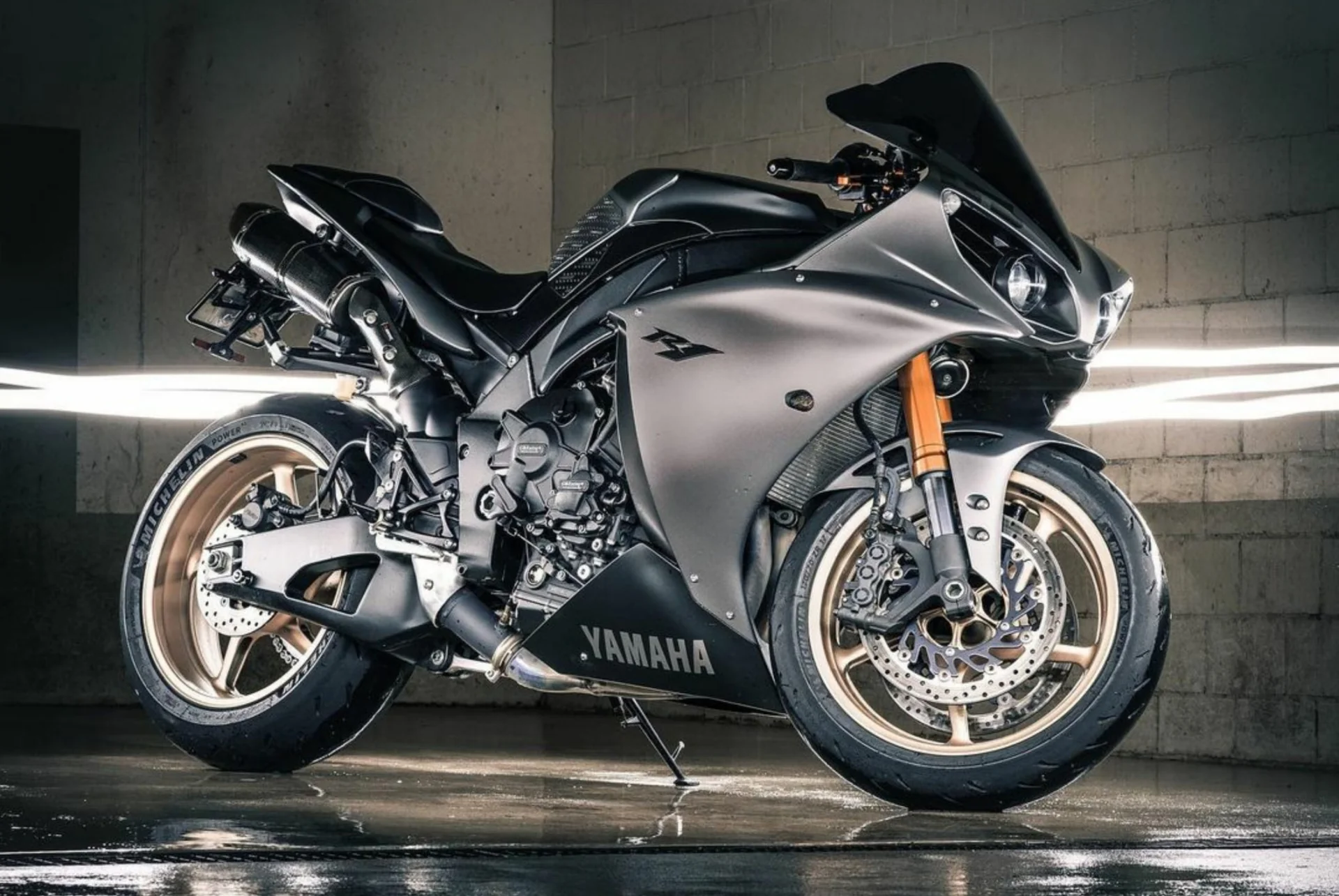
Apply wax or ceramic coating twice yearly. Modern ceramic coatings applied over clean paint provide significant UV protection and hydrophobic properties. They reduce the adhesion of road grime and salt.
Store with protection in mind. A breathable cover protects against UV, dust, and rain while allowing moisture to escape. An airtight cover in a humid environment traps moisture against the fairing surfaces.
Inspect mounting points and seals seasonally. Catch developing cracks, loosening hardware, and degraded rubber before they allow water ingress.
Touch up paint chips promptly. Every unprotected chip is a point where weather damage accelerates into the surrounding paint system.
Park in shade where possible. Reducing cumulative UV exposure has a measurable effect on long-term fairing condition. A shade structure or garage extends fairing life significantly compared to permanent outdoor parking in direct sunlight.
When Weather Damage Requires Replacement
Some fairing damage from weather exposure reaches a point where restoration is not practical.
UV-degraded plastic that has become brittle throughout its thickness cannot be restored by surface treatments. The molecular degradation is structural. A brittle panel that cracks at minor impacts is a safety concern. Debris ejected from a shattering fairing panel creates hazards for other road users.
Paint delamination that has progressed across large panel areas requires a complete respray. For older bikes, replacement with quality aftermarket panels can be more cost-effective than refinishing panels in poor condition.
Warped panels that no longer fit correctly against adjacent panels allow water and debris ingress regardless of how carefully the rest of the fairing system is maintained.
Quality motorcycle fairings from Aliwheels are manufactured to correct OEM dimensions. They are made using appropriate material thickness to provide the best long-term weather resistance when combined with consistent maintenance.
Conclusion
Weather damage to fairings is cumulative and largely invisible in its early stages. By the time the damage is obvious, the underlying deterioration is well advanced.
Regular maintenance, protective coatings, proper storage, and prompt attention to damage stop that progression before it becomes expensive.
Your fairings are both functional and aesthetic. They protect the mechanical components they enclose, reduce wind fatigue during riding, and define how the motorcycle presents itself. Protecting them from the weather protects the whole bike.
Shop quality motorcycle fairings built for lasting weather resistance at AliWheels.