


Free Shipping over $300

Support 24/7

Secure Payments

Hot Offers

Aliwheels is a leading motorcycle parts supplier offering free shipping anywhere in the world on orders above $300. Please note that all of our motorcycle parts and accessories are certified and tested. With more than 10,000* products to choose from this is your one place to get the motorcycle part you need. Browse our vast inventory of motorcycle radiators, fairings, clutch plates, headlights, chains, and sprockets.

Free Shipping over $300

Support 24/7

Secure Payments

Hot Offers

A motorcycle clutch kit can last anywhere from 20,000 to 60,000 miles, depending on the motorcycle, riding style, and maintenance. If your clutch wears out much sooner, the cause is often not the clutch plates themselves but the conditions they’re operating under.

From aggressive riding habits and heavy stop-and-go traffic to improper maintenance and incorrect adjustments, several factors can significantly shorten clutch life. Identifying these causes early helps you extend clutch life, improve performance, and avoid unexpected repair costs.

This guide explains the most common reasons motorcycle clutch plates wear out prematurely and how to prevent them.

Browse Motorcycle Clutch parts at Aliwheels and get certified replacement clutch plates and kits.

The Mechanics of Clutch Plate Wear

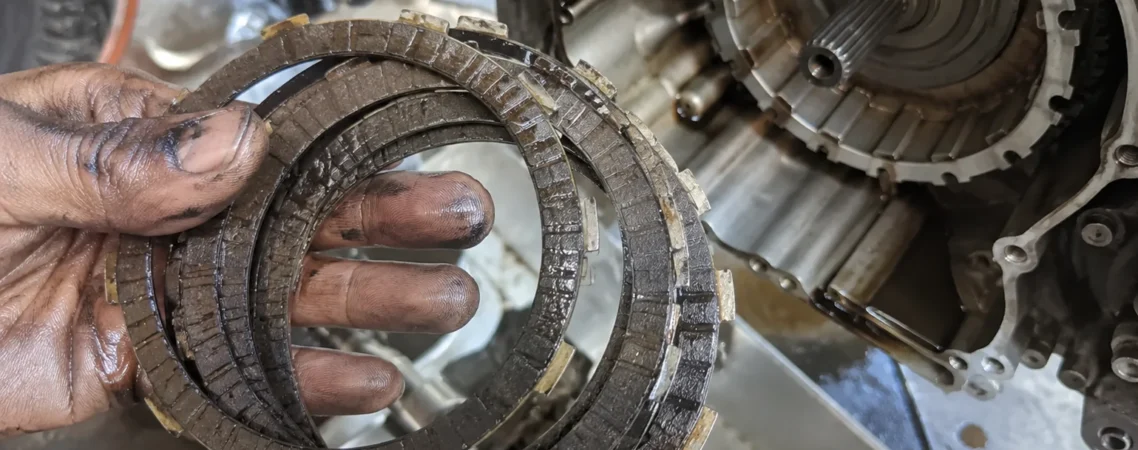
Motorcycle clutch plates wear through friction. Whenever the clutch is partially engaged, the friction plates rotate at a different speed than the steel plates. This creates heat, and over time, that heat wears away the friction material.

During normal, smooth riding, clutch slip is minimal, so wear happens gradually. However, frequent or prolonged clutch slip generates much more heat and significantly shortens clutch life.

Cause 1: Aggressive Riding and Hard Launches
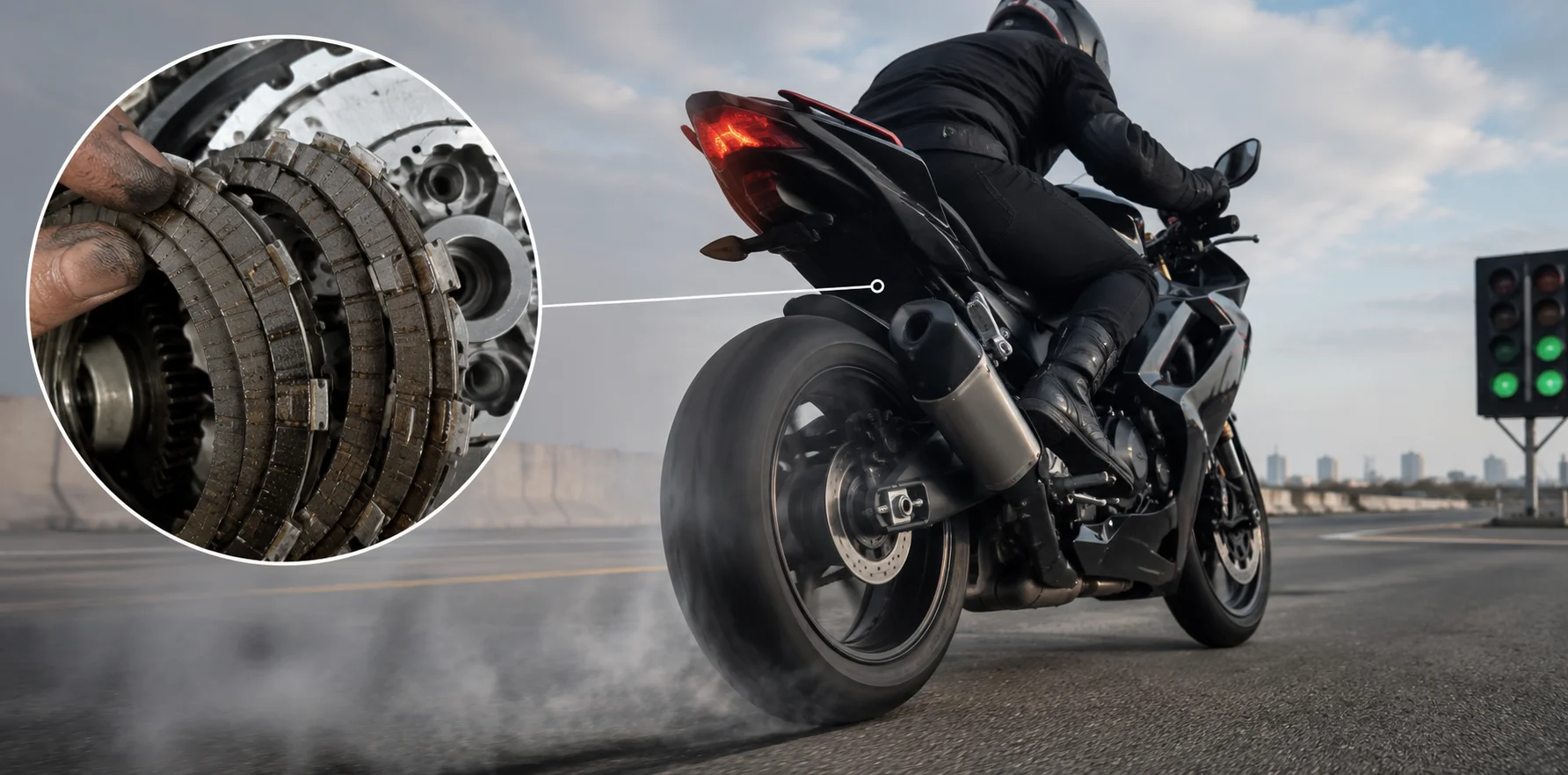
Aggressive motorcycle launch

Aggressive riding is one of the biggest causes of premature clutch wear. Every hard launch from a stop forces the clutch to slip while engine power is transferred to the rear wheel.

Track riders, riders who launch hard from traffic lights, or those who use the clutch for wheelies place far more heat and stress on the clutch than everyday riders.

If this matches your riding style, faster clutch wear is normal. Upgrading to a performance clutch kit with more heat-resistant friction material can help improve durability.

Cause 2: Incorrect Clutch Adjustment

Improper clutch adjustment is one of the most common and preventable causes of premature clutch wear.

A clutch cable with too little free play prevents the clutch from fully engaging, causing constant light clutch slip while riding. Even though the bike feels normal, the clutch continuously generates heat, wearing the plates much faster than expected.

Most motorcycles require approximately 2 to 3 mm of clutch lever free play, but always follow your manufacturer’s specifications. Check the adjustment whenever the clutch feel changes and during routine servicing.

Hydraulic clutch systems can develop a similar problem if air enters the hydraulic line. Trapped air prevents full clutch engagement, so bleeding the system during scheduled brake fluid service helps maintain proper operation.

Cause 3: Using the Wrong or Worn-Out Engine Oil

Most motorcycles use wet clutch systems, in which the clutch is submerged in engine oil. That’s why the quality of the oil has a direct impact on the performance and life of the clutch.

Using automotive engine oil can cause premature clutch wear because many car oils contain friction modifiers that reduce friction between the clutch plates, leading to clutch slip. Always use motorcycle oil that meets JASO MA or JASO MA2 specifications for wet clutch systems.

Old or degraded oil is another common problem. As oil ages, it loses viscosity and lubrication performance, causing inconsistent clutch engagement, extra heat, and faster wear.

Cause 4: A Worn or Damaged Clutch Basket
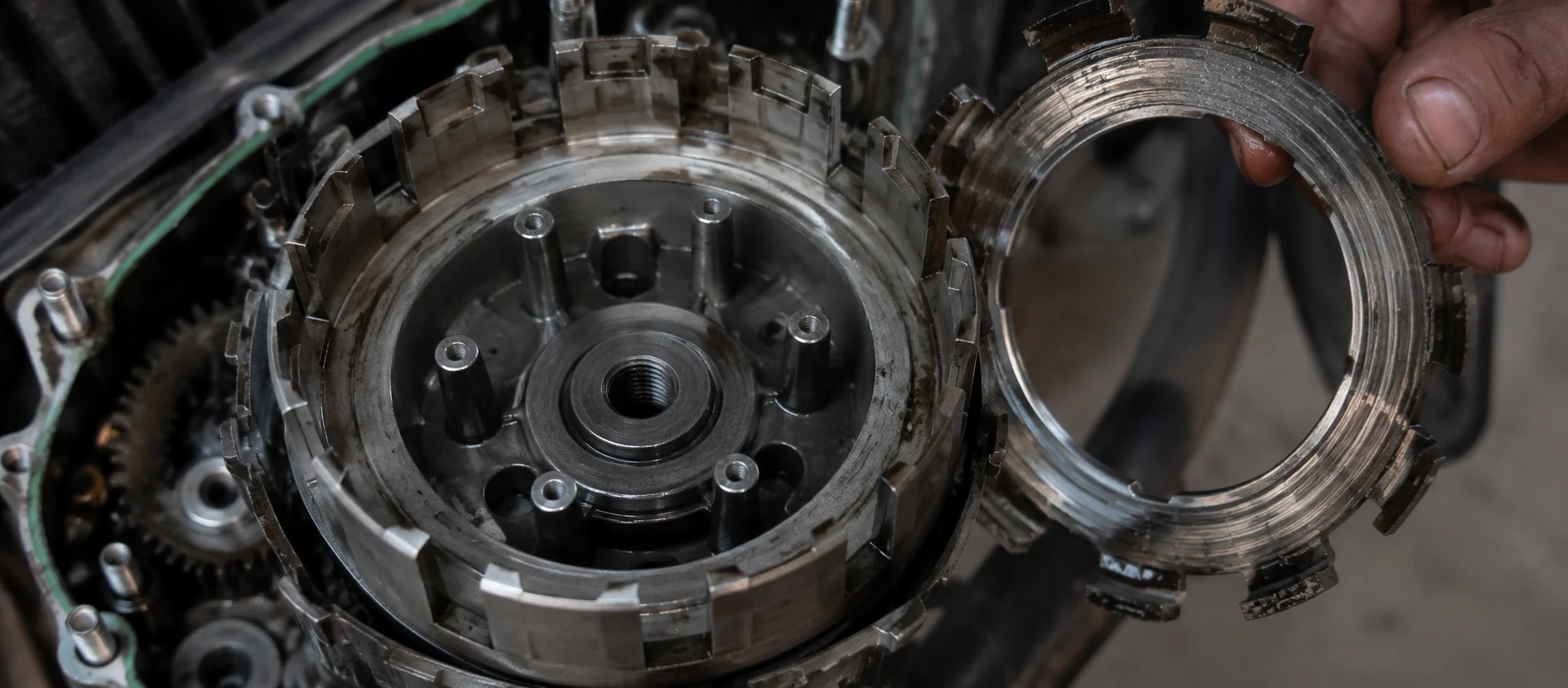
Worn motorcycle clutch basket

Over time, the clutch basket develops small grooves where the clutch plate tabs repeatedly contact the basket during engagement and disengagement.

These grooves prevent the friction plates from moving smoothly, causing the clutch to engage unevenly. Instead of wearing evenly across the entire surface, the friction material wears more heavily in certain areas, reducing clutch life.

Whenever replacing clutch plates, inspect the clutch basket carefully. Installing new plates into a badly worn basket often leads to premature wear of the replacement clutch.

Cause 5: Heavy Loads and Two-Up Riding

Carrying extra weight increases the workload on the clutch.

Riding with a passenger, carrying heavy luggage, or towing additional weight requires the clutch to transfer more engine torque during every launch and gear change. The increased load creates more clutch slip and more heat, accelerating wear.

This effect is especially noticeable on smaller-displacement motorcycles, where the clutch operates closer to its design limits under heavier loads.

Cause 6: Frequent Hill Starts and Slow-Speed Clutch Control

Holding the motorcycle on an incline with the clutch slipped, rather than fully engaging the clutch, creates extreme heat in a very short time.

Urban commuters, delivery riders, and anyone who regularly rides in heavy traffic often spend long periods feathering the clutch at low speeds. These repeated high-heat slip events wear clutch plates much faster than normal riding.

Using proper riding techniques and minimizing unnecessary clutch slip can significantly extend clutch life.

Warning Signs Your Clutch Plates Are Wearing Out

SignWhat It MeansUrgency
Slip under hard accelerationFriction material at or near minimumReplace within next service
Drag at idle, bike creeps in firstPlates not fully separatingAdjust cable first, then inspect
Burning smell in trafficHeat damage occurring nowInspect immediately
Inconsistent bite pointUneven plate thicknessInspect at next service
Jerky low-speed engagementSteel plate warpingReplace steel plates with a kit
Difficulty finding neutralPlates not releasing cleanlyCheck cable adjustment first

Inspect the Clutch Basket Before Replacing the Clutch

Before installing a new clutch kit, inspect the clutch basket for wear. Run your fingernail along each basket slot where the friction plate tabs make contact. If you can feel grooves, the new clutch plates may catch during operation, causing uneven engagement and faster wear.

Minor grooves can often be smoothed with a fine file. However, deep grooves (typically more than 0.5 mm) usually require clutch basket replacement to ensure the new clutch kit performs correctly and reaches its expected service life.

Installation Tips to Extend Clutch Life
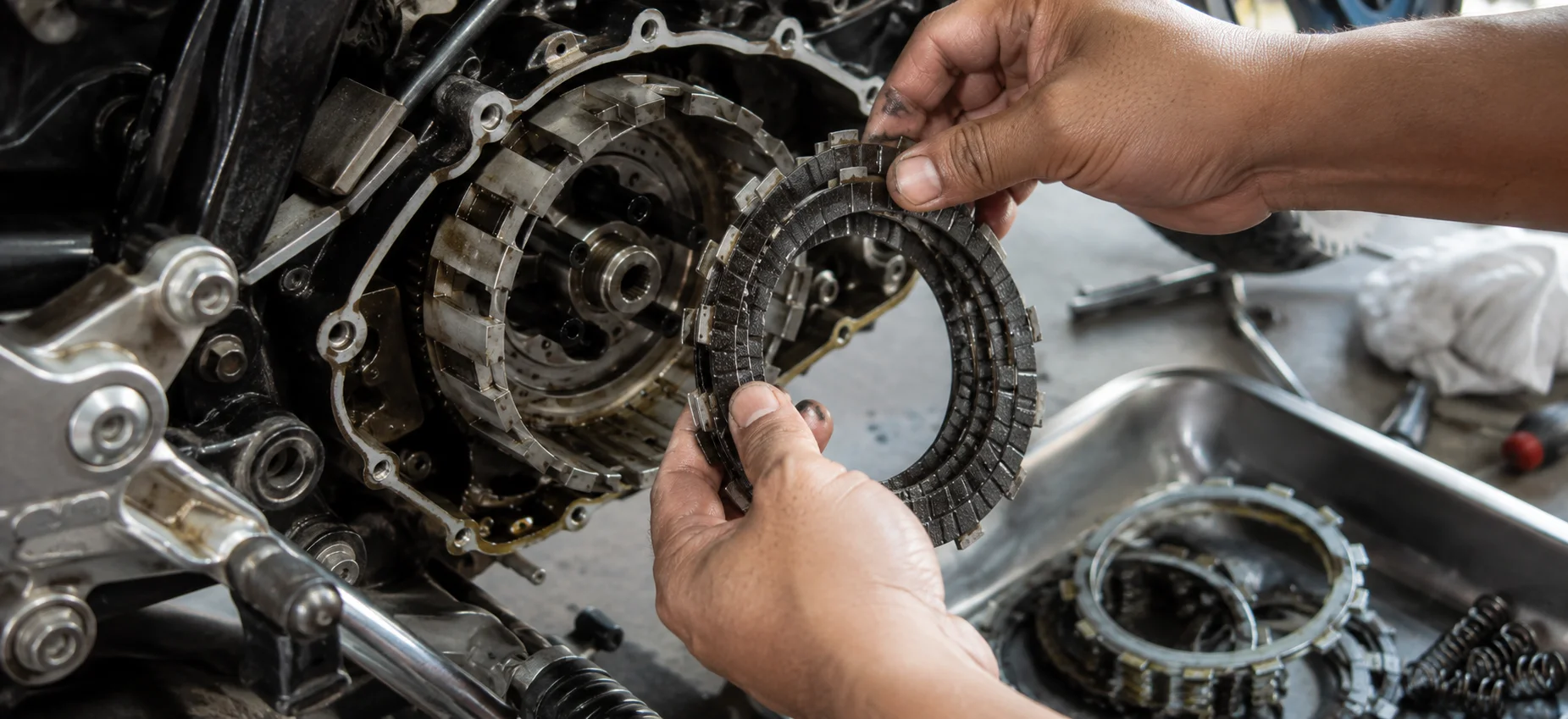
Motorcycle clutch installation

A few simple installation practices can significantly improve clutch performance and longevity:

  • Soak new friction plates in the recommended JASO MA or JASO MA2 motorcycle oil for at least 30 minutes before installation.
  • Inspect steel plates for warping and replace any that exceed the manufacturer’s service limit.
  • Check clutch springs against the service manual specification and replace weak or worn springs.
  • Adjust clutch free play to the correct specification after installation, then recheck it after the first few hundred miles as the new clutch plates bed in.

Aliwheels offers motorcycle clutch kits and clutch components for Honda, Yamaha, Kawasaki, Suzuki, Ducati, Harley-Davidson, BMW, KTM, Triumph, and many other brands. Every product is selected for model-specific fitment to help you find the right replacement for your motorcycle.

Conclusion

Clutch plates that wear out faster than expected are usually a symptom of riding style, incorrect cable adjustment, poor oil choice, or a worn clutch basket rather than a defective clutch kit. Fix the underlying cause before installing new plates, and your replacement kit will deliver its full service life. Replace only the worn plates without addressing the root issue, and you’ll likely be replacing the clutch again much sooner than expected.

Frequently Asked Questions

Q: How do I know if my clutch cable needs adjusting or if the plates are worn?
A: Check lever free play first. Most motorcycles require 2 to 3mm. If free play is correct but the clutch still slips under acceleration, the plates are likely worn. If the lever feels spongy or engagement is inconsistent, inspect the cable or bleed the hydraulic system before replacing the clutch.

Q: Can I use car engine oil in my motorcycle if it’s the right viscosity?
A: No. Car engine oil contains friction modifiers that can cause wet clutch slip. Always use motorcycle-specific oil with a JASO MA or JASO MA2 rating.

Q: Why are my new clutch plates slipping after only 5,000 miles?
A: Common causes include a worn clutch basket, incorrect oil, poor cable adjustment, or weak clutch springs. Check these issues before replacing the plates again.

Q: How do I check for clutch basket wear?
A: Run your fingernail along the basket tangs. Light grooves can often be smoothed, but deep grooves require basket replacement to prevent premature clutch wear.

Q: Does riding with a passenger wear out clutch plates faster?
A: Yes. Extra weight increases clutch load during starts and gear changes, which speeds up wear. Smooth riding and proper clutch adjustment can help extend clutch life.
(Commenting: OFF)

Steering head bearings are easy to forget because they’re completely hidden inside the motorcycle’s headstock. You never see them during routine maintenance, and unlike brake pads or tires, they don’t give obvious visual clues when they’re wearing out. Instead, the deterioration happens quietly, so many riders unknowingly adapt to the changing feel of the motorcycle without realizing what’s causing it.

That gradual wear has a surprisingly large effect on the way a motorcycle rides. Steering head bearings support the front end and allow the forks to turn smoothly through every steering input. As they wear, handling becomes less precise, straight-line stability suffers, and the bike can begin to feel vague, heavy, or unsettled when cornering. What starts as a minor annoyance eventually develops into a genuine safety concern.

The good news is that steering head bearing problems rarely appear without warning. Changes in steering feel, unusual front-end movement, or knocking under braking usually provide plenty of notice before complete failure occurs. Recognizing those signs early can mean the difference between a simple adjustment and a full bearing replacement.

In this guide, we’ll explain the most common symptoms of worn steering head bearings, why they fail, how to inspect them correctly, and when replacement is the only reliable solution.

For suspension and frame components, including steering system parts, browse Aliwheels’ Motorcycle Suspension and Frame category.

What Do Motorcycle Steering Head Bearings Do?

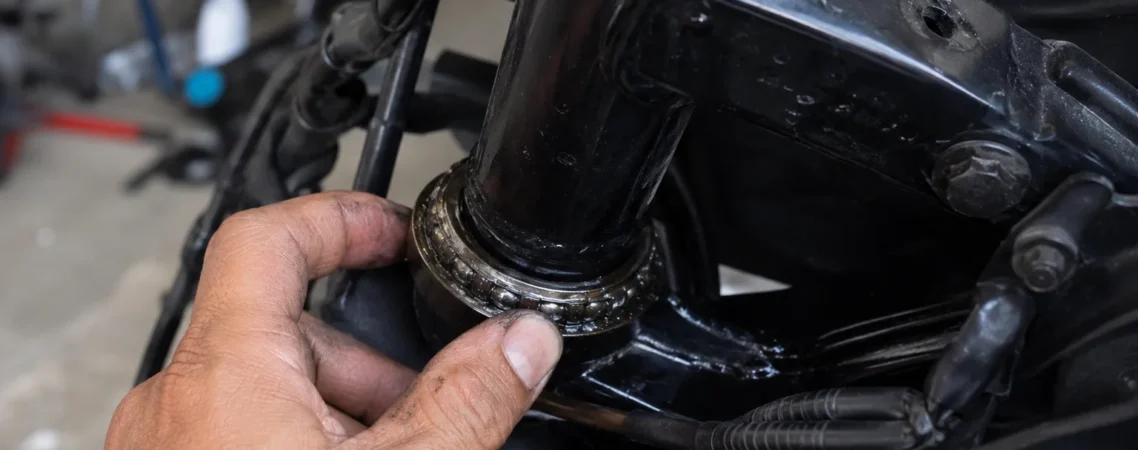
Motorcycle steering head bearings

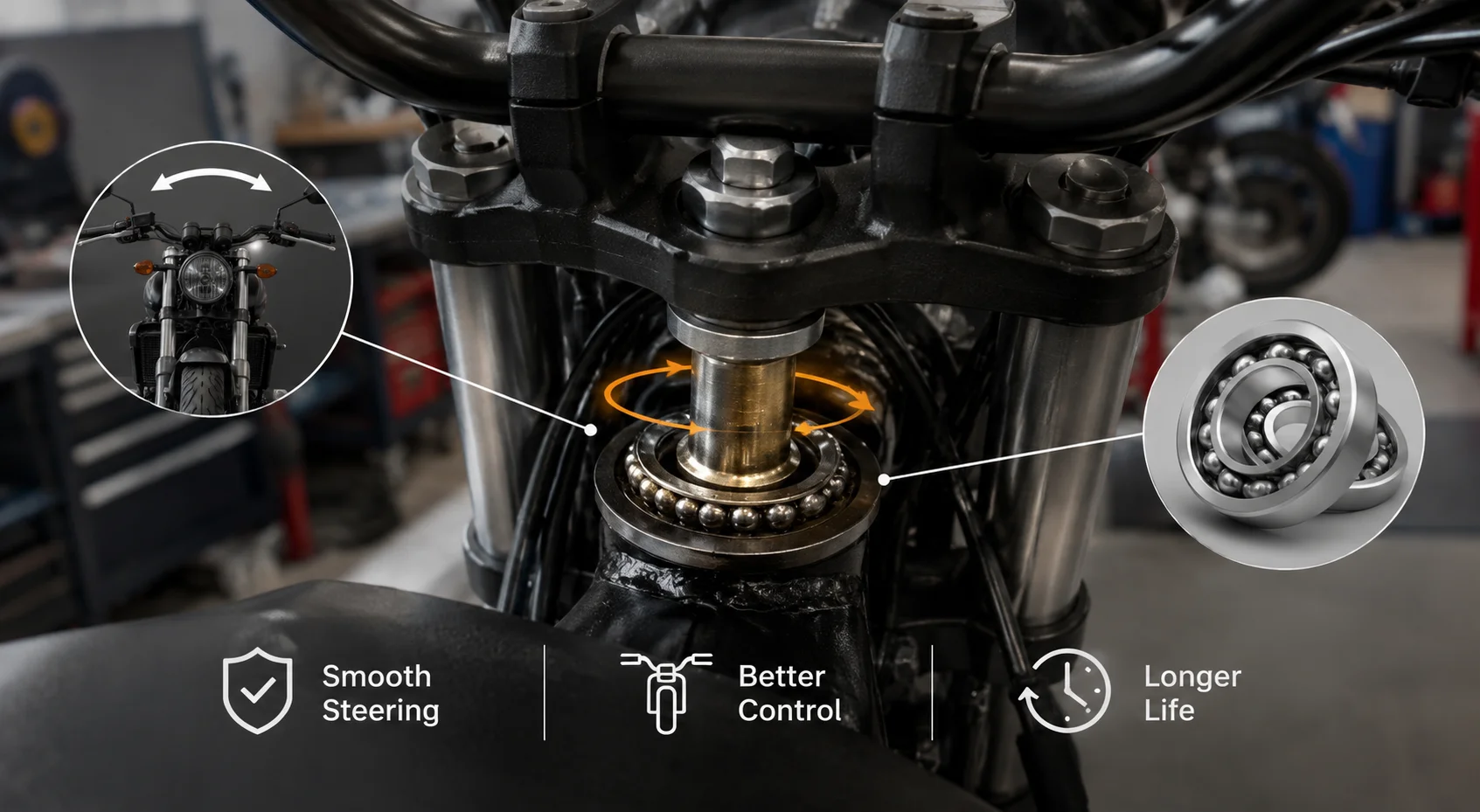
Steering head bearings are located inside the motorcycle’s headstock, the section of the frame where the front forks attach. Their job is to allow the fork assembly to turn smoothly from lock to lock while supporting the weight of the front end and absorbing the forces generated during braking, cornering, and riding over uneven road surfaces.

Most motorcycles use two steering head bearings: one at the top of the headstock and one at the bottom. Depending on the motorcycle, these may be traditional ball bearings or tapered roller bearings, with the latter commonly found on modern motorcycles because they handle heavy loads more effectively.

The lower bearing carries the greatest share of the load. Every bump, hard braking event, and impact from the road transfers force through this bearing, which is why it usually wears out before the upper one.

When the bearings become loose, develop corrosion, or the bearing races become pitted, the steering can no longer move smoothly through its full range. Instead of feeling precise and predictable, the front end may begin to feel heavy, vague, unstable, or reluctant to turn. Left unchecked, worn steering head bearings can significantly affect both handling and rider confidence, making early diagnosis well worth the effort.

7 Signs Your Motorcycle Steering Head Bearings Are Worn

1. Steering Feels Vague or Less Precise

One of the earliest symptoms is a loss of steering precision. The bike still turns normally, but the front end feels less direct and requires more effort to hold a line through corners. Because the change happens gradually, it’s often mistaken for tyre or suspension issues.

2. Notchiness Around the Straight-Ahead Position

Lift the front wheel off the ground and slowly turn the handlebars from lock to lock. Healthy bearings move smoothly. If the bars hesitate or “click” at the straight-ahead position, the bearing races have likely become pitted and need replacement.

3. Headshake or Weaving at Speed

Loose steering head bearings reduce front-end stability. The motorcycle may weave, wander, or develop headshake at highway speeds instead of tracking straight. Unlike tyre balance issues, the instability usually appears across a range of speeds rather than at one specific speed.

4. Clunking Under Braking

A knocking or clunking sound from the headstock during hard braking often indicates excessive bearing play. As the forks compress, the loose bearings shift slightly inside the steering head, creating a noticeable knock.

5. More Vibration Through the Handlebars

Steering head bearings help isolate road vibration. As they wear, more vibration reaches the handlebars, making the front end feel rougher, especially on uneven roads. If tyre pressures and suspension are correct, worn bearings are worth checking.

6. Steering Feels Heavy or Wants to Self-Centre

Severely worn or damaged bearings can make the steering feel stiff or reluctant to turn. The handlebars may resist movement or naturally fall back toward the centre instead of moving smoothly through the steering range.

7. Visible Play in the Front End

With the front brake applied, rock the motorcycle back and forth. Any movement or knocking felt at the steering head suggests excessive bearing play. This is a clear sign the bearings require adjustment or replacement.

Why Steering Head Bearings Wear?

Steering head bearing wear

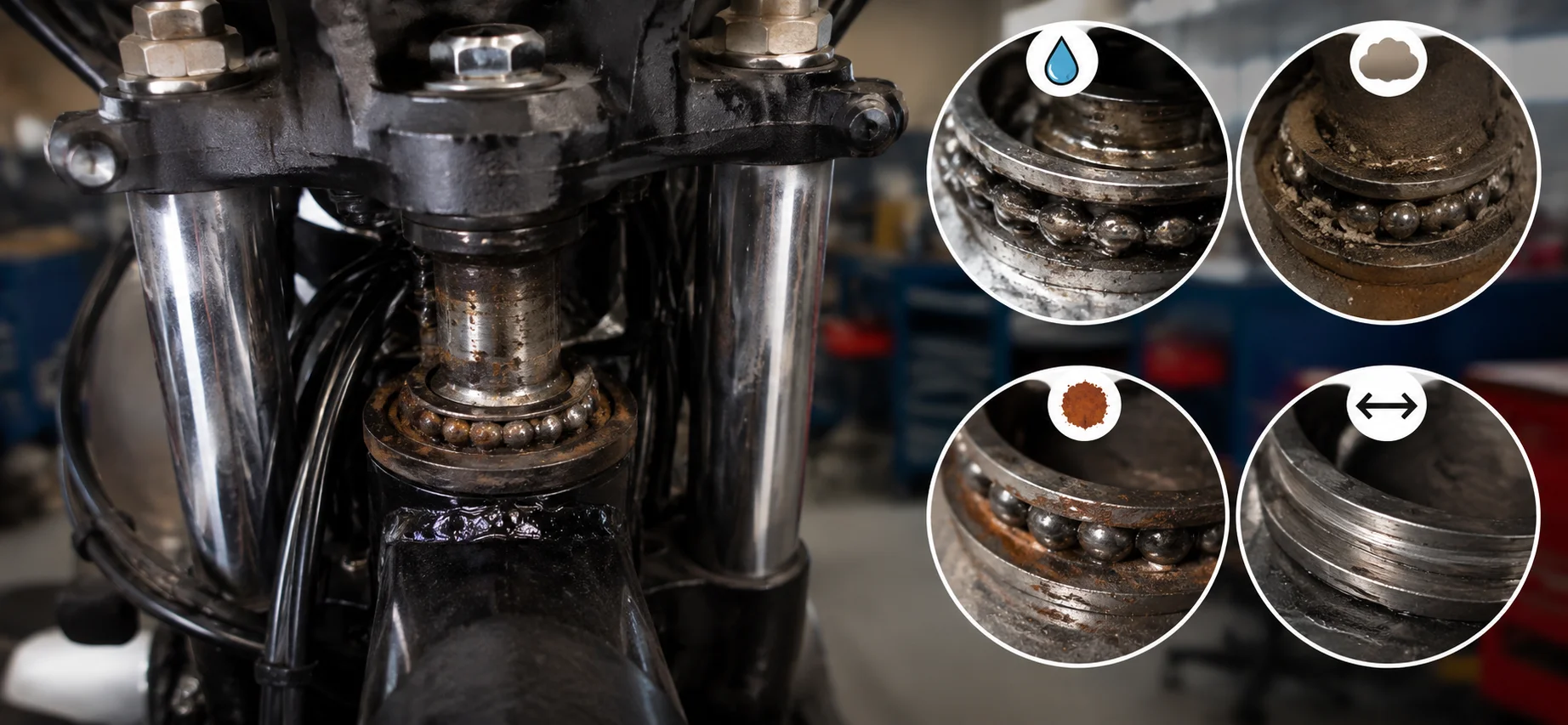
Steering head bearings wear because they absorb every force acting on the front end. Braking, cornering, potholes, and rough road surfaces all transfer load through the bearings. Since most riding is done with the handlebars pointing straight ahead, wear usually develops first at the center position, creating the familiar notchy steering feel.

Hard braking, poor road conditions, off-road riding, water intrusion, and neglected maintenance all accelerate bearing wear. Over time, grease breaks down, moisture causes corrosion, and the bearing races develop pitting that affects steering precision.

Can Steering Head Bearings Be Adjusted?

If the bearings are simply loose, a correct preload adjustment may remove the play and restore normal steering feel. However, adjustment only works when the bearings and races are still in good condition.

If the steering feels notchy or the bearing races are pitted, adjustment will not solve the problem. The entire steering head bearing set should be replaced to restore safe, predictable handling.

Replacing steering head bearings typically requires removing the front wheel, forks, and upper triple clamp, making it an intermediate-level repair with the proper tools and a service manual. After installation or adjustment, always check that the steering moves smoothly from lock to lock, with no play, notchiness, or instability during a test ride.

For steering, suspension, and frame components, browse the Motorcycle Suspension and Frame collection at Aliwheels or explore the complete Motorcycle Parts category to find model-specific replacement parts.

Conclusion

Steering head bearing wear develops gradually, making it easy to overlook until the handling noticeably deteriorates. What starts as slightly vague steering can eventually become instability, headshake, or unpredictable cornering if left unchecked.

Fortunately, diagnosing the problem is straightforward. A quick check for steering notchiness and front-end play takes only a few minutes and can reveal bearing wear before it becomes a serious safety issue. If the bearings are loose, an adjustment may be enough. If they’re worn or pitted, replacing the bearing set is the only reliable long-term solution.

Keeping your steering head bearings in good condition restores precise handling, improves rider confidence, and helps ensure your motorcycle remains safe and predictable on every ride.

Frequently Asked Questions

Q: How can I tell if my steering head bearings need adjustment or replacement?
A: Lift the front wheel and slowly turn the handlebars from lock to lock. If the steering feels smooth but has slight play, the bearings may only need a preload adjustment. If you feel a notch or rough spot around the straight-ahead position, the bearing races are worn and the bearings should be replaced.

Q: How often should motorcycle steering head bearings be replaced?
A: There is no fixed replacement interval. Inspect the bearings during routine servicing or whenever you notice changes in steering feel. Motorcycles used on rough roads, off-road, or in wet conditions may require more frequent inspection.

Q: Can worn steering head bearings cause headshake or speed wobble?
A: Yes. Loose steering head bearings can reduce front-end stability, leading to headshake or weaving at speed. These symptoms should be investigated immediately, as they can affect rider safety.

Q: Can I replace motorcycle steering head bearings myself?
A: Yes, if you have the correct tools and mechanical experience. The job involves removing the front wheel, forks, and steering stem, then pressing out the old bearing races and installing new ones with the correct preload. Many riders choose a workshop if they don’t have the required equipment.

Q: Is it safe to ride with worn steering head bearings?
A: No. Worn or damaged bearings reduce steering precision and can lead to instability under braking and at higher speeds. If you notice notchiness, excessive play, or headshake, inspect and repair the bearings before riding again.

(Commenting: OFF)

Or login with your social account