




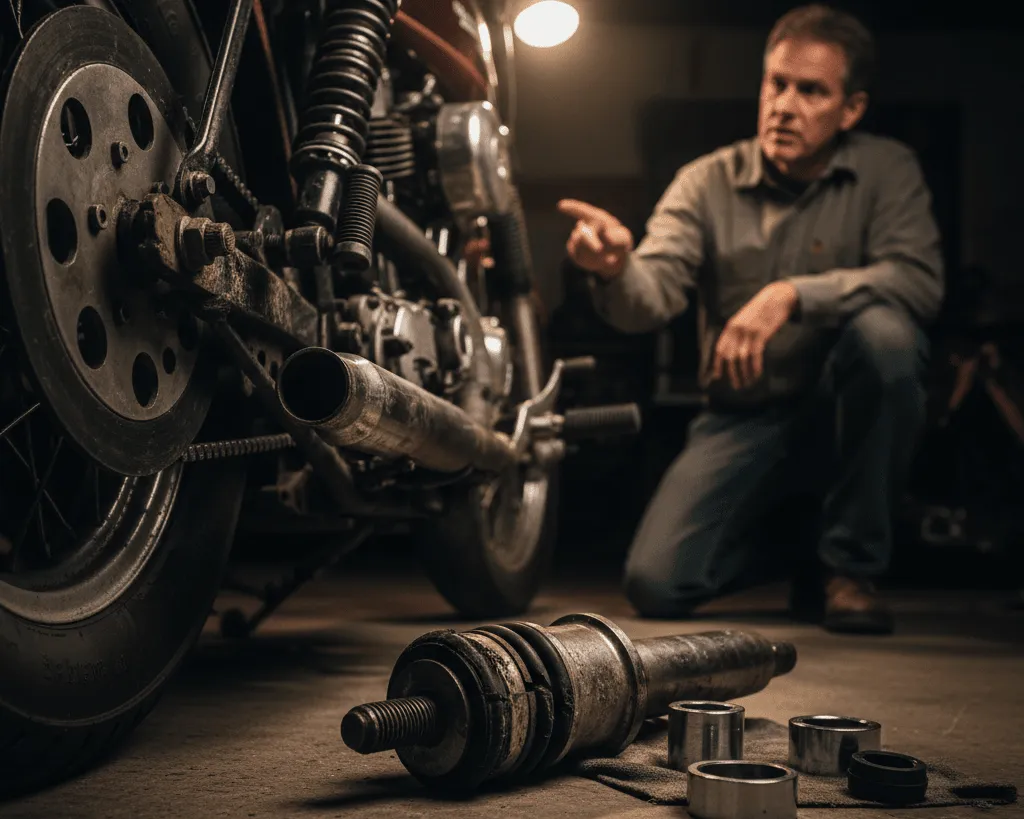

If your Harley-Davidson used to feel planted at 70 mph but now feels vague, twitchy, or slightly unstable, you are not imagining it. Many riders notice that after a few years and a few thousand miles, their bike no longer tracks the road with the same confidence it once did. The steering may feel light, the front end less precise, or the whole bike slightly unsettled at highway speed.
These Harley handling at high speed problems rarely come from one dramatic failure. Instead, they develop quietly through normal wear, aging rubber components, and Harley suspension parts that slowly lose their effectiveness. Understanding what causes this “loose” feeling is the first step toward restoring the solid, confidence-inspiring ride Harley owners expect.
What Riders Mean When They Say a Harley Feels Loose?
When riders describe looseness at speed, they usually mean one or more of the following symptoms:
- The motorcycle wanders slightly in the lane at highway speeds
- The front end feels vague or disconnected
- Small steering inputs feel amplified
- The bike reacts poorly to wind or passing trucks
- Subtle shaking or instability through the bars
These Harley highway instability symptoms often show up gradually, which is why many owners adapt to them without realizing something is wrong. Over time, what starts as mild imprecision can progress into real safety concerns.
Harley Suspension Wear Is the Biggest Culprit
The most common cause of a Harley feeling loose at speed is worn suspension. Rear shocks and front forks do not fail suddenly. They lose damping slowly, allowing excess movement that affects stability.
Rear Suspension Wear and High-Speed Stability
Rear shocks play a critical role in keeping the bike settled. As they age, internal oil breaks down, seals wear, and damping weakens. This allows the rear of the bike to move excessively over small bumps, especially at speed.
When rear suspension wear affects high-speed stability, the bike can feel like it is floating instead of tracking firmly. This is especially noticeable on touring models carrying luggage or a passenger.
Front Fork Degradation
Front forks also degrade over time. Fork oil becomes contaminated, bushings wear, and springs sag. The result is a delayed response and reduced front-end feedback. This contributes to a front-end shimmy that Harley riders often describe as light shaking or nervousness through the handlebars.
Steering Head Bearings and Front-End Geometry
Steering head bearings are often overlooked during routine service. As they wear or lose proper preload, steering precision suffers. Too loose, and the bike feels unstable. Too tight, and steering becomes heavy and inconsistent.
Worn or poorly adjusted bearings can directly contribute to Harley’s steering feeling loose at speed, especially when combined with aging Harley suspension components.
Tires and Tire Wear Patterns Matter
Tires play a huge role in stability, yet many riders underestimate their impact. Even when tread depth looks acceptable, tires that are squared off, unevenly worn, or hardened with age can introduce instability.
Old tires lose grip and feedback, making the bike more susceptible to speed wobbles on motorcycles, especially during lane changes or when encountering road grooves.
Correct tire pressure is equally important. Underinflated tires increase flex and reduce stability at highway speeds.
Rubber Components Quietly Change Handling
Harleys rely heavily on rubber-mounted components to manage vibration. Over time, these rubber parts harden, compress, or crack. This includes:
- Swingarm bushings
- Engine mounts
- Isolators in the chassis
As rubber ages, it no longer absorbs movement as designed. This subtle change can alter chassis dynamics and contribute to that loose, unsettled feeling at speed.
Wheel Alignment and Bearings
Misaligned wheels or worn wheel bearings in Harleys can also cause instability. These issues rarely create obvious noises early on, but they affect how the bike tracks at highway speed.
If the bike feels like it needs constant correction to stay straight, wheel alignment and bearings should be inspected.
Why Speed Wobble Develops Over Time?
Speed wobble does not appear overnight. It builds as multiple small issues combine. Slightly worn suspension, aging tires, soft bushings, and loose bearings together create conditions where the bike reacts poorly to airflow, bumps, or steering input.
That is why speed wobbles on motorcycles are often reported on bikes that feel “mostly fine” around town but unstable above 65 mph.
How to Restore a Solid, Planted Feel?
The good news is that most Harley handling issues are reversible. Riders who address the root causes often say their bike feels better than it did when new.
Key upgrades and maintenance steps include:
- Replacing worn rear shocks with properly rated units
- Servicing or upgrading front forks
- Inspecting and adjusting steering head bearings
- Installing fresh, high-quality tires
- Replacing worn rubber bushings where needed
Many riders are shocked at how much confidence returns once these areas are addressed.
Why Ignoring Looseness Is a Mistake?
Riding Harleys that feels loose at speed is not just uncomfortable. It is risky. Reduced stability affects braking, cornering, and emergency maneuvers. What feels like a minor annoyance can quickly become a safety issue during sudden lane changes or evasive action.
Addressing Harley handling at high speed problems early prevents further wear and helps protect both rider and machine.
Conclusion
Harleys should feel solid, predictable, and confidence-inspiring at highway speed. When that feeling fades, it is not a normal part of aging. It is a signal that key components are past their prime.
By understanding the real causes behind Harley highway instability symptoms, riders can make informed upgrades that restore the ride quality they fell in love with. A few targeted improvements can transform a loose, nervous bike into one that feels planted and powerful again, mile after mile.
If your Harley no longer feels as stable as it once did, it may not need more power. It likely needs attention where it matters most: suspension parts upgrade, steering upgrade, or the Harley components quietly holding everything together. Aliwheels has all Harley parts, no matter which model you ride. You name it, and we deliver it.