




You start a long ride feeling great. By the second hour, you are shifting around, standing on the pegs every few miles, and counting down to the next gas stop. Not because your legs are tired or your back is stiff. Because your back is screaming at you.
“Motorcycle seat pain on long rides” is one of the most common complaints among touring and adventure riders in the US. Most riders think it’s due to their lifestyle. Poor fitness, soft lifestyle, and not enough miles in the saddle. In reality, the problem is almost always the seat itself, specifically what happens to your body when poor seat design meets sustained vibration, pressure, and heat.
Here is what is actually causing the pain and what actually fixes it. Browse AliWheels’ motorcycle seats and sissy bars category after reading to find the right upgrade for your specific bike.
Why Motorcycle Seat Pain on Long Rides Is Almost Always a Design Problem?
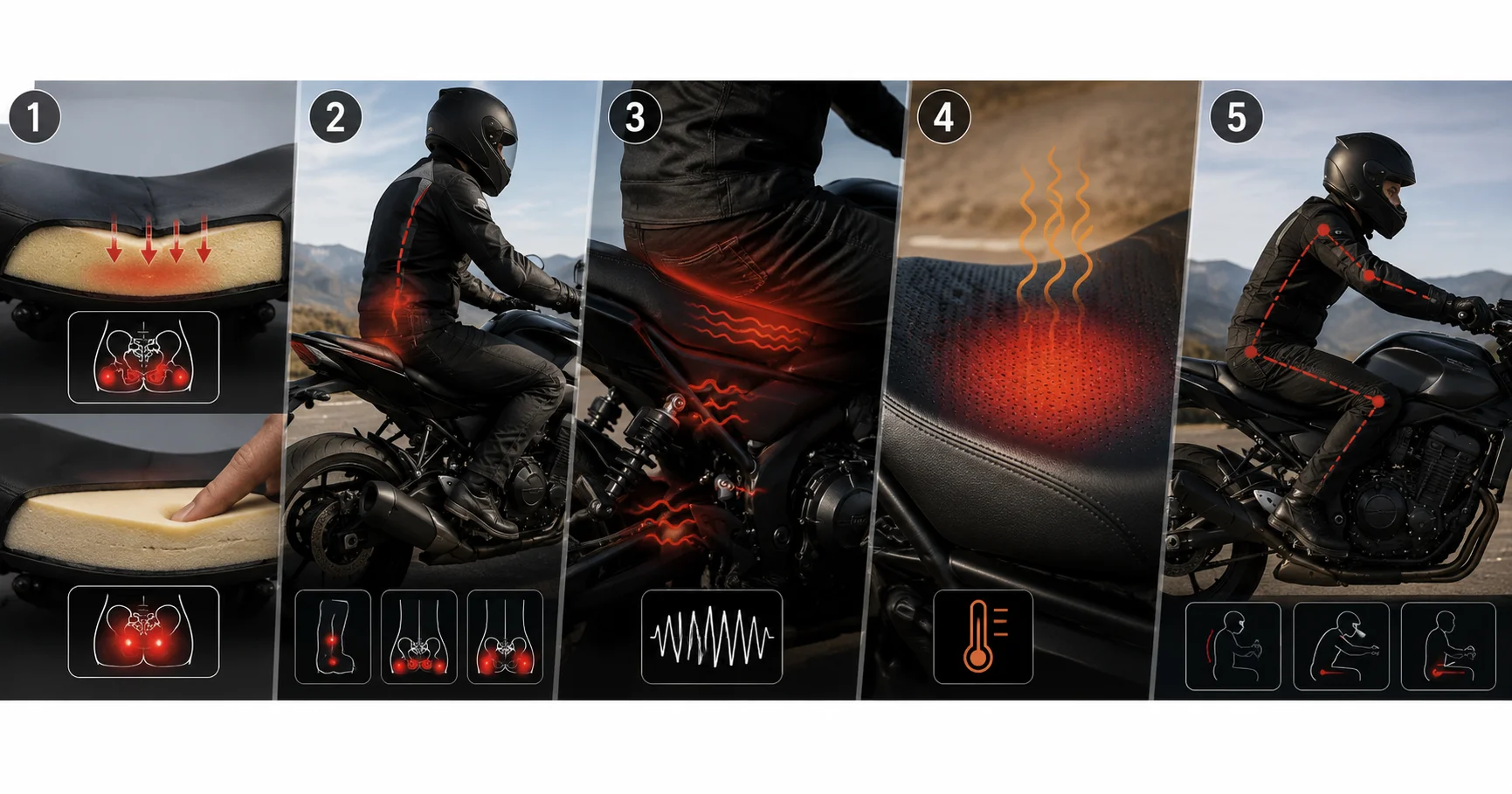
Your body weight on a motorcycle concentrates onto a very small surface area; primarily the ischial tuberosities, which are the two bony points at the base of your pelvis that you actually sit on. On a car seat, weight distributes across a wide, contoured surface. On a motorcycle seat, those same two points bear the full load on a surface that is often too narrow, too flat, or too hard for sustained riding.
According to ergonomics research cited by Motorcycle Cruiser magazine, sustained pressure on the ischial tuberosities compresses blood vessels and soft tissue in the area. After 60 to 90 minutes of continuous riding on a poorly designed seat, numbness, pain, and fatigue set in. This is not a fitness issue. It is a pressure distribution issue. The right seat redesigns the way your weight is distributed across that surface.
The 5 Real Causes of Motorcycle Seat Pain
1. Foam That Is Too Hard or Too Soft
Stock motorcycle seats are built to a price point. The foam used is often either too firm, which concentrates pressure at the bony contact points. Either too soft, which sounds better but actually allows the pelvis to sink through the foam until you are essentially sitting on the hard seat pan underneath.
The correct foam density for long-distance riding supports the pelvis without bottoming out and redistributes pressure away from the ischial points toward the surrounding soft tissue. This is the primary difference between a stock seat and a purpose-built touring seat.
2. A Seat That Does Not Match Your Body
Seat width, height, and contour all interact with rider anatomy. A seat that is too narrow concentrates all pressure onto the contact points with no lateral support. Furthermore, a seat that is too wide forces the inner thighs to bear constant friction against the tank. A seat with a raised front pommel pushes the rider’s weight backward and onto the coccyx.
Riders on the Seat Comfort thread consistently identify seat profile mismatch as the root cause when bike-specific aftermarket seats dramatically improve their comfort.
3. Vibration Transmitted Through the Seat
Your motorcycle engine transmits vibration through the frame and into the seat. Low-frequency vibration at the frequencies common in V-twin and parallel-twin motorcycles is particularly effective at causing fatigue in the muscles and soft tissue around the pelvis and lower spine. Over a long ride, that vibration accumulates into real fatigue and pain that feels like seat discomfort but is actually vibration-induced muscle fatigue.
Gel inserts and memory foam top layers address this by absorbing vibration before it reaches the rider. This is why gel seat pads can reduce discomfort even when fitted over an otherwise poor stock seat.
4. Heat Buildup From Seat Material
Standard vinyl and synthetic leather seat covers trap heat against the rider’s body. In summer riding or sustained direct sunlight, seat surface temperatures on stock seats can reach uncomfortable levels within 20 to 30 minutes. That heat increases perspiration, reduces blood flow, and amplifies any pressure discomfort that is already present from the other factors.
Breathable seat covers and perforated materials reduce this significantly. Some riders also find that textile riding pants with seat panels provide meaningful heat and friction reduction against a stock seat surface.
5. Riding Position Forced by Seat Geometry
A seat that positions you incorrectly relative to the footpegs and handlebars changes how your weight distributes across the seat. If the seat forces you forward into a crouch, more weight goes onto your wrists and the front of the seat. If it positions you too upright for the bar height, the lower back bears load that transfers into seat pressure.
This is why seat upgrades often need to be considered alongside bar height, peg position, and overall riding ergonomics. A seat upgrade in isolation solves the seat problem. A full ergonomics review solves the riding comfort problem.
| Seat Problem | What You Feel | The Fix |
| Foam too hard | Immediate pressure pain at sit bones within 30-60 min | Aftermarket seat with correct foam density or memory foam topper |
| The foam is too soft/bottomed out | Pain that builds after first hour, worse on bumps | Firmer aftermarket seat with proper density foam |
| Profile too narrow | Pain concentrated at two points, inner thigh chafing | Wider touring seat with contoured profile |
| Heat buildup | Burning, sweating, amplified discomfort in summer | Perforated cover, breathable seat material, textile pants |
| Vibration transmission | Diffuse fatigue and soreness rather than sharp pain | Gel insert or memory foam layer over or instead of stock seat |
| Wrong riding position from seat geometry | Lower back pain plus seat discomfort together | Combined seat upgrade and ergonomics review |
Gel Pad vs Aftermarket Seat: Which Solution Is Right for You?
There are two approaches to fixing motorcycle seat pain. A gel or foam pad over the existing seat is fast, cheap, and reversible. An aftermarket replacement seat is a more permanent and more effective solution for riders who regularly cover 200 or more miles per day.
| Solution | Cost | Effectiveness | Best For |
| Gel seat pad/topper | $20-$80 | Moderate. Addresses vibration and heat | Occasional long rides, budget-conscious riders, rental or newer bikes |
| Memory foam topper | $30-$100 | Good. Better pressure redistribution than gel alone | Riders whose main problem is foam density rather than seat profile |
| Aftermarket replacement seat | $150-$500+ | Best. Addresses profile, foam, heat, and vibration together | Touring riders, daily commuters, anyone doing 150+ mile days regularly |
| Custom seat rebuild | $200-$600 | Best possible. Tailored to your exact anatomy | Serious tourers, riders with specific ergonomic needs or injury history |
| Real talk from the Riders’ community: The consensus among experienced touring riders is that a gel pad buys you comfort improvement at low cost, but anyone doing regular long-distance riding eventually upgrades to an aftermarket seat. The cost per mile of comfort is far lower on a good replacement seat over its lifetime. |
What to Look for in an Aftermarket Motorcycle Seat?
• Foam density specification. The best aftermarket seats specify the foam density used. Medium-density foam in the 30-40 kg/m³ range is the typical sweet spot for touring comfort.
• Profile matched to your bike and body. Seat width matters. A seat designed for a 250-pound rider on a cruiser is a different product than one for a 160-pound rider on a sport-tourer.
• Cover material. Look for non-slip, breathable, or perforated materials. Avoid high-gloss vinyl covers that get hot and cause the rider to slide.
• Driver vs. passenger specific. Some bikes have combined or separated seating. Confirm which section you are buying. Driver comfort and passenger comfort require different solutions.
• Fitment by make, model, and year. An aftermarket seat for a 2019 Honda Africa Twin is a different product than one for a 2019 Harley-Davidson Road Glide. Exact fitment matters for mounting and profile.
For all related parts and gear, browse the full motorcycle parts category at Aliwheels. Fitment support is available 24/7 before your order ships.
5 Riding Habits That Reduces Seat Pain
While the right seat is the permanent solution, these habits make a meaningful difference in the short term and remain useful even after upgrading.
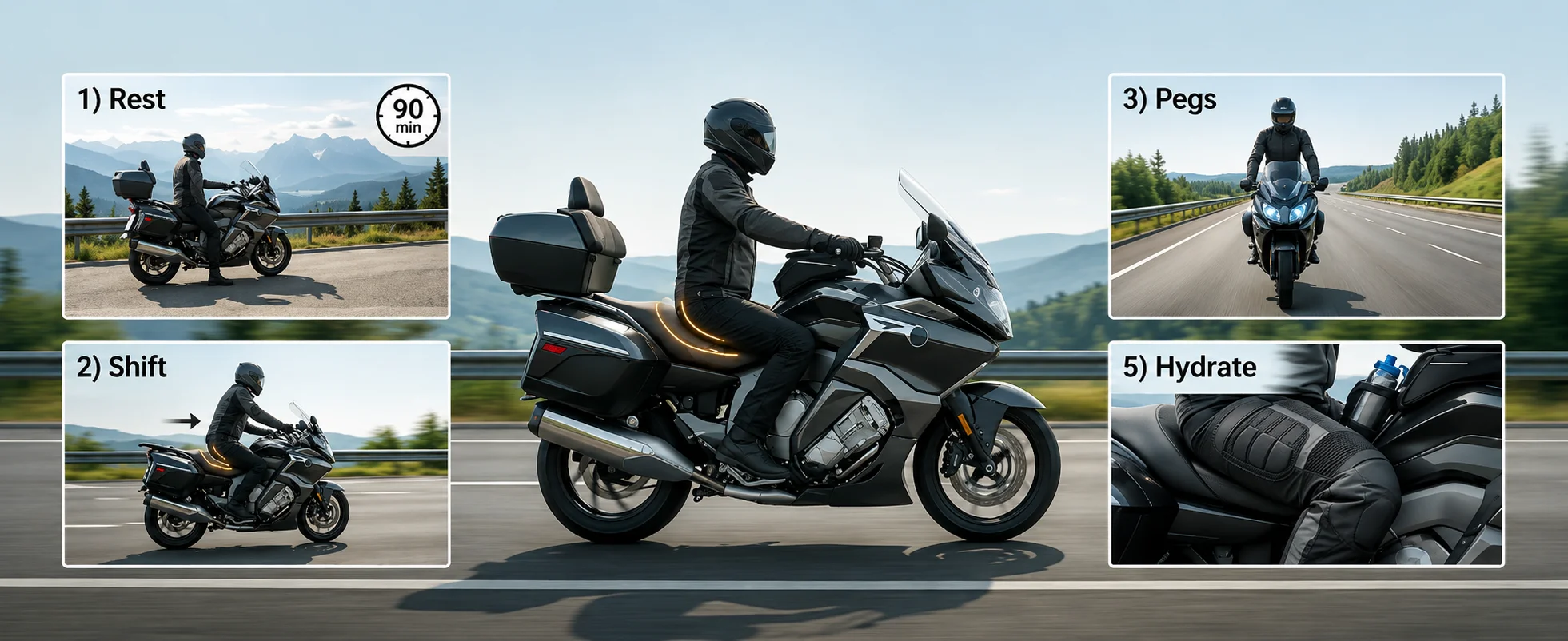
1. Stop every 90 minutes. Blood flow restriction becomes significant after 60 to 90 minutes of sustained pressure. A 5-minute walk at each stop is more effective than any seat pad for managing fatigue on long days.
2. Shift your weight actively. Moving forward and backward on the seat during riding changes the pressure distribution and gives fatigued areas temporary relief. Sportbike riders naturally do this. Cruiser and touring riders often sit statically, which concentrates fatigue.
3. Use your pegs. Stand up briefly every 30 to 45 minutes on long highway sections. Even 30 seconds of weight on the pegs resets circulation in the contact areas.
4. Wear proper riding pants. Textile pants with padded seat panels reduce both heat transfer and friction from the seat surface. The difference between riding in jeans and textile pants on a 300-mile day is significant.
5. Stay hydrated. Dehydration reduces soft tissue resilience and amplifies fatigue everywhere, including at the seat contact points. Riders who are properly hydrated consistently report better comfort on long days than those who restrict water intake to avoid stops.
Conclusion
Motorcycle seat pain on long rides can be prevented, and it is not a fitness problem. It is a design problem that has a design solution. The foam density, seat profile, cover material, and vibration absorption of your seat determine how your body feels after 200 miles. Getting that combination right transforms long-distance riding from an endurance test into the enjoyable experience it is supposed to be.
Start with riding habit adjustments for immediate relief. Add a gel pad if you need a short-term improvement. And when you are ready to solve it properly, upgrade to an aftermarket seat built for the distance you actually ride.
Browse AliWheels‘ motorcycle seats and sissy bars category page by your exact make, model, and year. Your back will begin to feel the difference from the first mile.
Frequently Asked Questions
Q: Why does my butt go numb on long motorcycle rides?
A: Numbness during long rides is caused by sustained pressure on the blood vessels and soft tissue under the ischial tuberosities — the two bony contact points you actually sit on. When blood flow is restricted for 60 to 90 minutes, numbness sets in. The fix is a combination of regular stops, active weight shifting during riding, and a seat with better pressure distribution than your stock unit provides.
Q: Does a gel seat pad actually work for motorcycle seat pain?
A: Yes, but with limits. A gel pad addresses vibration absorption and reduces heat buildup, which are real contributors to seat discomfort. However, it does not fix a seat that is the wrong profile for your body or foam that has bottomed out from age and use. For mild discomfort, a gel pad is a practical and affordable solution. For serious long-distance pain, an aftermarket replacement seat is the correct fix.
Q: How do I know if my motorcycle seat foam has worn out?
A: Press the center of the seat firmly with your hand. If you can feel the hard seat pan through the foam with moderate hand pressure, the foam has collapsed and is no longer providing proper cushioning. Most motorcycle seat foam reaches this point between 30,000 and 50,000 miles of use, but high-heat climates and heavy riders accelerate this timeline significantly.
Q: Is a wider motorcycle seat always more comfortable for long rides?
A: Not necessarily. A seat that is too wide causes the inner thighs to press constantly against the seat edges, which creates a different type of discomfort. The correct width depends on your specific anatomy. Generally, a seat wide enough to support both ischial contact points with some surrounding padding is optimal. Many aftermarket touring seats are actually close to stock width but shaped differently to improve pressure distribution.
Q: Can I modify my stock motorcycle seat to make it more comfortable?
A: Yes. A local upholstery shop that works with motorcycle seats can refoam and recover a stock seat with better materials for $100 to $300, depending on complexity. This is often a better solution than buying a cheap aftermarket seat because it uses your stock seat’s fitment while upgrading the materials. Ask specifically for medium-density rebond foam with a memory foam topper layer for the best touring comfort result.