



Your temperature gauge is creeping up. Or there is steam rising from somewhere near the engine. Or the bike just cut out on the highway with no warning and a lot of heat.
Motorcycle radiator overheating is one of those problems that starts small and ends expensively if you ignore the early signals. A liquid-cooled motorcycle engine runs within a precise temperature window. Push it above that window, and the damage is fast, serious, and often permanent.
Here are the signs that your motorcycle radiator is failing, the most common causes, and how to fix each one. Browse Aliwheels’ Motorcycle Radiators category for radiator and cooling system components across all major brands.
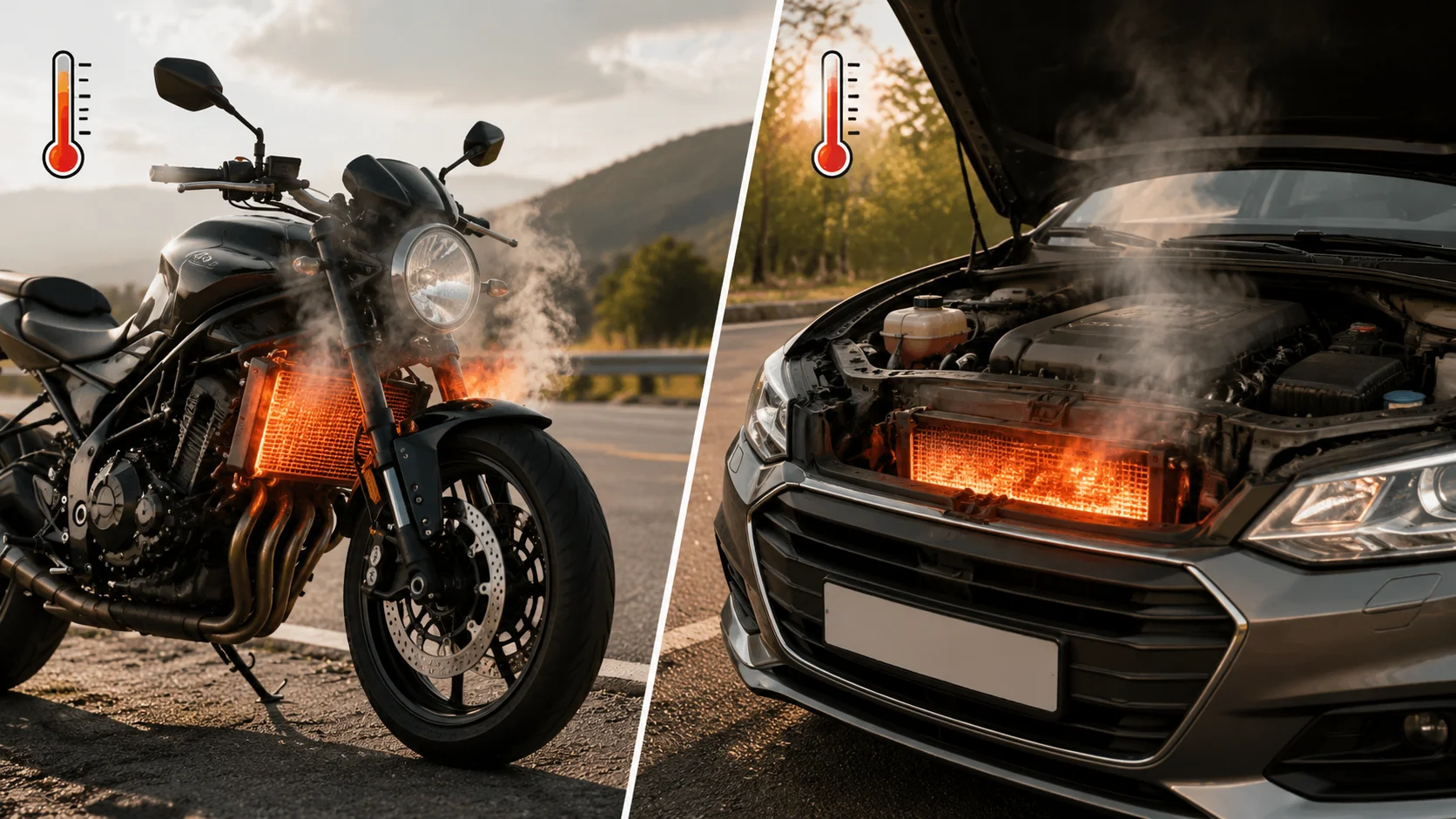
Motorcycle Radiator Overheating vs. Car Overheating
In a car, the engine has more thermal mass and more cooling capacity. You typically have time to pull over, let it cool, and add water. On a motorcycle with a smaller engine and a tighter cooling system, the thermal margin is narrower. Temperatures rise faster, and damage occurs more quickly once the cooling system fails.
According to Bike Cowboy’s motorcycle radiator guide, the most common consequence of sustained overheating on a liquid-cooled motorcycle engine is warped cylinder heads, blown head gaskets, and seized pistons in that order of frequency. Each one is a major engine rebuild. A $40 thermostat or a coolant flush prevents all three.
7 Warning Signs Your Motorcycle Radiator Is Overheating
1. Temperature Gauge Climbing Above Normal Range
The most obvious sign. Every liquid-cooled motorcycle has a temperature gauge or warning light. Know where your bike normally sits during different riding conditions. City traffic runs warmer than highway traffic. A reading that consistently exceeds your normal operating range by a meaningful margin is the first indication your cooling system is working harder than it should.
2. Steam or Smoke From the Engine Area
Steam rising from the engine area while riding or after stopping is a direct sign of coolant reaching a boiling point. Do not confuse steam from a cold engine on a humid morning with genuine overheating steam. Genuine overheating steam appears during or after riding in warm conditions and is often accompanied by a sweet chemical smell from boiling glycol coolant.
3. Coolant Dripping or Puddle Under the Bike
A coolant leak can be the cause of overheating rather than a symptom. A system losing coolant loses cooling capacity until the remaining fluid cannot keep the engine in its temperature window. Check under the bike after any ride where the temperature gauge ran high. Pink, green, or blue-tinted fluid under the engine area is coolant, not oil.
4. Reduced Power and Rough Running at Operating Temperature
When an engine overheats, the fuel-air mixture becomes less stable, and combustion efficiency drops. You may notice reduced power, rough idle, or hesitation at throttle inputs that only appear once the engine reaches operating temperature. These symptoms disappear when the engine cools.
5. Radiator Fan Running Constantly or Not Running At All
Most liquid-cooled motorcycles have a radiator fan that activates when coolant temperature exceeds a threshold, primarily at low speeds and in traffic where ram air is insufficient. A fan that never turns off indicates the cooling system cannot maintain temperature. A fan that never activates may indicate a failed thermo-switch or fan motor, allowing temperatures to climb without the fan providing relief.
6. Coolant Reservoir Is Consistently Low
Check your coolant reservoir level regularly. A level that is consistently below the minimum mark despite adding fluid indicates a leak in the system, either external at hose connections and the radiator or internal through a failing head gasket. Internal coolant leaks are particularly serious because coolant enters the combustion chamber and causes rapid engine damage.
7. Sweet Burning Smell During or After Riding
Ethylene glycol is the active ingredient in motorcycle coolant. It has a distinctively sweet smell when it burns or boils. If you notice this smell during riding or immediately after stopping, the coolant is either burning on a hot engine surface from an external leak or boiling internally from overheating. Both situations need immediate investigation.
| Warning Sign | Urgency | Likely Cause |
| Temperature gauge above normal | Investigate immediately | Coolant level low, thermostat failure, radiator blockage |
| Steam from engine area | Stop riding now | Coolant boiling — critical overheating |
| Coolant puddle under bike | Fix before next ride | External leak at hose, radiator, or water pump |
| Reduced power when hot | Diagnose within days | Overheating causing combustion instability |
| Fan running constantly | Fix within days | Cooling system insufficient — find root cause |
| Reservoir consistently low | Fix before next ride | Leak present — internal or external |
| Sweet burning smell | Investigate immediately | Coolant leaking onto hot surfaces or boiling |
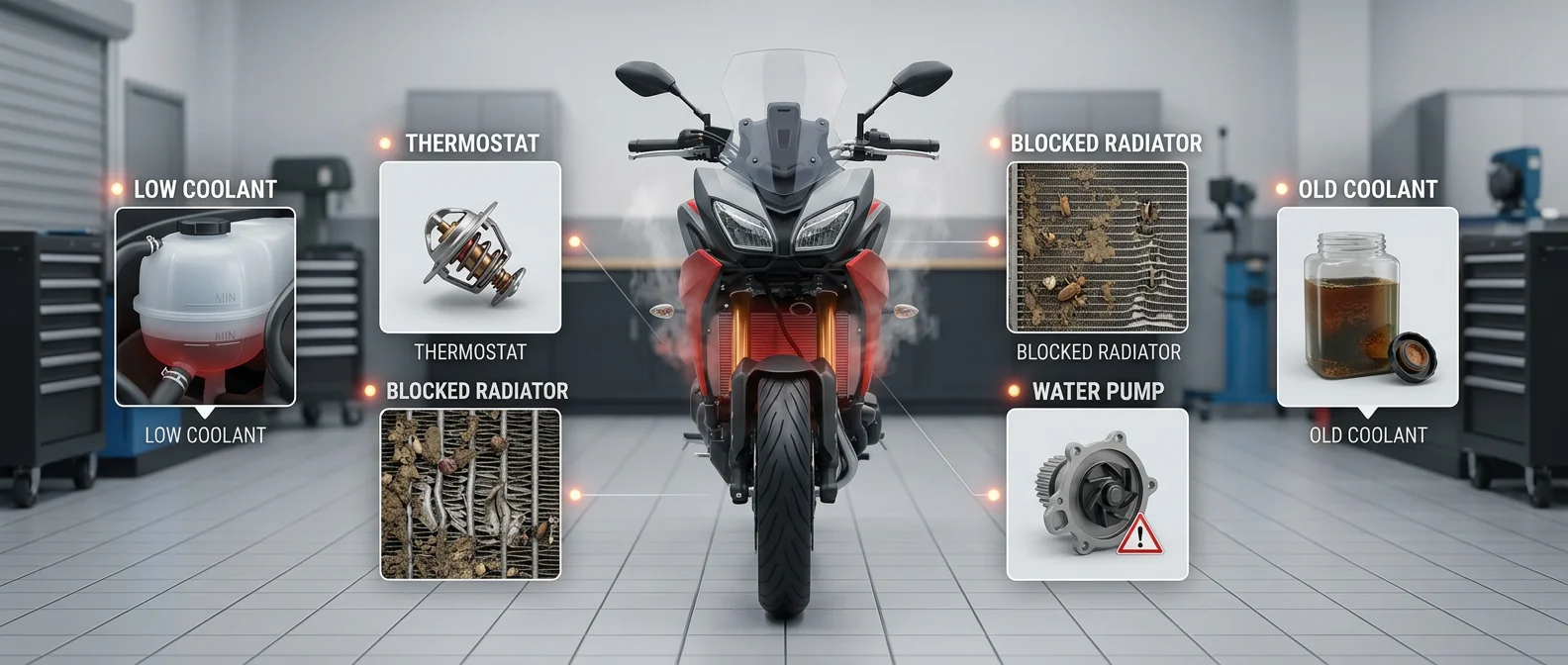
The 5 Most Common Causes of Motorcycle Radiator Overheating
1. Low Coolant Level
The simplest cause and the most common. If the coolant level drops below the minimum mark, the cooling system cannot transfer enough heat away from the engine. Low coolant is almost always caused by a leak somewhere in the system — the coolant does not evaporate under normal circumstances. Finding and fixing the leak is as important as topping up the fluid.
2. Thermostat Failure
The thermostat regulates coolant flow between the engine and the radiator. A thermostat stuck closed prevents coolant from flowing through the radiator at all — the engine heats rapidly with no heat dissipation. A thermostat stuck open allows coolant to flow before the engine is warm, extending warmup time but not causing overheating. Stuck closed is the dangerous failure mode.
Thermostat failure is particularly common on high-mileage motorcycles and on bikes that have been stored with old coolant that has degraded and left deposits in the cooling system.
3. Radiator Blockage or Damage
The radiator fins can become blocked with debris, insects, mud, or bent fins from road debris impacts. A partially blocked radiator reduces airflow through the cooling matrix and reduces heat dissipation capacity. At highway speeds, this may not matter. In slow city traffic where the fan carries more of the cooling load, a blocked radiator can push temperatures above the normal range.
4. Water Pump Failure
The water pump circulates coolant through the entire cooling circuit. A failing water pump reduces flow rate and therefore reduces heat transfer efficiency across the whole system. Water pump failure on motorcycles is less common than thermostat failure but more serious. Reduced coolant circulation means every component in the cooling circuit runs hotter.
5. Old or Degraded Coolant
Motorcycle coolant has a service life. Most manufacturers recommend replacing coolant every two years regardless of mileage. Degraded coolant loses its corrosion inhibitor properties and its heat transfer efficiency. Old coolant also becomes acidic and actively corrodes cooling system components, including the radiator, water pump, and thermostat housing. According to the Honda, Kawasaki, and Yamaha service documentation reviewed for this guide, coolant degradation is a primary cause of premature radiator failure on well-maintained bikes.
How to Fix Motorcycle Radiator Overheating: Step by Step
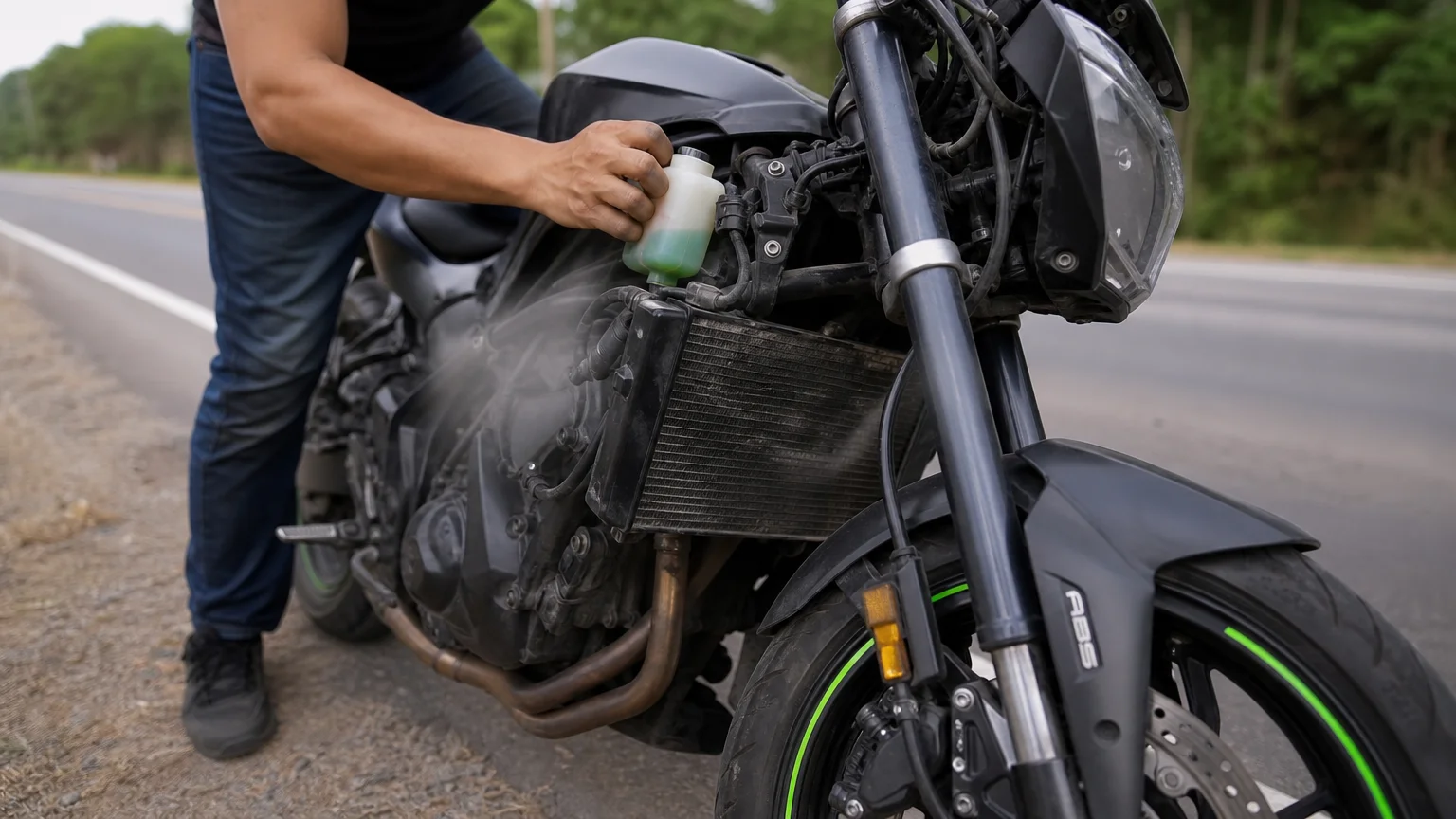
1. Check and top up coolant level first. Use the correct coolant type for your bike. Modern liquid-cooled motorcycles specify ethylene glycol- or propylene glycol-based coolant at a 50/50 mix with distilled water. Never use tap water as a substitute; mineral deposits accelerate internal corrosion.
2. Test the thermostat. Remove the thermostat and place it in a container of water heated on a stove. A functional thermostat opens at its rated temperature (typically 70 to 80 degrees Celsius). A thermostat that does not open must be replaced.
3. Inspect the radiator. Check the fins for blockage and straighten any bent sections with a fine-toothed comb or fin tool. Flush the radiator with clean water to remove internal debris if the coolant has not been changed recently.
4. Check hose connections and the radiator cap. A weak radiator cap that cannot maintain system pressure allows the coolant to boil at a lower temperature than intended. The cap is a common and cheap fix that riders overlook.
5. Flush and replace the coolant. If the coolant has not been changed in two or more years, drain the system completely, flush with clean water, and refill with fresh coolant at the correct concentration for your climate.
6. Bleed the cooling system of air. Air pockets in the cooling circuit create hot spots that the coolant cannot reach. After any coolant work, bleed the system following your service manual procedure to ensure full coolant circulation.
Conclusion
A motorcycle radiator overheating issue has a predictable pattern. The warning signs appear first, such as rising temperature, low coolant, sweet smells, and the fan running constantly. The causes are almost always one of five things. And every single cause has a repair that costs a fraction of the engine damage that results from ignoring it.
Check your coolant level and condition at every service. Know what your temperature gauge normally reads. And when the signs appear, act on them immediately rather than hoping the problem resolves itself on the next ride.
For cooling system components, radiators, and maintenance parts across all major makes, browse the full Motorcycle Radiators category at Aliwheels. Fitment guide support is available 24/7; confirm before your order ships.
Frequently Asked Questions
Q: Can I ride my motorcycle if the temperature gauge is high?
A: No. Pull over and let the engine cool as soon as the temperature gauge enters the warning zone. Continued riding with an overheating engine accelerates damage from gradual heat stress to immediate catastrophic failure. A warped cylinder head or seized piston can occur within minutes of sustained severe overheating.
Q: How often should I change my motorcycle coolant?
A: Most manufacturers recommend every two years regardless of mileage. Check your specific service manual for the interval for your model. If you buy a used motorcycle with unknown service history, replace the coolant as part of your initial ownership service regardless of how clean it looks.
Q: Can I use water instead of coolant in an emergency?
A: Clean distilled water can be used as a very short-term emergency measure to get you safely off the road. It should not be used as a regular coolant substitute. Water provides no corrosion protection, freezes in cold climates, and boils at a lower temperature than coolant mix, reducing the effective operating range of the cooling system.
Q: How do I know if my motorcycle head gasket is blown from overheating?
A: Classic signs of a blown head gasket include white smoke from the exhaust (coolant burning in the combustion chamber), oil that looks milky or has a coffee-with-cream appearance (coolant mixing with oil in the crankcase), persistent coolant loss with no external leak visible, and engine misfiring after overheating. Any combination of these symptoms requires professional diagnosis before further riding.
Q: My motorcycle fan never turns on. Is this normal?
A: It depends on your riding conditions. The fan activates when coolant temperature exceeds a threshold, primarily during slow city riding and idling. If you ride primarily on open roads at highway speeds, the fan may rarely or never activate because ram air flow through the radiator is sufficient. If you are in heavy traffic and the fan never activates, test the thermoswitch and fan motor.