



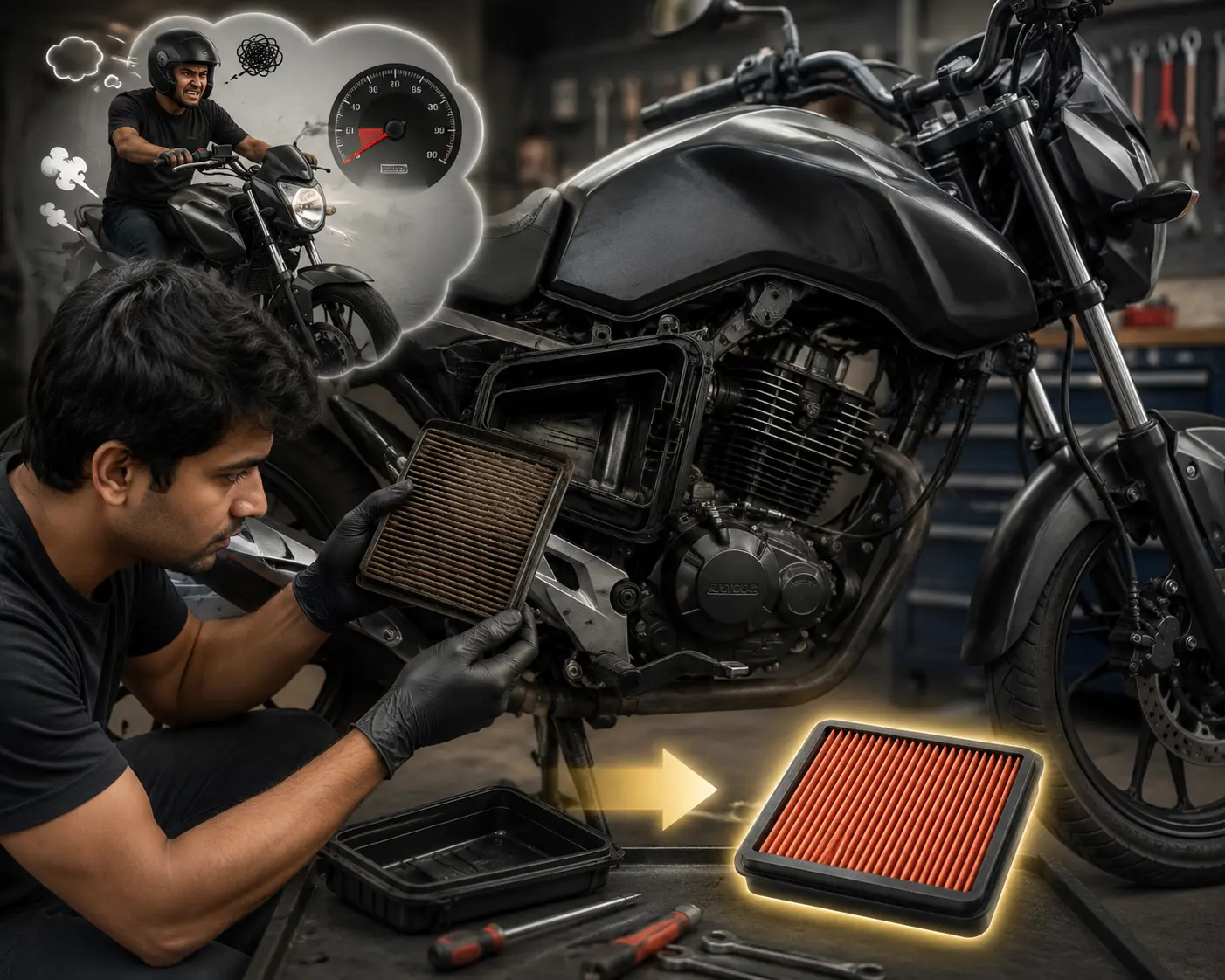

A motorcycle that hesitates, bogs, or feels sluggish under acceleration is a frustrating problem. Many riders go straight to the carburetor or fuel system looking for answers.
Often, the real cause is sitting right under the seat or behind the side panel. A clogged or damaged motorcycle air filter is one of the most common causes of poor acceleration and one of the most overlooked.
Here is why it matters and what to do about it.
What the Motorcycle Air Filter Actually Does?
Your engine is an air pump. It pulls in air, mixes it with fuel, combusts the mixture, and expels the waste gases. The ratio of air to fuel is critical for efficient combustion.
The air filter sits at the entrance of that process. Its job is to remove dust, grit, insects, and airborne debris before air enters the intake. Without filtration, abrasive particles enter the combustion chamber and accelerate wear on cylinder walls, piston rings, and valves.
The filter must do two things simultaneously. It must stop contamination effectively. And it must allow sufficient airflow for the engine to breathe freely at all RPM levels.
A filter that is clogged cannot do the second job. And a motorcycle engine that cannot breathe properly cannot perform properly.
How a Clogged Filter Affects Acceleration?
When the air filter is restricted, the engine cannot pull in enough air for proper combustion across the RPM range.
At idle, the effect is minimal. The engine is pulling very little air at idle. A partially clogged filter may not affect idle quality at all.
Under acceleration, the demand for air increases dramatically with every throttle opening. A restricted filter cannot meet that demand. The fuel injection system or carburetor continues delivering fuel at the rate it calculates, but the air volume is insufficient.
The result is a rich mixture under load. Too much fuel relative to air. The engine bogs, hesitates, and lacks the sharp response it should have.
On carbureted bikes, this manifests as a flat spot mid-range. On fuel-injected bikes, the ECU may partially compensate but cannot fully correct for severe restriction. You lose power, throttle response dulls, and fuel consumption increases.
Signs Your Air Filter Needs Attention
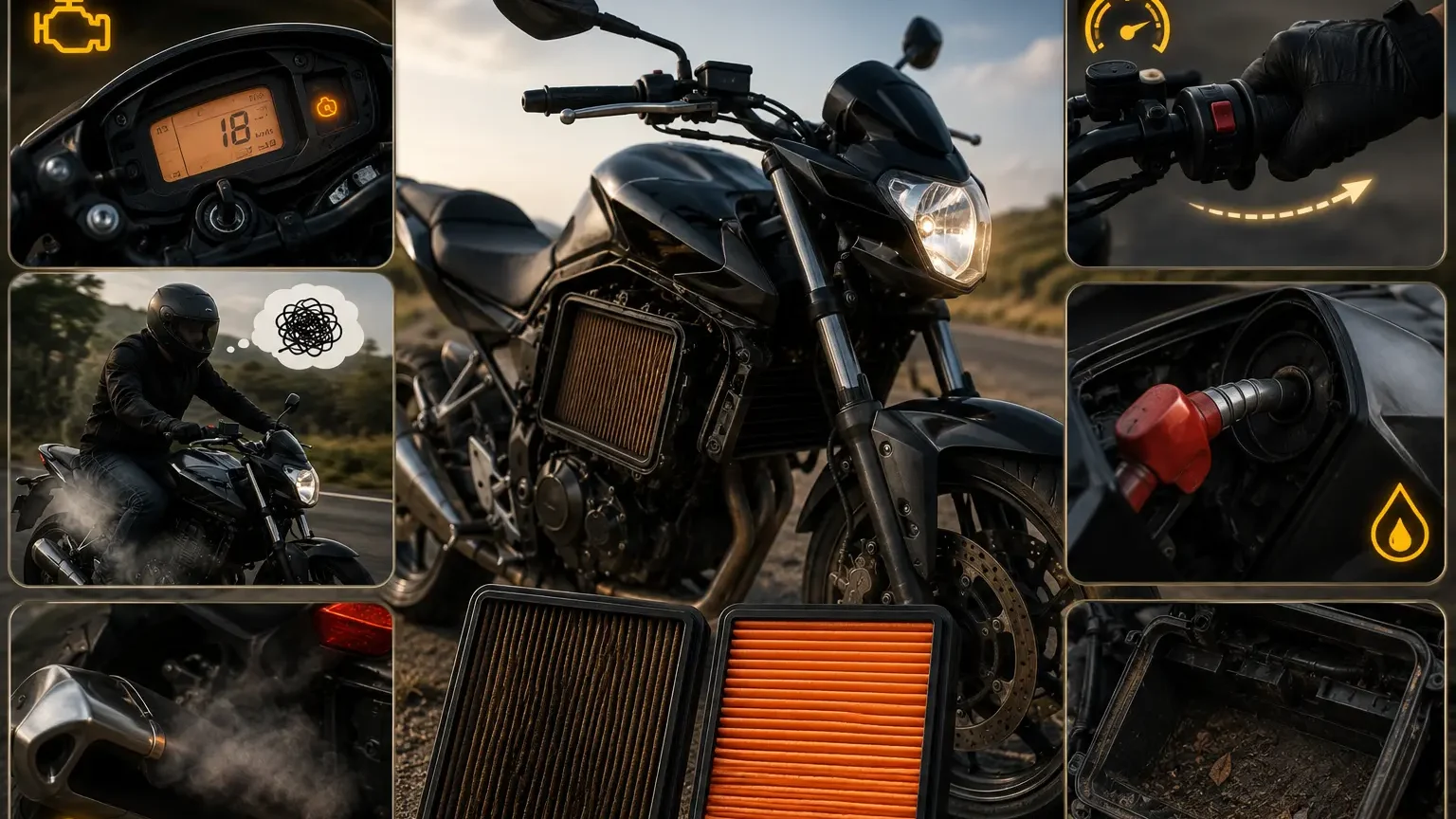
Sluggish acceleration from low RPM. The bike pulls away reluctantly. It feels heavy and unresponsive despite healthy engine sounds.
Flat spot when opening the throttle quickly. You crack the throttle and the engine stumbles before catching up.
Noticeably increased fuel consumption. Running rich wastes fuel. If your range per tank has dropped without a change in riding style, the air filter is worth checking.
Black smoke from the exhaust. This is unburned fuel exiting the engine. It is a classic sign of a rich running condition. A restricted air filter is one of several causes.
The engine runs better at higher RPM than at low and mid-range. At high RPM, the pressure differential across the filter increases enough to force adequate airflow. At lower RPM, it does not. A bike that pulls better at high revs than at low revs often has an airflow restriction.
The filter looks visibly dirty. Hold it up to the light. If you cannot see light through it clearly, airflow is significantly restricted.
How Often Should You Replace or Clean the Motorcycle Air Filter?
This depends on your filter type and riding environment.
Paper element filters are the most common type on stock motorcycles. These cannot be cleaned effectively. Once they are dirty, they need replacement. Under normal conditions, replace them every 10,000 to 15,000 km or annually. In dusty conditions, check every 3,000 km and replace when visibly contaminated.
Foam filters can be washed, dried, and re-oiled. They are common on off-road and adventure bikes. Clean and re-oil them every 3,000 to 5,000 km in normal use. After every dusty or muddy ride in off-road conditions.
Oiled gauze filters, such as aftermarket performance filters, can be cleaned with a dedicated filter cleaner and re-oiled. Follow the manufacturer’s service interval, typically every 10,000 to 15,000 km. After cleaning, the correct amount of filter oil is critical. Too much oil restricts airflow. Too little reduces filtration efficiency.
Always use the correct filter oil for your filter type. Do not substitute.
The Right Way to Inspect a Paper Air Filter
Remove the filter from the airbox. Inspect it in good lighting.
Hold the filter up to a light source. The light should be visible relatively evenly through the filter media. A heavily loaded filter will appear dark with no light transmission.
Look at the outer surface. A layer of fine grey or brown dust is normal. Large particles, insect debris, or oil contamination on the media surface indicate either normal wear or an airbox seal failure, letting unfiltered air in around the filter edges.
Check the rubber sealing gasket around the filter. This seal prevents unfiltered air from bypassing the filter element entirely. A cracked or deformed gasket means some portion of intake air enters the engine unfiltered. Replace any filter with a damaged seal immediately.
Do not try to clean a paper filter by blowing compressed air through it. This pushes debris deeper into the media and damages the fibers. Paper filters are replacement items, not service items.
Motorcycle Air Filter and Fuel System: Understanding the Connection
A clogged air filter does not work in isolation. It affects the entire intake and fuel delivery system.
On carbureted motorcycles, the air-fuel mixture is set by fixed jets and needle positions. The carburetor cannot adjust for reduced airflow. The bike runs rich when the filter is restricted. Spark plugs foul faster. Carbon builds up in the combustion chamber.
On fuel-injected motorcycles, the ECU uses a mass airflow sensor or manifold absolute pressure sensor to measure incoming air volume. A severely restricted filter creates readings the ECU is not programmed to handle correctly. Short-term fuel trims compensate partially. Long-term, the ECU may log fault codes.
If your bike has logged fault codes related to fuel trim or air-fuel ratio and you have not recently checked the air filter, start there before investigating further.
Installing a New Air Filter Correctly
Filter installation seems simple. But small mistakes cause big problems.
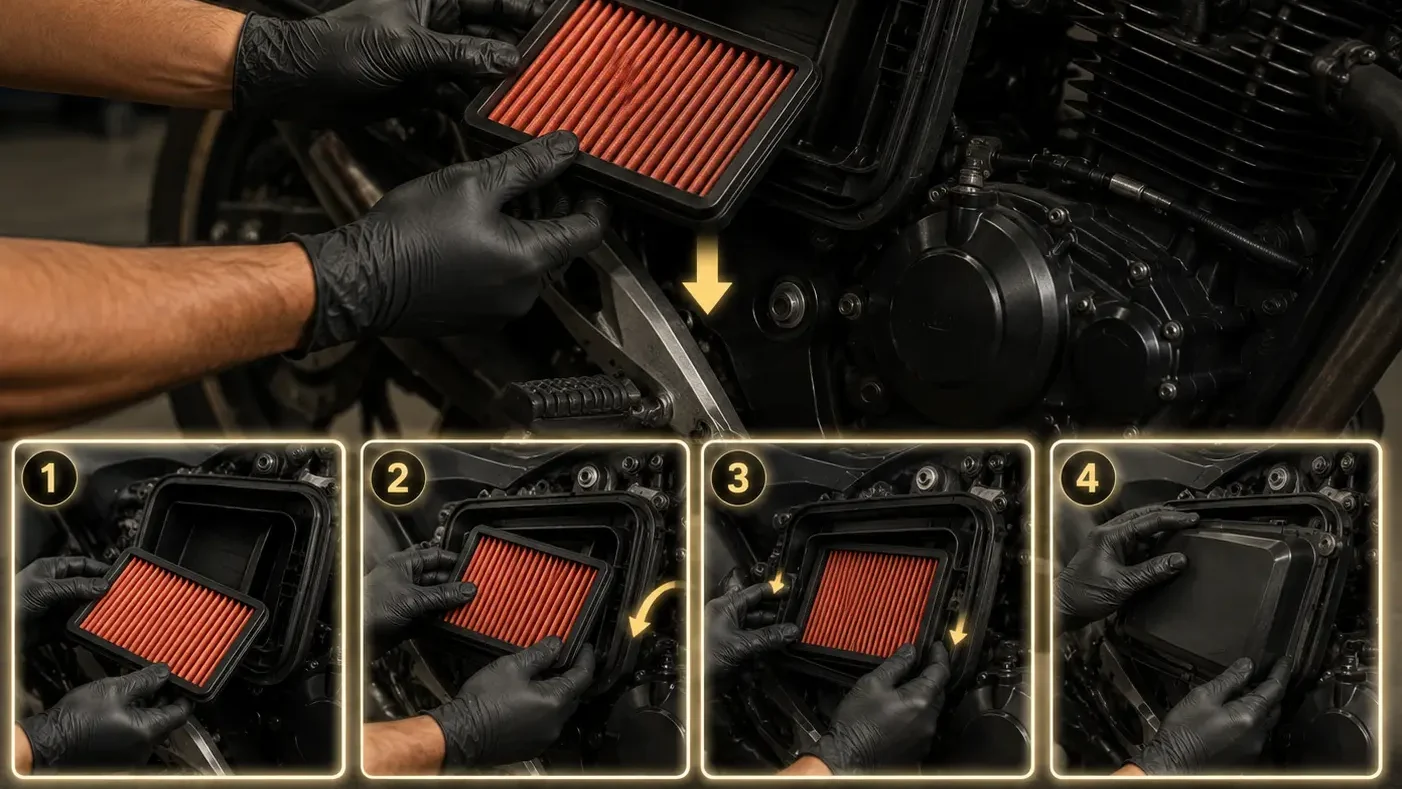
Ensure the airbox is completely clean before installing the new filter. Any debris left in the airbox goes directly into the engine once the filter is installed and the engine starts.
Check that the new filter sits fully and evenly on the airbox sealing surface. The rubber gasket must contact the airbox cleanly around its full circumference.
Secure all airbox clamps, clips, and bolts. A loose airbox lid creates an air leak that bypasses the filter entirely. This defeats the entire purpose of the filter.
On carbureted bikes, check the carburetor to airbox boot for cracks after filter service. These rubber boots age and crack. A cracked boot is an unmetered air leak that causes lean running at idle and low throttle.
Performance Air Filters: Are They Worth It
Aftermarket performance filters offer higher airflow than stock paper elements. For a standard street bike ridden normally, the power gain is minimal.
Where performance filters genuinely help is on modified engines with larger carburetors, performance exhausts, or tuned ECUs. In these cases, the stock airbox and filter can become a restriction on overall airflow.
If your bike is stock, a quality OEM replacement filter performs correctly for your fuel mapping and carburetor jetting. Fitting a high-flow filter to a stock engine without retuning the fuel system can cause lean running issues.
If your bike is modified, a performance filter combined with appropriate fueling changes makes sense. Do them together.
The Cost of Neglecting the Air Filter
An air filter costs very little. Neglecting it costs significantly more.
A motorcycle running rich over an extended period fouls spark plugs. Carbon builds up on valves and piston crowns. Unburned fuel washes oil from the cylinder walls. These effects accumulate over thousands of kilometers and accelerate wear on every internal engine component.
The servicing cost of a new filter every 10,000 km is negligible. The cost of premature engine wear from years of restricted airflow is not.
Conclusion
When a motorcycle loses acceleration response, the air filter is the quickest and cheapest place to start. It takes ten minutes to inspect. It costs very little to replace.
If your bike feels sluggish and you cannot remember the last time you changed the filter, change it now. The difference in throttle response is often immediately noticeable.
Simple maintenance. Real results.
Find the correct motorcycle air filter for your bike at Aliwheels and restore your engine’s breathing performance.