




Every motorcycle starts its life looking showroom fresh.
However, not every bike stays that way.
After a few years, some motorcycles still shine with glossy paint, spotless chrome, and clean bodywork, while others show faded plastics, scratched fuel tanks, rust spots, and weathered finishes. The difference isn’t luck. It’s how the motorcycle has been cared for from the very beginning.
The good news is that protecting your motorcycle doesn’t have to be complicated or expensive. A few simple maintenance habits, combined with the right protective products, can prevent many of the problems that make a bike look older than it really is.
In this guide, you’ll learn how to protect every major part of your motorcycle, including the paint, fuel tank, fairings, chrome, wheels, seat, and metal components. We’ll also cover the most common causes of cosmetic damage and the practical steps you can take to keep your motorcycle looking newer for years to come.
Browse Aliwheels’ Motorcycle Bike Protection category for every protection product mentioned in this guide.
What Causes Motorcycles to Age Faster?
Unlike cars, motorcycles spend most of their lives fully exposed to the environment.
Every ride exposes your bike to sunlight, rain, road grime, insects, dust, chain lubricant, engine heat, and flying debris. Even when parked, your motorcycle can suffer damage from UV rays, moisture, and accidental knocks in busy parking areas.
Over time, these everyday conditions gradually wear down your motorcycle’s appearance if they’re not managed properly.
The Four Biggest Threats to Your Motorcycle
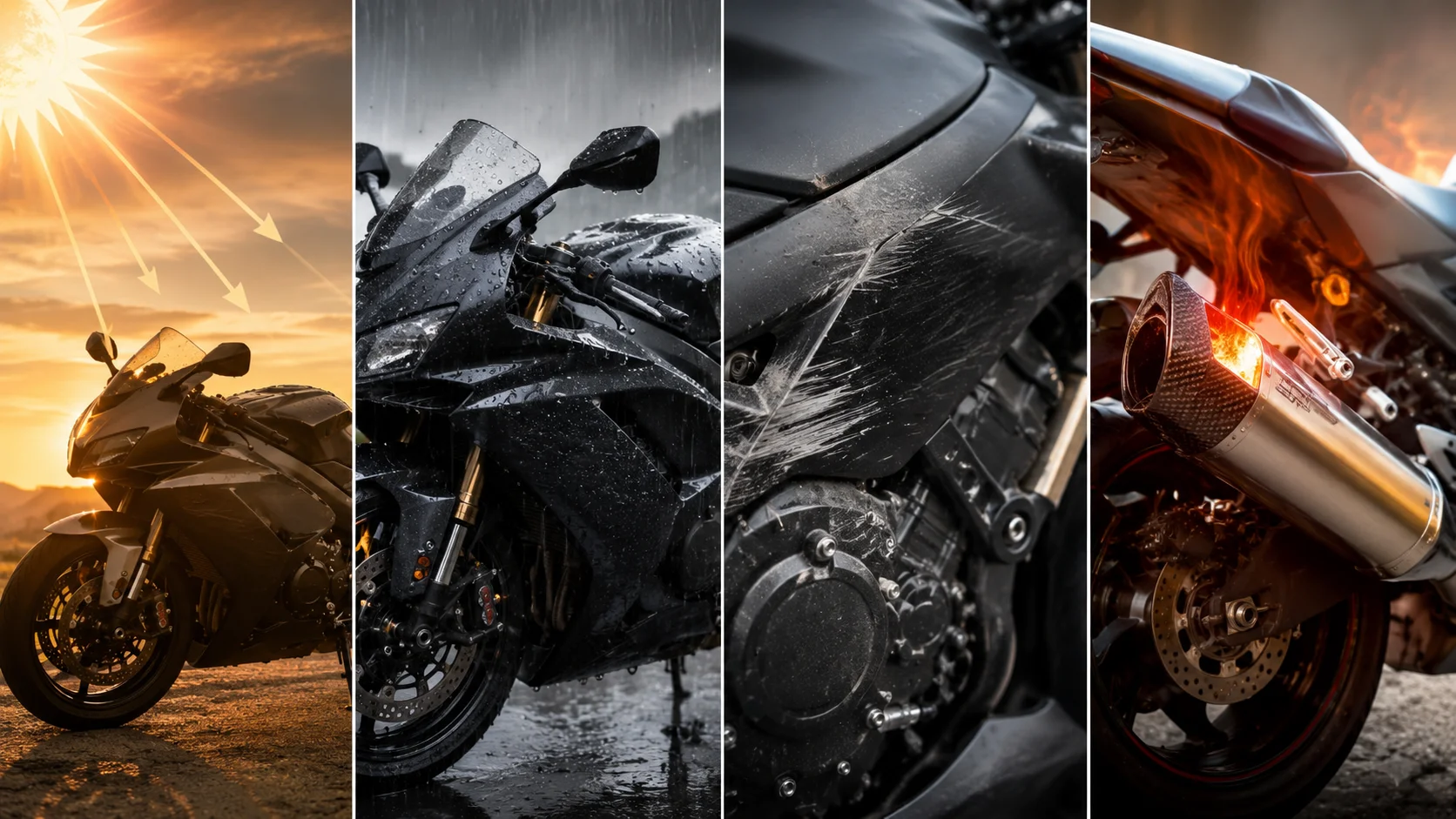
Understanding what damages a motorcycle makes it much easier to prevent long-term wear.
Ultraviolet (UV) radiation slowly fades paint, dulls clear coats, and causes plastic panels and rubber components to become brittle over time.
Moisture from rain, humidity, road salt, and washing can lead to corrosion on steel parts and oxidation on aluminum components if left untreated.
Physical abrasion is another common cause of cosmetic damage. Riding gear, luggage, tank bags, boots, and even minor parking lot incidents can leave scratches, scuffs, and worn surfaces.
Finally, heat generated by the engine and exhaust constantly expands and contracts nearby materials. This repeated heat cycling gradually affects paint, plastics, rubber seals, and other components located close to the engine.
The good news is that none of these problems are unavoidable.
With regular cleaning, proper storage, and the right motorcycle protection products, you can minimize all four types of damage and keep your motorcycle looking newer for much longer. Small maintenance habits performed consistently often make a far bigger difference than expensive repairs later.
Protect Your Motorcycle’s Paint Before Damage Starts
Your motorcycle’s paint is one of the first things people notice. It’s also one of the easiest areas to damage if left unprotected.
Every ride exposes the paintwork to sunlight, road debris, insects, bird droppings, rain, and airborne contaminants. Over time, these elements slowly wear away the clear coat, leaving the paint dull, faded, and far more vulnerable to scratches and oxidation.
The good news is that protecting your motorcycle’s paint doesn’t require expensive equipment. A few simple steps can preserve its finish for years.
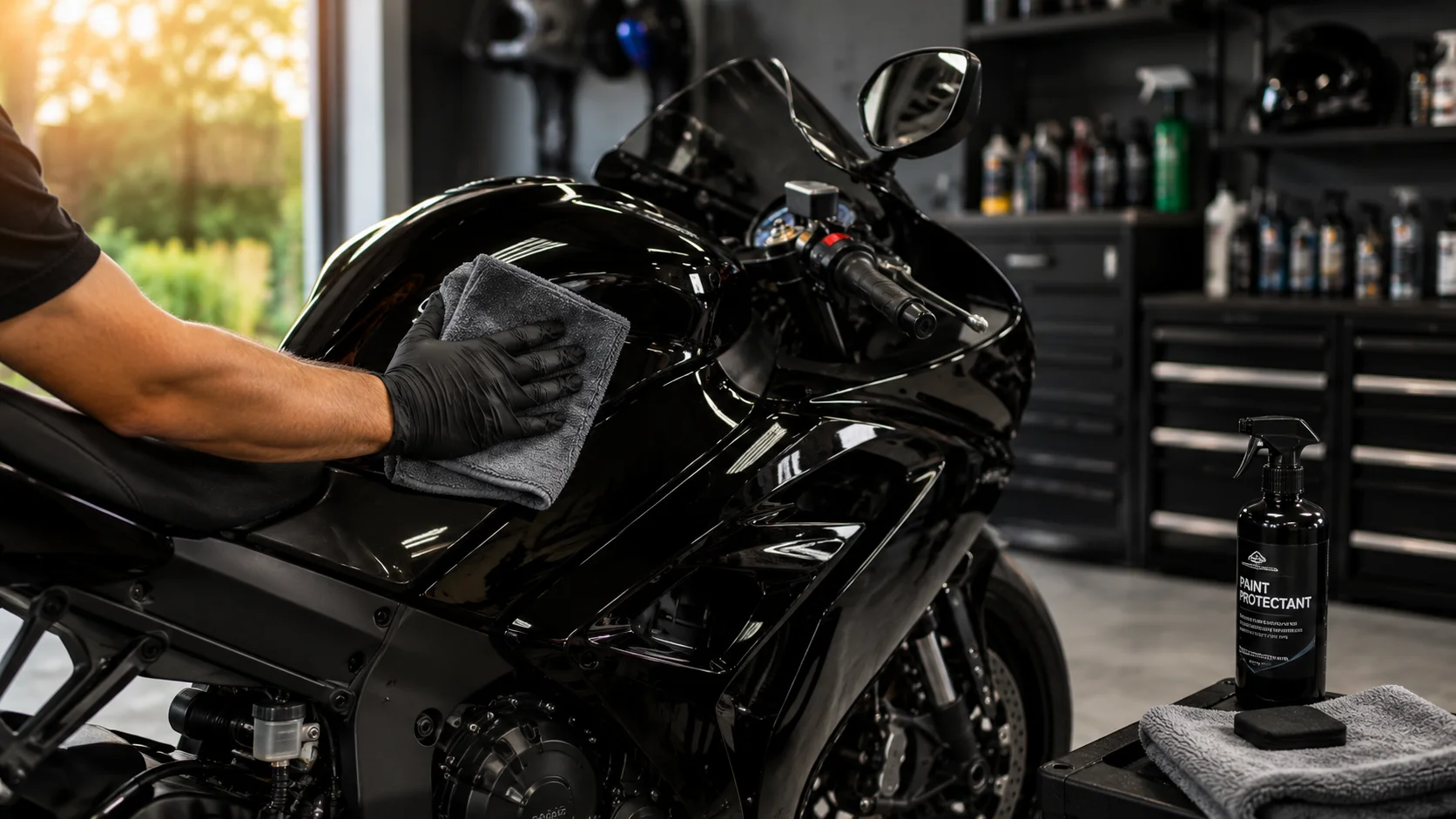
Apply Motorcycle Wax Every Few Months
The clear coat is the outer protective layer covering your motorcycle’s paint. Once this layer deteriorates, the color underneath begins to fade and oxidise, often requiring costly repainting to restore.
Applying a quality motorcycle wax every three months creates a protective barrier between the paint and the environment.
Whether you choose a natural carnauba wax or a modern synthetic formula, waxing helps:
- Reduce UV damage
- Repel water and road grime
- Protect against light scratches
- Keep the paint looking glossy for longer
The entire process usually takes less than 30 minutes but provides months of protection.
Consider a Ceramic Coating for long-term protection
If you want even stronger protection with less maintenance, a ceramic coating is one of the best upgrades you can make.
Unlike traditional wax, ceramic coatings chemically bond with the clear coat to create a durable protective layer that can last two to three years with proper care.
Benefits of ceramic coating include:
- Excellent UV protection
- Easier washing and cleaning
- Increased resistance to chemical contaminants
- Superior water beading that carries dirt away from the surface
- Long-lasting gloss and colour retention
Although professional ceramic coatings provide the longest lifespan, many high-quality DIY kits also deliver impressive results when applied correctly.
Protect High-Impact Areas with Paint Protection Film (PPF)
Some parts of a motorcycle receive far more abuse than others.
The front of the fuel tank, leading edges of the fairings, front fender, and fork legs constantly face gravel, road debris, and stone impacts.
Applying Paint Protection Film (PPF) to these high-impact areas adds an almost invisible protective barrier that absorbs small impacts before they reach the paint.
PPF helps prevent:
- Stone chips
- Surface scratches
- Paint cracking
- Premature wear in high-contact areas
It’s especially worthwhile for riders who spend significant time on highways or regularly ride behind other vehicles where flying debris is unavoidable.
Make Paint Protection Part of Routine Maintenance
Motorcycle paint protection isn’t a one-time job.
Regular washing, periodic waxing, ceramic coating maintenance, and protecting vulnerable areas with PPF all work together to preserve your bike’s appearance. Starting these habits early is far easier and less expensive than trying to restore faded or damaged paint later.
Install a Tank Pad Before Scratches Appear
The fuel tank is one of the most noticeable parts of any motorcycle. Unfortunately, it’s also one of the easiest areas to scratch.
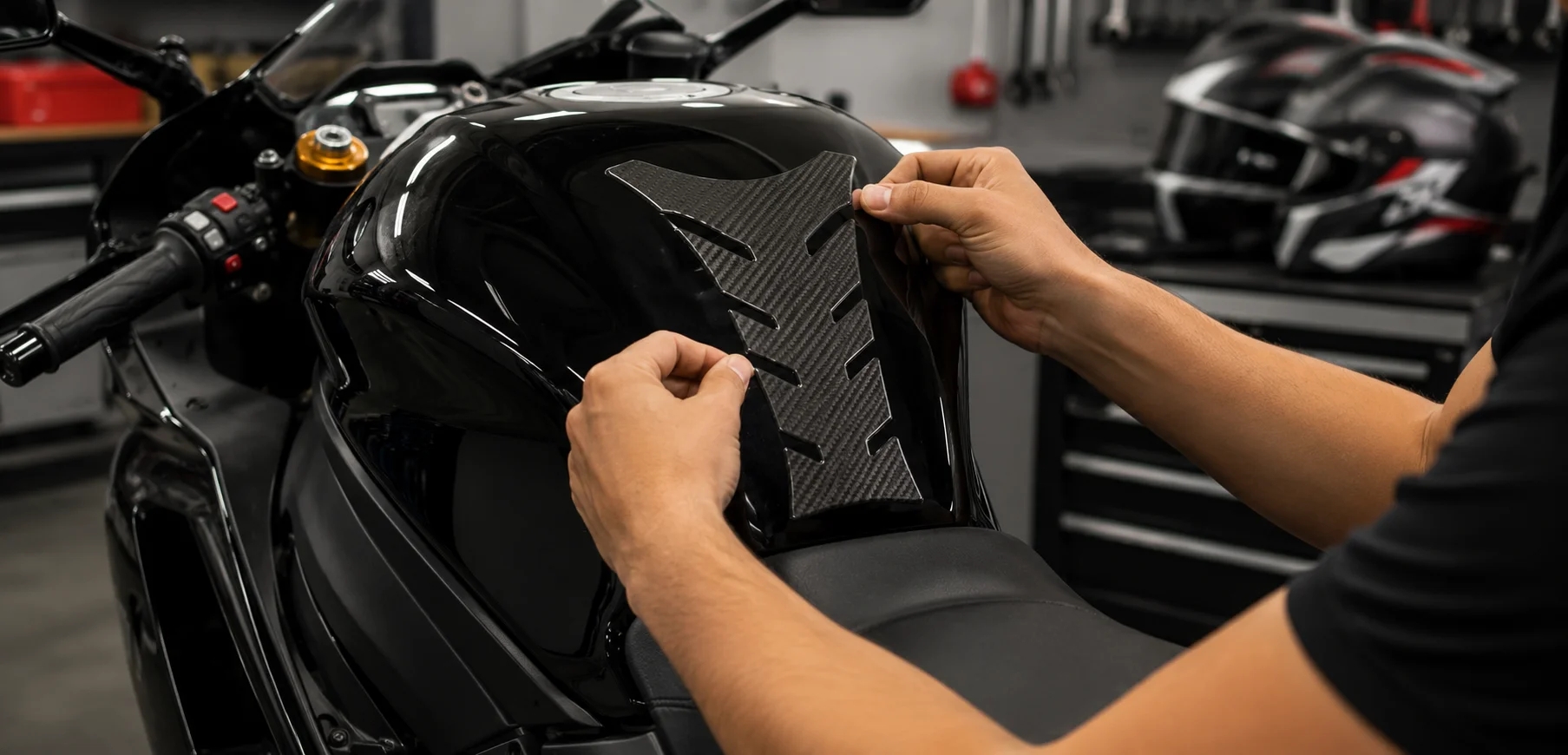
Every time you get on or off your bike, your jacket zipper, belt buckle, riding pants, or tank bag can rub against the paint. Individually, these marks seem harmless, but thousands of small contacts gradually wear away the finish, leaving dull patches and visible scratches.
A quality motorcycle tank pad creates a protective barrier between your riding gear and the paintwork, helping preserve your bike’s appearance for years.
Tank pads are especially worthwhile if you:
- Ride daily
- Wear riding jackets with metal zippers
- Use a tank bag regularly
- Frequently shift your body position while riding
Installing one takes only a few minutes but can save hundreds of dollars in future paint repairs.
For model-specific tank pads, including premium epoxy resin options designed for different motorcycle brands, explore the Motorcycle Bike Protection collection at Aliwheels.
Protect Your Motorcycle Before a Simple Tip-Over Becomes an Expensive Repair
Not every accident happens at speed.
Many motorcycles suffer their first cosmetic damage while standing still. A slippery parking surface, an uneven side stand, a strong gust of wind, or someone accidentally bumping the bike can easily cause a tip-over.
Without protection, even a low-speed fall can damage the following:
- Fairings
- Engine covers
- Fuel tanks
- Frame components
- Handlebar controls
Repair costs can quickly climb into hundreds or even thousands of dollars.
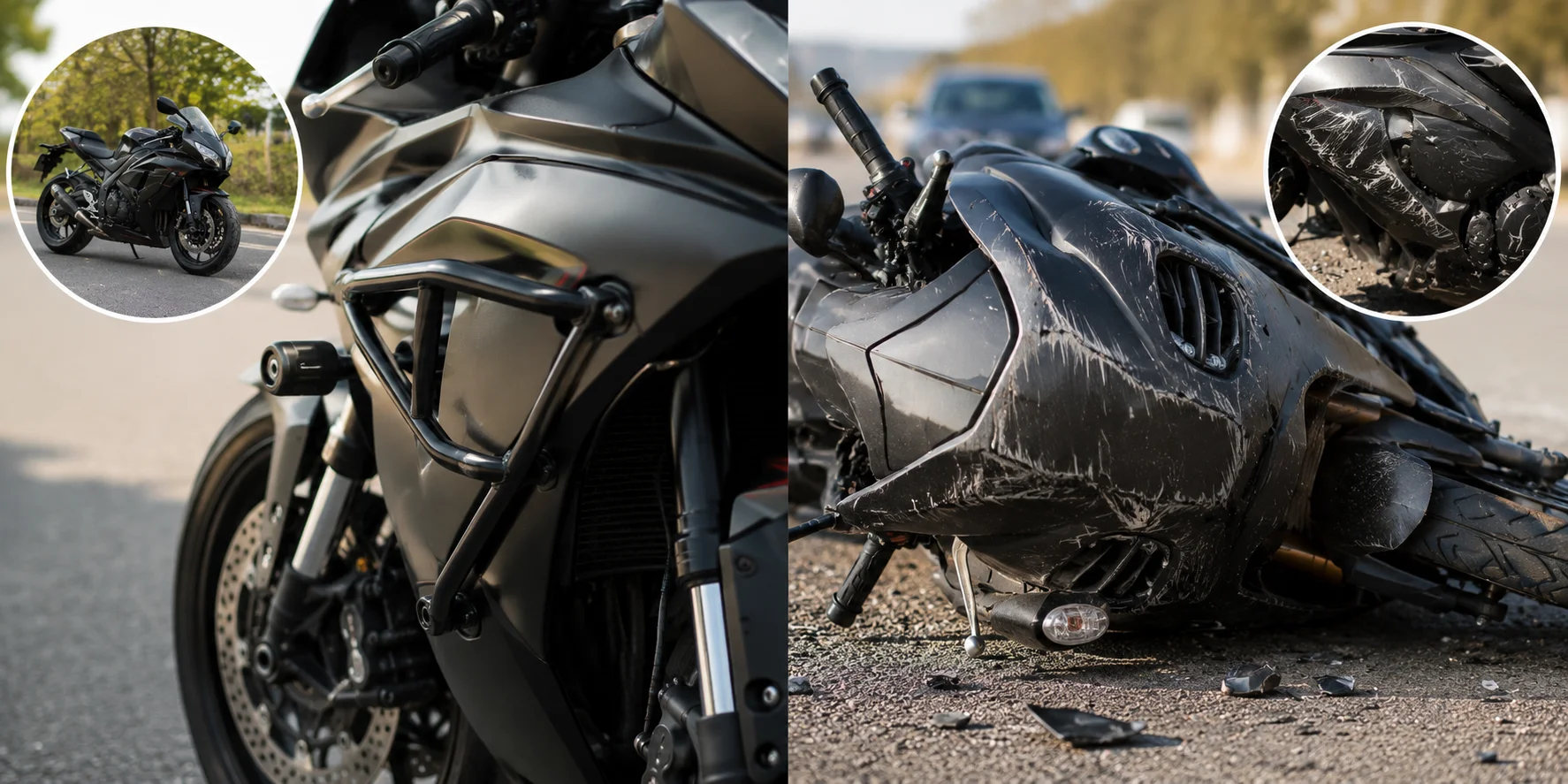
Why Frame Sliders Are Worth the Investment
Frame sliders are designed to absorb impact before expensive bodywork touches the ground.
Mounted directly to the motorcycle’s frame, they help keep fairings and engine cases away from the pavement during many low-speed drops and parking lot incidents.
Compared with replacing a cracked fairing or damaged engine cover, a quality set of frame sliders is a relatively inexpensive investment that can prevent much larger repair bills.
Choose Model-Specific Protection
Not all frame sliders offer the same level of protection.
A poorly designed kit or incorrect mounting location can reduce their effectiveness or even transfer impact forces to other parts of the motorcycle.
Always choose sliders engineered specifically for your motorcycle’s make and model to ensure proper mounting and maximum protection.
Aliwheels offers motorcycle bike protection products, including frame sliders, crash protection, and model-specific protective accessories for major motorcycle brands. You can also browse the complete motorcycle parts category to find compatible chassis and frame protection for your motorcycle.
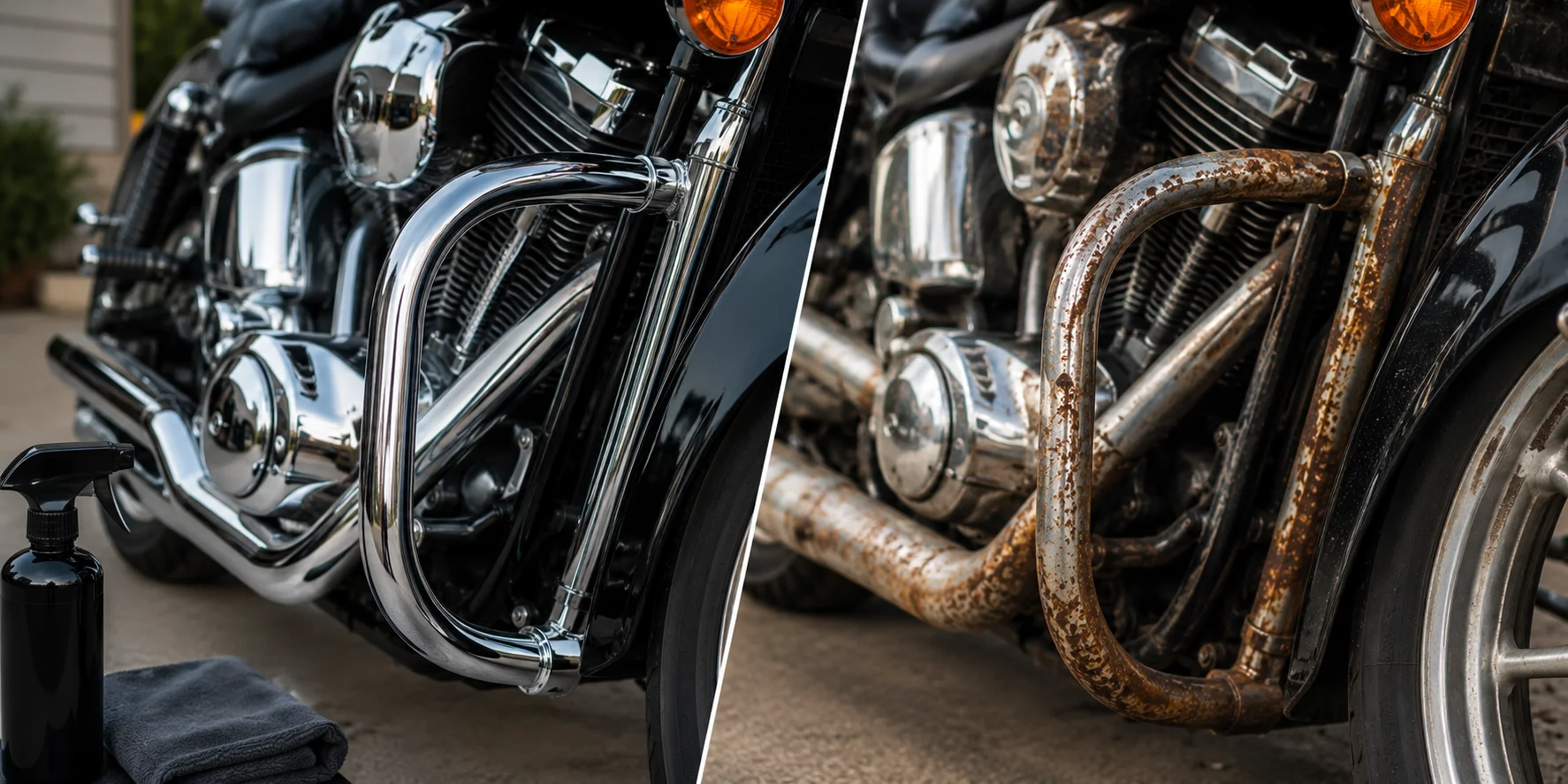
Protect Chrome Parts Before Rust and Pitting Appear
Chrome adds a premium finish to any motorcycle, but it also demands regular care.
Components such as exhaust headers, handlebars, wheel rims, mirrors, and engine hardware are constantly exposed to moisture, road salt, dirt, and changing temperatures. If left untreated, these surfaces can develop rust spots, staining, and chrome pitting that are difficult or impossible to repair.
The best approach is prevention rather than restoration.
Polish Chrome Regularly
A quality motorcycle chrome polish removes light oxidation before it develops into permanent damage.
For motorcycles ridden regularly, polishing chrome every two months helps maintain its shine while protecting the surface from corrosion.
After polishing, apply a thin layer of motorcycle wax or chrome sealant to create an additional barrier against moisture and road contaminants.
Regular polishing helps:
- Maintain a mirror-like finish
- Reduce surface oxidation
- Prevent chrome pitting
- Make future cleaning much easier
Give Exhaust Headers Extra Attention
Exhaust headers experience far more heat than any other chrome component on the motorcycle.
Because of these extreme temperatures, ordinary waxes quickly burn away and provide little lasting protection.
Instead, use a heat-resistant exhaust polish designed specifically for motorcycle exhaust systems. These products help remove discoloration while offering better protection against oxidation caused by repeated heating and cooling cycles.
Never Leave Chrome Wet
Water is one of chrome’s biggest enemies.
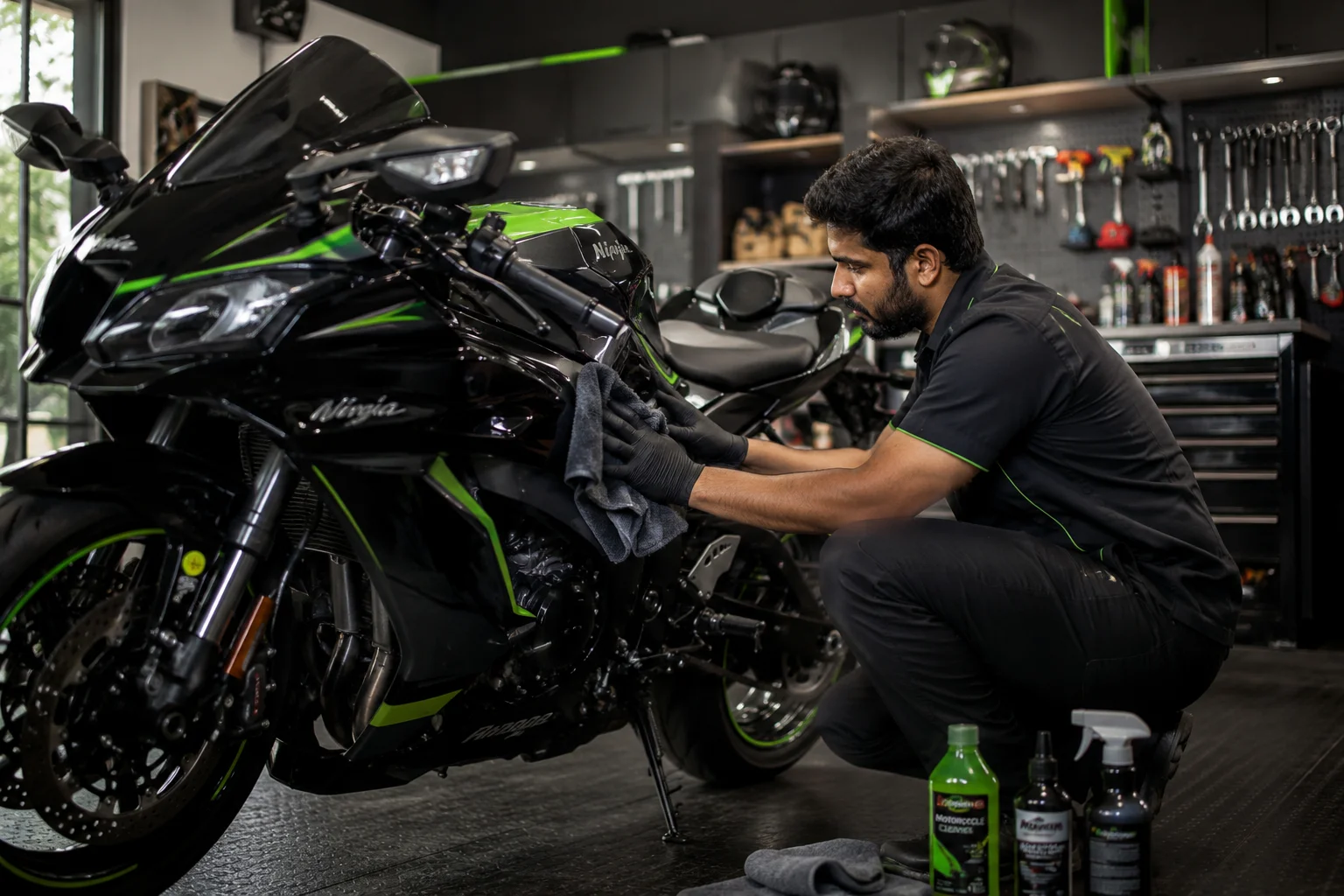
After riding in the rain or washing your motorcycle, dry chrome surfaces as soon as possible with a clean microfiber cloth. Moisture left on the surface, especially in warm or humid conditions, can begin the oxidation process surprisingly quickly.
Pay particular attention to:
- Exhaust systems
- Chrome wheels
- Crash bars
- Engine guards
- Handlebars
A five-minute wipe-down after a wet ride can prevent years of unnecessary corrosion.
Protect Plastic Fairings from Sun Damage
Motorcycle fairings and body panels don’t just lose their shine because of dirt.
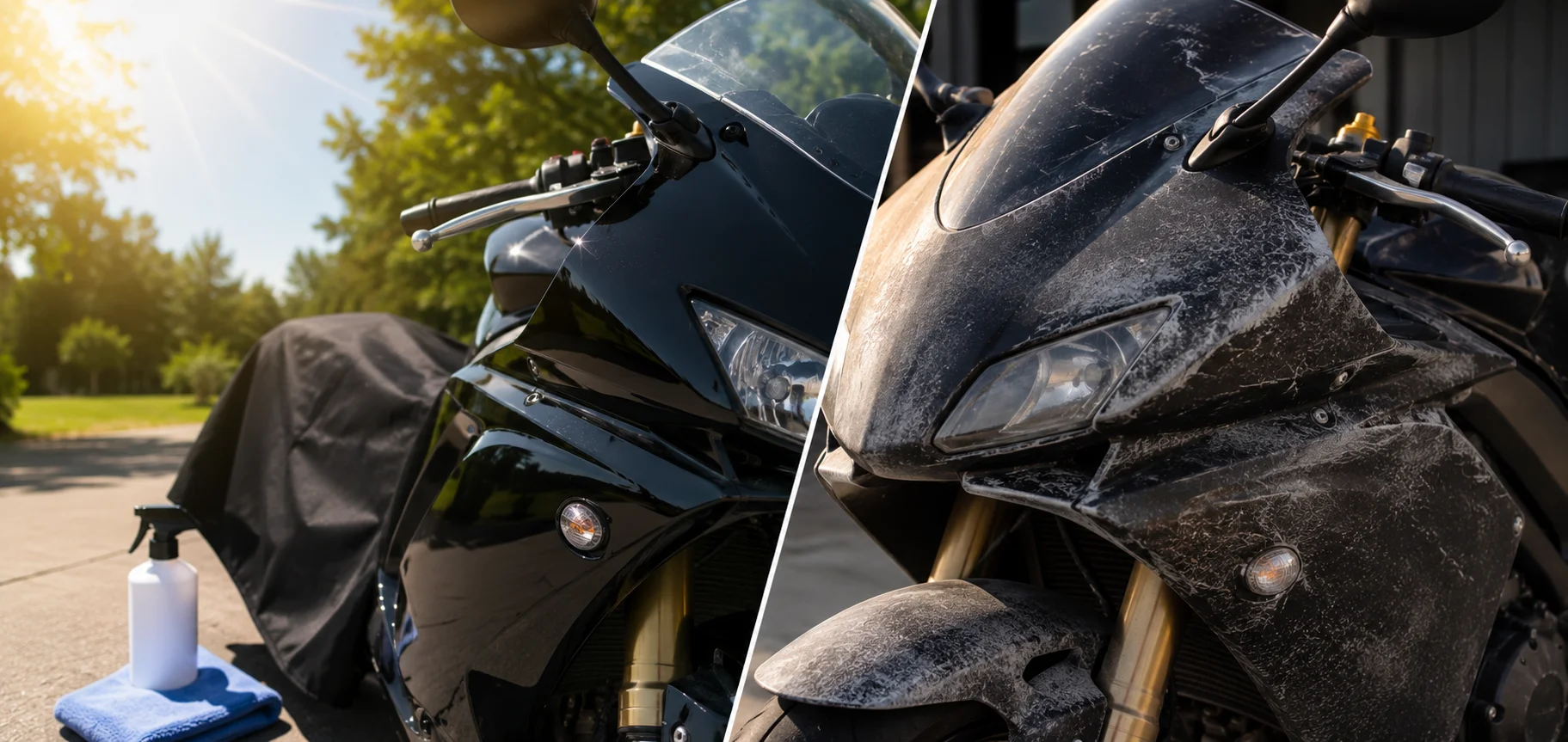
Constant exposure to sunlight slowly breaks down the plastic itself. Over time, unprotected plastics begin to fade, lose their color, and become brittle, making them more likely to crack around mounting points and fasteners.
This type of damage develops gradually but is difficult to reverse once it becomes severe.
Use a UV protectant.
A motorcycle-safe UV protectant helps shield unpainted plastic panels from harmful sunlight.
These products work much like interior protectants used on automotive dashboards, creating a protective layer that slows fading and keeps plastics looking newer.
For motorcycles stored outdoors, apply a UV protectant every two to three months. If your bike is garage-kept, applying it after each deep cleaning is usually sufficient.
Restore Faded Plastic Before It’s Too Late
If your motorcycle’s fairings or trim have already begun to lose their original colour, a quality plastic restorer can often bring back much of their appearance.
These products revive faded plastics by restoring colour and improving surface finish. However, they work best before the material becomes severely weathered or starts developing cracks.
Regular UV protection, combined with proper cleaning, is still the most effective way to keep motorcycle fairings looking factory fresh for years.
Use a Motorcycle Cover to Protect Your Bike Every Day
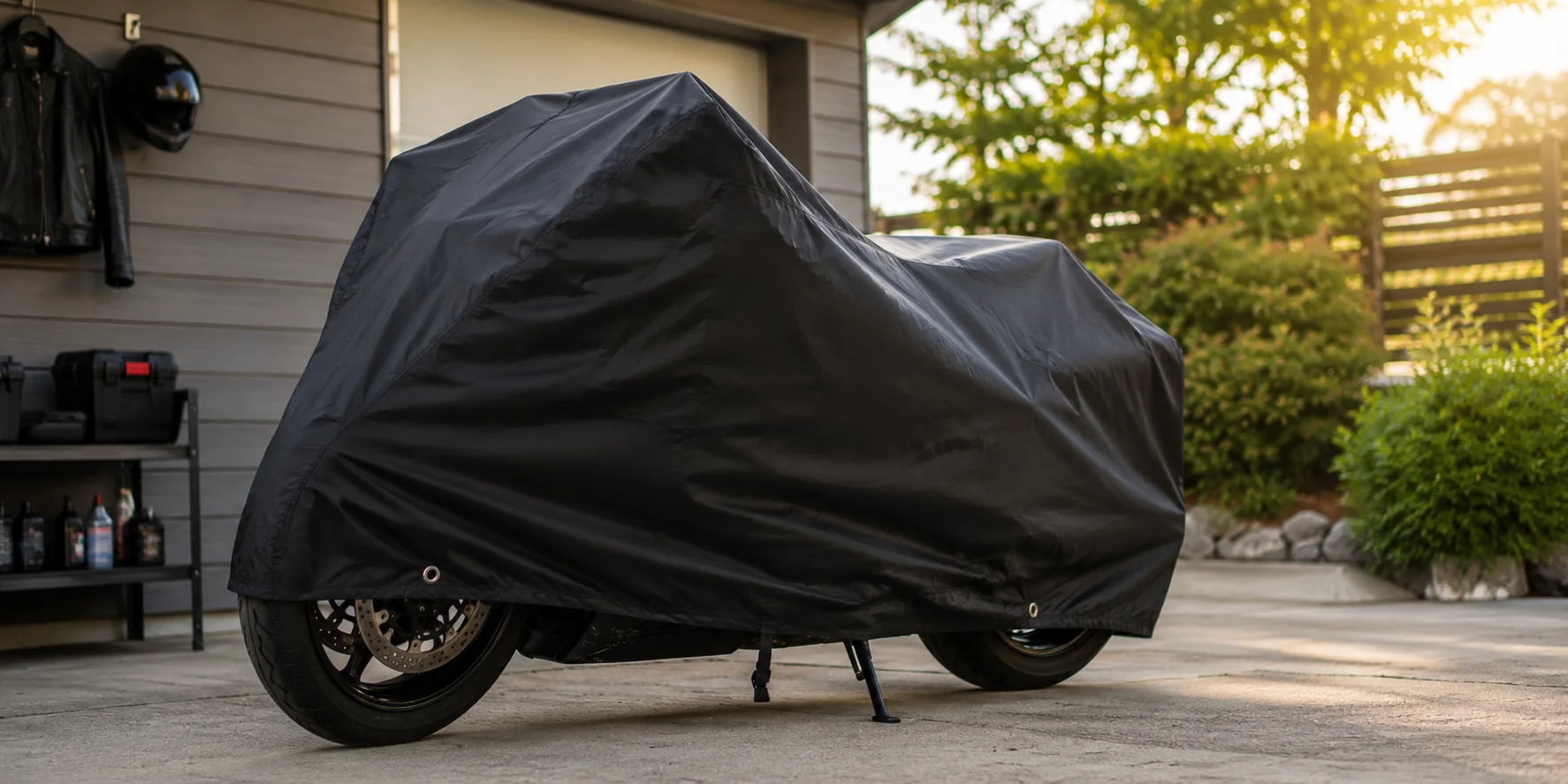
If you only invest in one motorcycle protection accessory, make it a quality motorcycle cover.
Whether your bike is parked outside or stored in a garage, a cover shields it from many of the everyday hazards that slowly damage its appearance. Sunlight, rain, dust, bird droppings, tree sap, pollen, and airborne contaminants all take a toll over time. A good cover helps reduce their impact before permanent damage occurs.
For motorcycles parked outdoors, a cover also helps keep the seat, controls, and paintwork cleaner between rides, reducing how often deep cleaning is needed.
Choose Breathability Over Waterproofing Alone
Not all motorcycle covers offer the same protection.
Many riders assume a fully waterproof cover is the best option. In reality, a cover that traps moisture can create as many problems as it prevents.
The ideal motorcycle cover should combine water resistance with breathability. This allows moisture and condensation to escape while still protecting the motorcycle from rain and snow.
A quality breathable cover helps prevent:
- Rust and corrosion
- Moisture buildup
- Mold and mildew
- Paint damage caused by trapped condensation
If you store your motorcycle for extended periods, choosing the right cover becomes even more important.
Aliwheels offers motorcycle bike protection products, including model-specific fitted covers and universal motorcycle covers designed for reliable everyday protection.
Protect Your Wheels and Tires from Long-Term Damage
Your motorcycle’s wheels and tires are constantly exposed to dirt, brake dust, road salt, UV rays, and changing weather conditions.
Without regular care, these components gradually lose their appearance and may even experience premature wear.
Seal Alloy Wheels
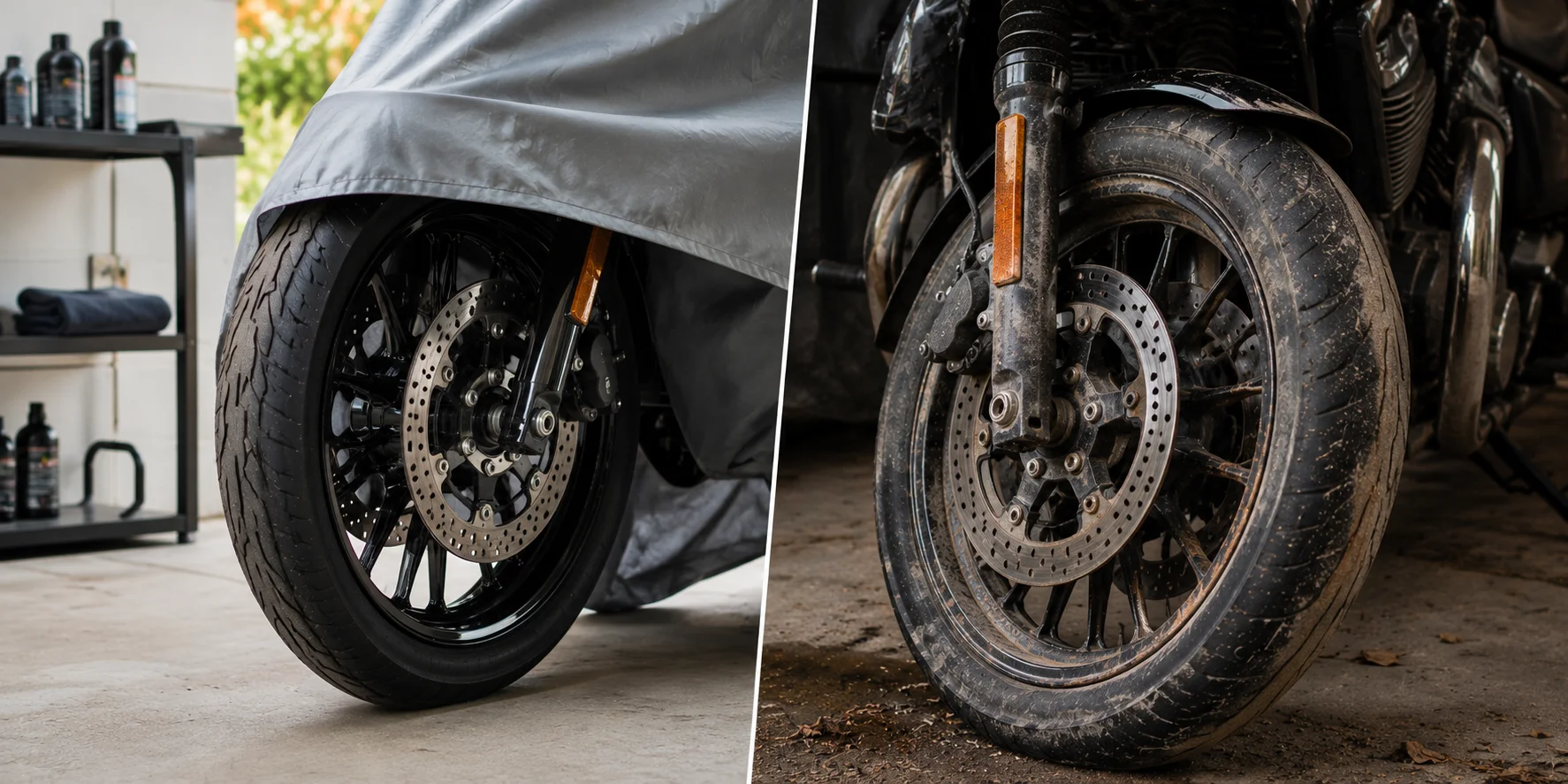
Alloy wheels are protected by a clear coat or anodized finish. As this protective layer ages, the metal underneath becomes more vulnerable to oxidation and staining.
Applying a quality wheel sealant after washing creates a protective barrier that helps repel:
- Brake dust
- Road salt
- Water
- Dirt and grime
Regular protection also makes future cleaning much easier because contaminants are less likely to stick to the wheel surface.
Protect Tire Sidewalls from UV Damage
While tire tread naturally wears through riding, the sidewalls often deteriorate because of prolonged exposure to sunlight.
Over time, UV rays can cause the rubber to dry out, fade, and develop small cracks, especially if the motorcycle sits unused for long periods.
Applying a motorcycle-safe tire protectant to the sidewalls only helps keep the rubber conditioned and slows UV-related aging during both everyday use and long-term storage.
Important: Never apply tire dressing or protectant to the tread surface. Any product that reduces traction can compromise grip and negatively affect braking, cornering, and overall rider safety.
With regular wheel cleaning, proper sealing, and occasional tire conditioning, your motorcycle’s wheels and tires will continue looking cleaner and performing better for years.
The 15-Minute Motorcycle Protection Routine
The motorcycles that still look showroom-fresh after five years usually don’t receive expensive detailing treatments every weekend. Instead, they receive a short protection routine performed consistently.
A simple 15-minute check after rides, plus a few monthly maintenance steps, prevents most of the cosmetic wear that makes a motorcycle look older than it really is.
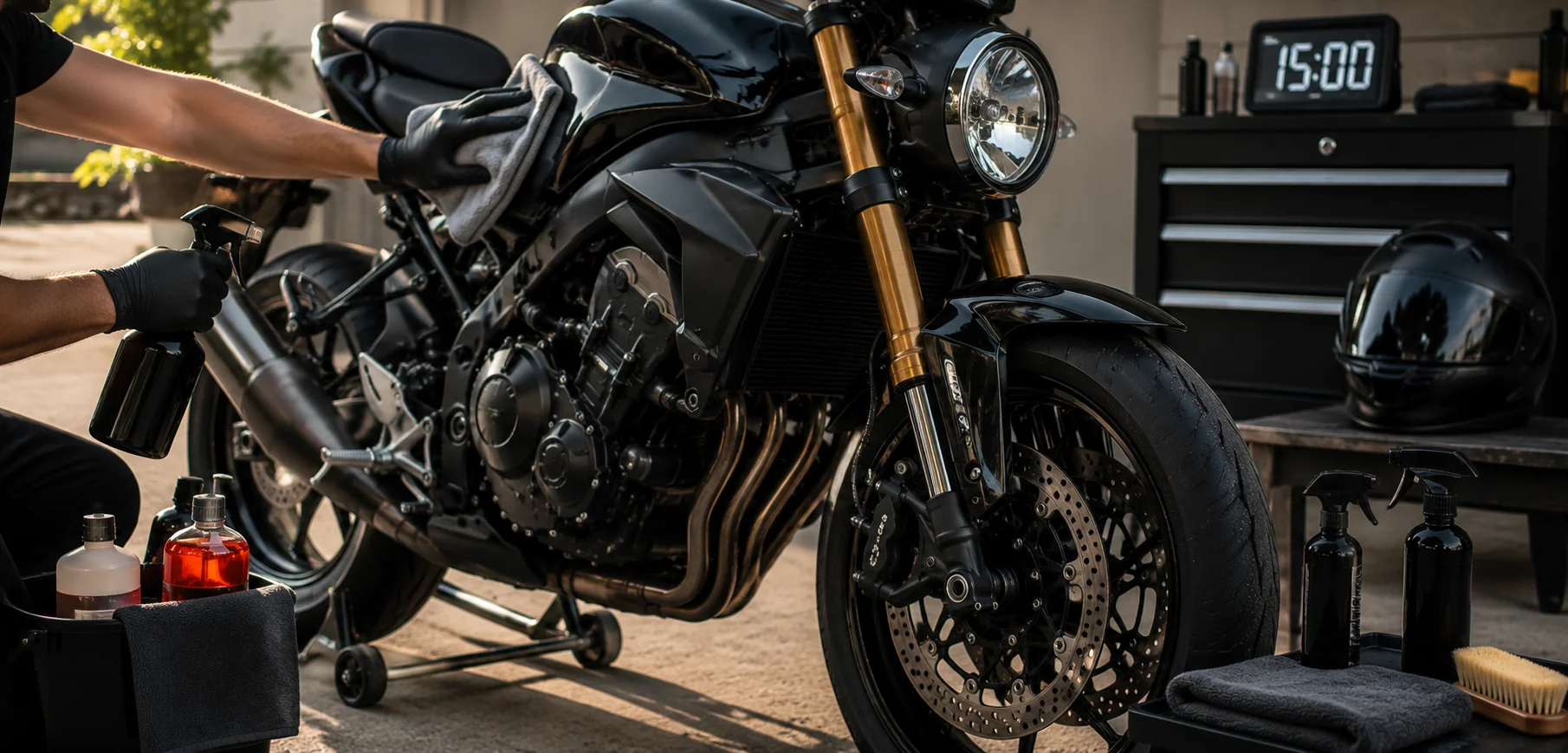
After Every Ride (2-3 Minutes)
Quick win
Wipe chain lubricant from the swingarm and rear wheel.
Remove any oil residue from the engine area before it bakes onto hot surfaces.
Check the fuel tank for fresh scuffs or scratches.
Brush away insects or debris from the front fairing and headlight.
Why it matters: Fresh chain lube and oil residue are much easier to remove immediately than after they’ve collected dust and hardened.
After Wet Rides (3-5 Minutes)
Moisture causes more cosmetic damage than most riders realize.
Do this before parking
Prevent corrosion
- Dry all chrome surfaces, especially the exhaust and wheel rims.
- Check under the fuel tank and seat area for trapped water.
- Wipe down the seat seams to prevent moisture from sitting in the stitching.
- Dry exposed electrical connectors and switchgear if they received direct water spray.
Tip: A clean microfiber towel kept in your garage is usually all you need for this step.
Weekly Protection Check (5 Minutes)
This is the routine that catches problems before they become expensive repairs.
Once a week
5 minutes
- Check tire pressure.
- Inspect chain tension and apply lubricant if needed.
- Look for loose fasteners around mirrors, fairings, exhaust mounts, and license plate brackets.
- Check frame sliders and crash protection for any signs of movement.
- Inspect the fuel tank and fairings for new scratches that can be treated before they worsen.
Why this matters: High-vibration areas can loosen over time. A loose fastener allows components to move, and that movement quickly wears through paint around the mounting point.
Monthly Protection Session (5-10 Minutes)
This is where long-term appearance is preserved.
Once a month
Long-term protection
- Apply wax or paint sealant to painted surfaces.
- Polish exposed chrome components.
- Apply UV protectant to unpainted plastic trim.
- Clean and seal alloy wheels.
- Inspect the motorcycle cover for wear if the bike is stored outdoors.
For motorcycles with a ceramic coating, this monthly session is usually enough to maintain the coating’s performance and gloss.
The 15-Minute Schedule
| Task | Time |
| Post-ride wipe-down | 2 minutes |
| Wet-ride drying | 3 minutes |
| Weekly inspection | 5 minutes |
| Monthly protection treatment | 5-10 minutes |
The Compounding Effect
None of these steps is dramatic on its own.
However, over five years, this routine prevents the following:
- Chain lube staining on the rear wheel
- Chrome pitting
- Paint oxidation
- Plastic fading
- Water-related corrosion
- Fastener wear around mounting points
- Seat seam deterioration
- Premature wheel oxidation
The result
A motorcycle that still looks cared for years later, without requiring a full cosmetic restoration.
Fifteen minutes of protection is almost always cheaper than one weekend of trying to undo years of neglect.
Conclusion
Keeping your motorcycle looking new isn’t about spending thousands of dollars on detailing or expensive cosmetic repairs. It’s about protecting the right areas before damage has a chance to develop.
Regular waxing preserves your paint. Tank pads prevent everyday scratches on the fuel tank. Frame sliders help reduce damage from unexpected tip-overs. Chrome polish slows oxidation before pitting begins, while a quality motorcycle cover shields your entire bike from UV rays, moisture, dust, and other environmental hazards during storage.
The best approach is to build protection into your regular maintenance routine. Small habits performed consistently will always deliver better long-term results than trying to restore years of neglect.
If you’re just getting started, invest first in the products that offer the greatest protection for the money. A breathable motorcycle cover, model-specific frame sliders, and a quality tank pad. Then maintain your motorcycle with regular cleaning, paint protection, and chrome care to keep it looking its best season after season.
Whether you’re protecting a brand-new motorcycle or preserving a bike you’ve owned for years, the right products make all the difference. Explore Aliwheels‘ Motorcycle Bike Protection collection for motorcycle covers, tank pads, frame sliders, paint protection accessories, and other products designed to help keep your motorcycle protected on every ride.
Frequently Asked Questions
Q: What is the best way to protect a motorcycle’s paint?
A: The most effective way to protect motorcycle paint is to apply a quality wax or ceramic coating. These products create a protective barrier that shields the clear coat from UV rays, water, road grime, and minor scratches. Wax should be reapplied every three months, while a properly maintained ceramic coating can for two to three years.
Q: Are frame sliders worth installing?
A: Yes. Frame sliders are one of the most cost-effective motorcycle protection upgrades available. They help protect fairings, engine covers, and bodywork during parking lot tip-overs and low-speed drops, which are far more common than high-speed crashes. For the best protection, always choose frame sliders designed specifically for your motorcycle model.
Q: How often should I wax my motorcycle?
A: Most motorcycles should be waxed every three months. If you ride frequently, store your bike outdoors, or ride in areas with road salt or harsh weather, you may need to apply wax more often. A simple indicator is water beading—when water no longer beads on the paint, it’s time to apply a fresh coat.
Q: Can I use car wax on my motorcycle?
A: Yes. Most high-quality carnauba and synthetic car waxes are safe for motorcycle paint and provide excellent protection. However, avoid products containing heavy cutting compounds or abrasive polishing agents, as they gradually remove clear coat and are intended for paint correction rather than regular maintenance.
Q: How do I keep motorcycle chrome from rusting?
A: Clean and polish chrome every two months using a quality chrome polish, then apply a protective sealant or wax to help block moisture and oxidation. After riding in the rain, always dry chrome surfaces thoroughly to prevent corrosion. For exhaust headers, use a heat-resistant chrome polish designed specifically for high-temperature motorcycle exhaust systems.