



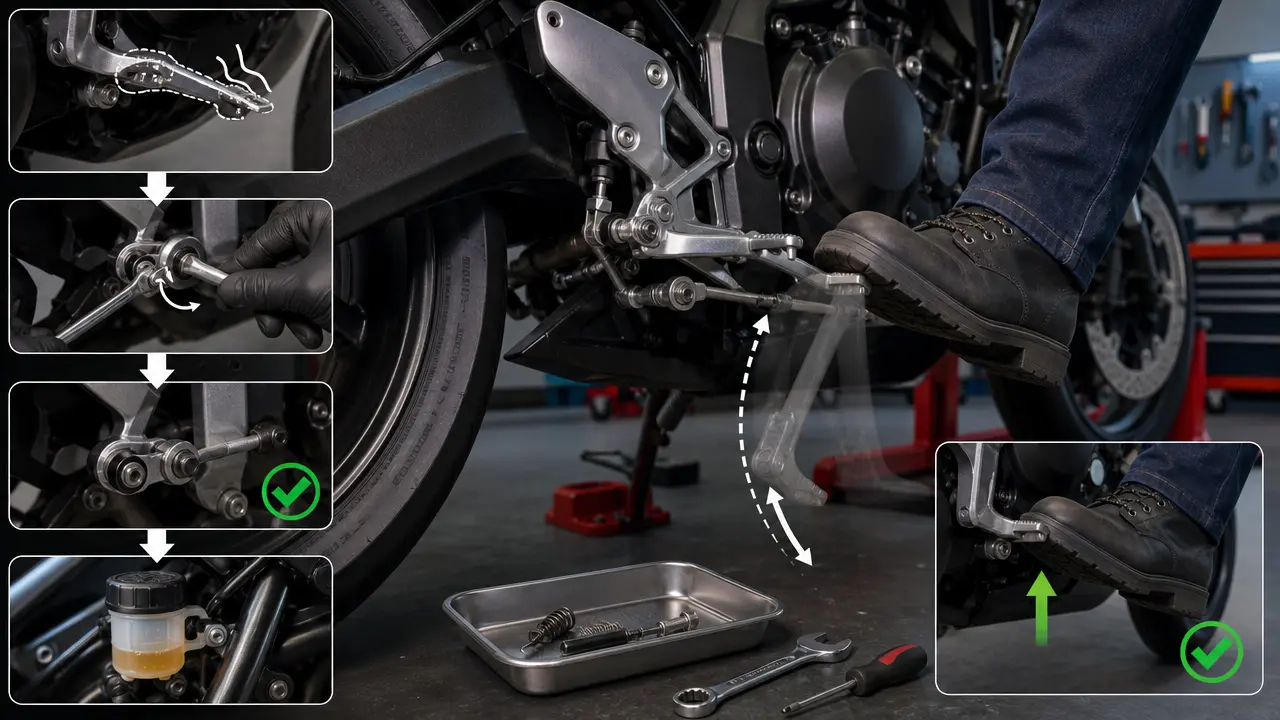

A loose or spongy rear brake pedal can quietly ruin your confidence on a motorcycle. You press down expecting a firm response, but instead the pedal travels too far, feels vague, or responds inconsistently. Many riders assume this means a major brake overhaul is coming. In reality, most cases of loose rear brake pedal feel are caused by small, easy-to-fix issues that can be addressed in minutes with basic tools.
Understanding what creates that loose feeling is the key. Motorcycle brakes are simple systems, but they rely on correct adjustment, clean components, and proper hydraulic pressure. When one part is slightly off, the pedal tells you immediately.
What “loose” rear brake feel actually means
A loose rear brake pedal usually shows up in one of three ways. The pedal has excessive free play before the brake engages. The pedal feels soft or spongy and lacks resistance. Or the braking response feels delayed, especially at low speeds.
Each symptom points to a different root cause. The good news is that most of these problems are not failures. They are adjustments, maintenance issues, or air where it should not be.
Check rear brake pedal free play first
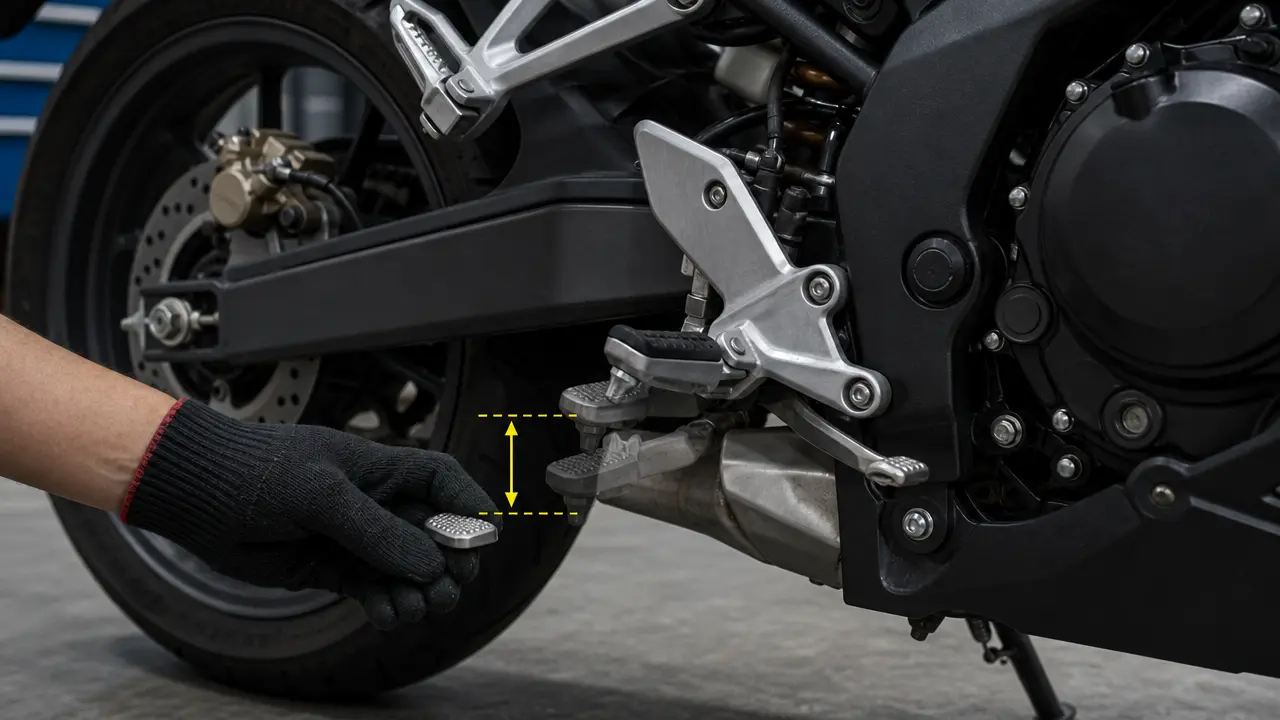
The fastest fix often takes less than two minutes. Rear brake pedals are designed with a small amount of free play so the brake is not partially engaged while riding. Over time, this free play can increase due to normal wear or vibration.
If the pedal moves significantly before you feel resistance, adjustment is likely needed. Most motorcycles use an adjustable pushrod between the pedal and the master cylinder. A few turns of the adjustment nut can restore proper pedal height and engagement point.
Riders are often surprised how much difference this makes. A pedal that feels worn out can suddenly feel firm and responsive again with a simple adjustment.
Inspect the rear brake fluid level
Low brake fluid is another common cause of loose rear brake feel. As brake pads wear, fluid level drops slightly. If the level gets too low, the system can draw in air, which compresses and creates a soft pedal.
Check the rear brake fluid reservoir and make sure the fluid is between the minimum and maximum marks. If it is low, top it up with the correct brake fluid specified by your manufacturer.
If the fluid looks dark or cloudy, that is another issue. Old brake fluid absorbs moisture over time, reducing braking performance and pedal feel.
Bleeding the rear brake can transform pedal feel
Air in the brake line is one of the most common reasons riders complain about loose or spongy rear brake pedals. Even a small air bubble can dramatically change how the pedal feels.
Bleeding the rear brake removes trapped air and restores hydraulic pressure. On many bikes, this takes ten minutes or less. You open the bleed valve, pump the pedal, and flush fresh fluid through the system until no air bubbles appear.
Riders who have never bled brakes often avoid it, but it is one of the most effective and affordable fixes for poor brake feel.
Rear brake pad wear and glazing
Worn or glazed rear brake pads can also contribute to vague pedal feedback. When pads are near the end of their service life, the pedal may feel inconsistent or require more travel to generate braking force.
Glazed pads, which happen when brakes overheat or are used lightly for long periods, reduce friction and feel slippery. Lightly scuffing the pad surface or replacing them entirely often restores predictable braking.
This is especially common on bikes where the rear brake is used frequently for low-speed control or riding in traffic.
Check rear brake pedal pivot and return spring
A surprisingly common issue is a dry or dirty brake pedal pivot. Dirt, corrosion, or lack of lubrication can cause the pedal to feel loose, sticky, or slow to return.
Inspect the pivot point and return spring. Clean the area and apply a small amount of appropriate grease. Make sure the pedal snaps back cleanly when released.
This simple step is often overlooked, but it can completely change how the rear brake feels under your foot.
Rear brake master cylinder issues
If adjustments, fluid, and bleeding do not fix the problem, the rear brake master cylinder may be worn internally. A failing seal can allow fluid to bypass inside the cylinder, creating a pedal that feels soft even with no air in the system.
This is less common, but it does happen on higher-mileage bikes or those that have sat unused for long periods. Rebuild kits are usually affordable and restore proper pressure when installed correctly.
Steel braided brake lines improve feel long term
Rubber brake lines expand slightly under pressure, especially as they age. This expansion reduces pedal firmness and feedback. While not a quick fix, upgrading to steel braided rear brake lines can noticeably improve brake feel and consistency.
Riders who prioritize braking confidence often make this upgrade once the stock lines begin to show their age. Quality aftermarket brake lines sourced from reliable suppliers like Aliwheels ensure proper fitment and long-term durability.
ABS systems and rear brake feel
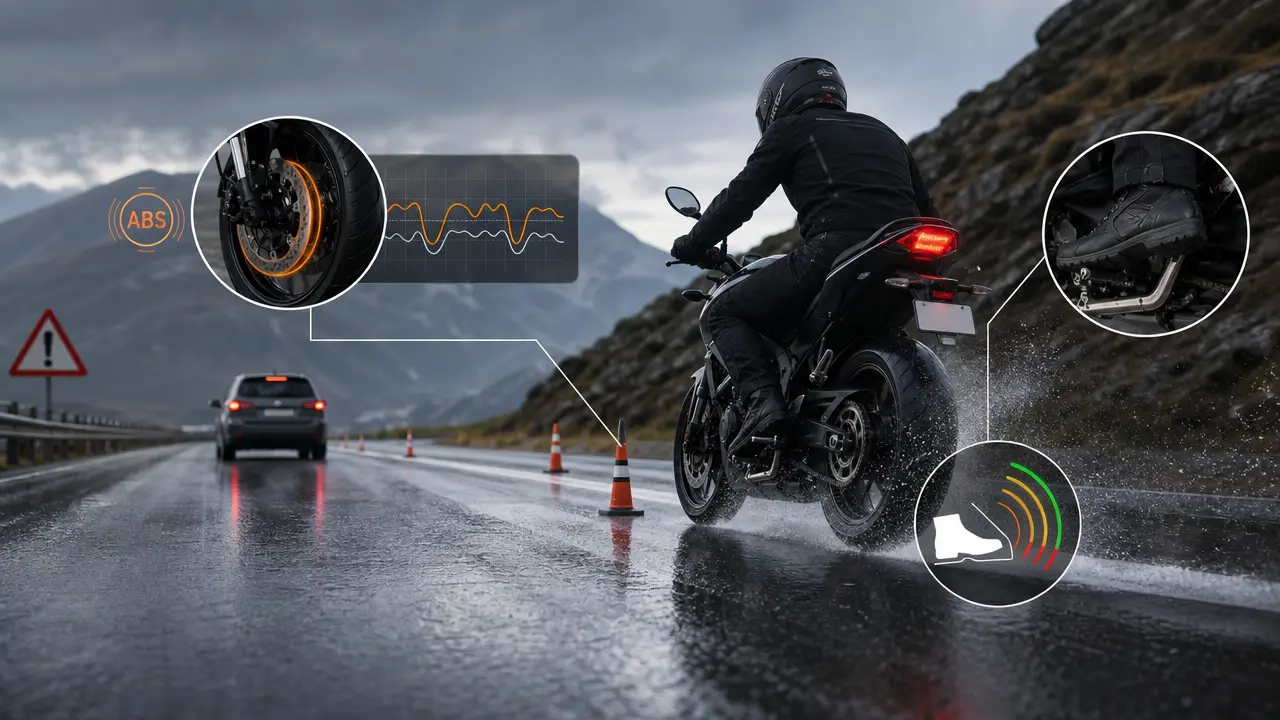
On ABS-equipped motorcycles, rear brake feel can change if the system has been activated frequently or if air enters the ABS module. Some bikes require specific bleeding procedures to fully remove air from ABS-equipped systems.
If your rear brake feels loose after hard braking or ABS intervention, a proper bleed using the manufacturer’s recommended process may be needed.
Common mistakes riders make
One common mistake is adjusting the pedal too far, eliminating all free play. This can cause brake drag and overheating. Another is topping up fluid without checking pad thickness, which can lead to overflow when new pads are installed.
Using the wrong brake fluid is another issue. DOT ratings matter. Mixing fluids or using incorrect types can damage seals and compromise braking.
How to know when the fix worked
A properly functioning rear brake pedal should feel firm but progressive. You should feel resistance early in the pedal travel, with predictable braking force increasing smoothly as you press down.
After any adjustment or bleeding, take a short test ride at low speed. Apply the rear brake gently at first and confirm consistent response before riding normally.
Final thoughts
A loose rear brake pedal rarely means something is seriously wrong. In most cases, the fix is fast, simple, and inexpensive. Free play adjustment, fluid checks, bleeding, and basic inspection solve the majority of complaints in minutes.
Rear brakes are often overlooked compared to front brakes, but they play a critical role in control, stability, and confidence. Addressing pedal feel early not only improves safety, it makes every ride smoother and more predictable.
Fix it once, check it occasionally, and your rear brake will feel exactly how it should every time you ride.