





Chain adjustment looks simple, which is exactly why so many riders get it wrong. A loose chain feels unsafe. A tight chain feels precise. Most riders assume tighter is better, so they keep adjusting the chain until it looks straight and firm. Unfortunately, this is one of the fastest ways to destroy chains, sprockets, wheel bearings, and even gearboxes.
Incorrect motorcycle chain slack is one of the most common causes of premature drivetrain wear. Many riders who experience chain noise, jerky acceleration, vibration, or rapid sprocket damage are actually dealing with a chain that was adjusted incorrectly, not a bad chain.
Understanding how to adjust chain slack correctly requires knowing how the suspension, swingarm, and drivetrain work together in real riding conditions.
Why Is Motorcycle Chain Slack Necessary ?
A motorcycle chain does not operate at a fixed distance. As the rear suspension moves up and down, the distance between the front sprocket and rear sprocket constantly changes. Chain slack exists to compensate for this movement.
When the suspension compresses, the chain tightens. When it extends, the chain loosens. If you adjust the chain too tight while the bike is unloaded, it becomes dangerously tight when you sit on the bike or hit bumps.
This is why incorrect chain slack causes more damage than riding with a slightly loose chain. A tight chain places continuous stress on the countershaft, gearbox bearings, rear wheel bearings, and swingarm components.
Most Riders Adjust Chain Slack Wrong
The most common mistake riders make is adjusting chain slack while the bike is on a center stand or paddock stand and assuming that is the correct setting. In that position, the rear suspension is fully extended, which is the loosest point of the chain.
Once the rider sits on the bike, the suspension compresses and the chain tightens significantly. If the chain was adjusted to look perfect on the stand, it becomes overtight under real riding conditions.
Another mistake is relying blindly on swingarm markings. These markings are alignment guides, not precision tools. Manufacturing tolerances, worn adjusters, or bent components can make these marks inaccurate.
The Correct Chain Slack Measurement
Every motorcycle has a manufacturer-recommended chain slack range. This is usually measured as the vertical movement of the chain at the midpoint between the front and rear sprockets.
Chain slack should always be checked at the tightest point of chain rotation, not the loosest. Chains wear unevenly, so rotating the wheel and finding the tightest section is critical.
When measured correctly, proper chain slack allows smooth power delivery without excessive lash or binding. It also ensures the chain does not tighten dangerously when the suspension compresses during riding.

How to Adjust Motorcycle Chain Slack?
The most accurate method is to adjust chain slack with the motorcycle under load. Ideally, the bike should be on its side stand with the rider sitting on it, or with weight applied to simulate riding conditions.
This approach accounts for real suspension compression and prevents overtightening. While it may take more effort, it dramatically improves chain life and drivetrain smoothness.
After adjustment, the chain should move freely through its full range without binding, snapping, or excessive resistance.
Signs Your Chain Is Too Tight
Many riders unknowingly ride with an overtight chain for months. Common signs include whining or humming noises while riding, vibration at steady speeds, stiff suspension movement, and rapid sprocket wear.
A tight chain can also cause harsh throttle response and make the bike feel jerky at low speeds. Over time, it can damage the gearbox output shaft, which is a costly repair.
If your chain feels silent but your bike feels strained, the chain may already be too tight.
Signs Your Chain Is Too Loose
While a loose chain is less dangerous than a tight one, it still causes problems. Excessive slack leads to chain slap, clunking sounds during acceleration, uneven sprocket wear, and poor throttle control.
In extreme cases, a very loose chain can derail from the sprocket, especially during aggressive downshifts or rough riding.
The goal is not tightness or looseness. The goal is controlled, correct slack.
Chain Alignment Is Just as Important as Slack
Chain slack means nothing if the rear wheel is not aligned properly. Misaligned wheels cause uneven chain wear, vibration, and pulling to one side.
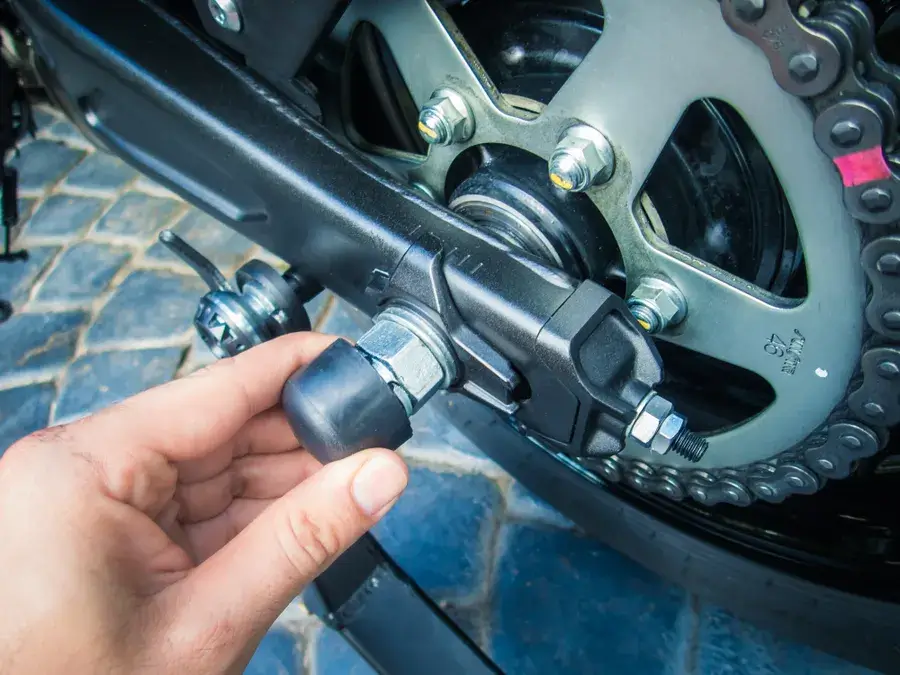
Instead of relying only on swingarm markings, visually check sprocket alignment or use a chain alignment tool. A properly aligned chain runs smoothly and quietly with minimal resistance.
Poor alignment is one of the most overlooked causes of short chain life.
Riding Conditions Affect Chain Slack
Riding style, load, and road conditions all affect chain behavior. Carrying a pillion, luggage, or riding on rough roads increases suspension movement and tightens the chain more than expected.
This is why touring riders and daily commuters should check chain slack more frequently. A chain adjusted for solo riding may become overtight when carrying extra weight.
How Often You Should Check and Adjust Chain Slack?
Chain slack should be checked every few hundred kilometers, especially on daily-use motorcycles. It should also be checked after chain lubrication, wheel removal, or any suspension work.
Ignoring chain maintenance leads to faster wear of chains and sprockets, increased noise, and reduced riding comfort.
Final Words
Most riders do not destroy chains because of poor riding. They destroy chains because of incorrect adjustment. A chain that looks perfect on the stand can be dangerously tight on the road.
Correct motorcycle chain slack protects your chain, sprockets, suspension, and gearbox. It improves ride smoothness, throttle response, and overall reliability.
Take the time to adjust it correctly once, and your drivetrain will reward you with thousands of trouble-free kilometers.