


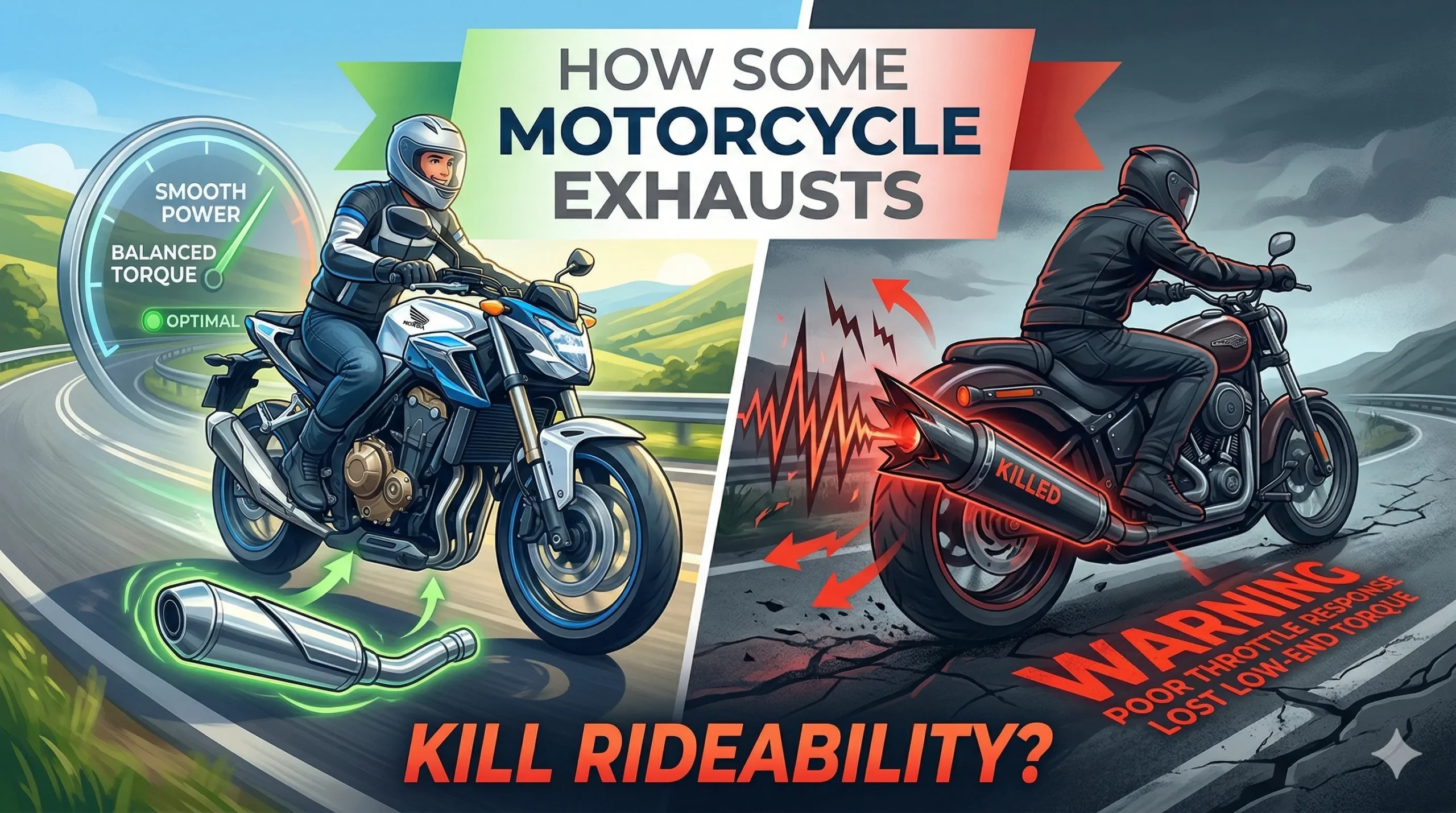

An aftermarket exhaust is often the first modification riders make. It promises better sound, lighter weight, and a more aggressive feel. On paper, it looks like an easy win. In reality, many riders install a new exhaust and slowly realize something feels off. The bike is louder, yes, but also rougher, twitchier, and harder to ride smoothly.
What most people do not expect is that the wrong exhaust can quietly ruin rideability without ever breaking anything.
Rideability is more than power and sound
Rideability is how easy and predictable a motorcycle feels in real-world riding. Smooth throttle response, usable torque at everyday speeds, stable cruising, and predictable engine braking all matter more on the street than peak horsepower.
Many exhaust systems are designed with dyno charts in mind rather than daily riding. They optimize high RPM flow and aggressive acoustics, often at the expense of low-end fueling and midrange smoothness. That tradeoff rarely shows up in marketing but becomes obvious in traffic, corners, and long rides.
Loss of low-end torque is the most common complaint
One of the first things riders notice after installing certain exhausts is weaker low-end pull. The bike feels flat below midrange RPM, requiring more throttle and more revs to move smoothly.
This happens because exhaust backpressure plays a role in torque delivery. Removing too much restriction, especially on engines tuned for street use, can hurt cylinder scavenging at lower RPMs. The result is an engine that feels eager at high revs but lazy everywhere else.
For street riders, commuters, and tourers, that tradeoff is almost always a downgrade.
Throttle response becomes jerky and unpredictable
Another frequent issue is abrupt throttle response. Riders describe it as snatchy, on-off, or overly sensitive at low speeds. Smooth corner exits become harder. Slow-speed maneuvers feel awkward. Riding in traffic turns tiring.
This is not just a rider adjustment problem. Many exhausts change airflow enough that the stock fueling no longer matches engine behavior. Without proper tuning, the ECU struggles to deliver smooth transitions, especially in the lower gears.
On modern ride-by-wire bikes, this can feel even worse because throttle maps amplify inconsistencies.
Excessive noise causes fatigue, not excitement
Loud exhausts are fun for about ten minutes. After that, the reality sets in.
Excessive volume and harsh frequencies create rider fatigue. Helmet resonance increases. Long rides become mentally draining. Passengers complain. Neighbors complain. Law enforcement notices.
More importantly, extremely loud exhausts often mask useful engine feedback. Subtle changes in RPM, traction, and throttle feel get lost behind noise, making the bike harder to ride smoothly.
A good exhaust enhances sound character. A bad one overwhelms everything else.
Heat management gets worse, not better
Many riders assume aftermarket exhausts reduce heat. In practice, some make it worse.
Thin-wall materials, poor routing, and missing heat shields can push heat closer to the rider’s legs and seat. In stop-and-go traffic or hot climates, this becomes uncomfortable quickly.
Poor exhaust design can also increase heat near sensors and wiring, contributing to long-term reliability issues that are hard to trace back to the exhaust itself.
Check engine lights and fueling issues creep in
Modern motorcycles rely heavily on exhaust sensors to manage fueling and emissions. Some aftermarket exhausts disrupt this balance.
Missing or poorly placed bungs, incompatible catalytic converter designs, or incorrect flow characteristics can confuse the ECU. Riders experience check engine lights, inconsistent idle, or poor cold starts.
While some of these issues can be resolved with tuning, many riders never tune at all, assuming the exhaust is truly plug-and-play. Months later, they are dealing with problems they never expected.
Midrange dips make bikes harder to enjoy
Dyno charts often highlight peak gains, but they rarely emphasize midrange dips. Some exhausts create noticeable torque holes right where riders spend most of their time.
The bike may feel strong at wide-open throttle but weak during casual acceleration. Passing maneuvers take more planning. Rolling on the throttle feels less satisfying than stock.
This mismatch between expectation and reality is one of the biggest reasons riders quietly regret certain exhaust upgrades.
Weight savings that do not justify the compromise
Yes, aftermarket exhausts are usually lighter. But weight savings alone do not guarantee better rideability.
Dropping a few kilograms does not help if the engine feels rough, the throttle is inconsistent, and the bike becomes louder than enjoyable. Many riders later admit they would have preferred the stock exhaust with better fueling and smoother delivery.
Ride quality matters more than numbers.
The tuning myth riders fall into
A common assumption is that tuning will fix everything. While proper tuning helps, it cannot fully compensate for poor exhaust design.
If the exhaust fundamentally shifts the powerband away from street usability, tuning can only do so much. Riders then spend more money chasing smoothness that never fully returns.
This is why exhaust choice matters more than most people realize.
Choosing an exhaust that preserves rideability
The best exhausts are designed around how motorcycles are actually ridden. They focus on smooth flow, balanced backpressure, controlled sound levels, and compatibility with factory electronics.
Well-matched systems improve character without disrupting drivability. They sound better without shouting. They feel stronger without sacrificing control.
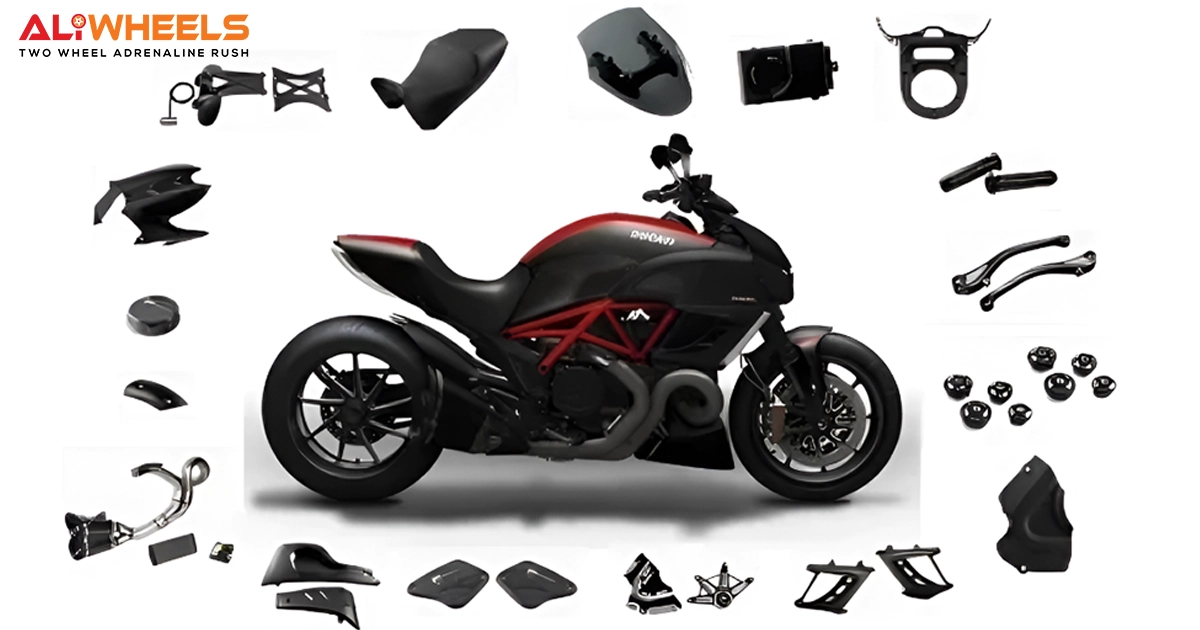
Sourcing quality exhaust components and related parts from reliable suppliers like Aliwheels helps riders avoid compatibility issues and poorly engineered options that prioritize noise over function.
Final thoughts
A motorcycle exhaust should enhance the riding experience, not dominate it. When a modification makes the bike harder to ride, more tiring to live with, or less predictable in everyday situations, it has failed its purpose.
The most satisfying motorcycles are not the loudest or the most aggressive. They are the ones that feel effortless, responsive, and enjoyable mile after mile.
Sometimes, the best upgrade is the one you barely notice, except for how much better the bike feels when you ride it.