



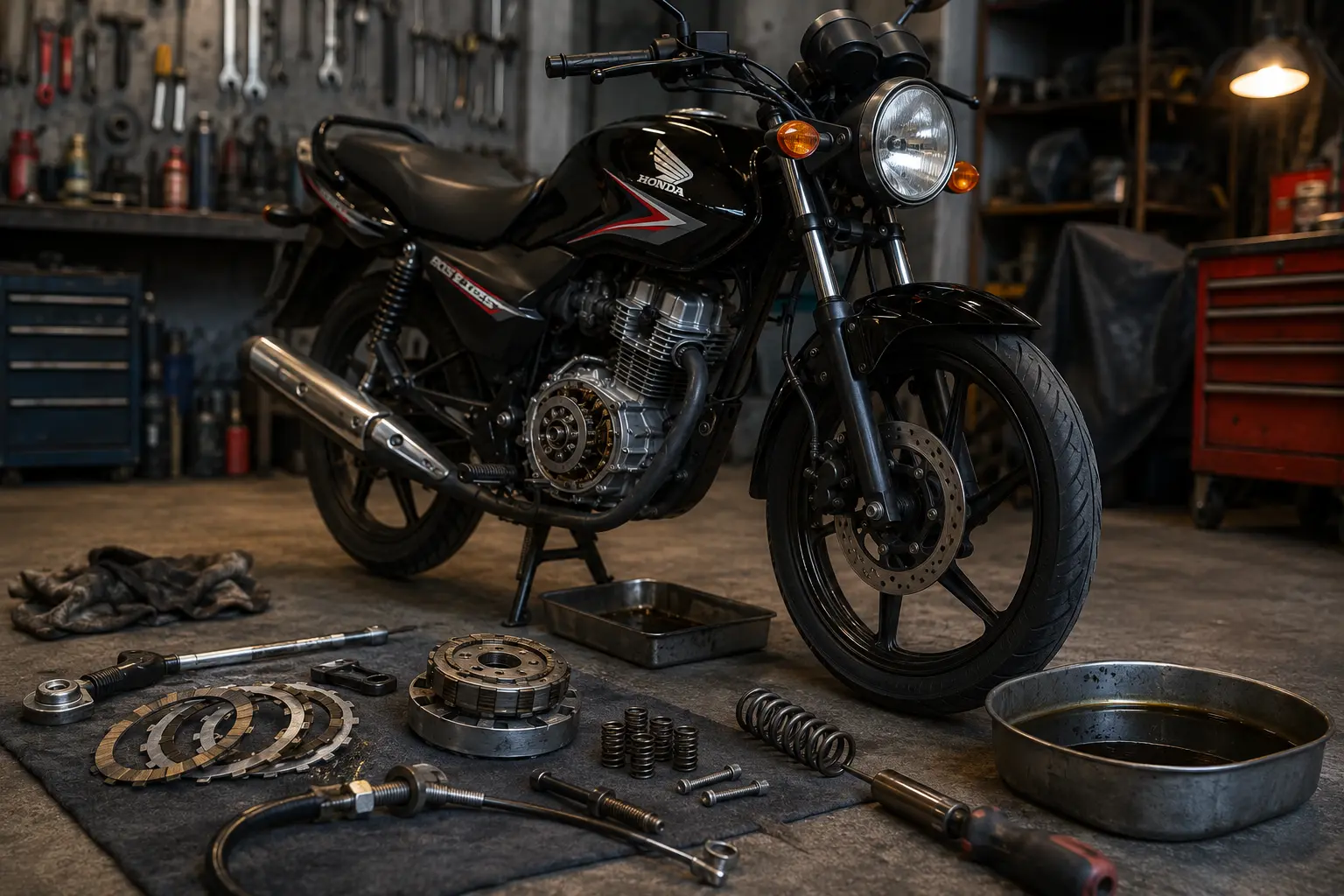

The Honda CBT125 is a reliable, hard-working learner and commuter bike. However, reliable does not mean maintenance-free. The clutch system on the CBT125 is a wet multi-plate design, and like any clutch, the plates wear down over time.
When that happens, the symptoms are easy to misread. Many riders blame the gearbox, the engine, or even the throttle before realizing the clutch plates are the real problem.
Here is a clear breakdown of the common Honda CBT125 clutch problems, what causes each one, and exactly how to fix them.
How the Honda CBT125 Clutch System Works
The CBT125 uses a wet multi-plate clutch that runs in engine oil. A stack of friction plates and steel drive plates sit inside the clutch basket. When you pull the lever, they separate and allow the engine to spin independently of the gearbox. When you release, they clamp together and transmit power.
Because these plates run in oil, they last a long time when the oil is serviced regularly. However, contaminated oil, low oil level, or simply high mileage gradually wears the friction material down. When the friction material is gone, the symptoms start.
Common Honda CBT125 Clutch Problems
Honda CBT125 Clutch Slipping Under Acceleration
Clutch slip is the most frequently reported CBT125 clutch problem. You open the throttle. The engine revs rise normally. However, the bike does not accelerate in proportion to the revs.
In more severe cases, the revs flare dramatically under hard acceleration while the bike barely speeds up. That gap between engine speed and road speed is the clutch plates failing to grip.
The cause is almost always worn friction plates. According to Honda service documentation, the friction material on CBT125 plates wears to a minimum thickness over time. Once below specification, the plates cannot generate enough clamping force to prevent slip.
The solution is a clutch plate replacement. You do not need to replace the entire clutch assembly. In most cases, fresh friction and steel plates restore full clutch function.
Difficulty Finding Neutral and Stiff Gear Changes
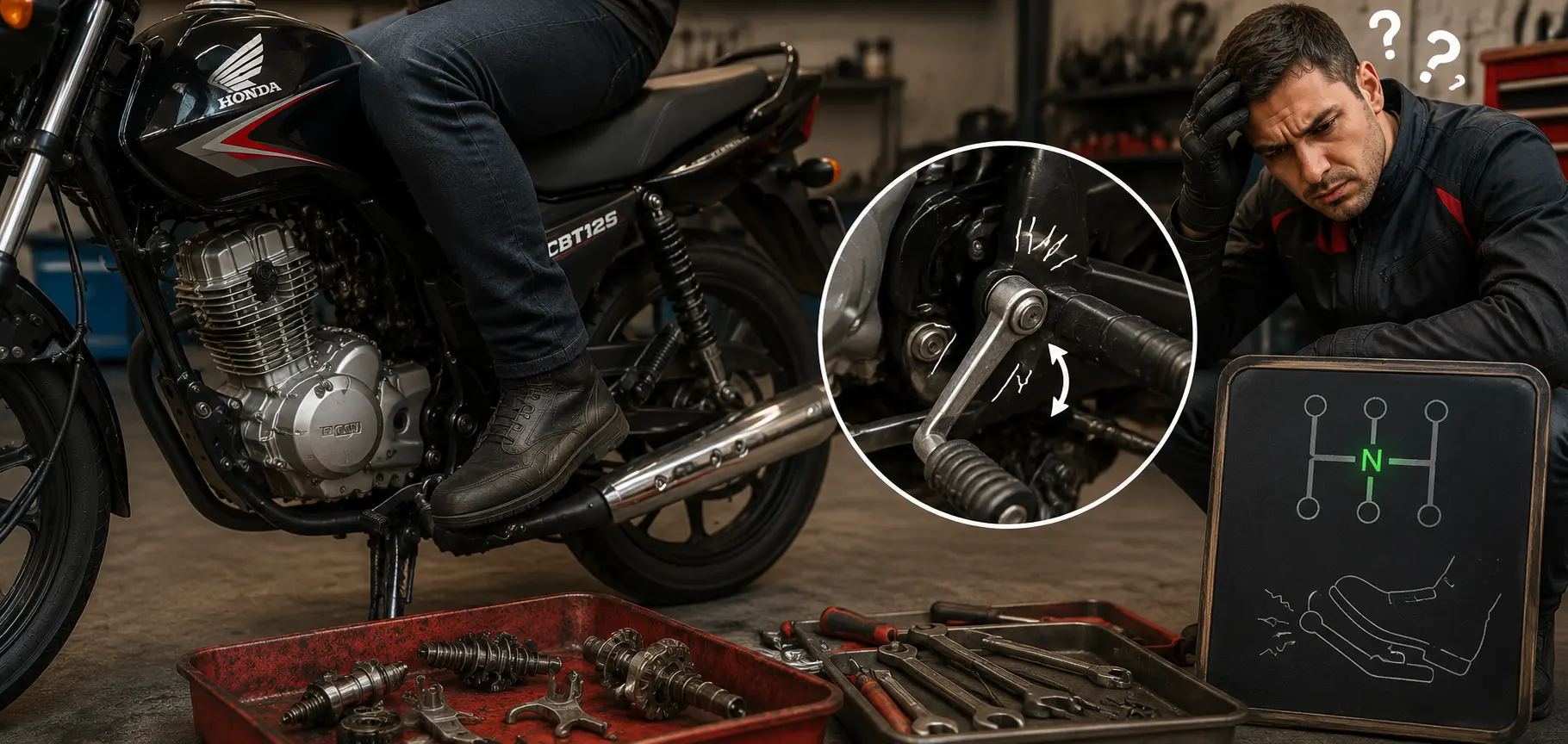
A worn or improperly adjusted clutch on the CBT125 can cause difficulty selecting neutral and harsh gear changes. If the clutch is not disengaging fully when the lever is pulled, the plates are still partially engaged when you try to shift.
That partial engagement drags the gearbox into gear changes and creates false neutrals and gear selection resistance.
Start by checking clutch cable adjustment. Proper free play at the lever is typically 10 to 20mm according to Honda’s CBT125 owner’s manual. If adjustment does not resolve the issue, warped steel plates are the likely cause. Warped plates prevent full separation even with correct cable tension.
Riders on Scooter and Motorcycle Forum UK consistently note that cable adjustment resolves about half of these cases. The other half require plate inspection.
Clutch Drag at Idle Causing Creeping in First Gear
Clutch drag happens when the plates do not fully separate even with the lever fully pulled. On the CBT125, this causes the bike to creep forward in first gear with the clutch lever held in, which is particularly frustrating in slow traffic.
Drag is caused by warped steel drive plates that physically cannot separate cleanly, oil contamination from the wrong lubricant type, or oil that has broken down and become sticky.
The first step is an oil change with the correct Honda-specification oil. Using non-motorcycle-specific oil or automotive oil in the CBT125 causes clutch drag because the friction modifiers in car oil reduce plate grip intentionally. That is exactly what you do not want in a wet clutch.
If an oil change with correct spec oil does not resolve the drag, plate inspection and replacement is required.
Clutch Lever Feels Unusually Heavy or Spongey
A heavy lever on the CBT125 is most often a cable problem rather than a clutch plate problem. A frayed, kinked, or dry cable increases the force required to pull it significantly.
Lubricate the clutch cable thoroughly first. If the lever remains heavy after lubrication and correct adjustment, inspect the cable for fraying or routing issues. A worn cable can also cause inconsistent clutch engagement feel even when the plates themselves are serviceable.
Burning Smell Under Heavy Use or Hill Starts
If you notice a distinct burning smell coming from the engine area during hill starts, heavy traffic riding, or sustained low-speed manoeuvring, the clutch is slipping under load and generating heat.

This is a more urgent version of the clutch slip symptom. Extended slipping under load accelerates plate wear dramatically and can contaminate the engine oil with clutch material. That contaminated oil then affects the rest of the engine.
Replace the clutch plates before continued riding under these conditions.
When to Replace Honda CBT125 Clutch Plates
The general guidance from Honda technicians is to inspect clutch plates every 20,000 to 25,000 kilometres on the CBT125. However, bikes used heavily in urban stop-start traffic wear plates significantly faster than those used predominantly on open roads.
Measure the friction plate thickness against Honda’s service specification. If any plate measures below minimum, replace the full set. Never mix old and new friction plates in the same stack, as the uneven thickness creates uneven clamping force and accelerates wear on the new plates.
Getting the Right Clutch Plates for Your Honda CBT125
Fit matters. The CBT125 uses a specific plate diameter, thickness, and friction material specification. An incorrect plate set creates the exact problems you are trying to fix.
Aliwheels stocks direct-fit Honda CBT125 Clutch Plates matched to the CBT125’s specifications, with free worldwide shipping on orders over $300. For the full range of clutch and drivetrain components, browse the Motorcycle Clutch category.
Conclusion
Honda CBT125 clutch problems come down to five main issues: slipping under acceleration, difficult gear changes, drag at idle, heavy lever feel, and burning smell under load. Most are caused by worn friction plates, warped steel plates, cable deterioration, or incorrect oil. Service the clutch at the right intervals, use the correct oil, and replace plates as a complete set when they reach wear limits.