







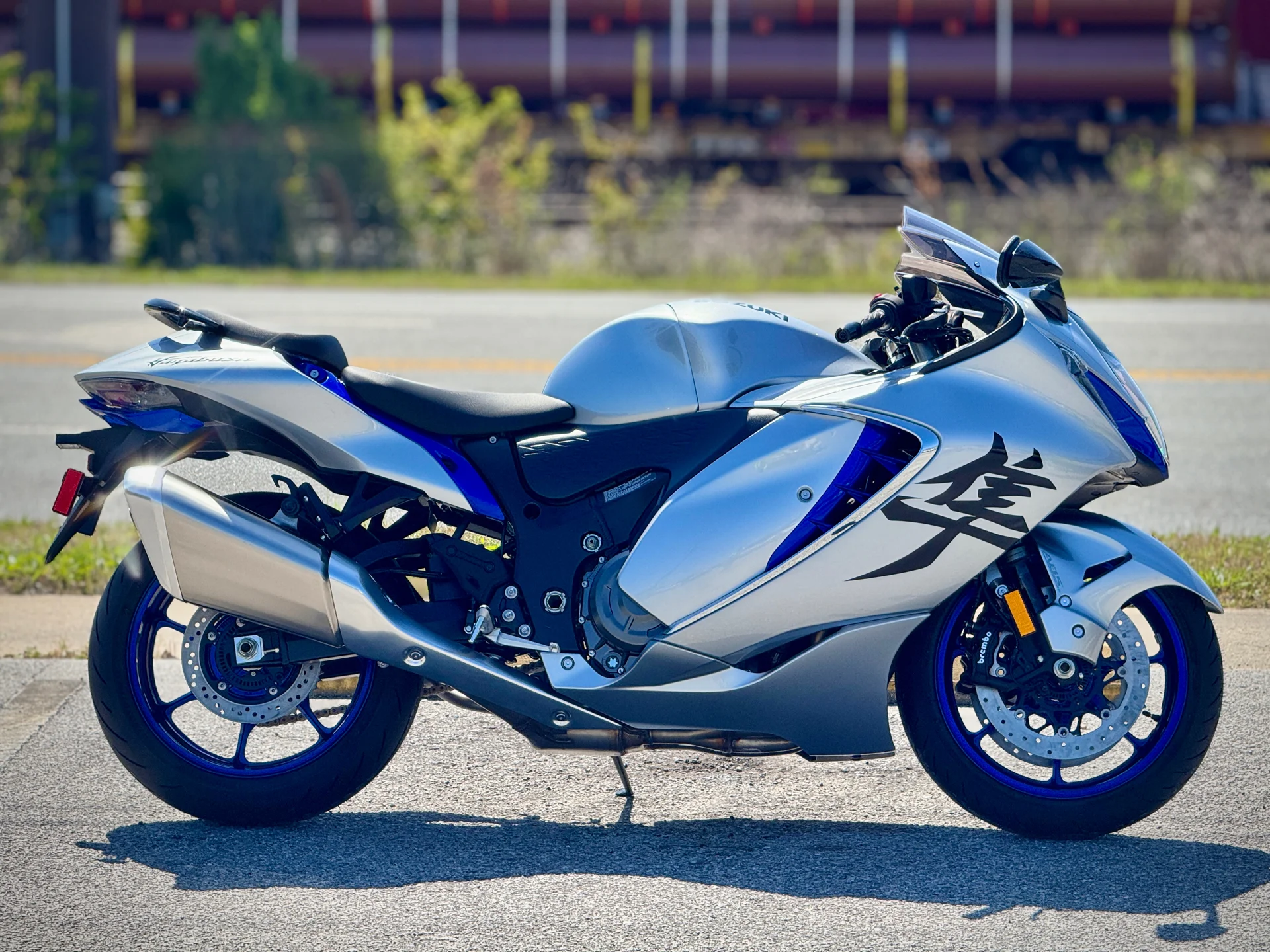

The Suzuki Hayabusa has been one of the most iconic performance motorcycles in the world since 1999. It has gone through three distinct generations, each with a different instrument cluster design and specification. When a Hayabusa speedometer fails, needs calibration, or a rider wants to upgrade the display quality, getting the right replacement requires knowing exactly which generation you own and what the fitment constraints are.
This is the complete guide to Hayabusa speedometer replacement and upgrade across all three generations. Browse Aliwheels’ Suzuki Motorcycle Parts category for Suzuki and Hayabusa-compatible parts.
The Three Hayabusa Generations: How They Affect Speedometer Fitment?
Generation 1 (1999 to 2007):
The original GSX1300R used a simple analog instrument cluster with separate round dials. The speedometer was a standalone unit, and depending on the year, it was either cable-driven or electronic. Early models from 1999 to 2001 used a mechanical speedometer cable, while later versions moved mostly to electronic speed sensing in many markets.
Generation 2 (2008 to 2021):
This version kept the classic Hayabusa design but upgraded the instrument cluster to a mix of analog and digital displays. The speedometer is fully electronic and built into a combined cluster that also shows fuel level, gear position, and warning lights. Because of this integrated design, you cannot replace just the speedometer on its own. The entire cluster must be replaced if needed.
Generation 3 (2021 onward):
The latest Hayabusa features a fully digital 6.5-inch TFT display. It is the most advanced system of all three generations. In many cases, replacing or recalibrating the cluster requires specific diagnostic tools due to its electronic complexity.
Hayabusa Speedometer Failure Causes
Gen 1 models:
The most frequent issue is failure of the electronic speed sensor. This sensor is usually located on the front wheel or transmission output and sends signals to the cluster. When it fails, the speedometer may drop to zero or behave erratically. The good news is that it is a separate, replaceable part, so the full cluster does not need to be changed.
Gen 2 models:
Problems here are often related to the instrument cluster itself. Common causes include corrosion in the connectors due to water ingress, backlight LED failure that makes the display hard to read, or internal electronic issues caused by vibration over time, which can crack solder joints in high-mileage bikes.
Gen 3 models:
The TFT display is the most sensitive component. Damage can come from impacts, extreme heat or cold, or water ingress. Because the cluster is integrated with ride modes and IMU systems, replacement or repair usually requires Suzuki dealer diagnostics and proper calibration.
| Generation | Years | Speedometer Type | Common Failure | Replacement Approach |
| Gen 1 | 1999-2007 | Analogue (electronic from 2002) | Speed sensor failure | Sensor replacement first; cluster if sensor is fine |
| Gen 2 | 2008-2021 | Analogue + digital combined | Connector corrosion, backlight | Full cluster replacement |
| Gen 3 | 2021+ | Full TFT digital | Screen damage, software | Dealer diagnosis recommended |

Gen 1 Hayabusa Speedometer: What to Check Before Replacing?
Before purchasing a replacement speedometer cluster for a Gen 1 Hayabusa, check these two things first. They resolve the majority of speedometer issues without requiring cluster replacement.
Check the speed sensor. The front wheel speed sensor on 2002-onward Gen 1 models is located at the front wheel hub. Disconnect and inspect the connector for corrosion. Spray with electrical contact cleaner, reconnect, and test. A corroded connector accounts for a significant proportion of speedometer zero-reading faults. Replacement sensors are a fraction of the cost of a full cluster.
Check the connector at the instrument cluster. The multi-pin connector at the back of the Gen 1 Hayabusa instrument cluster is a known corrosion point. Remove, clean with electrical contact cleaner, apply dielectric grease to the pins, and reconnect before condemning the cluster itself.
If both checks fail to resolve the issue, the cluster itself needs replacement. For a Gen 1 Hayabusa, quality aftermarket speedometer clusters are available at significantly lower cost than OEM dealer pricing and offer equivalent functionality.
Gen 2 Hayabusa Speedometer Replacement Considerations
The Gen 2 Hayabusa instrument cluster is a sealed unit. When replacing, confirm the replacement cluster matches your specific model year, as Suzuki made mid-production changes to the cluster specification within the 2008 to 2021 production run.
Clusters from 2008 to 2012 and 2013 to 2021 have different connector configurations in some markets. Always confirm the specific year and market specification before ordering.
Quality aftermarket Gen 2 clusters typically retain all original functions, including the gear indicator, fuel gauge, and warning light integration.
However, you should always confirm that the replacement unit includes the full wiring harness connector. Some aftermarket clusters require you to transfer the original connector from the damaged unit, which can increase installation time and complexity.
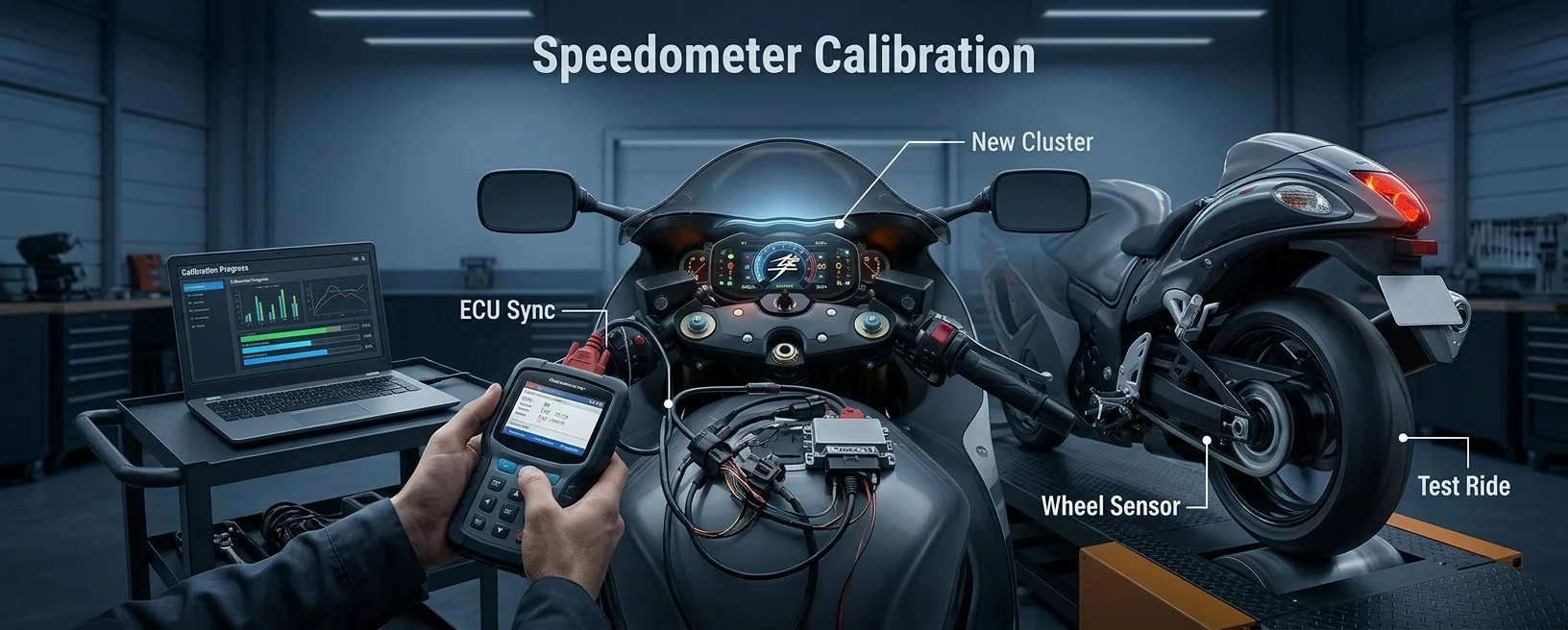
Speedometer Calibration After Replacement
Any speedometer replacement may require calibration if the replacement unit is from a different model year or uses a different pulse count configuration than your original unit. On Gen 1 models, calibration is performed through a specific button sequence documented in the Hayabusa service manual. On Gen 2 models, calibration is typically not required for like-for-like cluster replacements but may be needed if the replacement unit is from a different market specification.
Incorrect speedometer calibration can cause the speed reading to be consistently higher or lower than your actual speed.
This is not only a legal concern. It also affects other systems, including fuel consumption readings, trip computer accuracy, and any built-in speed-related warning functions in the electronics.
Find Suzuki Hayabusa dashboard components on Aliwheels‘ Suzuki motorcycle parts category page. For fitment confirmation by generation and specific year, the support team confirms compatibility 24/7 before your order ships. Free worldwide shipping applies on orders over $300.
Conclusion
Hayabusa speedometer replacement depends heavily on the generation, so correct fitment is very important.
For First Gen models, most issues can be solved by checking or replacing the speed sensor, so a full cluster replacement is rarely needed.
On Second Gen models, you must match the exact year and market specification when replacing the cluster, since units are not universally interchangeable.
On Third Gen models, any instrument issue should be checked with dealer diagnostics first before ordering parts due to system integration and calibration requirements.
Overall, the Hayabusa owner community is very detailed and reliable, so it is a good idea to confirm symptoms on generation-specific forums before buying any replacement parts.
Frequently Asked Questions
Q: My Gen 1 Hayabusa speedometer reads zero at all speeds. What is the most likely cause?
A: On 2002 onward Gen 1 Hayabusa models, a speedometer reading of zero at all speeds is most commonly caused by a failed or corroded front wheel speed sensor or its connector rather than a failed instrument cluster. Check and clean the sensor connector first. This is a $10 fix if it resolves the fault, versus $150 or more for a cluster replacement. Only replace the cluster if the sensor and connector are confirmed functioning.
Q: Can I swap a Gen 1 Hayabusa speedometer cluster with one from a different year?
A: Gen 1 clusters (1999 to 2007) are generally interchangeable within the generation, but confirm whether your specific year uses a mechanical cable drive (1999 to 2001 in some markets) or electronic speed sensing (2002 onward) as these are not interchangeable. Electronic sensing clusters from any Gen 1 year are compatible with other Gen 1 electronic years.
Q: Will an aftermarket Hayabusa speedometer cluster affect my insurance or roadworthiness?
A: A quality aftermarket speedometer cluster that maintains correct speed accuracy and all original warning light functions is legally equivalent to an OEM replacement in most US states. The key legal requirement is accurate speed display within the tolerance specified by your state’s vehicle equipment regulations — typically plus or minus 10%. Always confirm calibration accuracy after any speedometer replacement.
Q: My Gen 2 Hayabusa gear indicator stopped working but the speedometer is fine. Are these separate?
A: On the Gen 2 Hayabusa, the gear indicator and speedometer are on the same cluster unit but use different input signals. The gear indicator uses a separate signal from the transmission. If the speedometer functions correctly but the gear indicator does not, the fault is likely in the gear position sensor or its wiring rather than the instrument cluster itself. Diagnose the gear position sensor before replacing the cluster.
Q: How long does a Hayabusa instrument cluster typically last?
A: With normal use and no physical damage or water ingress, a Hayabusa instrument cluster can last the full life of the bike. The most common causes of premature failure are connector corrosion from water exposure (most common), vibration-induced solder joint cracking on high-mileage bikes, and backlight component failure on Gen 2 units. Regular connector maintenance with dielectric grease significantly extends cluster service life.