




There’s a joke that’s been running around Ducati forums for over twenty years now. Someone’s non-Ducati friend hears the bike idling in neutral, gets a worried look, and asks if it just threw a rod. The owner laughs and explains, no, that’s just the dry clutch. It’s supposed to sound like that. Mostly.
That “mostly” is what this whole article is about.
Why Ducatis Rattle in the First Place
Unless you’re on one of the smaller Monsters or a Scrambler with a wet clutch, your Ducati’s dry clutch makes noise by design, not by accident. When you pull the lever in, or sit in neutral with no load on the clutch, the plates separate slightly and knock around loosely inside the basket, driven by nothing more than normal engine vibration.
One longtime owner on the Ducati.org forum explained it about as clearly as I’ve ever heard it put. The rattle comes from the small gap between the friction plate’s pins and the notches cut into the clutch basket. Under load, in gear, moving forward, those pins get pushed firmly against the basket and the noise disappears. Off load, they’re free to bounce around, and that’s your rattle.
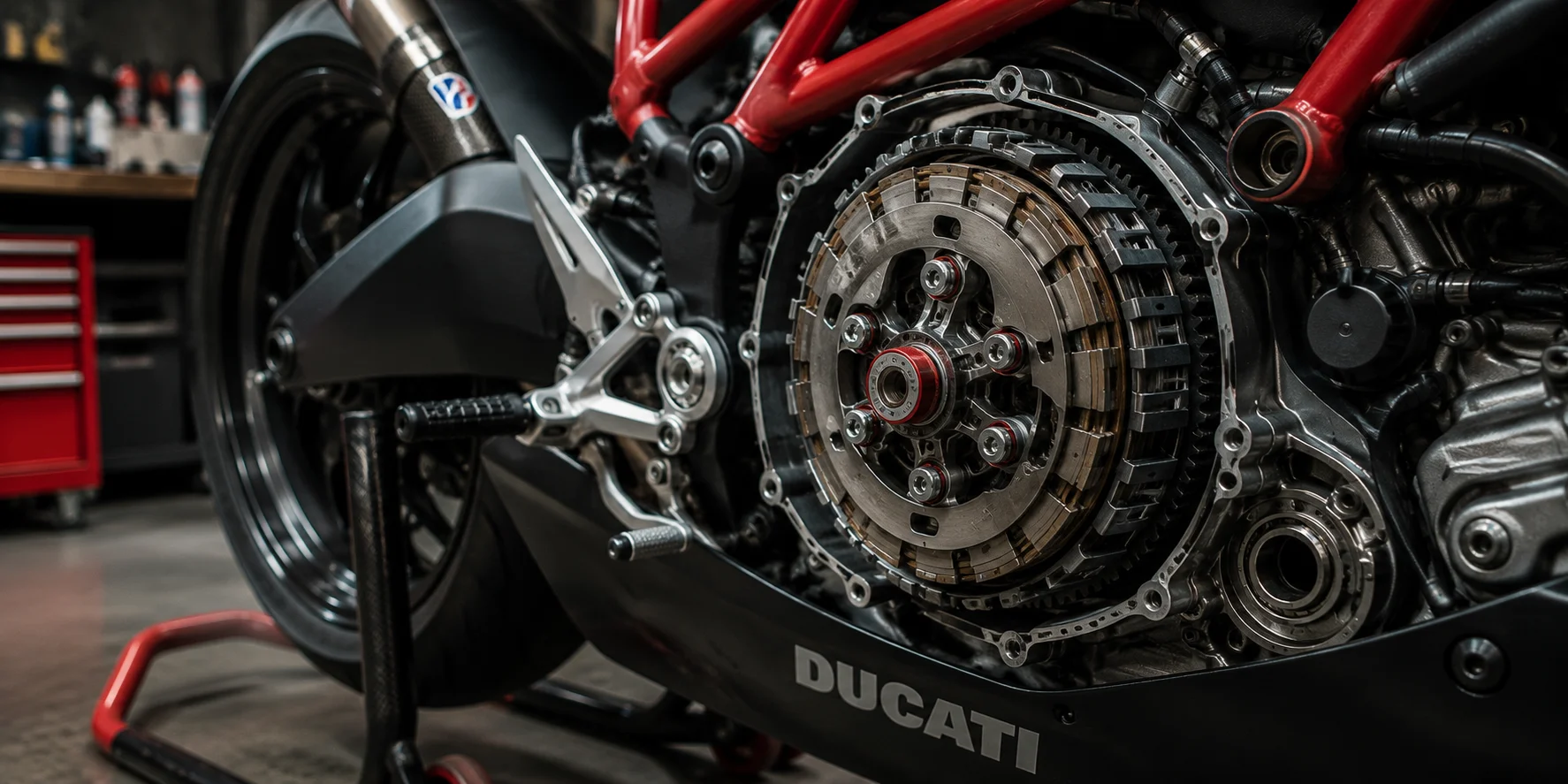
Some manufacturers use rounded pins instead of square ones specifically to quiet this down. A few use aluminum friction plates instead of steel, since aluminum doesn’t “ding” against the basket the way steel does. Ducati mostly hasn’t bothered, because a huge number of their own customers genuinely love the sound. One owner called it “the World Famous Dry Clutch” and said flat out that you paid extra for it.
So When Is It Actually a Problem?
Here’s where I want to be straight with you, because forums are full of people insisting “it’s always normal” and that’s not quite true either.
A normal dry clutch rattle is a light, consistent “blang blang blang” in neutral or off-throttle, and it goes quiet the moment you’re accelerating under load. That’s the sound design working exactly as intended.
Where it gets worrying is when the rattle changes character. Louder than it used to be. Present even under load, when it should be disappearing. Accompanied by a grinding sound mixed in with the rattle, rather than just the metallic jangle. Any of these shifts, especially a gradual increase in volume over weeks or months, points toward actual wear rather than normal design behavior.
What Causes an Abnormal Rattle
A few real mechanical culprits show up again and again once owners actually investigate.
Worn basket fingers. As one Diavel owner forum thread put it bluntly, a clutch that “rattles like you wouldn’t believe” usually means worn fingers on the clutch basket, not just normal character. This is genuine wear, and it needs addressing rather than ignoring.
A loose basket retaining nut. This came up specifically in a Ducati Monster forum thread where an 03 620 owner noticed the rattle getting progressively louder over months. The advice from experienced members was to check the basket nut first, since it directly affects how the whole clutch pack sits and moves.
Something more serious is hiding behind clutch symptoms. One Ducati.ms thread is worth mentioning specifically because it’s a good cautionary tale. An owner assumed clutch trouble based on a sudden new noise and a slight vibration felt through the lever. Turned out to be crankshaft endplay, caused by a loosening generator nut, not the clutch at all. The lesson here is simple. If a rattle changes suddenly, especially alongside any new vibration, don’t assume it’s “just the dry clutch” without actually checking.
A Quick Way to Tell the Difference Yourself
Pull the clutch cover off, if you’re comfortable doing that, and watch the plates while the engine idles in neutral. A healthy setup shows the plates lightly separating and knocking together in a steady, even pattern. If you see uneven movement, visible wear on the basket fingers themselves, or anything that looks like metal shavings collecting nearby, that’s your answer. It’s not just character anymore.
If you’d rather not pull the cover, listen specifically for the load test. Rev slightly while feathering the clutch lever out. A normal rattle should noticeably quiet down or disappear the moment the plates engage under load. If it doesn’t, or if it’s replaced by grinding rather than just going quiet, that’s worth investigating further rather than shrugging off.
Fixing Genuine Wear
Once you’ve confirmed it’s actual wear and not just Ducati being Ducati, replacing worn clutch plates restores both proper function and, honestly, a cleaner version of that same iconic sound plenty of owners love in the first place.
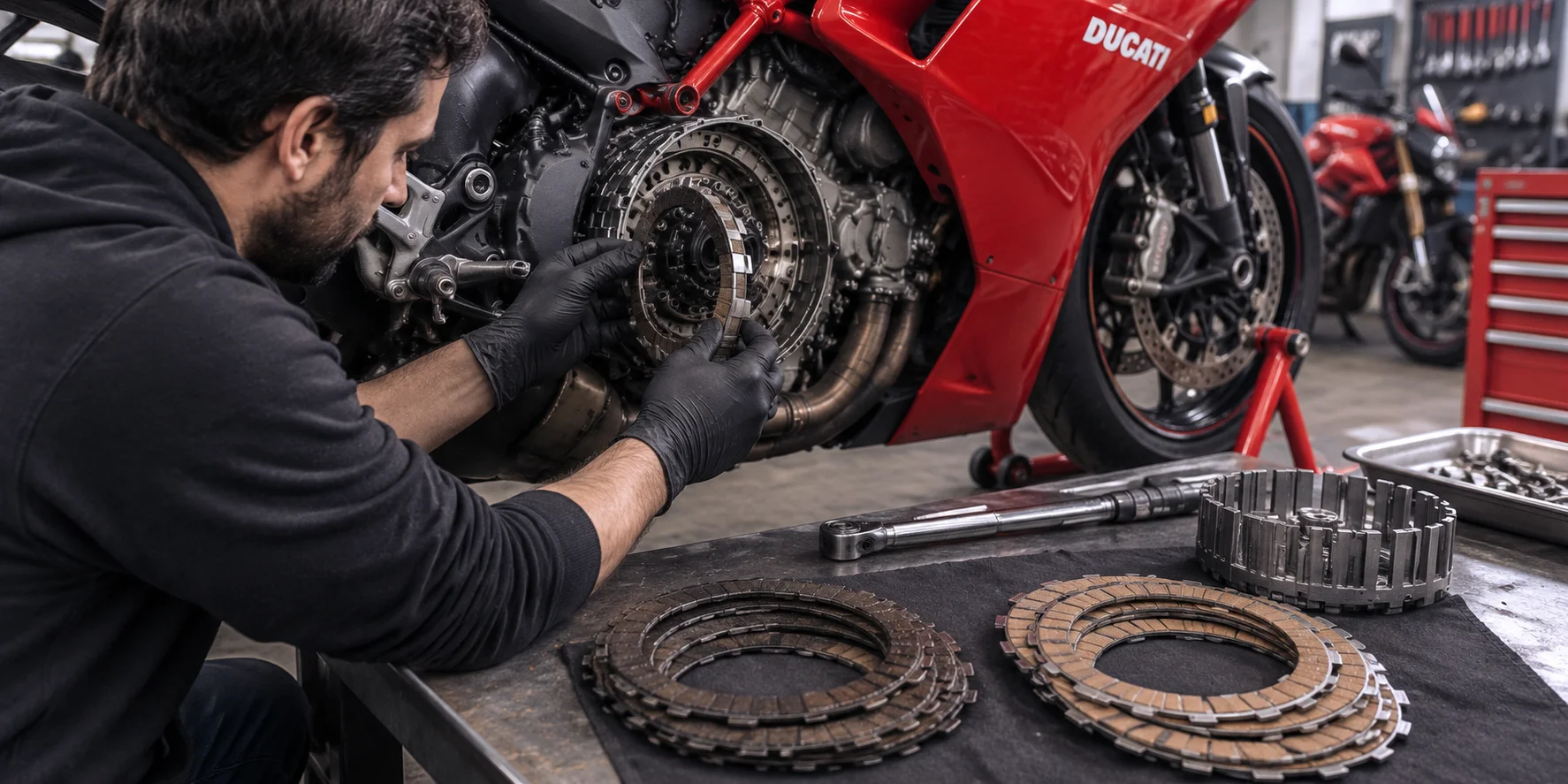
Aliwheels carries Ducati 1098 Clutch Plates for 2006-2010 models, a direct fitment cork-plate set, along with Ducati Scrambler 1100 Clutch Plates for 2018-2023 and Ducati Scrambler 400 Sixty2 Clutch Plates for 2016-2020. Browse our full Ducati motorcycle parts collection to confirm the correct fitment for your specific model and year before ordering.
Should You Even Fix It If You Like the Sound?
Genuinely, that’s up to you, and plenty of long-time owners will tell you not to mess with a rattle that’s within normal range just because it sounds aggressive to someone unfamiliar with dry clutches. But once wear enters the picture, worn fingers, a loosening basket nut, changing character over time, that’s no longer a stylistic choice. It’s a maintenance item, and ignoring it risks turning a cheap plate replacement into a more expensive repair down the line.
Frequently Asked Questions
Is it normal for a Ducati dry clutch to rattle in neutral?
Yes, this is standard behavior by design on most dry-clutch Ducatis. The plates separate slightly without load and knock together from engine vibration, quieting down once you’re accelerating under load.
Why does my clutch rattle even when I’m riding, not just in neutral?
A rattle that persists under load, rather than disappearing, often points to worn basket fingers or a loose basket retaining nut, and is worth investigating rather than dismissing as normal.
Could my clutch rattle actually be something else entirely?
Yes. In at least one documented case, what seemed like clutch rattle plus a new vibration turned out to be crankshaft endplay from a loosening generator nut. Any sudden change in noise or feel is worth checking properly.
Does an open or vented clutch cover make the rattle louder?
Yes, significantly. A sealed cover muffles the sound considerably, which is why some owners specifically install vented covers to hear more of the rattle, while others prefer a sealed cover for a quieter ride.
How do I know if I need new clutch plates?
If the rattle has gotten noticeably louder over time, persists under load when it previously didn’t, or is accompanied by grinding rather than a clean metallic knock, it’s time to inspect your clutch plates and basket for wear.
Browse our full Ducati motorcycle parts collection for fitment-matched clutch components across the Monster, Scrambler, and superbike lineup.