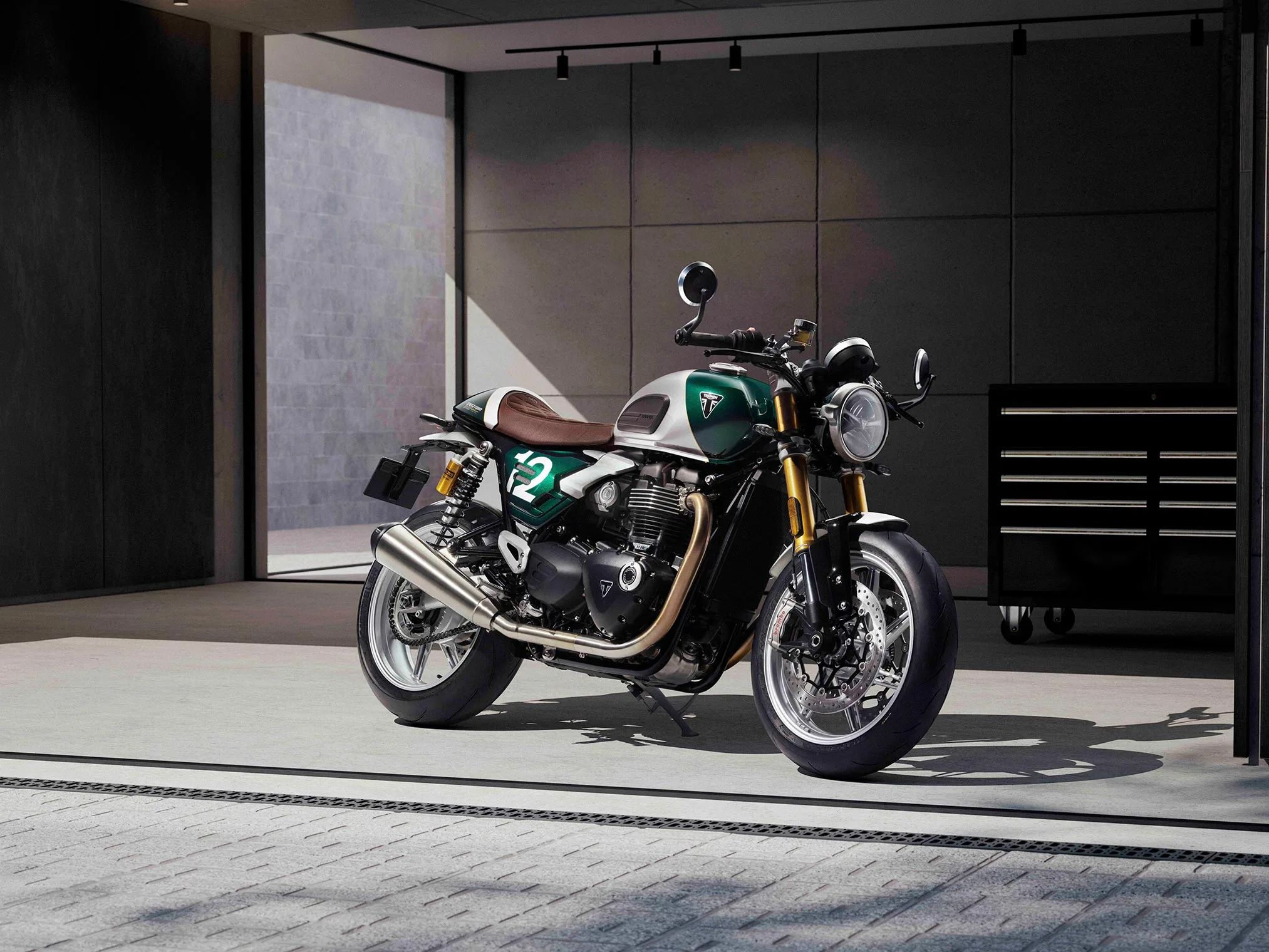



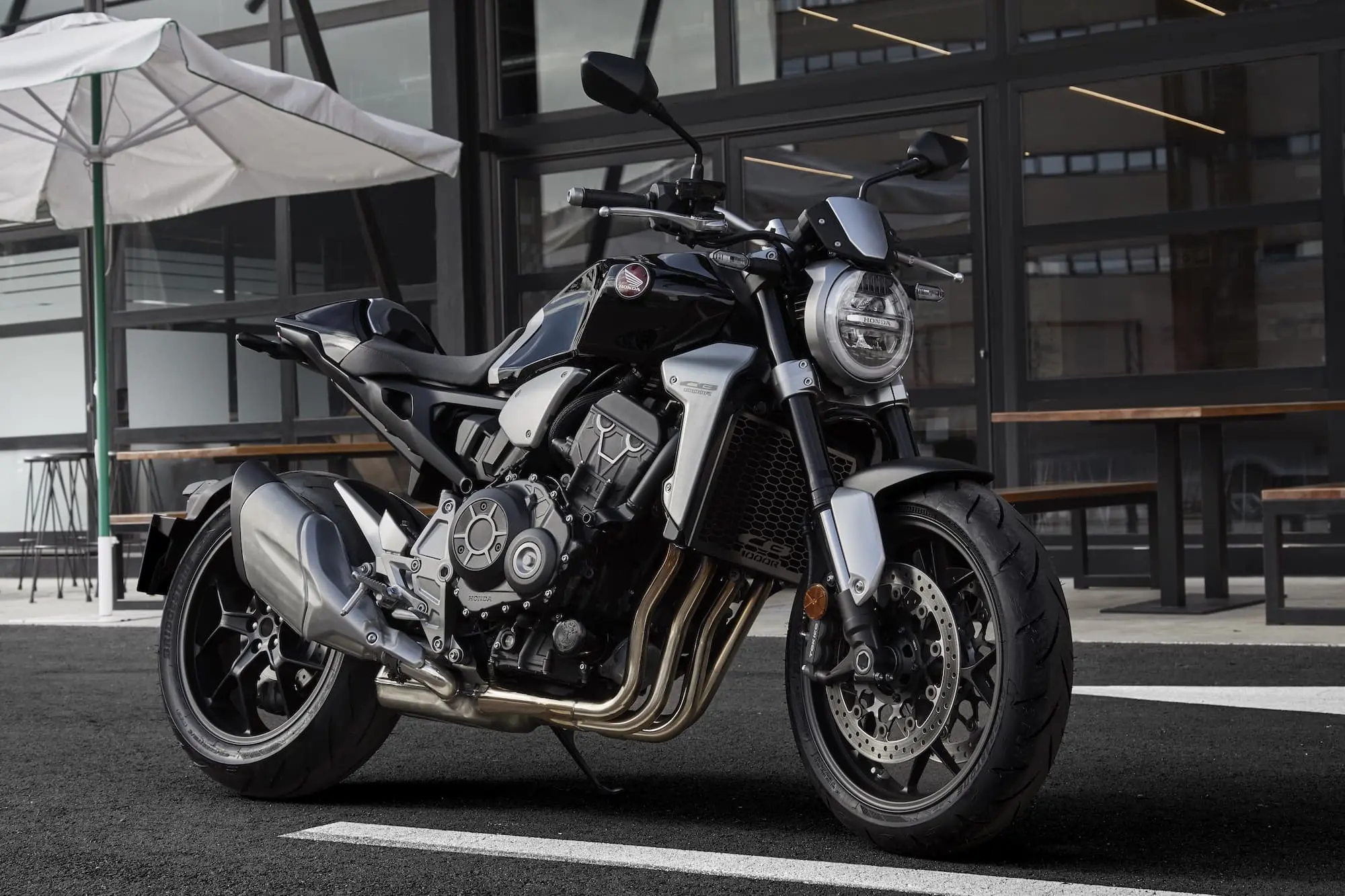

The Honda CB1000R stands out in a crowded field of naked bikes. It blends raw power with sharp, minimalist styling. Honda calls the design language “Neo Sports Café,” and it works. Riders love the aggressive stance and the inline-four engine borrowed from the Fireblade lineage. But owning a Honda CB1000R means more than admiring its looks. It means keeping up with maintenance and knowing which upgrades actually matter. This guide walks through the Honda CB1000R parts and upgrades that come up most often for CB1000R owners. We will cover routine maintenance items, common failure points, and a few upgrades worth considering once you know your bike well. Every section ties back to real Honda CB1000R parts you can find and buy, not vague advice that leaves you searching elsewhere.
Why the CB1000R Demands Different Care Than Older Naked Bikes
The CB1000R feels different from older Honda naked bikes. Honda redesigned it heavily starting with the 2018 model year, and the platform continued to evolve by 2021. The engine, frame, and electronics all changed. So maintenance advice from a decade-old CB1000 thread does not always apply here.
This matters because plenty of riders switch to the CB1000R from an older bike. They bring old habits with them. Those habits do not always transfer cleanly. A modern electronics package, updated drivetrain, and different service intervals mean you need current, accurate information. That is exactly what this guide provides.
Chain and Sprocket Maintenance: The Most Overlooked Job
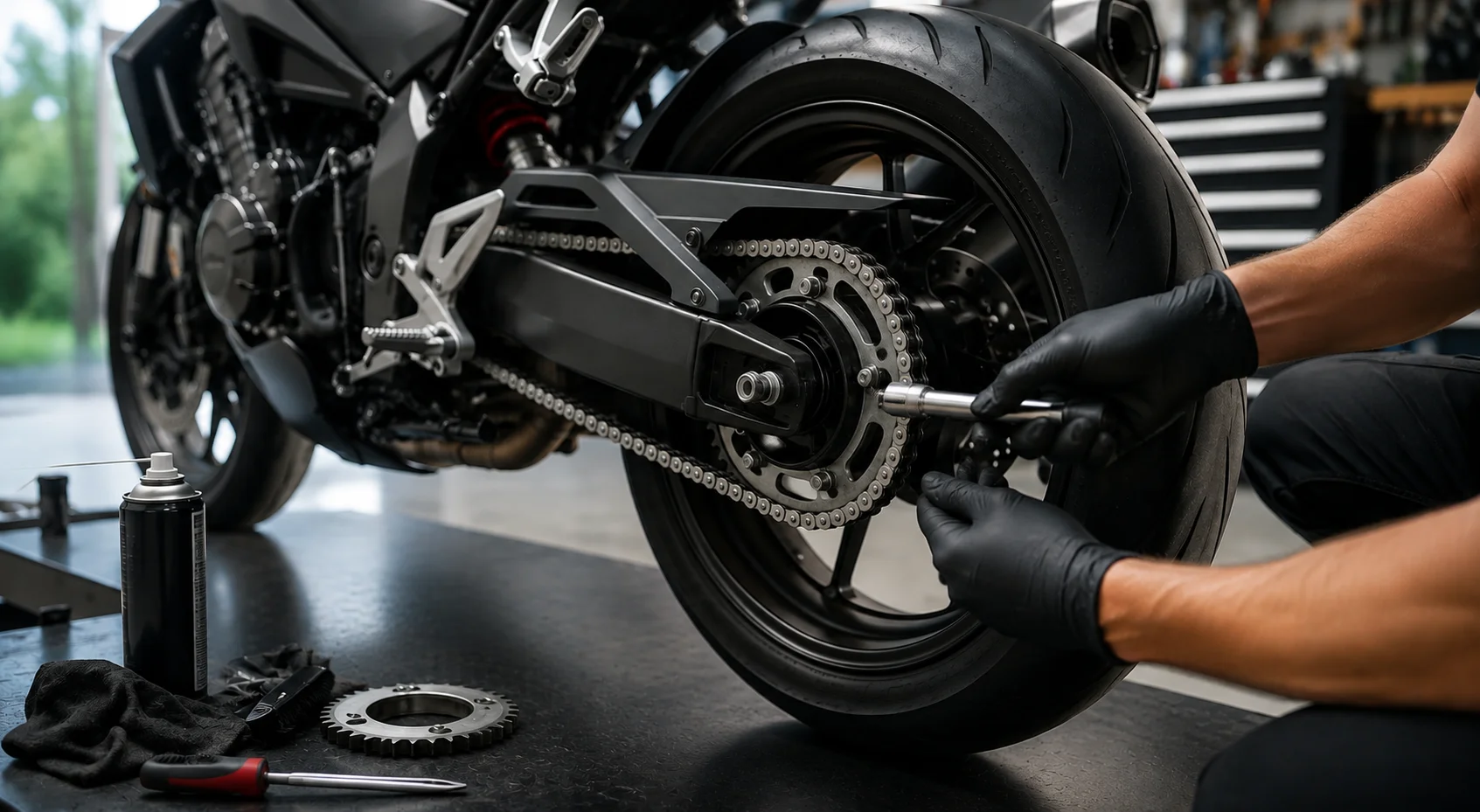
Every naked bike with real power needs a healthy chain and sprocket set. The CB1000R is no exception. In fact, its punchy midrange makes chain wear happen faster than riders expect.
Here is why this matters so much. A stretched chain throws off your gearing. It also creates a jerky feel during acceleration. Riders often blame the throttle response or the ride-by-wire system, but a worn chain is usually the real culprit.
Check your chain slack every few hundred miles. Look at the teeth on the sprockets, too. Worn teeth become hooked instead of straight-edged. When you see that shape, it’s time to replace. Wait too long, and more than an annoying vibration is at risk. A broken chain at speed can seriously damage your swingarm or even lock up the rear wheel.
For 2021 through 2023 CB1000R models, we stock a direct-fit chain and sprocket set built for exact OEM specifications. This means correct pitch, correct tooth count, and a clean bolt-on installation. You will not need to modify anything or guess at compatibility.
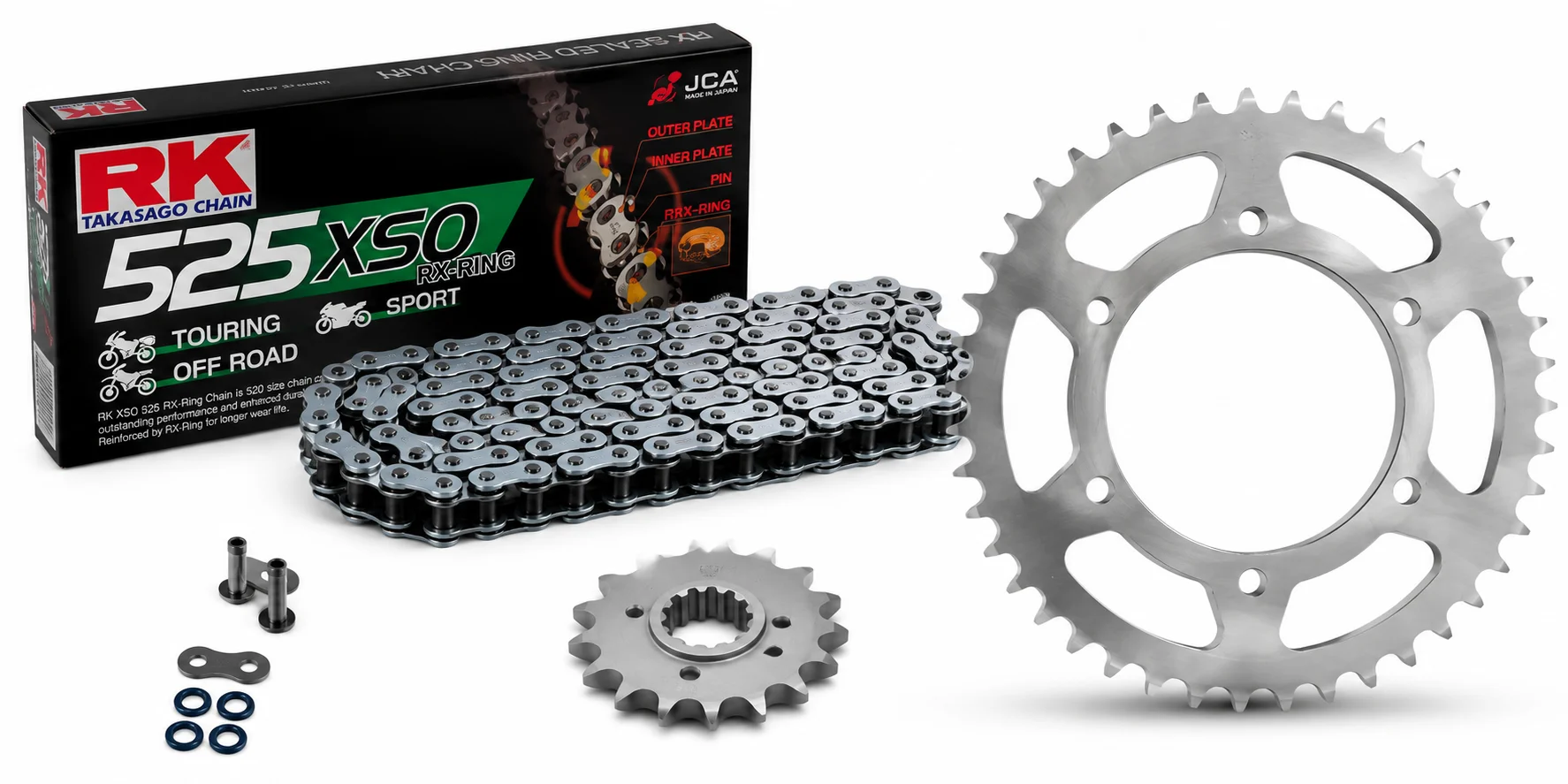
One more tip here. Clean and lubricate your chain regularly between replacements. This single habit extends chain life significantly. Use a proper chain lube, not general-purpose oil, since it needs to withstand centrifugal force without flinging off the chain.
Stator Cover Damage: A Common but Preventable Problem
Naked bikes are low. To the ground. Riders tend to lean on them more than they realize, especially on slow parking lot turns or tight U-turns. Which means the engine covers take a lot more abuse than most owners realize.
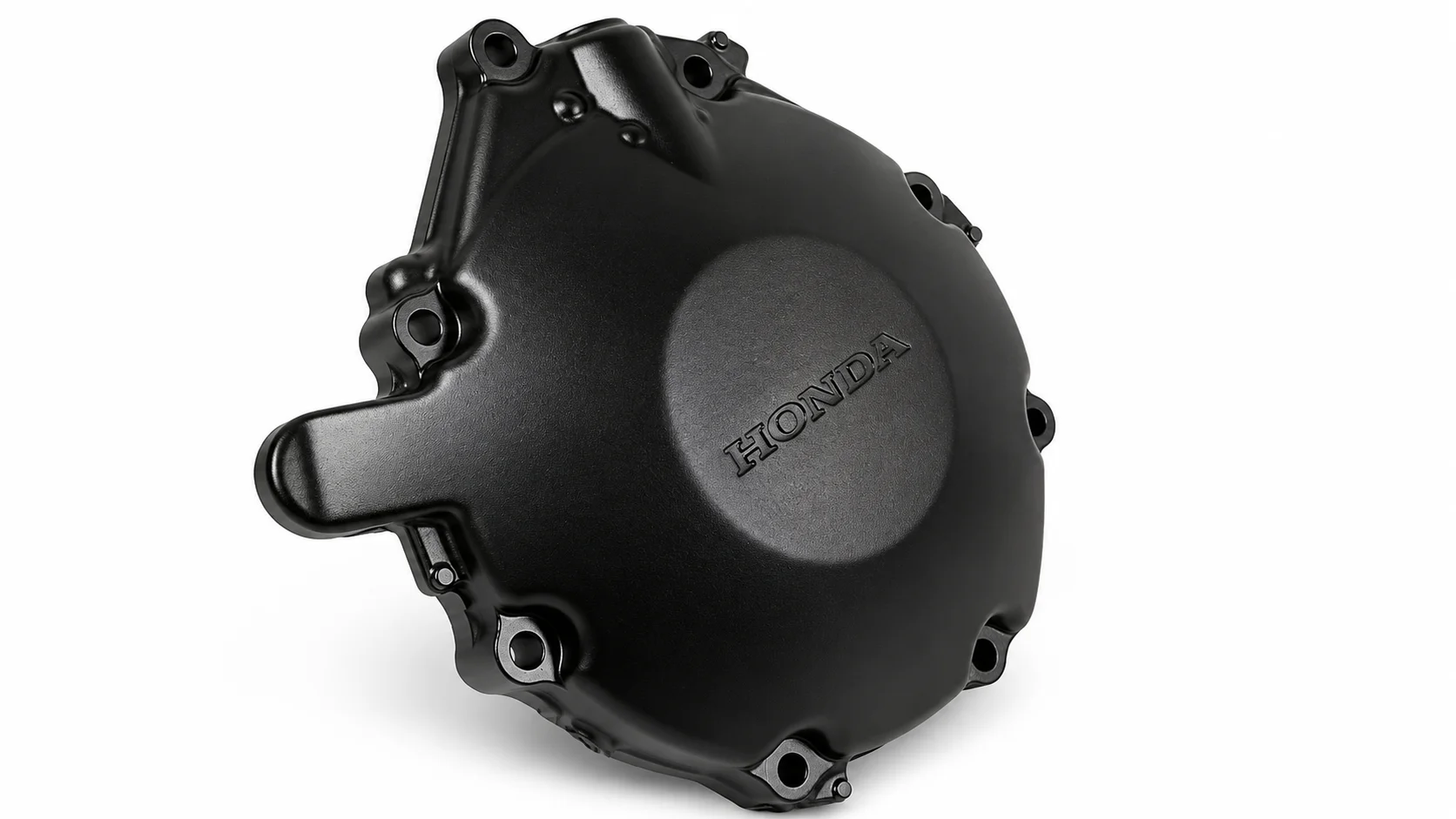
The stator cover is on the side of the engine and covers the inside charging system components. The cover on the CB1000R is in a weak place. It can crack or scuff badly even with a low-speed, gentle tip-over. Some riders only discover the damage when they see oil leaking out around the edges of the cover.
And it’s not just aesthetic. A cracked stator cover will leak oil at a steady rate. If not addressed, this can cause low oil levels and possible engine damage down the road. So don’t write off a cracked cover as a small problem.
Aliwheels carry a Honda CB1000R stator cover for 2021 through 2023 models. Replacing this part promptly after any drop protects your engine and keeps oil where it belongs. Installation is straightforward for anyone comfortable with basic engine work, though a shop visit works fine too if you prefer.
Understanding the CB1000R’s Electronics Package
Modern CB1000R models come loaded with electronic rider aids. This includes traction control, multiple ride modes, and ride-by-wire throttle. These systems make the bike safer and more adaptable. However, they also introduce complexity that older bikes never had.
If your throttle feels inconsistent, do not immediately assume a mechanical fault. First, check which ride mode you are in. Rain mode, for example, deliberately softens throttle response. Riders sometimes forget they switched modes and assume something broke.
That said, genuine electronic issues do happen. A loose connector or corroded ground wire can cause real problems. If you experience warning lights, stalling, or erratic behavior that persists across ride modes, get the connections checked. Vibration from regular riding can work connectors loose over time, especially near the subframe and tail section.
Suspension Setup: Why Stock Settings Rarely Fit Everyone
Honda ships the CB1000R with suspension tuned for an average rider on an average road. Most owners are not average in either sense. Your weight, riding style, and typical roads all affect what setup actually works for you.
Start with the basics before spending money on upgrades. Adjust your preload to match your weight, with or without a passenger. Many riders skip this step entirely and then complain about a harsh or mushy ride. A five-minute adjustment often solves what feels like a bigger problem.
Once you have dialed in the basics, some riders explore aftermarket suspension components for more control. This makes sense for aggressive riders or those doing regular canyon runs. But for most owners, proper stock suspension setup solves the majority of complaints. Do not skip this step just because upgrading sounds more exciting.
Grips and Ergonomics: Small Changes, Big Comfort Gains
The CB1000R’s riding position leans slightly forward, which suits its sporty character. However, this position can create hand fatigue on longer rides. Stock grips prioritize feel and feedback over long-distance comfort, which makes sense for a bike built around aggressive riding.
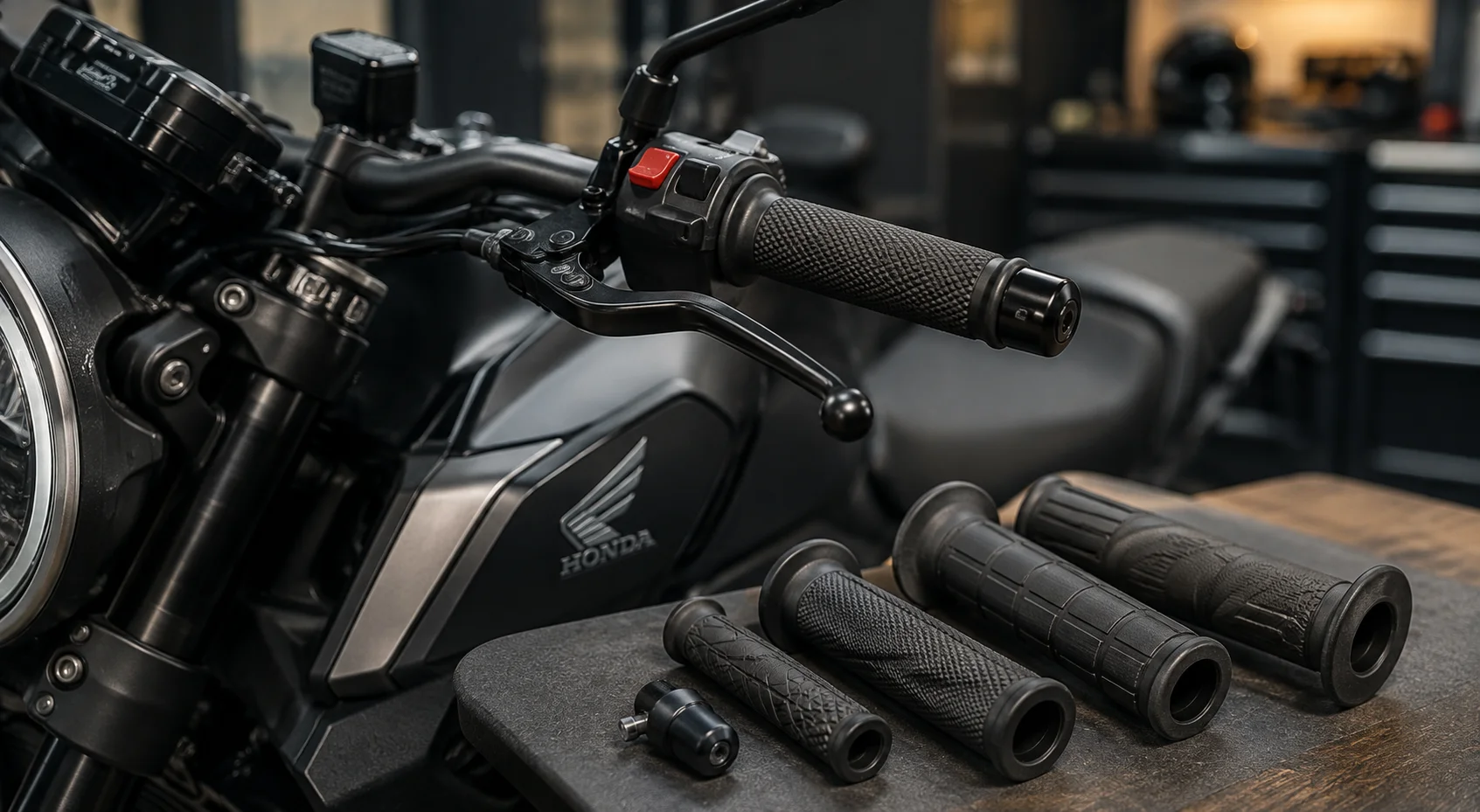
If you find your hands going numb after an hour, do not assume you simply need to “get used to it.” Grip diameter and compound both affect hand fatigue directly. Thicker, softer grips absorb more vibration and reduce pressure points.
This is a low-cost, easy upgrade that many riders skip simply because they do not think about it. Before investing in expensive suspension work or seat modifications, try addressing your grips first. It often solves more of the problem than people expect.
Brake Maintenance: What CB1000R Owners Need to Watch
The CB1000R comes with strong brakes suited to its performance character. That performance comes with maintenance responsibility. Aggressive braking generates more heat, and heat accelerates wear on pads and fluid alike.
Check your brake fluid color periodically. Fresh fluid looks clear to light amber. Dark, cloudy fluid means moisture contamination, which reduces braking performance exactly when you need it most. Replace fluid according to Honda’s recommended interval, not just when it looks obviously dirty.
Pad wear matters too. Many riders wait until they hear grinding before checking pads, but that means metal-on-metal contact already happened, which is expensive and dangerous. Instead, visually inspect pad thickness through the caliper every few thousand miles. Catching thin pads early costs far less than replacing scored rotors later.
Exhaust Options: Sound, Weight, and Real Performance Gains
Plenty of CB1000R owners consider an aftermarket exhaust early in ownership. The bike’s engine note already sounds aggressive, but many riders want more. Beyond sound, a quality aftermarket system can shed real weight since stock exhausts prioritize emissions compliance and noise regulations over minimal mass.
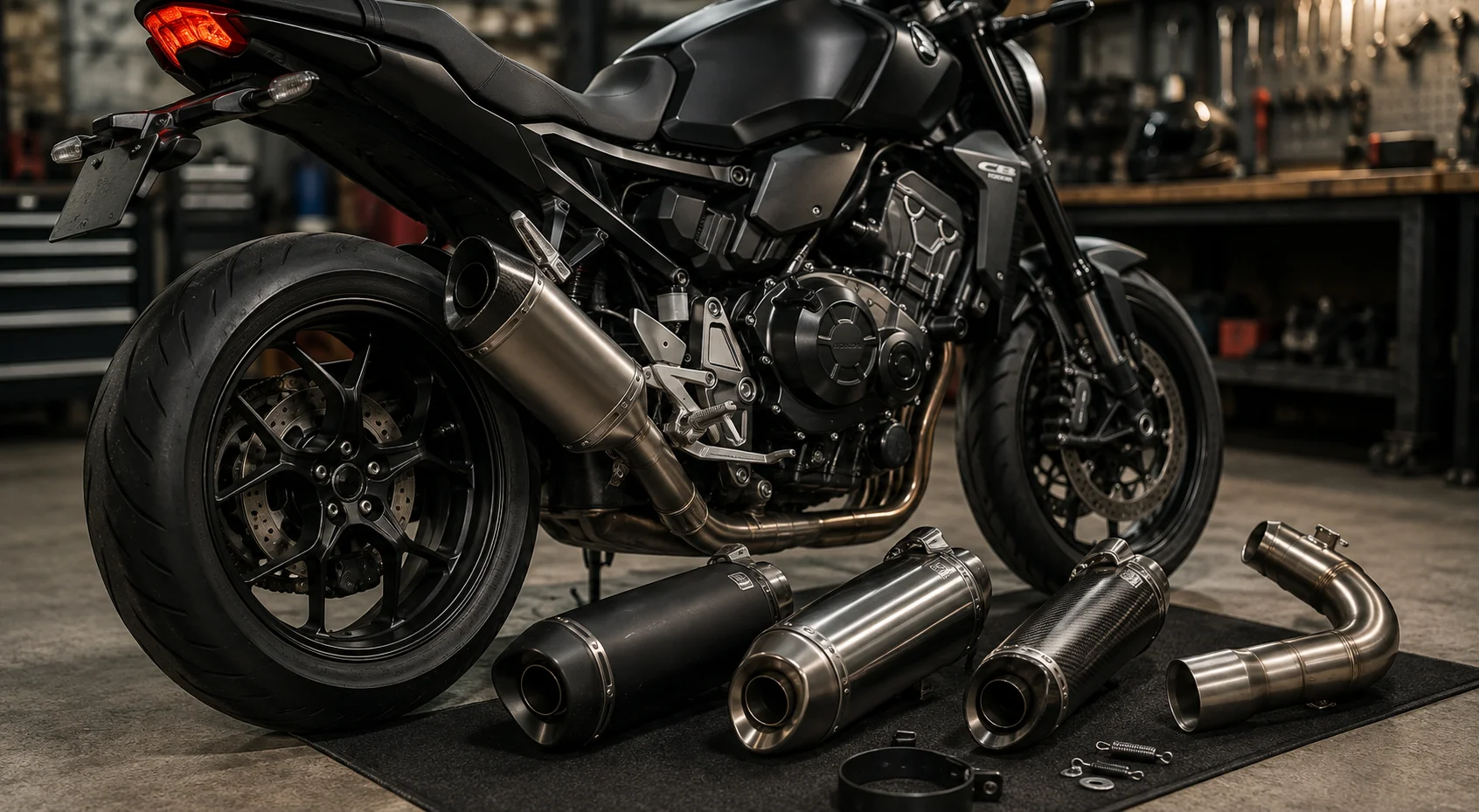
Weight reduction on a naked bike matters more than people assume. Less weight at the rear wheel improves handling feel, especially during quick direction changes. Combine that with a modest throttle response improvement, and the upgrade earns its cost for many riders.
Before installing anything, check whether your specific model year requires a fuel remap alongside the exhaust change. Some configurations run leaner after an exhaust swap, and that lean condition can cause long-term engine stress if left uncorrected. A quick consultation with your installer prevents this problem entirely.
Tire Choice: Matching Rubber to How You Actually Ride
Stock tires on the CB1000R perform well for general riding, but they represent a compromise. Honda has to satisfy commuters, weekend canyon riders, and everyone in between with one tire choice. Your riding style might benefit from something more specialized.
If you ride mostly in dry conditions and push the bike hard through corners, a sportier tire compound rewards you with better grip and feedback. If you commute daily through varied weather, a tire built for all-condition performance and longevity serves you better than an ultra-sticky sport compound that wears out fast.
Tire pressure matters just as much as tire choice. Check pressure weekly, not monthly. Temperature swings and slow leaks both affect pressure more than riders realize, and incorrect pressure changes how the bike handles more dramatically than most people expect.
Battery Care: Preventing the Most Common Winter Complaint
Every fall, CB1000R owners flood forums with the same question. Why won’t my bike start after sitting for a few weeks? The answer almost always traces back to battery care, or the lack of it.
Modern electronics draw small amounts of power even when the bike sits off. Over weeks of inactivity, this drain adds up. Combine that with natural battery self-discharge, and you get a bike that cranks weakly or not at all when you finally try to start it.
A battery tender solves this problem completely. Plug it in whenever the bike sits for more than a week or two, and you will never face a dead battery surprise. This costs far less than emergency roadside assistance or a rushed battery replacement.
Fork Seal Care: A Quiet Problem Until It Isn’t
Fork seals rarely announce themselves loudly. You might notice a thin film of oil on the fork legs during a routine wash, or you might not notice anything until the ride starts feeling harsh and unpredictable.
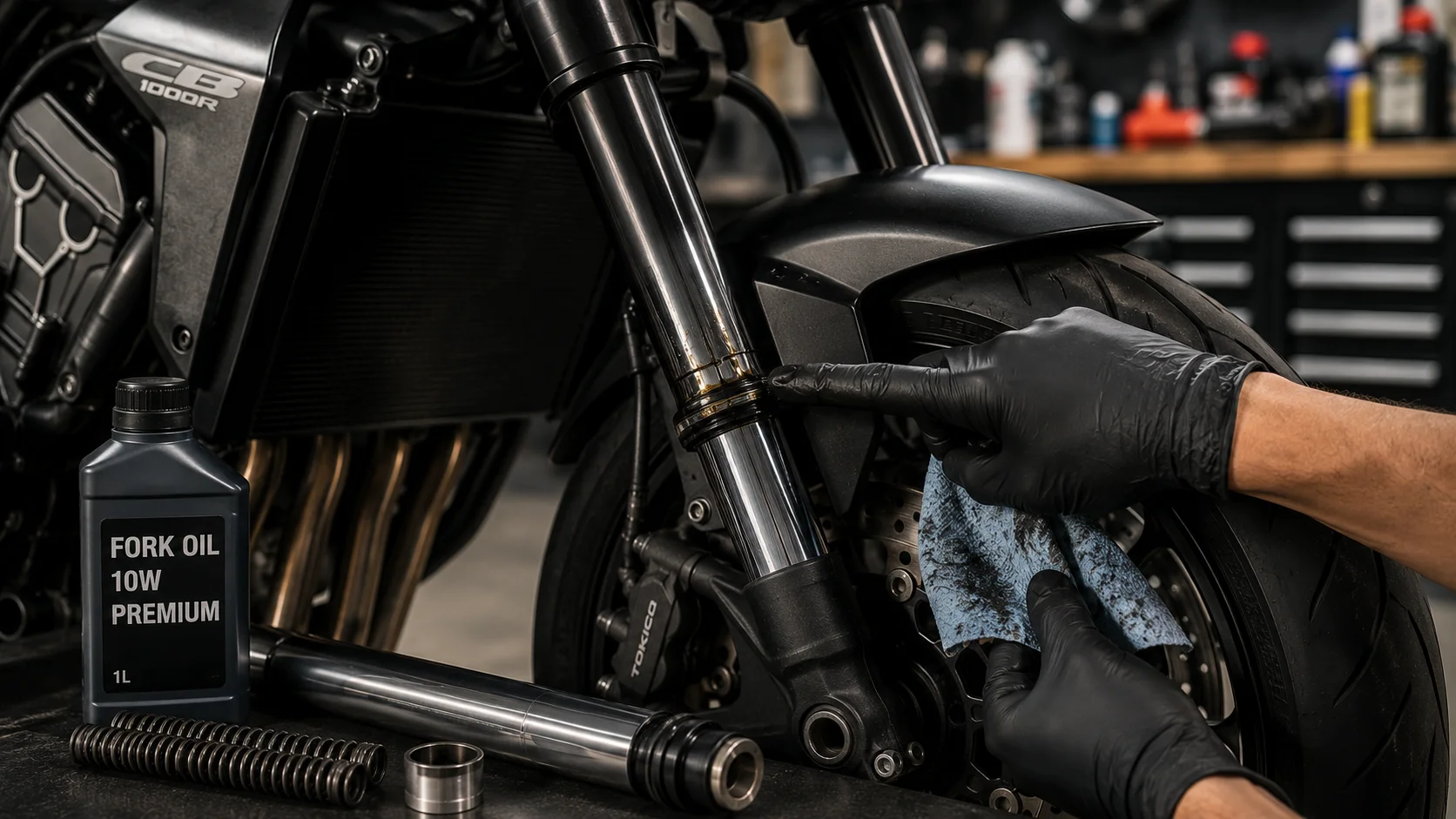
Once seals start leaking, fork oil escapes gradually. As oil volume drops, damping performance suffers. Your front end starts feeling vague through corners, and bumps transmit more harshly than before. This change happens slowly enough that many riders adjust without realizing anything changed.
Inspect your fork legs during every wash. Run a clean cloth along each leg and check for oil residue. Catching a leak early keeps the repair simple and affordable. Ignoring it lets the problem compound, potentially damaging the fork internals beyond simple seal replacement.
Building a Maintenance Routine That Actually Works
All the advice above means little without consistency. Riders who stay ahead of maintenance rarely face expensive surprises. Riders who wait for problems to announce themselves usually pay more, both in money and downtime.
Build a simple routine. Check chain slack and lubrication every few hundred miles. Inspect brake pads and fluid monthly. Look over fork legs and engine covers during every wash. Test your battery before long dormant periods. None of these tasks take much time individually, but together they prevent most of the common CB1000R headaches covered in this guide.
Aliwheels Honda CB1000R Motorcycle Parts Collection
The CB1000R rewards owners who understand its specific needs. It is not simply another naked bike, and treating it like one leads to preventable problems. Its punchy engine wears chains faster than a commuter bike would. Its low stance makes stator covers vulnerable during tip-overs. Its electronics package needs occasional attention to connectors and grounds.
None of this should discourage you from owning or enjoying this bike. Every motorcycle has its own maintenance personality, and once you learn the CB1000R’s, staying ahead of problems becomes second nature. Start with the Honda CB1000R chain and stator cover parts covered here, since those address the two most common real-world issues owners report. Then build outward from there based on how you actually ride.
Browse our full range of Honda motorcycle parts to find fitment-verified components for your exact CB1000R model year. Always confirm your year range before ordering, since Honda made meaningful updates to this platform across its production run, and getting the right part the first time saves you both money and time.