


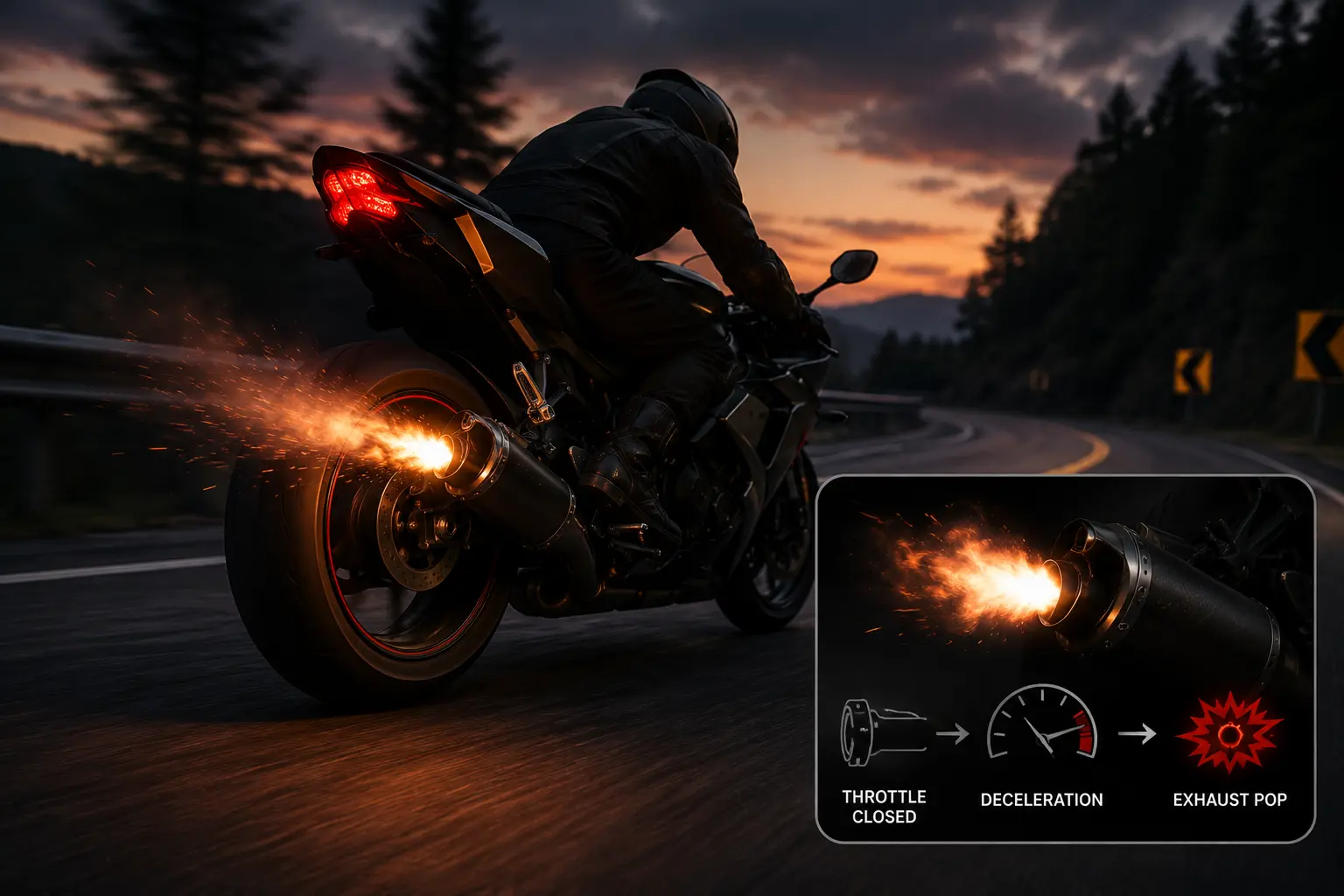

You roll off the throttle coming into a corner. Then you hear it. Pop, pop, pop, crackle. Some riders love the sound. Others are convinced something is broken. The truth? It depends entirely on why it is happening. Motorcycle exhaust popping on deceleration is one of the most misunderstood issues in motorcycling. Let’s cut through the noise and give you clear answers.
Is Motorcycle Exhaust Popping on Deceleration Harmful?
Sometimes, no. A light pop or crackle on deceleration can be completely normal, especially on bikes with aftermarket exhausts. However, excessive or sharp popping signals a real problem that will cause long-term damage if ignored.
The key difference: a soft rhythmic crackle is usually harmless lean-condition tuning. A loud explosive bang on deceleration is a backfire, and that is a different story entirely. Backfires can physically damage your exhaust valves, headers, and even crack exhaust pipes over time.
Riders on forums consistently separate the two. Light decel pop is tolerable, but heavy repeated banging means something is genuinely wrong.
What Causes Motorcycle Exhaust Popping on Deceleration?
1. The Engine Is Running Lean
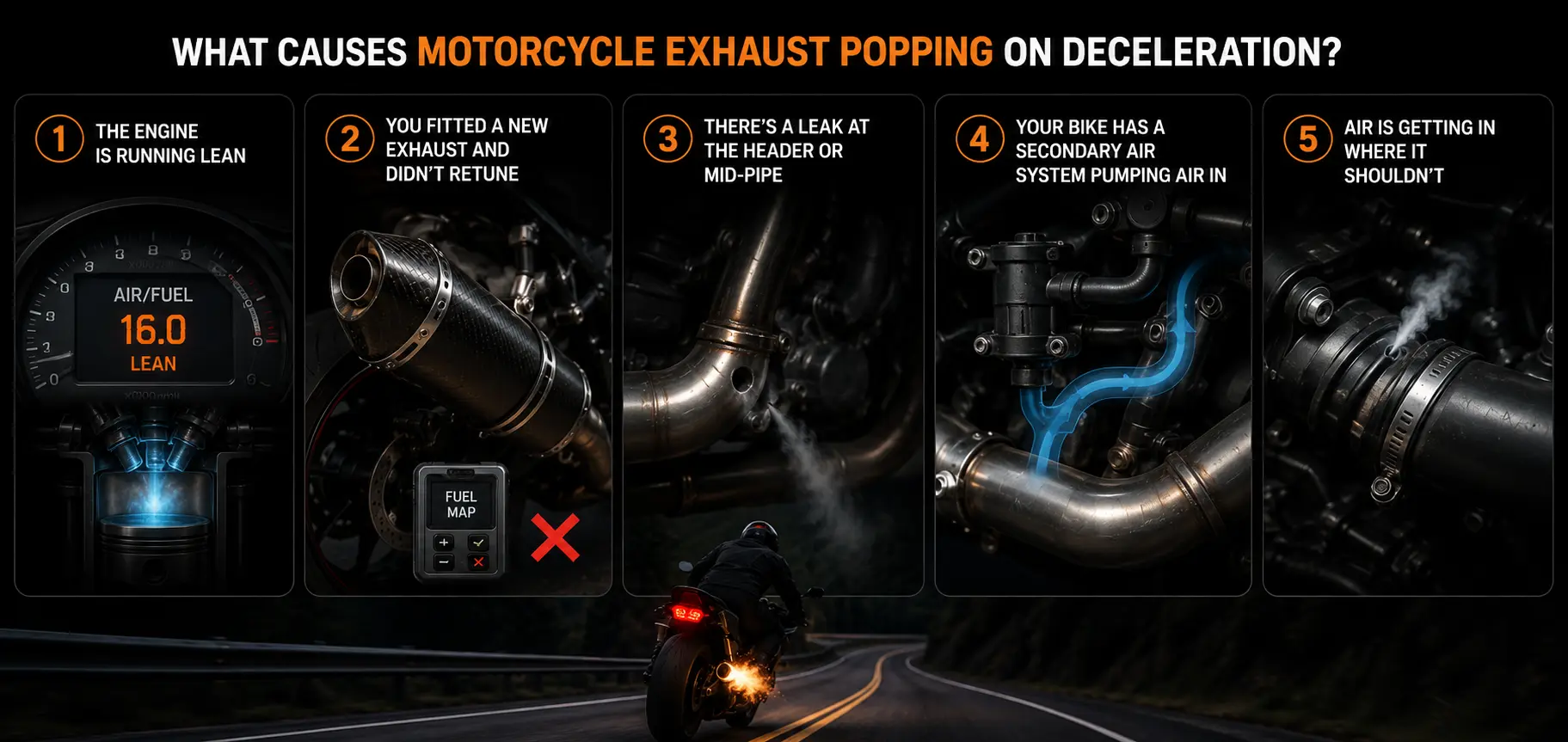
This is the most common cause, according to WulfMoto’s technical breakdown on deceleration popping. When you close the throttle, the engine momentarily pulls in more air than fuel. That lean condition means unburnt fuel exits into the exhaust.
Your exhaust headers are extremely hot. When that unburnt fuel hits them, it ignites. That is your pop.
Most stock ECUs are tuned lean from the factory to pass emissions standards. Install a free-flowing exhaust, and the problem often gets worse because you have opened up airflow without retuning the fuel map.
2. You Fitted a New Exhaust and Didn’t Retune
This catches riders off guard all the time. You install a new slip-on or full exhaust system. Everything sounds amazing at first. Then the popping starts.
The reason is simple. Aftermarket exhausts change the exhaust flow characteristics. Without an updated fuel map or ECU flash, your fueling is now mismatched to the new system. The result is a lean condition, which causes decel pop.
According to MyBikeForums.com members who ran into this exact issue after installing aftermarket pipes, the fix almost always involves fuel management, whether through a fuel controller, a Power Commander, or a full ECU remap.
3. There’s a Leak at the Header or Mid-Pipe
A small gap at the header gasket or mid-pipe joint lets outside air sneak into the exhaust stream. That extra oxygen is enough to ignite leftover fuel inside the pipe. The fix here is mechanical, not tuning-related.
Bareass Choppers’ motorcycle tech pages recommend a simple smoke test to find exhaust leaks. With the bike running, pass a lit incense stick or match near the header flanges and pipe joints. If the smoke gets disturbed, you have found your leak.
4. Your Bike Has a Secondary Air System Pumping Air In
Many modern fuel-injected bikes pump fresh air into the exhaust on deceleration. It is an emissions compliance feature. But that extra oxygen burns leftover fuel and causes popping.
Removing or blocking the secondary air system, sometimes called an SAI block-off, is a popular and effective fix on many naked bikes and sportbikes. Check your model-specific forum to see if this applies to your bike.
5. Air Is Getting In Where It Shouldn’t
Air leaking into the intake side of the engine has the same effect as a lean fuel map. It throws off the air-to-fuel ratio across all throttle positions, including closed-throttle deceleration.
Common culprits include cracked intake boots, loose carburettor connections, and deteriorated intake manifold gaskets, especially on older bikes.
How to Diagnose Deceleration Popping on Your Motorcycle? 5 Simple Steps

Start with the simplest checks first. This saves time and money.
Step 1: Check for exhaust leaks at the header flanges and pipe joints. Look for black soot marks around joints, which almost always indicate a leak.
Step 2: Inspect intake boots and carburettor connections for cracks or looseness. Spray a small amount of carb cleaner near connections while the bike idles. Any RPM change indicates a vacuum leak.
Step 3: Check whether the secondary air injection system is active on your bike. If so, consider a block-off kit.
Step 4: If the popping started after installing an aftermarket exhaust, the issue is almost certainly fueling. You need a fuel management solution.
Step 5: If you run a carburettor, a slightly richer idle mixture screw setting often reduces or eliminates light decel pop. Start at 1.5 turns out and adjust incrementally.
Fix Motorcycle Exhaust Popping on Deceleration Issue
For fueling issues, a fuel management controller or ECU remap is the proper solution. For exhaust leaks, new header gaskets fix it cleanly and cheaply. For vacuum leaks, fresh intake boots or carb seals solve the problem. For secondary air injection, a block-off plate does the job.
Upgrading your exhaust system properly from the start avoids most of these problems. Browse Aliwheels‘ full range of motorcycle exhaust systems for options that fit your exact make and model. And if fueling is your issue, the Aliwheels Air and Fuel category covers fuel management and air cleaner solutions in one place.
When Motorcycle Backfires on Deceleration, It Means Stop Riding
If the popping is occasional and light, you can ride while you diagnose. However, stop riding if you are hearing loud bangs, seeing backfires through the intake, noticing a loss of power, or smelling fuel strongly near the exhaust. Those are signs of a serious lean condition that can melt pistons or exhaust valves.
Take it seriously before it becomes expensive.
Conclusion
Motorcycle exhaust popping on deceleration comes down to one root cause: unburnt fuel igniting in a hot exhaust. The trigger is almost always a lean condition from factory ECU tuning, an aftermarket exhaust without retuning, an exhaust leak, secondary air injection, or a vacuum leak. Diagnose it methodically. Fix the root cause. Do not just turn up the idle and call it done.