





Your clutch is slipping. It takes longer to fully engage. Or maybe the feel is just off.
You know something needs fixing. But clutch replacement sounds expensive and complicated. So you keep riding and hoping it improves on its own.
Here is the truth. Clutch problems do not fix themselves. They get worse. And the longer you wait, the more damage you do to the rest of your drivetrain.
But the good news is that Aliwheels quality motorcycle clutch plates and kits are more affordable than many riders think. And if you understand what you are doing, replacement is very doable.
Let’s talk about affordable clutch solutions and how to get your bike’s clutch back to working perfectly.
Motorcycle Clutch in Action
Before you can understand clutch problems, you need to understand how the clutch works.
Your clutch is basically a stack of friction plates and steel plates pressed together. When you pull the clutch lever, hydraulic pressure releases that pressure. The friction plates separate from the steel plates.
When the pressure releases and the plates separate, engine power no longer connects to the transmission. You can shift gears without grinding.
When you release the clutch lever, the pressure reapplies, and the plates press together again. They create friction that transfers engine power to the transmission.
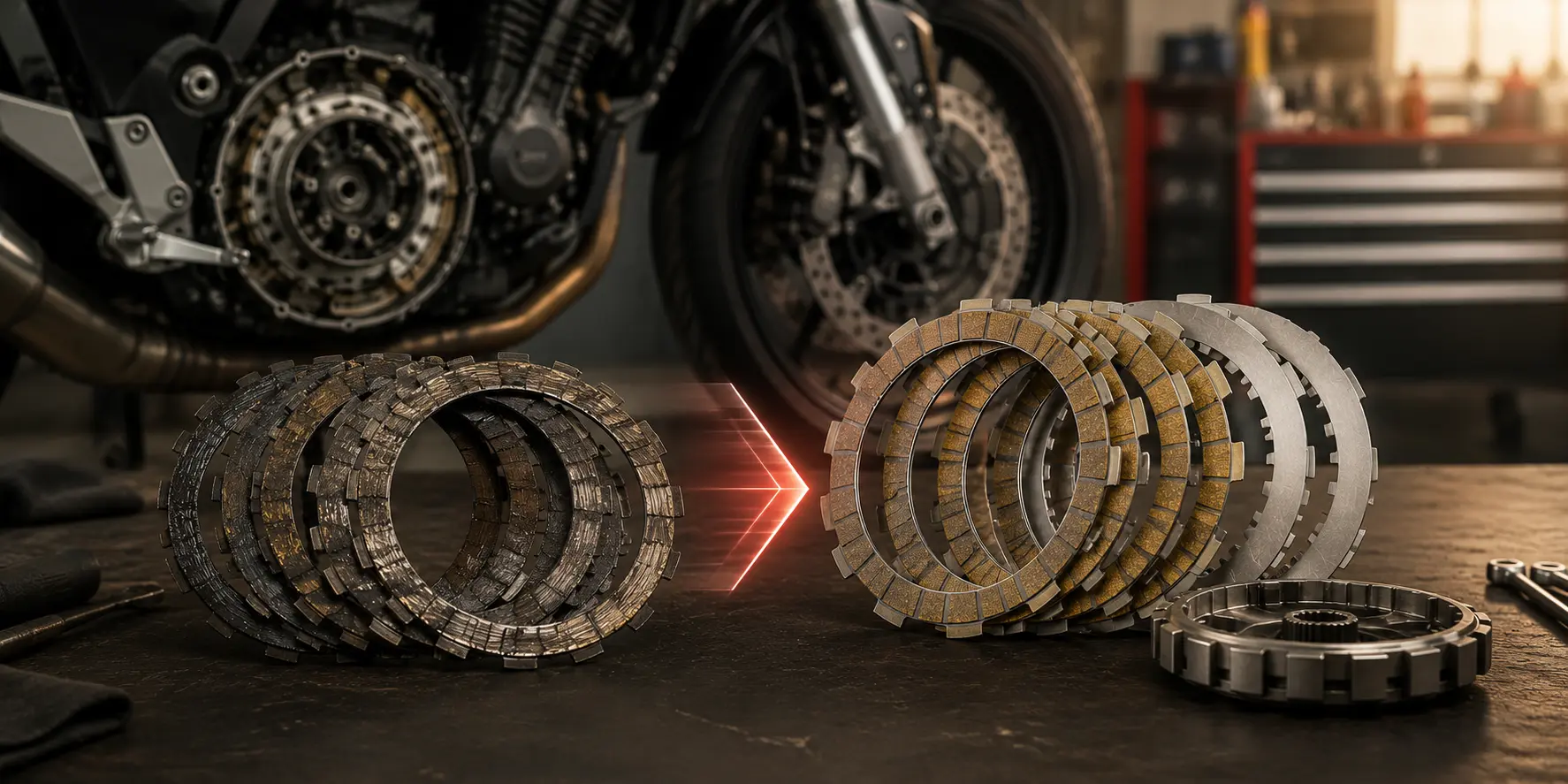
The friction from all those plates pressing together is what actually transfers power. Over time, that friction material wears down. The plates become thinner. Eventually, they cannot create enough friction anymore.
That is when you need replacement motorcycle clutch plates.
How to Know if Your Clutch Plates Need Replacement
Your clutch slips under acceleration. You open the throttle, and the engine RPM climbs, but power does not transfer efficiently. The bike accelerates slowly despite the engine revving. That is slipping.
Slipping usually means you have days or weeks left before the clutch becomes unusable.
It takes excessive lever pressure to fully engage. The clutch used to feel light and responsive. Now it feels heavy and requires a lot of hand pressure to fully engage the gears.
The clutch takes longer to engage than it used to. Pulling the lever has a much longer zone before the clutch actually grabs the transmission. The bite point keeps moving.
You smell burning when using the clutch heavily. A burnt smell from the clutch area means friction material is burning and wearing away. That smell means replacement is imminent.
Real example: A rider reported a burning smell on a Sunday ride. By Wednesday, the clutch was slipping too much to ride safely. The smell was an early warning sign.
The clutch feel is inconsistent or unpredictable. Sometimes it engages smoothly. Other times it grabs suddenly. That inconsistency points to worn plates with uneven friction surfaces.
You cannot downshift smoothly without rev-matching. A worn clutch does not fully separate the engine from the transmission. Downshifting without rev-matching becomes rough or grinds.
Wet Clutch vs Dry Clutch
Most street motorcycles use wet clutches. The friction and steel plates operate in engine oil. The oil cools the clutch and reduces wear.
Some performance and racing bikes use dry clutches. These operate without oil surrounding them. They can handle extreme heat and power but require more maintenance.
Know which type your bike has before ordering replacement plates. Wet clutch plates are different from dry clutch plates. Installing the wrong type creates problems.
Your service manual will tell you which type your bike has. If you are not sure, ask your parts supplier before ordering.
OEM vs Quality Aftermarket Clutch Plates
Here is where affordable options come in.
OEM clutch plates are manufactured to the exact specification your bike needs. They work perfectly and are guaranteed compatible. They also cost the most.
Quality aftermarket clutch plates from reputable manufacturers meet or exceed OEM specifications. They cost significantly less. They also work very well.
Budget aftermarket clutch plates are cheap. They might work. They might also fail prematurely or not provide the friction characteristics your bike expects.
Cost comparison: OEM clutch kit runs $250 to $400. A quality aftermarket kit runs $100 to $200. Budget kits run $50 to $80.
Real test: A quality aftermarket kit on an SV650 lasted 35,000 miles. A budget kit on the same bike lasted 8,000 miles. The cost difference was about $50. Quality paid for itself within 2,000 miles.
For affordable replacement, buy quality aftermarket plates from a known brand. Not the cheapest option you find. A middle-ground option between OEM and budget brands.
Choosing the Right Clutch Kit for Your Bike
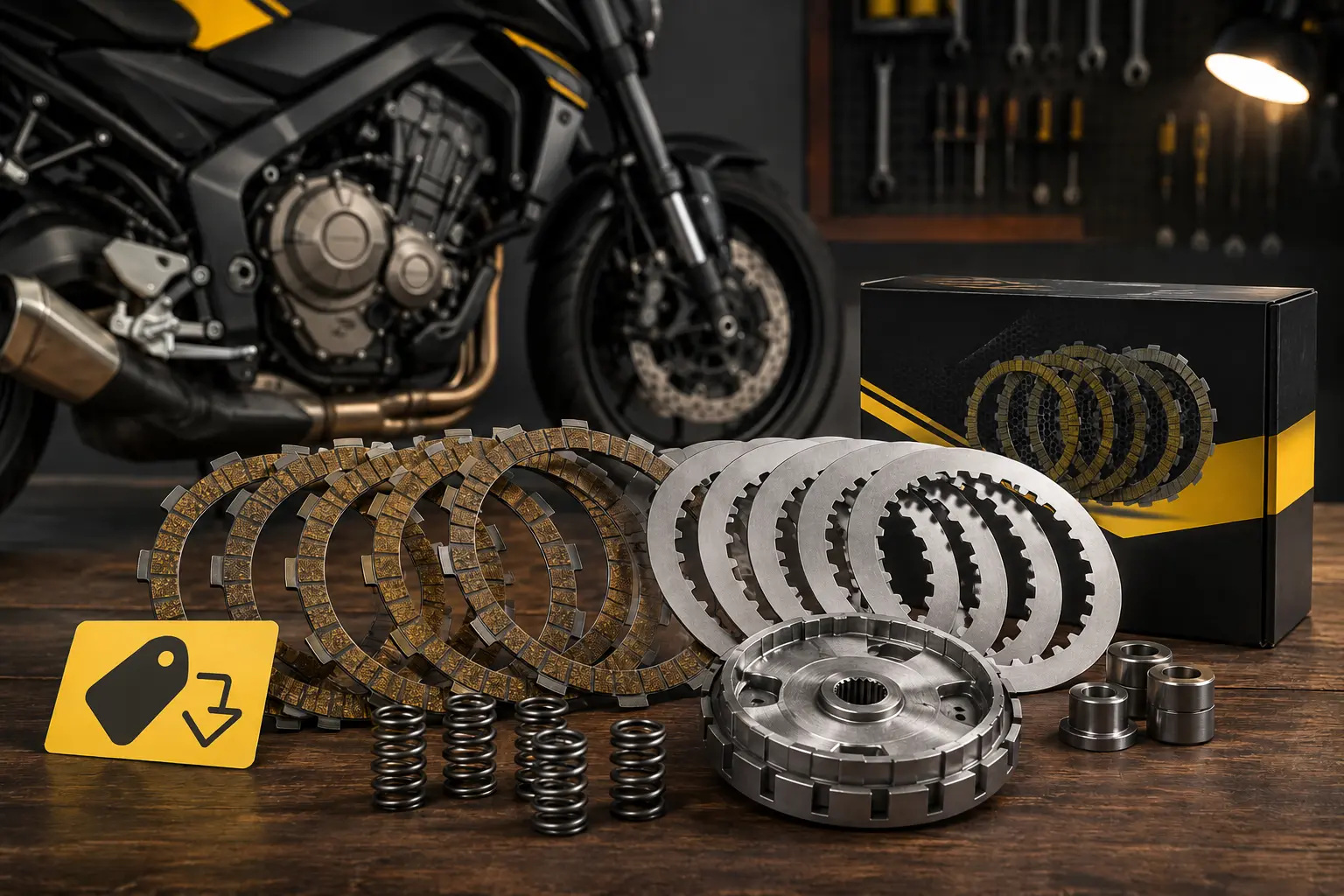
A complete clutch replacement kit includes new friction plates, steel plates, gaskets, and springs.
Kits make sense if your clutch failure is severe. You are replacing everything at once so you do not have clutch problems again for years.
If your clutch is just starting to slip, sometimes just the friction plates need replacement. Steel plates usually last much longer. Replacing only worn friction plates costs less than a full kit.
Cost savings: Friction plates alone run $60 to $120. A full kit runs $100 to $200. If you only need friction plates, the savings are real.
Your bike’s service manual specifies what your bike needs. It tells you whether a full kit is required or whether friction plate replacement alone is sufficient.
Installation Complexity Cost
Here is where the affordability calculation changes.
If you are mechanically inclined and have basic tools, clutch replacement is doable at home. It requires removing the engine or transmission depending on your bike. It also requires specific alignment tools.
For most riders, professional installation is the practical choice. A mechanic can do it in a few hours. The labor cost is worth not risking something going wrong.
Labor cost estimate: Independent mechanics typically charge $200 to $400 for clutch replacement labor. Dealerships charge $300 to $600.
So when calculating total cost, include both the parts and the labor. An affordable clutch plate kit plus reasonable labor is still much less expensive than waiting until the clutch fails and you damage the transmission.
Total replacement cost: quality aftermarket kit ($100 to $200) plus labor ($200 to $400) equals $300 to $600 total. Much less than transmission damage repair.
Clutch Wear Varies With Riding Style
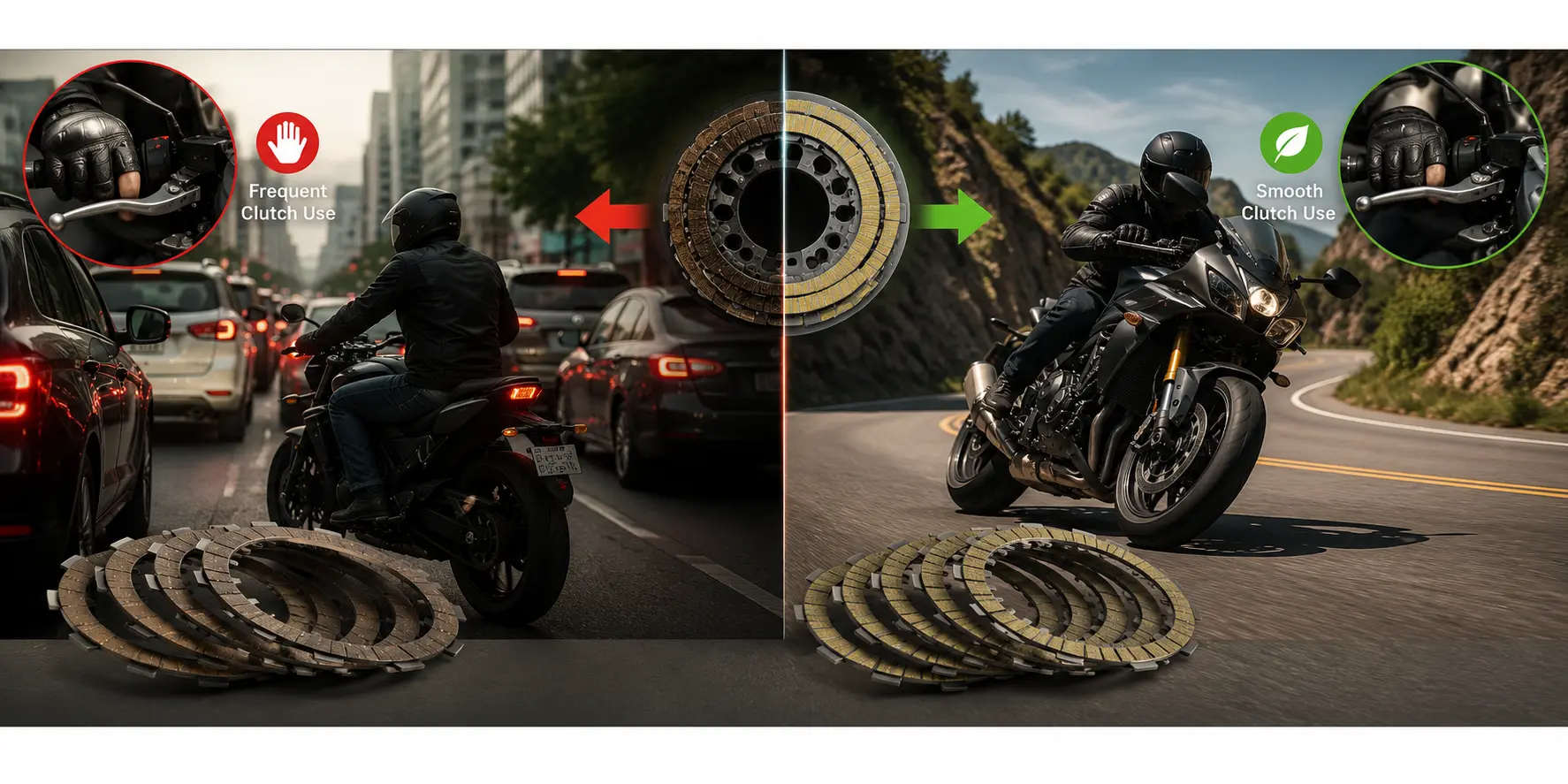
City riding wears out clutches faster than highway riding. The constant low-speed maneuvering, lane filtering, and parking lot creeping all use the clutch hard.
Aggressive riding wears out clutches faster than smooth riding. Rapid clutch engagement or riding with a partially engaged clutch accelerates wear.
Sport bike riding wears out clutches faster than cruiser riding because sport bikes use the clutch more aggressively in performance riding.
Wear timeline comparison: Highway commute clutch lasts 40,000 to 60,000 miles. City commute clutch lasts 20,000 to 35,000 miles. Aggressive sport bike riding, 10,000 to 20,000 miles.
Understanding your riding style helps you know whether your clutch failure was premature or normal wear. If your bike is heavily used in city riding, clutch wear every 20,000 to 40,000 miles is normal. That is not a defect.
How to Extend Your Motorcycle Clutch Life?
Smooth clutch operation extends life dramatically.
Engage the clutch fully and quickly. Do not slip the clutch. Do not ride with the clutch partially engaged at any point.
Avoid rapid acceleration from a standstill. Rolling acceleration is easier on the clutch than a hard launch.
In city riding, avoid excessive creeping in traffic. Keep the bike moving smoothly. That reduces clutch wear significantly.
Real example: Two riders on identical 2019 Kawasaki Ninjas. One rode smoothly and changed gears normally. The clutch lasted 38,000 miles. The other rider slipped the clutch and launched hard frequently. The clutch lasted 12,000 miles. Same bike, vastly different wear.
On a carbureted bike, ensure the engine is properly tuned. A rich or lean running condition increases clutch temperature and accelerates wear.
Proper maintenance of your engine oil also protects your clutch. Old, dirty oil reduces cooling around the clutch. Fresh oil keeps it cooler.
Conclusion
A worn clutch is a fixable problem. Quality replacement motorcycle clutch plates and kits are affordable. Professional installation is reasonably priced.
Do not ride with a worn clutch hoping it improves. It will not. Replace it and get back to riding a bike that works the way it is supposed to.
FAQ Section
Q: How much does a motorcycle clutch replacement actually cost?
A: An affordable quality clutch kit costs $100 to $200. Labor for professional installation typically costs $200 to $400 depending on your bike. Budget $300 to $600 total. Much less than transmission damage.
Q: Can I replace just the friction plates, or do I need a full kit?
A: Depends on the condition of your steel plates and springs. Your service manual specifies what needs replacing. Sometimes just friction plates is enough, saving $50 to $100.
Q: How do I know if my clutch is worn or if there is a different problem?
A: Slipping under acceleration is the most obvious sign. A burning smell and an inconsistent feel also indicate wear. A mechanic can diagnose definitively in 15 minutes.
Q: Is it cheaper to buy budget clutch plates than quality ones?
A: Cheaper upfront, yes. But budget plates often fail after 8,000 to 12,000 miles. Quality plates last 30,000+ miles. Quality pays for itself quickly.
Q: How often do motorcycle clutches need replacement on average?
A: Depends on riding style. City riders see wear every 20,000 to 40,000 miles. Highway riders might go 50,000 to 100,000 miles. Heavy performance riding wears them out in 10,000 to 20,000 miles.