




You need new brake pads. Your chain is worn. The grips feel dead. So you search for “motorcycle parts near me.” And suddenly you are looking at fifty different online motorcycle parts stores. Some look professional. Some look sketchy. Prices vary wildly. You have no idea who to trust.
Here is the truth. Where you buy your motorcycle parts matters just as much as which parts you buy. A quality supplier means correct parts, accurate specifications, and parts that actually work.
A bad supplier results in incorrect fitment, counterfeit components, or parts that fail after a few months. The cost difference is not worth the risk.
Let’s talk about how to find a good motorcycle parts online store and why it matters.
Riders’ Safety Depends on Quality Parts
Think about what happens when you get the wrong part. A brake pad that does not fit your caliper correctly leaves gaps. Your braking performance suffers, or your pad falls out entirely.
A clutch plate with incorrect friction characteristics causes slipping. You cannot get clean engagement. The bike becomes unreliable.
A chain with the incorrect pitch does not fit your sprockets. It wears out in hundreds of kilometers instead of thousands.
A customer ordered brake pads for a 2015 Kawasaki Ninja 300 from a seller who listed them as “universal fit.” The pads were slightly thinner than OEM. They moved excessively in the caliper. During hard braking, the pad came loose. That is a serious safety problem.
These are not minor issues. These are parts that affect safety and reliability. Saving five dollars on a part from an unknown supplier is not a win. It is a risk.
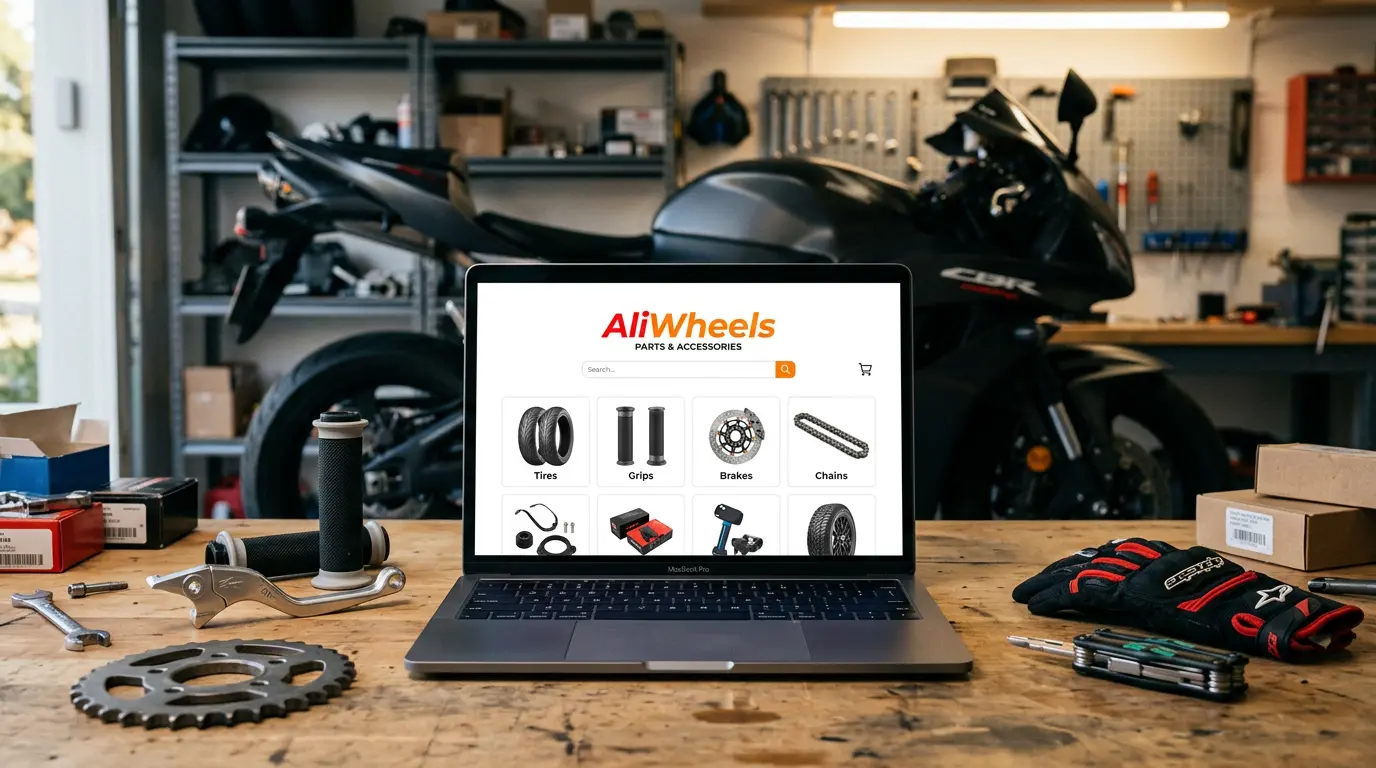
Aliwheels, the leading motorcycle parts store in the US, carries genuine or quality-equivalent components. They verify fitment for your specific bike. They know which parts are compatible and which are not.
That knowledge and reliability are worth paying for.
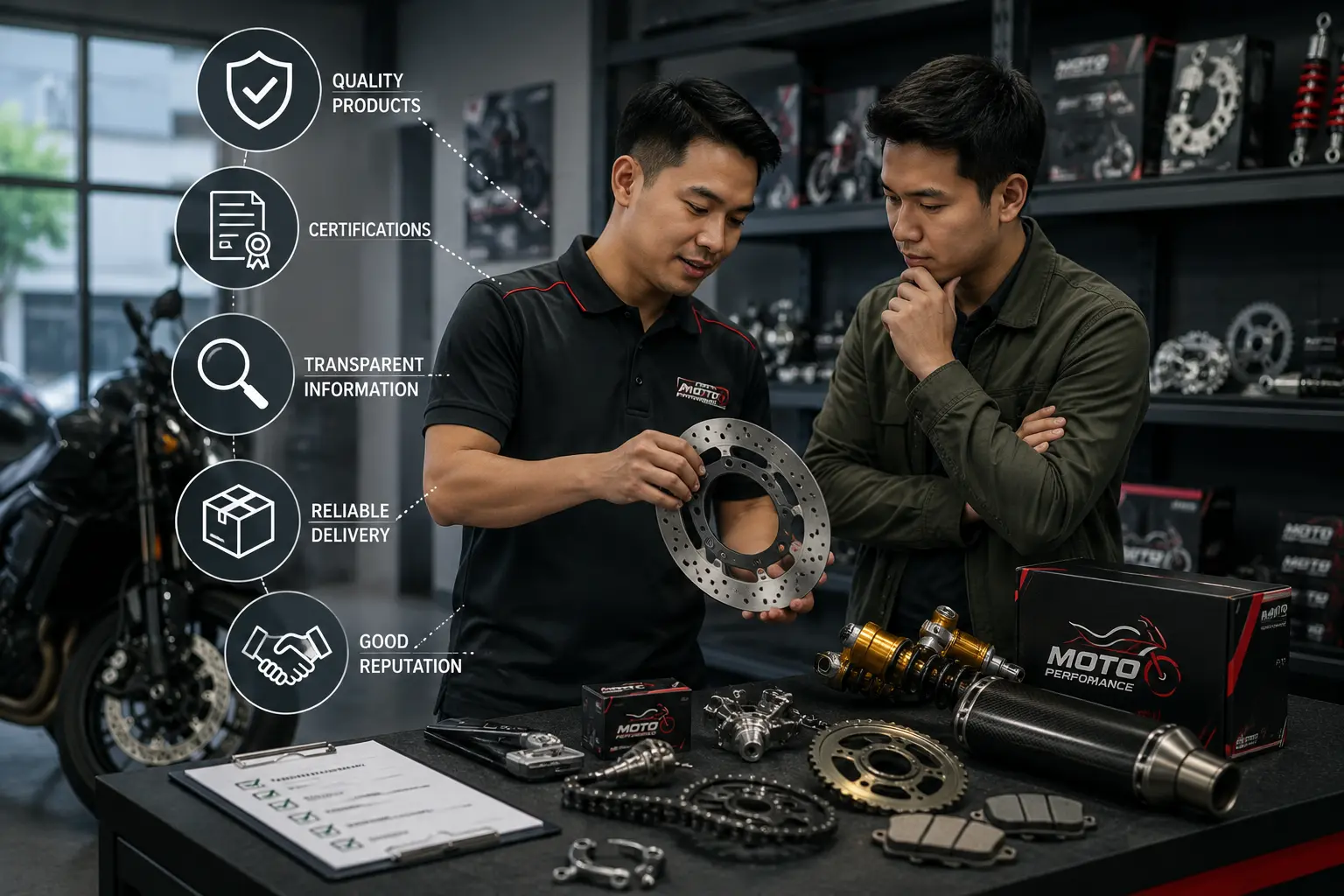
There are ways to Identify a Quality Motorcycle Parts Supplier
Check their experience and history. How long have they been selling motorcycle parts? A store that has been operating for years has survived by treating customers right.
Industry standard: Most quality online parts retailers have been operating for at least 5 to 10 years. New sellers might be great but lack proven track record.
Look for specific model fitment information. A good store lists which years and models a part fits. They do not sell generic “fits most bikes” components. They know the details.
Common problem we see: Budget sellers list parts as “fits all 1000cc sport bikes” when fitment actually differs by 2 to 3mm between model years.
Read customer reviews carefully. Not just the star rating. Read what actual customers say. Did parts arrive correctly? Did they fit as promised? Were there issues?
Red flags: Sellers with no reviews or reviews that sound written by the seller themselves.
Check their return policy. If a part does not fit or work correctly, can you return it? A store confident in their parts offers easy returns. A store that does not is a red flag.
Verify their contact information. A real business has a phone number, email, and physical address. They respond to questions. They are available if something goes wrong.
Look for accurate product descriptions. Quality suppliers provide exact specifications, fitment information, and compatibility details. They answer questions in advance.
Don’t do this When Buying Motorcycle Parts Online
The biggest mistake is buying without confirming fitment first. You assume a part will fit. You order it. It does not fit your bike. Then you have to return it, wait for a refund, and start over. Days wasted. Frustration guaranteed.
Always confirm fitment before ordering. Provide your exact year, model, and engine size. If the store cannot confirm it fits your bike, do not buy from them.
A rider needed replacement fairings for a 2018 Yamaha YZF-R6. Similar-looking fairings exist for the 2015-2017 R6 and 2019-2021 R6. They look almost identical, but fitment differs. Ordering generic “R6 fairings” without year confirmation guarantees problems.
Another mistake is choosing price over quality. The cheapest part is often the cheapest for a reason. It is inferior material, poor manufacturing, or incorrect specifications.
Compare prices but also compare what you are getting. A brake pad that is five dollars cheaper but wears twice as fast is not a deal.
Also, do not assume all online stores carry the same quality levels. Some specialize in budget alternatives. While some carry only OEM parts. Some carry both. Know what you are getting.
Look for Product Pages in an Online Store
A good product page tells you everything you need to know before ordering.
Fitment information is clear and specific. It lists exact years, models, and sometimes even trim levels or engine types. Vague fitment information is a warning sign.
Specifications are listed completely. For a brake pad, this means friction coefficient, thickness, and compatibility. For a chain, this means pitch, link count, and whether it is sealed.
Photos show the actual product and packaging. You should see what you are buying from multiple angles. Generic stock photos are not helpful.
Real customer reviews are visible. Actual buyers sharing their experience is more valuable than marketing claims. Both positive and negative reviews matter.
Contact options are obvious. You should see a phone number, email, or chat option prominently displayed. If you have to dig for contact info, that is a bad sign.
Return and warranty information is transparent. No hidden policies. No fine print saying returns are not allowed. Clear terms upfront.
Here’s how Cheap Parts Cost You
Here is something that costs you way more than the price difference. Cheap parts that fail.
A cheap chain that breaks on a ride home from work. You are stranded. You need emergency roadside service or a tow. That costs way more than the chain.
Realistic cost breakdown: A quality motorcycle chain costs $80-120. A cheap chain costs $40-60. If the cheap chain breaks and requires towing, the tow alone is $150-300. Plus you miss work or an important event.
A cheap brake pad that wears unevenly and damages your rotor. Now you need new pads and a new rotor. Your repair cost tripled.
A clutch plate set that slips from day one. You spend hours diagnosing the problem. Somehow, you eventually replace it with quality parts anyway. You end up wasting time, money, and left frustrated.
These scenarios are not hypothetical. They happen to riders regularly. Every single day.
Online Motorcycle Parts Store vs. Local Shop vs Dealership
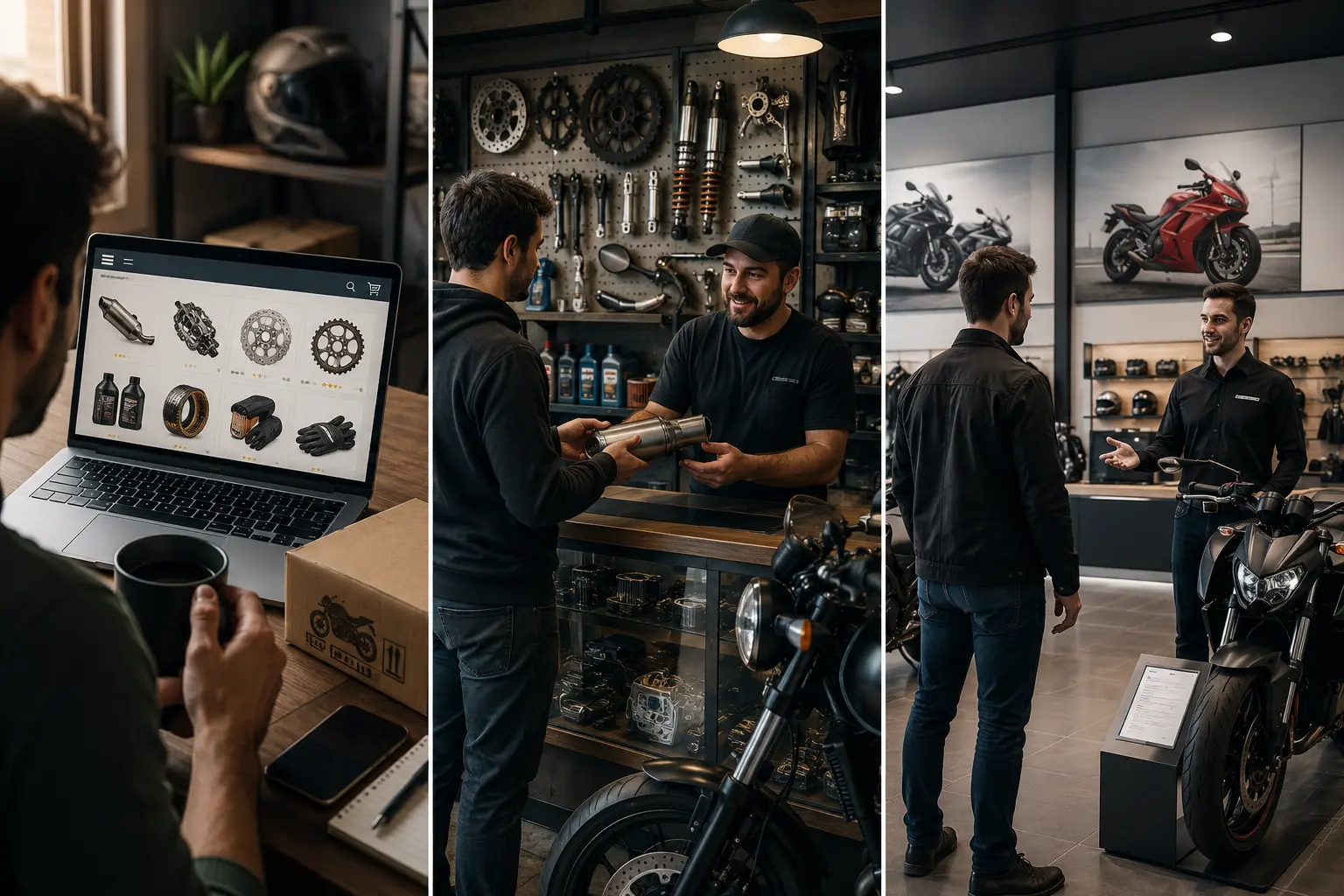
Each has advantages. Online stores usually have better pricing and a broader selection. Local shops know your bike personally and provide face-to-face service. Dealerships have OEM parts and genuine expertise for your specific bike.
The best approach often combines them. Buy common consumables online from a trusted store. Get technical advice from your local shop. Use the dealership for warranty items and complex work.
Do not limit yourself to one source. But be picky about which online stores you use.
Conclusion
Your motorcycle deserves quality parts from a reliable supplier. Saving money by buying from unknown or risky sources is penny-wise and pound-foolish.
Find a good motorcycle parts online store. Verify fitment for your bike. Build a relationship. Then order with confidence knowing you are getting the right parts.
FAQ Section
Q: How do I know if an online motorcycle parts store is legitimate?
A: Check their history (5+ years is good), read customer reviews, verify contact information, and confirm fitment details. Legitimate stores provide all this information transparently.
Q: What should I do if parts arrive but do not fit my motorcycle?
A: Check the return policy before ordering. A good store offers easy returns with clear refund terms. Always confirm fitment before ordering to avoid this situation.
Q: Are online motorcycle parts cheaper than buying locally?
A: Usually yes, but not always. Compare total cost, including shipping. Also compare quality levels. The cheapest option is not always the best value.
Q: How can I verify a part is compatible with my specific motorcycle model?
A: Provide your exact year, model, and engine size to the store. Ask them to confirm fitment. A quality supplier will verify compatibility before you order.
Q: Should I buy OEM parts or aftermarket motorcycle parts online?
A: Both have pros and cons. OEM parts are guaranteed correct but cost more. Quality aftermarket parts cost less, but you need to verify fitment carefully.