



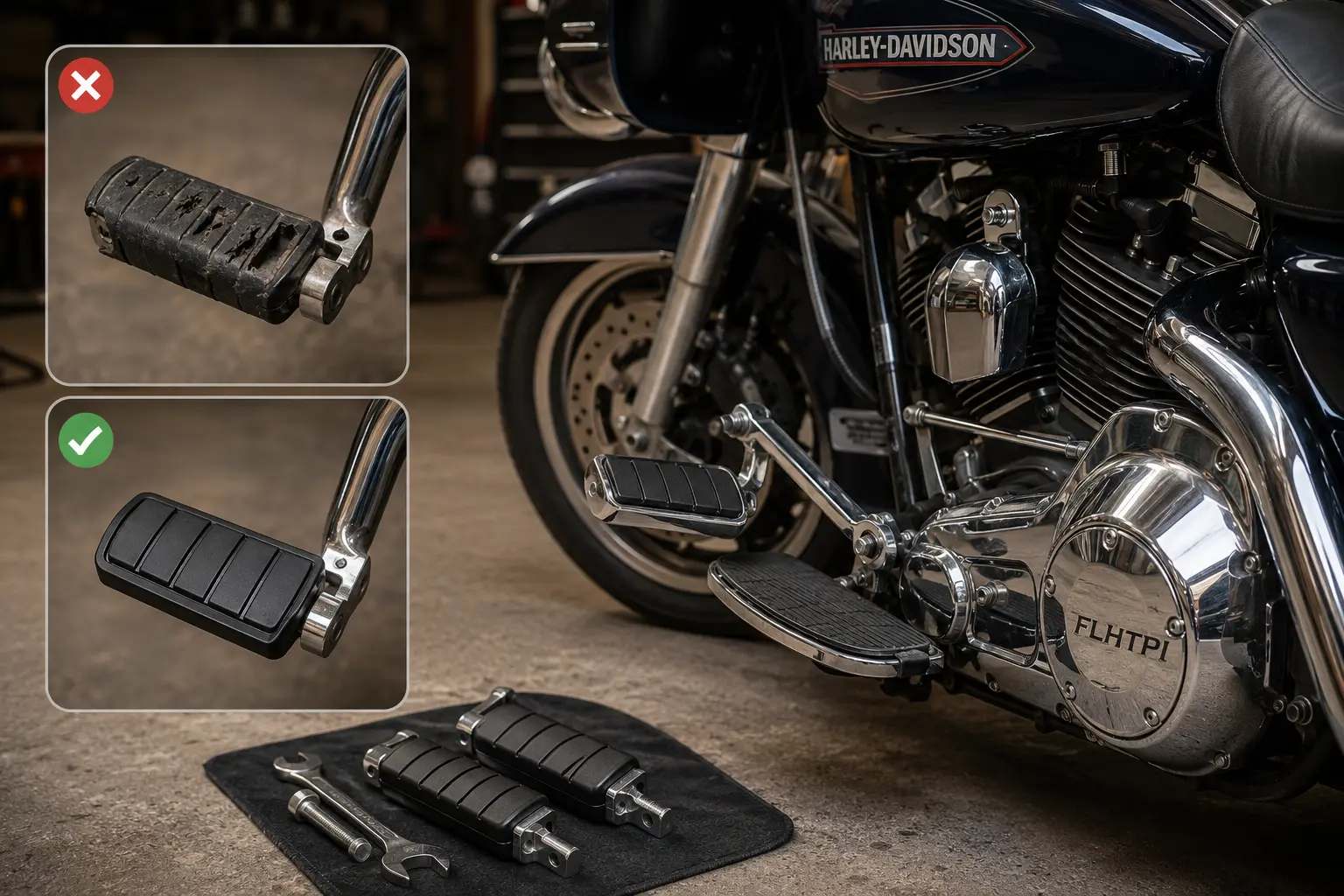

The Electra Glide Police FLHTPI is built for long hours on the road. It is a working bike. And because it logs serious miles, the components that take constant physical load need attention more often than most riders expect.
Your driver’s footpegs are one of them.
They seem bulletproof. However, worn or damaged foot pegs affect your riding comfort, your control, and even your safety over time. Here are six clear signs it is time to replace them on your FLHTPI.
1. The Rubber Grip Surface Has Worn Smooth
Harley-Davidson FLHTPI driver foot pegs use a rubber-topped platform to give your boots consistent grip during rides. That grip is not decorative. It keeps your feet planted firmly under braking, during slow maneuvers, and on uneven surfaces.
When the rubber wears smooth, your boots have almost nothing to grip. In wet conditions or emergency braking situations, that becomes a real control issue. If you run your hand over the surface and feel no texture remaining, replacement is overdue.
Riders on Harley-Davidson forums note that peg rubber typically shows significant wear after 20,000 to 30,000 miles of heavy use, with police models often hitting that threshold faster due to duty-cycle mileage.
2. The Peg Platform Has Visible Cracks or Chips
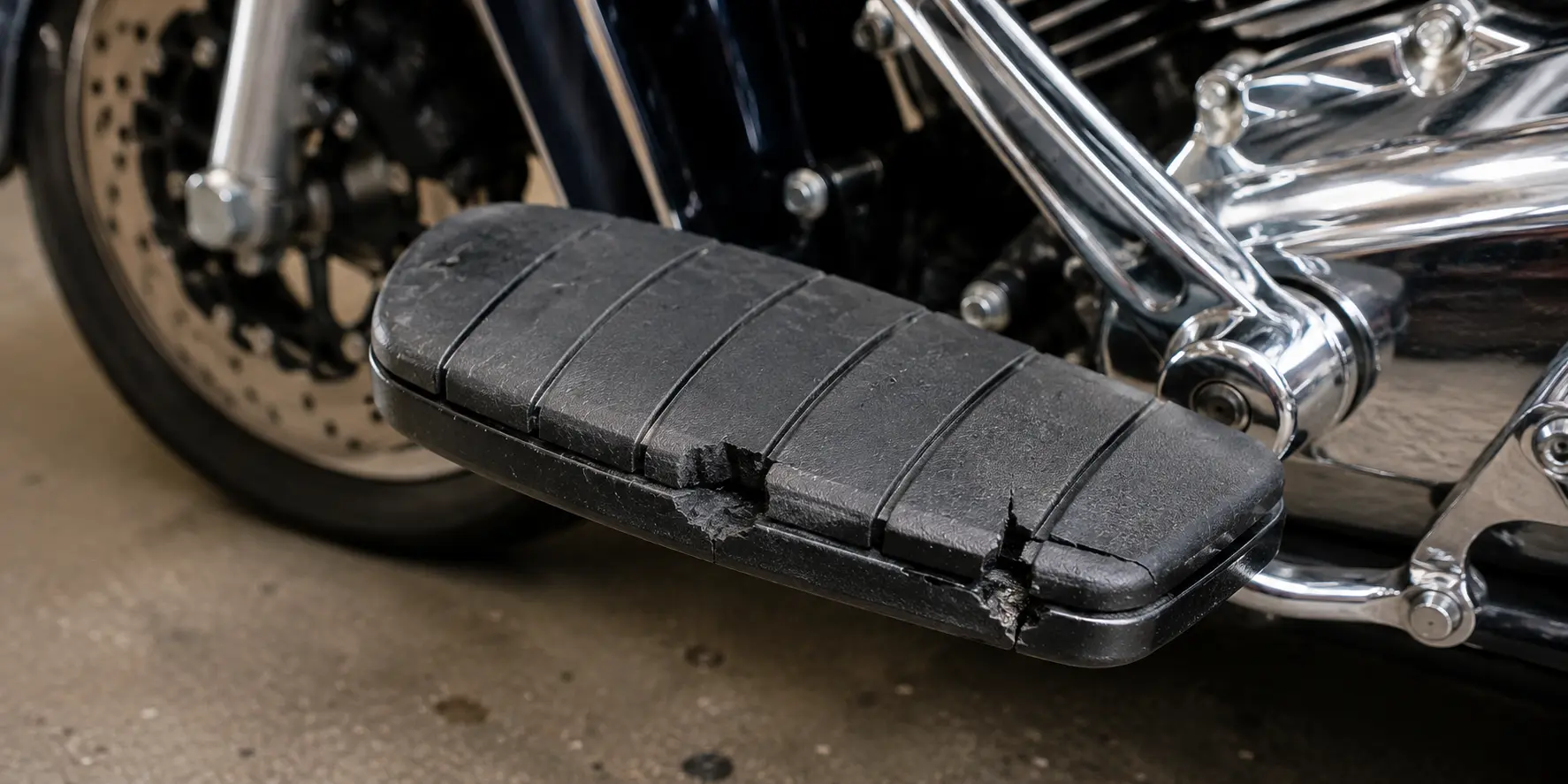
Aluminum foot peg platforms can develop hairline cracks from repeated impact loading, especially on bikes used in patrol or high-frequency stop-start duty cycles. Visually inspect the peg body under good light.
Surface scratches are cosmetic. However, cracks running through the platform or through the mounting area are structural. A cracked peg can fail under load without warning. That is not a risk worth taking on a bike that may need to perform in emergencies.
3. The Mounting Pin or Hinge Has Play in It
Fold the peg down and grip it firmly. Then move it side to side. There should be zero lateral movement. Any wobble or looseness indicates wear in the pivot pin or hinge mechanism.
A sloppy peg moves underfoot as you ride. That creates inconsistent feedback and makes smooth foot control harder, particularly important on the FLHTPI where precise brake pedal operation is critical for a rider in a law enforcement context.
According to Harley-Davidson service documentation, excessive pivot play is a defined replacement criterion for foot peg assemblies.
4. The Pegs No Longer Fold and Lock Cleanly
A functioning fold-down peg should spring back firmly and click into position. When the spring mechanism wears out, or the hinge corrodes, the peg either sticks in the folded position, droops during riding, or fails to lock down properly.
A peg that moves unexpectedly underfoot is dangerous. Beyond the safety concern, it is also a practical annoyance on a bike that is mounted and dismounted dozens of times a day on duty.
5. Corrosion Has Compromised the Finish or Structural Integrity
The FLHTPI is a year-round, all-weather working motorcycle in many departments. Exposure to road salt, rain, and extreme temperatures accelerates corrosion on any metal component.
Surface rust on steel hardware is common. However, corrosion that has penetrated the aluminum body of the peg, or that has caused the mounting hardware to seize or deteriorate, means the component can no longer be trusted structurally. At that point, replacement is not optional.
6. Your Feet Feel Fatigued or Uncomfortable on Long Patrol Shifts
This one is easy to dismiss as rider fitness. However, if you notice increasing foot and lower leg fatigue during long shifts and your pegs look physically worn, the loss of platform height and grip texture is often the real cause.
Worn pegs give your feet less surface area to rest on properly. Furthermore, your muscles compensate continuously for the reduced grip, which adds up over a full shift. Fresh, properly surfaced aluminum pegs restore the ergonomic support the bike was designed to provide.
As noted by Motorcycle Cruiser magazine, peg ergonomics have a direct and measurable effect on rider fatigue over distances above 100 miles. On a patrol bike covering that distance in a single duty period, it matters.
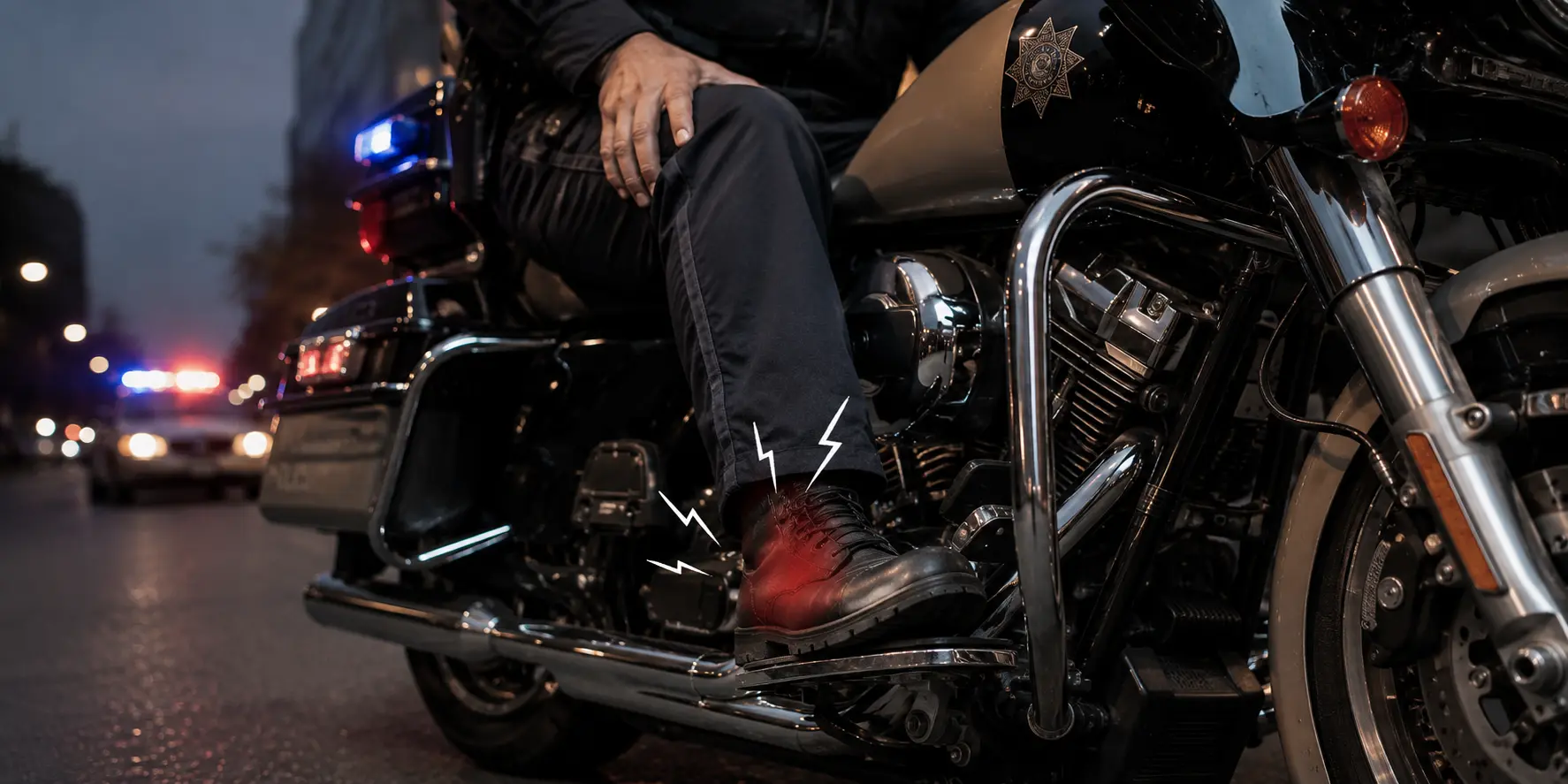
Getting the Right Replacement for Your FLHTPI
The FLHTPI ran from 2000 through 2009. When replacing driver foot pegs on this model, fitment and material quality matter. You need an exact-match replacement, not a universal peg that requires modification.
The Harley-Davidson Electra Glide Police EFI FLHTPI Driver Foot Pegs at Aliwheels are precision-fitted for 2000 to 2009 model years, built from aircraft-grade aluminum in black, and priced considerably below dealer retail. Browse the full Foot Controls category for related components, including floorboards and rear sets.
Conclusion
Worn rubber, platform cracks, pivot play, failed locking mechanisms, corrosion, and rider fatigue are all signals that your FLHTPI driver foot pegs need replacing. On a working police motorcycle, those signals should not be ignored.