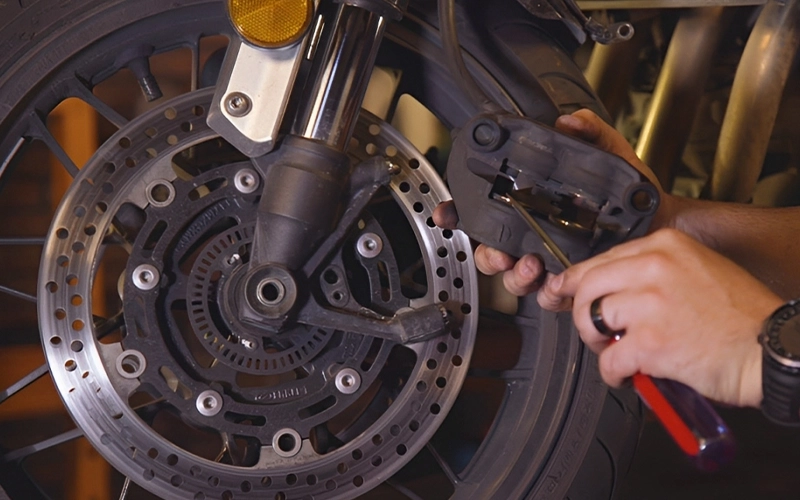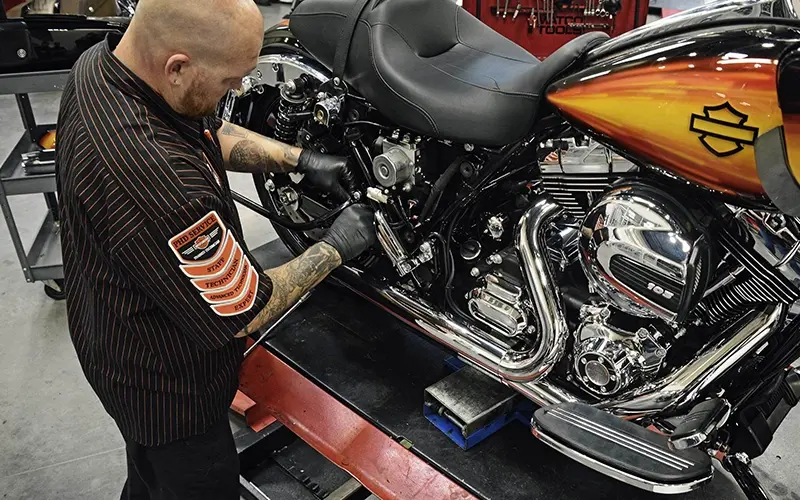






Harley Brake upgrades are usually sold as performance improvements. Shorter stopping distance. Better bite. Stronger feel at the lever. But for many Harley riders, brake modifications quietly cross a line where they stop being about performance and start becoming a safety risk.
Not because the rider chose bad parts, but because modern Harley braking systems are unforgiving when components are mismatched, installed without context, or chosen based on hype instead of function. This is the side of brake upgrades that most riders only learn after something feels wrong on the road.
Why Harley Brake Upgrades Can Backfire?
Harley braking systems, especially on ABS-equipped models, are engineered as balanced systems. Pressure, rotor mass, pad compound, brake line expansion, and ABS calibration all work together. Change one variable too aggressively, and the system responds in ways riders do not expect.
Common Harley brake upgrade problems include:
- ABS is activating too early during normal stops
- Inconsistent brake feel at highway speeds
- Brake fade appears sooner than with stock components
- Rear brake instability after front-only upgrades
These are not rare edge cases. They show up regularly in owner forums and rider complaints, especially after well-intentioned upgrades.
This is why Harley brake safety issues are becoming a growing concern, even among experienced riders.
The Most Dangerous Assumption Harley Riders Make
The biggest mistake is assuming that more stopping power always equals more safety.
In reality, predictable braking matters more than aggressive braking.
When brake upgrades change the timing, pressure curve, or feedback of the system, riders lose the ability to modulate braking instinctively. That hesitation or misjudgment is where risk increases.
Harley riders often search for:
- safe Harley brake upgrades
- Harley ABS brake issues after upgrade
- Why do my Harley brakes feel worse after the upgrade?
- Harley braking performance problems
Those searches usually come after confidence is already shaken.
How ABS Turns Poor Upgrades Into Safety Hazards?
Harley ABS systems are designed to prevent wheel lock by monitoring wheel speed and pressure changes. When aftermarket parts disrupt those signals, ABS does its job too aggressively.
This results in:
- Pulsing levers during mild braking
- Longer stopping distances in emergencies
- Unexpected ABS engagement mid-corner
In these moments, riders are not thinking about performance. They are thinking about staying upright. Upgrading Harley brakes without triggering ABS issues requires understanding how sensitive these systems are to pad compounds, rotor weight, and hydraulic consistency.
High Risk Brake Upgrade Choices: Riders Regret
Aggressive pads on stock rotors
High-friction pads promise dramatic stopping power but often exceed what stock rotors are designed to manage.
This leads to uneven heat buildup, pad glazing, and inconsistent braking response. On touring Harleys, this can create brake fade faster than stock pads.
Front brake upgrades without rear balance
Upgrading the front brake only creates an imbalance that ABS does not expect. The system interprets the difference as instability and intervenes.
The result is a bike that stops harder in theory but feels less controllable in practice.
Oversized rotors without matching components
Larger rotors change leverage and pressure characteristics. Without compatible calipers and master cylinders, this creates unpredictable braking behavior.
This is one of the most common causes of Harley braking performance issues after upgrades.
When Brake Upgrades Become a Legal and Liability Risk?
Beyond ride feel, improper brake modifications can introduce legal and insurance complications.
In some regions, modified braking systems that affect ABS functionality may be flagged during inspections or accident investigations.
If an upgraded brake system contributes to loss of control, liability can shift quickly.
This is why experienced riders increasingly research:
- Harley brake safety upgrades
- Are aftermarket brakes safe for Harley?
- legal brake modifications Harley
Safety is no longer just personal. It is legal and financial.
Signs Your Brake Upgrade Is Becoming a Safety Problem
Riders often ignore early warning signs, assuming they will adapt.
Pay attention if you notice:
- The brake feel changed as the bike heated up
- ABS lights are appearing intermittently
- The rear brake activates ABS before the front
- Reduced confidence during panic stops
These are not normal break-in symptoms. They indicate a system mismatch.
How to Upgrade Harley Brakes Without Compromising Safety?
Safe brake upgrades focus on system harmony, not maximum aggression.
Key principles include:
- Choosing ABS-compatible brake pads
- Matching rotors to factory specifications, unless upgrading the full system
- Replace brake fluid with every major hardware change
- Maintaining balance between the front and rear braking forces
Sourcing parts from Harley-focused suppliers matters here. Reliable stores like Aliwheels specialize in model-specific Harley parts that are designed to work with factory braking systems instead of fighting them. That compatibility reduces risk far more than any single performance gain.
Touring, Softail, and Sportster Differences Riders Miss
Touring Harleys generate more heat and carry more weight. Softails respond quickly to pressure changes. Sportsters amplify rotor and pad inconsistencies due to lighter mass.
A brake setup that feels fine on one platform can become unsafe on another.
This is why high intent searches like:
- Harley touring brake upgrade safety
- Softail ABS brake problems
- Sportster brake upgrade issues
continue to grow. Model-specific planning is no longer optional.
Performance Should Increase Confidence, Not Doubt
The goal of brake upgrades is not to stop harder once. It is to stop predictably every time.
If an upgrade makes you question braking in traffic, rain, or emergencies, performance has crossed into risk.
The smartest Harley riders treat braking as a safety system first and a performance system second. They upgrade gradually, test thoroughly, and prioritize compatibility over hype.
Final Rider Takeaway
Harley brake upgrades become a safety issue when they disrupt balance, confuse ABS, or reduce predictability. The most effective brake setups are not the most aggressive. They are the most consistent.
Before upgrading, ask one question: Will this help me stop with confidence when something goes wrong?
If the answer is uncertain, rethink the parts, the installation, or the approach. When sourced carefully from experienced Harley parts suppliers like Aliwheels, brake upgrades can deliver real improvements without compromising safety. Confidence is the real performance upgrade.